



Combat simulators developer Ihor Bielov: we’re moving toward single digital environment where all branches can train without crowding training areas
On December 10, 2025, Ukrainian developer Simtech Solutions unveiled Ukrainian Fight Drone Simulator (UFDS), a realistic combat FPV drone simulator now available on Steam. It is a professional training platform built on real combat operations, and it is now available not only to military personnel but also to civilian users.
Today, the role of simulators in preparing the country’s defense is more relevant than ever. Above all, this is because there are types of weapons whose handling skills can be trained only in a digital environment. These simulators are also highly mobile: they can be deployed virtually anywhere in 15 minutes, without creating crowds that are easy to track via satellites or reconnaissance UAVs.
As part of the "Drone Industry" project, Censor.NET spoke with Ihor Bielov, a Ukrainian entrepreneur and founder of the L7 group of companies, one of Ukraine’s leading developers of combat simulators.
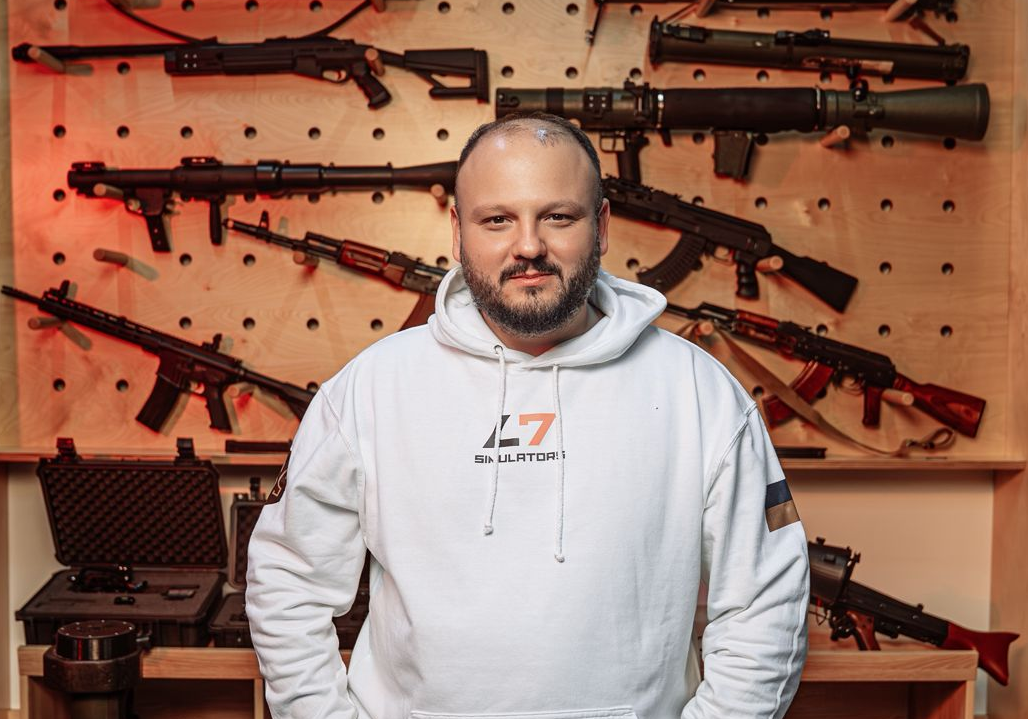
L7 United is a Ukrainian miltech group that brings together advanced expertise in military simulators (L7 Simulators), 3D printing (Logics 3D Print), and metalworking (7Metal).
L7 Simulators specializes in developing modern interactive training systems and combat training simulators for the Armed Forces of Ukraine, the National Guard, and other security and defense agencies. The company emerged as a volunteer initiative after Russia’s full-scale invasion of Ukraine began in 2022, in response to direct frontline requests for fast, safe, and effective troop training.
Starting with adapting trainers for Western weapons systems, the company quickly evolved into a full-fledged miltech manufacturer, building scalable simulation ecosystems for the military and the education sector.
L7 develops full-cycle, end-to-end solutions: from concept and software to the physical modeling of combat scenarios with a high degree of realism and full immersion in the training process.
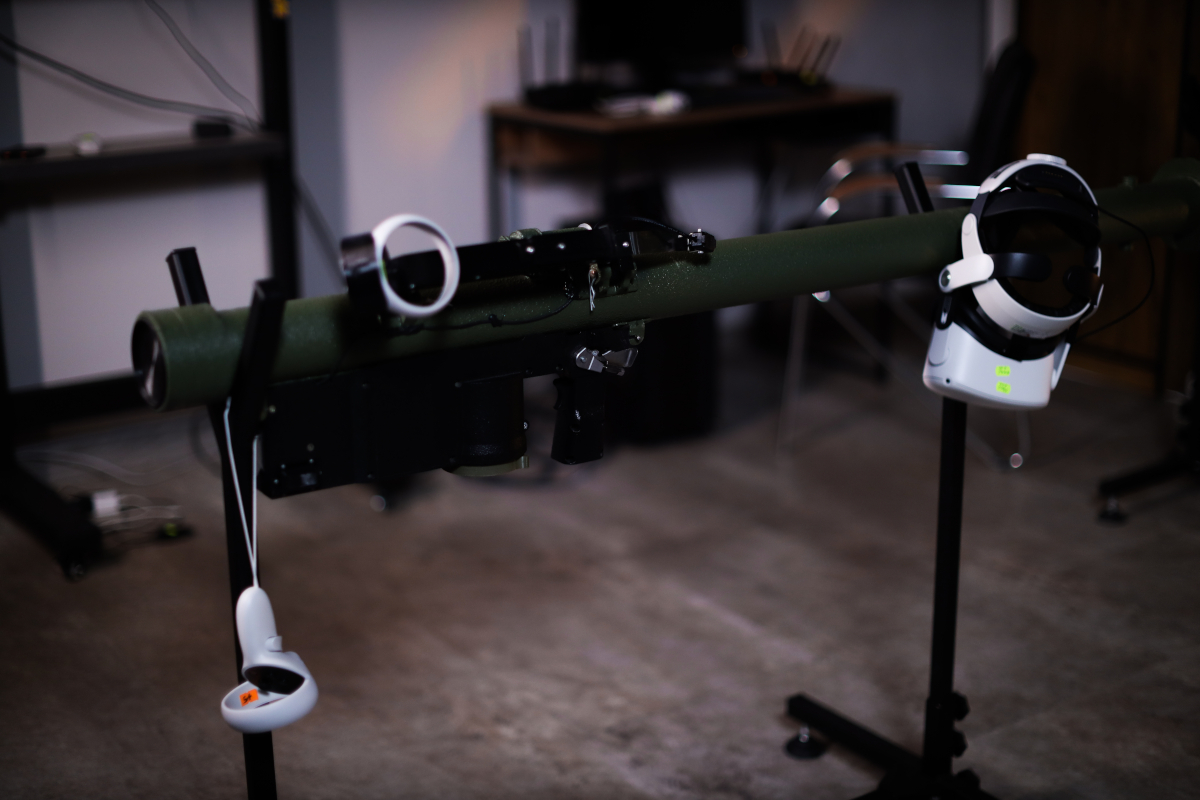
L7 platforms, including the UNITS ecosystem, enable users to rehearse tactical tasks, train firing with small arms, MANPADS and ATGMs, and practice team coordination in a safe environment: without risk to life or the expenditure of live ammunition.
L7’s products meet Ukraine’s Ministry of Defense requirements and modern military training standards, while some developments have been codified under NATO standards, opening up opportunities for international use.
– Please tell us about your product. You position yourselves as market leaders. What makes you a leader, and what sets your product apart from competitors?
– You could simply point to the market share we hold. But I wouldn’t want to focus on statistical figures. For me, the more important part is the underlying idea behind this issue. What makes us leaders in the field is our attitude toward what we build.
We have to go back to 2022, to the start of the full-scale war. We started as a volunteer movement: a team of IT specialists with experience in electronics development across different fields came together to solve a pressing problem.
Back then, we saw lines of men and women who wanted to be mobilized to defend the country. And training centers simply didn’t have enough ammunition to train troops. They were issued about a dozen rifle rounds to learn how to shoot. You didn’t have to be an expert to see this wasn’t enough. And it was a huge problem.
I’m not even talking about grenade launchers or the Western weapons our partners supplied: NLAW, Javelin, Carl Gustaf, Matador, Stinger, and so on. None of these weapon systems were available for training. They taught theory. At best, an instructor would use a mock-up you could hold in your hands to show what a particular button or lever does.
When you end up on the battlefield, there’s a certain mindset that requires skills at the level of muscle memory. It’s what people commonly call automatic reactions. Otherwise, you can freeze. Hesitation is a risk to life, let alone failing to accomplish the mission.
That’s when we realized we could help solve this problem. And it could only be solved through training systems that, first, let you train without expending ammunition and, second, allow you to build complex scenarios to drill exercises that either can’t be reproduced in real life or are prohibitively expensive to replicate on conventional training grounds.
One NLAW launch costs $30,000; a Javelin is ten times more—$300,000; and firing a Stinger can cost up to $100,000. So the economics are stacked against traditional training methods.
What’s more, when it comes to the Stinger, you can’t realistically recreate a fighter jet as a target for training or some drone that also costs money but moves at a different speed, is a different size, and so on.
Of course, there are exceptions, but in general, a soldier cannot be effective without properly drilling how to handle the weapon they use.
By the way, service members can train with us completely free of charge. Overall, since the start of the full-scale war, more than 100,000 people have trained on our simulator.
– How did you come up with this idea?
– We realized we could build trainers, simulation systems, fairly quickly. Essentially, it’s hardware and the right software. We have a Stinger, a Browning, and various types of small arms. They fully match the originals in weight and controls. So you can replicate the exact sequence of actions needed to engage a target.
In the VR headset, you see a scenario that has already played out on a real battlefield, or one that needs to be envisioned as a possible scenario. This way, a person drills the movements until they become automatic, building muscle memory.
We also recreate the audio side, every explosion, every shot, even the buzz of drones, for example. Add computer graphics, and you get a highly immersive system overall.
Beyond the electricity needed to power these trainers, there’s no need to spend money on depreciation or routine maintenance. Even logistics are greatly simplified. We can deploy such a system anywhere in 15 minutes. That rapid setup makes it possible to diversify training and avoid concentrating troops in one place, as happens with conventional training ranges.
This enables training at a new level, more effectively, faster, and at a lower cost than the traditional training system. It also allows for more complex setups, training a squad or even a company at the same time, so you can drill not only marksmanship but also tactics.
For example, mobile fire groups shoot down Shaheds from pickup trucks fitted with Browning machine guns. Two people work as a team: one is the gunner who directly engages the targets, and the other is the spotter, holding a flashlight or some kind of laser system.
They have to work in sync, and our simulators allow for joint training in a single digital environment.
We don’t follow the classic approach of first conducting a study of the issues, we start from what the military asks for. They are the ones who advise us and share their biggest pain points. And whatever hurts most, we recreate as quickly as possible with the help of IT specialists, engineers, designers, and other experts, making it as immersive as we can within the simulation system.
We see this as the future. It is a modernization of how troops are trained because the war itself has become modern. And we have no other option: we can’t increase the number of people, so they have to be effective.
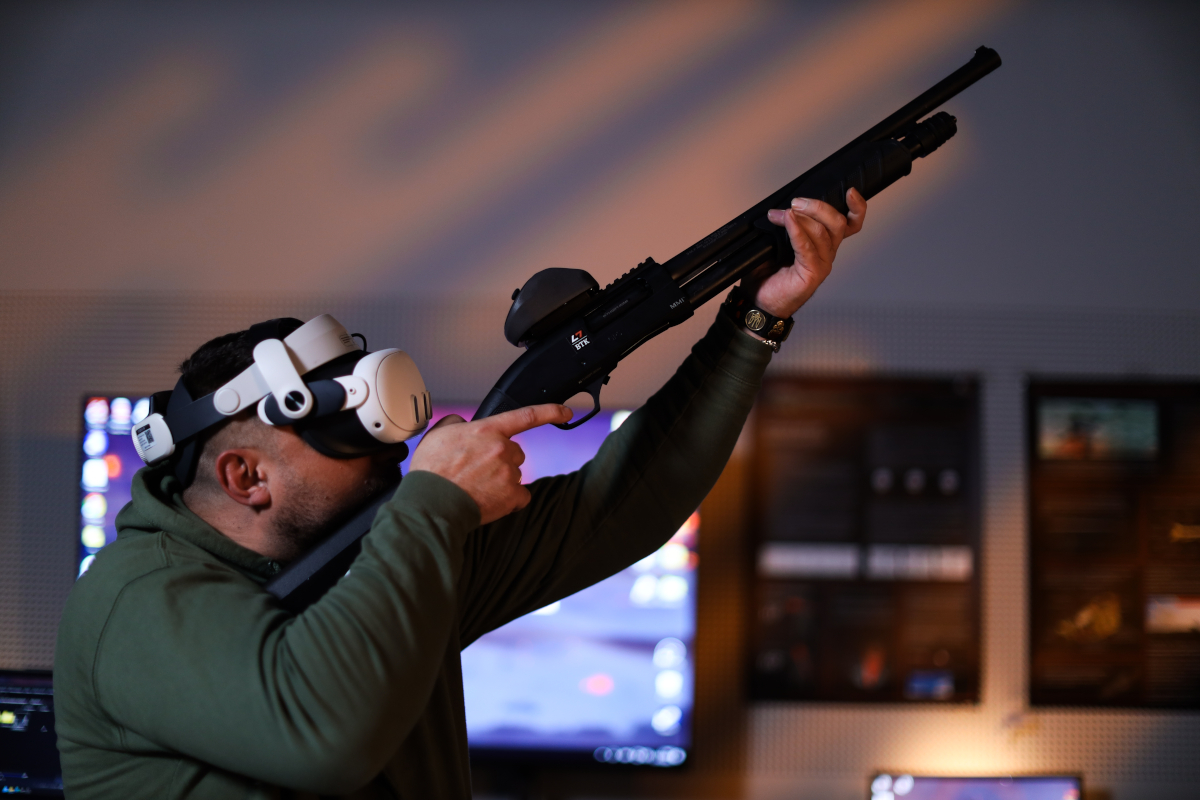
We want to be the ones pushing the transformation of military training from the development side, so it happens as quickly as possible. Because a well-trained soldier means a life saved, a mission carried out effectively, and another step toward victory.
– Are you succeeding? Does the military bureaucracy yield to that pressure?
– Compared with the situation before the full-scale invasion, it’s a completely different story now in terms of how the problem is approached. Where there used to be formalism and red tape, today, at different levels, from General Staff leadership to frontline officers, people are thinking about how to solve the problem, not how to avoid taking responsibility.
The war has been going on since 2014, but the fighting was localized. People did not feel as personally connected to the war as they do now. Once the threat to every family in the country became clear, attitudes changed. That is why many service members are actively helping drive the transformation of training and support the rollout of such simulators to military units.
We’ve also grown in terms of the number of people involved in the project; we’re now around 200. We reinvest all available resources into developing new simulators. Right now, we’re moving toward a combat simulation system or a war simulator so all branches of the armed forces can train in a single digital environment without crowding training ranges. It’s a matter of safety.
– I have to ask about the initial investment. How significant was the amount?
– The initial investment came from our previous businesses. There were several lines. First and foremost, a business in the lighting sector. I was involved in developing lighting fixtures that now illuminate Kyiv and other cities across Ukraine. That’s where our team of electronics specialists and designers came from, people who built the electronic components for the simulators, because the control systems are fairly complex.
We also had an IT company where we mostly produced gaming products. It’s the same kind of graphical elements and mathematical models. In gaming, they’re aimed at entertainment, at fun, but our goal is different: to sharpen professional skills.
That team was the single biggest investment. For the first six months, people worked without pay or for minimal wages, often close to ten times lower than what Western companies were offering them through outsourcing. We made a decision to invest our time in a project that would move us toward victory.
Later, demand surged, partly because we traveled to military units and training centers, offering troops free training. That’s how we built our network. Service members were and still are happy to share their feedback and requests. And we implement them as quickly as possible.
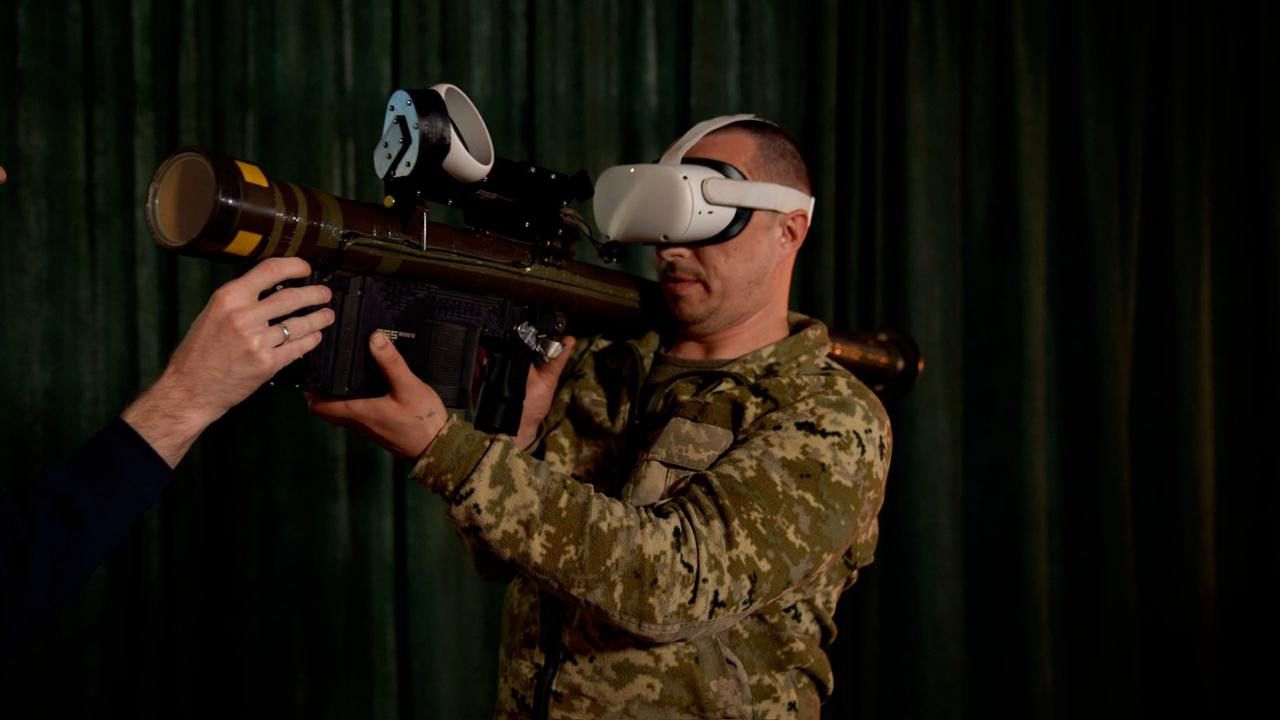
For example, we built a working NLAW prototype in three weeks, that’s as fast as it gets, given that it’s a complex product at the intersection of hardware and software.
All of this has driven our organic growth. We weren’t looking for investors for the project, but we are now considering that option to accelerate the development of a combat simulation system. Still, we’re only at the beginning of that path.
– Is there interest in your development abroad?
– It’s a timely question, and at the same time a complicated one. Ukraine has a legal framework that does not allow the export of intellectual property for dual-use or military products. While this may not apply to training systems to the same extent because it depends on interpretation, we want to be part of the changes our military and political leadership is talking about.
There is certainly strong interest in the product. For instance, we attended an exhibition in Kielce, Poland, this year, and it turned out that among the products on display, there wasn’t one better than ours. And I think that’s precisely because of our approach to solving the problem.
Who makes simulators? First and foremost, weapons manufacturers, so they can teach people how the weapon works. Their task is straightforward: either meet certain criteria set by the country where deliveries are planned, or provide basic skills to satisfy senior leadership and increase contracts for supplying that type of weapon. Not a word about training soldiers to be effective.
Our story is different. We are at war, and we want our soldiers to be prepared and able to use a wide range of weapons.
What’s more, abroad, it doesn’t even occur to anyone to build a cross-functional combat operations simulator. In European countries, that task simply isn’t on the agenda, because they are not at war. For them, army training is a budget line, an item that sits somewhere on the edge of top-down KPIs. So yes, troops are trained formally, but how prepared the army would be in its first fight… God willing, it never happens.

– Am I right in thinking that after completing the program on your simulator, a person is ready to go to the battlefield?
It depends on the weapon system. As I said, there are ones you can train only through simulators. The understanding is there, but the methodology isn’t. That’s exactly what we’re working on together with the military.
Stinger and Javelin, you can learn to fire them only with the help of a simulator. In my non-military view, for these weapon systems, a trainer is sufficient to be combat-ready. Of course, smelling gunpowder and finding yourself in real combat conditions is a completely different story.
– How saturated is the simulator market?
– Right now, we don’t see teams approaching the task of building a full combat operations simulator. We do see companies that develop simulators for individual weapon systems. So it’s hard to compare.
The lion’s share of integrating simulators into the training system has fallen on us. Still, there are two or three other teams producing genuinely strong products.
– How is a simulator different from a computer game?
– The purpose of creating a game is to create a mood, entertainment. When people are having fun, they don’t want to strain or step out of their comfort zone. They want to relax and think about nothing. Building a game model, its math, is about entertainment. Simulators, by contrast, are about maximum immersion, full engagement.
Yes, a simulator may have simpler graphics to streamline the system’s development, but it is designed to make weather conditions, time of day, wind, projectile behavior, trajectory, ballistics, and cross-functional interactions as close as possible to real combat.
So these are fundamentally different things, they’re about different purposes altogether. It’s like the difference between an airsoft rifle and a real one: there is some overlap in know-how and product logic, but it’s night and day.
In my view, it’s precisely the cross-functional interaction between the military and manufacturers that can deliver the desired effect and make the product truly effective.
Here, it would be appropriate to return to your question about the interest of foreign markets. It exists in any case. After all, a product that has been tested in real combat will prevail even over the best award-winning design, which knows about combat at best from textbooks.
– Using simulators is not a mandatory part of troop training, right? What’s your outlook, will such systems become part of the General Staff’s doctrine, and when could that happen?
– The first steps are already being taken. For example, the National Guard is quite actively developing training methodology that integrates simulation systems. The General Staff is moving in the same direction as well. But state institutions, especially during wartime, are fairly slow to implement changes. Not because they don’t want to, but because the mechanism itself is complex. You have to account for every detail to avoid getting into trouble.
I think that such a transformation will take place over the next five years. We can talk about simplifying training after Basic Combined Arms Training, that is, specialty training, where simulator-based methodologies can be implemented. In other words, once a soldier has mastered the general basics, they can train as a grenade launcher operator, a MANPADS operator, or a drone operator.
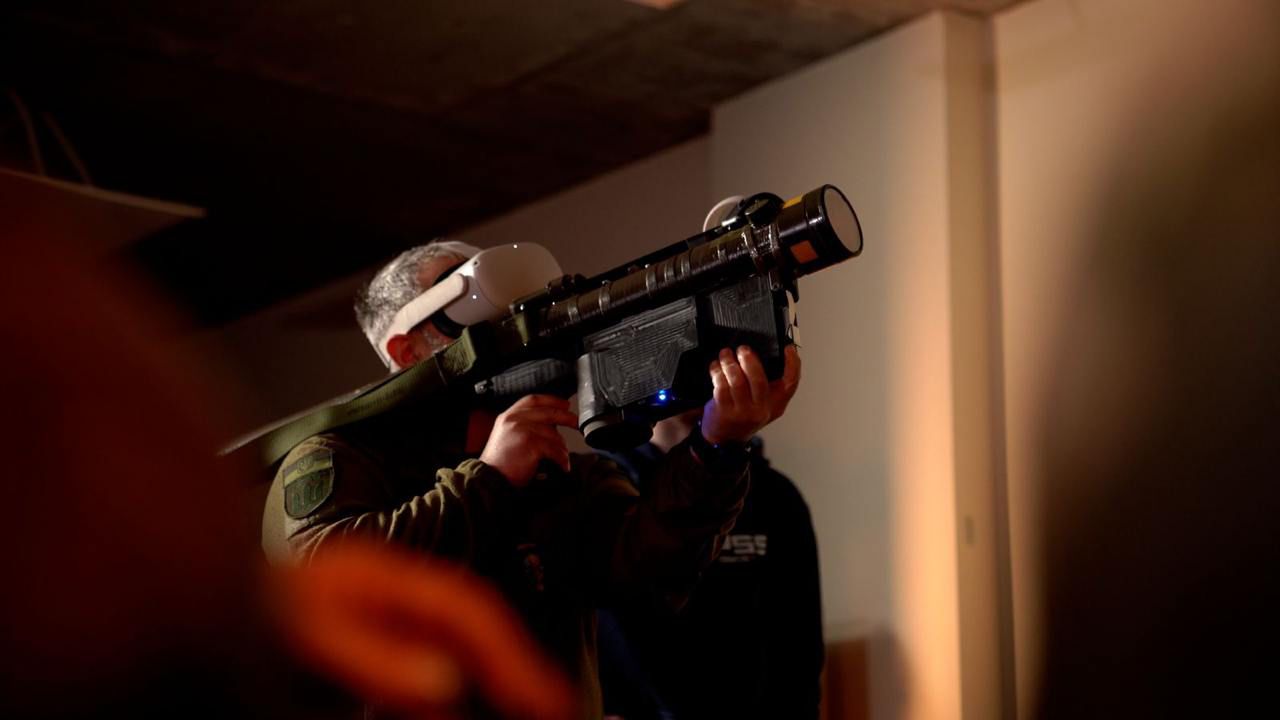
By the way, the functional side of controlling a real drone and a simulated one is exactly the same. The image generated by the computer is almost indistinguishable from what an operator sees through the camera. The person is holding the same control device—a joystick or any other controller. The same movements, the same feel of remote control.
In my view, learning to operate unmanned ground vehicles and UAVs should be done only through simulators.
– Why?
– Because there’s no risk of losing equipment, especially when you’re just getting started with training. Take aircraft simulators, for example. Until a trainee pilot logs a certain number of hours, nobody will put them in an aircraft. It’s obvious a beginner pilot could crash. Besides, an aircraft is complex equipment you have to understand. And it’s better to do that in a safe setting. There’s also the cost factor, an aircraft is expensive, even if you factor in an emergency ejection system.
The same applies to UAVs. Yes, there are cheap drones, but there are also expensive ones. Why risk them if all of this can be drilled in simulation? And no training range can provide the full picture of a battlefield—it is practically impossible to recreate, "live," the effects of electronic warfare, other equipment, combat scenarios, interception, tracking, target acquisition, and so on. In a simulated scenario, it’s easy, fast, and safe.
War is increasingly becoming a war of robots, that’s already obvious. That means troop training requires a greater intellectual load. It’s more about understanding what you’re doing, multi-step decision-making, and the complexity of executing a mission. So the training process will keep changing.
I do not mean there should be no physical training. Of course, it’s needed. And not only for the military, but also for civilians, in order to maintain health. But when it comes to complex operations, in my view, this will increasingly be done through simulation.
Ultimately, the process of operating many robotic systems will likely differ very little between training and controlling them in real combat.
– Let's imagine that tomorrow the war ends in one form or another. Will your product be needed?
– I think our product in particular—yes. Our northeastern neighbor isn’t going anywhere. We need to be ready for this conflict to continue. An army has to keep its skills sharp at all times. And I’m not talking only about us, but about any country. Europe has already shown us that pinning your hopes on someone else when it comes to defense is a problem and that’s a whole different discussion.
You need a strong army of your own. And our products, as training tools, will remain in demand.
Moreover, simulation systems are needed not only in miltech but also in civilian life. construction. This could be construction, agriculture, the State Emergency Service, or any field that involves complex scenarios and robotic systems. You can model it all and train skilled specialists to carry out such tasks.


