



She underwent breast amputation due to wearing bulletproof vest. Story of veteran Natalia Lishchyshena
How veteran Natalia Lishchyshena became the first woman in Ukraine to document the health risks of standard-issue body armour for female soldiers – and why this story matters for the entire army.

Natalia Lishchyshena always wanted to be a lawyer, and also to be like her father, a military man. The path to her goal was not easy, but she got her education and signed the long-awaited contract — just before the start of the full-scale invasion. Her service lasted until 2024, when a hospital examination revealed that she had a dangerous disease. This was followed by surgery and a long rehabilitation. She also had to fight a difficult bureaucratic battle to prove that her illness was related to her military service. Natalia was able to confirm that she lost her breasts due to military service, specifically due to wearing a bulletproof vest. Today, she works as a support specialist in Vinnytsia, studies at the "Tribe" project, and brings together the veteran community in her community. Natalia says that everything that had happened to her prepared her for this work, because now she knows from her own experience what military personnel and veterans face after discharge and how they can be helped.
Natalia was born in Hungary, where her father was serving at the time. When the family returned to Ukraine, they lived in the Luhansk region. When fighting broke out in the east in 2014, she was involved in commercial activities and began volunteering to help the military. She decided to stay in Stanytsia Luhanska despite its proximity to the front line in order to look after her father.
"All my life I dreamed of being a lawyer and wanted to be like my father. For me, the military are role models. It's about respect, dignity and honour. They are People with a capital P," Natalia shares, adding that she enrolled in the law faculty at the University of Siverskodonetsk when she was 38. In 2021, an acquaintance offered her a contract position in the 80th Separate Air Assault Brigade. She agreed. "My husband supported my decision. At that time, we did not think that there would be a war in 2022. Although we understood that what had been happening in the Luhansk and Donetsk regions for the past eight years was, to be honest, a shaky 'truce'," she explains.
On the first day of the full-scale invasion, Natalia was already in the Mykolaiv region, where her unit was based: "We were called up at 4:00 a.m. The first landing, shelling. We didn't understand who was friend and who was foe. There was no particular coordination between the units. The personnel were spread out in several directions — our military were in Prypiat, Kherson, and Zaporizhzhia. That's how my journey began."
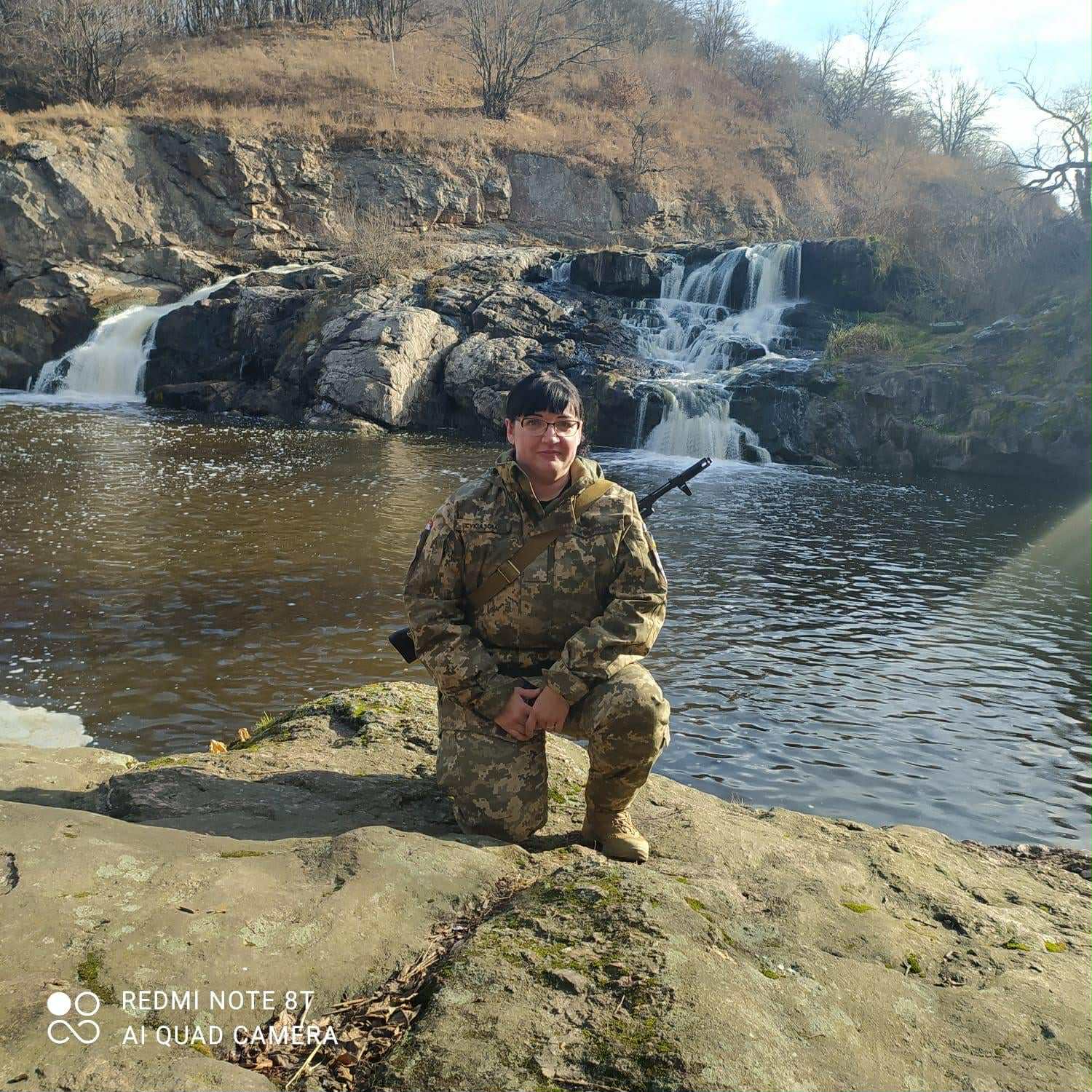
Natalia served between the first and second lines of defence. We were responsible for supplying the soldiers, logistics, and other tasks assigned to us by our commanders. There were many women in our brigade, most of them in rear services. There were women who had already served for many years at that point. As our commander told us back at the training centre: 'There are no women in the army, there are military personnel. You take your bag and march on your own. You knew where you were going." I remembered those words well, and they came in handy more than once, because I didn't want anyone to give me any special treatment," Natalia shares her impressions of being a woman in the army. She says that there have been some positive changes in gender policy in the army. But she adds that there are still problems and shortcomings, which Natalia has experienced first-hand.
"Until 2023-2024, there was no women's uniform. Thanks to the Arm Women Now project, a women's uniform was developed and implemented at the level of the Ministry of Defence. However, there are still no standard bulletproof vests for women that fit our anatomical features. I know that they are currently in the testing phase, but how many years have passed? There are already 70,000 women in the army. The standard bulletproof vest currently weighs 18 kilograms and is uncomfortable. And when you are on the first or second line of defence, you have to wear a bulletproof vest all the time. When I spoke to doctors, they said that only one in ten female military personnel who come for examination have no problems with their mammary glands. The chest is injured by the bulletproof vest," she notes.
In 2024, Natalia fell ill and was admitted to the pulmonology department of a hospital. After prolonged treatment, she was referred for a medical examination. There, after routine examinations and an ultrasound scan, the doctor informed her that she had Mints disease. This is an intraductal papilloma of the breast, which is asymptomatic. Without intervention, it can become malignant. Treatment involved surgery.
"The first operation was performed at the Podilskyi Cancer Centre. They performed a partial resection (removal) of both mammary glands. It was not entirely successful. Then I had a second operation at a military hospital. After that, the histology results for tumour markers came back, and there were some bad changes. This all lasted from May to July. On 31 July, the Military Medical Commission decided to discharge me. That's how my service ended," says Natalia.
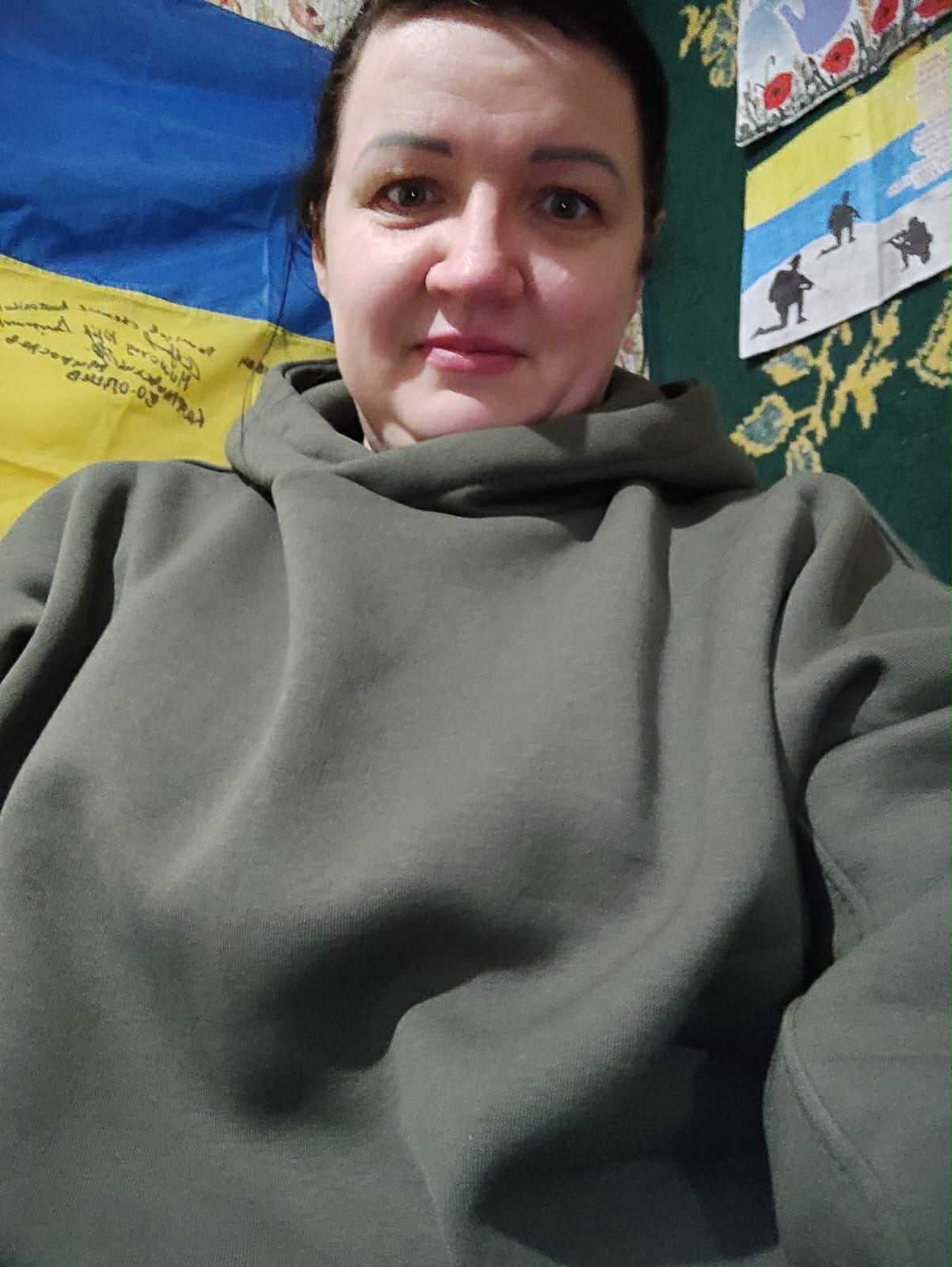
The woman underwent three operations. During the third, she underwent a complete resection of the mammary glands. Now the veteran says that she cannot raise her arms high, lift heavy objects, stay in the sun, or overheat. Her husband is very supportive. She shares that the doctor even spoke with him before his wife's operation, explaining the anatomical features and consequences. But, says Natalia, her husband replied to the doctor that the main thing for him was that she was alive.
In addition to her illness, Natalia also had to "fight" with bureaucracy. She is currently the only woman in Ukraine who has documented evidence that her illness was caused by wearing a bulletproof vest. The conclusion of the MMC (certificate of illness) states that her illness is related to the defence of her homeland. The veteran also faced problems in obtaining disability status. She was not summoned to a meeting of the Medical and Social Expert Commission (MSEC), which at that time determined disability status, for a long time. And then they refused to grant her disability status altogether, saying that they "did not see any grounds" for it. Natalia managed to appeal this decision and was granted a Group 3 disability, but the decision contained an incorrect diagnosis. After a complete resection, when she applied to change her disability group, one of the commission's doctors told her that she had "had her breasts removed on a whim." Natalia did not give up, and as a result, this doctor was removed from the commission and banned from holding this position in the future. After a second meeting of the commission, the veteran was assigned a second group disability for life.

"After the operations and my discharge, I didn't even have much time to feel sorry for myself," Natalia smiles.
Almost immediately, she began working as a specialist supporting war veterans and demobilised persons: she passed a competitive selection process and training, and has been helping veterans and their families in her new community in Vinnytsia Oblast for a year now. She says that she does not work strictly according to job instructions, which require her to refer veterans to other specialists, but tries to help everyone herself on the spot. "I am probably even grateful now that I have this experience. Because I went through it all myself: treatment, medical examination, and rehabilitation. Now I can help others. I know all the nuances that veterans, female veterans and active military personnel may encounter," the woman continues.
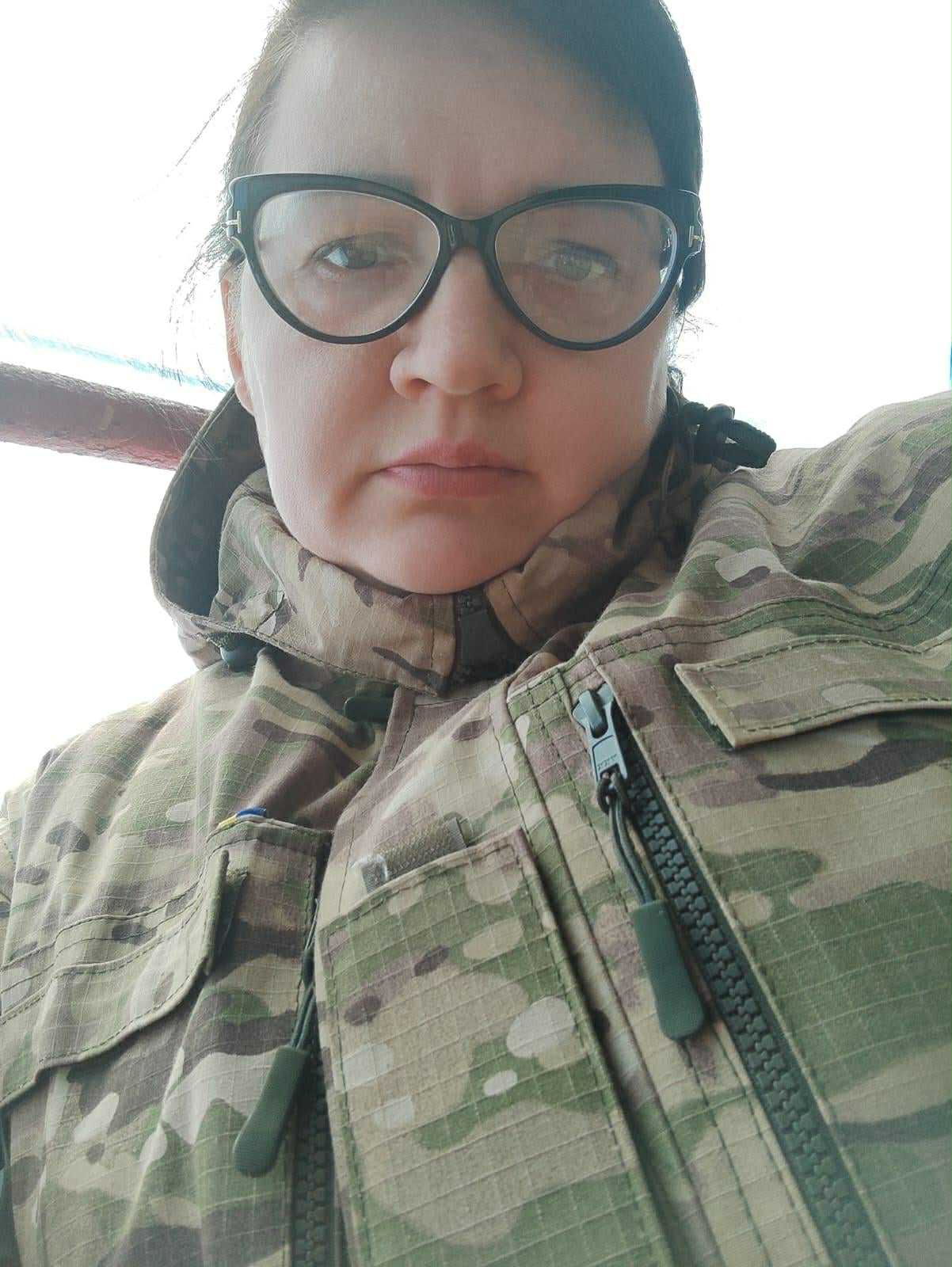
Alongside her work, Natalia is studying on veteran programmes, including Amnesty International Ukraine's "Tribe" project. She also approaches various authorities, both local and central, with different initiatives. Now, for example, Natalia is trying to draw the attention of the Ministry of Veterans Affairs and the Deputy Head of the President's Office, Iryna Vereshchuk, to the problem of women's injuries related to military service. "If there is no recurrence of the disease, I was offered to consider prosthetics. But prostheses are silicone pads that are issued. They are uncomfortable, rub, and create new wounds and scars. Plastic surgery has to be done at your own expense, and it is expensive. Implants cost from $3,000. Abroad, there are government programmes that finance this. It would be good if such programmes were available here too. There are many women in the army. But of course, it would be better if they did not have to deal with this. I now tell all my friends: "Girls, get yourselves checked, because you don't even feel that you are being injured," the veteran emphasises.
Anna Tokhmakhchi, Amnesty International Ukraine


