



Is there light at end…: will there be more electricity in spring, and why Kharkiv and Zhytomyr are no better off than Kyiv
Power engineers have pulled off the impossible. Despite a severe electricity shortfall in the capital, we are introducing schedules based on the amount of power we have, DTEK stressed.
From midnight on January 29, Kyiv introduced individual electricity supply schedules, which residents of each building can check separately.
Despite this, Kyiv Mayor Vitalii Klytschko said that as of January 29, 454 residential buildings in the capital remain without heating, mostly in Troieshchyna.
Meanwhile, Lviv Mayor Andrii Sadovyi advised residents to stock up in preparation for an emergency.
On Thursday, participants at "New Country," organized by Sonia Koshkina, discussed how close Ukraine is to an energy collapse. Based on the speakers’ remarks and our own sources, Censor.NET tried to piece together a picture of our near-term prospects.
Return to the schedules and 15 hours without electricity
"In fact, these are not the schedules we are used to. It’s a tough story, because since January 9, the city has been living in uncertainty, literally. Of course, it is very difficult for the company’s customers, first and foremost, I mean households, but also business customers, to plan their lives. That’s why the team...came up with this approach, so that it would be possible to set up electricity switching schedules at least somehow at this point," Serhii Kovalenko said during a panel at "New Country."
He said that given the generation shortfall in Kyiv, it is impossible to call these electricity supply schedules, because there is more time without power than with it.
Kovalenko did not offer any forecasts on whether there is hope for different schedules, but noted that once the heat supply is restored, the electricity situation should gradually stabilize.

Serhii Kovalenko. Photo by Zoriana Stelmakh, LB.UA
"When heating returns, people use fewer electrical appliances, there are fewer outages, and the electricity supply stabilizes. There is no other option," YASNO CEO added.
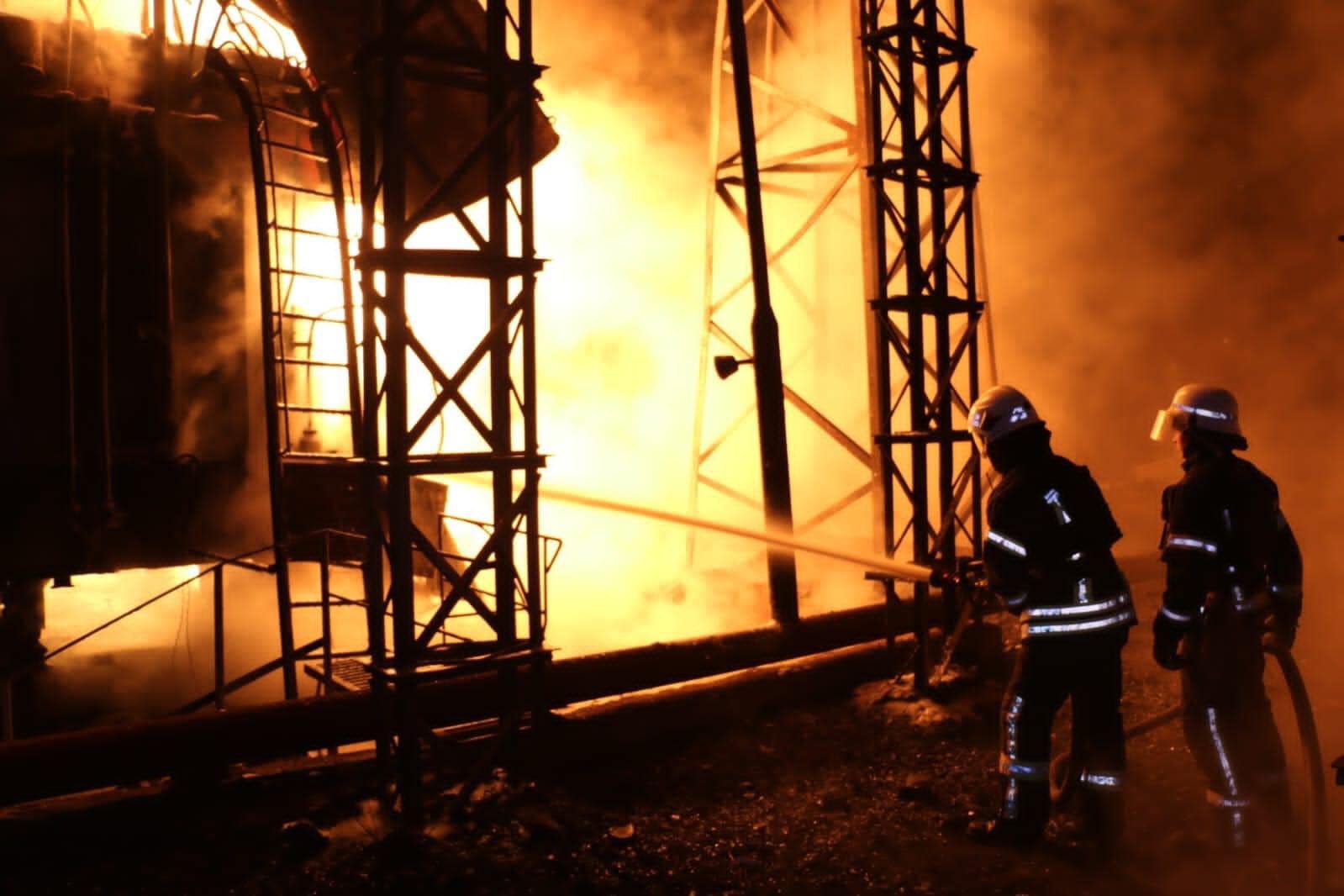
As is known, starting on January 9, Kyiv came under a series of very heavy attacks, and after the strike on January 13, the capital’s energy system was effectively knocked out. In particular, energy expert Oleksandr Kharchenko noted that following the January 13 strike, Kyiv lost its own generation capacity.
While efforts were underway to restore power to the capital, former Ukrenergo head Oleksii Brekht was killed at one of the substations.
This week, Desnianskyi district head Maksym Bakhmatov told LB.UA that with CHP Plant No. 6 out of service, Troieshchyna has been left with no alternative heat sources, because it had been supplied only by that plant, putting the district on the brink of collapse, with "cesspits" to be dug there soon.

According to Censor.NET sources, intensive efforts are underway to find a solution to restore heating in the district, and it may be possible to do so in the near term, but this will depend both on whether Russia does not destroy anything else and on whether power engineers have the skill to assemble at least something from what remains.
As is known, on Thursday, U.S. President Donald Trump said he had personally asked Putin "not to shell Kyiv and other cities for a week, and he agreed," according to a White House broadcast.
Earlier, various sources reported that Ukraine and Russia had reached a bilateral understanding not to strike energy facilities.
But even if one strongly believes in a ceasefire and some kind of peace deals, this in no way means that Ukraine’s energy system will be restored overnight. In fact, it will take years.
However, former Ukrenergo head Volodymyr Kudrytskyi says the situation is critical, but not quite as tragic.
According to him, from a system-wide perspective, the worst situation was in 2022, when for several hours the power system was in a complete blackout, nuclear power plants stopped, and electricity generation virtually came to a halt.
"Back then, Ukrenergo dispatchers rebuilt the system in 13 hours. But the main thing is that such situations have not been allowed since, and even with an extremely acute deficit, when demand would be 18 thousand gigawatts, while only 11 are available for generation, the system is still under control, albeit with very significant discomfort for consumers and businesses," he said during a discussion at "New Country."
He said that 15 to 17 power plants are currently operating within Ukraine’s energy system, providing 80-90% of the country’s total electricity output.
"Sorry, but it’s crystal clear that with the capacity to produce dozens of missiles a month and thousands of Shaheds, and with so few targets, if they concentrate all their strikes, the Russians can damage all of these plants. They do not attack nuclear power plants directly; they attack Ukrenergo substations that enable power output from those nuclear plants. In this way, they expand the task from three nuclear power plants to 12–15 substations. But still, it comes down to 20–25 facilities that they systematically attack. That’s why we have such a deficit," Kudrytskyi explained.
With a 7-gigawatt shortfall out of the required 18, outages for household customers could last up to 15 hours until the end of winter, Kudrytskyi predicted.
According to power engineers Censor.NET spoke with in previous weeks, the cold spell has significantly slowed the pace of restoration wherever it is possible. What used to take a day now takes two or three.
"Until the cold eases, we will face the same situation as now. The enemy will use the cold to attack the energy system. For them, this is the golden time for such attacks, because consumption is at its peak. The impact of these attacks is enormous. And the biggest impact is on household customers. And he (Putin - ed.) will try to take advantage of this time," Kudrytskyi said during a "New Country" panel discussion.
Next, the former Ukrenergo head predicted that in March, evening demand should drop from 18 GW to 15 or 13 GW.
As is known, in spring the balance of the energy system will change, because solar power plants will start operating and hydropower plants will generate more.
"Solar power plants will make it possible to ease the load on our hydropower generation during daytime hours, allowing it to store up water during the day so that by evening it can release that water and cover higher consumption. In other words, roughly speaking, we will have at least a couple of additional groups of customers who will not be cut off," the former Ukrenergo head said.
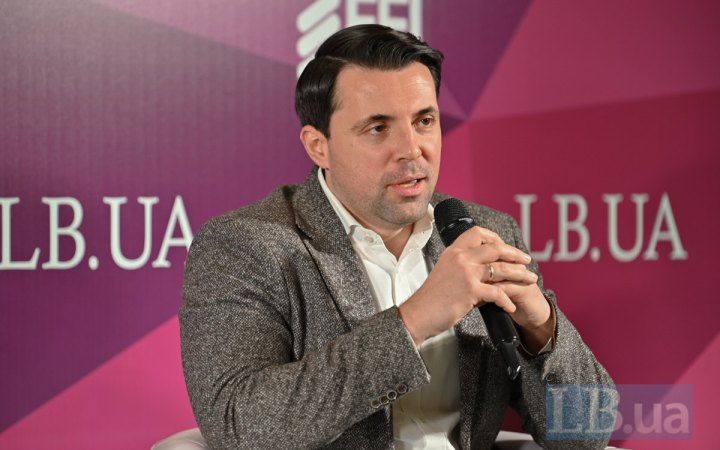
Photo: Zoriana Stelmakh, LB.UA
"If the Russians have the resources to maintain the same level of intensity as they do now, then most likely we will still be stuck with schedules even in warmer weather, but these schedules will not be like the ones we have now; they will be more or less moderate. If the Russians conclude that the effectiveness of these attacks is not commensurate with the resources they are spending on them and they spend up to a trillion rubles a year on the Shahed program alone, which is 3% of their budget, they may temporarily halt these strikes, because their effectiveness is lower than in winter," Kudrytskyi believes.
Why Kharkiv is not much better off than Kyiv, and the ballad of successful Zhytomyr
The shutdown of all Kyiv’s CHP plants triggered a major debate over who is to blame. And while in previous years it mostly centered on what Ukrenergo had or had not built in terms of protective shelters, the discussion has now, finally, moved on to the readiness of individual cities and decentralized generation.
As is known, on January 14, the day of his appointment, First Deputy Prime Minister and Energy Minister Denys Shmyhal said that Kyiv had prepared far worse for Russia’s massive strikes on energy facilities than Kharkiv.
He said this during an address to the Verkhovna Rada.
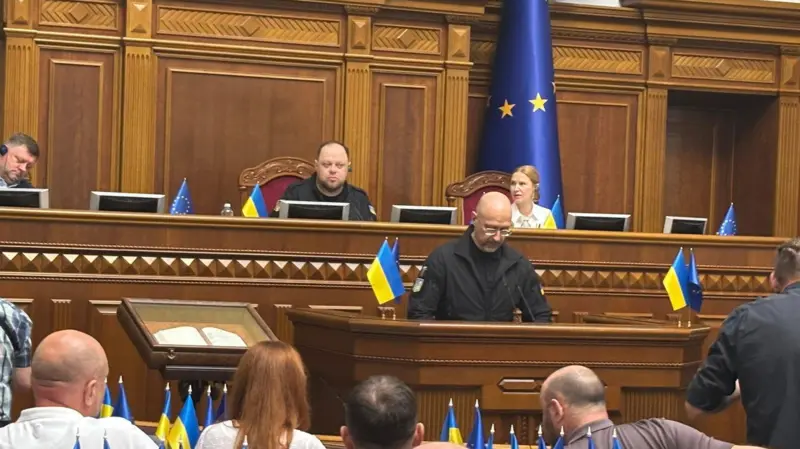
(Photo by Iryna Herashchenko)
"Kharkiv is prepared. The regional authorities and the city authorities are prepared. The city has mobile boiler houses and appropriate distributed generation," Shmyhal said on the second day after the massive strike.
He said Kyiv had been prepared for far worse.
"I will say this — it was not prepared at all. So now we will have to take crisis measures," Shmyhal assured.
These remarks sparked a debate that the capital’s authorities had indeed paid little attention to developing decentralized generation and had not even connected what they had received as aid.
And on January 20, Kyivvodokanal became the butt of jokes after reporting that it had only now ordered diesel generators, which would not arrive until spring.
On January 21, Kyiv Mayor Vitalii Klytschko said that only large CHP plants can meet the city’s needs, because Kyiv has Europe’s largest district heating system — 2,700 kilometers of heat networks serving more than 3.5 million residents.
"Building an alternative generation system for a city like this would take decades and tens of billions of dollars. In wartime, it’s unrealistic," Klytschko said.
In the same interview, he called it manipulation to claim that the capital had not prepared for attacks — he said 1,120 generators had been purchased for critical infrastructure, medical and social facilities, as well as 69 mobile boiler units.
Oleksandr Kharchenko also believes that decentralized generation will not solve Kyiv’s problem.
"Given the topology and planning of Kyiv’s power grid, the city needs at least three large CHP plants. That is a historical given; we won’t change it, and changing it would cost so much that it would be easier to build a new capital. So, we need three large CHP plants and many smaller facilities. They will vary — some at 500 MW, others at 10 MW," the expert said in an interview with LB.UA.
Amid comparisons between Kyiv and Kharkiv, as well as some posts about Zhytomyr’s great and phenomenal success, Kudrytskyi’s answer at "New Country" was particularly interesting:
"Look, I'll give you some figures, and you can draw your own conclusions. About Zhytomyr, Kyiv, Kharkiv, and all that. So, in sub-zero temperatures, when it’s -10 to -15, Kyiv consumes up to 2,000 MW. Decentralized generation - containerized gas piston power plants - delivers 2.3 to 2.5 MW. So, roughly speaking, Kyiv would need around 800 such containers to cover its peak demand.
"Recently, we discussed the news that eight are already being installed. And that’s very bad. Everyone says: Look, Kyiv has no decentralized generation, but Kharkiv does. Yes, Kharkiv consumes less, up to 700 MW at the peak, but even there, the share of decentralized generation will not be above a notional 10%.
And after all these talks, teleconferences, the Supreme Commander-in-Chief's Headquarters meeting, and all the big, powerful meetings about how Kyiv prepared badly by 2% and Kharkiv did great, sadly, Kharkiv was hit again, and 80% of the city was left without electricity.
Now the ballad about Zhytomyr. In this kind of frosty weather, Zhytomyr consumes 250–280 MW at peak demand. Recently, we heard that Zhytomyr has managed to install a whole 2 MW. I personally know of some private projects totaling 10 MW.
I have a question. Most of you here are not energy specialists, I’m naming figures like 280 and 10, 2,000, and 16, 700, and 50. All these cities, in terms of rolling out decentralized generation, have done between 2% and 10%. Let’s not get into, like, who the champion is, because, in my view, there are no champions there."
If, after reading this, you have a question about whether decentralized generation will save us, the answer is: not now. But it definitely needs to be developed.
However, in a conversation with Censor.NET, Kudrytskyi suggested that developing a fully-fledged decentralized generation system could take up to five years, and at best two to three years.
But it will have to be developed anyway, because it meets the demands of the time.
As Kovalenko noted, a major factor in Kyiv’s survival right now is that businesses — both small and large — have switched to alternative energy sources. According to a YASNO representative, by their own estimates, about 26% of Kyiv residents have charging stations at home. This also helps get through hard times. At the same time, Kovalenko said that when it comes to larger-scale projects that would allow buildings to function better, almost nothing has been implemented in the capital.
Tetiana Nikolaienko, Censor.NET


