



Case worth 4.7 billion: How Medvedchuk ally attempts to sue Poltava Mining and Processing Plant over non-existent debt
Inconsistent rulings by unreformed Ukrainian courts and their selective enforcement, including by employees of state institutions, create additional risks for business. A telling example is Poltava Mining and Processing Plant (MPP), which someone is trying to make pay 4.7 billion hryvnias in debt for a second time, a debt that was already repaid in 2015.
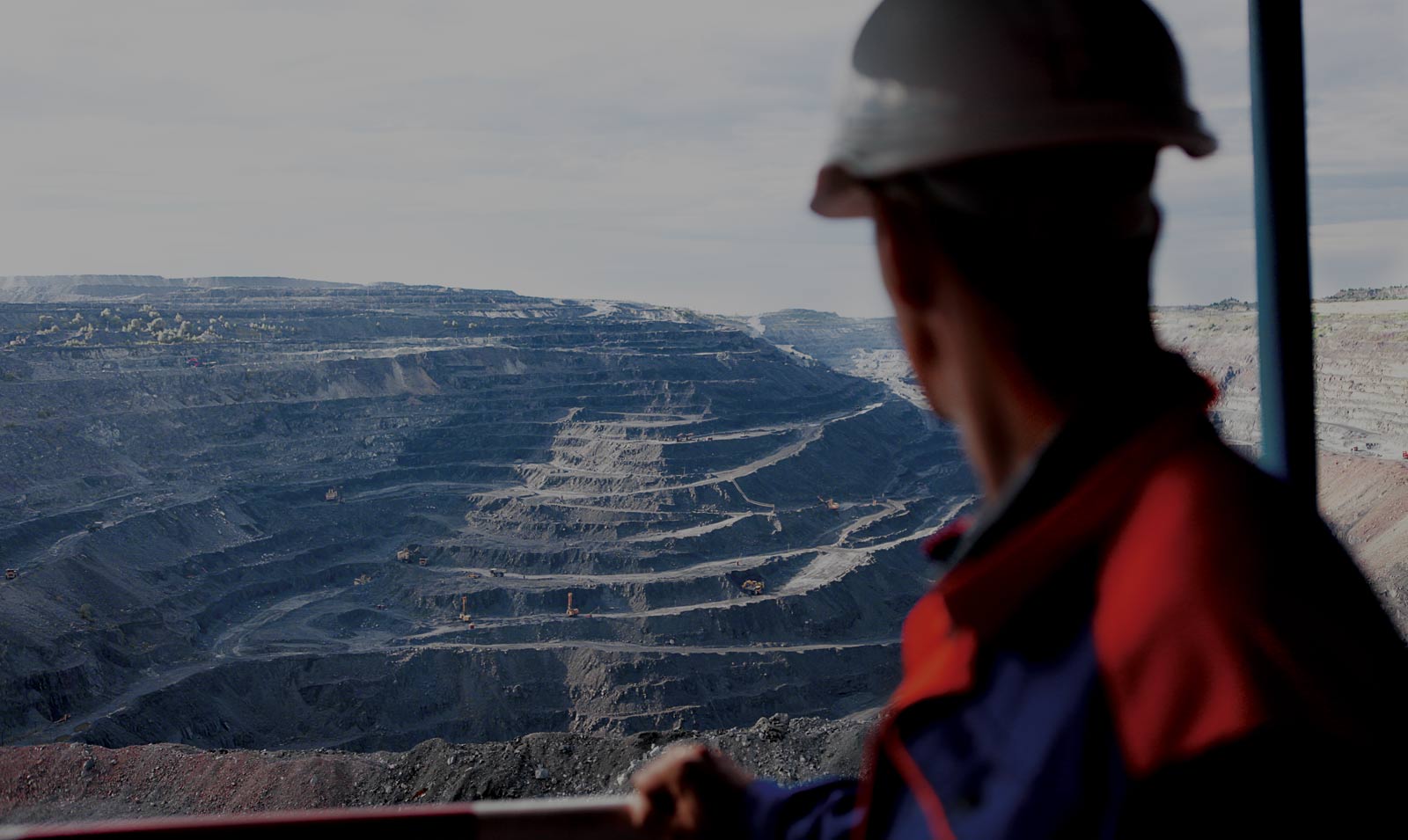
Not just the war: who is getting in the way of one of Poltava Oblast’s largest companies
Poltava Mining and Processing Plant is one of the largest and most modern enterprises in Ukraine. Shortly before the start of the full-scale war, the company was testing unmanned technologies to operate 220-ton haul trucks and was one of the region’s key taxpayers.
However, after the start of the full-scale invasion, the situation changed, and not only because of the war. First, a number of offshore companies linked to Kremlin-linked Russian oligarchs Oleksandr Babakov and Yevgeny Giner tried to use the courts to take control of 40.19% of Poltava MPP’s shares by invalidating a deal that was more than 20 years old.
According to data in the YouControl system, 100% of the shares in Private Joint Stock Company Poltava Mining and Processing Plant are owned by Ferrexpo AG. Shares in its "parent" company, Ferrexpo plc, are traded on the Main Market of the London Stock Exchange.
The largest shareholder in Ferrexpo remains businessman Kostiantyn Zhevago, although his stake in recent years has fallen to 49.3% of the shares. The rest is held by international investors, including global investment company BlackRock, pension funds, mutual funds, and others.
Later, the National Police of Ukraine opened a case against the company’s management over allegedly illegal mineral extraction, calculating losses at a staggering 157 billion hryvnias. In fact, it concerns waste generated during iron ore mining. The company managed to sort and sell some of it to builders instead of crushed stone, but investigators believe all of the waste should have been stored exclusively in dumps.
Ultimately, in February 2025, the National Security and Defence Council of Ukraine imposed sanctions against one of Poltava MPP`s shareholders, Kostiantyn Zhevago. No specific grounds were provided, and the NSDC sanctions decision itself was drafted with errors that had to be hurriedly corrected.
Still, despite the difficulties, the company continued operating until November 2025, when it had to suspend production due to the aftermath of massive Russian attacks on the energy sector. It was later able to resume operations, but in late January, the company halted operations for the second time. Whether it can restart again remains an open question, as another claimant has joined the queue for Poltava MPP’s assets.
Background: the banking crisis and six years of litigation
After the events of 2014, many major banks ran into trouble. With assets lost in occupied territories and the hryvnia’s exchange rate against the US dollar collapsing, many companies were unable to service their debts.
Finance and Credit Bank, which was also owned by Kostiantyn Zhevago, was no exception. However, he still had the profitable Poltava MPP, which became a guarantor for loans taken out by a number of other companies at the bank.

To improve the situation, in August 2015, the bank debited $126 million and 462.5 million hryvnias from the guarantor’s accounts and credited the funds toward repayment of the outstanding debt on those loans. At the end of the same month, then head of the National Bank of Ukraine, Valeriia Hontareva, acknowledged that, together with other steps, this was how Kostiantyn Zhevago was meeting his commitments to rehabilitate the financial institution.
However, the tight deadlines set by the central bank could not be met, and in September that year, the NBU declared Finance and Credit Bank insolvent, and in December, decided to liquidate it.
Poltava MPP then challenged the debiting of its funds from its bank accounts in court. The case dragged on for six years. The timeline of court rulings in the lawsuit is as follows:
- On October 31, 2016, the Commercial Court of Kyiv opened proceedings in the case;
- On October 25, 2017, the Commercial Court of Kyiv rejected Poltava MPP’s claim;
- On July 18, 2018, the Kyiv Commercial Court of Appeal overturned that ruling and issued a new one granting Poltava MPP’s claim;
- On December 11, 2018, the Supreme Court of Ukraine overturned the Kyiv appellate court’s decision and sent the case back for a new hearing;
- On June 19, 2019, the Northern Commercial Court of Appeal again ruled in favor of Poltava MPP, granting its claim;
- On October 31, 2019, the Supreme Court overturned the Northern Commercial Court of Appeal’s ruling and sent the case back for reconsideration;
- On November 23, 2021, the Northern Commercial Court of Appeal issued a new ruling rejecting Poltava MPP’s claims;
- On 1 June 2022, the Supreme Court issued a final ruling in the case, dismissing Poltava MPP’s cassation appeal and upholding the Northern Commercial Court of Appeal’s 2021 decision as well as the Commercial Court of Kyiv’s 2017 ruling.
Thus, the Supreme Court of Ukraine acknowledged that $126 million and 462.5 million hryvnias were debited from Poltava MPP’s accounts in 2015.
Moreover, representatives of the Deposit Guarantee Fund of Ukraine confirmed in court that as of December 17, 2015, when the decision to liquidate the bank was made, those funds were no longer in Poltava MPP’s accounts, as most of the amount had been used to repay the borrowers’ debts under the guarantee agreement.
How to sell a debt that does not exist
As it later emerged, due to the inconsistent actions of the liquidator of Finance and Credit Bank, the debt resurfaced, albeit only "on paper".
Without waiting for the Supreme Court of Ukraine’s decision in the previous case, the bank’s liquidator in July 2019 (while the appellate court ruling in favor of Poltava MPP was still in force) annulled the 2015 transactions that debited the guarantor’s funds and, as a result, reinstated the borrowers’ loan debt.
Such promptness might have deserved praise if the bank’s liquidator had been equally quick to reflect the consequences of the Supreme Court’s decision, which overturned the appellate ruling as early as October 2019.
However, for some reason, the bank’s liquidator ignored the Supreme Court of Ukraine’s decision. As a result, the bank’s books continued to carry the borrowers’ debt that had been repaid using the funds of Private Joint Stock Company Poltava MPP back in 2015.
What is more, a year after the Supreme Court’s ruling, in November 2020, the claims rights to that debt, as part of a pool of Finance and Credit Bank assets, were sold at a discount of around 99%. The buyer was Maxi Capital Group LLC, which paid about 85.6 million hryvnias for the assets, including claims rights on loans with a total face value of around 6 billion hryvnias. Under the agreement, the firm obtained the right to claim against the bank’s borrowers and, consequently, against Poltava MPP as their guarantor.
For several years, Maxi Capital Group LLC made no claims against Poltava MPP. However, in early 2023, it filed a lawsuit seeking to recover 4.7 billion hryvnias in debt plus interest from Poltava MPP, as a guarantor for loans taken out by a number of borrowers of Finance and Credit Bank. Crucially, it concerned the same debts that the Supreme Court of Ukraine had recognized as repaid back in 2015.
In September 2023, the Commercial Court of Poltava Oblast granted the claim, and in January 2024, the Eastern Commercial Court of Appeal upheld the ruling unchanged.
This time, representatives of the Deposit Guarantee Fund of Ukraine "threw up their hands" in court and argued that since the claims rights on the loans had already been sold to a new creditor, it was impossible to annul the changes made in July 2019 in line with the Supreme Court of Ukraine’s decision.
In addition, the appellate court effectively acknowledged that these debts and therefore Poltava MPP’s guarantee for them did not exist until July 2019, when they reappeared "on paper", i.e., on the bank’s balance sheet.
However, in June 2024, a panel of judges at the Cassation Commercial Court of the Supreme Court issued a different ruling in the case.
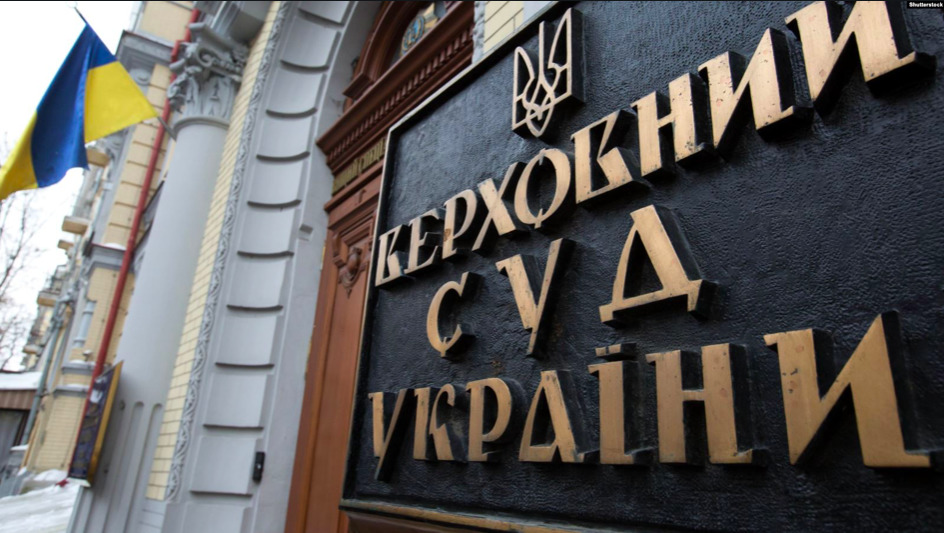
In particular, the judges held that the debiting of funds from Poltava MPP’s accounts in 2015 toward repayment of the debt under the loan agreements is confirmed by a final court ruling that has entered into legal force, is binding, and cannot be called into question.
Therefore, the courts were required to take this into account and could not issue different rulings due to actions taken by the liquidator of Finance and Credit Bank on the basis of an appellate court decision that was later overturned.
"In view of the above, the panel of judges concludes that the transaction by which the bank debited funds from the guarantor in 2015 is valid under Article 204 of the Civil Code, and therefore the obligations of Private Joint Stock Company Poltava MPP, as a guarantor under the loan agreements secured by a guarantee, were terminated in August 2015 as a result of the guarantor fulfilling its obligations under the guarantee agreements," the ruling says.
"Therefore, at the time of the sale in November 2020, Maxi Capital Group LLC did not have claims rights on Finance and Credit Bank loans amounting to 3.9 billion hryvnias, since that debt had already been repaid in 2015 by the guarantor — Private Joint Stock Company Poltava MPP," the Cassation Commercial Court of the Supreme Court said in its ruling.
The panel of judges also noted that the debt reappeared in the bank’s accounting records solely due to the bank’s "inconsistent actions in voluntarily complying with the appellate court ruling" in July 2019 and, at the same time, "failure to take any action" after that ruling was overturned.
However, given the contentious case law in other proceedings, the panel decided to refer the case to the United Chamber of the Cassation Commercial Court, which is to issue a final decision.
A lawyer, legal professionals and a Medvedchuk ally: who is trying to recover a "paper debt" from Poltava MPP
According to data in the YouControl system, the beneficial owners of Maxi Capital Group LLC are Serhii Hlukhenkyi, Serhii Hrachov, Vasyl Kotynkevych, and Leonid Kriuchkov. Each owns 25% of the company’s charter capital.
Serhii Hlukhenkyi is a lawyer from Berdychiv who, at various times, has been a founder or director of a number of little-known companies operating in different sectors. According to the court register, he is actively involved in cases typical of a general-practice lawyer, including debt recovery, unauthorized construction, and the establishment of guardianship.
Serhii Hrachov is the owner of Dnipro Capital, which until 2023 belonged to Vasyl Kotynkevych. According to information on its website, the firm buys distressed assets of banks in liquidation, handles legal disputes, and processes land plots. The company’s website states that "Serhii Hrachov was one of the founders of one of the largest financial and industrial groups in Ukraine, with the value of the enterprise amounting to several billion dollars."
Vasyl Kotynkevych is the founder of KNK Consulting Company, which is engaged in recovering distressed debt. Together with Serhii Hrachov, he sits on the supervisory board of the charity Chas Dii. According to its website, it appears to have ceased operations in March 2022, shortly after Russia’s full-scale invasion.
Leonid Kriuchkov is the best-known among the co-owners of Maxi Capital Group LLC. In 2019, he came close to becoming a member of parliament via the party list of the pro-Russian and now-banned Opposition Platform — For Life (OPFL) linked to Viktor Medvedchuk. That year, the party secured 37 seats from its list, while Kriuchkov was No. 40. In effect, had the faction not fallen apart after Russia’s full-scale invasion, he would likely have long since become eligible for a parliamentary mandate in place of colleagues who lost theirs.

In business circles, Leonid Kriuchkov is also known as the brother of former lawmaker Dmytro Kriuchkov, who was sentenced by the High Anti-Corruption Court of Ukraine to 15 years in prison for embezzling more than 1.5 billion hryvnias from the state-owned companies Cherkasyoblenergo and Zaporizhzhiaoblenergo in 2014–2015. He is currently in hiding abroad.
During the same period, Leonid Kriuchkov was also involved with state companies but avoided criminal cases. In 2014, he briefly headed the state company Ukrspetsexport, and in 2015, he served as deputy director of Ukrinmash, which is part of Ukrainian Defence Industry JSC (formerly the Ukroboronprom).
Since the 2000s, the Kriuchkov brothers have been accused of corporate raiding. However, in a 2019 interview with Business Censor, Leonid Kriuchkov denied this and said he does not keep in touch with his brother.
He said he made his first million in the early 2000s by recovering fuel debts from the Ministry of Defence of Ukraine. Later, together with his brother, they established control over contractors of Energoatom.
Later, Leonid Kriuchkov went into the construction business and served as an aide to Vadym Stolar, a Kyiv-based developer and former member of the Party of Regions. Law enforcement investigated a number of cases involving alleged legal violations in construction projects. For example, one firm linked to Kriuchkov built a business center on the site of a Kyivpastrans dispatch center without any permits, and later "legalized" the unauthorized construction with the help of a notary.
Leonid Kriuchkov later also moved into cargo transshipment at the port of Mykolaiv, and in 2017 promoted a project to build a nuclear fuel plant in Ukraine using technology from Russia’s state corporation Rosatom.


