



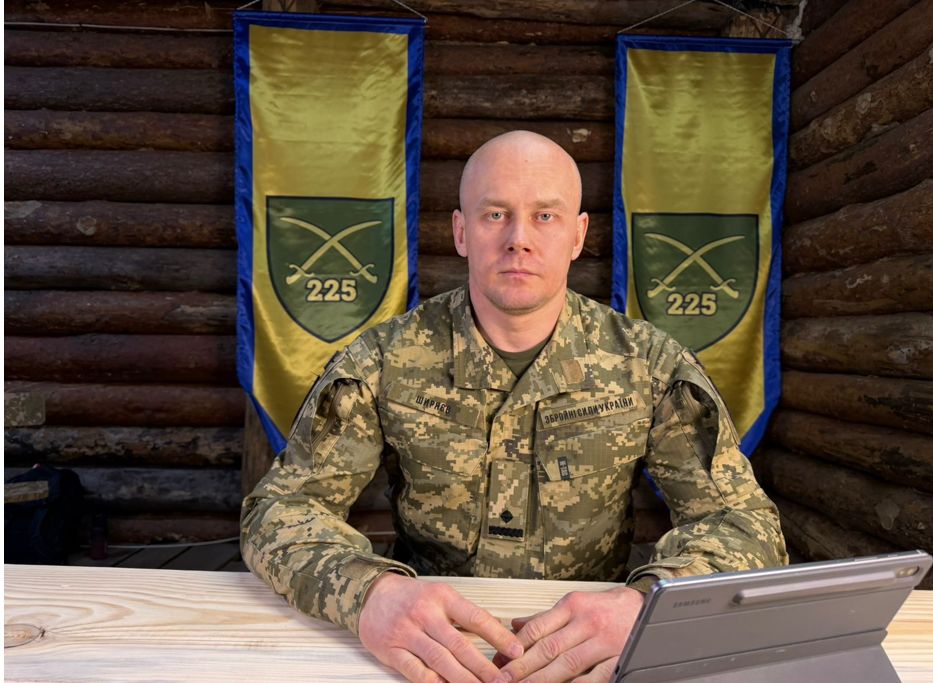
Commander of the 225th Separate Assault Regiment Oleg Shyriaiev: There are no bad soldiers, only bad commanders who cannot teach
In a conversation between Censor.NET and the commander of the 225th Separate Assault Regiment, Oleg Shyriaiev, the discussion initially focused on his unit’s current operations in the Zaporizhzhia direction. Quite quickly, the conversation turned to harsh, sometimes brutal topics: the psychological state of the busified, who are brought to the assault unit; alcoholism and drug addiction among soldiers, and what to do with them in war.
Perhaps it is worth warning right away: some of the opinions in this interview will not appeal to idealistic individualists. Assault units require rigorous discipline and firm leadership, and the commander of the 225th Separate Assault Regiment is known for uncompromising discipline. "War is a team sport," he says. "That's why we work as a team here."
We touched on another topic separately: those who were conditionally released early from prison during this war. Shyriaev considers former prisoners to be the best soldiers, and he argues his point in detail. Here is just a short quote that demonstrates his faith in these people: "The Shkval unit will carry out any combat mission. And it will do so with minimal losses."
These are important words, considering that the 225th Separate Assault Regiment is traditionally among the units that the command uses to rectify the dire situation in one direction or another of the fighting.
This interview also discusses Ukraine's reserves in this war and the future fundamental confrontation between Russia and Europe. It also discusses why the enemy cannot be given Donbas and why the Kursk region and its people are Ukraine.
Since the start of the full-scale war, Oleg Shyriaiev has come a long way with his unit, rising from rifleman to regiment commander. Although not in chronological order, this conversation is an interim summary of the path taken by the 225th Separate Assault Regiment.
Your regiment is currently focused on the Zaporizhzhia direction, as this is currently the main direction of the enemy's attack. Can you give a brief description of the terrain, the nature of the fighting, and the enemy contingent?
- There are no forests there, as there are, for example, in the Sumy region; it is purely steppe and plantations. It is a fairly large agglomeration, with many settlements around Zaporizhzhia — small in size, but numerous. Plus, the weather is unstable and can change quickly due to the variable wind direction. Fighting in the steppe is always difficult because it is open terrain.
And you are right, this is now the main direction of the enemy's attack. Why? Because before we arrived, the enemy had some success here. The infantry, having tasted blood, will stop at nothing. They were advancing quite confidently. Due to the fact that they had been successful in battle for a certain period of time, they believed in themselves. When we appeared near Huliaipole, I think the enemy's mood changed. Now they can no longer advance. If they do manage to achieve some success, it is thanks to those units that, let's say, let us down. I am referring to those Territorial Defense Forces units that left their positions without permission and thus, to put it mildly, betrayed us.
- And is it the job of the assault units to correct these mistakes?
- In fact, according to our military doctrine, the purpose of the assault units is to advance and correct the situation in difficult areas. Something like a fire brigade. In principle, that's how it is.
- Of all the major cities in Ukraine, Zaporizhzhia is currently the most shelled. My friend, who lives on the edge of the city closest to the fighting, says that bullets are already flying in the neighboring village. However, this may be his subjective impression. Another thing is your perspective. Hence, the question: Do you think the situation could worsen in the near future?
- I don't think the situation can worsen because of our presence and the units that have entered the area. But it's not a given that the 225th unit will come and save everyone. We'll live and see. We will do everything within our area of responsibility, and the results will be evident. Your friend, if he joins the army, can be more useful than just being a "couch expert". Because all couch experts have no practical experience and do not understand what is really going on. I'm not sure that bullets are flying around there, as he says. If a person had served in the army for a certain period of time, they would already understand where and what could happen. It all depends on where he lives, the settlement. After all, information about where the line of combat is is quite public. The enemy, taking advantage of bad weather conditions (i.e., when we are not flying), is indeed trying to advance and infiltrate deep into our defenses to disrupt our logistics, set up ambushes, and so on.
Have you managed to develop an antidote to this enemy tactic, which has been successful in various areas?
- We are working on it. There is a certain understanding of what needs to be done now. We are also working at a new level. You see, the growth of the 225th unit is an evolutionary path. At the beginning of the war, I was a simple soldier in a trench. Then, a platoon, a company, a battalion, a regiment, everything evolved. My team grew with me in terms of quantity and quality. And it continues to grow thanks to those who join us. Now it's not just a regiment; it's a large unit that can hardly be called a regiment. After all, doctrinally, a regiment has a certain size...
- ...so your unit is closer to a brigade?
- It's bigger than a brigade. But it works. I can't say that we are some kind of unique case; we just know how to get all our fighters ready for work.
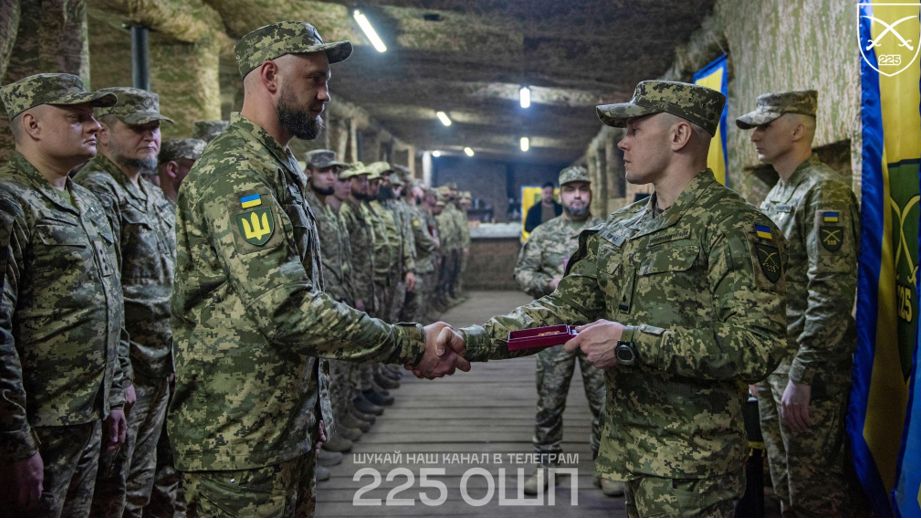
- I've heard a lot about your excellent training. The 225th knows how to train people better than others. Tell us how you do it.
- I never evaluate myself, saying, "I'm the best." I understand what a soldier needs to know and understand in modern warfare. And we implement these things during training. We are more confident in these people because we trained them according to our experience and the experience that soldiers now need on the battlefield. There is nothing unique about it. Of course, there is control. For example, many readers do not understand why we take away soldiers' cell phones. They do not understand and constantly make up stories about it. Gentlemen, understand one thing: this is a real war...
- Well, then, answer with your own story why it is important to take away soldiers' phones.
- We remember all those strikes on training grounds, on formations, and so on. Because a certain number of phones are easily detected by the enemy.
- As they strike us, so we strike them...
- Yes. I have never had such a strike - and I would not want it to happen. That is why this practice exists. But according to the Commander-in-Chief's order, the use of mobile phones and messengers is prohibited in the army. But we have to use them when necessary. Of course, we are talking about the commanding staff of the unit, from the company and platoon commander, and above. Soldiers need to focus their attention on training.
Of course, there are certain exceptions: sick parents, a wife giving birth. In this case, a solution can be found.
- Somewhere in the comments under the latest "online legal consultation on military issues," I found a question dated March 1 of last year. The person writes: "Good afternoon. Does anyone know anything about such a unit (225th)? Judging by the reviews, almost everyone who ends up there is no longer in contact. It's impossible to get any information about our relatives; you don't know the battalion, the comrades, or the location — whether they are undergoing training or have already been sent to Kursk. What should relatives do in such a situation to get information and draw attention to this unit?"
In general, I am cautious about such questions because I understand that the enemy is involved in some of them...
- Of course.
- Nevertheless, please explain to such people why the 225th unit, and assault units in general, are so isolated from information? And has the situation changed since March last year?
- Our patronage service, both full-time and part-time, plus the Civil-Military Cooperation Service, is responsible for contacting relatives. All contact details are available on the website and on social media - please contact them, and they will tell you everything.
- So that the boys their relatives are worried about are alive.
- Yes. I understand the wives, parents, and children who are worried. I also lost friends, brothers-in-arms, and relatives in this war. Concern is understandable; it is right. But, first of all, there is a war going on. Secondly, interpreting assault units as "meat units"... Yes, it's a sensitive topic, but Russian propagandists are exploiting it.
- Well, people have always been prone to stereotypes.
- People are looking for some understanding of what assault units are, hence these stereotypes. Probably, it's easier for them to understand at their level. In reality, these are complex units with a fairly serious combat organizational core. The people who serve there are experienced. All these firefighting teams would not be necessary if there were one simple thing: the responsibility of commanders in the areas where we go to extinguish fires. Because if some brigades have 2-3 broadcast for the entire brigade...
- Is that not enough?
- Not only is it not enough; in modern warfare, it is not even enough at the battalion level.
- Please explain what a broadcast is in this context.
- Aerial reconnaissance. That is, one continuous broadcast (one carousel, as we say) is two continuous streams to a particular location. If, for example, a brigade of three battalions holds 15 kilometers of the front line, please tell me, how can these broadcasts be enough for these 15 kilometers of the front line? What if it's green? What if it's spring, summer, or fall?
- With the current intensity of combat operations, it's just a nightmare.
- And such things have happened. Like, for example, with the Territorial Defense Forces brigades in the Zaporizhzhia direction, the 108th and 102nd. They were stationed in that direction for three years. They could have focused solely on their training. There were rotations at the positions. I didn't have rotations the whole time because we got started and just kept working — no rest, no rotations. When we arrived and started working in the area, I was surprised that they didn't use this time to their advantage. If a brigade commander or battalion commander has no drive, no normal communication with the unit, then, excuse me, he should be held responsible and sent to prison.
So we actually had to additionally train and prepare the fighters of these units, conduct separate coordination, in particular, with the 108th Brigade of the Territorial Defense Forces, so that we could count on them in battle.
- You mentioned how often people have a superficial understanding of what assault troops do. I want to approach the issue from a different angle. Why do the units that are holding the defense often dislike the assault troops? Is it because, as you like to say, you are stirring the reeds?
- Where did you hear that expression?
- I prepare for my interviews.
- "Stirring the reeds" is our slang for "we're going to work." It means concentrating our forces and resources and working in a specific direction that we have chosen.
- I see. Or rather, I don't see. It's one of those cases where it's harder to explain than to feel.
- It can't be translated.
- Let me rephrase that. If you hear from the military about dissatisfaction with the assault troops, at various levels — from the lowest to the highest — what do you say to such people? Or do they simply not tell you such things?
- (With a half-smile) They don't tell me such things.
- Because you could get hurt?
- Well, yes... They don't tell us that. If someone is dissatisfied, that's their problem.
- There is definitely a problem that is both yours and ours — it's the unauthorized absence (AWOL equivalent). While preparing for the interview, I thought about what questions to ask you about absence. And I decided to just ask you to tell me what you think about this phenomenon. In a casual manner.
To put it mildly, I have a negative attitude towards deserters. But there are cases when a person has a clear explanation for their actions and can be understood. This is also a question of responsibility; we should not decriminalize it. There would be fewer deserters if the leadership, which is unable to organize processes, were held responsible. Soldiers do not administer, make calculations, or plan. All of this is done by officers in accordance with the staff.
Therefore, I leave the question of responsibility at all levels open. For example, thoughts like "I'll go to the AWOL, and nothing will happen to me" are not good. We will not win the war 100% that way. I think you will agree with me.
I know that you also have the approach to the AWOL that the burden of such a person's decision falls on the shoulders of those who remain.
- That's right. He also abandons his comrades. It's a common betrayal. It's quite unfortunate that society continues to be polarized by elements of hybrid warfare. Plus, lawyers who advertise write that they will help. You know, it's quite difficult to assess this without offending anyone... I have a negative attitude towards this and towards those commanders for whom this is a common phenomenon. Because my unit pays a certain price for this stabilization, for these firefighting actions. To put it mildly, it is rude to treat the performance of one's official duties and the organization of one's troops in this way — in this way, they simply expose my people and me to attacks and threats. We have enough to do without being a firefighting team. We are people too, but right now, all the successful assault units that are saving the day can be counted on the fingers of one hand.
- Namely?
There are not many who are constantly traveling along the front line. These are the 425th Separate Assault Regiment "Skala," the 475th Separate Assault Regiment, and the 1st Assault Regiment "Wolves of Da Vinci." These are the units that come and rectify the situation. We should also add the airborne assault troops, all the serious combat airborne assault brigades. Namely, the 95th, 92nd, 82nd, 80th, and 25th. All these guys constantly come and fix the situation. If I forgot to mention someone, it doesn't mean they don't exist...
And so some run away, and they get away with it. On the contrary, their commanders get positions in the corps, that is, they get promoted. This is illogical. And this happens systematically. This illogicality now has the characteristics of a certain system, which is, of course, wrong. People must be held responsible. Or they should be demoted and held responsible on the battlefield.
- Let's move on. I've heard that Oleg Shyriaiev isn't afraid to take on people who drink or are addicted to drugs, but who have a certain amount of willpower and a desire to change.
- (With a half-smile) The commander has the desire and willpower. And before meeting the commander, they had neither willpower nor desire. No one takes them, but I do. I have a fairly high recruitment rate. Why? Because any drug or alcohol addict has tried to quit a thousand times. This is the thousand and first time, but now without access to drugs or alcohol. And they become normal people after a certain period of recovery. You provide them with medical assistance — you detoxify them, wean them off, bring them to their senses. And the person gets back on track.
- Effective rehab.
Yes. Firstly, there is no access to the object of addiction, and secondly, we exercise control. Plus, there are no cell phones. There you have it.
We even had some who tried to order something for themselves, some cognac in a parcel, drugs... various things... Listen, I take everyone because I believe that there are no bad soldiers. I believe that there are bad commanders who cannot train them. There is a simple military saying: if you don't know how, we'll teach you; if you don't want to, we'll make you. That's what it all comes down to. It's a team. War is a team sport. That's why we work as a team here.
- You were among the first to enter the Kursk direction. If, in 20 years, you were woken up in the middle of the night and asked what you remember most about the Kursk period, what would your answer be?
- History does not tolerate the conditional mood... It was a good war; those were happy times. But everything passes, everything changes. Now I can't turn back time and refuse it. I believe that the goal of the Kursk operation was right. The Kursk operation really proved itself quite seriously. If it weren't for it, we would have had problems in Zaporizhzhia earlier. Because then they were going to send the combat-ready units that we had crushed at Kursk there.
- When you hear or read that we went to Kursk for nothing, because we had to leave there later, and we can't exchange our land for Kursk...
- Who writes this? Some b*tch who never served in the army?
- ...plus our guys died for nothing. When you hear something like that, what do you say?
- I don't say anything at all — I just ask the person one question, always the same one: Are you currently serving in the army? In 99% of cases, I hear the answer: does it matter? But it matters a lot — whether you serve in the army or not. There is a war going on; if you are a man, you have to do your duty and defend your country. No one else will do it for us. "Couch experts" probably understand this better – so let them form units, go and fight. If they publish a collective appeal on the president's website that we, the "couch experts", have decided to unite and form a unit the size of a battalion or regiment, then unite, go, and show us how to fight. I agree to look at it from a different angle.
- When you were among residents of the border areas of Kursk region, did you feel any sympathy toward Ukrainian soldiers?
- It's hard to say. One thing I clearly realized is that they are Ukrainians.
- Explain.
- Ukrainians live there and communicate in Ukrainian. They communicate in Ukrainian in everyday life. In cities like Sudzha or Tyotkino, Russian is more common, but in villages, it's Ukrainian. This is Ukraine; ethnically, these are Ukrainians. And I wanted us to annex this territory. It is legally ours. And everything else where Ukrainians live is also ours. Why can't we protect Ukrainians in Kuban? Are there Ukrainians there? Yes, there are. There are also many Ukrainians in the Rostov region. Rostov, Kuban, Kursk – these are territories of Ukraine. If you think about it, then probably the Belgorod region has more to do with us than with Russia. The truth is the truth: the Muscovites themselves brought up this topic – now reap what you sow. Now they are talking about how they are winning, and we have no trump cards to play at the negotiating table. Mark my words: it is still unknown how this war will end for the Muscovites. It is unknown. Hitler also did not know how it would all end...
- I wanted to ask, what percentage of your regiment belongs to ex-convicts who voluntarily volunteered to go to war?
- Ex-convicts. This is a temporary restriction. It's not a lifelong social status... There were times when 70% of our personnel were parolees. We were still a battalion then. Our combat personnel consisted of parolees. They are the best soldiers. They are the most adaptable to life. They are independent and know how to make decisions. They are thoughtful. I have a very good attitude towards them as soldiers. I have a fairly normal relationship with them. I think it's normal to have such units and give people the opportunity to prove themselves... But the legislative framework needs to be tweaked a little. I would like them to have the opportunity to repay all their debts to society after a year of service in the Shkval unit (i.e., a special assault battalion or special assault company). So that they are no longer conditionally released early, but released. And they could be transferred to regular units. And they could get jobs. I would give them that opportunity.
- In your experience, which habits and worldview characteristics of these people at war should be eliminated, and which, on the contrary, are useful and very helpful?
- It's hard to comment on that. It depends... They all — the mobilized, the early released, the ex-cons, as you say — have one problem: the war is so dynamic right now that they are all quite exhausted. There was a study on this topic. I don't remember the American company that conducted it, but I read the study. So, during the first month that a person spends in the field, they have a certain adrenaline rush and a fairly high level of testosterone. This affects their mood, their... simple instinct — they need to feel like a hunter. They shouldn't feel like prey. And for about 40 days, a person can keep going, but then the process of decline begins. If a person doesn't rest and recover, their testosterone levels decline. They become phlegmatic, amoeba-like, and internal fears develop quite strongly. A person turns from a brave soldier... not into a hunter, but into prey. You see, it's the place, the time, the circumstances... It's quite difficult to change something drastically. But I've studied this issue, so I gave you this example.
- Is it possible to stop this process somehow?
- We must give people time to rest. Then a person can rethink their experience and think about what they would have done differently. When our people have the opportunity to rest, they always rethink their experience. Then they are ready to go back into battle and carry out their tasks. Maybe a person becomes some kind of pro, a scout, or continues to serve in the assault troops. But it all boils down to one thing: they all start pretty well, but fatigue causes a reverse process. These are biological things. We just have to take that into account.
- What opportunities do you give them for at least a minimal physical and mental reset?
- Ideally, people who perform tasks should have time off, a cycle of recharging. That's ideally. But it's good if we can at least take them to our base and let them recharge there. That means sweets, delicious food, sleep, and so on.
- Are ex-cons really better at learning and more flexible in making decisions on the battlefield?
- They learn better, yes. In general, better than others. But I wouldn't want the reader to get the impression that mobilized soldiers are stupid, and busified soldiers even more so. It works best when a person is turned towards the unit. So, a person is busified, brought to the unit, imagine how they feel. Put yourself in their shoes.
- Fear, humiliation.
- Yes. We have to explain to them that they have a duty to their homeland. And teach them to work in a team. Before, people could live within the circle of one family, but they didn't live in a team. Most of them didn't even serve in the army. We understand that. It's good enough if a person has that experience. We live in a closed society where everyone is immersed in gadgets and personal hobbies. And we see this because we have a negative birth rate. This means that people cannot even find wives for themselves. People are constantly in an artificial environment. We communicate with each other less and less because there are things like delivery; everything can be brought to your home. That is why people do not go out, hiding from the world for years...
I always say that those who are now hiding at home from the recruitment center are the best scouts. They are sedentary and observe the world around them... As a rule, they are very knowledgeable about strategy and tactics. And they know the news better than we do. Sometimes I don't understand what's going on in the world around me. But they are definitely in the know...
Joking aside, we have reserves; we just haven't gotten to them yet. I am sure there are specialists we need.
- What combat tasks do you know for sure that Shkval can perform...
- ...I'll answer right away: Shkval can perform any combat task. And at the same time, it has minimal losses.
- Now, a little about your worldview. Do you really believe in, and I quote, the prospect of demilitarizing Russia under the control of international partners, as was the case with Nazi Germany?
- Yes. (With a smile)
- Okay, let me rephrase that. Explain to me how it is possible to demilitarize a country, a huge shack with hundreds of millions of people, irreparably infected with the imperial bacillus?
- I'm not sure that the Yakuts, Kalmyks, and Buryats are infected with the imperial bacillus. I think they dream of independence and understand that they have mineral resources; they have forests and access to the ocean. They could be quite serious players in the oil market without Russia. Because everything that Russia has is not mined in the Moscow, Ryazan, Vladimir, and Leningrad regions.
- I'm more concerned that no one in the West will want to denazify and demilitarize them. And we will have to deal with rebuilding the country.
- We can say whatever we want, but we don't know how this war will end. Maybe it will last another month, or maybe 10 years. That's also possible. Because we have been at war for over 10 years. Who could have thought that we would endure what we have endured over these four years? Four full years of real, full-scale war. Now the commander of the Bundeswehr has stated that he is preparing Germany for an attack by Russia.
- Well, he was probably appointed for this task.
- First of all, this is a warning sign. Second, Germans will always be Germans. Even modern ones. And the Poles and Balts can also seriously spoil the blood.
- Just like the Scandinavians.
- Yes.
- In general, the further north you go in Europe, the more systematically hostile the peoples become to Putin's regime. This is not Greece and Turkey.
- Because the Nordic peoples, the peoples of the North, have always survived collectively. War is a team sport, as I told you at the beginning of our conversation. Therefore, I am confident that all Europeans will sooner or later join this process. There can be many reasons and preconditions for this. A couple more missile strikes, suicide bombers — someone will get tired of it, and a fundamental confrontation between Russia and Europe will begin. Believe me, Europeans have always been pioneers, inventors, and so on. This is the European world.
- Returning to the Russian theme. When Prigozhin, against whom you fought so hard, marched on Moscow and met no resistance from Putin's troops, did you keep your fingers crossed for him? Are they both bad, or is Wagner even worse?
- Of course, both sides are bad in this case. This proves that not everything is so great with the Russians. Not everything is so great with them. They are all on the same echelon. Why did we break through Kursk? Why did we break through Belgorod? Because they are always on the same echelon. Not everything is so great with them, even in terms of people. I have witnessed many operations that we have carried out. Where we found weak spots or wore down the enemy and successfully caught them off guard, everything always fell apart, again, because they are all on the same echelon. And their personnel situation is quite sad. I have witnessed many such situations: for example, a Russian brigade or regiment would come in to carry out tasks. And if they were wiped out, then everyone else was wiped out too — the cooks and the repairmen. This is what happened to the 30th motorized rifle regiment, whose commander we wiped out in the Sumy region. We killed enemy commanders several times. We went deep into enemy territory, surrounded them, took over their logistics, and carried out an operation to get on their nerves. We are masters at this, at nerve-getting... We ruined their appetites there and killed quite a few of them. They were already hopeless there. They even pulled people out of hospitals who were walking on crutches and with broken arms. This is the same Russian tactic of "meat-throwing" at the enemy.
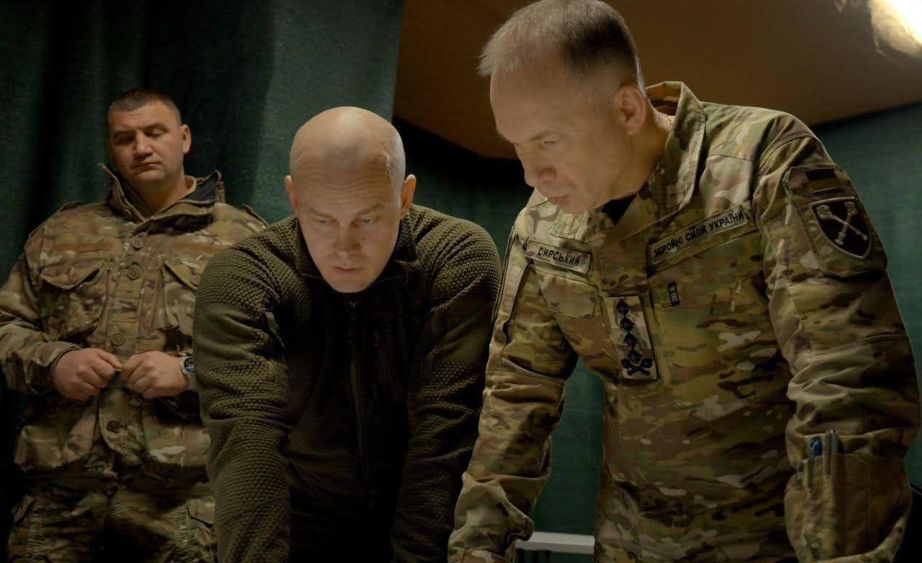
But we must not underestimate them. Our problem is not Russian marshals, army commanders, or even division commanders. We have to destroy battalion commanders and company commanders. This is the component that knows how to fight, both on our side and on theirs. In some cases, our battalion commanders know more about war than brigade commanders. There are such people. We must pay attention to them. What good does it do me that an army commander has been killed? You can just applaud that. But when we kill a battalion commander or a company commander during an offensive, that breaks the chain of command. Because in a historical context and in war, personality is paramount. People follow personalities. If there is success, there is personality.
- What have you been reading lately?
- Ukrainian Hetmans and Rommel's Infantry on the Offensive. Classics.
- Will the Germans remain Germans?
- The Germans will continue to be Germans. Americans will continue to be Americans. Trump will never be Russia's partner; he will never defend their interests. In my opinion, Trump will lead them into a trap and simply finish them off. That's it. That's how I imagine it.
- If there is enough time to lead them into a trap. And does he want to lead them into a trap? Just open today's news feed: the Trump administration has made it clear to Ukraine that US security guarantees will depend on Kyiv's agreement to a deal that would require it to cede Donbas to Russia.
- And then they backed down, right? Has the mood changed?
- I'm talking about something else. Maybe they will back down. These are all Trump's business tactics: cold-hot-cold again...
Never mind. Donbas is not foreign to you; you fought there a lot. Bakhmut, Avdiivka, Chasiv Yar. How will you and your brothers-in-arms perceive such an agreement?
- I am sure that my brothers-in-arms will carry out the order, because I cannot stand traitors and saboteurs. They will carry out the order. But I personally believe that we cannot betray people who identify themselves with Ukraine and want to be part of Ukraine, as Kursk, Belgorod, Kuban, and Crimea want... What else is there? And the Sea of Okhotsk, and Magadan. There are many Ukrainians there...
Yevhen Kuzmenko, Censor.NET


