



Block impossible to permit: will Telegram be blocked in Ukraine?
Here we go again: the idea of blocking Telegram is once again being actively debated in Ukraine at the national level. Senior government officials, politicians, experts and social media users are all writing and talking about it.
The latest catalyst for this public flare-up was a high-profile terrorist attack in Lviv. Citing Ministry of Internal Affairs (MIA) reports, President Zelenskyy stated that the perpetrators of the attack had been recruited via Telegram. While the President did not elaborate further on the matter, he noted that according to intelligence data, Russia intends to continue such strikes against Ukrainians. "People need more protection," Volodymyr Zelenskyy remarked.
Meanwhile, Deputy Head of the Office of the President, Iryna Vereshchuk, devoted a separate post to Telegram. In it, the author calls for "thinking about the functioning of Telegram and other anonymous platforms in our information space during the war," since "the enemy systematically uses Telegram to recruit terrorists, coordinate their activities and carry out terrorist attacks."
Interestingly, the top official shared the same post on her own Telegram channel. Which leaves one wondering: was that a kind of half-confession, or simply a failure of basic logic?
Still, perhaps Iryna Andriivna is simply trying to stay in step with the current news agenda. She also knows full well that her current boss, Kyrylo Budanov, has traditionally taken a dim view of Telegram’s ubiquity in Ukraine — the brainchild of Russian businessman Pavel Durov.
"DOWN WITH TELEGRAM": CONTENTS OF PREVIOUS EPISODES
One of the earlier spikes in the campaign to ban Telegram was tied precisely to a statement by Kyrylo Budanov. On 19 September 2024, the issue took up the lion’s share of a meeting of the National Security and Defence Council.
We quote the news from the official website of the NSDC: "The key topic of the meeting was the discussion of threats to national security associated with the use of the Telegram messenger, especially during Russia’s full-scale war against Ukraine."
The head of the Main Intelligence Directorate of the Ministry of Defence of Ukraine, Kyrylo Budanov, presented substantiated evidence that Russian intelligence services have access to Telegram users’ private correspondence, including deleted messages, as well as their personal data.
"I have always advocated and continue to advocate for freedom of speech, but the Telegram issue is not a matter of freedom of speech, it is a matter of national security," he stressed.
Representatives of the Security Service of Ukraine (SBU) and the General Staff of Ukraine’s Armed Forces noted that Telegram is actively used by the enemy for cyberattacks, the distribution of phishing content and malicious software, establishing users’ geolocation, adjusting missile strikes, and other hostile activities.
"In order to minimise these threats, a decision was taken to prohibit the installation and use of Telegram on official devices of employees of state authorities, military personnel, security and defence sector staff, as well as enterprises operating critical infrastructure. The only exception will apply to those for whom the use of this messenger is part of their official duties," the press service of the National Security and Defence Council stated in September 2024.
The NSDC decision fell on deaf ears in some quarters, while elsewhere it was taken seriously. In October, the Verkhovna Rada restricted the use of Telegram for its staff. In November of that same year, the media wrote extensively about some Ukrainian universities banning employees from using Telegram, following restrictions already imposed on civil servants, military personnel, and at critical infrastructure facilities. Then, in the summer of 2025, Verkhovna Rada Speaker Ruslan Stefanchuk spoke about the prospect of banning Telegram in Ukraine at the legislative level.
"That means such a possibility exists. That means talks need to be held. And if decisions in the national interest are needed, the Ukrainian parliament will pass them. But let me repeat: not for PR, not so that someone can collect likes, but so that Ukraine gains greater information security," Stefanchuk said
The next surge of calls to ban Telegram came in September 2025, just days after the murder of Andrii Parubii.
"Law enforcement agencies have already proved that the murder was organised through the Telegram network. And today, a network of terrorist activity against Ukraine is being built through Telegram," Petro Poroshenko said in the Verkhovna Rada. "It is our matter of honour, dear friends, brothers and sisters-in-arms, to ban Telegram in Ukraine. Not someday, but right now."
CAN TELEGRAM BE INFLUENCED? "PRESSURE CAN BE APPLIED AT THE REGIONAL LEVEL, THROUGH ECONOMIC MEANS AND OTHERWISE."
To discuss whether a full blocking of Telegram in Ukraine is possible, or whether certain ways of putting pressure on it might be used instead, we spoke with cybersecurity expert Kostiantyn Korsun, who has been writing about Telegram and its activities for years.
Is it technically possible to completely block Telegram in Ukraine?" Mr. Korsun asks the Censor.NET correspondent. "Completely — no. Can its operation be disrupted so that it runs more slowly and irritates users? Yes, it can. But that requires more than situational statements by some politician, so that everyone rushes to do something, does something, rushes back, and then everything goes on as before. No, this requires consistency, organisation, and funding. In Russia, this was done a long time ago by creating Roskomnadzor, surrounding it with a regulatory framework, ensuring it had stable and substantial financing, and most importantly, equipping it with technical capabilities, that is, direct leverage over internet service providers, mobile operators, data centres and, in general, all the nodes involved in the functioning of the national segment of the internet.
In Ukraine, none of these elements exists even in the most approximate sense. On the one hand, I welcome such amateurism because our society does not allow the authorities to decide by totalitarian methods what information we may or may not consume. Our society reacts very negatively to such attempts, and the authorities know this, which is why they do not engage in them.
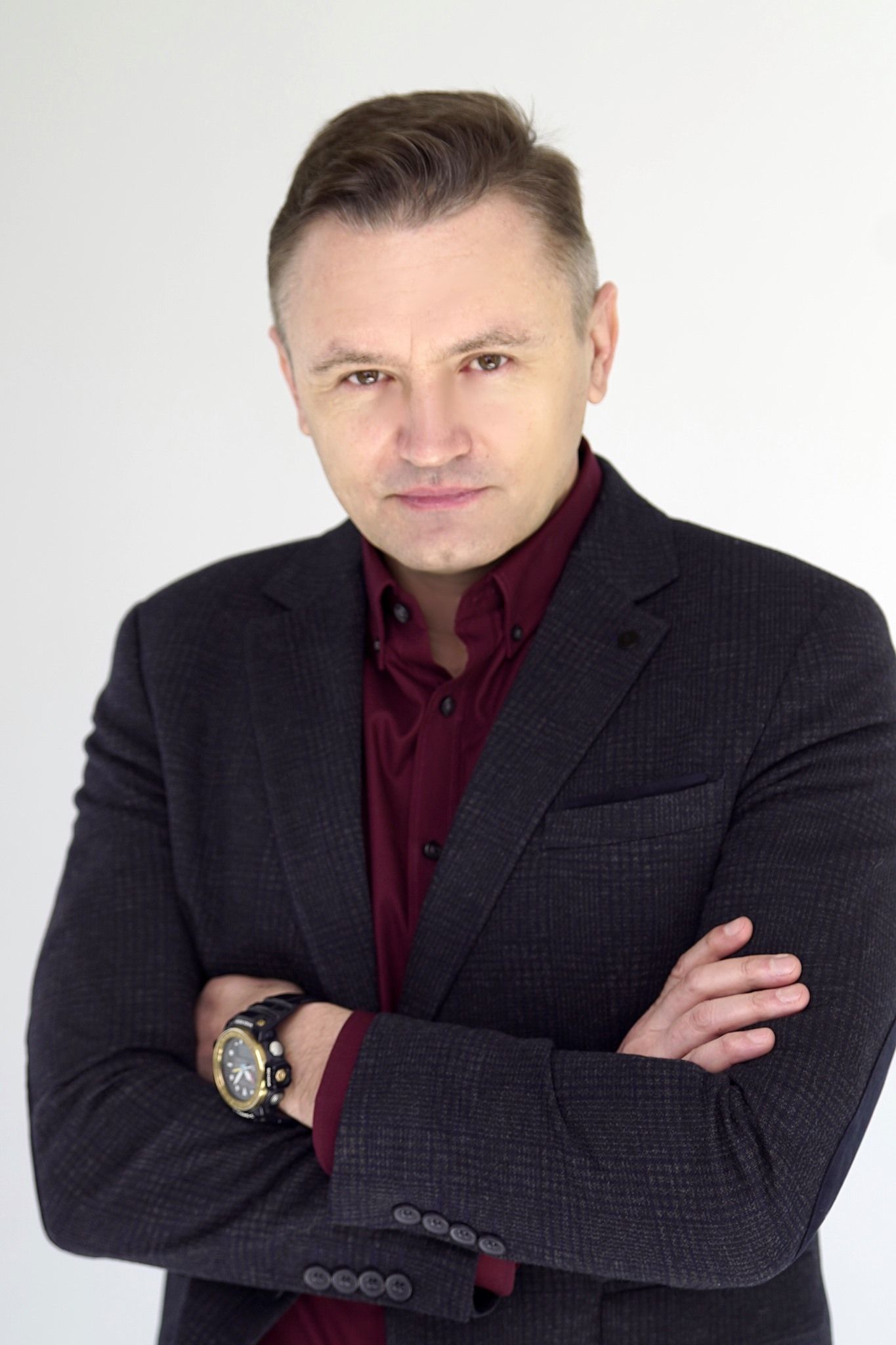
Kostiantyn Korsun
Therefore, completely blocking Telegram is almost impossible, as it would require colossal resources. Disrupting it, however, is possible, since Telegram is also a network of companies in Ukraine that have received permission from Durov to conduct commercial activities and sell advertising services. This is a fairly large market that can be significantly affected, for example, through sanctions. If Telegram were added to the list of sanctioned software, that would create major problems, especially by hitting its revenue.
- Do you mean that by creating problems for Durov through properly imposed sanctions, we could communicate with him on security matters?
- Absolutely, these things are directly connected. Many of our law enforcement agencies and executive authorities frequently say that Telegram is full of risks, groups, and Russian propaganda, while the Telegram administration does not respond to attempts to communicate with them on these issues. But let us recall that it was the same with France, until Durov was detained at Orly Airport. And then communication with the French authorities somehow began to move forward. The same can be done in Ukraine. Of course, Durov is unlikely to come here. But Telegram’s policies can certainly be influenced through economic means. And it can be compelled to comply with at least some conditions in Ukraine’s interests.
Incidentally, the same applies to Russia; they are currently threatening to block Telegram in April (the Russian authorities claim that the messenger ignores legal requirements, does not remove "illegal content", and is allegedly used by terrorists. — Ye.K.).
- Yes, and they are planning to massively roll out their own "sovereign" messenger, Max…
- Yes, and of course, there is a dictatorship there. But in principle, the essence remains the same. A messenger can be pressured at the regional level through economic means, and not only. Russia prefers straightforward technical blocking. Although that, too, is effective. Because Telegram’s largest audience is, of course, Russia. But the second-largest in terms of numbers and revenue is precisely Ukraine.
- It is said (and no one has yet refuted these figures) that more than 70–85% of Ukrainians use Telegram as their main source of news and communication tool. Those are incredible numbers…
- I am inclined to trust them, despite the fact that I have been and remain a convinced opponent of Telegram. In my view, it is pure evil and must be countered. The question is by what methods. The economy is an important lever in talks with operators. If we were discussing a tax on social networks, Google, Meta, and the other platforms would come to the Ukrainian authorities, at least to talk. To begin a dialogue. But dialogue with Telegram is like talking to a radio set: they speak, we listen. Because if we start talking to a radio set, we will end up in a psychiatric ward.
At the same time, there are methods of exerting pressure on Telegram. There are ways of obstructing its operation. Technical, economic and legal. In the Verkhovna Rada, to my recollection, there have already been several draft laws on restricting or regulating the activities of social networks. They usually emerge in parallel with major news triggers. Among the key provisions in these draft laws was a proposal to require social networks to have official points of presence in Ukraine, for formal communication with an authorised state body…
- In the fall of 2024, it appeared that the Ukrainian authorities had finally taken action to restrict Telegram: the NSDC (National Security and Defense Council) passed a decision to ban the installation and use of Telegram on official devices of government employees, military personnel, security and defense sector workers, as well as employees of critical infrastructure operators. Did you follow how this directive was implemented?
- That is an interesting story, and I remember it quite well. To start with, within the NSDC apparatus itself, there are several clear-headed individuals who, in principle, share the view that Telegram is a hostile entity. They prepared this decision based on findings from the DIU (Defence Intelligence of Ukraine) and the SBU; it was subsequently approved by the Council. However, a public outcry immediately followed, and I was among the first to join in, naturally, by welcoming the initiative. Yet, just two hours after the NSDC decision was published, a clarification was issued: essentially saying, "Excuse us, that’s not what we meant." The substance of the clarification was that this was not a ban, but merely a non-binding recommendation.
- Do you think pressure was put on the Council?
- I believe it is related to the fact that they took heat from the Office of the President. Someone put their foot down, barked an order, and they were forced to disavow their previous statement. It turned out that this was not an order, but a recommendation. And as for something that is advisory in nature, no one is obligated to follow it. Those who wish to comply do so; the rest do not...
HOW ELSE CAN TELEGRAM’S INFLUENCE BE MITIGATED? THE REMEDIES VARY, FROM EUROPEAN LEGISLATION TO MASS DIGITAL HYGIENE
The recommendations for neutralising Telegram’s enormous influence on Ukraine’s information and security space do not end there. Even among Verkhovna Rada MPs who are well-versed in digital issues, those recommendations differ. And that is a good thing: the state can combine them and, when necessary, prioritise one set of measures over another.
For instance, Viktoriia Podhorna, a member of the parliamentary Committee on Digital Transformation, draws Censor.NET readers’ attention to European legislative practice (which, incidentally, was the basis on which France once detained Pavel Durov, over Telegram’s refusal to cooperate with French law enforcement and the lack of proper moderation on the platform).
"Telegram channels currently being utilized, including by our enemy, are part of their cognitive warfare. This is because they do not merely engage in propaganda but actively distort people’s thinking. In Ukraine and other post-Soviet states, including Europe, where there is a large Russian population, the popularity of Telegram is immense. Furthermore, in Europe, Telegram significantly underreports its user numbers. This is because the European Union adopted the Digital Services Act (DSA), aimed at regulating digital platforms. This act establishes specific standards to ensure platforms are not exploited for terrorism, child trafficking, and other criminal activities. While the EU has adopted it, implementation varies across different countries. (We also have a draft version of it, in line with our European integration plans). The DSA contains specific thresholds for large platforms, as our colleagues in the European Commission view them as posing the greatest risk. They rightly emphasize that these large platforms must bear at least some degree of responsibility for their content, for instance, through the implementation of moderation."

Viktoriia Podhorna. Photo: Anna Putilina / UNDP in Ukraine
Among the many problems Telegram creates for Ukraine, what appears to concern Podhorna most is its anonymity (or, as expert Korsun put it earlier, the "radio loudspeaker" effect), which makes the platform an ideal tool for disinformation and the recruitment of Ukrainians.
"This anonymity, when you do not understand who the people behind a particular Telegram channel actually are, poses a major threat," the MP says. "The Security Service of Ukraine regularly publishes lists of seemingly legitimate Telegram channels with millions of subscribers that present themselves as Ukrainian but are in fact run by the FSB. And they are not simply criticising the authorities; they are creating an entire vibe, for example, around undermining mobilisation. In other words, a deliberate war is being waged through Telegram channels that also masquerade as Ukrainian."
How can this be countered? "I have one proposal (which, of course, requires discussion): perhaps in the countries where Telegram operates, it should be required to re-register and comply with standards aligned with the DSA. That is, so that it has effective content moderation tools in place. At least a few such examples should be set… But that depends on whether Durov would agree to it. Given that he is Russian and, most likely, under the influence of the FSB…" Podhorna says.
There is also no doubt about FSB influence over Telegram in the view of Yehor Cherniev, a former member of the parliamentary committee on digital transformation and now Deputy Head of the Committee on National Security, Defence and Intelligence. However, he sees the countermeasure less in technical or legislative tools and more in large-scale public awareness efforts. Cherniev believes it would be faster to reach the minds of fellow citizens through an information campaign than through prolonged technical measures.

Yehor Cherniev
"I believe that banning communication channels or restricting the internet is technically unfeasible," he says. "Solutions will always be found to bypass these bans or restrictions. To me, the most correct path in combating any manifestations of improper behavior on the internet is engagement with society and so-called digital hygiene. This involves educating people on what to engage with and what to avoid; what requires attention and what should be steered well clear of. And this works not only in cases of disinformation or espionage by the Russian Federation via Telegram channels, it is, fundamentally, the correct approach from the perspective of personal safety. Therefore, I favor a proactive state position where citizens are taught how to conduct themselves and warned about the threats posed by various communication channels. Awareness, critical thinking, and digital hygiene are the best preventive tools for thwarting such crimes."
There are other proposals as well. Member of Parliament Iryna Herashchenko points out that her faction, European Solidarity, registered a bill in the Verkhovna Rada long ago regarding the de-anonymization of Telegram.
MP Yaroslav Yurchyshyn has announced the closure of his Telegram channel and addressed the President and the Prime Minister:
HOW WILL THE ARMED FORCES OF UKRAINE REACT TO TELEGRAM RESTRICTIONS? AND WHAT DO LAW ENFORCEMENT OFFICIALS SAY?
This text has already mentioned that this winter Russia has stepped up restrictions on Telegram’s operations (as of February 2026), accusing the messenger of failing to comply with legislation, fraud and posing security threats. Roskomnadzor has been introducing successive restrictions, leading to widespread disruptions, slower performance and access problems, including at the front. Moreover, some Russian media outlets are announcing a full blocking of Telegram starting 1 April.
This has triggered near panic among Russian military correspondents and various z-bloggers. They complain that blocking Telegram will negatively affect the coordination of Russian troops.
Watching the enemy tear their hair out is, of course, satisfying, but would we not face a mirror situation in the AFU? There is no desire to compare the two armies, yet we remember the extraordinary statistics of Telegram usage in Ukraine…
MP Cherniev, of the Defense Committee, believes this risk is exaggerated.
"Ukrainian servicemen, in their overwhelming majority, understand that Telegram is a communication channel used by the enemy," he believes. "And, in fact, what should be restricted (and I think such a decision will be found) is the work of our special services on enemy territory through those same Telegram channels, for recruiting Russians and carrying out tasks in the interests of our state."
However, former MP and current serviceman Ihor Lutsenko holds a somewhat different view.
"Our military communications are in no way dependent on TG (Telegram -ed.)," he wrote to Censor.NET, "but many have informal chat groups. And they get their news from there as well. It is a territory without censorship, with a wealth of diverse information. No one will be thrilled about a potential ban."
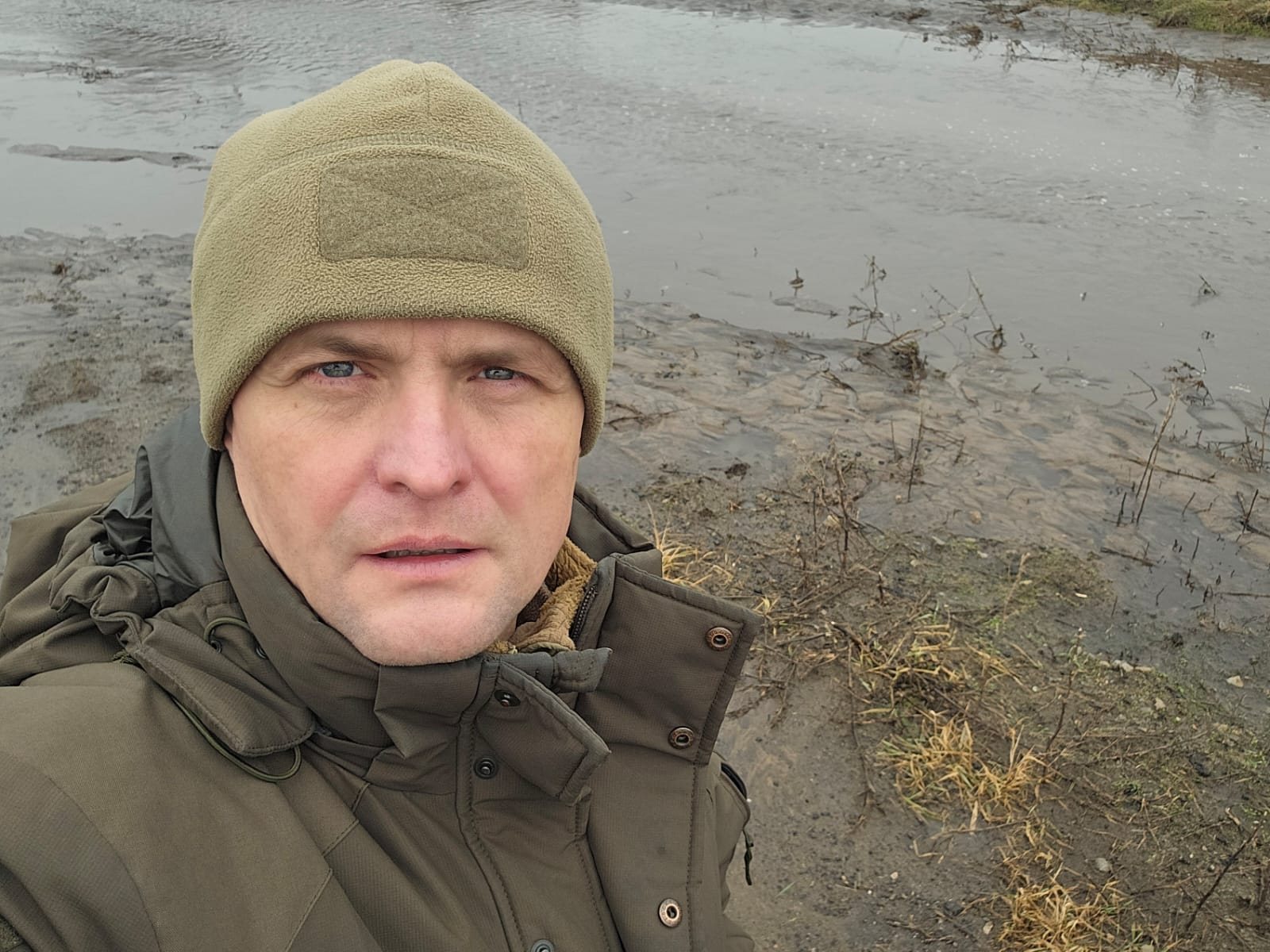
Ihor Lutsenko
However, Lutsenko does not really believe that Ukraine would be able to block Telegram even if it wanted to.
"Right now, it is practically impossible," he says. "Telegram is a robust entity; it is intertwined with the openness of the internet itself. Even the Russians prepared for their own Telegram shutdown for a long time."
But how do law enforcement agencies view this unregulated existence? They, more than anyone, should be exasperated by Telegram’s unchecked operation in Ukraine: the recruitment and instruction of spies and terrorists, mass channels for incitement and disinformation, and the resulting explosions, missile strikes, and other attacks, as well as the surge in assaults on TCRs (Territorial Centers of Recruitment ) and law enforcement structures.
At a briefing on February 23, Minister of Internal Affairs Ihor Klymenko noted that approximately half of all recruitment efforts targeting Ukrainians occur via Telegram. He further stated:
"The issue of closing Telegram is not just a matter for the MIA or the SBU. Society must also provide an answer. It is impossible to fully ban what is inherently unbannable. What we must discuss is restricting it and ensuring law enforcement can operate in a way that allows us to reduce the number of terrorist crimes."
Perhaps it is not the Minister of Internal Affairs who should be the target of criticism here, but rather the lack of political will from the country's leadership. Nonetheless, the use of the phrase "we must discuss this" in such a context cannot help but evoke sadness, bewilderment, and irritation. The only question is: directed at whom?
And here is what another top-level law enforcement official, Deputy Head of the National Police Andrii Niebytov, said in a comment to Censor.NET:
"Organized crime groups, cyber-fraudsters, and drug traffickers actively use Telegram as a platform to recruit perpetrators for the arson of AFU vehicles, the destruction of railway infrastructure and post offices, and the preparation of assassination attempts against military and law enforcement personnel. In the vast majority of cases, recruitment was conducted specifically through this messenger. Furthermore, criminals not only coordinate actions but also oversee the manufacturing of explosive or incendiary devices via real-time video calls. Certain Telegram channels are used anonymously for drug sales, weapons trafficking, and the dissemination of child pornography.
I should add that I am not providing assessments regarding the closure of Telegram—that falls within the purview of other state institutions. However, my position is principled: any platform operating in Ukraine with such scale and influence is obligated to act strictly within the framework of Ukrainian legislation. The law is the same for everyone. No digital service can exist outside the nation's legal field," Mr. Niebytov concludes.
CONCLUSIONS: TELEGRAM HAS PLENTY OF ALLIES INSIDE UKRAINE. AND THE COUNTRY’S LEADERSHIP LACKS POLITICAL WILL
It is worth once again drawing attention to the words of the Minister of Internal Affairs — specifically, to his statement that "the issue of closing Telegram is not only a matter for the Ministry of Internal Affairs or the Security Service of Ukraine. Society must also provide an answer."
Upon hearing these words, many will respond irritably:
- Instead of blaming society, go and look for spies and terrorists!
Yet in addressing the issue to society, Mr. Klymenko is right in many respects. The well-known phrase by writer Dovlatov — "Who wrote the four million denunciations?", can, albeit with considerable polemical exaggeration, be reformulated as: "Who makes up these 70–80% of Telegram users in Ukraine?"
The question seems rhetorical.
In our country, a vast number of people, even in the fifth year of the full-scale war, not only continue to use Telegram, but would also, in the event of possible sanctions against the platform, speak out against "pressure on freedom of speech."
One does not have to look far for examples: after Iryna Vereshchuk’s post, which we treated with irony at the beginning of this piece, yet which in essence contains a rational core, those who would be deprived without Telegram of both a source of income and a platform for their informational filth immediately crawled to the surface.
But those are professional, anonymous muckrakers. The overwhelming majority of Telegram users in Ukraine and readers of such channels are people who simply find it inconvenient to give up Telegram and switch to WhatsApp or Signal. Few are willing to embrace the kind of information hygiene that MP Cherniev speaks about.
The country’s leadership has its own calculations. President Zelenskyy may speak as much as he likes about how the perpetrators of the latest terrorist attack were recruited via Telegram and demand "more protection for people." And the head of his Office, former chief of military intelligence Kyrylo Budanov, may declare every day that for him "the issue of Telegram is not about freedom of speech, it is about national security."
But going forward, security and Telegram will continue to go hand in hand amid terrorist attacks and hostile strikes.
It is therefore hardly surprising that, reflecting on the possible prospect of blocking or slowing Telegram, serviceman Ihor Lutsenko says:
- I do not expect such a step. Knowing the approach of the current officials, they are wary of antagonising the average voter. So I consider such a measure unlikely.
Amen.
Yevhen Kuzmenko, Censor.NET


