



Why NABU and SAPO expect new attack against them
Four months have passed since the start of Mindichgate. Of the key figures in the case, only former Energy Minister Herman Halushchenko and his adviser Ihor Myroniuk are currently being held in a pre-trial detention center.
At the same time, the latest hearing in Halushchenko’s case prompted yet another session of the Verkhovna Rada’s Anti-Corruption Committee, which once again heard from the leadership of NABU and SAPO after a SMS message from a Justice Ministry employee was read out in court. The message stated that the Security Service of Ukraine had asked that a cell be selected for NABU detective Ruslan Mahamedrasulov "with unpleasant cellmates."
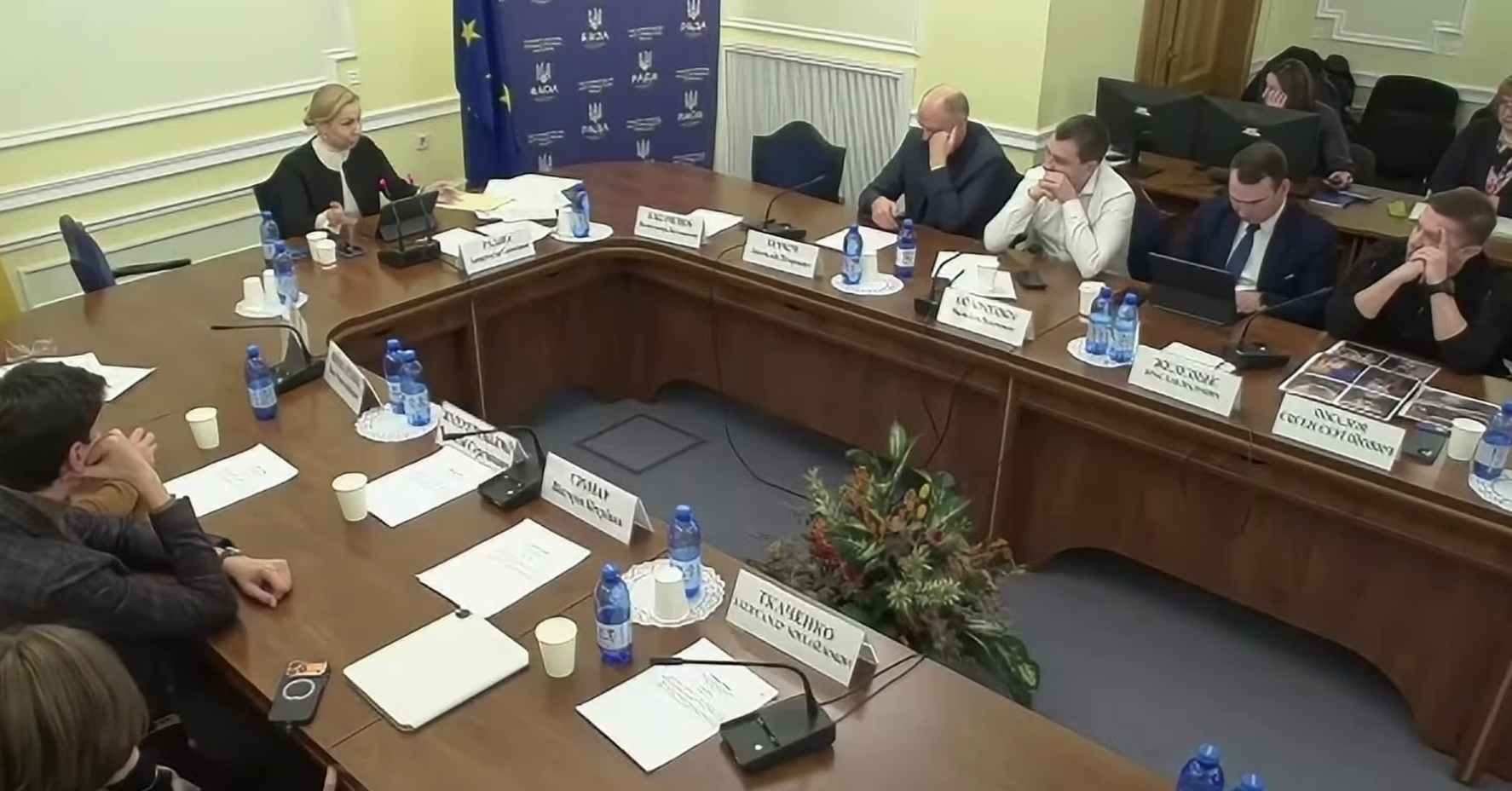
During the parliamentary committee meeting, representatives of NABU and SAPO disclosed new details that may have been among the reasons why Mindich was able to leave Ukraine before being formally served with a notice of suspicion. They also predicted that further attacks from the authorities are only a matter of time.
According to NABU Director Semen Kryvonos, they learned that, based on the criminal case number and other data, such as the surnames of the persons involved in the criminal proceedings or even the addresses of certain objects, multiple searches were conducted in the register of court rulings, which made it possible to understand what investigative actions were being carried out by NABU in the Midas case.
Such searches were conducted on 14 November 2025 by Security Service of Ukraine operative Romanchenko, SSU (Security Service of Ukraine) operative Voitko, SSU officer in Zhytomyr region Lutai, Central Office of the State Bureau of Investigation official Zhiblov, Deputy Head of a department at the Office of the Prosecutor General Havrysh, Head of a department at the Office of the Prosecutor General Sydorov, and Deputy Head of ARMA Velykorechanin.
Searches were also carried out on 28 November 2025 by Mykolaiv Region Main Directorate of the National Police officer Rusavskyi, State Financial Monitoring Service specialist Klymenko, and Kyiv Court of Appeal judge Zhuk.
In addition, Kryvonos stated that they had received information from the "Safe City" system about surveillance of their detectives’ vehicles, even though the detectives were using cover license plates and official vehicles.
Previously, journalists had learned that during the final month of work on the Midas case, NABU detectives were even forced to sleep at their workplace in order to prevent interference with their investigative actions.
According to Kryvonos, all of the law enforcement and other bodies mentioned, of course, have the right to monitor this information. However, they do not have the right to pass it on to interested parties.
At the same time, he recalled that information about vehicle movements had ended up in the hands of individuals involved in the case. For example, court hearings repeatedly referenced how Tsukerman and his associate Rioshyk (Fursenko) discussed methods of maintaining secrecy and reported surveillance of vehicles.
"If the drivers of certain suspects, their security guards, or, for instance, law enforcement officers are interested in monitoring our activities and operational measures, they can use this system... to expose us to potential suspects," Kryvonos said.
Meanwhile, Viktoriia Siumar noted that the "Safe City" system had effectively been under the control of Petro Olenych, a suspect in another NABU case, "Clean City."
"There is no logical explanation as to why such a wide circle of individuals, who are not connected to our criminal proceedings, were trying to obtain information in the register of court decisions by searching for our criminal case number," he added.
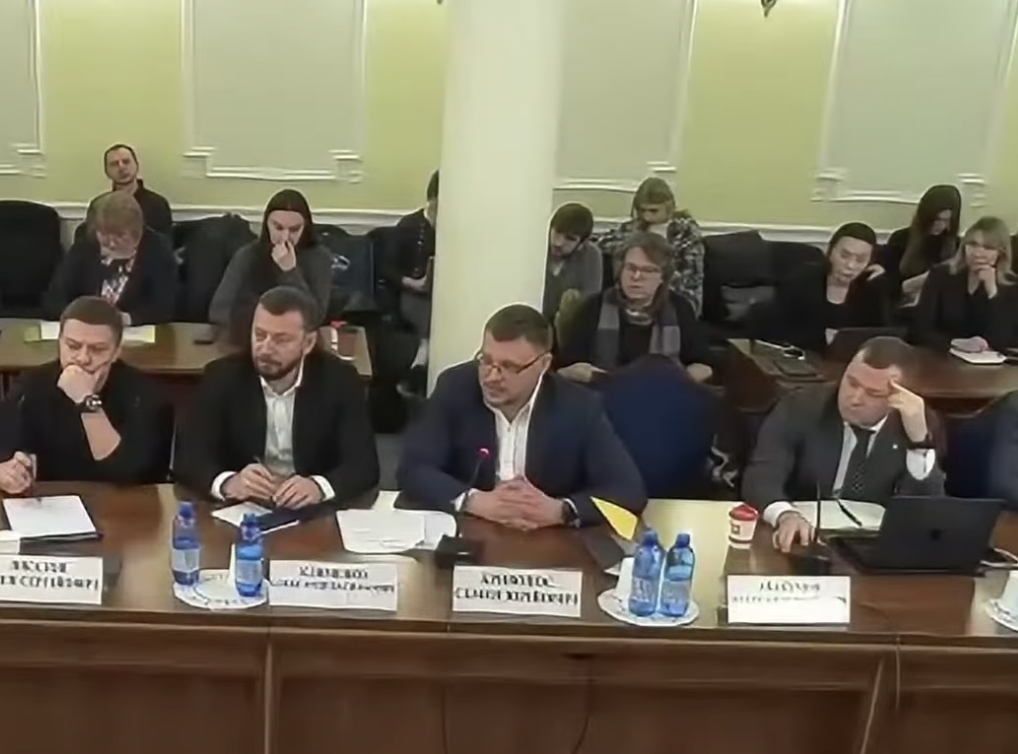
He also stressed that such information leaks are not only a problem for NABU and SAPO, but for the entire law enforcement system. Yet, "for some reason, nothing moves forward, because apparently some people are building a business around these practices."
While Kryvonos did not mention specific names, it is widely known about NABU’s proceedings against the Borzykh group, which traded in registry data and is suspected of having drafted amendments to a bill that would have undermined the powers of NABU and SAPO.
"In effect, this amounts to systemic obstruction of the investigation itself if you have access to this register," SAPO Head Oleksandr Klymenko said. He specifically referred to lawyers who had developed entire software tools to track certain court rulings by surnames and street names and then sell that information to suspects.
Klymenko also emphasized that, as of today, more than 10,000 individuals have access in the Unified Register of Court Decisions to rulings related to NABU and SAPO criminal proceedings.
"These include all judges, a large number of ARMA staff, Financial Monitoring officials, National Police officers, SBI officers, BES (Bureau of Economic Security) officers, prosecutors, and SSU personnel. With such a large number of people, it is impossible to preserve the secrecy of a pre-trial investigation," the SAPO head complained.
"Because if we take this particular case, from the moment it entered the public domain, when we conducted searches, we subsequently planned a number of other investigative and procedural actions. For those actions, it was necessary to obtain a court warrant authorizing a search. That warrant is automatically entered into the register from the moment it is issued. And we have 30 days to determine the most optimal time to carry out that search," Klymenko explained, outlining the specifics of the procedure.
"And during those 30 days, any of these officials can view that warrant and warn the individuals in respect of whom we intend to carry out the investigative action. We consider this an extremely negative and high-risk phenomenon for the entire criminal justice process," he added.
At the same time, NABU and SAPO have no tools to verify whether orders were issued authorizing investigative actions against their detectives. For example, in a case where listening devices were found in the office of one of NABU’s detectives.
"Well, first of all, it should be noted that this is the head of a unit who is, on the one hand, part of the investigative team handling MIDAS, and on the other, she leads an investigation related to a well-known manufacturer of unmanned aerial vehicles," said Oleksandr Abakumov, the lead detective in the Midas case.
Incidentally, the discovery of listening devices in the office of a NABU representative led experts to suggest that efforts to obstruct the work of NABU and SAPO have by no means ceased.
At the committee meeting, the NABU director himself also stated that the conditions for a new attack remain in place.
"The key individuals who were used against NABU are effectively still in their positions. I mean, within law enforcement bodies. And whether the system is capable of self-correction, and whether these attacks could become impossible due to certain political considerations, I have serious doubts," Kryvonos said.
"All of this remains possible because the key preconditions have not been eliminated. Neither the political dependence of law enforcement agencies nor that of the judicial branch, courts that issued and legitimized urgent searches which, I can say now in advance, were pre-planned," he added.
Oleksandr Klymenko also did not rule out the possibility of a new attack.
"I will simply add something very straightforward. The people who directly participated in the attack on NABU in the summer not only faced no accountability, they received certain incentives. Some were promoted, some were granted the rank of general. And of course, they believe they are moving in the right direction. That the destruction of the anti-corruption system should continue, and then the top political leadership will reward you," the SAPO head said.

He did not specify whom he meant, but it is not difficult to infer that he was referring to the Prosecutor General and part of the SSU leadership. Moreover, these remarks came in response to Viktoriia Siumar’s statement that, according to an investigation by Yaroslav Zhelezniak, it is now known that major anonymous Telegram channels are linked to the SSU.
"We are simply waiting for the next attack against us, how and in what form it will be organized," Klymenko stressed.
Notably, the committee meeting coincided with the visit to Ukraine of European Commissioner Marta Kos, who emphasized that the Ukrainian authorities had not restored the trust of their European partners following the attack on NABU and SAPO.
"Because you can pass and repeal laws as much as you like, but you cannot simply restore trust overnight… Once trust is no longer complete, whatever your partner does, you will still place a small question mark: is this really the right thing to do? What is the objective now?" Kos said.
Evidently, the authorities would do well to heed this signal.
But now to another matter.
Any account of the committee meeting would be incomplete without the story of Mahamedrasulov’s cell. After SAPO representatives read out in court a text message indicating that the SSU had effectively asked the Justice Ministry to assign an uncomfortable cell to the detective, Deputy Justice Minister Pikalov, somewhat unexpectedly, attended the committee session.
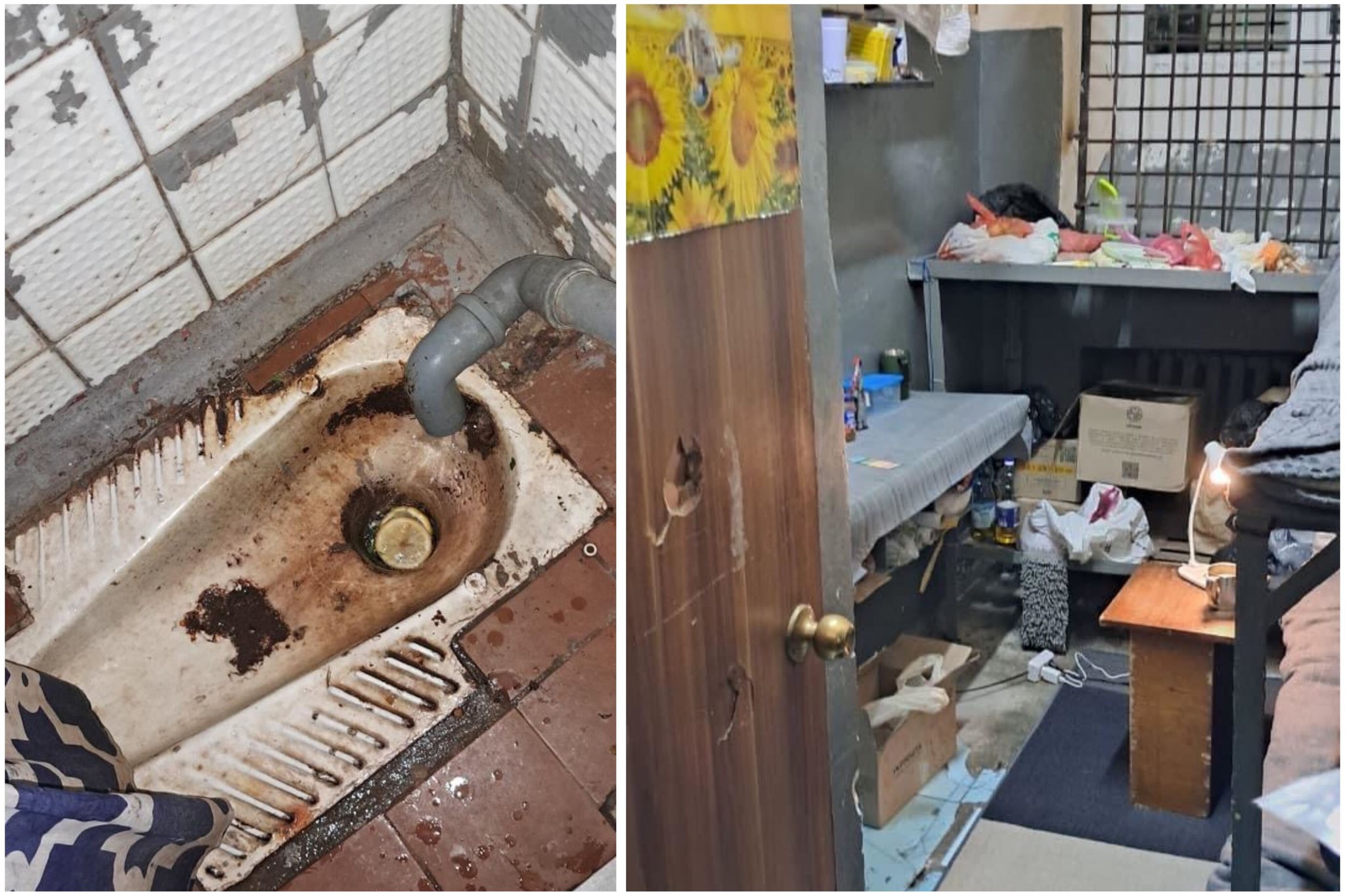
He tried to explain what had been written by saying that the minister had taken an interest in the condition of the cells. After all, he said, the minister had been in office for only a week. He also stated that the detective was being held alone, without any "unpleasant cellmates." When committee chair Anastasiia Radina asked about the broken window in the cell in October, Pikalov replied that he knew nothing about it.
"There was no creation of intolerable conditions. The cells next door, and this is easy to verify, are worse, unfortunately. There is mold there as well. He only had mold in the bathroom," Pikalov told lawmakers. He added: "As for Mr. Mahamedrasulov, he was in fact held alone. He properly received all parcels, and all of his requests, for sports equipment, cooking utensils, visits, and so on, were fulfilled," the deputy minister added.
He spent more time leaning on the poor state of the Lukianivke pre-trial detention center than explaining the meaning of his SMS text message about coordinating the cell with the SSU.
Oleksandr Klymenko, however, had his own explanation of the consequences of this situation.
"As for the minister’s actions and what we are discussing here, this is not a matter of an isolated incident. The issue is that for several years now, we have been trying, in one way or another, to move the issue of extradition to Ukraine off dead center. Even before the war, we were being refused on the grounds that detention conditions here were inadequate. Now there are already two reasons, inadequate detention conditions and the war," the SAPO head recalled.
"So now, when any lawyer in court hearings abroad points and says: look, their minister, who is supposed to guarantee proper detention conditions, is directly involved in making them worse, no country will extradite people to us. That is why we will be dealing with the fallout from these SMS messages, these SSU requests, for a very, very long time," Klymenko stressed.
Tetiana Nikolaienko, Censor.NET


