



"Over four years of full-scale offensive, I have had only 10 days of leave, and I spent even those days on phone and at computer, carrying out commander’s tasks"
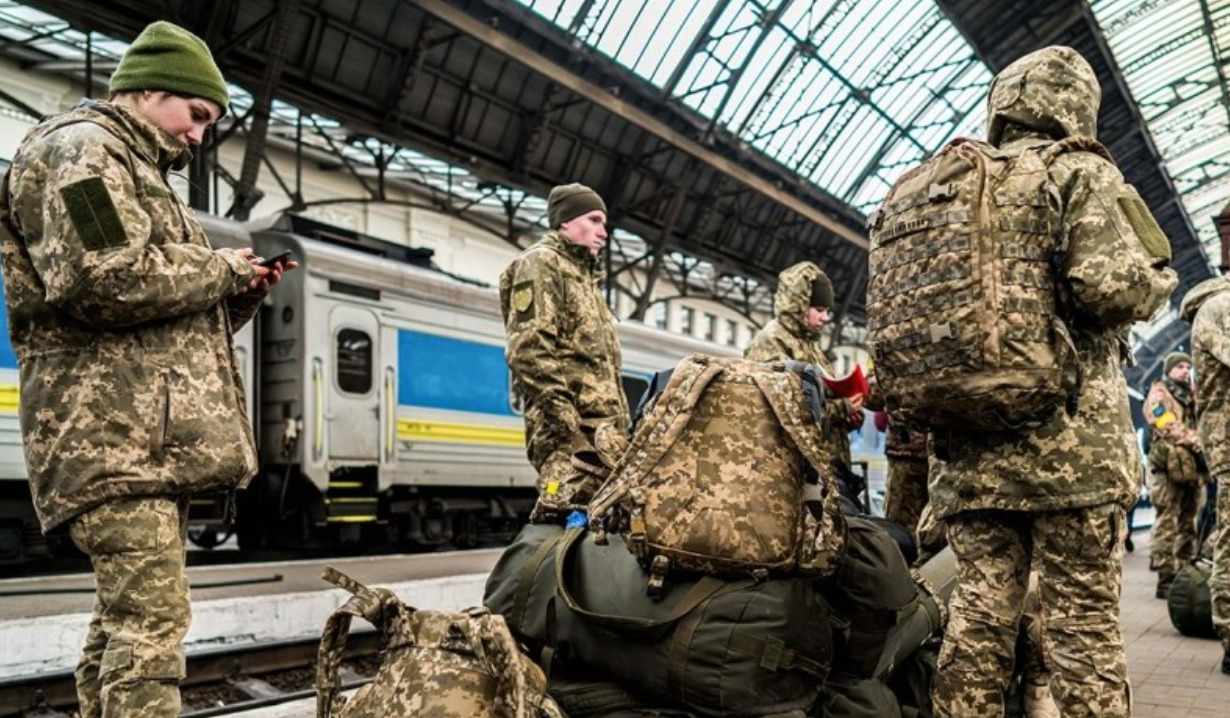
Last December, Censor.NET launched a project to collect and highlight facts of violations of the rights of service members and veterans. This is important and necessary so that such situations become public, and the state and society make efforts to resolve them.
As part of this project, we received complaints concerning leave, more precisely, the failure to grant leave. We therefore sought to examine how leave is granted in the Armed Forces and why service members are not being released for the rest provided for and stipulated by law.
"WHEN A UNIT IS ON THE LINE OF FIRE, LEAVE IS POSTPONED BECAUSE - QUITE SIMPLY! - THERE IS NO ONE TO REPLACE PERSONNEL AT THE POSITIONS."
As part of our project, which can be accessed via the link, we received letters regarding leave. We therefore decided to address this issue separately. Let us quote several of the appeals:
"Brigade 115 does not grant the mandatory 15 days of leave to those who already have combat veteran status and have served for more than one year. At the same time, the soldier is serving under contract and is under 25 years old. There is a mess in this matter. Could you find out from the 115th Brigade whether everyone has taken their 15 days of leave for 2025? Because some people close to the leadership go on leave, while ordinary soldiers do not."
"In Military Unit A2960, which is structurally subordinated to another unit, there are issues with granting leave. The service member has been serving in the unit since 24 January 2025. Some in the unit have already been on leave twice! That is, they have used all 30 days. Others have gone for the first time but have served in the unit significantly less time than I have. At the same time, I have still not received even the first part of my leave! I strongly ask for help in resolving this artificially created problem, since by failing to grant leave, the command is violating current legislation."
We forwarded these complaints to the Ministry of Defense, as well as to the Ombudsman’s Office, and received responses from both institutions. A representative of the Ombudsman reported that inspections are underway in the units concerned. We can quote the official response from the Ministry of Defense:
"Military Units A2960 and A4053 are currently operating under conditions of continuous combat missions in areas of active hostilities. The command of the military units is obliged to:
distribute the workload among personnel evenly;
maintain an adequate level of unit staffing;
ensure combat readiness.
Under such circumstances, leave may be granted based on the actual overall number of service members in the respective unit.
We also inform you that, based on the results of 2025, the rate of refusals to grant leave relative to the total number of submitted leave requests amounted to:
in Military Unit A2960 – 0.58%;
in Military Unit A4053 – 3.02%."
We did not limit ourselves to official responses and sought to understand how the issue of leave is supposed to be regulated. And how does it actually work within units? In order to understand how this system functions, and whether it functions at all, we spoke with various units and service members at different levels. It should be noted from the outset that most of our interlocutors serve in units positioned on the line of fire and carrying out combat missions. For obvious reasons, they asked not to be named, so that they would not be punished for telling the truth.
- How is leave granted? At the beginning of the year, the unit issues a standing order," explains a commander of an infantry unit who has served in the army for more than 12 years. "After that, each subunit separately drafts schedules, which will go on leave and when. But let’s be honest: during wartime, it is not always possible to adhere to those schedules. Still, they exist. And if a person has been informed of the period during which they may use their two 15-day leave periods, or all 30 days at once, they are entitled to object when the specified date approaches and to demand that they be granted leave. This is an absolutely lawful right of a service member. The Army+ app has also introduced the ability to track one’s leave and its designated timeframes. That, too, can serve as grounds for a fighter to show the commander: my turn has come...let me go. In every unit, there is a person responsible for monitoring who goes on leave and when, so that not everyone leaves at once, and so that it is distributed more or less evenly and fairly.
- During your service, what was the longest period you went without leave?
- In 2014, after graduating from the academy, I did not take leave for a year and a half. But the war had just begun, and I was a company commander. We were fighting in Donbas. There was simply no time for leave then. Once the situation became more or less clear and our brigade took up a defensive line, we began to be granted leave.
Not long ago, this officer took command of a brigade that had been partially withdrawn from the combat zone. As he reviewed the situation, he also paid attention to how personnel had been granted leave.
- From time to time, complaints arise that someone has not been on leave," the officer explains. "But when a unit is on the line of fire, leave is postponed because – quite simply! – there is no one to replace people at the positions. However, once we were moved to a safer location, we immediately checked how many days each member of the personnel had not taken and, one by one, sent everyone on leave.
- Is there a specific person in the brigade whose duty is to monitor how personnel take leave?
- No, there is no such position in any structure of the Armed Forces of Ukraine. Every commander, and this is stipulated in their functional duties, determines and monitors leave for their personnel. Platoon commanders, company commanders, battalion commanders, these are the key individuals who know their people and directly decide with them who will go home and when. The brigade commander grants leave to those directly subordinated to him. That is how it works. The personnel office simply records it.
"THE LACK OF THE OPPORTUNITY TO TAKE LEAVE DIRECTLY CONTRIBUTES TO AN INCREASE IN THE NUMBER OF THOSE GOING AWOL."
We have also identified the reasons why servicemen are unable to exercise their right to leave. There are several. Let us begin with the example of a soldier from a brigade that has been continuously engaged in combat operations since 2022.
- I have been serving in this brigade since 2021," says Oleksandr, who holds the position of deputy company commander in one of the infantry brigades. "I secured my first leave last year, in my fifth year of service! I truly had to fight for it. I constantly demanded that the commander let me go. He finally granted me 10 days! But that leave was in quotation marks, not real, because I worked every day, preparing reports. In addition, during my absence, soldiers from our company were killed. The paperwork for them had to be completed. I spent all ten days with my phone in my hand. There was nothing to say about my own recovery during those days. It simply did not happen. Yes, I understand and clearly see that there is a shortage of personnel. That there is simply no one to replace me when I am gone. But I am not made of steel. In order to continue performing my duties effectively, I need to catch my breath occasionally. That is not happening.
At present, all leaves are suspended as the brigade commander has been replaced, and the command is undergoing a total personnel reshuffle. During this period, we were informed that only leave on family grounds is possible, but in that case, a justification of what happened in the family must be attached to the report. The new brigade commander explains the suspension of leave due to the lack of personnel.
However, under the previous commander, leave could be canceled in a certain battalion, while in others it was scheduled, and personnel were able to travel home for rest... Under the new command, leave has been canceled across the entire brigade.
In 2022, we were not allowed to take leave, with this being explained by the difficult situation in the country. After that, it was just endless tasks, tasks, and more tasks. You understand, everyone is supposed to have a deputy. Physically and mentally, I cannot carry this workload alone. There has to be someone to help.
The lack of an opportunity to go on leave directly affects the growing number of those who go AWOL. I believe this is also largely linked to the fact that the army has effectively lost the tier of officers who are supposed to monitor and ensure the psychological well-being of personnel. They should not operate in a merely formal manner. But those officers are usually buried under a pile of pointless work, for example writing off lost property, even though that is not part of their official duties.
In addition, a person who has served on the front line, sat in trenches, and taken part in assaults must have a chance to recover. And this is not even about leave. It is precisely because fighters have neither the first nor the second in any predictable form that many burn out, grow exhausted, and go AWOL. That is why personnel are being lost.
And yes, I have never heard of anyone being specifically responsible for leave.
"My first contract with the Armed Forces of Ukraine was in the National Guard. At the beginning of each year, we submitted schedules indicating who wanted to go on leave and when. And it worked like this there: if your turn came up while you were on rotation, your leave was postponed, and as soon as you returned from a combat mission, you were required to go home. And you chose for yourself whether to take 15 days or 30. On top of that, you were also given another 10 days to recover after the rotation. Forty days are enough to come to your senses. That is a way you can serve.
In this unit where I am now, there is no planning at all. Over these years, no one has asked, at least not me, when I would like to go on leave. At the same time, service chiefs and their deputies go on leave regardless of whether there are enough people, whether they have tasks, or when those tasks are supposed to be completed.
Commanders at different levels talk a lot, in general, about how people need to be protected, cared for, given a chance to recover, deal with problems at home, and get some rest. But in reality, in practice, I do not see that these people actually have people as their priority. It is sheer hypocrisy.
The fairness of how leave is granted does not depend only on whether schedules are followed. To a large extent, whether a person gets to go or not is influenced by the human factor and personal relationships.
- A unit commander looks first and foremost at his capabilities when and how many people he can send on leave," explains a fighter from one of the Jaeger brigades that has spent the past several years constantly fighting in the hottest areas of the war. "I can say that in all units, there are always complaints that someone is not being allowed to go. But as a rule, if the commander has to choose whom to prioritize, the drunk will end up last in line. As a rule, whenever possible, those who are actually fighting, those who have spent a long time in the trenches, are given the chance to rest first. But even in that case, you have to form a queue; it is impossible to let everyone go at once. And if the next task comes in, then, as you can imagine, not everyone manages to go on leave. There are a lot of nuances in this matter. This really is monitored by the company commander and the battalion commander. If the battalion commander has signed the leave request, the brigade commander will definitely sign it too. If in a unit some people go on leave three times a year while others do not go at all, then you need to look for a personal conflict between the commander and that fighter. That happens.
- I have heard more than once about situations where fighters did not return from leave. Could that also be a reason why potential ‘runaways’ are not being allowed to leave the unit?
- Experience shows that if a soldier wants to go AWOL, he will do so anyway. And not necessarily from leave. He will find a way to get out of the unit even in wartime
We should also add the official explanation from the Ministry of Defense’s response:
"Since 2022, the Ministry of Defense has significantly improved the legislation in order to strengthen protections for service members, including by ensuring they are able to rest and spend time with their families. In particular, the rules governing leave were improved, as reflected in the Law of Ukraine ‘On Social and Legal Protection of Service Members and Members of Their Families.’ In particular, service members were granted the right to spend their lawful leave abroad or use their free time in another way. A war is currently underway, and despite everyone’s desire to rest, the commander of a military unit is limited by law: no more than 30% of a unit may be absent at the same time."
"A SERVICE MEMBER WHO HAD NOT TAKEN LEAVE SINCE 2014 RECEIVED FINANCIAL COMPENSATION FOR IT, MORE THAN 1 MILLION HRYVNIAS."
We also asked about the state of affairs with leave in the Air Assault Forces.
- "When there is no manpower shortage and no major task that has to be carried out in the near future, commanders let fighters go on leave," an Air Assault Forces officer explains. "There are constant complaints, and not only about leave, but also about rotations. But there is no one to replace people. That is where the problems come from. At the beginning of the year, leave schedules are drawn up, but draft dodgers and those going AWOL make their own adjustments to them.
At the same time, both this officer and the next one cannot even remember when they themselves were last on leave. Because there is no one to replace them either.
The fact that service members do not use their leave also creates economic problems: when a person is discharged, they must be paid financial compensation for unused leave days. And if unused leave has been accumulating for years, the amount that piles up is quite substantial. That is why units are interested in fighters taking leave, so they do not have to pay out compensation later. An officer serving in the Unmanned Systems Forces spoke about this in more detail.
- Just the other day, a fighter was discharged who had not taken leave since 2014! And not because he was not allowed to go, but because circumstances kept arising that prevented him from exercising his lawful right," my interlocutor explains. "Only last year did he take two weeks off. His unused leave was calculated, and he was paid compensation, more than one million hryvnias. The state does not particularly welcome having to make such substantial payments. It is better for people to take their leave on time. By law, every fighter is entitled to annual basic leave. There is also leave for family circumstances, leave for rehabilitation after injury, and combat veteran leave, 14 additional days per year. It is clear that in combat brigades located directly on the line of contact, 100% of the personnel physically cannot take all the leave provided for. I am sure there is not a single unit where the entire personnel, even if we take just 2025, have taken all their leave. In 2022, no one went on leave. Later, restrictions were introduced; leave could be taken twice a year, but for no more than two weeks at a time. People took two weeks, but as a rule, there was no opportunity for the other two weeks. But when large compensation payments for unused leave upon discharge began to "surface", unit commanders started doing the opposite, pushing personnel to take at least their basic leave. Leave became a mandatory matter. But not everyone is able to use it. Of course, the process is regulated by company commanders and battalion commanders. These are the people who draw up the schedules, approve them, and sign the leave requests. Everything goes through them. The personnel office keeps the overall statistics. Nothing new has been invented

No one has so far spoken of systemic manipulation related to leave. These appear to be isolated cases. However, even before the full-scale offensive, in one of the brigades stationed in Donbas, specifically in an elite unit carrying out specialized missions, a fighter reportedly had to pay a certain sum to the company commander in order to be granted leave. From time to time, similar cases of extortion become known, whether to brigade commanders or to the broader public. And then, naturally, measures are taken to ensure that such practices do not recur.
Regarding the complaints received from service members, we spoke with an assistant to the Ombudsman. We were told that complaints about leave do not rank among the most frequent. In fact, there have so far been no complaints specifically concerning leave. The most common topics of complaints are: referral of service members for medical treatment and military medical commissions (MMCs); payment of monetary allowances and additional remuneration; transfer or discharge from military service; prolonged deployment at positions and lack of communication with relatives.
It can be assumed that violations in the granting of leave will continue to occur in the army. Therefore, we are providing feedback for everyone who encounters such issues. It should be noted that a complaint may be filed not only by a service member but also by their relatives, as representatives of the Ministry of Defense pointed out in their official response to our editorial office:
"Service members and their family members may contact the Office of the Military Ombudsman or the Ministry of Defense hotline at 1512. Every appeal matters and helps improve the conditions of service and life of our military personnel, who devote their strength to defending the state. We remind you of the contact details: Citizens of Ukraine have the right to contact the Ministry of Defense of Ukraine. A written appeal may be sent by mail or delivered in person. You may also use email or the Internet. The address for appeals to the Ministry of Defense of Ukraine is: [email protected]. In addition, service members and their family members may submit appeals regarding violations of their rights that are systemic in nature to the Main Directorate for the Protection of the Rights of Service Members — email: [email protected]. Military Ombudsman — email: [email protected]
In addition, if you have encountered problems in the army, write to us at Censor.NET. Your experience may become the impetus that changes the situation not just for one person, but for thousands. Send your letters to the email address: [email protected]
Violetta Kirtoka, Censor.NET


