



My bionic prostheses are lying around at home. I should have spent that money on repairs instead, - veteran Yevhenii Kholodnytskyi
Now a veteran, Yevhenii Kholodnytskyi (call sign Prynts (Prince)) volunteered for the defense forces back in 2022. For over three years, he has been living with the aftermath of his injuries—bilateral hand amputations. However, his combat service is only a small part of this interview; the focus is primarily on his rehabilitation.
He eats, writes, and handles other everyday tasks with the help of a magnetic bracelet, a flashlight by his headphones, and other entirely ordinary devices. He adapted backpack straps and uses them for sports training. He records videos that motivate others, although he admits he does it for himself.
Despite owning no fewer than three bionic prostheses, he rarely uses them.
Why did it turn out this way? What advice would Yevhenii give to service members who also have to live with amputations, and what advice would he give to government agencies responsible for the treatment and rehabilitation of amputees? Why does lobbying by prosthetics companies go beyond reasonable limits, and why does the state provide veterans with prostheses not "on the cheap", as it may seem at first glance? In a candid conversation with Censor.NET.
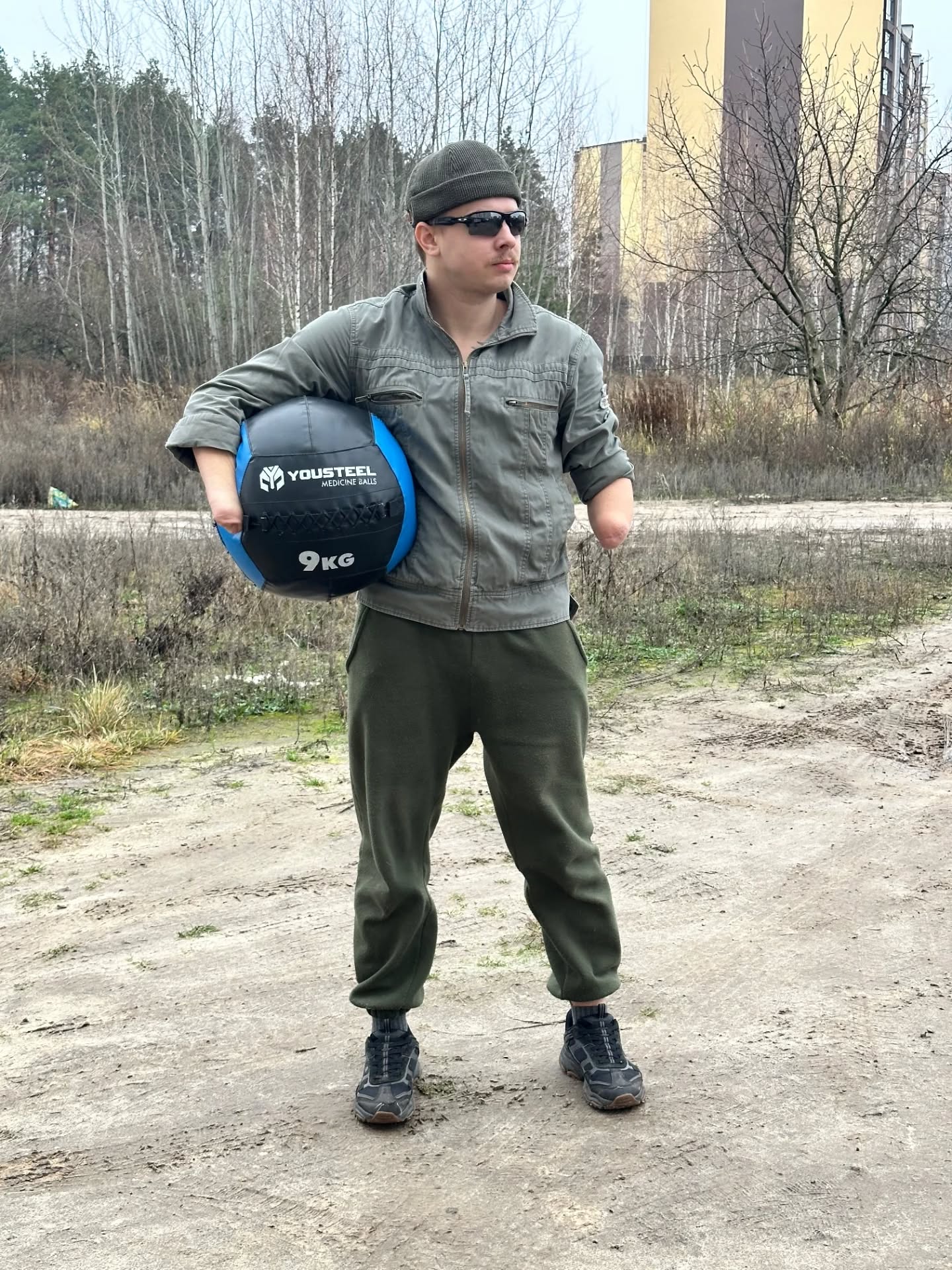
I WAS JUST PREPARING THE DRONE FOR TAKEOFF WHEN WE WERE HIT. THE BLAST ALSO BLEW UP OUR DRONE.
- I joined the army in April 2022, when I was 19. I am from the Chernihiv region, and at first I served here. I was the youngest, so the senior commanders did not want to let me go from here. But in the end, they sent me anyway, because everyone who was fit was being selected.
They first sent me to the Chernihiv Infantry Battalion, from which I successfully transferred to the 33rd Separate Mechanized Brigade. I served in the 33rd until I was wounded.
- What was going through your mind when you joined the military? Because even then, not everyone that age would have gone.
- It was youthful idealism. Back then, many people volunteered on a wave of patriotic fervor.
My father fought back in 2015-16, but was discharged for health reasons and removed from the military register. But in 2022, he volunteered again. The war began that morning, and he immediately went to the enlistment office. He spent the first month in Chernihiv with the Defense Forces and then returned home. His health did not allow him to stay any longer.
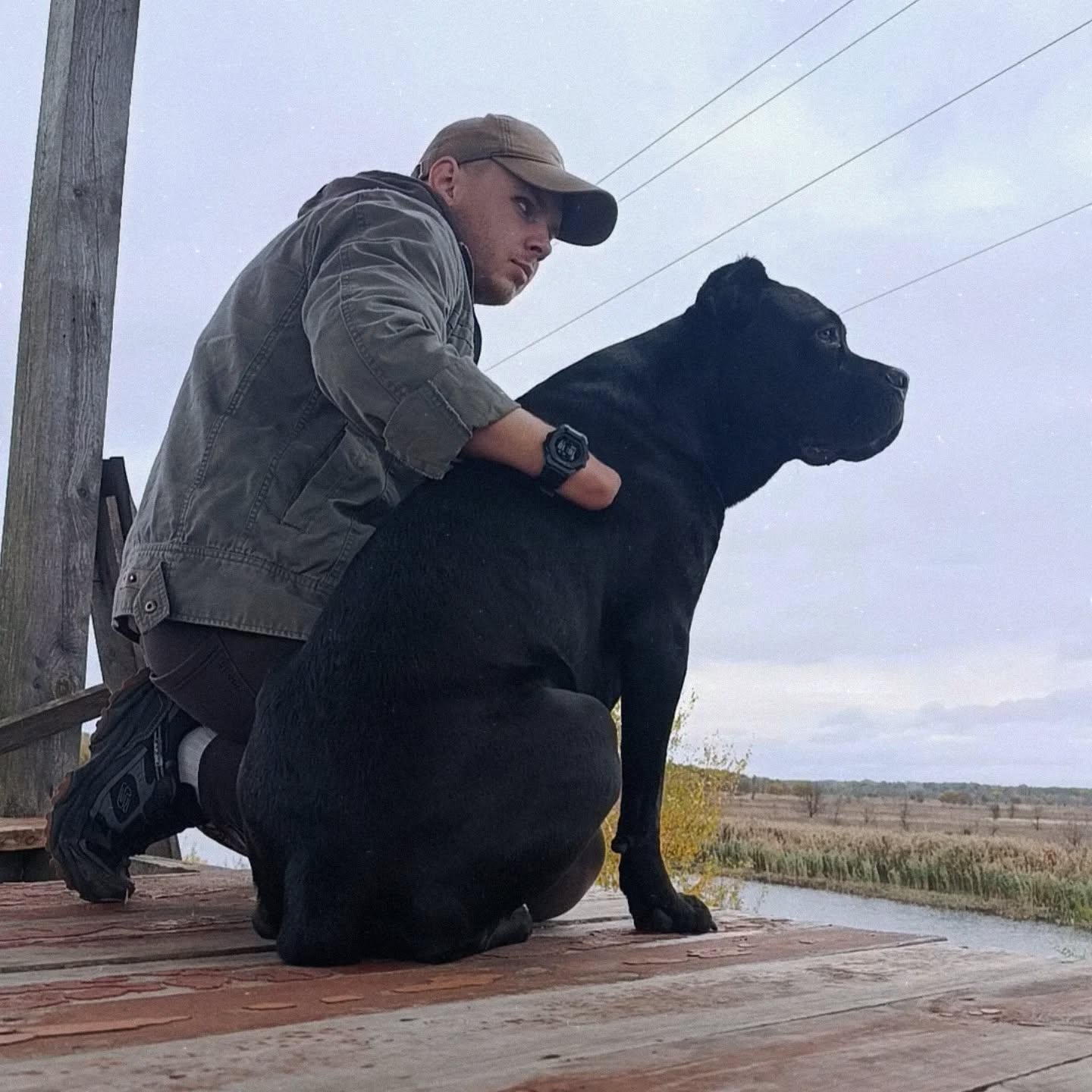
- Your army callsign is Prynts. Why? Did you get it in 2022?
- It comes from The Little Prince. I love that book.
- Because of your injury, your time on the front was not long. Could you describe your overall experience in the military? How did you adapt to wartime life and deal with fear?
- I was not some kind of super-Rex. But there was no real fear either. I had a good unit. The guys and I processed it through jokes and laughter.
I do not even have any interesting stories to tell. Back then, it was a different kind of war. There were fewer drones and somewhat more close-quarters fighting.
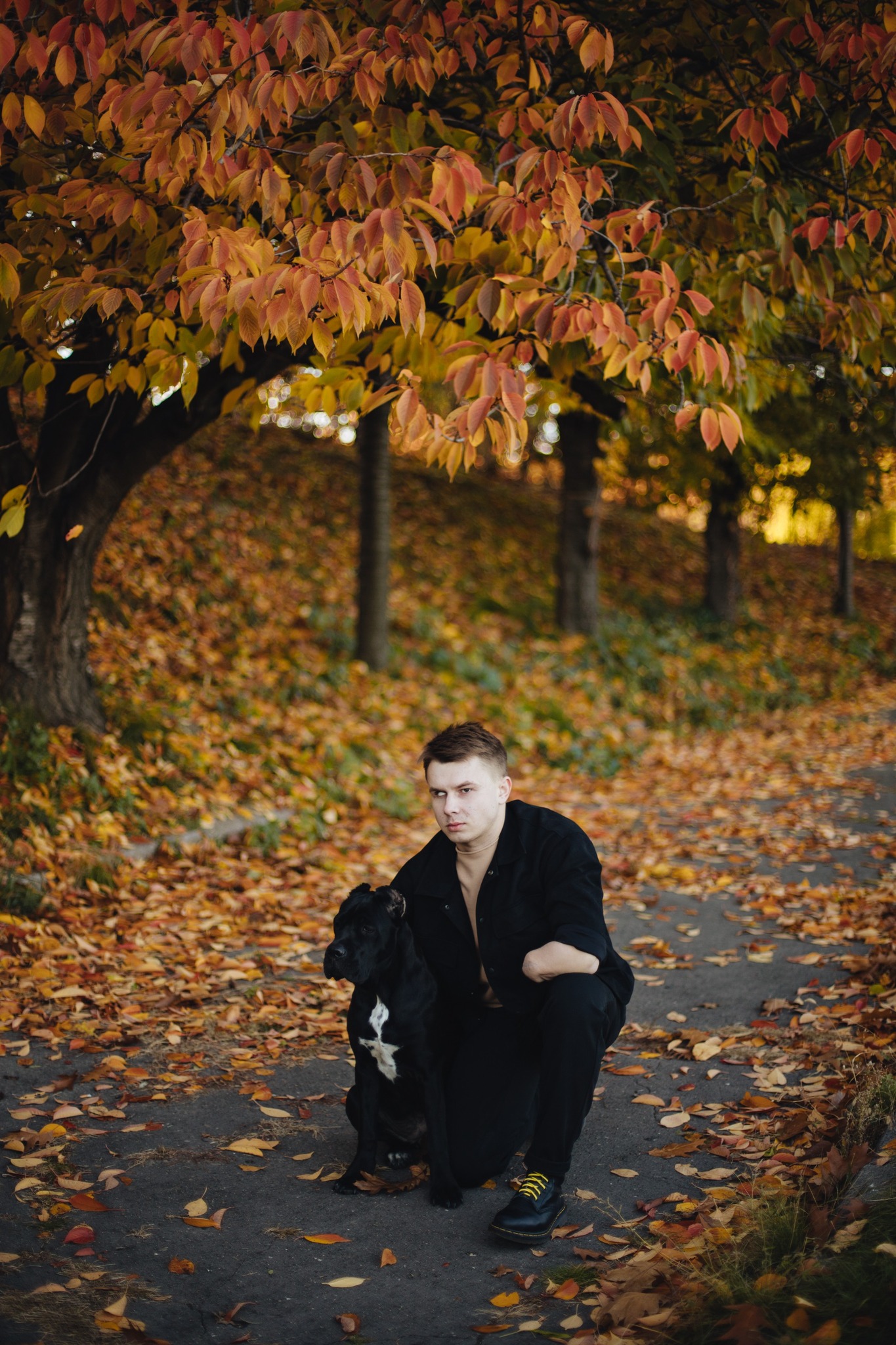
- Did you have combat contact with Russian forces? What is your view of them from a tactical standpoint?
- You have to respect your enemy and learn from him; otherwise, it will only make things worse for you. Of course, war is war, and the invader must be killed. There is a stereotype that Russians are chmonyas (Chmonya is a Ukrainian slang term meaning ‘Nincompoop’ - ed.). But if they were not a strong enemy, we would have defeated them long ago.
- You were wounded about six months after you began your service. How and where did it happen?
- A mine landed near Robotyne on October 19. We had just arrived at the position. I was in a UAV unit - we were flying, conducting reconnaissance. We were constantly being pressured there. I had just stepped out to prepare the drone for takeoff. I finished setting it up, but did not manage to move far from it when it hit. The blast triggered the initiation board, and our drone also exploded.
I was taken to the hospital, where they patched me up quickly. The wounds healed fairly fast, so there were no complications. There were no traumatic brain injuries, and the musculoskeletal system was not damaged either. Essentially, there were only shrapnel wounds that healed, and that was it. I was discharged and went home.
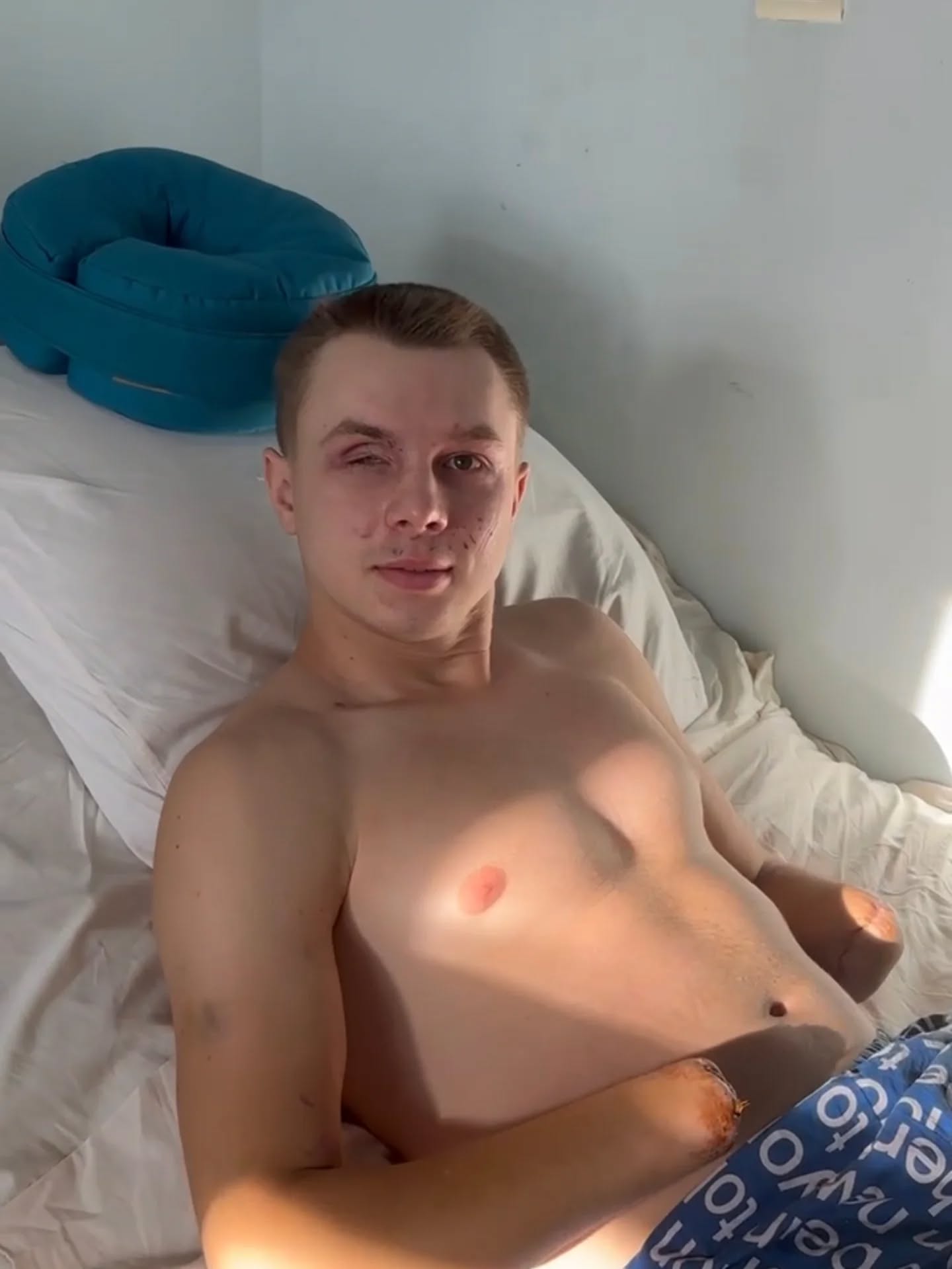
"SHOCK DULLS THE PAIN. THE GUYS BANDAGED ME UP, AND I SIPPED SOME WATER. I THOUGHT: I’LL GET PROSTHETICS, IF I DON'T CROAK."
- You so delicately skipped over the fact that your hands were blown off. It seems your hands and vision were affected—at least from what is visible today.
- No, I was mangled all over. My left leg was broken—a femur, an open fracture. The entire upper thigh was also sliced up. The right leg below the knee was shredded. The right arm was less damaged but was severely lacerated, and they ended up removing it at the hospital. I don’t know what their reasoning was, but they amputated it. They stitched it all up very neatly and surgically, though. Credit where credit is due.
- Yevhenii, quite a lot of time has passed. Do you remember your first thoughts when it happened and when you realized there would be an amputation?
- There was no critical distress. First off, it didn’t even hurt. A state of shock overrides the sensation of pain. The leg hurt a lot, but the hands didn't hurt at all. I just lay there, sipping some water; the guys bandaged me up, and I waited for the evac. I thought: I’ll get prosthetics, if I don't croak, of course.
- How quickly were you evacuated then? I assume it was fast, given that help was provided in time.
- I lay there for about three hours waiting. That’s relatively fast. There are cases where guys lie for 10 hours, which leads to tourniquet syndrome, and as a result, limbs have to be amputated much higher up.
Plus, I was acting as a medic because the unit was just being formed and we were short on personnel. Since I knew my way around tactical medicine quite well, I gave the guys some pointers.
I was first taken to Zaporizhzhia; I couldn't see anything at that point. I was wrapped up entirely like a mummy. Then, three or four days later, I was transferred to the Mechnikov Hospital in Dnipro. I spent a week there. That’s where they finally unpacked me, and I could see a little bit. But my vision hadn't fully returned yet. A week after that, I was moved to Feofaniia.
I didn't choose where I’d be treated. I just got lucky with my command; they were the ones who arranged the best treatment conditions for me.
There, they debrided the wounds, dressed them, stitched and re-stitched everything, and got me back on my feet. They put an external fixator on my leg, and I lay with it for about a month. Then they put a plate in. They gave me some consultations regarding my eyes. My arms were healing, too. Eventually, the stitches were removed, and that was it.
MY EXPERIENCE HAS SHOWN THAT A BIONIC PROSTHESIS IS JUNK. EXPECTATIONS OF IT ARE OVERBLOWN.
- How did you choose where to have your prosthesis made?
- It is a long story... I had my prosthesis made at the "Titanovi" center. Literally a couple of weeks after I was admitted to Feofaniia, Viacheslav Zaporozhets came to see me and promised to make the best prostheses for me. He is quite influential in his field. I was a person who had just been wounded and was in a very depressed state at the time. And I knew absolutely nothing about this subject. I thought: at least there is someone I can latch onto.
At that point, I did not yet know there were many prosthetics companies and that there was a choice. So I latched onto one manufacturer and believed him. He has a fairly well-developed system for winning patients over. In short, they made my first bionic prosthesis very quickly, literally within two months.
- So you skipped the mechanical prosthesis stage, even though that is what government Resolution No. 321 provides for? Under it, a bionic prosthesis can only be made after a year. How did that happen?
- Because Zaporozhets helped make it happen, let us put it that way. Although at the time I also thought bionic prostheses were the best option. Now I lean toward mechanical ones, because my own experience has shown that a bionic prosthesis is complete junk. At least in my case.
- Why? Does it lag?
- It is all individual; I cannot speak for everyone, but the people I talk to agree with me. I tried using a bionic prosthesis to open a car door and to eat, and it is inconvenient.
People have a somewhat distorted idea of bionic prostheses because they look like a hand. And in all those videos online, you get the impression that a person can supposedly function fully in everyday life with one. I am sure you have seen plenty of videos where people seem to drink coffee with it or tap a smartphone screen. But I have not seen, for example, that you can open a door with it or brush your teeth.
You cannot control it freely. In other words, you cannot move it the way you move a living hand. There are preset algorithms, and the prosthesis operates within those limits. The fingers move according to those preset algorithms through sensors. One sensor is placed on one muscle, another on a second muscle. I still have my forearm, and it all moves. So the sensor simply picks up a muscle contraction and translates it into movement in the hand. Three fingers close, three fingers open. Two fingers close, two fingers open. It is fairly primitive. And it does not add functionality. On the contrary, fine motor skills are unavailable. All it really lets me do is hold something in place. And I manage that perfectly well without a prosthesis.
To open a door with a key using a bionic prosthesis, I do not know how much time you would have to spend on it. So expectations of it are overblown, while in practice, it offers no real functionality. And that is not the prosthetists’ fault. That is simply the limit of the technology at this point.
- Do I understand correctly that after the bionic prosthesis, you also received a mechanical one?
- No, I actually did not receive a mechanical one. Although I do want to get a mechanical prosthesis for my left arm, because I know what I might need it for. Under Resolution No. 518, I still have the option of ordering a prosthesis worth 2 million hryvnias. I am just not using that option for now.
- So, how many prostheses do you have now in total?
- Three. The first was the one I got instead of a mechanical prosthesis. Then they made a second one for the hand, also a bionic one (I checked the registries, and it does not appear anywhere at all). I know what money it was made with, but I did not ask for it. That was the clinic’s initiative.
Then I received another one under the new resolution, which provides for substantial funding. Two of the prostheses are Ukrainian-made, and one is foreign-made.
THE STATE MANDATED A ONE-YEAR WAIT BETWEEN MECHANICAL AND BIONIC PROSTHETICS, NOT OUT OF STINGINESS, BUT TO ALLOW TIME TO CHOOSE
- Still, it’s unclear, why were they pushing a bionic prosthesis on you? Were you being convinced that a mechanical one was bad?
-The approach where lobbyists from prosthetics companies are allowed access to an amputee immediately is wrong. Imagine: a person is wounded, lying in the hospital, and suddenly a bunch of representatives from prosthetics firms show up—partly because they want to help, but also because there’s serious money involved.
The law gives a person time to adapt and think. I used to think the one-year gap required between getting a mechanical and a bionic prosthesis was just the state being stingy. Now, I’ve changed my mind. This time is given so a person can understand how they live and what exactly they need a prosthesis for.
And rehabilitation should be tailored accordingly. Even in my hospital room, I was already learning how to do things. I ate, brushed my teeth, walked, and washed myself. Then I’d go to a prosthetist who taught me how to move blocks from one place to another on a table. I’m sitting there thinking: how does this relate to my daily functionality? I mean, I need to eat, I need to brush my teeth, I need to sign a document. I’ve already learned all that, yet here I am moving blocks.
This year is given specifically for a person to realize what they can do without a prosthesis, what’s actually more convenient to do with just a magnetic wristband. For example, eating (the spoon sticks to the magnet, and I eat). As for driving, I can turn a standard car key without a prosthesis. I can shift gears without a prosthesis. Opening or closing a window, that’s a button. Turning on the ignition - a button.
For other tasks, I have a knife and a flashlight on my headphones. I also have a watch on my arm that I can use to eat, write, or wedge something into if I need to secure an object. Those are all my adaptive tools.
But for professional activities, a specific prosthesis is necessary.
- What activities do you use your bionic prosthesis for?
- I don’t use them at all, really. I have one prosthesis worth eight thousand dollars and another worth forty thousand. They’re both just lying around at home. Honestly, I think I would have been better off buying a good robot vacuum and doing some home renovations with that money.
- Really? What do you do for a living now? Apart from returning to sport.
- As for sports, I’ve been involved in them almost my entire life, up until the injury. After being wounded, I had a general idea of how to train. The point is to work the muscle. A hand is a tool; fingers are tools. That’s how I explain it to everyone: ten fingers are the most advanced, evolutionarily convenient tool.
Without them, my two fingerless hands are also tools. It’s just that some things are a bit harder or take a little longer, but overall, it’s doable. Regarding sports, I use various straps instead of fingers. I figured out how to sew them on for different muscle groups.
Bionic prosthetics, on the other hand, have nothing to do with sports; they aren't designed for that.
THE "TYTANOVI" CLINIC HAS YET TO DISCLOSE THE WHEREABOUTS OF THE $22,000 RAISED FOR ME BY PATRONS
- Among the additional devices designed for prosthetics to help adapt to different spheres of life, are there no items for sports? Why did you make those straps yourself?
- I had to do it myself because the organization where I received my prosthetics refused all my requests. They did so because you can’t squeeze any money out of that.
Later, I saw a catalog of adaptive items, but I didn't take anything from it. Although there were inventions similar to the ones I made myself.
- You mean "Tytanovi"?
- Yes. The state reimburses for bionic prostheses, but it doesn’t pay for the various gadgets a patient might want for convenience.
- There are several videos online where veterans who underwent prosthetics under Zaporozhets accuse him of fraud, but you are the first to agree to talk to the press about this.
- I am telling my story. But that’s just the thing—he has many positive cases and servicemen who support him. So my situation won’t change much.
- Was the preparation of the stump for prosthetics done well?
- Good prosthetists and rehabilitologists work there; they do everything by the book. I only had a bad experience regarding the prosthetic attachment method and dishonest communication.
- What exactly are you referring to?
- First of all, after making the cosmetic fashion prosthesis, they suggested I undergo osseointegration, inserting implants into my left arm. I agreed because Zaporozhets made a good first impression. But he stated that prosthetics using this method is not funded by the state, so 97,000 euros were needed.
I have acquaintances who agreed to fund 40,000 euros. Another half a million hryvnias in donations were transferred to Zaporozhets’ foundation. This happened in 2024. The state could cover the rest, the cost of individual components of the prosthesis.
- How were these agreements formalized?
- In April 2024, a tripartite agreement was signed, and the surgery was supposed to take place in June. Time passed. Autumn arrived, and I still hadn't been invited for the surgery. We started asking questions. We were told there was an issue with the certification and logistics of the implants.
Meanwhile, I was researching the osseointegration method and saw no advantages for myself. A year and a half had passed since the injury, and I was managing quite well without it. Plus, there are many restrictions and risks, and no long-term clinical studies on this method. So, in November 2024, when I came to have the plate removed from my leg, we informed them of our refusal of the surgery. Zaporozhets said: No problem. However, another six months passed, and he called to say my implants had arrived. This was already June 2025, a year after the surgery was supposed to have happened.
I asked why they had arrived if we had refused them seven months ago, and everyone had agreed. Zaporozhets presented me with the fact that 28,000 euros had been spent on them. Then I asked: where is the 22,000, the remainder of the 50,000 funded by patrons and well-wishers? We planned to spend it on a high-quality hand prosthesis or physical rehabilitation.
- Where did the money go?
- Unknown. I don't get involved because, effectively, it’s not my money. The patrons spoke with "Tytanovi" through their lawyers.
- Did you speak with those who had undergone osseointegration? Many prosthetic specialists express concern over the effectiveness of this method, as it carries many risks and side effects.
- Yes, I spoke directly with only one person who had osseointegration in their arm. His prosthesis mostly just hangs on a hook at home. I was told of only one case where someone actively uses such a prosthesis.
It’s everyone’s choice. Osseointegration is an attachment method that is perhaps slightly more convenient than a standard socket. If someone decides at their own risk that they’ll be better off with an implant, so be it. I didn’t find it useful for myself.
To repeat, I think it’s wrong that "Tytanovi" promotes osseointegration as the only possible option. They call everything else "the last century." That’s not true, because in many cases, a classic prosthesis is sufficient. And, for example, there’s no need at all to put an implant in a lower leg.
- Did "Tytanovi" help you in terms of restoring your vision?
- In the beginning, when I still had certain expectations of them and was, so to speak, charmed by their friendliness, I asked for an ophthalmologist consultation. They did sign me up for a clinic in Kyiv; I went there once and then stopped. I have a good acquaintance, a skilled ophthalmologist in Chernihiv, who has his own clinic. I continued treatment with him. He removed shrapnel from my eye, and now I have 100% vision; there are no problems at the moment.
I WILL NOT RETURN TO SPORT, BECAUSE I REMEMBER WHAT I WAS CAPABLE OF BEFORE THE INJURY
- Do you make motivational videos more for yourself or to support others?
- That is not really the point. I am not working anywhere because I am on a pension. Right now, I split my time between three homes: my girlfriend’s, my parents’, and my grandmother’s. With a state payment, I bought a house in Boryspil, but it still needs repairs.
My friends and acquaintances are all working in Kyiv. That is why I make videos, because I see social media as a serious communication tool. I have met a lot of new people there.
- Have you ever thought about joining the Paralympic team, for example?
- No, that is not something I am going to do, because I trained before I was injured. Adaptive sports at a competitive level do not interest me. Many guys find in sports a kind of therapy after being injured, and that appeals to them. But remembering what I was capable of before the injury, I am not going to compete anymore. Right now, I have chosen sports where I am on equal footing with everyone else: cycling, running, and chess.
- Finally, what advice could you give to male and female service members who are also facing amputations?
- Aside from my family, the first person to visit me in the hospital was Zaporozhets. But it should not have been that way. The first people to come should be veterans who have had similar injuries. In my case, it should have been people with arm amputations telling their stories. I would have been glad of that. I wish someone had advised me at the time not to rush, and perhaps first adapt some things at home for convenience. That is advice not only for veterans, but also a recommendation to the state.
Because when a person who still has both arms and legs comes in and tells you everything will be fine, that is not the same. I now have a friend who lost an arm, and he is not rushing things. He is visiting prosthetic centers and choosing carefully. I hope our request will be heard.
****
Following the publication of the interview, Viacheslav Zaporozhets, founder and director of the TYTANOVI Prosthetics and Rehabilitation Center, contacted the editorial staff of Censor.NET. He has a different account of the events and asked for it to be reported.
- In our conversation, you expressed the view that the interview with Yevhen Kholodnytskyi is not entirely objective. After all, in your opinion, there are some inaccuracies in this article. What exactly would you like to clarify in this situation?
- First of all, how did I meet Yevhenii? In an interview, he says that I went to Feofaniya and found him there. That’s not true at all. I have a friend and comrade, Anton Herashchenko (a former member of parliament—Ed.). He was the first person, along with Mikhail Fedorov, to start working with drones. Yevhenii happened to be a skilled drone operator, and Yevhenii's commander was a friend of Herashchenko’s. Yevhenii probably doesn’t know that Herashchenko helped the unit where he served.
When Yevhenii was wounded (and the worst part was that he was wounded in the eye), half an hour after he was wounded, his commander called Herashchenko, and Herashchenko called me. I was in Kramatorsk; we still had an evacuation team working there.
And Anton asked me to do everything possible—and even the impossible—to save Yevhenii's eyesight. We’d already dealt with cases involving blind boys, and it’s terrible because 50% of them end up dying.
We put him at the top of the evacuation list. It was very difficult to do at the time, because there was a huge influx of wounded soldiers. It was fortunate that Yevhenii was in the Zaporizhzhia sector. My friend, Colonel Kuzev, was in charge of the Zaporizhzhia hospital at the time. While the evacuation was underway, we searched for an ophthalmology professor, since there was no such specialist in Zaporizhzhia. I took charge of this personally, provided a vehicle, and we brought a professor from Dnipro who operated on Yevhenii all night long.
Yevhenii doesn’t know this or has forgotten, but his father remembers it. I then arranged for Yevhenii to be transported from Zaporizhzhia to Mechka, and from Mechka to Feofaniya. So when people write that I go around Feofaniya looking for patients—that’s not true. I’m truly proud that Yevhenii is living a full life now and that we saved his eyes.
What happened next? Next, his commander asked us to make him a bionic prosthesis as soon as possible. How was that even possible? It was thanks to my efforts that we amended Resolution 518. That’s why it’s no longer prohibited to manufacture a bionic prosthesis as a primary option. Instead, you are relying on Resolution 321. These changes were made in November 2024.
- So, were the changes made after Yevhenii's bionic prosthesis was manufactured, or at the very same time? This is the key question: why wasn’t he given the option of a mechanical prosthesis?
- That's exactly when. We "closed" it in early 2025. By the way, the initial prosthesis wasn't made by us, but by our colleagues at "Ortho-Pro."
- Every other wounded person I’ve spoken with who has undergone an amputation complains about rushing into things: they got a prosthesis without thinking it through, and now they regret it—whether because of the quality, the type of prosthesis, or the preparation of the stump. This is just my own small, subjective observation, but it highlights a problem.
- We’ve fitted over a hundred people with prosthetics. Let me tell you more. There are very few prosthetics centers in our country that make good upper-limb prostheses. There are literally only 2 or 3 centers that make arms properly. Most of our patients come to us after their initial prosthetic fitting and ask for bionic prostheses. We invite you to our center to actually talk with veterans who are just learning to use bionic prostheses and with those who have mastered them. And you can draw your own conclusions: do they use these prostheses in their daily lives or not.
- The main accusation against you concerns the money for the implants, which Yevhenii refused, but this was not confirmed in writing. And there was still 22,000 left.
- Yevhenii and his family didn’t refuse the implants; otherwise, we wouldn’t have manufactured or shipped them. What’s even more disappointing is that when I brought surgeon Rickard Brånemark to Ukraine a year ago in May, I brought him specifically to perform osteointegration of Yevhenii's forearm.
And I had warned Yevhenii about this a month earlier. I said, "Yevhenii, the implants are ready, and Ricard has agreed to come to Kyiv. Please make a decision." He didn’t reply, so we didn’t cancel Ricard’s visit—especially since we had another surgery scheduled. And two days later, I wrote to Yevhenii again and asked if he was going to have the surgery. He said "no." No problem, especially since the money allocated for his implant was provided by the logistics company DSV.
- What happens to the rest of the money?
- We've come to an agreement with DSV and are now providing treatment to veterans who worked for their company. In other words, we're using this money, even though we've simply returned the implants to the manufacturer. Once they sell them to someone else, we'll be able to get the funds back.
Actually, I think Yevhenii is upset with me. It’s no coincidence that he keeps bringing up June 2025. In May, Ricard Brånemark (a Swedish surgeon and pioneer of one of the methods of osseointegration) came to visit, but Yevhenii refused to have the surgery. And almost a month later—on June 5—Yevhenii asked to borrow $10,000 to buy a home. But by then I was no longer a businessman and didn’t have the money. I wanted to help and offered him a home in Protsiv—a smart house from the series I had built before the war and given to veterans with amputations. Yevhenii refused because the government subsidy he had received was to be spent on a home with an area of at least 60 square meters. Although I wanted to give him the smart house as a gift.
And so, after that conversation, our relationship soured, even though it had been fine up until then. People started demanding that I return the remaining funds—in particular, Yevhenii's father asked me to do so. But even if there is money left over in the charitable foundation from a particular program, I cannot return it to a private individual. I can use it for other charitable activities.
This ended up with the donor company, DSV, filing a claim against us. In other words, Yevhenii had misled them. We had also had a good relationship with them prior to that. We met with them and provided a full account: we showed them the invoices, payment records, and implants. After all, there had been no written refusal from either Yevhenii or the donors.
Yes, Integrum delayed the delivery of the implants because it did not have a U.S. license for a certain period of time. These are custom implants—that is, they are not mass-produced—and they are manufactured in the United States. That is why the delay occurred.
By the way, the plate was removed from Yevhenii's leg at our partner clinic, Mirum, and I paid for it. That is, I used DSV’s funds, and DSV subsequently reimbursed me for that amount.
- Why is easier access to bionic prosthetics so important to you?
- For me, easier access to bionic prosthetics isn’t a matter of principle. So that’s not quite the right way to phrase the question. I’m very sorry that Yevhenii didn’t want to learn how to use bionic prosthetics. And he showed a lot of promise in that regard. He stopped wearing prostheses; he really learned to live without them. I once asked him: why are you showing everyone that it’s cool that you can open a car and drive without a prosthesis on your own? ... It’s cool, but why say that bionics aren’t necessary? His statement is dangerous because this path isn’t suitable for most people. Imagine if one of the relevant officials reads this interview and says: "Let’s repeal the amendments to the resolution, and let the guys start with mechanical prosthetics for a year, and then some commission will decide whether they need bionics."
It depends on the person. For example, some people like to get around by bike, others by scooter, and still others by electric car.
- In this case, Yevhenii also emphasized that each person decides for themselves on the prosthetic method and type of prosthesis. For some, bionics or osseointegration may be a better option.
- I call it the butterfly effect. Young, tough guys with a strong spirit get wounded, and then they realize they’ll never be the same as they were before the injury. Do you see what I mean? It affects their attitude toward life and those around them. It’s a psychological burden, and we don’t have a system that allows these guys to keep working, get the housing they want, or pursue a career.
By the way, we’re currently setting up a training center. At first, the guys will undergo training, take an exam on how to use the bionic device, and only then receive a bionic prosthesis. Right now, it’s the other way around: we filed a request under Resolution 518, ordered the bionic prosthesis, and then we’re trying to teach him how to use it. But he says he doesn’t want to learn. So what then?
And we have a lot of work ahead of us, because there are so many wounded people. It’s enough work to last a decade. And we need to come together, make mistakes, and correct them. Mistakes are always going to happen. Those who don’t work don’t make mistakes. And I urge all prosthetists to come together and share their experiences.
Olha Skorokhod, Censor.NET


