



"We shot down Ka-52 helicopter, worth $16 million, with FPV drone on fibre-optic cable costing one and half thousand," – Commander of "High Altitude Predators", Condor
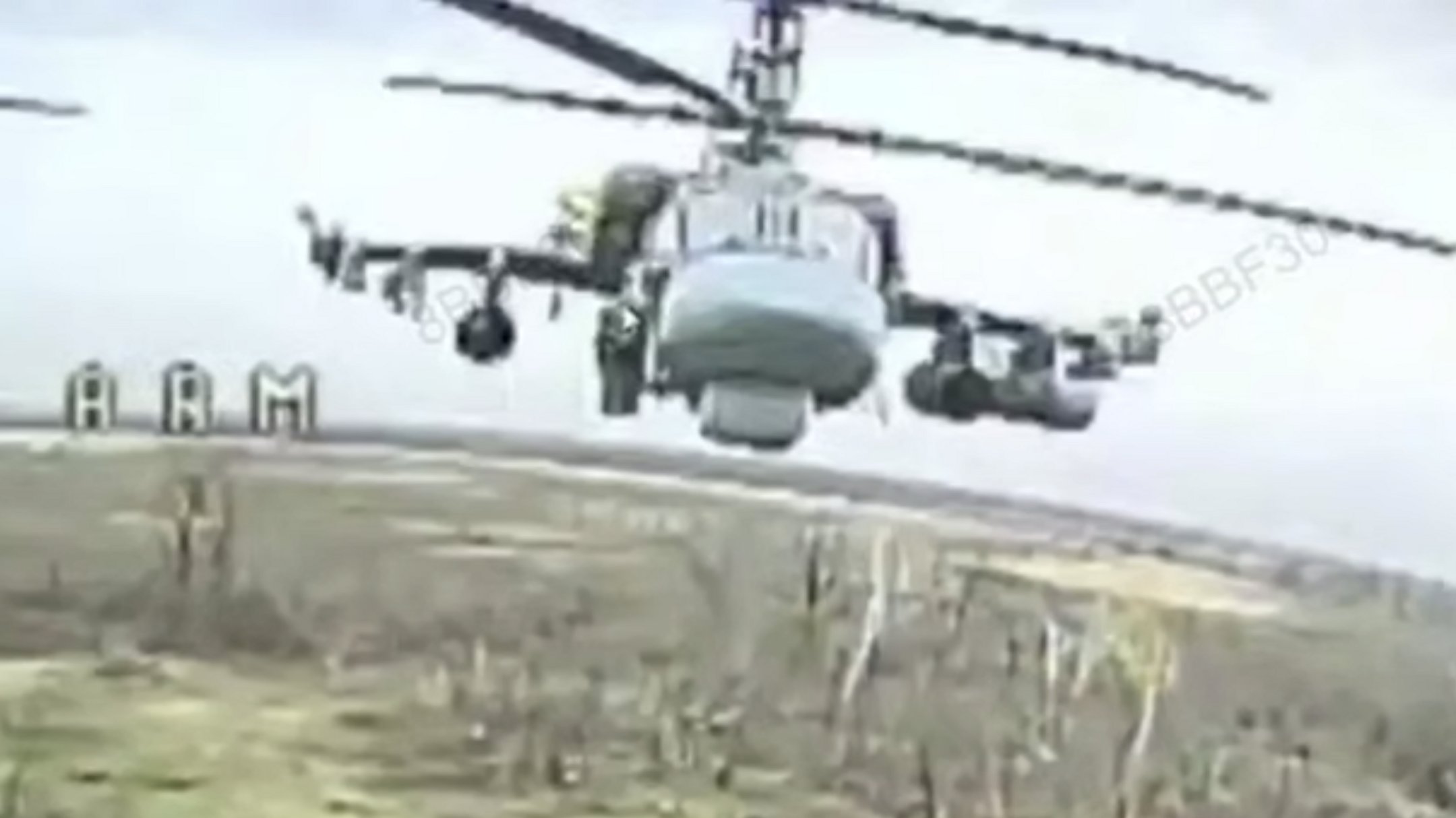
This is the second Russian helicopter downed by pilots from the "High-Altitude Predators" unmanned systems battalion of the 59th Brigade. At the end of September last year, the same crew shot down an Mi-8. So far, this is the only crew that has been able to effectively hunt down helicopters.
A still from a drone feed clearly showing an enemy helicopter went viral last Friday, spreading across both the news and social media. At this moment, the helicopter itself seems a little taken aback – because the very next second it will burst into flames. Results like this from Ukrainian pilots are very encouraging and motivating. You don’t always need a big machine to dominate the skies. Sometimes a small FPV drone, seemingly with a modest payload, is enough – yet it too can inflict irreversible damage.
I was lucky enough to hear the reaction during the live stream from the drone control centre. There… wasn’t one. Once the impact had been recorded, the helicopter… was brought down. But it was ablaze, and it was clear it would never take off again. Until the helicopter crew, who had run away from the burning machine, were also neutralised, no one observing and controlling the situation expressed any particular emotion. Hunting requires a cool head and maximum composure. Real hunters were at work here, who know their job well.
We spoke to the unit commander about this remarkable operation. Maksym, call sign ‘Condor’, revealed some of the secrets of his unit’s work. Of course, not all of them, as this work demands secrecy.
"BEFORE WE ACHIEVED SUCCESS, WE HAD OUR FAILURES"
The 59th Brigade has been carrying out missions in the Donetsk region for several years now, almost on the border with Dnipropetrovsk region. And within its area of responsibility, the enemy has failed to break through into the neighbouring region, where it is so eager to get. It has succeeded in some areas. But not where the 59th stands in its way.
"Helicopters haven’t been active in our area of responsibility for a long time," says Maksym, commander of the "High-Altitude Predators" unmanned systems battalion, call sign "Condor". "They hadn’t been here for over a year – until early autumn 2025. Their first sortie was very bold – six or seven helicopters flew in at once. Usually, they operate in pairs or with four helicopters flying together. But here – we saw seven! And they started operating in our direction almost every day. Until the moment we shot down their helicopter. That happened on 29 September 2025. We hit the Mi-8 with a standard analogue FPV.
No one had done anything like that before. We set ourselves that task. We thought about what was needed to make it work, and how we could do it. Because the enemy was operating in such a way that it was impossible to hit them with a MANPADS – the missiles didn’t reach them. So we decided to try hitting them with a FPV.
We spent about a month trying to target helicopters. There were a couple of unsuccessful attempts. The FPV drone flies past the helicopter. And it lacks the speed and manoeuvrability to turn round and catch up with the helicopter. There can only be a single attempt here. The FPV’s speed is several times slower than that of a helicopter. We can only fly head-on. That’s why it’s important to choose a direction so that we’re moving directly towards it. The pilot’s skill and analysis of the situation play a major role in this. And one day we succeeded.
- Did you study when and how the Russians operate?
- Yes, we watched them closely, studied their routes: where they launch from, where they head off to. We observed and analysed them every day.
After we shot down a helicopter on 29 September, they stopped flying in our sector. They were operating in neighbouring brigades; they didn’t give them a moment’s peace. They didn’t fly into our sector until early 2026. In January, towards the end of the month, they reappeared. It seemed to us that they had become more brazen than those who had operated previously. They started flying closer to the front line. But we already had experience. So, we started hunting helicopters again, studying their tactics and routes. We listened to reports from the infantry – because the lads in the trenches hear the noise of helicopters before anyone else. To be honest, up to that point we’d also had unsuccessful attempts to shoot one down. More than one crew had been working on it. Both with analog systems and optics. And yet we achieved a result – we hit a Ka-52 with a FPV using fibre optics.
- How much did the FPV you used cost?
– 65,000 hryvnias. About one and a half thousand dollars. And the Ka-52 helicopter, also known as the ‘Alligator’, is worth 16 million dollars!
"THE SON OF THE RUSSIAN COMMANDER OF THE AVIATION UNIT WAS KILLED IN THE Mi-8 WE SHOT DOWN IN SEPTEMBER"
"Whether it was the first time or the second, we all felt the same emotions," Maksym continues. "It’s not as though we were any happier or less happy the first time than we are now. Whether then or now, we’re absolutely delighted with the result. You feel the initial emotions the moment you watch the live stream from the FPV, when it clearly hits the helicopter and the stream cuts out. That’s good! We hit it! The primary result is there – the helicopter has been hit. Then we watch the stream from the Mavic or a larger drone. In the first instance of a shoot-down, we immediately saw a massive fire because we’d hit the fuel tanks. But now the FPV had detonated, yet the helicopter continued to fly with no outward signs of damage. Unlike the Mi-8, the Ka-52 has light armour…
To be honest, the initial joy of hitting the helicopter turned to disappointment. On the one hand, we’d done everything right, but it was still flying! A minute passes – it turns round. It didn’t fire! And we saw a fire smouldering at the point of impact, and it was flaring up. We watched and were glad that we’d hit it after all, inflicted damage, and hoped it would catch fire more. If you listen to the recordings of those observations, you can hear us shouting: ‘Come on, fall down, burn already.’ And the vehicle gradually caught fire. But the pilots managed to land the helicopter and run out before the munitions detonated.
From the live streams, we saw that they had taken cover in an anti-tank trench dug near where they had landed. Two Russian helicopters were circling above the landing site. They clearly wanted to land to pick up the pilots, but our artillery stepped in and prevented them from landing. And the crews of the ‘Madyar’s Birds’ unit fired on the pilots.
- The Russian news said they were alive, that they’d been rescued…
- They always lie. After our first hit, Russian Telegram channels and news outlets also claimed that everyone was alive, everything was fine, and there were no problems. But we clearly saw and documented that the pilots were killed both then and now.
In the previous helicopter, there was a senior lieutenant – the son of one of the aviation brigade commanders. He was posthumously awarded the title of hero of russia. He was probably a good pilot. But he became even better.
It is no secret that aeroplanes and helicopters are not flown by ordinary soldiers. They are, at the very least, senior officers, confident and experienced pilots. We could see this clearly from the way they flew into our airspace and how they operated.
- Were both helicopters shot down by the same crew of pilots?
- Yes.
- Will the lads now be working exclusively on air targets? Will there be a specialised crew, so to speak?
- Of course not. In fact, all our crews are among the best and can engage any target. And they all engage whatever targets come their way. Anything that moves and poses a threat is a target for them. And it wasn’t just one crew working towards the result of shooting down a helicopter. We immediately understood how to do it. So this is an expected result. We worked on this for a long time – it is a long and painstaking process. And so this is an achievement for our entire great team. Whilst with the first helicopter we were more hopeful that we would succeed, now we clearly understood that it was possible and expected the result. We knew that sooner or later, the result would come.
The 59th Brigade’s Unmanned Systems Battalion is the first of its kind in the Land Forces. Soon after its formation, similar units began to be established rapidly in other battalions and brigades. This battalion began to be formed in 2023. Therefore, the crews have ample experience and training.
- Since the start of this New Year, we have doubled in size and are expanding, - adds the battalion commander. – "High-Altitude Predators" – that is the name the battalion was given last year, sometime in October. The name is directly linked to the brigade’s name, "Steppe Predators". I took command of the unit in September 2024.
- The crew that shot down the helicopter was awarded the Order of Courage, 2nd Class, on the very same day…
- They received the third class precisely for the previous shoot-down.
- Let’s hope the lads get the first-class orders too – and also for shooting down yet another Russian helicopter.
- We’ll do everything we can to make that happen!
…For anyone who wants to take pride in the latest work of the ‘High Altitude Predators’ pilots, here is the current fundraising link – the lads are constantly buying the necessary equipment to improve their capabilities. Please support them too.


