



"As long as war continues, there will be no elections in Ukraine. This is clearly articulated political and legal position," - Andrii Hevko, member of Central Election Commission
Despite the fact that the war in Ukraine has been going on for five years and almost no one is talking anymore about a ceasefire that was supposedly coming soon, the possibility of holding elections remains at the forefront of everyone’s mind who is involved in Ukrainian politics. If for no other reason than that without a renewal of the elite and this key democratic process, Ukraine will inevitably lose the dynamic European future for which it is fighting against the Russian occupiers.
On the other hand, there is no doubt that the first post-war elections will be the most difficult to organise. Organisers will face extremely complex challenges: is it possible to enable millions of Ukrainians abroad to vote? How can voting logistics be arranged for internally displaced persons? On what basis should voting arrangements be organised for military personnel? Where can staff be found for polling station committees, particularly in the de-occupied territories?
These are just a few questions from a long list of electoral issues. Andrii Hevko, a member of the Central Election Commission, helped "Censor" find the answers.
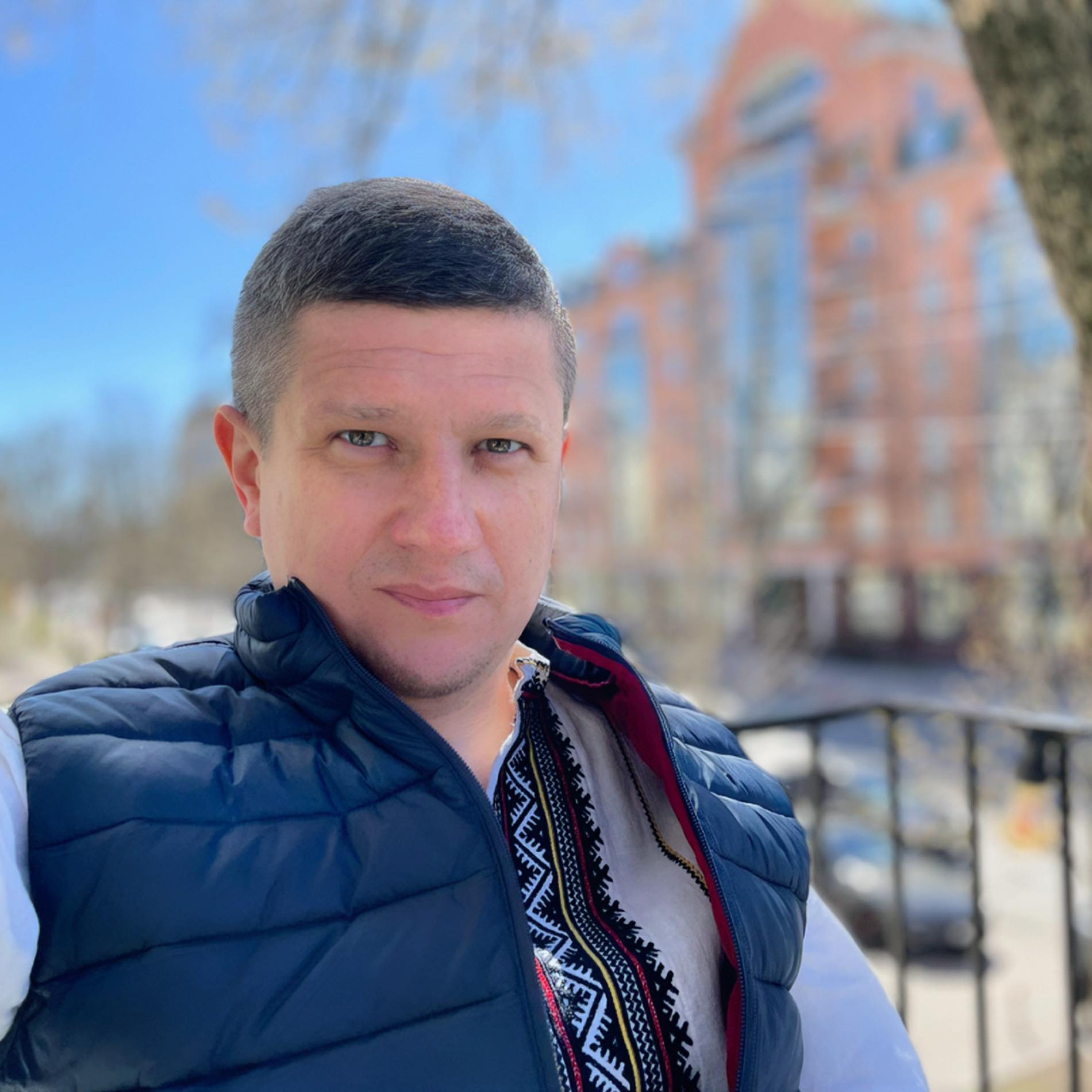
- Let’s start with elections during military operations. This possibility was discussed in the media last year – and with great concern, as we were under considerable external pressure. Nevertheless, experts, politicians, military personnel and lawyers all seemed to speak out in unison against this option and cited dozens of reasons why it should not be done.
So, will there be no elections during the war?
- No, there won’t be. This is a clearly articulated political and legal position. Holding elections is impossible until hostilities cease and the legal regime of martial law is lifted.
- But if we were to be guided purely by political expediency, is there theoretically a loophole that would allow elections to be held even under extremely unfavourable conditions? For example, the lifting of martial law for the purpose of holding elections?
- Theoretically, such an option is possible. However, given the current circumstances, I do not see any prospect of such a scenario being realised.
- Since early January, a working group has been operating in the Verkhovna Rada to prepare legislative proposals regarding the specifics of organising and conducting elections under a state of emergency (martial law) and in the post-war period. Are you following the development of the draft post-war election law? I have heard estimates that 65% of the draft legislation covering the first half of the elections has been finalised, and that another month will be needed to draft the full text. Do these estimates match your own?
- I am following the working group’s work via broadcasts of its meetings. We have commission members who have been delegated to this working group. So far, I do not see the participants moving directly to drafting the bill itself. I see an understanding that the bill developed by the Central Election Commission will serve as the basis. This has been noted on several occasions during the working group’s meetings.
It is premature to speak of specific deadlines for the preparation of such a bill, as the previously announced deadlines have already been missed, which may be justified given the need to take many important aspects into account.
- One of the issues still unresolved is the regulation of cryptocurrencies in the electoral process. Please explain what this entails.
- This concerns foreign interference in elections, which encompasses manipulation and influence by foreign countries (FIMI – Foreign Information Manipulation and Interference). We see how, in global practice (for example, in Romania and Moldova), social media and crypto-assets are used to bribe voters. In particular, in Moldova, cryptocurrency has become one of the main tools for large-scale voter bribery and the financing of pro-Russian political projects. In Ukraine, meanwhile, Telegram is actively used by Russia for recruitment.
- And does cryptocurrency play a leading role here?
- To what extent can this issue be regulated within the electoral process? In my view, it is premature to discuss the legalisation of cryptocurrency in Ukraine’s electoral process, as the circulation of crypto-assets is not regulated in Ukraine as a whole. This issue should be addressed within a national context, and only then in the context of elections.
- You mentioned Romania and Moldova as countries that already have experience in combating external interference in elections through the use of social media and cryptocurrency. Does the CEC receive guidance from these countries, or is this solely the prerogative of law enforcement agencies?
The Central Election Commission maintains close communication with the administrative bodies of those countries that have experience in countering external interference in the electoral process. We cooperate to exchange experience regarding this multi-faceted interference, which includes disinformation campaigns, voter bribery, and cyber-interference in the information systems of state authorities.
It is not within the CEC’s remit to apprehend criminals. However, should any threats be identified, we must establish effective protocols for cooperation with law enforcement agencies to minimise the risks of such interference in the electoral process.
- So does such cooperation already exists?
- We are working in this direction. With the support of international partners, we have already conducted simulations to practise a coordinated response between different government bodies, where each acts within its own mandate. Our aim is to ensure the readiness of the state as a whole, and not just the CEC, to respond to possible external interference in the electoral process during the first post-war elections.
We realise that the enemy is adapting its methods of influence following setbacks in the elections in Hungary, Romania and Moldova. We must be aware of this, not be overconfident, not claim that we are ready – but simply work methodically and start preparing today for new challenges and threats from our enemy in the first post-war elections.
The Russians are very adept at exploiting sensitive social issues, such as matters related to mobilisation. Therefore, the readiness of both the state and society is of critical importance. Citizens must possess a sufficient level of critical thinking to distinguish between truth and manipulation.
- It is widely acknowledged that this electoral law, if passed, will be a one-off measure, tailored to the specific post-war conditions. So what exactly makes it a one-off?
- This law is likely to be a one-off measure, as it is intended to resolve specific post-war conflicts, in particular the sequence of presidential and parliamentary elections.
It also needs to be discussed which provisions should be incorporated into the Electoral Code and which will remain one-off. For example, the current regulations on voting abroad, which provide for only 104 polling stations at diplomatic missions, are irrelevant to reality due to the mass forced migration of citizens. There is no certainty that all these citizens will return in the coming years, so a decision must be made as to whether polling stations outside diplomatic missions will be opened only for the first post-war elections.
- There is really no certainty that all these citizens will return in the coming years. It seems there is more certainty to the contrary.
- This raises the question: will we have to hold future elections abroad as well, opening polling stations outside embassies? If so, there is a need to introduce a provision into the Electoral Code regarding the possibility of opening polling stations outside diplomatic missions. So that this rule applies to future elections as well.
Next is the question of the electoral system. The current system, as provided for in the Code, is progressive but designed for peacetime. It does not correspond to the realities of the post-war period, when there are 3.7 million internally displaced persons (IDPs) with the right to vote https://www.ioc.gov.ua/en/analytics/dashboard-vpo, millions of citizens abroad and military personnel in the conflict zone. This is a large number of voters who will be voting away from their main place of residence. And these factors, in my view, will influence the choice of electoral system to be applied in the first post-war elections to the Ukrainian parliament. Therefore, the electoral system is likely to be a one-off measure for the first post-war elections, after which it will be possible to return to the current provisions of the Code.
- Let’s move on to the categories of citizens that pose problems in terms of organising the electoral process after the war. Will Ukrainians in the temporarily occupied territories be unable to vote?
- It will be impossible to organise the electoral process in the occupied territory. That is a fact.
- ...because there is too much risk for both the people and for Ukraine, so it would be impossible for us to accept the results of such elections. Also because we remember Putin’s words: ‘Set up polling stations on Russian territory; we have many Ukrainians here...’
- Putin is keen to exert maximum influence on the Ukrainian elections. We can therefore expect repeated calls from him to open polling stations both in Russia and in the occupied territories.
- Let us then move on to voting by the military. We are talking about post-war elections, but we understand that even after the war, Ukraine will have a significant military presence on its borders, and not only there. To what extent is it possible to ensure that the military have both the right to vote and the right to stand for election?
- If we are talking about the right of military personnel to vote, we already have some experience of organising such a process. Let us recall 2019, when there was experience of organising special polling stations, which were set up on an exceptional basis. During the presidential elections, around 80 polling stations were established. The military organised this process — and, in my view, they did it well. Of course, the situation was different then — nevertheless, the military already has such experience. It is not a simple process; there are many problematic issues, which is why a separate working sub-group, headed by Roman Lozynskyi, is operating within the Working Group in the Verkhovna Rada. But there is one point here that I would like to highlight.
- What is this about?
- At present, the Electoral Code regulates only the procedure for establishing such polling stations. This ‘lack of regulation’ provides the necessary flexibility. Excessive legislative regulation could disrupt the process, given the security situation on the contact line.
As the number of polling stations will increase significantly compared to 2019, a balance must be struck between the transparency of the process and security considerations. Our main task is to enable military personnel defending Ukraine to exercise their right to vote.
- Internally displaced persons: is there currently any information on how many are registered and how many are in the grey zone for various reasons? Roughly.
- We can refer to the official data from the IDP register. As of now, there are approximately 4.6 million, of whom around 3.7 million are citizens aged 18 or over who are eligible to vote.
It is difficult to speak about the grey zone. The total number of voters in the government-controlled territory, according to the State Voter Register, is approximately 26.7 million. In fact, this figure includes Ukrainians who left the country during the full-scale invasion, as most of them did not change their registration details. They are still ‘residing’ here. And we do not see this figure.
The same applies to internally displaced persons. People who move do not change their place of registration. They simply register in the IDP register. The most important thing here is to provide these people with a user-friendly tool for changing their electoral address, so that they have the opportunity to exercise their right to vote. We have already proposed a number of ways in which this can be done at this stage.
- An easy-to-use tool is good, but there are even more fundamental fears that cannot be avoided in post-war elections. Do you see any such fears?
- I think there will be fears related to the mining of polling stations. The security factor will be very much present.
The enemy, unable to establish a ‘fifth column’, may try to disrupt the elections using such methods; as was the case in Moldova, where ‘fake bombings’ took place at overseas polling stations.
- And how did they resolve this issue?
- Local services responded in accordance with protocols, assessed the security situation, and the polling stations continued to operate. I think we should also be prepared for such situations within the country. Incidentally, we receive daily phone calls about ‘fake bomb threats’ against various premises. And, in principle, the state is able to respond to these calls effectively. But we will communicate certain guidelines to voters on how to react to such situations. And here, the issue of communications during the elections will be key. We have already developed a communications strategy for the post-war elections. We are currently working on a plan to implement it. There are many issues that need to be explained.
- For example?
- Even after martial law is lifted, the threat of air raid alerts will remain, so every polling station needs signs pointing to the nearest shelter.
A key issue will be ensuring the accessibility and proper organisation of the electoral process. Due to the increase in the number of voters, particularly veterans, people with injuries, concussions, experience of traumatic events, and others with direct experience of war who will require additional support in their interactions, it is important to prepare polling station staff in advance to avoid potential conflicts. This requires more in-depth training for election commission members on appropriate communication, expected behaviour, and reducing unnecessary distractions within the premises, particularly unusual sounds and signals. We are already working on these issues, preparing training programmes and conducting accessibility checks on the premises themselves.
- A separate issue is the shortage of polling station committee members. And if the enemy were to stoke an epidemic of fear...
- This is a pressing issue. As the last elections took place six years ago, the staff of precinct electoral commissions will be new and largely inexperienced. Training electoral commission members will be one of the priorities for the Central Election Commission.
It is very important that political parties and candidates, who are responsible for nominating election commission members, also involve war veterans in this process. Experience in the US shows that the presence of veterans at polling stations increases trust in the process. Furthermore, this will facilitate communication with veteran voters.
- In the first post-war elections, not only will the polling station committees be significantly renewed, but so will the electorate. Because they haven’t voted for so many years.
- Thus, our last (local) elections were held in 2020. Since then, a whole generation of people has come of age. And as of now, 1,840,000 such voters are included in the register.
- Are the vast majority of these people in Ukraine?
- We don’t know, because they are young people; they may well be outside Ukraine. But these people have no experience of voting. And it is very important that they go out and vote. We will appeal to their civic duty and distribute explanatory materials among them.
- The next topic is voting abroad. Theoretically, how many votes from Ukrainians abroad should we expect with maximum turnout? If everyone wanted to vote and had the opportunity to do so?
- Estimates vary; we base our figures on UN and Eurostat data regarding citizens who have sought protection. There are estimates of around 4 million voters, but I would treat these figures with caution.
The problem is that the state has minimal communication with its citizens abroad. The existing consular registration system was created for other purposes and is not up to the scale of the challenge.
- That is precisely what I wanted to ask about. You mentioned approximately 4 million abroad. Now for the harsh reality: am I correct in understanding that only those registered with the consulate will be able to vote abroad?
- That is precisely why the Commission, in its proposals, suggests introducing a mechanism for active voter registration to determine the approximate number of voters intending to vote in national elections on the territory of a foreign state.
Consular registration has its drawbacks: it is a paid service and citizens lack the motivation to go through with it. Reviewing this public service is the prerogative of the Ministry of Foreign Affairs.
- Is there an average figure for how many Ukrainians worldwide are registered with the consulate? Is it true that it is less than 10%?
- According to our data, it is approximately 387,000 voters.
- Why is that? Do people not want to draw attention to themselves during the war because men of conscription age are nearby? Or is there simply no motivation to make the effort to travel somewhere and register: why bother, what’s in it for me?..
- I think the main reason is logistical problems and the inaccessibility of the service. The need to travel to an embassy or consulate to register is a significant deterrent.
- Another huge problem is the paltry number of polling stations abroad. How can we drastically increase the number of polling stations in a particular country? This requires a great deal of painstaking work, primarily on the part of the Ministry of Foreign Affairs.
- First and foremost, this issue must be resolved at the legislative level. Over the past three years, the Central Election Commission, in conjunction with the Ministry of Foreign Affairs, has been carrying out significant work, visiting European countries where large numbers of Ukrainians reside. During these visits, we meet with our colleagues from the electoral administration bodies, who tell us about the various restrictions that exist in their countries regarding other countries holding elections on their territory. There are countries where this is not prohibited, and they may even assist you. And there are countries where there are certain legal restrictions on other countries holding such elections.
- Specifically?
- Certain restrictions and difficulties may arise in the Czech Republic and Germany. That said, large-scale elections are held in Germany by Romania and Moldova.
- So it’s precisely with them that we need to consult, so as not to reinvent the wheel?
- Definitely. We are consulting with the election administration bodies of Moldova, Romania and Poland, whose experience is relevant in terms of logistics and interaction with local authorities.
- Could you give one or two examples?
These could be purely practical aspects: where it is permitted to open polling stations (for example, in schools or libraries), taking into account the local opening hours of such establishments. Or the need to inform the Ministry of Foreign Affairs of the partner country about the dates of the elections.
- Does a factor such as the number of Russians living in a given country have an impact?
- This is a security issue; it is also a factor. Cooperation with the law enforcement agencies of the countries concerned is important here. We are talking about ensuring law and order and public safety around polling stations, not about a physical presence at them. It is also clear that in every locality where a polling station is to be set up, the local authorities and local police will need to be informed.
- Who are sitting there sighing, because for them our elections are an extra headache?
- Actually, no. For European countries with significant Polish, Moldovan and Romanian diasporas, this comes as no surprise. They take such challenges in their stride. It is a matter of establishing proper cooperation: many countries are ready to assist us in holding our post-war elections.
- Are statements by politicians from these countries – such as ‘Ukrainian men, what are you doing here? Go home and fight’ – one of these challenges? Could such rhetoric affect our voter turnout?
- As the elections will take place in the post-war period, such harsh rhetoric is likely to subside.
The time allocated for election preparations following the lifting of martial law must be used to encourage Ukrainians to return. This will strategically reduce the challenges of organising voting abroad.
- A frequently asked question: what percentage of Ukrainians (of those who left the country at the start of the full-scale war) will return home?
- This is not within my remit. However, dynamic research by the Centre for Economic Strategy shows a downward trend in the percentage of citizens planning to return, and as of February 2026, this figure stands at 43%. The longer the war lasts, the more people adapt to their new lives, and the lower the return rate will be. This is an objective reality that requires a targeted state policy to encourage repatriation.
- Returning to the issue of polling stations. How drastically, as far as possible, can the number of polling stations in a foreign country be increased?
- The primary task is to introduce, at the legislative level, a mechanism for the active registration of voters abroad, which will allow citizens to declare their place of residence and their wish to vote. This information will form the basis for determining the need for polling stations, as the necessity for them varies depending on the country.
- And what should our law enforcement agencies be doing in cooperation with foreign law enforcement agencies? Protecting these polling stations from possible provocations?
- Public order is maintained exclusively by the law enforcement agencies of the host country. Cooperation is limited to informing local law enforcement agencies of the time and location of the elections.
- Now let me look at it from another angle. We hear from politicians: Ukraine needs to expand the network of polling stations beyond diplomatic missions to ensure the right to vote for millions of refugees abroad. But that is what they say publicly. At the same time, one hears that those same politicians, – at least the leading parties influencing the situation – are not particularly keen on maximising voter turnout abroad. Have you heard anything like that?
- Personally, I haven’t come across such claims. My position is clear: we must ensure that all citizens of Ukraine have the opportunity to exercise their right to vote, regardless of where they are. After all, this right is guaranteed to them by the Constitution of Ukraine.
- Let me elaborate on my question. Politicians are reacting to the fact that a significant proportion of those Ukrainians who have stayed behind view those who have left negatively. It is sad to say, but it is a fact. And for them, the politicians, those who vote in Ukraine are closer to their hearts, whilst ‘overseas voters’ may feel like a severed limb. So are our decision-makers actually interested in ensuring that Ukrainians abroad can vote?
- In my view, our key task is to bring citizens home. Any severing of ties with Ukrainians who have left the country due to the war (in particular, depriving them of their right to vote) will only push them further away from the state. This is counterproductive.
- The inevitable question of money. Are there at least rough estimates of what it will cost us and our partners (or rather, them) to restore the infrastructure for holding the elections?
- There is no point in discussing figures, as the war is not over. The circumstances in which we will hold these elections will be a completely different story. But there are certain basic requirements, and we understand what we will need funding for. The first issue is polling stations, as the premises of a significant number of polling stations are currently damaged or even destroyed.

- This is what we read about every day in the news feed: a drone has hit a school, a library, a hospital...
- ...a community centre and so on – these are all resources for polling stations. We have been monitoring this for months and can see the number of destroyed polling stations. One scenario is where windows have been smashed; clearly, these premises need to be repaired and will be used. Another scenario is when the premises are completely destroyed; in that case, local authorities request that another building be used as a polling station. We carry out this monitoring continuously and amend our resolution on the register of polling stations once a quarter. This is very important. And the issue of polling stations in de-occupied territories where active military operations took place will be particularly acute. We are talking about the availability of premises such as schools. These are mainly premises that are on the balance sheet of local government communal property.
A separate issue is logistical support. In some places, we have suffered losses of ballot boxes. (Again, this concerns territories where active military operations took place.) We have also accounted for these matters. There are estimates that a certain number of new ballot boxes need to be produced.
Next is the issue of the election information and analysis system, its security, and so on. We are already working on this, but the question of state funding for these measures is also relevant today. In some cases, we are covering the costs with donor funds – but this issue also requires state funding.
- There are certain nuances here: first of all, you need to know what the electoral system will be for the parliamentary elections.
- Exactly. The ‘Elections’ IAS is designed for the 2019 electoral system. Since the system laid down in the Electoral Code is different, and the post-war system is likely to be different, it is impossible to update the IAS until parliament has decided on the electoral system.
- Well, and finally – the remuneration of election commissions. A sore point.
- It’s a sore point even in Ukraine. The money we pay to people working as members of electoral commissions isn’t enough for them to do the job properly.
- This is despite the fact that we have already discussed the risks of post-war elections. People will be afraid to join electoral commissions—and as motivation, they will expect the state to pay them more than has been the case for decades.
- I believe we must review this and understand: if we want election commission members to do a good job, they must receive decent pay for their work. It should not be a pittance, but decent pay commensurate with the risks, both in Ukraine and abroad. Remuneration for election commission members is a key focus of election preparations.
- There is a question I simply must ask. Another wave of rumours has swept through political circles that elections will definitely take place this year. They say that even if the war continues, the elections will go ahead! My question is: how do you assess this possibility?
- My answer is simple: as long as the war continues, there will be no elections in Ukraine.
Yevhen Kuzmenko, "Censor.NET"


