



"In Serebrianskyi forest, when we were already semi-encircled, orcs figured out evacuation route and set up "carousel" there," – border guard with call sign Killer
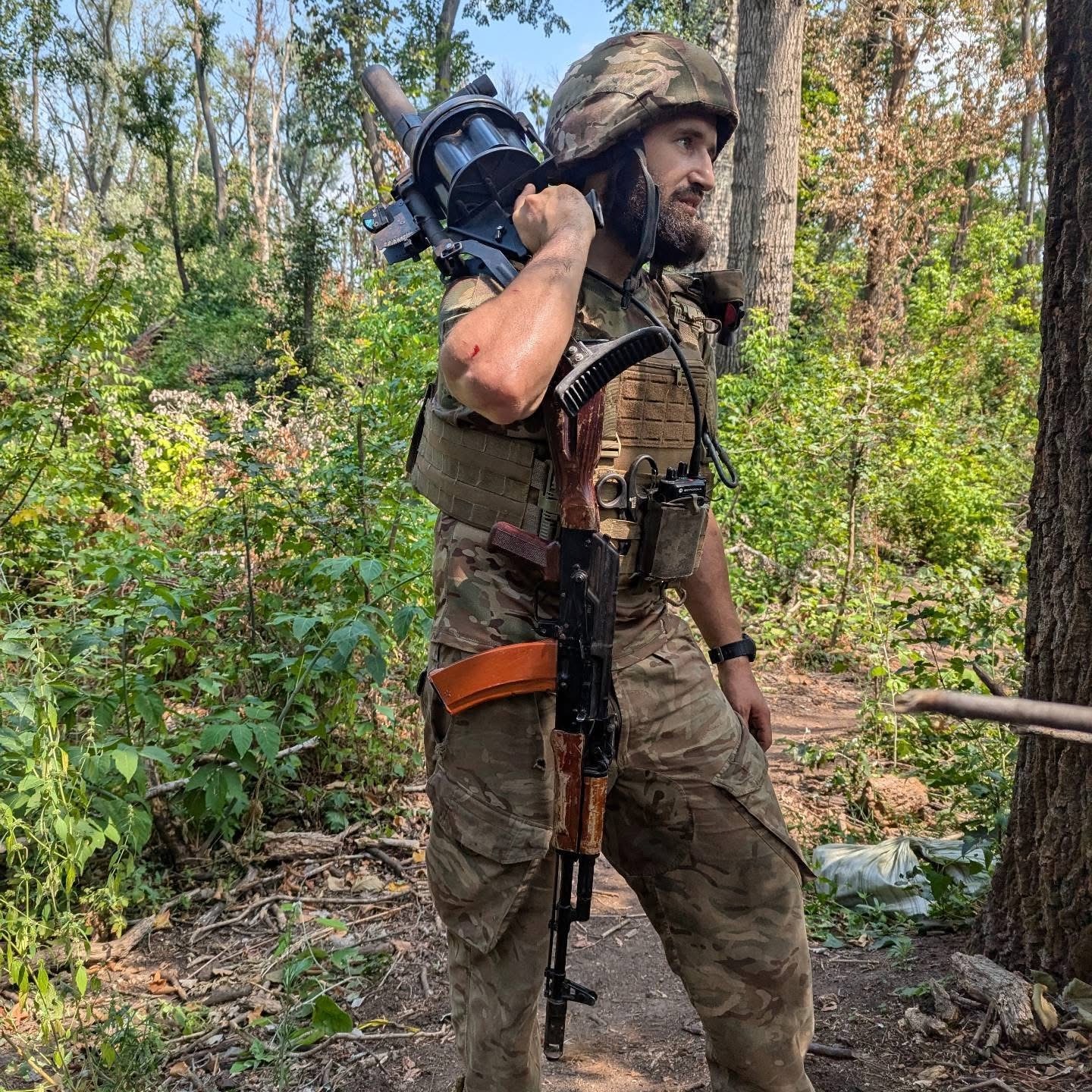
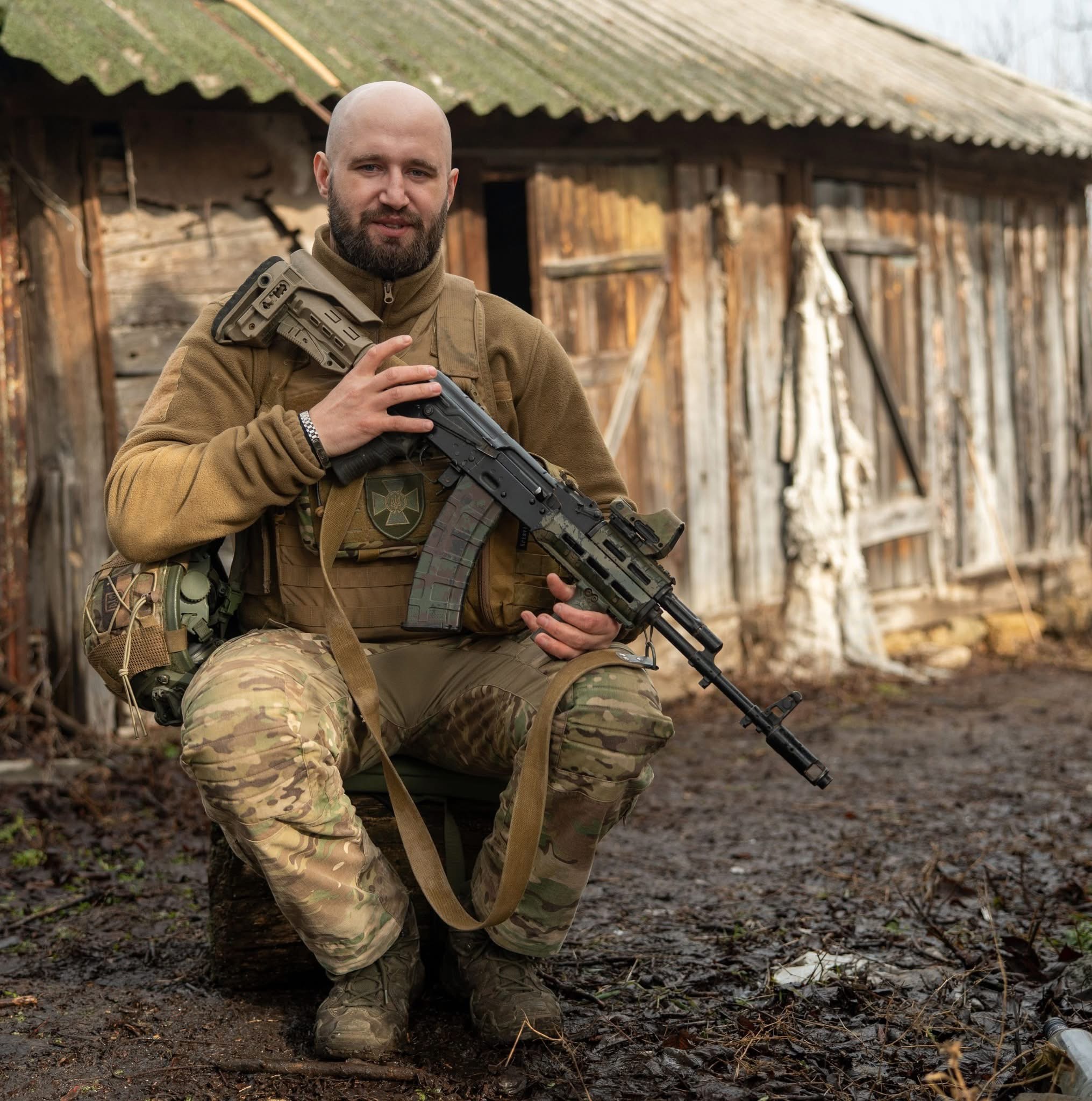
We met with Oleksandr Olifirenko, a scout from the "Sribna Triika" (Silver Three) unit of the SBGS "Pomsta" (Revenge) Brigade, one day before his birthday.
At 30, the border guard has dozens of successful strike-and-search operations on the line of active combat and behind enemy lines, in the Donetsk, Lyman, and Kupiansk directions. He has dozens of rescued wounded brothers-in-arms and severe injuries to his credit. We arranged an interview immediately after his departure from the positions. However, this conversation might not have happened: the day before, they were attacked by Russian drones, and during their return at night, the car struck a mine.
We met in the morning, and he calmly began to talk about the war.
Later, after this interview had already been recorded, it became known that Master Sergeant Oleksandr Olifirenko was awarded the title "Hero of Ukraine."
"AT NIGHT, AS SOON AS THE CHECKPOINT CLOSED, SNIPER BATTLES BEGAN"
– When you sent the video of the dugout entrance burning, I was honestly worried.
– Overall, it was a good walk. We didn't get killed, that's already a plus.
– What happened there? Why did you go specifically on Easter?
– Baha (Andrii Bahinskyi, Deputy Commandant for Rear Services — Ed.) and I went to check the positions, congratulate the infantry on Easter, and provide moral support, as they have been in the trenches for months.
We moved in, everything was perfect regarding the weather and timing; the orcs didn't spot us.
We set a record, reaching the positions faster than anyone else who had entered that village: 5 kilometers in 45 minutes
There wasn't enough adrenaline, so we "ordered" a b#stard drone just to have something to tell (he laughs — Ed.).
We planned to visit nine positions. At the ninth one, a drone started attacking us.
It turned out quite funny: I was lying there, watching videos with headphones on, and they have Starlinks there. I saw the guys rushing around. I took off my headphones and heard the distinct sound of something burning.
We were lucky, the drone got snagged and exploded near the entrance rather than right at it
Baha and I threw dirt on the flames. You can't extinguish it with water; you have to dig and cover it with earth.
While we were putting out the fire, one of the infantrymen started saying his goodbyes and sent about 30 "last" voice messages to his relatives.
Then the colonel and I jumped out into the tree line to look for netting to barricade the entrance.
It’s a straight entrance without zigzags. The door might have withstood one more FPV, but the next one would have flown inside. We barricaded ourselves. But our guys shot down the katsap drones.
The next morning, while it was still dark, we headed out. We were waiting for the vehicle, saw it about a hundred meters away, and then, boom! It was a significant blast — the L200 was armored, but the rear was completely mangled.
– How is the driver?
– Unharmed, everything is fine.
– Due to several severe injuries this year, doctors declared you fit for limited service. You didn't have to go, especially on Easter. Why did you?
– Yes, I didn't have to go, but I signed a waiver and went. On one hand, I’m tired; on the other, I love this kind of action.
Just imagine: an infantryman has been sitting in a trench for three months without communication, and then, on Easter, a Master Sergeant (his marksmanship instructor) and a Colonel come to visit him, bringing a video greeting from his wife and daughter.
– Was there a "wow effect"?
– Oh, it was awesome!
– So, are you returning to active duty?
– Currently, I am a marksmanship instructor at the training ground. But I still go out on these types of missions.
– You’ve basically been with a weapon since finishing school: training at the SBGS training center in 2014, service in Volyn on the border with Belarus, and three years in the JFO in the Donetsk region as part of the Kramatorsk Border Guard Detachment. Then, a special purpose police unit. Do you remember the day you fired your first shot?
– I fired my first shot at the age of seven from my grandfather’s old "no-analogue" Soviet rifle. My friend and I were hunting crows. We were planting corn in the garden, and they were eating it. So, we conducted a successful special operation.
Becoming a soldier was my childhood dream. I had been working toward this goal since I was seven: I did sports and track and field. Nowadays, if you want to be a soldier, you'll definitely be taken into some brigade, but back then, to enter a military institution, you had to pass exams, meaning you needed good physical preparation.
Since childhood, I’ve loved sports; I didn't drink or smoke. My first detachment competitions were in polyathlon, I think, which I won. I was transferred to the Border Guard Department (BGD) Rivne, a top unit of the Lutsk Border Guard Detachment, so I could represent them in competitions. Later, I won all the competitions held by the State Border Guard Service at the national championship level: orienteering, running, and polyathlon. I was second among all law enforcement and security agencies.
– You could have achieved great results in sports. Why did you choose military service?
– The uniform, the weapons. I love shooting.
– In what year did you join the JFO in the Donetsk region? Was it your decision or an order?
– In October 2018. It was my decision. I wanted to join earlier, but by law, I couldn't do it until I was 23. It bothered me that I was a soldier playing "Counter-Strike" (he laughs — Ed.) while guys were telling stories about fighting in the ATO and JFO. I felt ashamed. A contract, the 11th Border Guard Detachment — Maryinka, Staromykhailivka, Nevelske, Pisky.
At that time, it was a positional war. Our checkpoint — grey zone — separatist checkpoint. People were crossing the demarcation line — presumably receiving pensions both there and from us. Our task was to ensure the "liberators" didn't kill them in the process, as they sometimes shelled even during the day.
At night, as soon as the checkpoint closed, sniper battles began. There were 700 meters of open ground to the tree line on our side and about a kilometer on theirs. The b#stards wanted to dig in to control that tree line. I was in a sniper position and made them hurt so they wouldn't succeed.
– So did they give you the call sign ‘Killer’ back during the Joint Forces Operation?
– Yes, I was already a sharpshooter by then.

"I'M LYING THERE, LOOKING AT A DRONE WITH A PAYLOAD, AND THINKING: 'THAT'S IT, I'M DONE FIGHTING'"
– You fought in Bilohorivka — one of the toughest sectors. Tell us about the battle where you received your first severe injury.
– In the spring of 2024, in Bilohorivka, our trio held positions in the Serebryanskyi forest. Across the river from Bilohorivka, the 81st Air Mobile Brigade was holding the line. Ten border guards were attached to them for reinforcement. By the way, the training at the range was excellent — we were trained by paratroopers and Azov fighters who had seen combat in 2022–2024.
Our line of defense met theirs, and we were supposed to move into the center and establish a foothold. Between the positions was a "pipe" that controls the entrance to Bilohorivka. Our task was to capture it. Groups of paratroopers had gone there before us and never returned.
We developed a counterattack plan. For a month, we trained rigorously for this mission, working through every detail. Eventually, six out of the ten people were chosen, and I led the group.
At the end of March, at 8:00 AM, we deployed. There were two IFVs — we were in one, and the other provided cover. As soon as we approached, we were met by mortars, machine guns, and automatic grenade launchers. One of our IFVs was hit immediately, but we broke through in the other.
I’m cutting across, and I get hit in the leg. My foot was shattered, and shrapnel entered my lower leg. I just stopped feeling my foot, as if it wasn't there. I fall and crawl away. An APC was supposed to go around, but it turned and started driving toward me. I crawled into another crater.
I look up at the sky, and there's an enemy drone. I didn't even resist anymore. I’m lying there, looking at the drone with its payload, and thinking: "That's it, I'm done fighting..." But the katsap pilot turned out to be clumsy and missed. I realized it wasn't time to die yet and crawled toward our lines.
– How did the battle unfold? Was there contact with the enemy?
– About 10 minutes later, Russian infantry arrived on two APCs to counterattack. Both BMPs were immediately hit by our FPVs, and we finished off the Vanyas.
All day, they pounded us with everything: mortars, a tank, and every few minutes — FPVs with munition drops.
There was a direct hit on one of the trenches — the guys were buried up to their necks, only their heads were sticking out. There were three of them.
The one closest to the exit managed to get out, and they immediately started dropping payloads on him. Wounded and covered in shrapnel, he kept digging out the others, and he pulled them out.
We dragged him into our trench. All the first-aid kits from the paratroopers who had died there were used to bandage him up.
– And the other two?
– They were lightly wounded with concussions. They ran to the nearest trench, but rats were eating bodies there. They jumped out and into a second dugout.
– It’s haunting to hear this... let alone to live through it. But you speak about it so calmly...
– I treat every battle as a job that just needs to be done as professionally as possible. If I allowed myself to get emotionally involved in all of this, I would have ended up in a madhouse a long time ago...
"KIA HELPED US SURVIVE"
– How did you eventually manage to survive?
– KIA helped us survive. There were bodies of the fallen in every dugout. It was March, freezing cold; they were frozen solid. We piled them around us.
When the Russians saw the heap of bodies in the trenches, they assumed it was us.
In the gray light of dawn, we began to withdraw. Over the radio, they told us: "Follow the APC tracks."
But "APC tracks" just meant an open field.
Part of the group went around to draw the FPV drones toward themselves. I and the guy who was covered in shrapnel went straight across—moving from one crater to the next.
At the evacuation point, the buggies were supposed to be picked up first. They had just entered the village when they took a direct hit. Everyone died.
Then they sent a pickup truck — it overturned in a crater, but the lads survived.
And then, a completely crazy, reckless driver came for us.
He swerves in—we jump into the truck bed. Around us is an open field. Everything that can shoot is firing at us: drones, drops, vehicles are burning. And he’s maneuvering between it all. We were flying at a breakneck speed. I was holding onto the wounded man so he wouldn't fly out. There were three tires lying there. Those tires kept slamming into my ribs—I was bruised purple all over. Helmets, body armor, everything was scattered. I even took a piece of shrapnel to the arm while we were driving. We all made it back alive. My brothers-in-arms admitted they didn't think we’d return. Because the groups before us...
– What happened to that wounded brother-in-arms who was digging out the others, and what about your leg?
– He’s doing well, we got him out, got him to safety, and he’s since been demobilized. I believe he should be awarded Hero of Ukraine, he’s a truly impressive guy.
As for the leg, they wanted to amputate it because gangrene had set in. Not just the foot, but up to the knee.
Back then, I was constantly on the move without a combat boot, fueled by adrenaline and not paying much attention—and that’s what took its toll. But I transferred from Dnipro to Khmelnytskyi, and the doctors there saved the leg.
– Is the nature of your activity at the front primarily reconnaissance combined with strike-and-search operations?
– Yes. I’m the lead of a strike-and-search group. When we need to enter the gray zone to scout, clear it of the enemy, or withdraw if the forces are unequal and report the coordinates to our side, and then set up our positions there. But in the Serebrianskyi forest, I formed an operational group, and we evacuated the wounded.
– Explain why a sniper and an experienced scout were evacuating the wounded instead of combat medics?
– Because evacuating a WIA is often a special operation in its own right.
For example, in the Serebrianskyi forest, when we were already semi-encircled, the orcs figured out the evacuation route and set up a "carousel"—continuous shelling from various weapons.
But we outsmarted them: we used the weather to our advantage and, in two days, carried out 23 wounded and all KIA.
There was one man, his position had been under assault for several days, both his arms had been shot through, there were constant waves of attacks, and no one could get in.
We rushed in, brought in ammunition, led in reinforcements, took out a body, pulled out the wounded man, and withdrew. But in war, you don't just save the living.
– So you didn't just evacuate the wounded, you also carried out the deceased?
– Yes. In the Serebrianskyi forest, we didn't leave a single brother-in-arms on the battlefield—we took them all. And that, too, is often a special operation. For instance, we lost a position and thought the orcs were there. The mission was to counterattack, clear it with grenades, and extract three of our KIA.
When we approached, there were no katsaps, but we heard a scream from under the rubble: one soldier, alive, just buried.
We extracted him. But the bodies of two soldiers remained under the rubble—they could only be pulled out through a narrow passage. The next day, we took a short, thin soldier with us, he crawled into that hole, tied a rope to the bodies, and that’s how we got everyone out.
– Have you had to fight alongside friends and lose them?
– Yes. My friend and triathlon coach, Roman Havryliuk, a Ukrainian 100-meter sprint champion, was killed. We trained and competed together. Russian special forces in camouflage suits with Vintorez rifles infiltrated their position.
– Did you analyze what went wrong afterward?
– In a thick forest, it’s impossible to predict everything, especially when a well-trained group is operating. We come in from the rear and hit them; similarly, they sometimes get behind us.
Back then, they got caught up in the excitement and pushed on to another position, where they were pelted with grenades. Some were bagged, some were wounded, and they retreated. The next day, we retook that position: neighboring units did their job, the b#stards fled, and we just walked in.
– After such losses, many say they are driven by anger. What motivates you?
– There was hate, perhaps, at the beginning, for the destroyed cities. Now, it’s a job. The more of them we kill, the sooner the war will end.
I could never kill a prisoner, even though I know what they do to our guys. When he’s unarmed, I don’t strike; I’ll feed him and give him water.
At that moment, he’s at least somewhat human to me. I have carried out ten times more of our wounded than I have killed Russians. For me, the priority is to save, not to bag them.
In the Serebrianskyi forest, I could have blasted away with a grenade launcher in volleys, but instead, I was running with a stretcher, evacuating the wounded.
–– I heard from your brothers-in-arms that you have been nominated for the title of Hero of Ukraine for your personal courage and heroism. Tell us about the events in the village of Topoli, Kharkiv region, when you continued to perform your combat mission with 18 pieces of shrapnel in your body and a lung burned by a chemical grenade. Why didn't you withdraw then?
– It was early April 2025. We entered the assigned sector. According to the documents, these were fortified positions, but in reality, it was a gray zone; none of our forces were there. And it was unclear what lay ahead: there could have been b#stard positions.
There was no foliage yet, and we had to sprint across 500 meters of open ground. On the first day, we scouted a couple of dugouts — no enemy was found. On the second, we found more, brought in two soldiers, and dug in. There’s no point in scouting and then leaving — you’ll come back, and the "brothers" will already be sitting there.
Another tree line lay across 150 meters of open ground, which we needed to clear and fortify. As we were moving to the next point, a drone spotted us. We retreated into a dugout — and then it began: they started pounding us with HE rounds to force us out.
Then, suddenly — gas. It’s an extremely unpleasant sensation: there’s nothing to breathe, your eyes, face, and bronchi — everything is being eaten away. Ryzhyi and I "faded out," but the sapper was closer to the exit and managed to rouse us. We had no gas masks, but we had water — we soaked our clothes and covered our faces.
– How did you eventually manage to get out?
– We calculated that they needed about 15 minutes to reload and took advantage of that.
After another drop, we waited — the drone was still hovering, observing the result — and then we withdrew. We moved back about 300 meters, camouflaged ourselves, and crawled under some oak trees so the night cameras wouldn't spot us.
The last drop was powerful; it destroyed the entrance. The dugout was small, without zigzags, so the next one would have hit us directly.
– And was the injury sustained before or after the chemical attack?
– Two weeks prior, I was laying OZM mines. A drone spotted me, and then two more joined in, they were chasing me (he laughs — Ed.), they "made me WIA," but it wasn't severe.
– Shrapnel in your body, chemical poisoning... how were you physically able to continue working?
– On adrenaline. And that poisoning isn't felt immediately. At first, it's more or less okay, but then every day it becomes harder to breathe. Those 18 pieces of shrapnel were small. I bandaged myself up, and that was it. I was there for two months; it even healed over. Later, they extracted the shrapnel in Kramatorsk.
I didn't leave because, up to that point, we had only set up two dugouts, and we needed eight more. Every position must be properly equipped, otherwise, the men will just be shot like in a shooting gallery. I had more experience. I go in, assess the situation, know where the enemy is, how to dig, and where to look. I set the tasks, move on, and then return to supervise.
Two tree lines, 700 meters wide and 1300 meters long, they were hitting us with everything. I reported to the commandant and suggested spreading the positions out along the tree line, two or three men each, so as not to sit in one cluster. He gave the go-ahead. Setting up the positions took some time (he laughs — Ed.).
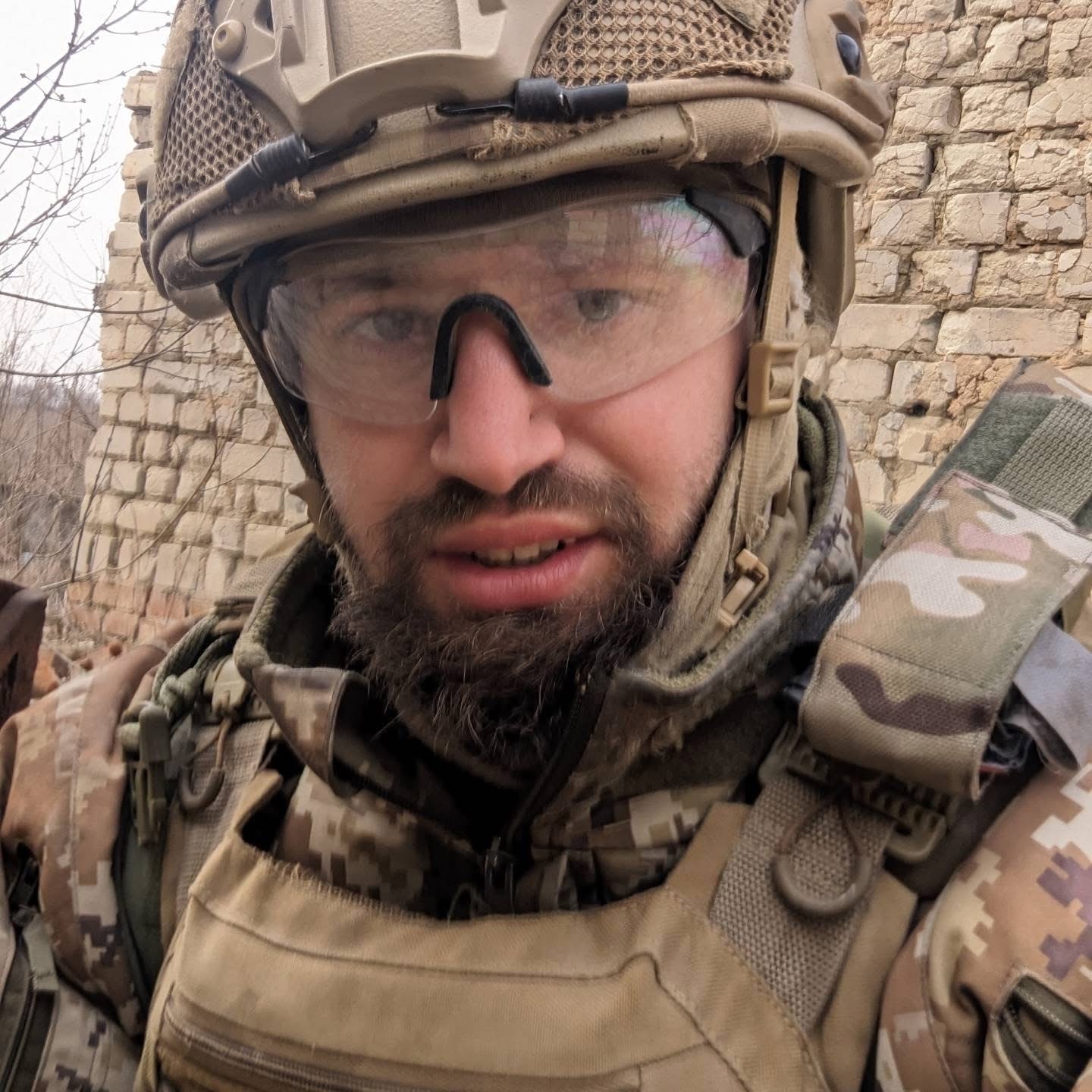
– You are currently an instructor for combat and special training. Can you talk about the specifics of your service?
– In short: after their Basic General Military Training (BGMT), I train mobilized recruits at the range. But I try to stay in shape because that is the primary requirement for high-quality instruction, when an instructor isn't just blathering but can actually demonstrate the standard. I go through three to four thousand rounds a month.
– What do you think of today’s mobilized recruits?
– Terrified (he laughs). The most popular theory among most draft dodgers is that they will be thrown into an assault immediately without training, and killed. I cannot speak for all units, but I will tell you how it is with us. After someone is caught, he is scared and thinks he is being sent to the front right away. In reality, there are two months of training, after which he comes to our range, where we assess his physical and mental qualities. He undergoes intensive combat training. Only then does he go to a position where we support him. And for us—knock on wood, the casualty rate is very low.
In fact, it is absolutely not in our interest for a physically weak or untrained soldier to end up on the line of contact, because tomorrow he will become a casualty, and someone will have to risk their life to pull him out. There are many rear positions where such a soldier can be useful.
– They say those who wanted to serve joined a long time ago, and those who are hiding cannot be convinced. In your opinion, what could motivate such people?
– There are two types of draft dodgers in my view: those who are afraid, and the "mama’s boys" who in 2022 said they would kill all the b#stards. I thought they wouldn't leave any enemies for me. But now they are sitting in a hole somewhere in a hamlet, living off their wives. It is a disgrace. I can somewhat understand those hiding in a dugout somewhere in western Ukraine, thinking the war won't reach them. But what about the men sitting in frontline cities? If the front collapses, the Russians will enter and wipe them out first, just like in the so-called DPR and LPR, where they were thrown into the meat grinder. Or they will just shoot you in your own house.
Sitting it out won't work. Therefore, one should learn how to fight, and fight.
Nataliia Konova for "Censor.NET"


