



"Access to bank accounts is tool that will make it possible to compare amounts of income received and declared," – Acting State Tax Service head Lesia Karnaukh
Collecting taxes during wartime is a difficult and thankless task. Ordinary citizens have no "extra" money, and what they do have must be spent on endless wartime emergencies. Small and medium-sized businesses are barely surviving, prices are rising relentlessly, and people can barely plan ahead. Does this look like a favorable tax climate?
On the other hand, to survive during the war, the state needs money. It is no coincidence that President Zelenskyy has repeated year after year that six to eight taxpayers are needed to sustain one serviceman in Ukraine’s Armed Forces. The conclusion is simple: without taxes, the country will have nothing to defend itself with...
Censor.NET spoke at length with the Acting Head of the State Tax Service (STS) of Ukraine, Lesia Karnaukh, about how and from whom the state collects its taxes; the complexities and challenges of this process; the tax innovations businesses should anticipate; and the measures being taken to counter tax optimization and tax evasion schemes.
This conversation is also, to some extent, a separate look at how, in the fifth year of the full-scale war, Ukraine, despite the enemy’s hopes, remains not a failed state but a functioning state.
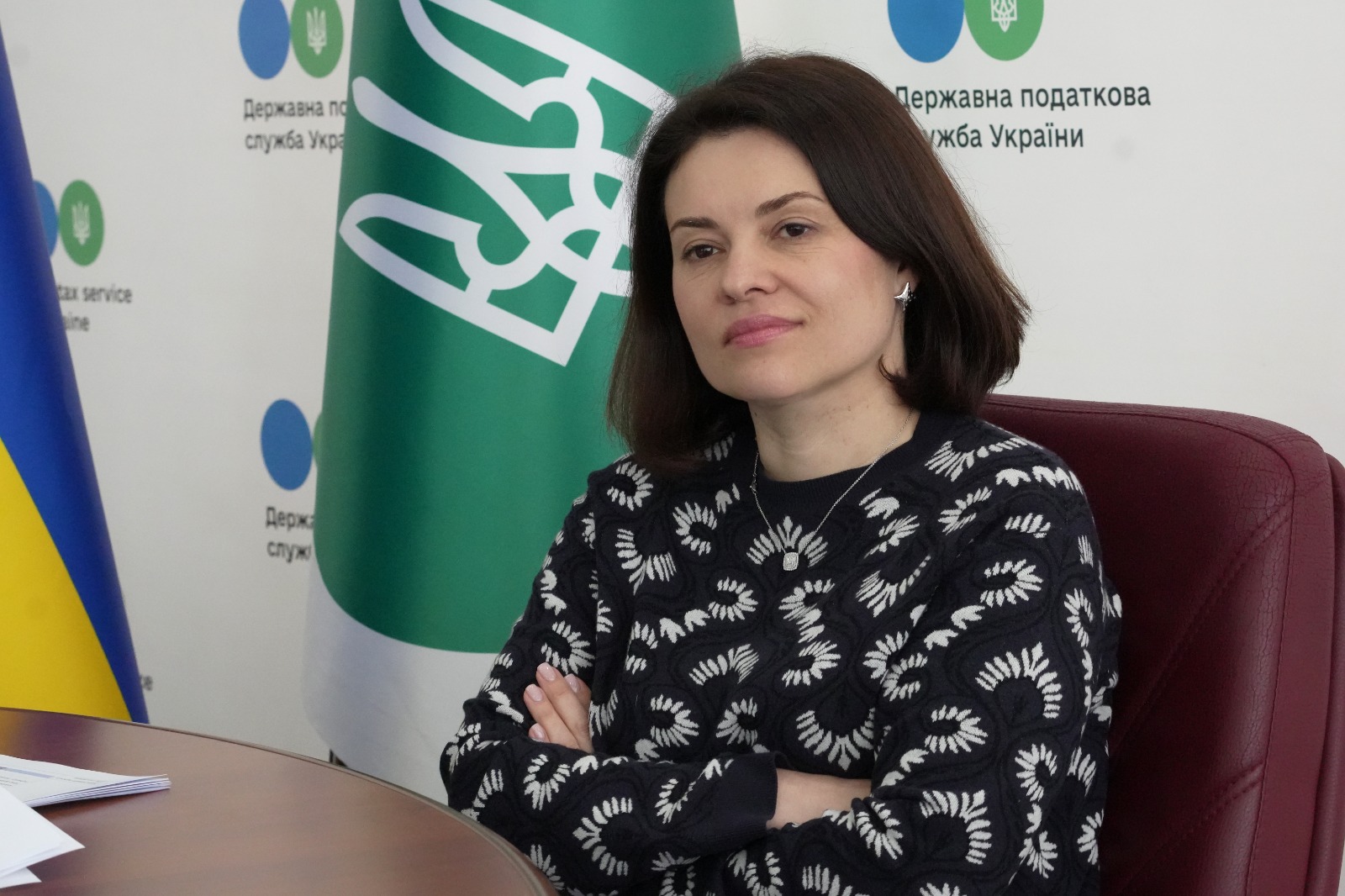
"INTRODUCING UNIVERSAL INCOME DECLARATIONS IS A VERY COMPLEX AND COSTLY UNDERTAKING FOR THE STATE"
– The 2025 individual income declaration campaign has ended. Does the State Tax Service plan to carry out selective checks of citizens who filed declarations?
– This year, Ukrainians filed 176,000 declarations and declared UAH 299 billion in income.
As for checks, this is a basic function of tax control that we carry out in accordance with the Tax Code. So yes, absolutely. We check all declarations through a desk audit, that is, automatically, to ensure compliance with all mandatory requirements. After that, a risk-based approach comes into play. Declarations are selected for more detailed analysis based on defined risk criteria.
Our specialists review them, and if risks are triggered and a declaration does not meet certain conditions, we may pay closer attention to it.
If a larger number of such risks are triggered over a certain period of time, this may be grounds for an audit. At that point, we look directly at the documents on the basis of which the declaration was prepared.
– Could you explain in more detail how exactly these risk criteria are triggered in such declarations?
– For example, we pay attention to whether tax rates have been applied correctly and whether income has been declared in full.
Sometimes, citizens incorrectly determine tax rates and fail to indicate all income that must be declared in the return. Sometimes they enter the wrong date or the wrong period for which the declaration is being filed. This is exactly what is checked during desk audits. There can also be purely arithmetic errors. And we need to see whether it is indeed an arithmetic error that can be corrected, or whether there is a violation.
There are also situations where our citizens who are registered in Ukraine receive income both here and in other countries, as was the case with OnlyFans. Last year, for example, this case was actively communicated, perhaps you remember. At the time, we received information from the UK tax authorities about these citizens’ income and checked whether they had reported this income in Ukraine. After all, they are residents of Ukraine and are required to pay 18% personal income tax and the military levy here on all income.
Or there may be situations where we receive additional information from law enforcement agencies indicating signs of undeclared income that a person failed to report. Or if we have any other tax information that casts doubt on the amount of declared income. This is how we check these declarations and determine whether the amounts have been reported correctly.
– Are mistakes in declarations usually made by people who have filed declarations before?
– No. After all, we do not have universal income declarations in Ukraine... Ukrainian legislation provides for a very convenient mechanism: citizens are not required to declare income received from tax agents. All salaried employees do not file declarations. They only file declarations if they have another source of income in addition to income received from tax agents. In many countries around the world, there is a practice whereby you, as a citizen, are required to file a tax declaration; you are required to keep track of what happened to you during the financial year. You may do this independently or with the help of consultants, but you still file it. Such countries do exist. The most vivid example is the United States.
But there are also people filing for the first time. And indeed, mistakes can happen. We are pleased that, according to our estimates, the overwhelming majority of taxpayers are compliant. Ukraine does not have a situation where everyone, or the overwhelming majority, is non-compliant and deliberately avoids filing declarations or paying taxes. Our task is to increase the number of compliant taxpayers.
– Still, there is a certain group of people who receive income from inheritance, freelance work, or other sources and simply do not report it or file declarations at all. You cannot really see them. They are counting on the tax authorities not noticing them.
– In fact, this is why many countries around the world, particularly European Union countries, actively use mechanisms that allow tax authorities access to bank accounts in order to review incoming funds and compare them. Different jurisdictions provide different levels of access: in some cases, upon request, in others, full access. That is why Ukraine’s National Revenue Strategy through 2030 includes a provision to grant such access. After all, in order to determine whether a taxpayer is acting fairly and in good faith, there must be something to compare against. Access to bank accounts is unquestionably the tool that would make it possible to compare actual and declared income.
At the same time, Ukraine has a fairly well-developed system through which citizens report various types of income via different state registries. If we are talking about inheritance, any inheritance must be notarised. A notary also acts as a tax agent when it comes to submitting information about the value of inherited property and enters this information into the state register through reporting procedures. We have automated information exchange between the Unified State Register of Property Rights and the tax authorities’ databases. Accordingly, we can verify this information. In other words, we can see all income that has been officially recorded in state registries.
The same applies to vehicles. We are currently cooperating with the Ministry of Internal Affairs and the Main Service Center. In Ukraine, the first sale of a passenger car is exempt from taxation, while the second and all subsequent sales are subject to personal income tax and the military levy. In order to identify second, third, and subsequent sales and understand that such income must be declared, we cooperate with the Main Service Center and exchange relevant information. This is our function — to collect taxes and ensure fairness in how they are paid.
– When exchanging information with the Interior Ministry’s Main Service Center, do you identify cases where people conceal sales?
– Of course, such cases exist. If we did not identify them, we would be receiving our salaries for nothing. Our job is to ensure the fair fulfilment of tax obligations.
Based on identified cases, we ensured the filing of 6,300 property and income declarations for 2025, with the amount of taxes declared for payment totaling UAH 267.6 million.
Results can be achieved in different ways. One can use a stick and threats, but that is not our method. It is better to do so through improved services and a smarter, more logical, and constructive approach. In cooperating with various state agencies, our goal is not to find a specific citizen named Ivanenko and declare him guilty. Our task is to understand why the state budget is falling short of certain amounts of revenue. Then, to determine why this is happening, what the reasons are, and who is involved. We do not start from the individual person — we start from the fact that the state budget is not receiving the expected revenues.
– But you then impose penalties on a specific person, don’t you?
– Of course, but we look into it. What is the difference between a service-oriented, client-oriented approach and a fiscal one? The fiscal approach is that we find the taxpayer and ensure revenue collection. Our team’s approach is that we look at the problems. Why, for example, are there UAH 2 million in shortfalls in personal income tax in a notional March, April, or May? After all, everything had been calculated. What caused this? Did the person stop receiving income, did they quit, did something change in the sector? Or did they go into the shadow economy? We identify the causes of the problem. Each cause has either a human, subjective explanation or a legislative one.
– The issue of universal income declarations has been raised repeatedly over the years, but as you noted, it still does not exist. Do you support universal income declarations? Should they be introduced while the country is at war?
– Introducing universal income declarations is a very complex and costly undertaking for the state. For it to have an effect and be useful in terms of increasing state budget revenues, a great deal of effort would be needed. This includes creating convenient services and running a broad public information campaign to teach people how to file them. Such large-scale, universal reforms require a lot of time. No one questions the fact that when you start doing business, you must submit reports. But in our country, it has turned out that we are not taught from childhood that we are taxpayers. (Addressing Censor.NET journalists) All of us here are roughly the same age. Tell me, who was told at school that when you grow up, you will pay personal income tax and will need to file a declaration? This determines the level of tax culture, or the culture of paying taxes.
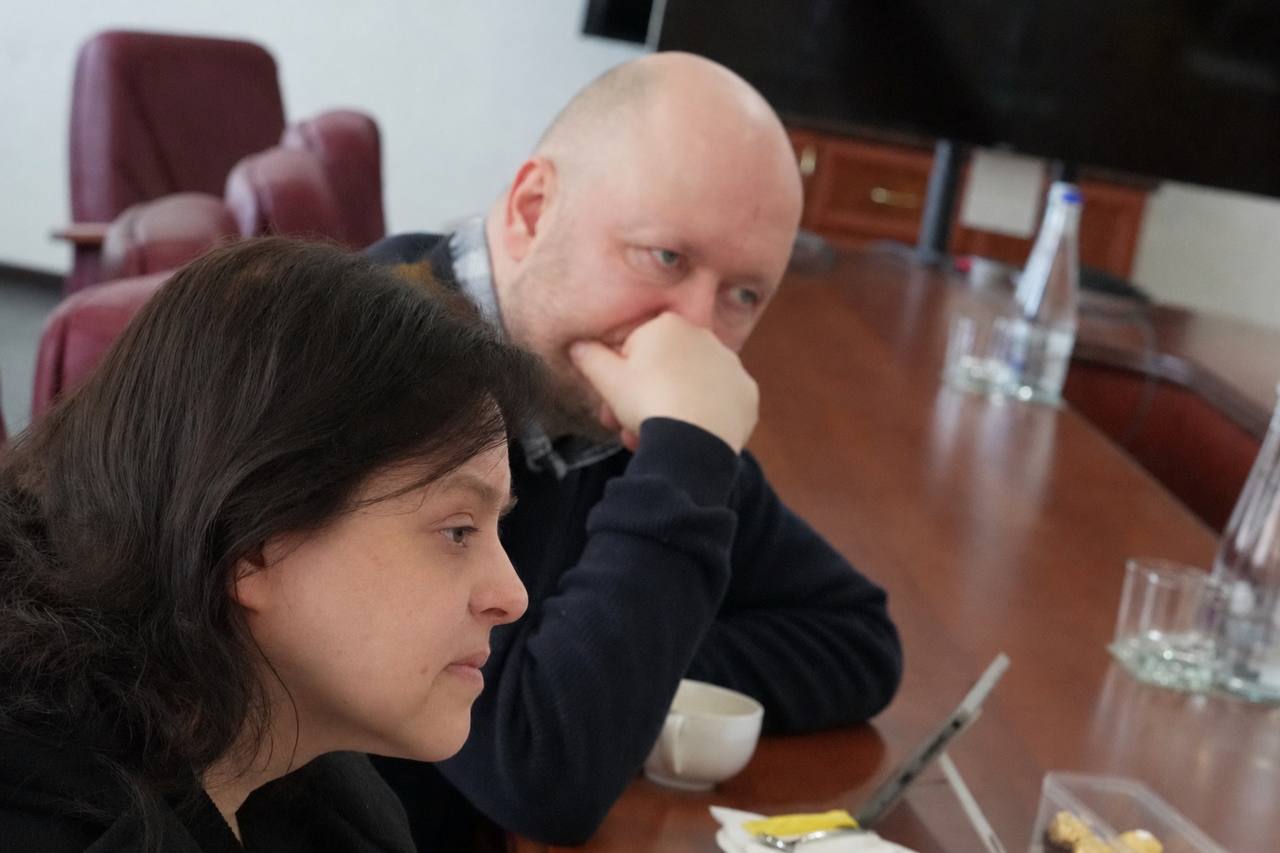
– When I was at school, we were not told about this at all.
– Nor was I.
– I have three children, and they attend a modern school. Unfortunately, I have not heard anything like that from them either.
If we are talking about introducing universal income declarations from the point of view of making income control easier, then, of course, it is more convenient and more comfortable for the state. But every reform has a social dimension. This is a very costly reform that would take a long time to implement. Any decision-maker must always strike a balance and assess what effect it would produce. At present, there are no calculations showing what additional effect it could have. But there are certain reservations about how much time it would take and what social impact we would get, because, first, it would affect everyone. Second, during the war, people are very sensitive to issues of injustice and hardship, so this is a highly sensitive issue. Creating any new additional obligation when people are living under such stress must be backed by a strong explanation of what effect would be achieved if such a measure were introduced.
– We actually wanted to ask you how your work has changed during the war. Has the State Tax Service recorded an increase in voluntary income declarations since the start of the full-scale war?
– Everything is very situational. In March and April 2022, people were in total shock, and then came fuel problems. Accordingly, in the first and second quarters of 2022, there was a significant drop in revenues. Everyone was under stress and did not understand what was working, where, and how, or where and what to file... Later, people more or less recovered, and I am grateful to our businesses, which learned to cope with the challenges. The dynamics of tax revenues show this: every year, we see positive growth. For example, in terms of revenues to the state and local budgets, we ended 2025 with an increase of UAH 305.2 billion compared with the actual figure for the previous year. This year, we are also seeing a growth trend. We are always grateful to our taxpayers for this, because they are the ones paying. Business is operating, the country is alive, and our Defense Forces are being funded. What are the root causes of this? Why is this happening? Is it the result of a conscious patriotic position of "I will pay more"? I would very much like to believe so. We are making every effort to develop tax culture, so that paying taxes is seen as patriotic, fashionable, and modern. Recently, as part of the declaration campaign, some of our main departments recorded interesting videos with public figures and artists who talk about declarations and taxes. They are so well done and pleasant to watch. I really liked the work of our Ivano-Frankivsk department. A well-known artist, Fiinka, is registered there, so she went and declared her income and spoke about it very nicely in a video.
– On the one hand, you say people have started paying more taxes. On the other hand, we see, even on social media, that many businesses are simply leaving the Ukrainian market. Some shut down entirely, while others relocate abroad. I speak with people who own small businesses, and they say they are barely surviving under current conditions. Some are dissatisfied with the overall state policy, others with the situation in the country — power outages, rising generator costs, and fuel prices. There are different reasons. But people are struggling to cope. Do you feel this in the revenue figures?
– Problems certainly exist. I have already spoken about the revenue figures. Of course, there are taxes where we are recording shortfalls in revenues. But there are objective reasons for this.
Like everyone else, we also read social media and feedback in order to better understand taxpayers’ sentiments and provide adequate and fair solutions that would be accepted.
We are noting growth in the number of registered individual entrepreneurs. In other words, one coffee shop may close, but another one opens. Of course, some newly registered individual entrepreneurs are also used in business-splitting schemes.
Naturally, we also see cases where major taxpayers face problems as a result of the large-scale aggression. I remember a call last year from the head of the Southern Office for Large Taxpayers: "Lesia Arkadiivna, AKKERMAN has been bombed. Everything they had left in stock is gone, and that accounted for 50% of excise tax revenues from wine products in the region. I do not know how to make up for it." There are also cases like in Sumy, when we were on our way to meet with taxpayers, and one of them never made it because his production facility was damaged during an attack.
We take all such stories personally. Because when 50% of excise revenues disappear, the question becomes how to compensate for them. The money we collect is relied upon by people — the military, public-sector salaries, and social payments.
Such situations force the state to review its spending system (if we have fallen short and failed to collect enough revenue). Many employees of the State Tax Service, especially those who communicate directly with businesses, perceive these problems as a personal loss. You watch as an entity shows positive dynamics year after year, quarter after quarter, and then suddenly it posts a decline, and then another decline, again and again. You call and ask, what happened? "What do you mean? We were hit again..."
And there are plenty of such cases, and this naturally affects revenue, especially when it comes to VAT and excise duty. Everything related to production. Sometimes you wonder how businesses manage to cope with all this?
I am very proud of the patriotism of our businesses. Remember that farmer from the Kherson region who defended his land from drones? And there are many such cases in Sumy, Zaporizhzhia, and Mykolaiv regions. They say, "I will stand my ground to the end!" Moreover, this carries some signs of ordinary routine life. Because some cannot relocate for physical reasons, since this is quite a costly production...
And recently, there was a case involving displaced people from the Luhansk region. They are already of retirement age; they used to be farmers and had land. Then they moved here and thought, what should pensioners do? They leased several hectares of land and said: now we will make wine, give us a licence, we will be craft wine producers...

"WE ARE ACTIVELY BEING TARGETED BY CYBERATTACKS"
– I will ask about the de-occupied territories. They all have their own problems. Politicians complain that political life has been paralysed. Central Election Commission officials do not know how they will restore commissions, and so on. What about the State Tax Service? How has the war changed work in the de-occupied territories?
– Unfortunately, we do not have that many de-occupied territories. The clearest examples are the territory of the Kyiv region and the city of Kherson itself. Wherever the security situation allows, work has been fully restored. People must receive proper tax services, regardless of where they are registered.
Overall, more than 70 State Tax Service facilities have now been damaged in 11 regions on government-controlled territory as a result of Russian military aggression. Unfortunately, the aggression is intensifying. We cannot put people in danger. That is why we are always looking for different options.
For example, the Sumy region. We had a discussion about restoring the work of the tax inspectorate in Hlukhiv because the head of the community had requested it. We weighed the situation and proposed a remote point where people could come. And it was as if we had sensed it, because the premises where we had proposed restoring work were bombed two months later.
Just recently, I spoke with the head of the Kherson region office. The employees have moved entirely into the basement, but they still go to work. It is difficult, but they say it is extremely important to them. Despite all the incidents like, "I was running to work, and an FPV drone was flying after me, so I waited it out under a tree and then hid"...
Zaporizhzhia is under constant shelling. In Sumy, after Easter, there were warnings for a week that the Muscovites would bomb the central part of the city. In most cases, to protect people, we switch them to remote work.
Donetsk region: for now, we have kept three of our offices in Sloviansk, Kramatorsk, and Oleksandrivka. And even in Kramatorsk, although we have good premises, people work in the basement. Services are also needed there. We have kept only those locals who are not leaving for personal reasons.
In Sloviansk, the situation is even worse. But we are doing everything to save people and jobs.
By the way, this is quite an interesting experience that all our foreign partners ask us to share — how we ensure the stable operation of the tax service during wartime. We have a rule that people come first, then information, then property. This is the action plan algorithm in the event of emergencies. It is clearly defined who is responsible for evacuation, where people gather, which vehicle they leave in, and each of the heads of frontline territories personally reports to me on how everything is organised. In other words, the first priority is to ensure the safety of people’s lives and health.
The second priority is information. The State Tax Service possesses a large amount of information that is highly sensitive for the enemy. Therefore, the task is to ensure maximum protection and prevent the enemy from gaining access to our data. Measures to prevent this have long been in place. Because we are actively being targeted by cyberattacks. Since the start of the full-scale invasion, there have been more than 300 such attacks, including 50 classified as the highest risk. We receive significant assistance from the Security Service of Ukraine and the State Service of Special Communications. But we remain under constant enemy scrutiny.
And the third priority is saving state property, computers, and everything else that can be relocated — we relocate everything possible. This is the clear algorithm under which we operate.
– A question tax officials do not particularly like to answer, but still. According to the tax service’s estimates, what amount of income each year remains outside the declaration system for individuals? Do you have any figures? Specifically regarding ordinary citizens? Or do you not conduct such calculations?
– We do not conduct them because we do not have a source for that. This is effectively a form of measurement, and there are different methods for it. In our country, indirect calculation methods are not provided for the tax control authority. However, we do analyse available tax information that may indicate tax evasion. First and foremost, this is information from tax agents. In particular, we pay attention to citizens who, according to information available to the State Tax Service, have not received income for a long period of time.
– The draft law concerning online platforms is causing a great deal of debate. If it is adopted, you will see the income of people selling goods on such platforms. But will you also see how much Ukrainians spend on purchases through these platforms? Many people systematically buy there.
– We already see the income declared to us by, for example, a hypothetical Rozetka. They are also taxpayers and, depending on the revenue they receive, declare their income. Will we collect information on how much people spend in order to later calculate how much they must have earned? On a total basis — definitely not. Those who meet risk criteria or regarding whom law enforcement agencies provide information indicating signs of illegal activity will come into our field of view. In such individual cases, we may conduct an analysis.
– Many Ukrainians left the country during the war while fleeing the war. Some of these people receive income in their countries of residence. Do they need to declare it in Ukraine, and if so, how?
– The Tax Code stipulates that if you are a resident of Ukraine, you are required to declare all income received from any source, both in Ukraine and abroad. We issue residency certificates.
In other words, if a citizen is a resident of Ukraine or meets the residency criteria defined by the Code, they are required, as a resident, to declare all income earned anywhere and pay taxes on it in Ukraine.
Further, Ukraine has double taxation avoidance conventions with many countries around the world. If income earned abroad has already been taxed there, it is not subject to double taxation in Ukraine. In other words, everything already paid there, either by a tax agent or directly by the taxpayer, is taken into account by us. We also always emphasise that financial assistance from foreign states, foundations, or charitable organisations related to the war, as well as similar assistance to close relatives affected by Russian aggression, is not subject to taxation. Such income does not have to be declared.
These are clear rules. Together with the Ministry of Digital Transformation and the Foreign Ministry, we are currently working on two projects — eCard and eConsul — which will help our citizens.
– Could you tell us more about these projects?
– Beta testing has already begun, and in the near future, we will present a joint communication together with the Ministry of Digital Transformation and the Foreign Ministry. An identification code will be obtainable through the eCard mechanism via Diia. eConsul will provide an additional range of services for our citizens abroad.
We also have a mechanism called CRS (Common Reporting Standard). This is an exchange of tax information. Other countries provide us with information about income earned there by our citizens — that is, by our residents. We process this information. If we receive information through CRS that a person received income but did not report it to us, we send a request asking for an explanation. If the person provides proof that they paid taxes there as a resident of that jurisdiction, we do not include it in taxable income here. If they do not provide such proof, we ask them to pay more. That is how it works.
– How many Ukrainian citizens have renounced Ukrainian tax residency since the start of the full-scale invasion? Are there any figures?
– We do not have such a procedure. But I can say that the amount of revenue received from citizens living abroad is increasing.
Foreign income was declared by 12,700 taxpayers, which is 3,400 more declarants compared with the same period last year.
The total amount of declared foreign income reached UAH 20.7 billion. Citizens independently assessed for payment: UAH 2.4 billion in personal income tax and UAH 1 billion in military levy.
– An updated service is now being prepared for launch by the Ministry of Digital Transformation together with the State Tax Service. This concerns paying taxes through Diia. Which services will realistically launch first, within what timeframe, and what will you not manage to complete this year?
– For me, this is one of the most important tasks. We began cooperating with the Ministry of Digital Transformation on this project back in August last year. Project managers have a principle called agile. And I keep "agiling" and "agiling," shifting and shifting things around. I am adapting to the Ministry of Digital Transformation team. I would very much like us to launch this by the end of the year.
The main idea is convenience. What does our tax payment system currently look like, for example, for individuals paying property taxes on land or apartments? You need to go to the State Tax Service website, find the account details, contact a bank, and prepare a payment document to pay the taxes.
But we are Ukrainians, used to Diia and banking apps, where everything is done in one click. And anything that does not work that way already prompts complaints: I have no time to go to the bank, I lost that piece of paper somewhere, where am I supposed to look for this account? So the idea emerged: you are sitting there thinking, "Have I paid my tax? No, I have not. One, two, three, four, five, done, you have paid your taxes... This will be a service that makes it easier to pay taxes.
That is why my entire team was interested. Then, since Diia is a large-scale national project and they have many tasks besides this one, we are adapting to their schedules. We hope to present the product soon, and that the 2027 declaration campaign will already take this into account. We also plan to launch another additional service.
– What is it?
– Property reconciliation. This is a problem citizens face. I very often hear: Oh, I sold this apartment long ago, so why are you charging me property tax on it? Or I leased this land to a farmer, why did you send me this notice? For us, this is also an unnecessary waste of time on calculations and an unnecessary waste of money on paper. Data accuracy is very important to us. We are working as actively as possible to reconcile all our data with all state registries. But we also want to involve citizens so that, through Diia, they can review information about taxable property and the minimum tax liability, as well as the assessed amounts of monetary liabilities for these taxes (conduct property reconciliation). In other words, we charge you for this property, you agree that it is in your ownership, and you pay. If you disagree, there are mechanisms for you to provide documents and show what is actually in your ownership and what will serve as the tax base.
Another service is one-click payment. You receive a notification that by such-and-such a date, you must pay such-and-such an amount for such-and-such property. If you agree with this, you pay. If you have not paid, we remind you that you have incurred tax debt and can pay it by clicking this button.
– What happens if a person leaves a frontline area while property for which they previously paid taxes remains there? They may not even know what has happened to it if the settlement is under constant shelling or occupied. The apartment or house may already have been destroyed.
– Since the start of the full-scale invasion, the Tax Code has provided for a number of exemptions in cases where a taxpayer is unable to fulfil their tax obligations. There is also an order issued by the Finance Ministry that defines the list of grounds for being unable to meet tax obligations.
I should note that property tax is neither assessed nor paid on properties located in combat zones or temporarily occupied territories. For us, it is sufficient that such a territory is included in the relevant official list.
There are many options available for businesses and individuals. And in the overwhelming majority of cases, they use them. Large-scale power outages also allow people, by submitting the relevant information to us, to justify why certain reporting was submitted late. In such cases, we do not impose penalties...
– You say that budget revenues are gradually increasing. That is already good news. But what about the money that still remains in the shadows? Your colleague, the head of the Bureau of Economic Security, mentions an approximate figure of one trillion. What figures do you have?
– In any case, all figures that we should and can talk about must be clearly calculated and researched. As for the level of the shadow economy, there is a separate order issued by the Economy Ministry that is based on statistical data. Measurements are carried out. Statistical data is currently limited by the state due to the full-scale invasion, and peacetime methodologies do not account for the destructive impact of the war. Accordingly, we do not have official, legally verified figures at this time. At the same time, we are very grateful to the many analytical centres that independently conduct such research and assess particular markets.
– For example?
– For example, one of the best-known studies was conducted by Kantar, which estimates turnover on the shadow tobacco market. I cannot say that we base our decisions entirely on the findings of such research. But we do follow them, because they allow us to track trends, identify areas of concern, and then use our own methods to confirm or refute particular figures.
The same applies to the fuel market. There are studies published and provided to us by analytical centres. We have established cooperation with civil society. We use, among other things, their data, involve them in calculations, and, where it is possible to measure something in a relevant way, we do so. My task as head of the Tax Service is not to provoke or make manipulative and irresponsible statements that affect competition levels in a particular market. I cannot allow myself to do that. I cannot say, without reliable and verified information, that we are losing UAH 20 billion in revenues because, for example, players in the household appliances market are not paying taxes.
How do we determine in different sectors what may be operating in the shadows? We actively combat tax optimisation schemes and abuses of tax rights. We work on cases involving business splitting. We use specific criteria. For example, certain individual entrepreneurs systematically submit reports from the same IP address and use the same contact phone numbers belonging to a single authorised accountant. Or an individual entrepreneur may systematically report receiving income from only one LLC, effectively disguising hired labour. They continuously receive income for only one type of service from a single LLC. This immediately raises suspicions for us that it is concealed employment.
We also analyse other shadow schemes. For example, in the excisable goods sector, this may involve illegal production. Naturally, the Bureau of Economic Security has somewhat broader responsibilities in this area as a law enforcement body, particularly in identifying cases of illegal counterfeit production. But we are also aware of such information. When, during on-site inspections of retail trade, for example, we find illegal cigarette packs or low-alcohol or alcoholic excisable products, we naturally trace the supply chain to determine where they came from. The entity producing illegal goods automatically becomes a subject of our interest. First, because they do not pay excise tax. Second, because they pose a threat to the lives and health of our citizens.
Does this produce results? Yes. Let me give an example. In the first quarter of this year alone, we conducted nearly 4,000 on-site inspections in the tobacco and alcohol production and sales sector. We have already identified 4,000 violations of the law, imposed more than UAH 143 million in fines, and revoked nearly 2,600 licences.
We also take a broader view within the framework of implementing sector-specific plans as part of our experimental project. Such plans exist for fuel, construction, and household appliances. We break down the entire sector and look at how many entities there are, how they reported, what deviations, norms, and risks exist. We also have our own estimates, which is why we focus on these sectors.
This year, we applied the same approach to the audit plan for the year. Together with the team, we prepared an analytical explanatory report: why exactly these sectors? Why were these entities included? What is their market share? What is their impact? How much revenue shortfall do they account for? What are the reasons? In other words, we are trying to measure, as comprehensively as possible, using the mechanisms available to us, the scale of revenue shortfalls and take steps to reduce them. First and foremost, this involves proactive communication with taxpayers and targeted preventive measures.
– The figures published by Kantar, which you mentioned, are constantly increasing. The shadow cigarette market is progressing and growing. Why has nothing been done about it? Especially since the names of those who may be behind it have been mentioned more than once, including at a meeting of the parliamentary Temporary Investigative Commission. Why has nothing changed? This is not only the task of the Bureau of Economic Security; the tax service also has response tools.
– The latest Kantar studies show a decline in percentage terms... We recently had a meeting with industry representatives where a decrease was discussed, albeit a slight one. The formation of the illegal tobacco market is influenced not only by illegal production. Production does not account for such a large share there. There is also such a thing as imported raw materials. The number of products being sold, including through imports and cross-border movement, is becoming diluted and increasing. The State Tax Service has no powers at the border. We use data from the State Customs Service, just like the Bureau of Economic Security does. After all, the State Customs Service is responsible for import control in Ukraine. Accordingly, we receive this information and check those who directly obtained licences for growing or production, their compliance with licensing conditions, and the fairness of excise tax assessment. We also conduct on-site inspections — nearly 15,000 last year — and record violations almost every day. But, unfortunately, the current conditions are such that many players in this market find it quite profitable to use the situation that exists in Ukraine.
– And when you say you do not see this import, do you mean that a certain percentage is brought in through grey or black channels?
– Most likely, yes. We later see that it has appeared in the volumes. We know the capacities of everyone who has obtained licences and trace the chain of who they supply. But they supply what they produce not only to domestic clients, they also export it.
We have control posts at tobacco product manufacturers and fermentation plants, as well as round-the-clock video surveillance systems in places where tobacco raw materials and tobacco products are produced and stored. We control everything that can be controlled. But raw materials that enter the country or are grown outside licensing conditions also affect the volume, and we do not see them because there are no our posts or other control mechanisms there. They conduct completely illegal activity. They are not even registered with us as excise taxpayers and, accordingly, cannot fall within the scope of tax control. This is precisely where the Bureau of Economic Security has investigative jurisdiction; they must identify such illegal production facilities.
– The State Customs Service is now headed by a person from an anti-corruption body. Do you think the number of schemes and smuggling cases will decrease?
– I do not know.
– So you have no expectations regarding the new head?
– I simply do not know. It is difficult for me to say because I always try to make decisions based on the results of cooperation and practical matters. Relying solely on general information from public sources and making assessments simply because a person worked in one body or another seems irresponsible to me. Without knowing the person or the system, I cannot say whether this will lead to a positive result.
– You publicly spoke about reducing the number of on-site inspections by 25–27%. What effect has this had on the budget and on business?
– For the budget, first and foremost, it has produced an increase in revenues. For example, in the first quarter of this year, revenues from penalties imposed following on-site inspections increased by 40% compared with the same period last year. That amounts to more than UAH 108 million.
But reducing the number of on-site inspections and improving the risk-based approach is less about increasing budget revenues. It is more about strengthening the bridge of trust between taxpayers and the State Tax Service. It is about moving away from focusing solely on dry figures in our reports and plans and instead seeing the person, the citizen, and the business owner behind every taxpayer. It is about preventing additional waves of manipulation, claiming that the Tax Service is putting pressure on businesses and trying to squeeze out the last pennies. We simply do not have enough resources to pursue every taxpayer in the country on a daily basis, as some people like to claim.
Across the entire State Tax Service system, there are approximately 2,500 auditors responsible for on-site inspections (excluding excise-related inspections, planned audits, and similar work). Meanwhile, there are 240,000 economically active business entities that submit VAT reporting to us. Therefore, total control is physically impossible.
– So, how many auditors should there be, in your opinion, to fully cover this number?
– We should not fully cover it. We should work where there is risk. There is no need to overload economically active businesses with excessive attention. We need to point out mistakes and help.
We are trying to apply a preventive approach. But if we see aggressive tax optimisation, as was the case with the Marketopt retail chain, we respond accordingly.
Over the past year and a half, we have identified 14 well-known retail chains selling household appliances, clothing, and food products. These optimisers involved more than 1,200 individual entrepreneurs in business-splitting schemes. Possible tax evasion amounts to at least UAH 1.7 billion.
And effective cooperation with law enforcement agencies is important here. We transfer materials to the Bureau of Economic Security, the Prosecutor General’s Office, and the National Police, which then bring these cases to their logical conclusion.
– How would you currently assess the situation with tax revenues? Which major sources have seen growth, and which still remain below expectations?
– At the end of last year, we had (and continue to have) a very difficult situation with excise tax revenues, especially on fuel. At present, we simply do not have fuel production volumes at the level we would like to see, or that existed before the large-scale attacks began. This also leads to lower VAT revenues. There are also problems with excise and VAT revenues from electricity. Massive attacks continue unabated. All of this affects the dynamics of state budget revenues. At the same time, revenues from personal income tax remain stable, and they are growing.
As for sectors, positive growth is being shown by the processing industry and the agricultural sector. Of course, we are highly dependent, especially in agricultural products and in the results of processing and extractive industries, on price quotations on international exchanges. The processing sector is growing, for example, because international exchange prices have risen; the price went up, and revenues increased accordingly. As for agriculture, I have heard from many experts that prices were not very good at the end of the year. They waited for prices on exchanges to rise and then exported their products.
The public sector plays a major role. In many communities, when I look at reports, especially closer to the front line, personal income tax from employees of law enforcement and public-sector institutions forms the basis of revenues to budgets at all levels. There are central communities (for example, in the Kirovohrad region), where the largest personal income taxpayer is the National Police.
– And the National Police complain that their salaries are low...
– That is true, because there is nothing else in that community. The National Police and educators account for the lion’s share of personal income tax revenues. The state and employees of state institutions are fairly significant taxpayers in many communities. We even carried out an interesting analysis for ourselves: how much personal income tax we pay in each community, how much we pay in each region, and how much land tax we pay. After all, the State Tax Service also pays taxes. Some communities granted us a preferential zero rate, while in others we pay for land plots used by the State Tax Service on equal terms with all taxpayers. And since the State Tax Service is not a small government agency, in many communities we return a lot to the community through personal income tax. We also pay the military levy and single social contribution.
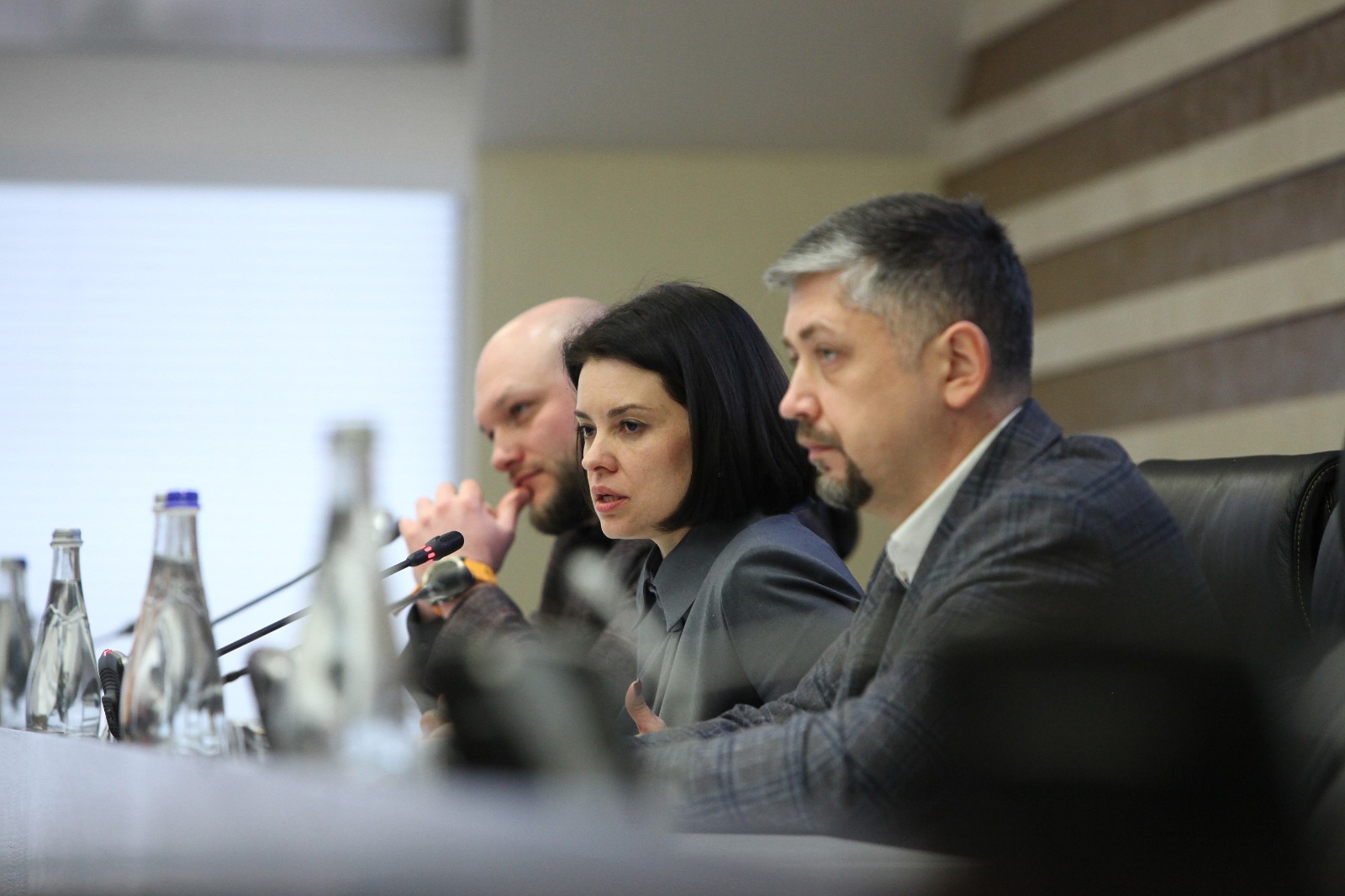
"THE IMF MEMORANDUM DOES NOT SAY: INTRODUCE VAT FOR ALL INDIVIDUAL ENTREPRENEURS ACROSS THE BOARD"
– Prime Minister Yuliia Svyrydenko reported that the International Monetary Fund (IMF) has shown understanding regarding the sensitivity of introducing Value Added Tax for individual entrepreneurs. The Ukrainian side held consultations with the Fund and European partners. The Prime Minister stated that, and I quote, "we will continue to work together on the necessary decisions and explore other alternative measures to ensure the revenue side of the 2027 budget."
Is the State Tax Service being consulted during the ongoing work mentioned by the Prime Minister?
– The State Tax Service is certainly involved in processes related to cooperation with the International Monetary Fund in terms of improving tax administration and the so-called VAT for individual entrepreneurs. Although, in substance, it is actually about something slightly different. When we hold consultations and meetings with the Finance Ministry or the head of government, we always talk about modernising the simplified taxation regime. The IMF memorandum does not say: introduce VAT for all individual entrepreneurs across the board. There is nothing like that there. The tax policy advocated by the Finance Ministry and the government (and the State Tax Service fully shares this position) is that moderate tax rates and a broader tax base are important to us. Our rates are a weighted average. We do not have extremely high rates across all taxes. If we break them down and compare them with those in European Union countries, where we are heading, ours are weighted average. In some countries, VAT is 22%; in others, it is 18%, depending on economic conditions and what is being taxed. But a broader tax base, moderate rates, and very clear work to identify the taxpayer and the tax base are what the International Monetary Fund wants from us. That is why, together with the government, we are devoting a great deal of effort to improving administration. This is what we, as the State Tax Service, are responsible for. Therefore, regardless of what decision is ultimately made (whether the so-called VAT for individual entrepreneurs is introduced or not), we are already looking at what we can change. We conducted an internal exercise: I tasked each department with finding five working accountants and asking them what they like, what they do not like, and how much time they spend. And then to map out the entire VAT administration process, from the moment the obligation arises to reporting and payment, in full. And we identified problems that can be solved just like that (She snaps fingers – ed.).
– What exactly are you referring to?
– For example, one of the complex systems is the registration of tax invoices through the Unified Register of Tax Invoices (URTI). This is done via the taxpayer's electronic cabinet. Now, a tax invoice in the taxpayer's cabinet can accommodate over a thousand item categories. This is convenient for enterprises engaged in wholesale or retail trade. Consequently, they can generate a single tax invoice instead of 20. We expanded the list of item categories, allowing an accountant to create one invoice rather than 20. And we have implemented this.
Furthermore, accountants spend a significant amount of time generating and registering tax invoices. For individual entrepreneurs, those operating in retail, or where cash registers are used, we aim for the tax invoice to be generated automatically from the cash register and software. Numerous technical solutions of this kind are planned.
– You are now talking about the positive side, but when society discussed VAT for individual entrepreneurs, the discussion was mostly about pressure on individual entrepreneurs. The prime minister has now said that this issue is not currently on the agenda. So what alternative is being discussed instead?
– The maximal improvement of tax administration and the simplified taxation regime. Independent of the Ministry of Finance or the IMF, my personal position is as follows: the simplified taxation regime was designed over 20 years ago to stimulate entrepreneurial activity in Ukraine. The circumstances then were entirely different. Entrepreneurial activity was developing rapidly, and we did not have qualified entrepreneurs. I remember this distinctly, as I come from a family of lawyers, and my mother was a legal counsel. She provided extensive assistance in registering and establishing LLCs, drafting charters, and launching operations.
The process was very chaotic. Then liberalisation took place. Suddenly, everyone became entrepreneurs without having the necessary experience in tax or accounting matters. When it became clear that the existing legislative framework was simply killing anyone with an entrepreneurial spirit and that we would not be able to launch free economic activity, the simplified taxation regime was introduced. Growth followed, there was a boom. Large businesses and corporations began to expand. And because the simplified taxation system existed alongside the regular one, many started using it to optimise their operations.
The simplified system is very often used in tax optimisation schemes. First-group individual entrepreneurs, who have no hired employees, genuinely provide services such as hairdressing. That is definitely a small business, and they should remain under the simplified taxation system.
But we see such a large number of activities under the second and third groups that clearly should operate on equal terms with everyone else engaged in the same activity. Because abuses exist, and we see them.
So we (and I personally) support optimising the second and third groups and bringing them back to the purpose for which they were originally created.
– And how should this be implemented?
– Through a gradual review of high-margin areas of activity that are currently in the second and third groups. These are used in tax optimisation schemes and clearly have nothing to do with supporting micro and small businesses. They are connected individual entrepreneurs linked to large companies, and allow them to avoid paying taxes at a fair level.
– Reports have recently emerged that the EU may include tax reform among the conditions for further financing for Ukraine under a EUR 90 billion loan programme. Is such a requirement expected? Could you tell us more?
– At the moment, like you, I only have information about this from the media. So I will be able to speak about it in more detail only once I have a larger body of information.
But it is logical that the issue of mobilising domestic resources is entirely understandable and logical for our international partners. Today, we are fighting the Russian enemy not only for the country’s existence, but also for financial stability. We all see what our entrepreneurs who run their businesses honestly have to go through.
And the State Tax Service is already working on the systemic changes I have mentioned. These include digitalisation, improved analytics, development of services, and the fight against the shadow economy.
– In August 2025, a new automated tax debt collection system was launched. What has the performance of this tool been like so far?
– The system was launched at the end of August last year. We have already managed to collect more than UAH 1 billion. In the first quarter of this year alone, it was approximately UAH 357 million. Compared with the dynamics of the previous period, this is three times more. I am very pleased with this because it is effective.
The essence of the system is that it contains all information about debts, debtors, and decisions subject to enforcement. The system automatically generates payment instructions and sends them through the Treasury to financial institutions where taxpayers hold accounts. If funds are found in the debtor’s account, the amount specified in the notice is written off. The Tax Service does not receive funds directly from the taxpayer; everything goes through the Treasury.
– How much do you expect to recover in 2026?
– That depends heavily on the economic activity of debtors. According to our estimates, economically active business entities account for around UAH 22 billion of the more than UAH 290 billion in total debt. A large share of these debts belongs to economically inactive entities or those located in temporarily occupied or frontline territories. The structure of the debt is complex. A significant portion of tax debt also arose due to penalties for missing payment deadlines and failure to repatriate foreign currency earnings.
In practice, the debt exists, but there is no one from whom it can actually be recovered. So there are many problems. Out of this enormous amount of debt, what we realistically see is UAH 22 billion owed by economically active business entities. I sincerely wish them good financial results so that we can recover this debt (She laughs — ed.)…
– Yes, this seems to be an example of tax humour.
– Unfortunately, we are aware that such humour is not really appropriate for a state institution. Taxpayers are all different, and we tend to lean more toward prioritising the citizen’s position over the state’s position. Although taxpayers always complain, in the overwhelming majority of cases, the taxpayer ends up being right. "Individual entrepreneurs will be killed by VAT," "the Tax Service is crushing everyone," "the shadow economy is worth UAH 35 billion", many, many such figures dominate the information space.
– It is clear that you are well-versed in this field.
– Absolutely. Or here is another example from our recent discussion with civil society. As soon as you say "blocking of invoices," people immediately say this is the number one problem. So at a meeting with civil society, where there were many economists, I said, "Let us speak in numbers". Currently, out of 100% of tax invoices, the system for monitoring whether tax invoices meet risk assessment criteria (SMKOR) blocks approximately 0.15%. So 99.85% are registered automatically. Is this a blocking system or an automatic registration system? Judging by the figures, it is a registration system.
– Today, we have spoken a lot about taxpayer awareness and responsible business. But this winter, we saw how quickly prices rose for generators, charging stations, and so on. I know that the Tax Service appealed to the conscience of those selling these goods, but that conscience did not really wake up...
– My outrage knew no bounds. I experienced this situation just like everyone else. I asked my colleagues to go and check, to make test purchases in order to establish the facts and rely on specific figures. To look at the dynamics and compare them with sales revenues, to see whether this had really happened. And there was an unnaturally large, excessive, and extremely rapid increase in prices, even though the imported goods had been brought in at different prices, and there were no economic grounds for such growth other than increased demand. That is why we appealed to sellers.
At the same time, although as a tax authority we do influence fair pricing and competitive conditions on the market, this is not our task. Our task, and this is very important, is not to solve all the world’s problems or influence the formation of a competitive price. Our task is to ensure the fair fulfilment of tax obligations and fairness in tax revenues. That is what we focus on.
– Can anyone influence such price increases?
– The Antimonopoly Committee. We look at it through the lens of whether VAT was paid correctly and whether corporate income tax was paid correctly.
– Do they pay anything to the state at all when they import such goods into Ukraine?
– They do not pay import VAT. After that, they pay VAT on sales and corporate income tax.
– So they import cheaply and sell at a high price.
– Correct. But then there is profit. They pay corporate income tax.
– Have you looked at what percentage of these sellers are simply paying the single tax?
– (She smiles — ed.) I see we may have another tax service employee who thinks the same way we do...

– In winter, I attended a public discussion of draft legislative changes proposed by the Bureau of Economic Security. It concerned mediation with taxpayers. Some legal and business experts told the Bureau of Economic Security representatives: do you not feel that what you are proposing, to some extent, overlaps with the Tax Service’s activities already prescribed by law?
After that, you took part in the discussion, and the Bureau of Economic Security head, Mr. Tsyvinskyi, also said that you are in constant contact. What is your view of the Bureau of Economic Security's idea of mediation?
– We are in constant working contact. That is how it should be.
By the way, I recently analysed why I so often use the phrase that I have been a civil servant in Ukraine for more than 20 years. And I realised that after 20 years, I can be proud of it. This is really about how I treat my state. I have developed my own position: in public service, there is no need to create or look for a sensation where there is none. You need to do your job.
Accordingly, we build our work with the Bureau of Economic Security in a working manner. We send them materials, and after processing them, they provide information on what has been done. We are currently working on introducing automatic exchange between our databases, because we collect a large amount of information that they also need. It would look ridiculous if we sat on our information like a brooding hen and refused to give it to them so they could do their job. What common task would we then be solving? Or if we followed each other around looking for "two billion there, one billion here"... For me personally, that is ridiculous and unserious. So I am grateful to Oleksandr (Tsyvinskyi, head of the Bureau of Economic Security — ed.) that we are building our cooperation on this approach and demonstrating it toward each other.
Now, as for tax mediation. Mediation, in general, is an alternative dispute resolution mechanism. There is a law on mediation that clearly defines where it can and cannot be applied. Our view is that pre-trial mediation would significantly simplify life for both taxpayers and tax officials. Because it is an opportunity not to drag disputes into years-long litigation. That means a loss of time, nerves, and resources. Each of us has our own vision. The Bureau of Economic Security is talking more about a tax compromise at the stage of concluding a plea agreement.
During the Bureau of Economic Security presentation of the relevant draft law, I clearly said that we support the idea itself. Because if there are complaints, it means the usual mechanism for resolving disputes through the courts is not enough. More flexibility is needed. Mediation is one tool for adding flexibility to communication with the state... But our comments concerned the fact that this should be reflected in the Tax Code, because their version of a tax compromise affects the fulfilment of tax obligations. We also had doubts about the fact that such an agreement would have to be approved by a prosecutor, because the adversarial principle is not observed there. We prepared and submitted our proposals to the Bureau of Economic Security so they could work through them further. This is normal standard practice for executive authorities.
As for our vision of tax mediation, this is our own format. We also need it. There are several mechanisms for resolving disputes with the Tax Service. The first one, which I always ask all taxpayers to use (and which I encourage my colleagues to support), is that any mediation or communication should begin directly between the inspector, the accountant, the financial director, and the director. Any kind. Even if there is a potential dispute. Preferably, it should begin at the consultation stage, before the process starts (there is a tax consultant’s office for this), and then continue during the audit. There is no need to think: I had better go and look for some senior official and sort it out with them, they will come down hard on this inspector, and he will not write that. That is the wrong path.
Then there is the appeal procedure. We file objections and then appeal. We have an administrative procedure. The central office reviews complaints against the actions of territorial bodies and assesses whether they acted correctly. The Tax Code regulates whether to send the case for a repeat audit or uphold the audit report. But this has also proved insufficient. Because some people want, for example, to involve a third party. The essence of mediation is to involve a third party who, before the case goes to court, will assess the positions of both the Tax Service and the taxpayer. This assessment takes place before the costly and lengthy court appeal procedure for the state.
We have already drafted such a bill and will soon offer it for public discussion. For this purpose, we are working with the Ukrainian Academy of Mediation, which has long been promoting mediation and was involved in drafting the law on mediation. The idea is that, with the involvement of a third party before going to court, or as a final stage before court, the positions of the taxpayer and the Tax Service are reviewed once again and given an independent assessment. In some cases, many taxpayers, especially large ones who use this mechanism, either stick to their position or reduce the scope of their claims before going to court. It works. That is what our initiative is about.
– Who is this third party?
– Mediators, in accordance with the Law on Mediation.
– Finally, we will ask a somewhat existential question. Being a tax official is not exactly very popular in society.
– This goes back to fairy tales. I always joke: remember fairy tales. Who ever liked having taxes collected from them?
– The same is true in the Bible, where your colleague Levi Matthew appears among the apostles. It also mentions a less than favourable attitude toward tax collectors. Hence the question: what motivates you? You are an energetic and empathetic person, that is clear. It is also clear that you love your work. To be honest, before you, I mostly saw rather cold people among senior tax officials. So what motivates you to collect taxes now? Moreover, to head the main body responsible for this work and to be the patron of the people doing it? What meaning do you see in your work from within your own worldview?
– I think I have already touched on this topic in passing when I said that I am truly proud to have worked for the state for more than 20 years. I have practically never worked in private business. I like this work. I know how to do it, and I understand a lot about what works and how. I have worked in different institutions, and I understand how the state apparatus functions, what can be done in public service, how it should be done, and what does not have to be done.
Second. You rightly noted that I am indeed active, energetic, and have been positively minded all my life. So for me, it is more of a personal choice that it is better to do something positive and good quickly, here and now, rather than drag it out for a long time and hide behind the process. I like achieving results. I do not like process for the sake of process. I have encountered a certain coldness and indifference quite often, not only in public service but also in the private sector: an unwillingness to take responsibility for achieving an effect. To put it mildly, that is not me. I am not afraid to take responsibility in order to achieve an effect.
Many of the ideas that my team and I implement begin with me looking into the eyes of my employees and colleagues. Sometimes I read in their eyes: Lord, she has come up with something again... And then, when we all see the result, it makes us happy. For example, that was the case with the Tax Consultants’ Offices. It all began with three simple words: attention, respect, trust. This is the foundation, the principle behind the work of tax consultants, and I believe that over time it will become the principle of the entire tax service.
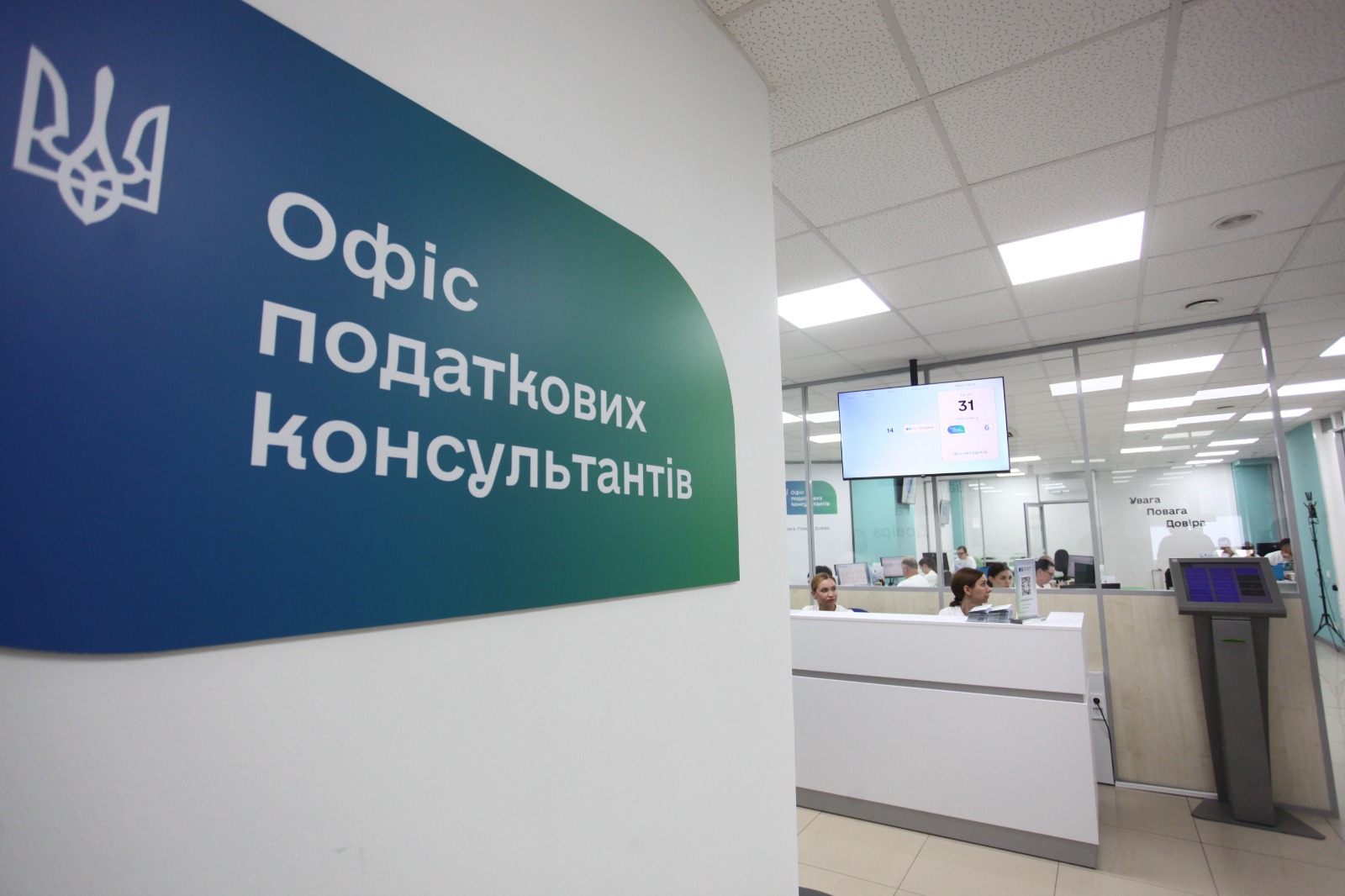
– So they do not shout at people in those offices?
– Perhaps that sometimes happens too. Tax officials are ordinary people as well. We all sometimes react emotionally. Shelling, a tense situation, everything has an impact. But this needs to be acknowledged and worked on. This issue needs to be fixed in order to achieve results.
One can follow the theory that a civil servant must be perfect in everything. But it seems to me that, honestly and fairly, we should recognise that just as a civil servant must first and foremost be a person, so must a taxpayer first and foremost be a person too. Taxpayers also sometimes shout and deceive. And many manipulative stories are based on deception. This is probably one of the biggest discoveries I have made while serving as head of the State Tax Service.
Tetiana Bodnia, Yevhen Kuzmenko, "Censor.NET"


