



Alta Ares CEO Hadrien Canter: "Ukraine today has one of best air defence architectures in world"
Drone Industry
Alta Ares is a promising French defence tech startup founded in 2024 that specializes in developing air defence, reconnaissance, and edge AI systems for drones.
Although the company is headquartered in Paris, Alta Ares has extremely close ties with Ukraine. The company has set up a large engineering and analysis hub in Kyiv, where technologies for real combat conditions are developed and manufactured jointly with Ukrainian specialists.
As part of the Drone Industry project, Censor.NET journalists spoke with Alta Ares CEO Hadrien Canter about the company’s activities, the specifics of intercepting enemy drones, protecting Ukrainian skies from cruise and ballistic missiles, and dependence on Chinese components.
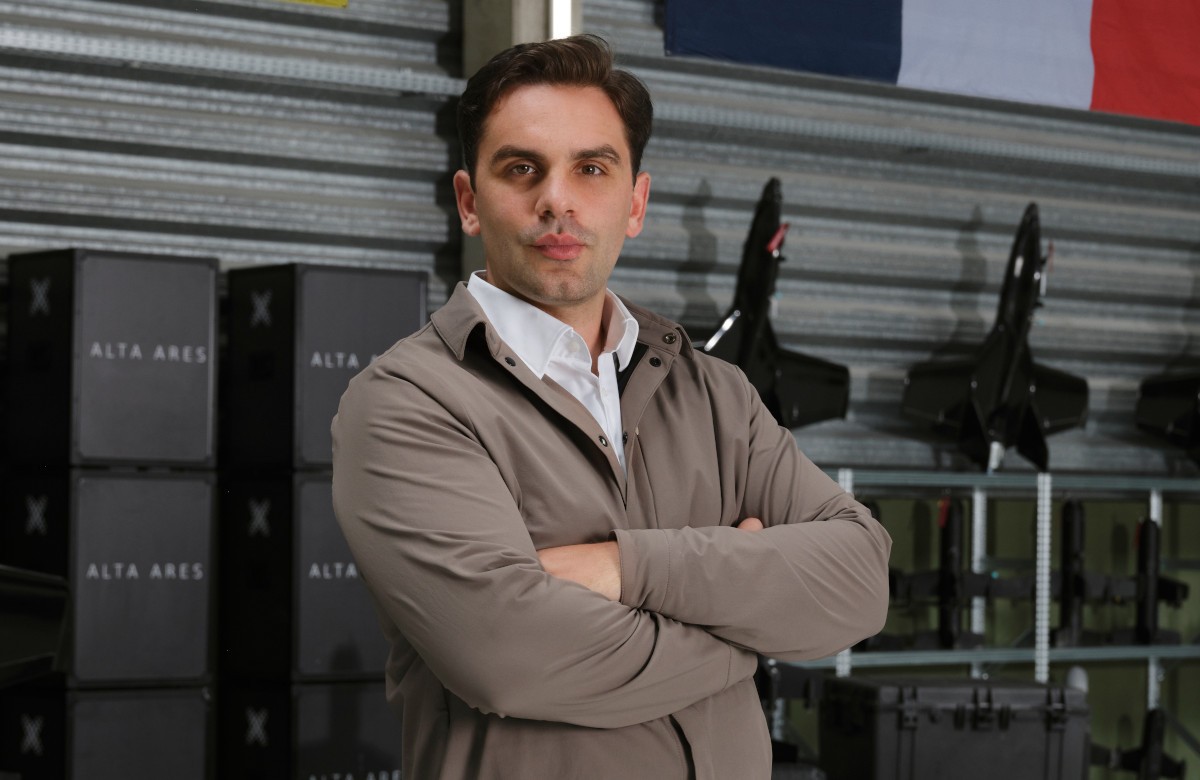
– Please tell us in more detail about Alta Ares — what does the company do, and how did it enter the Ukrainian market?
– Alta Ares is a French company, but in fact, we were, so to speak, born in Ukraine, southeast of Zaporizhzhia, two and a half years ago.
Our company entered the Ukrainian market because its story is connected with Ukraine. In 2011, I studied at a high school in Kyiv’s Pechersk district. It was only for three months, but that was enough to build good relations with Ukrainians.
The Russian-Ukrainian war showed that war as such has changed profoundly. Our company emerged in response to a need voiced by Ukrainian servicemen we knew.
We spent two months with a brigade and understood that, apart from what everyone calls the "drone war," there are many people on the front line. And the human role in this drone war is very central.
In this context, we first began developing software for ISR missions (Intelligence, Surveillance and Reconnaissance — the collection, observation, and reconnaissance of information. ISR missions involve both collecting and processing the information obtained — ed. note). Later, we began working on terminal guidance software. And now we manufacture X-Lock and Blackbird interceptors.
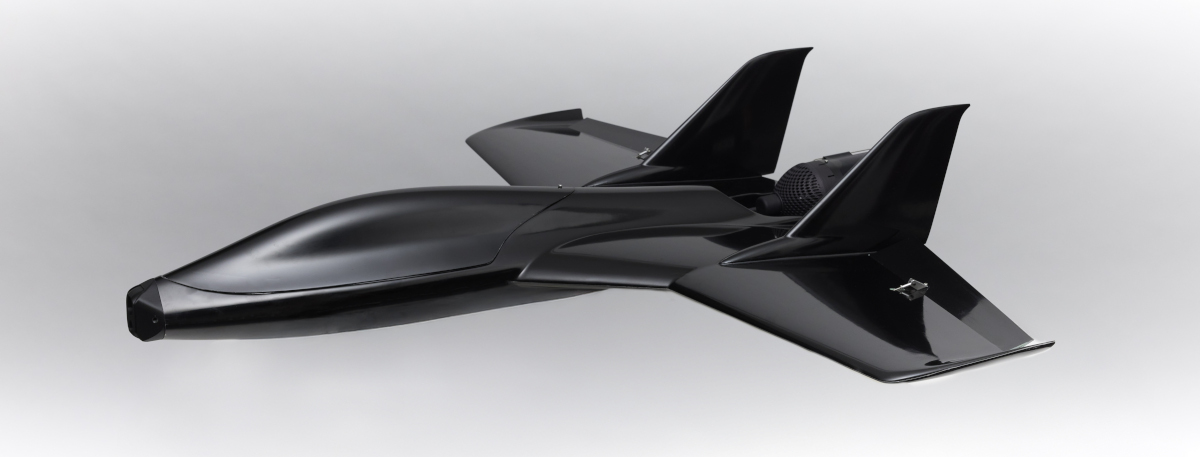
X-Lock is a rocket-type quadcopter, while Blackbird is a turbine-powered jet interceptor that is still a prototype but will be deployed in Ukraine very soon.
But we are not a drone company. We want to be seen as capability providers. What does that mean? People often confuse software, hardware, artificial intelligence, data, maintenance, and so on.
In general, these are all different companies. We are one company. We have very large teams working on artificial intelligence, software, and hardware. And we are developing production capacity.
For example, X-Lock is not a drone; it is a munition. It should be viewed specifically as a munition, because a drone is expected to return after takeoff. Our small smart rocket with an 800-gram warhead does not return after launch. So Alta Ares, I stress, is not a drone manufacturing company; we make smart rockets.
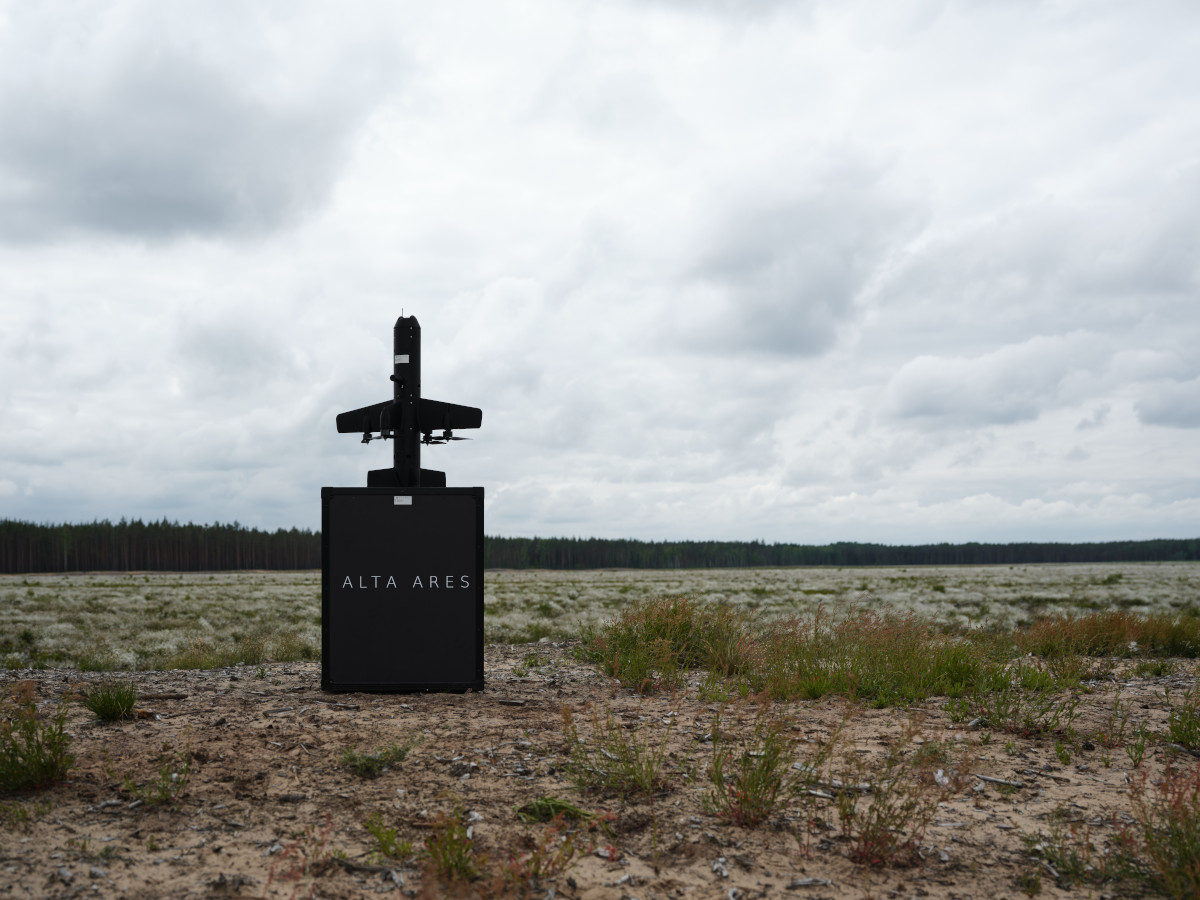
In our view, this is what Ukraine needs. But beyond Ukraine, NATO also needs it.
A year ago, we won a NATO competition in Bydgoszcz (Poland). It was similar to JTAC centres, where Ukrainian officers worked with NATO officers to find solutions to the problems Ukraine is facing and that the Alliance could potentially face as well.
In my view, they were right. Because NATO is now facing the same problems as Ukraine, albeit on a smaller scale, of course. Shaheds are falling in Romania, Poland, and Lithuania. And what can we use against them? Nothing except F-16 or Rafale fighter jets. But now we have Ukrainian solutions. And we hope to deploy them in most NATO countries as part of the Eastern Flank initiative.
This initiative is led by NATO Air Command (AIRCOM) and NATO Land Command (LANDCOM). Its goal is to deploy systems similar to those already operating in Ukraine. By the way, Ukraine is also part of this initiative, under which we are deploying such systems in different countries along the borders with Russia and Belarus. In effect, Ukraine has pioneered a new approach to organising air defence.
The Ukrainians are demonstrating an extremely innovative approach. Of course, we are part of this defence technology ecosystem in Ukraine, but also in NATO countries. At the same time, we try to be guided by two key principles: ensuring interoperability with NATO in accordance with Alliance standards, and obtaining feedback from Ukraine on the experience of using the technologies in real combat conditions, as this fundamentally changes the situation.
– Alta Ares has a solution for guided aerial bombs, which pose a major threat and are a problem for our defence. Could you please tell us more about this solution? Is it already being used?
– The competition we won a year ago was focused on countering Shahed-136 drones and Kh-101-type cruise missiles. Glide bombs, unlike the same Shahed, are much harder to intercept, although they have a more linear trajectory that is easier to predict.
We are developing a prototype, not yet a finished product, called Blackbird. This jet interceptor has a speed close to that of a cruise missile, and our goal is to deploy this product in Ukraine by the end of this year.
Our company works with the French government, but also with the Ukrainian government, especially with the Brave1 cluster, which is very helpful in terms of improving the product. Because we do not want to implement a solution that does not work.
So we want to use operational feedback to develop something that truly meets the needs of the Ukrainian army. And Brave1 plays the role of centralising the needs of Ukraine and the General Staff, and tells innovative companies: do this and that, integrate with Krechet (a tactical air defence group command post designed for automated control of air defence units. Developed by Ukrainian Armor, — ed. note), with ground control, with SkyMap, and so on. Because this is not only about the interceptor itself, but about the entire architecture that makes air defence successful.
– Is the Ukrainian government helping you? How?
– Yes, different branches of government are helping. Or, for example, from the General Staff to deputy ministers such as Serhii Boiev. He was very supportive of his team in guiding us in the right direction.
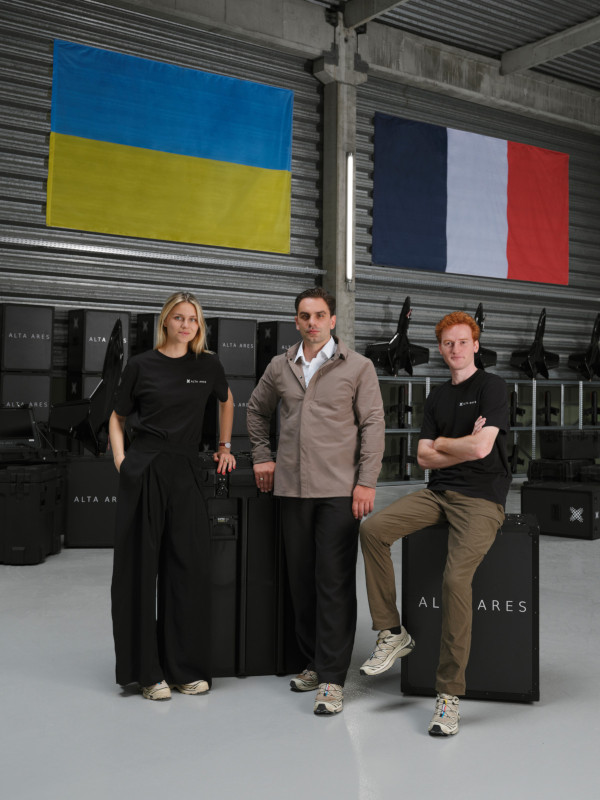
We had many meetings with his team. And also with ground units, various Air Force units, and special units. They also help and support us a great deal as a foreign company, but they also see us as a Ukrainian company. Because we speak Ukrainian, we have a Ukrainian legal entity, and we have offices here, unlike other companies that come for a week-long meeting and say they will return in six months. We send our engineers to the front line. Even I personally took part in several missions with interceptors, just a few days after the meeting between Presidents Macron and Zelenskyy.
This is how we see what does not work and fix mistakes. We have those we call "frontline engineers," who stay with a military unit for about a week and work on development.
– How has the emergence of interceptors affected the Russian-Ukrainian war?
– Interceptors are part of the solution in a new air defence strategy. They are quite effective against low-speed targets such as Gerbera, Shahed-136, Supercam, Zala drones, and so on. But they address only part of the problem.
As we saw during the latest massive attacks on Kyiv, cruise and ballistic missiles are harder to intercept — we have few solutions for that.
That is why Alta Ares signed a partnership with Airbus to develop European air defence solutions. But we will have to change many things, including the software component — this means additional work, additional development.
For example, when you shoot down a Shahed, you let it fly past so that the interceptor is behind it. Intercepting cruise or ballistic missiles requires a head-on engagement. So these are not the same algorithms.
That is why, if we raise 50 million euros as part of a fundraising campaign, we will reinvest 10 million euros in Ukraine for this programme.
– But do you know how to do it — how to shoot down missiles?
– We have engineers from various very good companies who joined us and carried out modelling and experiments on how to solve this problem. But before saying that we have a solution, we want to do something like intercepting a missile. Once we do that, I will say that we have a solution. Until then, I would not want to give false hopes.
You know how many times Ukrainians have expected magical Western solutions and, in the end, nothing came of it, you understand? Take Leopard 2 tanks, for example. We do not want to shape expectations because civilian lives are at stake, and our company takes this very seriously.
This is a difficult task, and we want to accomplish it because we do not want to take on easy ones. If we solve the problem, it will be a major victory for Ukraine, as well as for NATO countries and our partners, for example, in the Middle East.
– How well are Alta Ares products integrated into Ukraine’s air defence system?
– Quite well. For a two-year-old company, we are doing fairly well. Although things can always be both better and worse.
I am very pleased with the support we have received from various brigades, especially from the Unmanned Systems Forces. They supported us a great deal. In particular, they gave us access to a highly qualified crew and explained what needed to be changed, because when we started development, nothing worked.
We came up with ideas from France and began working here. And you need to stay here to have an R&D team. Because during testing, you better understand what does not work and what needs to be changed to make it work.
So I am grateful to those people in the General Staff who helped us integrate with the right unit, who granted permission for combat trials, which was not always easy. I am also grateful to the Security Service of Ukraine — they have always been very supportive of us. They like our innovative and fast approach to carrying out tasks. For example, when something does not work for us, we say, "Okay, we will have a solution in a week." And they like that.
– Is it possible to completely close the sky against enemy attacks?
– No, let us be realistic. We are not here to sell dreams to people who do not need them right now. Israel is the best example of how you can receive around 4 billion euros’ worth of Patriot missiles from the United States every year, but what is the result? You understand, there is quality, and there is quantity. And in my view, the Russians, Iranians, Chinese, and all the not-so-friendly countries have understood this very well.
Making the sky as safe as possible is the goal that all of us — both companies and the government — should strive for. And it is possible, but it requires a great deal of coordination. Because it is not only about the interceptors themselves, but also about coordination with radars, the data management system, maintenance, and the warhead. There are many components that make this equation solvable, you know. So I think Ukraine is on the right track toward having one, and we can say that we have started working on it. And Ukraine now has one of the best air defence architectures in the world.
Ukraine has always been a very technological country, one that has always wanted to solve problems. And that is exactly why it is so important for our company to be here. Because the mindset of the Ukrainian people is very innovative, and we like that very much.
– What sets your company apart from competitors?
– We have various competitors, but we do not call them competitors; we call them partners. I can only be glad when I see someone else’s interceptor shoot down a drone where we could not.
We are happy to see other companies working, because there is so much work to do. It is difficult for one company to make all the interceptors in the world, you understand. So let us be realistic: we are very happy to have good relations with our partners, because some of them, for example, buy our terminal guidance software.
We are not here to say: "We want to be the leaders, and everyone else should be behind us." No, we are all working on the same thing. When I sleep, I know that other companies are protecting the sky over my head, and when they sleep, they know that we can protect their airspace.
And I think this is also a lesson in humility. Because you may have the best engineer, well paid in France, and a very sleek office, but the truth is in the field. The truth is in how your interceptor works on the front line.
We really want to improve, for example, the interception rate. I will be frank with you. About a month ago, at a combat position in Zaporizhzhia, I saw 45 Shaheds over my head, and we had only three interceptors with us. At a moment like that, you feel very foolish.
And I started thinking about increasing investment. I thought: "All right, damn it, I need to do something bigger, raise a lot of money, so that next time I go to Zaporizhzhia, I have not three interceptors, but 30."
– How has the emergence of artificial intelligence changed the war and the miltech market?
– AI is a big topic. Many people talk about artificial intelligence, but few understand it. Let me say that I have a perfect understanding of AI, because we have been using it from day one.
We have a very strong machine learning team. Its members previously worked, for example, with Palantir or SaffronAI, and eventually joined us.
In our case, AI is needed, essentially, to reduce what we call "cognitive load."
How does an interception mission take place? There is a navigator, a pilot, and an engineer. And this team is in a Mercedes Sprinter somewhere in the middle of a potato field. They have two screens. One shows the radar, the other shows the video feed.
When the radar says, "I see a Shahed within a radius of 20 km," the crew gets out of the Sprinter, removes the safety pins from the interceptors, and the hunt begins.
Now imagine that it is already 3 a.m., the pilot is tired because he has been doing this for months, probably has not seen his family for even longer, and on top of that, the adrenaline is kicking in. So the cognitive load is very high, and the probability of a successful intercept is low.
But if you use artificial intelligence that automates the mission, you reduce the cognitive load and increase the probability of interception.
That is why it is very important for us to use more AI for automation, as well as to ease the pressure on the human operator, so that, for example, when facing 10 targets, that person can send different AI-guided interceptors.
– One of the problems often discussed is dependence on Chinese products. Is it possible to completely move away from components made in China?
– It is possible, but expensive.
Let me give you one example. France built the Rafale fighter jet, which does not contain any Chinese components. It is much more difficult, but it is possible and at a higher price.
We obviously need to build a supply chain right now. When I began integrating the pixel-lock terminal for target tracking into different interceptors, they were all using Chinese cameras.
And we say: guys, please, there is a Ukrainian manufacturer producing this camera in Ukraine with sensors from France. Yes, it is twice as expensive. But if tomorrow the Chinese cut off the supply chain, you will be glad that you have a camera that integrates with your drone.
So it is possible, but it is more expensive and takes time.


