



Bureaucracy or indifference: Why are thousands of wounded soldiers forced to fight for their injury benefits?
Ukraine takes care of its defenders even after they are wounded—as evidenced by our clinics and hospitals, where, in some cases, there are more military personnel at various stages of recovery from injuries than civilian patients. It is well known that wounded defenders are entitled to compensation for medical treatment and to the treatment itself. At the same time, almost everyone has heard firsthand about cases where a wounded soldier has been removed from the active roster, is not paid compensation for treatment, and, as a result, he and his family are forced to struggle to survive.
The reasons lie not only in the negligent attitude of the command of certain units, but above all in the multitude of bureaucratic intricacies. So, what are the pitfalls involved in completing the paperwork required to claim additional compensation whilst undergoing treatment following an injury? Which of these issues could the state have resolved long ago? What documents need to be gathered, and in what format, to avoid running into problems?
As of the time of publication of this article, Ukrainian servicemen and women who have sustained injuries or trauma whilst defending their homeland are entitled to additional payments, which are allocated on a graduated scale.
The first is 100,000, paid monthly for four months of inpatient treatment, or longer if the Medical Examination Commission so decides. Salary payments continue during this period.
Secondly, in the event of a disability being established, a one-off cash benefit is awarded. Group I – 1,331,200 UAH, Group II – 998,400 UAH, Group III – 832,000 UAH. Certain payments are also possible in the event of partial loss of working capacity.
Thirdly, financial assistance for rehabilitation and payments from local authorities, which can be applied for on the basis of an existing status.
Censor.NET spoke to lawyers who handle cases involving military personnel either entirely or partly on a voluntary basis – Roman Likhachov and Nataliia Lisova. Ms Lisova is also the secretary of the Kyiv Regional Bar Council’s Committee for the Protection of the Rights of Combatants.
"IN DEFENCE OF THE MOTHERLAND"
Firstly, regarding the main provision – the 100,000 additional payment. This must be paid during treatment, provided three documents are available. The first is a certificate detailing the circumstances of the injury or trauma. The second is a discharge summary from inpatient treatment. And the third is a certificate from the MMC stating that the injury or trauma was sustained whilst defending the Motherland. If all three documents are available, there are no issues at all. If any of the documents are missing, that’s when the problems begin.
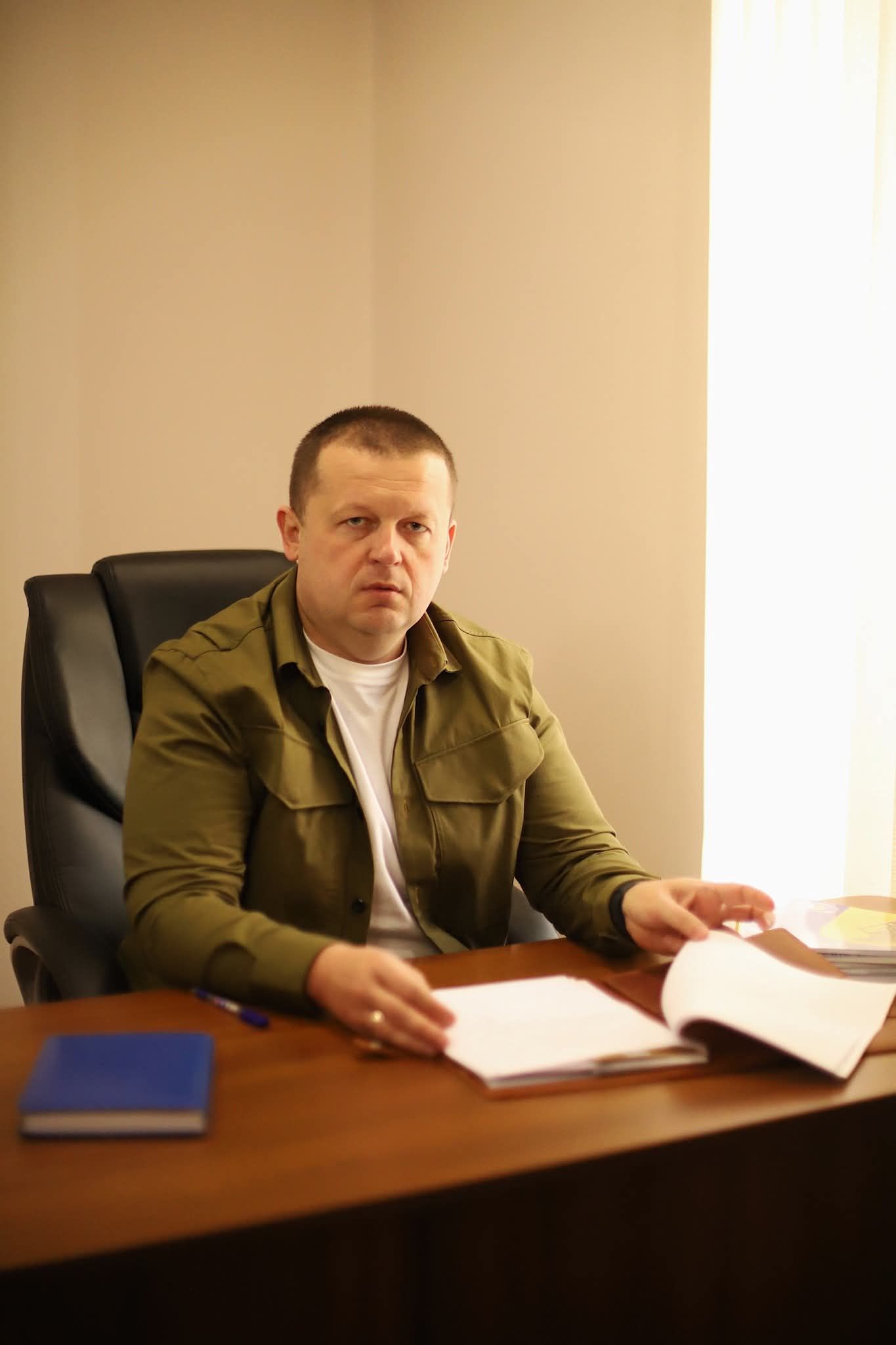
The reason for the military unit’s negligence is obvious, notes Roman Likhachov:
"For example, a soldier was wounded whilst on secondment to another military unit. A certificate detailing the circumstances of the injury still needs to be obtained, in some military units, the process runs smoothly and quickly, whilst in others it takes a very long time.
The second issue concerns payment. We sometimes encounter situations where the unit commander and the medical unit have not forwarded the relevant documents to the finance department, and the person receives no payment. This situation is quite common in cases of long-term treatment, where a person is undergoing treatment for four months or more. After four months, a decision from the MMC is required, confirming that treatment will take longer than four months, and only then will payments continue."
It is important to pay attention to the details of the Form 5 certificate. If it does not state that the injury or trauma was sustained whilst defending the Motherland, then, in essence, this invalidates the entire claim.
"Often, the actual circumstances are not analysed. The MMC relies on documents from the military unit. In other words, if a Form 5 certificate is received from the military unit stating that the injury was sustained on the battlefield, the MMC will rule that it is related to the defence of the homeland. But if there is no such certificate, just a formal document, then they will rule that it is simply related to military service. And then, to receive additional compensation, the serviceman must obtain a new certificate – detailing the circumstances of the injury. This must then be sent back to the MMC, requesting a review of the decision. Usually, this decision is automatically amended in this way, establishing a link to the defence of the homeland on the basis of the certificate."
Today, the exchange of documents and the obtaining of new certificates takes place electronically via the SEDO system; however, it still takes time and adds to the hassle.
Are there any payments if it is recognised that the injury was sustained whilst performing military duties or whilst on active military service? Only for treatment on general grounds. There is no question of a 100,000 reward here.
Payments under local programmes and rehabilitation allowances will also depend on the status of the injury, which the soldier will be assigned based on the MMC’s certificates, or, if they had to obtain this status through the courts.
Quite often, local programmes explicitly state that if an injury was sustained whilst defending the homeland, additional compensation from the local budget may be available, whereas injuries sustained as a result of military service are either not mentioned at all or are covered by different payment schemes.
MEDICAL BUREAUCRACY AND DIAGNOSES
If the injury is severe, the serviceman’s leave is also paid for. If the severity of the injury is not established by medical discharge papers or the MMC – and this does happen – then one risks losing the court case and not receiving payment precisely for the period of leave, notes Likhachov.
"Controversial case law is also currently emerging regarding illnesses linked to the defence of the Motherland. Just recently, we won another court case and succeeded in getting the MMC to recognise a specific serviceman’s tuberculosis as an illness linked to the defence of the Motherland, and the military unit paid 100,000 in additional compensation for the duration of his treatment. "Although military units generally do not recognise these illnesses and state that the 100,000 ‘combat’ allowance should only be paid if a soldier has been wounded or injured. And even if the illness is linked to the defence of the homeland, they believe they are not obliged to pay the 100,000 during treatment," he said.
Nataliia Lisova notes that, out of the large number of court cases in her practice, problems with the certificate detailing the circumstances of the injury are the least common:
"In other words, the grounds for refusing additional compensation for the period of inpatient treatment are rarely based on incorrect wording in the certificate. Occasionally, there are cases where it is incorrectly drawn up: either it does not follow the prescribed format, or the surname, first name and patronymic are incorrectly stated.
Another scenario is when Form 5 is issued after the deadline. It must be issued within five days of the service member receiving the primary medical documentation form (Form 100), which is completed at the pre-hospital stage of medical care. Alternatively, if no pre-hospital certificate was provided and the patient was taken directly to hospital, Form 5 is then issued on the basis of a certificate confirming their stay in a medical facility for inpatient treatment.
Consequently, the certificate detailing the circumstances of the injury includes either the initial diagnoses – those recorded on Form 100 – or those made at the time of the first hospitalisation. However, it is not uncommon for other diagnoses to emerge later on, which are a consequence of the injury and directly related to it, but these will not be included in the certificate detailing the circumstances of the injury. The only way to prove the link between these secondary diagnoses and the defence of the Motherland is to undergo MMC."
The problem arises when interpreting medical information. For example, when a serviceman has undergone treatment but has not undergone MMC. However, Lisova emphasises that military units usually have more questions not about Form 5, but specifically regarding the medical documentation – namely Form 027/O, that is, the extract from the inpatient’s medical record or the discharge summary. "If, upon a serviceman’s admission to hospital, the medical facility states the primary diagnosis and a secondary diagnosis in Section 7, the military unit often considers the secondary diagnosis to be unrelated to defence duties and therefore does not pay the additional allowance."
TREATMENT ABROAD: THE MMC's GAP
Those undergoing long-term treatment and rehabilitation abroad often face a major problem.
"For example, we receive medical documents from Germany. They are not in the same format as here in Ukraine, of course. The Germans describe things quite differently, and their definition of ‘inpatient treatment’ is entirely different. Another problem arises when we submit a notarised translation of a discharge summary from a German medical facility to the military unit. The military unit then asks: ‘Where does it say here that this is inpatient treatment?’, explains Lisova.
In Germany, there is a concept known as ‘nursing care’. This refers to situations where a person is not directly in hospital but is staying at a hospice near the hospital under round-the-clock nursing care, either undergoing dialysis or preparing for surgery. In effect, they are considered to be in hospital under the terms of our legislation. But the Germans call it something different, and so it turns out that the soldier has no grounds for receiving additional compensation, even though they are in hospital.
And if a person is abroad for more than four consecutive months undergoing treatment, a second problem arises – the need to undergo a MMC, which must confirm the need for long-term treatment lasting more than four consecutive months. Without the MMC’s approval, the military unit ceases payment not only of the additional allowance but also of the basic pay.
The law provides that the MMC assessment may be conducted remotely; nevertheless, I have encountered cases in my practice where a German medical facility issued a certificate stating that the soldier was hospitalised with a very serious injury and was being prepared for the next surgical procedure. Yet in Ukraine, the MMC rules that he does not require long-term treatment. And we are faced with a situation where he can barely move unaided; the MMC has made this ruling, and we have to transport him from Germany to the military unit just so that they can tell us: ‘No, go back, get treated there’. I have had more than one such case where we challenged the Military Medical Commission’s decision through the courts, as well as the military units’ decisions to suspend payments."
The lawyer believes that inter-departmental cooperation could help resolve the situation. The Ministry of Education and Science and the Ministry of Health should have drawn up a standardised document setting out how medical reports from Germany are to be taken into account here.
These documents, incidentally, are very difficult to obtain in Germany. They have no concept of a discharge summary from an inpatient’s medical record; you cannot even obtain one by post. Usually, volunteers have to request a detailed report on the patient’s condition, along with diagnoses and test results.
"Ministry of Defence Order No. 260 contains a very strange and utterly unconstitutional provision, which stipulates that in the event of a serviceman’s continuous hospitalisation for more than four months, if there is no corresponding MMC report confirming the need for long-term treatment, the military unit has the right to suspend the payment of financial allowances.
Either you discharge him and then do not pay, or you pay. Can you imagine such a situation in civilian life, if you were an employee? A wounded serviceman becomes a hostage to the situation, as he cannot attend the MMC himself – that is, he cannot book an appointment via the ‘Helsi’ app for the MMC. He is referred to the MMC by his attending doctor. But if he is in Germany, his attending doctor there cannot refer him for the MMC, as this is purely a matter of Ukrainian domestic legislation.
However, Order No. 402 of the Ministry of Defence, which regulates the procedure for conducting MMC, clearly stipulates that if the need for long-term treatment lasting more than four months is determined, the referral for the MMC must be made either by the head of the department where the soldier is receiving treatment or by the specialist doctor treating the soldier.
This inconsistency for those abroad has still not been resolved. Although the courts side with the servicemen and, even in the absence of a MMC’s conclusion, rule that the 100,000 must be paid. Commanders have the right to refer them, but they do not always do so," states Lisova.

INJURIES AT THE TRAINING GROUND OR CAUSED BY SRG: THE CONDITIONAL REAR
Whilst disputes over injuries, illnesses and trauma sustained on the front line are more or less clear-cut, those sustained in the so-called rear raise more questions. For example, in a firefight with a sabotage and reconnaissance group or from shrapnel from a shahed. Or an instructor or cadet is wounded at a training ground. Or a wound sustained at a base or even in a trench from an incoming strike outside the line of contact. Is this recognised under the heading of ‘defence of the Motherland’?
"This is a major problem," says Likhachov. "We have a similar case. We’ve already been through two levels of court and lost both; the case is now at the appeal stage. It concerns a soldier who lost his leg as a result of a rocket strike on a military formation in Chernihiv. He, incidentally, continued his service. Initially, his military unit issued a certificate stating that, as a rocket had struck Chernihiv, his leg had been blown off whilst defending the Motherland.
However, a month later, the military unit revoked this certificate and issued a new one, stating that the injury occurred whilst performing military duties, as Chernihiv is not considered a zone of active hostilities. The fact that a missile struck there is of no interest to anyone now. It is now proving quite difficult for this soldier to receive 100,000 combat pay whilst he is undergoing treatment.
The situation is similar for injuries sustained at training grounds. Rockets do strike there, yet it turns out that these injuries were sustained ‘whilst performing military service’ or ‘whilst carrying out military duties’, but not ‘whilst defending the Motherland’.
The reason why the command often fails to award the 100,000 combat payment lies in the subsequent monitoring process, adds Roman Likhachov:
"We have many criminal cases where audit officials arrive at a military unit and say: ‘You have calculated all this incorrectly; you have incorrectly determined that this was the line of contact.’ There is a problem with regulations and legislation. For example, a military unit calculated 100,000, including for those stationed at a command post located in an active combat zone, on one of the hotspots, but the auditors consider that this is not a combat zone. Therefore, it is sometimes better for the command not to make the payments, to avoid facing criminal proceedings later on. Auditors consider everything from a documentary perspective, not from the perspective of an actual war. To get a sense of it, they even measure the distance to enemy combat positions using a map. But how can you measure the distance when we no longer have that trench line, as we did in ’41–’45?"
In other words, civilians who are far removed from the war have effectively turned up and are deciding exactly where the front line should run. Clearly, specific instructions from the Ministry of Education and Science, along with inter-agency coordination, could also bring some order to this process.
DISABILITY IS NOT ALWAYS ‘DEFENCE OF THE MOTHERLAND’
Another issue is what disability category a person will be assigned based on a comparison of the injury sustained, medical certificates and treatment records, and the source of the injury influences this.
"There needs to be standardisation so that injuries sustained at training grounds, in military units, or following enemy sabotage operations are recognised as having occurred in the defence of the Motherland.
To achieve this, the legislation must be standardised. Even judges in court hearings openly and correctly state that they understand that a person’s leg was severed, and that this injury was the result of active combat operations. However, the legislation is worded in such a way that this is not deemed to be the defence of the Motherland, but rather that the person was performing military duties when this situation occurred."
And ultimately, time does not always work in favour of advancing the case. The time taken to obtain the necessary documents, even with electronic document management, varies across different units.
"The human factor comes into play. In some military units, the system is well-organised. There, it goes so far that when a person is in hospital, steps are taken to ensure that certificates are issued, payments are made on time, and communication with families takes place. This depends on how well the unit’s command has organised everything, as the legislation is the same for all military units. It depends on how well the civil-military cooperation service carries out its tasks.
Our legislation is actually quite good at the moment. The problem, however, lies with the bureaucracy and those responsible for implementation. For example, let’s say there is a commander, Petrovych, who has a wounded person in hospital, and he must ensure that the certificate has been issued, that the certificate has been sent from the military unit to the hospital, that the discharge papers have been received, that the MMC’s decision on defence of the Motherland has been received, and that all other documents are in order. And Petrovych doesn’t always keep track of all this."
REMOVAL FROM THE STAFF, LOSS OF SALARY
The most glaring and demotivating situations, which border on the army discrediting itself, are when a wounded or injured soldier is removed from the staff, meaning they do not receive a salary. Stories of wounded soldiers having just 600 hryvnias credited to their card are a case in point.
"The military units' position on why they are sending personnel outside their regular staff—it's because they need to recruit people to fill their regular staff positions. The higher-up command asks how many authorised posts there are. And to recruit a new serviceman, they must fill the authorised number of posts. If these are full, then that military unit will not be allocated any more personnel. And that is why the command is sometimes forced to remove people from the unit’s authorised strength.
Again, if a serviceman is undergoing treatment, he should be paid 100,000 in additional remuneration provided all the necessary documents are in order. The issues mentioned here arise with those who are undergoing long-term treatment or have been on sick leave for a long time. Problems, for example, in obtaining documents certifying a serviceman’s unfitness for service, as these must be approved by the regional MMC, and this can sometimes take months. I believe that these powers should be devolved to the local level so that district Military Registration Commissions can also issue such certificates," explains Likhachov.
RECEIVING MONEY UNDER COURT ORDERS: DEBTS OWED TO MILITARY PERSONNEL UNDER COURT RULINGS AMOUNT TO 3 BILLION
Ukrainian courts are overburdened, and there is a shortage of judges and support staff. How quickly are military cases dealt with at a single instance, and how long does the process take if the case has to go all the way to the Supreme Court?
"I can put it this way: the Kharkiv District Administrative Court handles cases involving all government bodies, including the Pension Fund, the tax authorities and military units, so its caseload stands at around 40,000 cases a year. Give or take, the situation is much the same in the Lviv region," says Likhachov.
"The courts are currently severely overburdened, so in cases that should take two months to hear, by law they sometimes take up to half a year. We have cases that take two years to be resolved in the court of first instance. The Kharkiv District Administrative Court sometimes takes as long as two years to resolve a case."
And finally, if a wounded soldier, who is not being paid compensation for his injuries, has had his rights upheld in court by his relatives or loved ones, how realistic is it to actually receive the money from the military unit following the court’s decision?
"Just recently, I received a letter from the Ministry of Defence stating that debts owed to military personnel by military units, as per court rulings, currently amount to 3 billion hryvnias. For example, last year the figure was 1.7 billion hryvnias. As of 2024, there were more than 80,000 cases involving military personnel pending in the courts. In other words, winning a case in court is one thing; getting the money is the next challenge," adds the lawyer.
We have a case involving a young man from the National Guard who was taken prisoner. He fought for several months and was in hospital. There was no certificate from the military unit regarding the circumstances of his injury, and we spent a year and a half trying to get the military unit to hand over all the documents. They wrote to him stating that the injury was sustained whilst on military service. Because of this, he did not receive any additional award for that period. We eventually secured a MMC and recognition that the injury was sustained whilst defending the Motherland. This soldier has since been discharged; we spent a year and a half fighting for justice, yet the military unit has still not paid him the full amount.
There is another case – dating back to 2022 involving the 92nd Brigade, where a man suffered a serious injury and underwent treatment. We won the court case, but the military unit has not paid this money for three years, citing a lack of funding. What have they done? They have separated the payment of financial allowances from the enforcement of court rulings. In other words, even if you win the court case, the military unit claims there is no money.
"I have just recently received a letter from the Ministry of Defence stating that debts owed to military personnel in military units, as per court rulings, currently amount to 3 billion hryvnias."
Nataliia Lisova speaks of differing practices across different military units:
"There are military units that receive funding, and there are military units where we can initiate judicial oversight, and the enforcement officer will impose fines on them. The enforcement of a court ruling is a separate budget classification item to receive funds. The military unit submits an application to the Land Forces Command, if it is part of the Land Forces, and then awaits funding, but does not receive funding from the state.
In other words, we are taking more procedural steps to ensure enforcement than we did to secure a court ruling in favour of the serviceman."
She notes that the courts, including the Supreme Court, predominantly hand down favourable rulings in favour of service personnel:
"There is even Supreme Court case law on this matter. The Supreme Court has stated: it does not matter how many secondary deceases are listed, and even if, for example, the primary illness is described in general terms, but a secondary diagnosis is linked to the consequences of defending the Motherland (for example, mine-blast injuries), it is still considered that the person was undergoing inpatient treatment. However, despite established case law, many military units disregard this, and servicemen have to go through hell to prove their entitlement.
In other words, case law is very well established in favour of service personnel and is very clear-cut. But the duration of court proceedings amounts to a year of expense, and if the case is in Kyiv or the Kyiv region, it takes more than a year. And then one still has to ensure that the court’s decision is enforced."
What is the reason, on the part of certain military units, for refusing to pay financial compensation to their wounded personnel, even in the face of a court ruling? A desire to save money and a lack of funds are the first explanations that spring to mind. However, lawyers also identify bureaucratic reasons here:
"For example, military units still refuse to pay additional compensation – despite the vast body of case law on the matter – if, for instance, a serviceman was treated for his injury, spent a month or a month and a half in hospital, then returned to duty, and two months later suffered a relapse, and he is admitted again to a military hospital or a civilian healthcare facility due to the consequences of the same injury. He is no longer paid compensation because there is allegedly a break in his treatment.
The Supreme Court has stated on more than one occasion that Cabinet of Ministers Resolution No. 168 does not stipulate a requirement for the continuity of treatment. Regardless of how many times he has undergone treatment, if that treatment is related to an injury sustained whilst defending the Motherland, then compensation must definitely be paid.
This practice emerged in the armed forces in 2022, when Government Resolution No. 168 clearly set out the conditions for payment, and a separate directive from the Minister of Defence was issued to military units detailing the specific procedure for making payments. This separate directive contained the phrase ‘continuous treatment’. And despite the fact that this separate directive ceased to be in force as early as mid-June 2022, some military units continue to adhere to it."
Lisova believes that this problem can also be resolved through ministerial intervention.
"It is important for military units to receive clarification from the Ministry of Defence or the Land Forces Command regarding what and how to pay. If guidelines based on case law were issued, I think there would be fewer such problems. And these guidelines should also be taken into account by the State Audit Service. Because at the moment, military units are playing it safe in case they are audited – so that they are not accused of making unfounded payments," the lawyer notes.
MILITARY COURTS – A PANACEA?
In light of the nuances outlined above regarding court cases involving military personnel – protracted proceedings, delays in receiving funds – the question arises once again as to whether Ukraine needs military courts. Are they capable of at least speeding up the process? Legal experts’ views on this are divided.
"I witnessed the workings of military courts; at one time I was seconded to the military prosecutor’s office whilst serving in the armed forces. I can say this: there are pros and cons," recalls Roman Likhachov.
This system of justice was abolished as unnecessary, partly with the support of international organisations. Now we can see that the military justice system is needed. It is absolutely wrong that the Chuhuiv City Court in the Kharkiv region is effectively a frontline court, swamped with military cases. This is an excessive workload.
The advantage of military courts is that they deal with cases in a specialised manner, much like the High Anti-Corruption Court, which has already demonstrated its effectiveness. Whilst it does have certain shortcomings and drawbacks, it has proven its effectiveness. In a country at war, a military justice system is necessary, as, unfortunately, not every judge fully understands military law.
As far as I recall, there were only four or five judges in the garrison court. This would place little strain on the budget, but it would take the burden off all cases involving military personnel. And it would enable the standardisation of such cases.
The question is: who should be appointed to the military courts? There would not be much competition, as there are not that many lawyers with legal experience serving in the armed forces. Even now, specialised panels could be introduced in the courts of appeal to hear military cases, at least at the appeal stage, in order to reduce the workload on the courts of appeal with general jurisdiction.
As for the military legal profession, it effectively already exists. Today, it is correct to refer to us as ‘lawyers specialising in cases involving military personnel’, but the term commonly used by the general public, of course, is ‘military lawyers’. Therefore, it might even be worth establishing a system for training lawyers to defend the rights of military personnel."
According to Nataliia Lisova, it would make more sense to resolve issues relating to the calculation of compensation for injuries and other military cases at the pre-trial stage, so that servicemen do not have to waste time and energy on protracted legal proceedings:
"It seems to me that it would be more effective to harmonise the legislation, introduce amendments and, through internal departmental regulations, ensure the consistent application of legal provisions by military units, so that they all pay the same additional compensation for medical treatment following injury. Some units pay, whilst others do not, despite being based on exactly the same documents. This would be more effective than military justice.
In other words, this issue needs to be resolved out of court. And if a soldier—whether male or female—does end up going to court, the effectiveness drops. Firstly, not all lawyers take on cases involving military personnel. And secondly, not every soldier can find a lawyer who will help them free of charge. And if a soldier, for example, is in Germany without a pay packet, this is practically impossible. All the more so because, abroad, these are mainly people with serious injuries, often suffering from PTSD. They simply do not have the mental strength for legal wrangling."
There are currently no plans, not even in draft form, to establish military courts, whilst tens of thousands of cases involving military personnel are already pending before courts at various levels. Lawyers have made it clear that the problems with processing the paperwork required to receive awards for injuries are systemic. And it is possible to secure justice, at least in the most egregious cases, through decisions by the authorities.
Olha Skorokhod, Censor.NET


