



How Russians lied about having "captured" Kupiansk. Russian POW recounts story
A Russian prisoner of war recounts how he ended up at war because of a drug dead drop and a contract signed under duress, how he found himself in an assault company staffed with convicts, how he hid among civilians in Kupiansk, and how he was later held captive by his own commanders — where Chasnyk kept his fellow soldiers trapped under the rubble while lying to his superiors about having "full control" of the city.
Vladimir Gennadievich Didyuev, born on 9 September 1992, house 40, Tsentralnyi, the village of Nikitino, the town of Verkhnyaya Salda, Sverdlovsk Oblast.
How did you end up in the Russian army?
I came out of hiding, stepped out of the woods onto the road, and a UAZ drove up; they gave me a hard time, offered me a contract – a blank sheet of paper. Sign it, and you’re free. I signed it, and within two weeks they came for me and took me away.
What kind of men did you have in the assault company? Who were they?
Convicts.
Was the entire company staffed with convicts?
Yes.
What had they been convicted of?
Some had been convicted under Article 228, others of paedophilia. The paedophiles were kept separately from us because we might have killed them, the paedophiles and rapists.
If you had been sent into an assault with a soldier who had been convicted of paedophilia, would you have...
Killed him.
At what point did you head to Kupiansk? Did you know you were going to Kupiansk?
No. They only told me after we had crossed the river by boat. We went in, and there was an apple tree, or perhaps not an apple tree, some kind of apple orchard. We passed through it, and people told us over the radio: "Guys, you are in Kupiansk." I took off my body armour, took off my helmet, threw down my rifle and told my commander over the radio, "Goodbye." I dropped everything and left. That was it. I refused to fight and walked away.
Where did you go?
To civilians, to ordinary people. I lived with them for six months. I was declared AWOL.
Who was there?
There was Aunt Lena, her eldest son Sasha, her son-in-law Sasha, and her daughter, Natasha, I think. I do not want to give you the wrong name; I cannot remember what their daughter was called. She was there with her children.
So, the whole family?
Yes.
How old were they, from the youngest to the oldest?
Aunt Lena was around 53 or 54. Sania was 38 or 39. The older Sasha was about 40. I do not know how old the sister was; I did not ask. She looked about 35 to 37, somewhere around that. And the children were two, ten, and 17.
How did they survive there?
They went from flat to flat, collecting grain and whatever else they could find, any food. They fetched water from a well. I changed into civilian clothes and went to fetch water. I helped them with everything I could. They lived in a basement.
In a basement?
Yes.
In a block of flats?
Well, in a five-storey building. A five-storey building.
When you returned, they were gone?
I was told that they had left for Kharkiv.
For Kharkiv?
Yes. They left with a flag, they said. That was it.
I do not understand — with a flag?
Yes, with a white flag, so that no one would harm them. They all left, I was told. I went with the elderly men to the second building.
Why did they leave while you were away?
I do not know.
At what point did the Russian soldiers find you?
How did it happen?
Completely by chance. Our soldiers found me. They asked, "Who are you?" I said, "I’m a local, a civilian." One of them asked for my surname, and I gave him my surname and first name. They radioed their commander. "Take him captive," he said. "He refused to fight and went AWOL. Take him captive, don’t let him go anywhere. Make him carry out combat missions."
Where did they take you?
They took me to a nine-storey building.
What did you do there if they had detained you as a combat refuser?
Nothing. I was tied up.
They tied you up?
Yes. They tied my hands and feet. They fed me once.
How many soldiers were there?
There were five of us, including me. Their call signs were Fatty, Buba, and Alligator. There was also another man who flew drones, a drone pilot. I cannot remember his call sign.
In Kupiansk?
Yes.
Was he a drone operator?
Yes. He flew drones from that nine-storey building — two or three times while I was there. Then he stopped flying them.
You mentioned a flag. Were you asked to display a flag?
That happened when Alligator and I were in the second building. The commander gave the order: "You and that, I won’t swear, that companion of yours who is sitting there with you will carry out an assault, and you’ll hold the flag with him." He asked, "Why with him and not with the men I carry out assaults with?" "Well," the commander said, "I want to see what he’ll do. Let him stand there and hold the flag with you. And you’ll give a speech." He said, "All right, fine."
For a video?
Yes. Drones were filming it. He said over the radio, "Happy 23rd February in advance. That’s it, wrap it up. Everything looks good." After that, they began assaulting our nine-storey building.
The assault on our building began, and the drones started firing at us.
And you and Alligator jumped out of the building?
Yes, and we ran towards the Central District Hospital. I made it, but Alligator did not. A drone caught up with him. One of our own drones.
Why do you think it was your own side?
Because we had asked our commanders to strike the second and third floors, but instead they started pounding us on the sixth floor. He said, "Wait, you’re hitting us." They replied, "We know. We’re kicking up dust to cover you." I still have shrapnel in my butt cheek from that.
How did you know you had to run towards the Central District Hospital?
Because Alligator told me to run there. He said there were friendly troops there.
You ran inside. What happened next?
I ran inside, and once again a bullet went straight through me. I shouted, "Guys, I’m one of yours, I’m friendly!" I shouted, "Duke! Duke!" I had a through-and-through gunshot wound. Then I heard him running away. I crawled inside and kept crawling. I shouted out a call sign. I was calling for Chesnok, the senior man, because our commanders had made arrangements with him. They had told us, "Chesnok is the senior man there. Everyone knows. He is supposed to meet you." So I called out for Chesnok.
Chesnok — so, you and the men...
When I ran inside, they tied me up again. "Do you know why you’re tied up?" they asked. I said, "Yes, I understand. I refused to fight." "We actually have orders to kill you," he said. "Where are the others?" I said, "They’re all dead." "Why?" I explained it to them. "All right, then," they said. "Stay tied up for now."
"The first to raise the Russian tricolour in central Kupiansk were members of a group led by a commander with the call sign Chesnok, my friend and comrade-in-arms. The six-member group raised flags over the district administration building on 9 October 2025. On 20 November 2025, Gerasimov reported to the Supreme Commander-in-Chief that the city of Kupiansk had been fully captured."
How often did Chesnok contact the command?
Every hour. He did not radio them himself; the others did. They reported on the situation. They were told, "Everything is fine, everything is quiet and calm. Guys, this is all nonsense, it is all lies. You’re all fine in your shelter. Help is always available to you, so pay no attention to what you’re being told." When Chesnok explained that they were surrounded and finished and asked, "What are we supposed to do?" they replied, "Guys, who told you that? You’re sitting there just fine. No one is going to assault you; there is no way in. They would have to come in without body armour, and no one is going to come at you without body armour. So no one is going to assault you." That was how they reassured them.
There were 15 people over that period. Did Chesnok’s group suffer any losses?
There were 16 because there was also a civilian with them. I reported that there were civilians there. But how was that civilian dressed? In military clothing and carrying an assault rifle. "I support Russia," he said.
Did they give him a weapon?
Yes. He walked around with an assault rifle. He stood guard and manned a post.
Did he tell you himself that he was a civilian?
Yes, and Chesnok also said he was a civilian. Once I had started going out, I went to collect a package. He was caught in an explosion from some drone-dropped munitions there. Later, they said, drones finished him off. As for the second man, there was some kind of scuffle or commotion among them. "That’s it," they said. "He’s dead." The third man was already dead. I have no idea how the third man died.
Tell us about the place where you were staying. Was it a basement or...?
It was a basement, and it was long, until the southern section was buried under rubble. They had a well there and dug it out. They had access to water, so water was not a problem. Food was the problem. Sometimes the grain did not make it through; sometimes the drone did not make it through. Sometimes there were no deliveries at all. They would go hungry for about two days. At night, a Mavic would fly in and drop energy bars — sweet bars. That was it. About one time in ten, it would make it through and drop seven at a time.
What did the soldiers themselves say about the situation? Did they discuss what was happening — that they were trapped under the rubble, that they had to find a way out, or what would happen next?
They did not even think about it. That was what Chesnok was there for. He had even been promoted, and they respected him even more after that.
At what point was he promoted?
About a month and a half later.
How did it happen? Over the radio?
Yes, over the radio. They said, "Congratulations on your promotion." What promotion? What rank did they give him? I think they made him either a senior lieutenant or just a lieutenant. I had no idea what rank he had held before. They immediately brought out the home-brew.
Were they celebrating Chesnok’s new rank?
Yes. What rank was it? Who the hell knows? But I suffered a bit that night. They got blind drunk and started kicking and abusing me again. But what could I do while tied up? Nothing.
"All that time, they received food supplies exclusively by drone, but even the packages had to be retrieved under heavy enemy fire. It seemed as though they had held that Central District Hospital forever, and the enemy had not managed to breach their defences once in six months. Then came the next episode, when the Central District Hospital was completely levelled by an airstrike. Unfortunately, many died in the basements, and only a small number of soldiers survived. But, as they say, those who survived envied the dead."
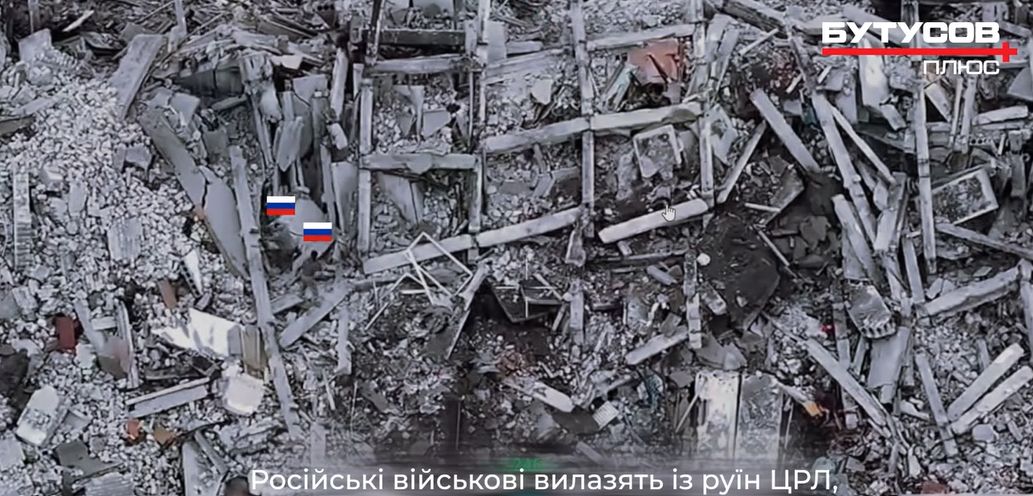
Every day, I crawled out twice during daylight. Two packages at a time, because that was all that arrived. Nothing else arrived during the day. I was like a dog: they put a collar on me and led me out on a leash. Another man went with me. He kept me on a leash like a dog.
Did another man go outside with you?
No, he did not go outside. I crawled out.
Through the rubble?
Yes. He followed behind me and could reach the packages. I crawled outside.
Why did you decide to run away from Chesnok?
Because they abused and beat me. They humiliated me in every possible way. I could have beaten one of them to a pulp, but you understand that I could not take them all on. My own health mattered more to me than they did.
How did you eventually manage to escape?
When they took the leash off me...
Oh, they took it off that time?
Yes, they gave me an opening. I had been waiting a very long time for it. It was like a nightmare for me. I had the last package. I opened their package and ran away with it. It contained 40 Snickers bars and a 200-gram packet of coffee. I ran away with the package to a detached house near the maternity hospital building. I stayed there for a week. Then I wanted a cigarette. I had been there for three days and wanted a smoke, so I decided to go and look for some packages. I thought I might find something to smoke or come across something else. So I went looking for the packages. I found two. I ran back to the house and heard gunfire. They told me to surrender. I had a carton of cigarettes. I said, "I surrender, guys. I don’t have a weapon or anything else. I surrender." They asked, "Who are you?"
I said, "I’m a Russian soldier. I refused to fight and ran away from my own side. I don’t know where to go, and I have nothing with me." They entered the house and confirmed that I really was alone. I had no weapon or anything else with me. They tied my hands and took me back with them.
How long did you remain in Kupiansk after you were taken prisoner?
I was held prisoner for three months.
In Kupiansk?
Yes.
How were you treated?
Fine. For the first two days, I was kept tied up. Then they said, "If you try to run, we’ll shoot you." I said, "Guys, I have nowhere left to run."
Compared with Chesnok’s group, how would you describe the way the Ukrainian soldiers treated you?
I was actually glad that I ended up with them.
Shuryk, a serviceman of the 425th Separate Assault Regiment Skelia:
"We promised him, ‘If you cooperate with us, we’ll get you out, and you’ll be fine.’ He agreed and even carried TM mines to them himself.
"He knew where their posts were and when each man left and returned."
Do you know how they treated me? "Mate, what are you bringing us to eat?" I would bring it. "Mate, shall we make some tea and have a drink?" I would make the tea, and we would drink it. They treated me very well. Guys, I’m so glad you took me prisoner.


