



Vladyslav Heraskevych: "I’m not considering politics at this point. My goal is to compete at next Olympics and contend for medals"
If at the end of this year someone in Ukraine attempts to compile a list of the most popular phrases of 2026, the probable No. 1 on this list will be "Heraskevych’s helmet." The athlete, who was known primarily to specialists prior to the Milan Olympics, managed to break through the world’s information "fatigue" from the Russo-Ukrainian war and Ukrainian suffering for a few days. And Vladyslav Heraskevych did this by effectively sacrificing his Olympic medal dream.
Back then, in February, his name was mentioned more often in the international media than that of Volodymyr Zelenskyy.
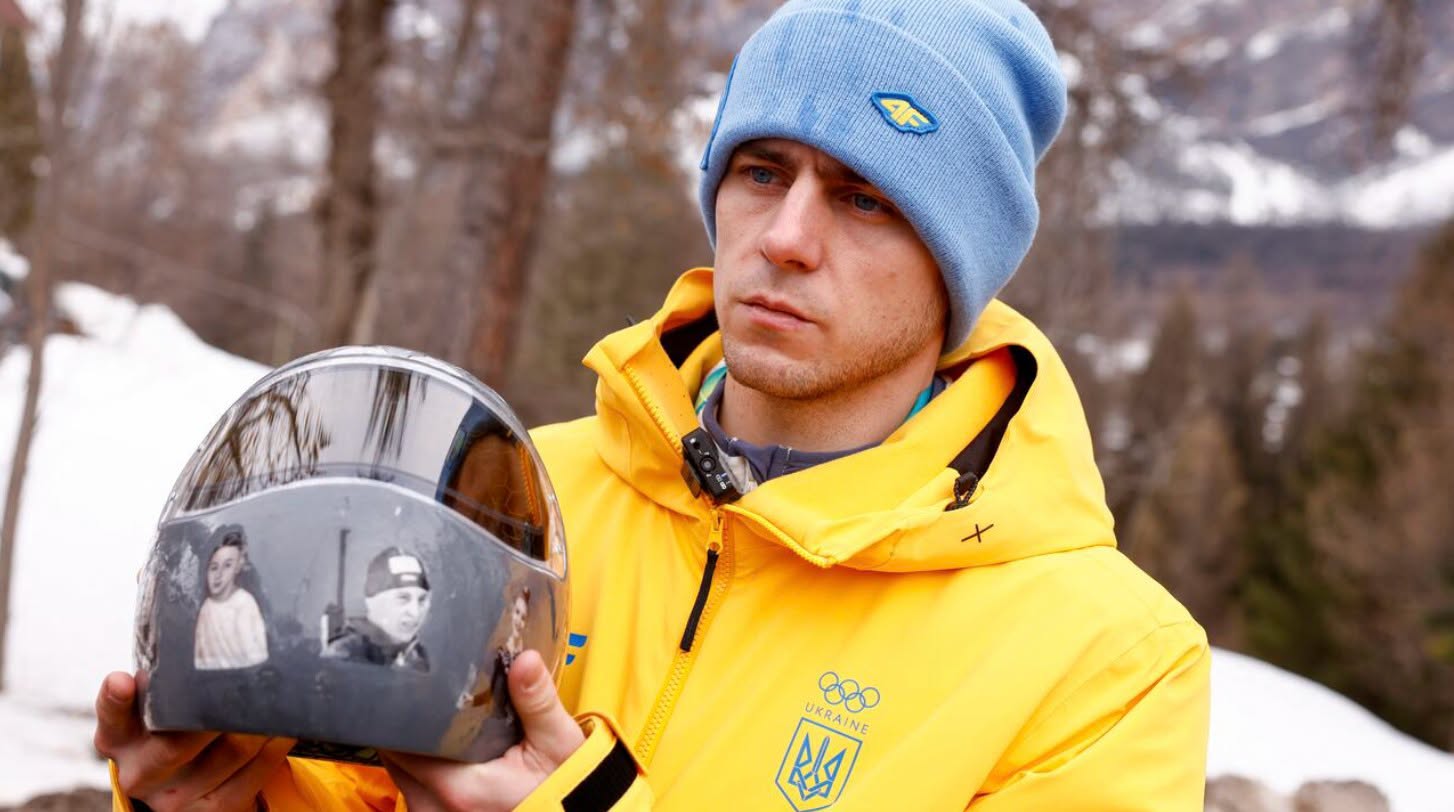
Six months have passed since then. Vladyslav trains every day, oversees the operations of the Heraskevych Charity Foundation, and seeks to build a summer push track for skeleton racers in Ukraine. And he continues his crusade against the Russian athletes stained by the blood of this war. Moreover, against those International Olympic Committee officials who have made considerable efforts to lift the sanctions imposed on Putin's favorites in 2022 and return them to international competitions.
Censor.NET asked the skeleton racer himself about how to prevent this return; whether the Ukrainian authorities are doing everything necessary to achieve this, and whether Heraskevych plans to enter high politics.
- Your high-profile Olympic helmet story took place in the winter. Unfortunately, over the past six months alone, the number of memorial portraits on your virtual helmet has significantly increased. These include the 2008 Paralympics and World Championships bronze medalist Anton Stabrovskyi, our well-known powerlifter Mykhailo Malkush, practical shooting athletes Denys Popovych and Oleksandr Lashchuk, Master of Sports in mixed martial arts Oleksii Bondarenko, children's handball coach and soldier Vitalii Maslo, 45-year-old athlete and combat medic Mykola Antoshkin, and hockey player Yurii Orlov.
Some of them were carrying out a combat mission at the front, while others were killed at home during shellings. Sumy, for example, was deeply shaken by the death (near a bus stop) of Uliana Vorona, a 13-year-old student of the Holubnychyi Sports School.
Do you also keep this sad martyrology? I think every time that Heraskevych probably has no free space left on his helmet.
- There were only 22 athletes depicted on my helmet. At the time of the Olympic Games, there was already information about more than 650 athletes...
Of course, not everyone is depicted there. It is very difficult to keep such statistics. I am not a media resource. I do not have full statistics. But I track it, I try to publish it on my social networks. So that the world remembers the names of Ukrainian victims in this war specifically from the sports community. Because I am an athlete, and I want to show through sports that these are ordinary people. These are not some special people bred for war. These are people who should currently be in sports arenas. Unfortunately, they are dying. And this is the worst, because all the destruction, all the sports stadiums can be rebuilt, but lives cannot be brought back. This must be remembered.
- Does the state of Ukraine in one form or another care for the families of fallen athletes?
- I know that after my disqualification due to the memory helmet, the NOC of Ukraine initiated support for the families of those athletes who were depicted on my helmet. Currently, we are also going to implement projects with the families of fallen athletes through our Heraskevych Charity Foundation. One of such projects was the transfer of bicycles to a new school in Zhovkva. It was a request from the family of Andrii Kutsenko, a cycling athlete who was depicted on the helmet. We handed over 8 road bicycles to the cycling school where he trained so that the new generation would have better training conditions now.
- And who provides money for your foundation?
- We had donors. After the disqualification, there was a lot of news that I was being given a lot of money. Well, this money went to the charity foundation's accounts. Thanks to this, we can now implement these projects.

We are also planning to create an online museum. We will collect a large volume of information about those athletes depicted on the helmet. We also want to build a sports ground in memory of these athletes, a physical space where one will also be able to learn about these people.
- Back then, in the winter, without exaggeration, the entire world wrote about the helmet and your disqualification, about the Russo-Ukrainian war that kills Ukrainian athletes. But time passes, and "war fatigue" is accumulating again. This war has again receded to the second or third place. So what else, in your opinion, can Ukrainian athletes do to prevent the world, and primarily Europe, from forgetting?
- We understand this concept. It is called war fatigue, and it is discussed a lot in international media. People get tired of the war, and the news doesn't change.
- Actually, to be honest (although it's sad), it's a natural human reaction.
- It is a natural human reaction, but in my opinion, it is also a problem of how the media, international media in particular, communicate the war. For them, the war has turned into statistics. These are just numbers, behind which readers and viewers do not understand what this means. When we say that such and such a number of people died during today's shelling, it does not resonate with people's hearts and souls as much. And that is why this helmet became such a huge case in world news—because these were people's stories. It wasn't statistics, but stories of athletes specifically during the largest sports event. Athletes who could be with us in the arenas right now. But they were killed by Russia. We must tell these stories, carry this memory.
Now, when we see that Russian symbols are actively returning to international arenas; when recommendations regarding the suspension of Russian athletes are already being removed, we must do everything possible to counter this. We must talk about Ukraine in whatever way we can. And actually, we have many cases where sports specifically was the catalyst to draw attention to Ukraine. Let's recall the disqualification of Olha Kharlan at the World Championship. This occurred during a situation when our athletes did not shake hands; when gymnasts stepped onto podiums and closed their eyes and ears when Russian flags appeared there.
- Another example: Ukrainian tennis players were able to draw the world's attention to this discourse at Roland Garros when they told the world both about Russia's attacks on Ukrainian cities and villages, and about how Russian and Belarusian tennis players tolerate the aggression (and some directly cooperate with Putin's regime). Did you follow how the girls did this?
- Yes. I know the girls. I was lucky that when I was returning home, I passed through the city where they were holding the tournament. And I had the opportunity to enjoy the play of our national team. They are wonderful people. Right now in international tennis, there is a lot of criticism towards Oleksandra Oliynykova, claiming that she politicizes sports too much, but I support her in this because these are today's realities. No competitions can even remotely compare in importance to what is currently happening in Ukraine. No medal can cost the lives of ordinary people who die every day. I am very glad that they use their platform to speak about Ukraine. Just as Marta Kostyuk and Elina Svitolina do.
- ...whom you met, judging by your Facebook.
Leaving aside any non-public topics, can you say what you discussed?
- We talk a lot about the return of Russian athletes, about their suspension, about the support of Ukrainian sports. To me, Elina Svitolina is a good example of how an athlete should act. All the initiatives she joins are very important. Both regarding the return of abducted Ukrainian children and helping young tennis players, whom they started supporting during their master classes across Ukraine at the time (and who already have huge achievements in the international tennis arena).
War is a tremendous pain that all Ukrainian athletes share. We want Russian athletes not to be present at competitions, and we prefer to make our own contribution to this. Unfortunately, this work is still not organized very systematically here. Although lately, it has been improving slightly on the part of the NOC of Ukraine specifically and the Ministry of Youth and Sports.
- And at the Winter Olympics, during this scandalous story, did foreign athletes come to you with support? Or did many consider this topic controversial?
- Here we need to separate what we did publicly and what we did non-publicly. Non-publicly, all the athletes I crossed paths with at the Olympics expressed words of support.
- Absolutely all of them?
- Skeleton racers are people I have known for a long time. Those whom I crossed paths with and communicated with on this topic, all of them supported me. I did not hear from skeleton athletes saying: you must give up this helmet or you must not wear it. These were Germans, Britons, Danes, Latvians, Israelis, Australians. A huge number of different countries that seem far from us, but they expressed support and said that there is nothing political in this helmet. These are your current realities. You must be allowed to compete.

Unfortunately, far fewer people spoke about this incident publicly. But we must understand that they depend on their national Olympic committees, which in turn depend on the International Olympic Committee. Not everyone is ready to express their opinion publicly.
- In those days, the head of the International Olympic Committee, Kirsty Coventry, met with you, and you later criticized her rather harshly. Have there been no more contacts?
- No, there were not. And I criticize her mostly because of her promises that she did not fulfill. I think no one likes those who promise something and do not deliver. Ms. Coventry turned out to be exactly that kind of person. After the disqualification, she gave an interview in which she cried very hard and promised that they would contact us regarding providing generators to Ukraine. This was a demand on the day of disqualification: I said that they must allow me to compete in this helmet; and so that it wouldn't seem that the IOC is pro-Russian, it would be great if they supported us in this difficult time. I will remind you, it was February. There were huge electricity problems. I insisted that the IOC could provide a certain number of generators for sports facilities in Ukraine. In her interview, crying, she promised that they would contact some companies and country governments; that they would provide this aid. She said that they would contact me, my dad, and we would be able to transfer this to sports facilities.
Unfortunately, she never contacted us after that. We did not receive any help in the form of generators from the IOC. Instead of the IOC, after the disqualification, the company Rozetka contacted our foundation and, together with our foundation, provided a generator for a sports facility in Cherkasy. They had electricity problems, couldn't hold competitions, and couldn't train. When they received the generators, they resumed their work and are now fully protected even from blackouts.
- Let's consider this interview as another reminder to Ms. Coventry about her promise.
- I also criticized her regarding the decision about my disqualification. I still believe that it was unlawful, although the IOC holds a different opinion in its decision. But it has still not been explained in detail exactly what I violated with this helmet, and why I was suspended.
Six months have now passed since the suspension. We see a trend that Russian sports on the international sports arena have increased. They are actively returning.
All of this can be linked to the governance policy of Ms. Coventry.
- Moreover, this is not even a creeping return, but a landslide one. Initially, this summer, the International Olympic Committee suspended a number of sanctions and did not review the reinstatement of the Russian Olympic Committee. Concurrently, it granted individual federations permission to lift sanctions against Russia. Furthermore, it canceled the ban on holding competitions in the Russian Federation and recommended lifting restrictions on athletes. This is not even washing their hands; it is direct collaboration with the aggressor. Well, and then everything depends on the influence of the Russian Federation in a particular federation. For instance, the International Gymnastics Federation completely allowed Russians to compete under their own flag. The same applies to the International Modern Pentathlon Union (UIPM), the International Weightlifting Federation (IWF), and the International Table Tennis Federation. The International Federations of volleyball, judo, sambo, and chess are bringing Russians back.
I am talking about this now, and I can already hear readers asking indignant questions: well, why is this happening in the 5th year of the war? Vladyslav, I am redirecting this question to you.
- Since 2022, Russia has very successfully begun to promote the thesis that athletes are innocent, that sports are out of politics. We could hear this thesis even in Ukraine prior to the full-scale invasion from some Ukrainian politicians and even ministers of sports.
- Which one exactly?
- This occurred during the scandal related to Yaroslava Mahuchikh's photograph. In 2021, I believe. Back then, some politicians stated that sports are out of politics. In his time, Mr. Huttsait noted that sports are out of politics. But this is a false thesis, and I am glad that Mr. Huttsait understood this. At the same time, unfortunately, it is widely supported abroad. War fatigue also has an impact. People who do not read international and political news very often think that the war is already over. As absurd as it may sound to us. They simply lack the context. And at some events a year ago, our fellow athletes asked: Is there still a war in Ukraine? They do not know what is happening in our country. We are not written about in their news. At the same time, we see the active return of Russia not only in sports. It is present in cinematography, at art arsenals, such as the Biennale. All this is connected with the international community's war fatigue. And it is also the work of some successful Russian narratives, at least the very same "sports are out of politics." This is exactly the thesis that is now being voiced by Kirsty Coventry. It is worth noting that for some reason it very often turns out that the children of dictatorships are the ones who shout the loudest about sports being out of politics.
- Really?
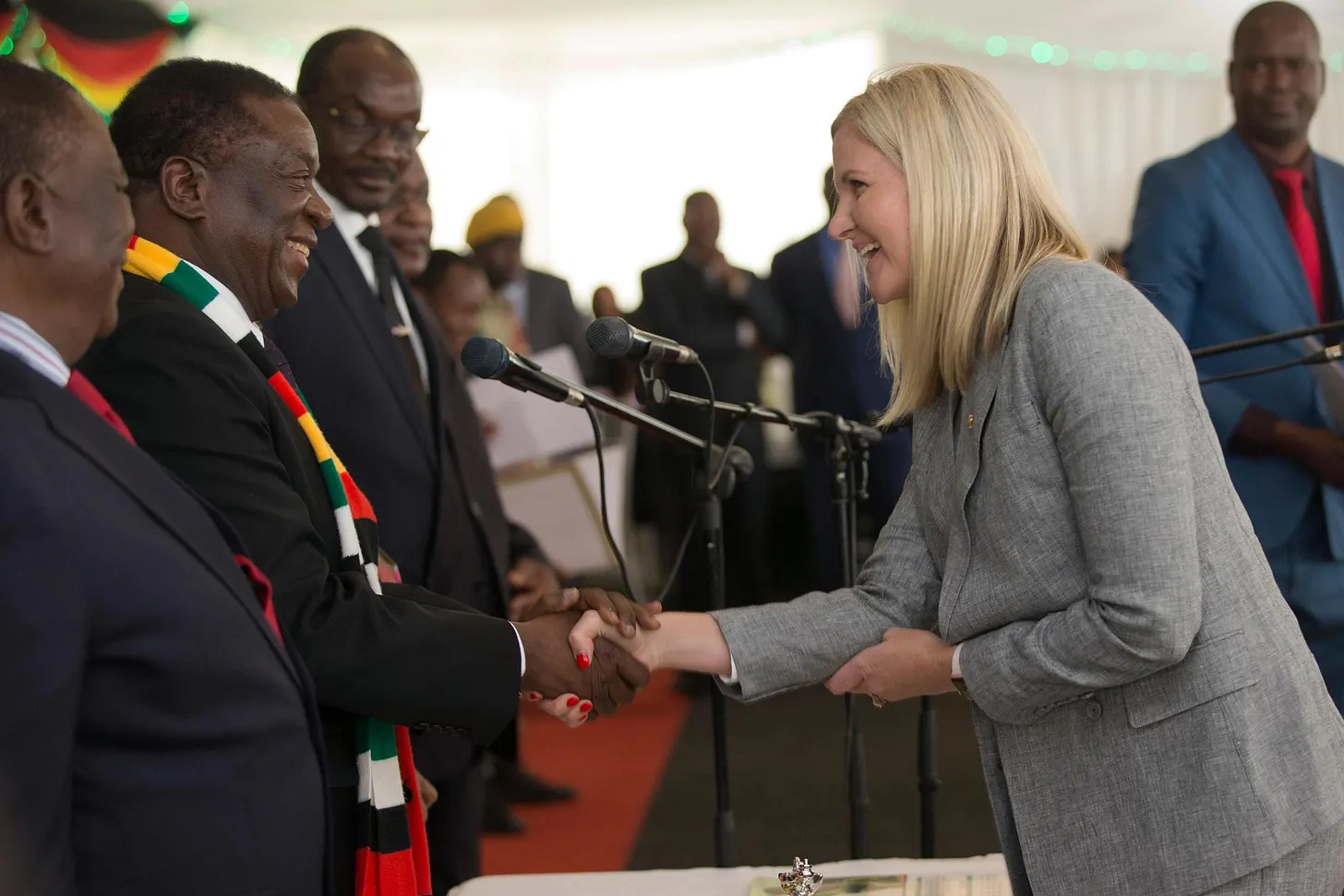
- Yes. This is very often said by Russian athletes involved in various activities related to abducted Ukrainian children, to the propaganda of war. They shout the loudest that sports are out of politics. Similarly, Kirsty Coventry, a protégé of Mugabe's regime, shouts louder than anyone that sports are out of politics and that the athletes are innocent of everything. Although she herself was on the side of the dictatorship in her time.
- I am not familiar with this page of her biography.
- She is a protégé of Mugabe's regime; she was called Mugabe's golden girl, she was the Minister of Sports in Zimbabwe. It is very convenient for her to say that sports are out of politics because she was a beneficiary of a dictatorship. Just like the Russian athletes who receive privileges in Russia for working in organizations similar to the Yunarmia. Or for participating in events aimed at legalizing the occupation of our territories. As it was at the stadium in 2022 in Luzhniki, when Russian athletes, Olympians, medalists came out with Z-symbols, with Putin, and celebrated the anniversary of the occupation of Crimea. To say that these athletes are innocent, that they are neutral—for me, this is an absurdity. But this is what we are seeing now within the walls of international sports.
- How can we prevent this return of Russia to big sports? I see you write both about Russian athletes fighting against Ukraine and about Ukrainian athletes killed in the war. And what other forms of protest can there be? What else can athletes do?
- When Russian athletes were brought back under a neutral flag, this was done not by the federation, but by the federation's arbitration court. And our athletes staged a protest at the competitions back then. They came out with posters because in our team there are children who suffered from the war, or their homes were destroyed. And our athletes showed this and spoke about it. The police were called; a lot of international attention was drawn. The competitions took place in Austria, so there was a lot of information regarding this protest in both Austrian and German media.
This is one option for counteraction. Another is working with national federations, with international federations, to prevent the return of the Russians. This involves gathering evidence and providing it to the international sports community.
- As I understand it, our Ministry of Youth and Sports proposed the idea of a conference of sports ministers from countries that support our position.
- Yes. But here one must clearly understand jurisdiction, who works with whom, and who has the right to do what. When we talk about sports federations – these are non-governmental organizations. Likewise, the IOC is a non-governmental organization, just a very large one. State organizations like ministries cannot influence the decisions of a non-governmental organization because this contradicts the charter of the non-governmental organization. Therefore, it is necessary to work with the NOCs of the countries, with our national federations, so that they work with the national federations of other countries across various sports. But right now, unfortunately, this is not very effective because there is the IOC, which has worked very hard towards the return of the Russians. It has already removed all recommendations; it is lifting sanctions. Therefore, in my opinion, we must now actively conduct work with the ministries of sports and foreign affairs. This is work directed at exposing Russian athletes who support the war.
- Until now, we were talking about federations, ministers of sports, that is, institutional matters. But there are simply very famous world athletes who support our position. For example, Norwegian biathletes the Bø brothers and Lægreid, Swedish pole vaulter Duplantis. Perhaps, on an "athlete to athlete" level, it would be possible to make some joint statements? Or is this not customary in the sports world?
- Here one also needs to understand that for very many athletes, this war is very distant. They do not stay awake under shellings all night, as we do.
- Well, yes, and you can't drag them here so that they could see and feel everything.
- You can bring some of them. Some athletes do travel. But this is a question of a systematic approach. Someone must handle this systematically, invite them, show them the realities of war. Some do not want to risk their careers, because it is still a huge risk, going against one's system, against one's national Olympic committee.
But despite this, one must work. For our Foundation, this cooperation is turning out very successfully. We work with the German organization "Athletes For Ukraine". One of the members of this organization, three-time Olympic champion Felix Loch, recently made a very strong statement against the return of the Russians. He is a good friend of mine, with whom we have been working since 2022. He himself traveled to the Polish-Ukrainian border, evacuated people, and took them to Germany. Felix visited a school in Germany with me, where there were children with mental disabilities. There was a child who was sitting in a rather uncomfortable wheelchair. And right in front of me, he made arrangements, purchased a wheelchair, and gave it to this child.
That is, there are foreign athletes who deeply care about Ukraine, who openly support it and do everything possible to help Ukrainians. We just need to work with them. We are doing this, and we are succeeding. Within the framework of cooperation with NATO countries, we contacted American biathletes who delivered aid to the Chernihiv biathlon center. We were happy to assist with logistics.
Sometimes such actions by athletes say much more about their position than words. Recently, I met in Kyiv with a member of the Norwegian Football Federation, who very openly supports Ukraine and speaks out against the return of Russian athletes. Once again: we have support, but we need to work on it. We must show it, hold conversations among athletes. I am not a proponent of constantly imposing my opinion, but when asked, one must not be shy and must tell about what is happening in Ukraine.
- Yes, because war is an extraordinary situation. So there must be extraordinary measures.
- Yes. But I would like a little more of a systematic approach, so that we hold a series of events in Ukraine. With war fatigue, it is very difficult to convey what is happening in Ukraine. Because people abroad are generally out of context that we have shellings here every day. Even the news about the lifting of sanctions on the Russian Olympic Committee came on a day when we had a day of mourning following those two horrific shellings, when over 50 people died in Kyiv alone. This demonstrates how detached the IOC is from reality and does not understand the context of our war.
- Does it not make sense for our Ministry of Youth and Sports and the National Olympic Committee to invite Ms. Kirsty to Ukraine? To try to do this publicly, to provide a rationale. We have Olympic reserve bases and schools that also suffer from shellings. So how could she not come?
- That is a good suggestion. It has already been voiced repeatedly. Unfortunately, we do not see Coventry in Ukraine. But in 2022, Thomas Bach (the previous head of the IOC. — Ye.K.) came. He arrived, and after that, he began to promote the idea of neutral Russian athletes. You know, the IOC really likes to talk about imaginary Russian athletes who are innocent and have nothing to do with the war. But when the conversation shifts to the plane of real athletes and real cases, the IOC very often avoids these conversations and does not want to talk about specific cases. And these very specific cases indicate that Russian athletes are guilty in this war; that they are members of the system. We also worked extensively with the opposition Belarusian association at the time. They left Belarus and started opposition work in the field of sports. In 2023, we participated in the Play the Game event, which gathers investigative journalists in the field of sports. This concerns football, as well as that scandalous World Cup in Qatar, where human rights were violated.
- I have heard about this event.
- And during our panel discussion on the return of Russian athletes and the neutrality of Russian sports, the speakers included the head of the Danish Olympic Committee, Hans Natorp, the representative of the Belarusian association Anatol Kotau, the IOC executive board member from Norway, Kristin Kloster, and myself. My speech included a presentation of the thesis that not all bridges are built for peace.
- I remember the then-head of the IOC, Thomas Bach, actively promoted the idea that sports should build bridges.
- Exactly. And I drew an analogy with the Crimean Bridge and used the example of Ukraine to prove that not all bridges are built for peace. Because ultimately, these bridges are used only to increase the scale of the war.
In that discussion, we talked about the neutrality of Russian athletes, and I vividly remember the speech by the representative of the Belarusian association, who said that in Belarus (and it works the same way in Russia), if you are not a supporter of the regime, you cannot be a member of the national team. They have a whole series of evidence of Belarusian athletes who held a position against Lukashenko disappearing for two weeks, and then returning with a pro-Lukashenko position. There is evidence of them being tortured to change their position in order to remain on the national team. Their family members were threatened.

Belarus actively fights against athletes who oppose Lukashenko. And for six months now, Anatol Kotau, who spoke at that conference, has been considered missing. He was abducted in Turkey, taken to a Russian-controlled territory in Georgia, and since then nothing has been known about his whereabouts.
- Horrific...
Another topic. The National Olympic Committee, jointly with the Ministry of Youth and Sports, filed an appeal with the Court of Arbitration for Sport (CAS) in Lausanne demanding the annulment of the IOC Executive Board's decision to temporarily restore the rights of the Russian Olympic Committee. Do you think we have a chance for a positive verdict? How dependent is the Court of Arbitration for Sport on the IOC?
- Very dependent. This is a pocket court of the IOC, which mostly makes decisions in favor of the IOC. Decisions against the IOC are very rare. They mainly concern stories about when someone was caught using doping and wants to reduce the term of their suspension, and similar things. When cases concern the IOC's image and are important to the IOC, decisions are mostly made in favor of the IOC, as was the case with the memory helmet. I remember the court hearing very well. It was terrible for the IOC, excellent for us. The IOC could not present a single argument that we could not counter. The IOC could not find an answer to a single one of our questions. But despite this, the decision was still in favor of the IOC!
- Listening to you, our appeal has little chance.
- But despite this, we have a successful case regarding the operation of the Russian Chess Federation in the occupied territories. Therefore, I believe we do have a chance. I hope that Ukraine can win this case.
- Considering how immersed you are in the topic of defending Ukraine's interests in the sports sphere, I will ask: have the Ministry of Youth and Sports and the National Olympic Committee ever asked you for help in the public sphere?
- There were some potential requests to participate in joint events. But we have not held any joint events.
- Very strange.
- I still believe that we have very weak systematicity. The Ministry of Sports is a huge building. A lot of floors, a lot of people. And despite this, still very few people in this building understand how the International Olympic Committee works; how Russians are returning to big sports; what tools and new directions they find in order to return.
Therefore, when at some point the return of Russian athletes via the courts actively began, we as a party were not ready for this. Now we have already begun to adapt. We see the first cases regarding the chess federation. Now the NOC of Ukraine is already filing lawsuits. But Russia started doing this 3 years ago! We are lagging far behind in this pace. Plus, there is no systematic approach to sanctions policy. Although we recently received good news that the Minister of Sports of the Russian Federation Degtyarev and the FIDE President Dvorkovich were finally added to the European Union's sanctions. By the way, I find it strange that this happened only now. Because Degtyarev, since the beginning of his political career in 2005, has been a person very close to Zhirinovsky. He was literally his right-hand man. Furthermore, this person runs a Telegram channel called "Degtyarev's Machine Gun."
- So much for de Coubertin's "O Sport, you are Peace!"
- Yes. And this is a person who openly supports the occupation of Ukrainian territories, appoints veterans of the Special Military Operation to positions in sports organizations, and does similar things. Despite this, the heads of international sports organizations willingly meet with him. One such figure is Morinari Watanabe, president of the International Gymnastics Federation. Incidentally, while sitting in the IOC offices, he was also involved in deciding which athletes qualified as neutral and which did not. Watanabe visited Russia and held meetings there even after the start of the full-scale invasion.
The heads of anti-doping agencies also met with Degtyarev. A few days ago, there was information that even after his inclusion in the EU sanctions list, he was in Switzerland and met with the head of the organization responsible for anti-doping in the world of sports. To me, this is shameful, and I do not understand why there is no reaction to this! Because we are talking about a sanctioned individual, and communicating with him should be utterly shameful! This, again, is a problem of reputation and the weak reaction of the international community.
If we talk about the NOC of Ukraine, we have made many mistakes starting from 2023, when the first recommendations regarding the admission of neutral athletes appeared. Back then, the NOC very quickly started talking about a full boycott. At that time, it was a groundless move because we did not have any coalition back then. The NOC, together with the Ministry of Sports (Huttsait was still there at the time), issued a joint order—and this was a huge mistake. We still do not have a proper coalition regarding the suspension. It should have been formed two years ago, not now. But better late than never...
- Vladyslav, we have been discussing the political dimension of sport for quite some time, so my next question is a natural one in this context. How did you react six months ago when some commentators and bloggers described the helmet controversy as follows: "Heraskevych is just trying to make a name for himself through politics and the war. He is unlikely to win an Olympic medal, so he is laying the groundwork for a political career. Look, he even spoke at the Munich Security Conference..."
- Let's start with the Olympic Games. This is open information; one can look at the official training sessions. My worst result there was the sixth position; the best was the first position. I won the final training run at the Olympic Games. I was the fastest on the track. This is official information; it can be Googled and verified: Heraskevych Olympics. To say that I had no chance of a medal is absurd, because the chances were there. I was among the top athletes!
Also, you can watch this run on the YouTube channel of Suspilne.Sport, which broadcast the Olympics.
Now, as for the claim that I am supposedly using this as a political platform. You know, after my disqualification, there was a great deal of criticism and many attacks from bots. They claimed that I had bought myself a car, made millions, and so on. This is also a matter of information hygiene. People do not make much effort to verify the information they are given. Let me tell you what actually happened. During this time, I have bought neither a car nor a home. Instead, our foundation has carried out a number of charitable projects. We donated bicycles and a generator to a sports school in Cherkasy. We are currently supporting our young skeleton athletes. A training camp is already underway in Koncha-Zaspa, funded in part by our charitable organisation. We are also actively working on a major project to install a solar power system at the Ukrainian Physics and Mathematics Lyceum. This is a joint project with the US-based Razom for Ukraine foundation (UFML).
- You mentioned bots. I was surprised to see an absolute crowd of hostile commentators or simply bots on your FB page. Do you have an understanding of why this is? Because one gets the impression that this is a deliberate campaign.
- Absolutely. It started when I began talking about the need to strip Serhiy Bubka of his state awards. Then attacks by pro-Russian deputies like Anna Skorokhod or Bilous began, often in my comments section. People who were public figures, then got arrested, and later released on bail. In other words, these people were involved in corruption. It is publicly known that they are corrupt officials. They accuse me a lot.
Also, a person named Shariy and similar Russian dissidents very often come to my comments, especially on Twitter... The very same Shariy who spreads fakes about me.
- Have you not tried to find out whose bot farms exactly are operating against you?
- I know from some Ukrainian journalists who tried to investigate this issue that these were various bot farms, both Russian and those of certain Ukrainian political forces... This is a sort of recognition, because during the Olympics, they wrote about me literally from all corners of the world. At that time, my voice in the world was very loud. Naturally, it is pro-Ukrainian, systematic, and for a long time. I advocate for the suspension of Russian athletes, for assistance to Ukraine and the Ukrainian army, and for the protection of the Ukrainian sky. All these issues are very painful for Russia. They are anti-Russian. And this, I believe, is the exact reason for the barrage of criticism that has been going on for 6 months already.
- Since I have already brought up the topic of politics, I will ask directly: are you interested in this career path? Let's say, if some political force offers you a place in the eligible part of the party list in the (eventual) elections to the Verkhovna Rada—will you agree?
- If we are talking about today, I am not considering this. I am 27 years old. I still have an active sports career. I have a goal to compete at the next Olympic Games and contend for medals. There are World Championships, European Championships, World Cups. I am an active athlete.
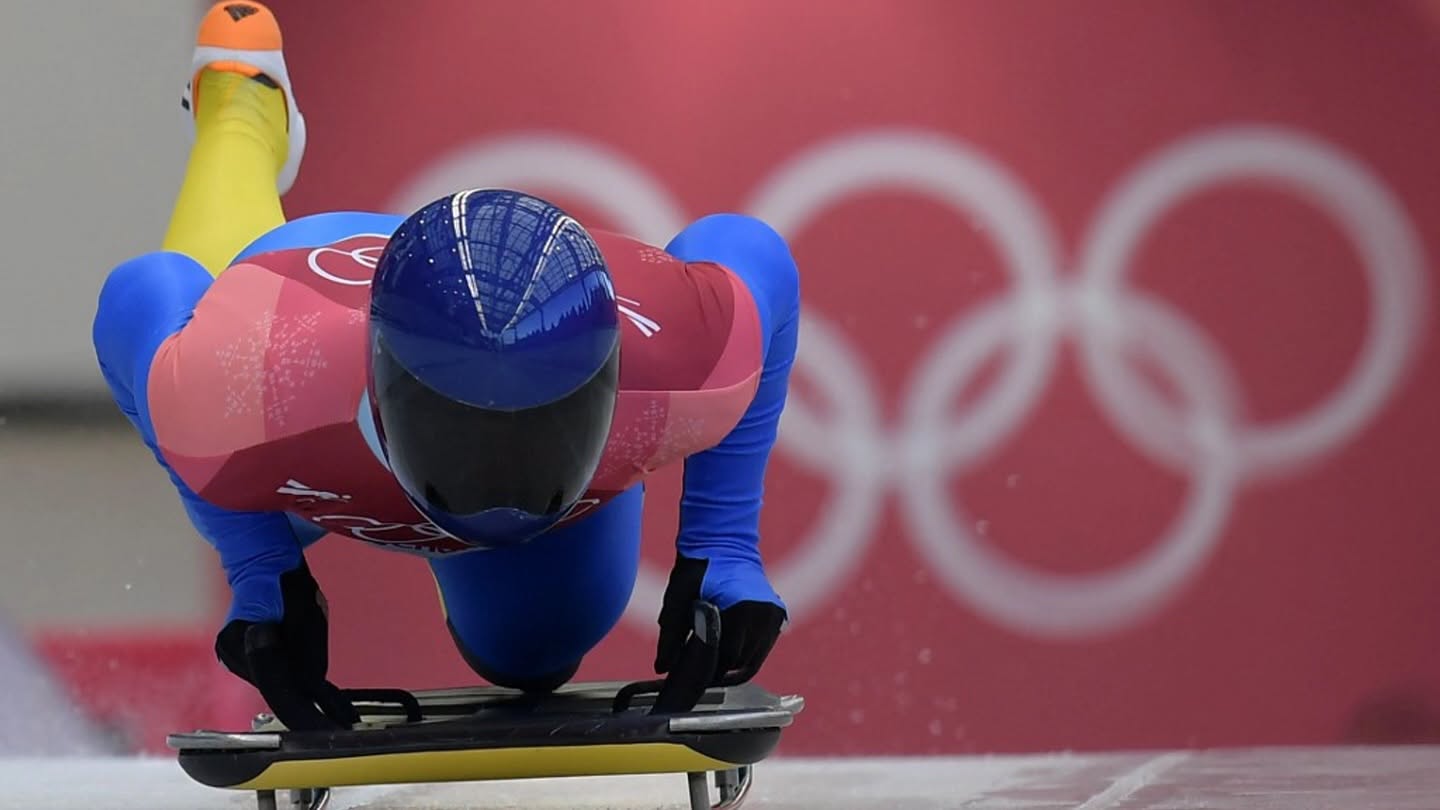
Plus, there is the Heraskevych Charity Foundation and a number of projects we are working on. Time is not elastic; I do not have time to do everything. Therefore, at the moment, I am not even considering the issue of politics. As you can see, over the course of six months, I haven't even ended up in any political party.
- Does any party or politician evoke sympathy in you?
- Currently, no.
- You went to the cardboard Maidan in support of Mykhailo Fedorov. Explain your motivation.
- I do not have a cult of personality. I am not going and have never gone to these protests because I am a fan of Mykhailo Fedorov. He is a good, effective manager. I have many acquaintances who work with him. And he has proven his effectiveness over a long period. By the way, he doesn't have his own political party.
- Well, in our times, this is done quickly. Zelenskyy also did not have his own political party a year prior to the elections.
- But he does not have his own political party at the moment. And this is a question, first and foremost, of poor communication.
- And when did you meet him?
- I am not personally acquainted with him. But I know people who work with them. Although it would be interesting for me to meet him. Because I consider him to be a very effective manager.
- How did you find the people you saw at the cardboard Maidan?
- This is the active part of society that creates changes.
- Opponents say: they herded in the youth, deceived them, and handed out money.
- Many call it by various names: Soros's puppets, and the like. Once again, for some reason, the very people who criticized me for the memory helmet (like Ms. Skorokhod) expressed a lot of bad talking points about this protest. And these are the ones who fled Ukraine and are currently abroad, call themselves opposition bloggers, but promote Russian narratives, Russian theses.
And at the cardboard Maidan, I met many people whom I saw as a teenager at the Maidan in 2014. These are the people who stood up for anti-corruption bodies last year. And these are the people who make a difference in this country.
- Did you attend last year’s protests in defence of NABU?
- Unfortunately, I did not. I followed everything that was happening and supported the protests publicly, but I was attending a training camp abroad at the time. We do not have the necessary training facilities in Ukraine, so we spend a great deal of time abroad when preparing for the skeleton season. Unfortunately, that was why I could not be there.
- Is there really nowhere in Ukraine where you can practise skeleton?
- This has been a painful issue for many years. Ukraine has no specialised skeleton training facilities. We have now built some training equipment ourselves that allows us to practise the push start to a very limited extent. But we are extremely keen to build a proper start ramp so that we can conduct full summer training sessions and summer competitions in Ukraine. A start ramp is a structure 100–120 metres long where we practise only the push start.
As for an ice track, I do not think one will appear in Ukraine within the next 10–20 years. Even if we put aside the realities of war and return to peacetime conditions, it is an extremely expensive facility. Its maintenance is also very costly. We currently have no need for one. There are not many of them worldwide either – perhaps around 15 operational tracks. It is a highly unusual facility.
Here are a few statistics to provide some context. The average race length of a track is 1.5 kilometres, while its total length is 1.8–1.9 kilometres. The elevation difference is around 100–110 metres. It requires an enormous area and specific favourable weather and geographical conditions. Certain types of wind must be absent, while qualified personnel are also required, among other things. Older tracks use ammonia-based refrigeration systems, which involve nitrogen. If an explosion occurs, that nitrogen has to settle somewhere. This means that there must be a body of water nearby capable of absorbing all of it. It is extremely expensive, and finding a suitable location is very difficult. In addition, you need to find people capable of maintaining it.
And finally: do we actually need one in Ukraine from a practical standpoint?
- So the conclusion is that our leading skeleton athletes are forced to train abroad.
- We will come back to that now. Our season lasts approximately from late autumn until early spring. Accordingly, tracks around the world do not operate for most of the spring, throughout the summer, and for most of the autumn. There is no ice on them. They are simply structures standing idle. They can be adapted for certain tourist attractions, but for the most part, they are not in use.
During that period, foreign athletes work on their push starts and manufacture their equipment – sleds, runners and so on. This training requires summer facilities, namely the start ramp I mentioned. It is more accessible and less expensive. We are working actively to have one built in Ukraine.
- So that you can conduct at least some of your training here.
- So that we do not have to travel abroad for summer training. This season, we have barely travelled abroad; we have remained mostly in Ukraine and trained here.
But we will begin travelling abroad in early autumn because we need specialised facilities. If such facilities become available in Ukraine, we will be able to spend more time here and have a proper base for summer training. We would then have a place where we could invite all children who want to try skeleton. The team we currently have consists of children who joined us through charity training sessions we held in different parts of Ukraine in 2022, mostly in cities and regions badly affected by the war, including Chernihiv and the Kyiv region. The children really enjoyed skeleton during those sessions. We invited some of them to join us. I secured non-state funding so that these children could begin careers in skeleton, and we launched the project together with international partners.
These children are now competing internationally and preparing for the Youth Olympic Games, which will be held on the same track that hosted the previous Winter Olympics.
- One final question. Do you still hope to compete at the next Olympics?
- Yes, I do.
- I can imagine Olympic officials and the international media scrutinising every millimetre of your equipment.
- We’ll see...

Yevhen Kuzmenko, "Censor.NET"
PHOTOS and video: the author; Vladyslav Heraskevych’s archive


