



"I’m not person to ask where TCR is." Veteran Yevhen Shybalov worked as taxi driver after captivity and wrote book
One of the few Ukrainian journalists who worked in occupied Donetsk. An employee of an international organization. A volunteer from the first day of the full-scale invasion. A prisoner whom the Russians tried to portray as an "American spy." An employee of the Ministry of Veterans Affairs. A writer. A taxi driver. Yevhen Shybalov. Censor.NET interviewed Yevhen about his entire military and personal journey.
"Persona non grata in an unrecognised republic". What did he do until 2022?
— Let us start with 2014. You worked as a journalist for Dzerkalo Tyzhnia. You remained in occupied Donetsk for some time. How did you manage to work there?
— Two things kept me safe. First, I was a local. The separatists would immediately ask all Ukrainian journalists who were still travelling from Kyiv at the time to report on events in Donetsk: "Why have you come here? You are not welcome here." But I could calmly reply that I had not come from anywhere; I lived there. Second, I never ventured into strictly military matters. I described how people’s lives were changing for the worse without trying to take any sharply political stance.
— How did you view Russia before 24 February 2022?
— As an unfriendly country, but one that could be negotiated with. I devoted eight years to peacebuilding because I believed that it was still possible to reach some kind of agreement with them.
— During those eight years, did you see any grounds for optimism?
— Not really. I saw their imperial arrogance and snobbery. But I thought it was simply a peculiar trait of a large imperial nation, to look down somewhat on those who were not as wealthy or as large and did not fly into space. I saw the main problem: in Russia’s eyes, Ukraine did not have sufficient agency for the Russians to take it seriously. I thought that if we worked to strengthen our agency and secured international support, it would eventually force them to recognize us and negotiate with us as equals. I was wrong, and I acknowledge that.
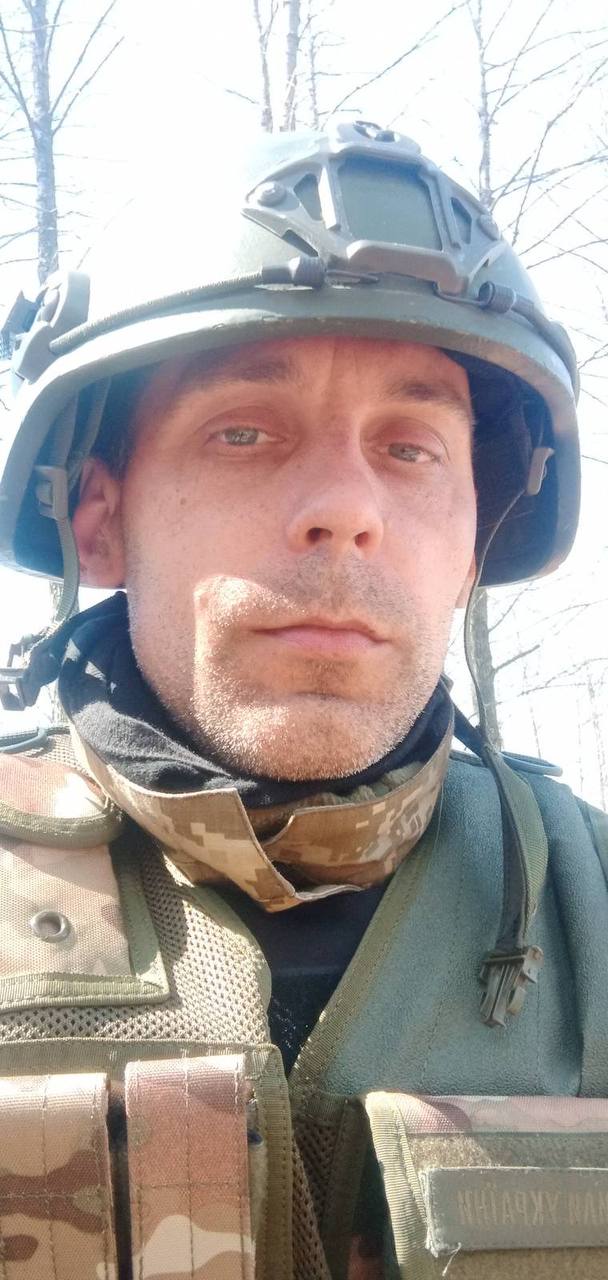
"Humanism pushed me into the trenches." How he became a volunteer
— The morning of 24 February 2022. You were working for a humanitarian organization. Why did you decide to defend the country?
— I asked myself a very simple question: what makes me better than those who are now going off to fight? There were also people among them who had achieved success in life. When I joined my company, it included business owners, highly successful IT specialists and lawyers licensed to practise internationally. For some time, the battalion’s chief medical officer was a leading surgeon at the central hospital, a vascular surgeon and rising star of Ukrainian medicine. All these people could likewise have reassured themselves that they were needed more where they already were, yet they still dropped everything and took up arms.
It was now a matter of my fundamental duties as a man and a citizen. And right now, those duties are to protect people who cannot defend themselves.
You could say that the same humanism that had previously compelled me to leave journalism and take up humanitarian work was what pushed me into the trenches.
— In the first months of the full-scale invasion, many different "fronts" emerged: the cultural front, the economic front. There was even talk of a "home front." How do you feel about all these expressions now?
— I felt the same way about them then as I do now: they are a way of convincing others why you should not have to fulfil your primary duty. To put it simply, they are all excuses. There is no front more important now than the one running along the line of contact. And I believe that anyone who is liable for military service and whose health allows them to serve in at least some capacity should be in the military.
— You mentioned in an interview that even you were surprised to find yourself in the Territorial Defence Forces as early as 24 February. What were you thinking and doing at the time?
— I had a very clear sense that if I did not join the military right then, I would never again be able to look in the mirror and call myself a man. Although I was afraid. I had never been as afraid in my life as I was that day, when I was travelling to the military enlistment office on 24 February, and during my first few days in the military. I ate nothing for more than a week because of the stress and felt no hunger whatsoever; I barely slept. I was not even that stressed in a Russian prison, because after setting out on a combat mission, the Luhansk pre-trial detention centre was the first place where I finally got some sleep. But at that point, I could not.

A platoon against a Russian battalion. Fighting in Donbas
— You then joined a group that was to deploy to Donbas. How did that happen?
— After the Battle of Kyiv ended, Ukrainian forces launched a counteroffensive in the north, completely cleared the Kyiv region of Russian troops, and the Russians retreated to Belarus. We then took up defensive positions along the border. We fortified our positions and waited to see whether there would be another offensive against the capital. When it became clear that this would definitely not happen in the near future, the Ukrainian command decided to redeploy some of the forces stationed in the north to the east. A company tactical group was being formed from our battalion. I volunteered, but my name was removed from the list. I then caused a scene and argued with everyone over it, eventually managing to secure my deployment to the war in the east.
— In the trenches, you experienced various types of weapons firsthand. The Russians pounded your positions with Grad MLRS and attacked you from aircraft. But as you have admitted, the helicopter left you with the most terrifying memories. Why?
— We had no air defence systems whatsoever. An aircraft would streak over us at supersonic speed in a fraction of a second, hitting or missing its target; it was all over quickly. A missile comes in, you hear that it is not headed for you, and that is it: you are calm. But once we had run out of Stingers, helicopters could afford to hover over the battlefield for literally hours. They did what drones do now, except these were attack helicopters. They could see us and simply shoot us from above as though we were targets at a firing range. The most terrifying part was that we had nothing with which to counter them. We were completely defenceless against them. The helicopter has now become a phobia for me, symbolizing a fear against which you are powerless.
— You mentioned in your book that you felt proud when you learned how many Russian paratroopers your group had held back. What did you have to endure during those days?
— Almost everything, except that there were not yet as many drones at the time. A composite platoon comprising troops from our battalion and the 72nd Brigade defended a village that was attacked by Pskov paratroopers from two sides and Wagner fighters from another flank. The Russians badly needed that village because a railway line and several roads from Sievierodonetsk and Lysychansk ran through it. We had to hold the corridor so that our brothers- and sisters-in-arms could retreat. Their attempts to simply dislodge us from our positions with a single assault involving armoured vehicles failed. The Russians then decided to simply obliterate the village, the surrounding forest and us along with them, to grind everything into the ground. We came under fire from Grad MLRS, mortars of every calibre, heavy artillery and tanks, as well as strikes by fixed-wing aircraft and attack helicopters.
— Could it be said that the mistakes of specific commanders also led to your capture?
— Absolutely. In our case, the brigade withdrew its own troops and simply abandoned the attached Territorial Defence Forces troops while they were encircled, leaving them without communications. We continued defending for several more hours, almost half a day, the four of us against an entire battalion.
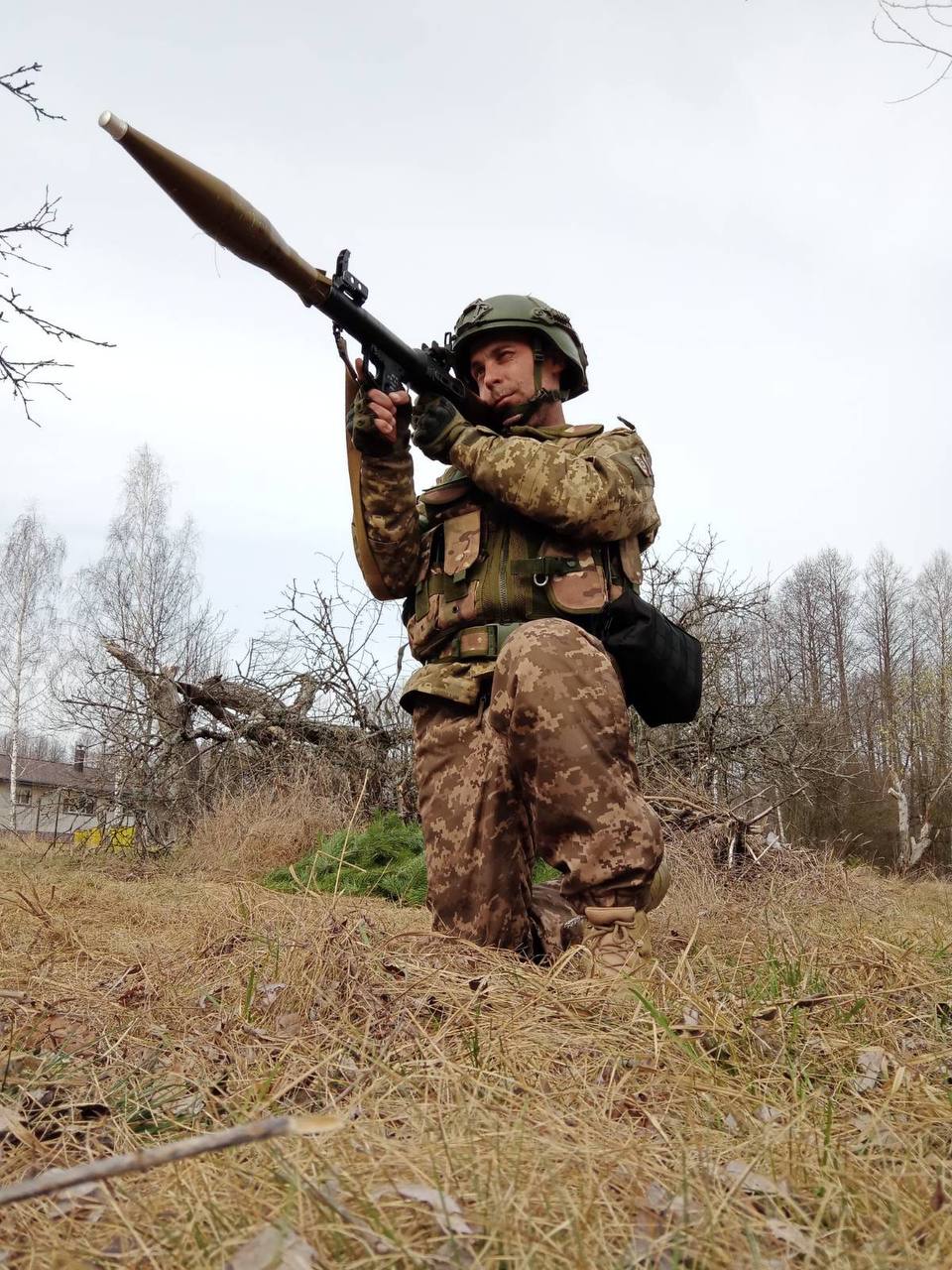
— Why were you left without communications?
— Because our radios were taken away, with the explanation that the frequencies needed to be changed because there were suspicions that the Russians knew them. I still do not know whether that was true. After that, the 72nd Brigade ordered its company simply to withdraw from those positions. They withdrew without ever remembering that someone had been left behind without a radio and with no idea of what was happening. We were captured because we did not leave our position without an order, and that order never came.
"I put down my weapon, stood up to my full height and walked towards them." Being taken captive
— How were you captured by the Pskov paratroopers?
— They approached our position from the rear, several dozen of them. At first, I heard them rustling in the bushes, and when I turned around, I saw three of them aiming at me.
I do not know why I did it, but I simply put down my weapon, stood up to my full height, and walked towards them. The poor guys were taken aback too and did not know what to do. If I had started shooting, they would have started shooting; if I had started running, they would have started shooting as well. Those are reflexes; everything is straightforward. But they had no idea what to do with someone who had clearly lost his mind and was simply walking towards them unarmed. There was no procedure for that, so they also just waited to see what would happen. Once they had established who they were dealing with, they demanded that we surrender. I somehow still found the strength to argue with them, saying that I was not in command at the position and did not make such decisions. They even said: "Well, go and ask whoever is in command, then." The whole situation was completely absurd.
I went back and reported to the officer in command at the position that they had come up behind us and that we were surrounded. He gave the order to lay down our arms, and I believe that order saved our lives.
"They attached the tapik to our ears to run electric current through the brain." Torture
— Tell us, when did they begin torturing you?
— I am still not sure whether the interrogation at the airborne battalion’s intelligence post can be called torture. They beat us a little just to perk us up. There was no malice and no attempt to inflict pain. He was simply an intelligence officer who needed information and was beating it out of us. He was completely indifferent to us and felt no hatred whatsoever.
But when the Russian military handed us over to the security services, I learned what professional torturers were like, especially those who enjoyed their work.
The farther a prisoner is taken from the front line, the greater the suffering becomes. The cruellest and also the most cowardly are farthest from the front. The men who end up deep inside Russia have it worst. One of those I mention in the book spent several more months in Bashkiria, and he said it was far worse than Luhansk, Sverdlovsk, or anything we had experienced before. You fall into the clutches of people who want to act out all their sick fantasies on someone who cannot resist them.
— What exactly did they try to do to you?
— They tried to punish me more severely, regarding me as a traitor because I was from Donbas but had fought in the Ukrainian army. That was the usual fate of all locals who ended up in the Armed Forces of Ukraine, especially those who joined voluntarily. In their minds, someone from any other region was simply an enemy. But one of their own who had gone to fight for the "Nazi Banderite regime" was a traitor.
They used a field telephone known as a "tapik" for torture. Instead of connecting it to a communications line, they attach electrodes to a person and begin turning the crank or pressing a button that activates an electric generator. It is a very popular instrument of torture. The extent of their sick imagination depends on which part of the body they attach the electrodes to.
The opening act is standard for everyone: the electrodes go on the fingers. It is simply to let the person feel what a "tapik" is and what electric-shock torture is like. What happens next depends on how stubborn the prisoner is and how sadistic the interrogator is. They may attach them to the ears, as they did in my case, to run electric current through the brain. They may attach them to the genitals or insert them, pardon me, into the anus. When one person gains absolute power over another, you never know what kind of shit will come out of them.
At some point, a person begins to enjoy having the right to torture others without being held accountable for it. That is precisely why cases like the one involving the Skelia Separate Assault Regiment must not be tolerated. Otherwise, we will create people who enjoy it, who simply cannot imagine their lives without it and whose d#cks, forgive me, no longer get hard unless they are torturing and raping someone at the same time.
— Beyond abuse for its own sake, what is the purpose of all this?
— For some reason, they wanted to document crimes against civilians. Perhaps they wanted to use this to excuse themselves for Bucha, Irpin, or Mariupol, saying: "It is not that we are so bad; people simply turn into beasts during war. Look how many Ukrainian service members we have convicted of committing war crimes against civilians."
After units comprising Russian nationals appeared in the Ukrainian army, the Russian military also became enamoured with the idea of creating similar units from Ukrainian prisoners of war. So they worked on those who seemed pliable enough.
And, as always, military intelligence prowls prisoner-of-war camps, looking for people it can recruit as agents and send back in an exchange as ticking time bombs for espionage and sabotage operations against Ukraine. These are the most dangerous because they understand that if a Ukrainian soldier has no relatives in Russia or the occupied territories, they will have no means of directly blackmailing him once he returns home. To maintain control over those they are trying to recruit as agents, they attempt to rewire their minds by exploiting their genuine beliefs and values. In other words, they try to convince a person to spy for Russia while making that person believe they are doing something good for their own country. These are Jesuitical logical constructs, and I described them as best I could in my book.
Intelligence officers really are dangerous, because at least a brute with a "tapik" does not try to get inside your soul. An intelligence officer, however, tries to steal your soul and turn it into a tool. Finally, there are purely propagandistic methods, in which prisoners of war are forced to record themselves saying something negative on camera.
— That they were abandoned, left without weapons…
Yes, that they’re against the Ukrainian authorities, that they’re calling for an end to the war, and so on. Unfortunately, there are some not particularly intelligent people in Ukraine who take these videos seriously, and many prisoners are then subjected to bullying upon their return.
— What happened in your case?
— They devised an individual programme for me. When they learned that I had worked for an international humanitarian organization, they began beating a confession out of me that I was an American spy.
Why did I refuse to go along with it? I convinced myself that if I allowed them to sentence me under the article on espionage, I would simply spend twenty years in a Russian prison. And that would be no different from them simply killing me during an interrogation right then. To me, those were not two different paths but one path that did not lead home. For some reason, at that moment, I completely forgot that people who had been sentenced were also included in prisoner exchanges.
At some point, I noticed that the people torturing us always stopped just short of killing us. Perhaps their KPIs said that they could do anything they wanted to us, but killing us was forbidden. Perhaps they were told off for it, denied their bonuses, or given a reprimand.
— How is it possible, when they torture and interrogate you and demand a "confession," not to give them one?
— At some point, I simply began replying: "I have nothing more to add to what I have already said." I had told them the truth. What kept me from "confessing" was a major shortcoming: I do not know how to lie. I could not make up a story they would like.
Then, at some point, a very strange stage begins: you almost stop feeling pain. That is precisely why they alternate between different forms of torture during interrogations: you essentially no longer care what happens to you and simply begin to wait. You think that sooner or later, one way or another, it will end. You just have to wait it out. They are on duty; they do not have time, they have an assignment, they have an assembly line, and many interrogations to conduct, whereas you have all the time in the world. So you simply wait and watch from a distance what they are doing to your body, which, when you think about it, no longer feels entirely yours. Depersonalization sets in, as Viktor Frankl called it. Strangely enough, once you cross that threshold, you can endure it and gain a certain advantage over your torturers.
"The woman I love and I underwent psychiatric treatment together." Release from captivity and rehabilitation
— What did you feel when you were taken to a prisoner exchange on 31 December 2022?
— I had mentally prepared myself for the possibility that I was merely being transferred under guard to another prison. Even when the Russians opened the door of the prison van at the exchange point and told me, "Well, get out. We are going to shoot you now," I believed them. I was very surprised when, instead, they simply removed my blindfold, returned my military ID, and pointed towards the Ukrainian buses and Ukrainian officers who were already receiving the prisoners. It was only when they gave me a telephone, and I called my family, that I finally believed I was home, that I was finally speaking on the telephone to the people with whom, for many months, I had spoken only in my dreams.
— What happened to your daughter while you were in captivity?
— My daughter suffered a stroke during that time, and she was only 19. My brothers-in-arms saved her: they completed all the necessary formalities very quickly and arranged for my family to receive my combat pay. That money paid for my daughter’s treatment, and she recovered very well. She now lives a completely normal life.
But it affected everyone psychologically and emotionally, because captivity is also an ordeal for the prisoner’s loved ones. They, too, need to return to normal life. For example, the woman I love and I later underwent psychiatric treatment together.
I am still afraid to think about what my mother, my daughter and my loved ones endured during those seven months. But I know one thing: I would not have traded places with them. I would rather go through all of it again than be in their place, where all you can do is wait and imagine.

— What do you think about rallies where relatives of prisoners of war take to the streets and demand the soldiers’ release?
— When it comes to prisoners, one must be very careful with public campaigning. You never know whether it will help them or harm them.
For example, soldiers from many special units carry identity documents issued under different names, with records stating that they serve in a completely different location and unit. This is a cover identity intended specifically for the event of capture. And then you attend a rally with a large placard reading: "Release my relative, who serves in the Special Operations Forces. His name is such and such." You even display his photograph. You could cause him serious harm.
Secondly, public pressure can influence the Ukrainian authorities. Ukraine remains fairly democratic even during the war, and official institutions are sensitive to reputational risks. Therefore, if there is a delay on the Ukrainian side and someone is not being put forward for an exchange, public campaigning can accelerate the process. I very much doubt that the Russians can be influenced in this way.

— You previously said in an interview that your ability to sit calmly and speak with journalists now was thanks to Ukrainian mental health professionals. How did they help you recover, and what condition were you in when you came to them?
— Their first task, as always with former prisoners, was to teach us to sleep again. After such an abrupt transition and so much constant stress, everyone was in such a heightened, agitated state that hardly anyone slept during the first three days after the exchange.
Then, once everyone had caught their breath a little and realized that we were finally home, all the suppressed emotions began to surface. It is a terrible emotional roller coaster. One moment, you want to run back to the front to take revenge; the next, you want to hide somewhere no one will find you. Then you want revenge again, and then you want to hide again. At its peak, your mood shifts extremely rapidly. You are constantly being tossed from one extreme to another, except when a psychiatrist manages to get hold of you, gives you a sleeping pill and you get at least a little sleep. You have to be brought back into balance, readapted to your new living conditions and at least prepared to recall what happened.
Then intensive, systematic work begins. With medication and the support of a highly skilled psychologist and psychotherapist, you begin analysing everything that happened almost minute by minute. The process has an overarching motto: "Turn trauma into experience." The most important lesson is not to blame yourself for what happened.
For example, if your brothers-in-arms were killed beside you at the same position, there is a tendency to blame yourself. Or if you are no longer capable of fighting while your men are heading for their second rotation near Bakhmut, you feel guilty, as though you are letting them down. Or you have returned from captivity while others who were with you are still there. I nearly ate myself alive over that. Not blaming myself for it was the hardest part.
— You continued serving after your release from captivity and trained as a drone operator. What exactly did you do during that period?
— First, I underwent lengthy treatment and another examination by the Military Medical Commission. The commission found me partially fit for military service. I began looking for a new position in the military because, at the time, the law did not yet allow former prisoners to be discharged. I found courses at the Dronarium Academy and managed to secure a referral there for training. But as soon as I completed the training, higher headquarters latched on to a procedural requirement that former prisoners had to be transferred to reserve companies and battalions. So I was transferred to another unit. Officially, according to the staffing table, I served there in a reserve company until the end of my service. In practice, I sometimes worked with drone crews as a second pilot within my brigade’s area of responsibility. Later, to keep myself from completely stagnating in the military, I asked my commander to give me some work. He gladly gave me the kind of work that is more abundant than anything else in the military: paperwork. So I remained the self-appointed administrative clerk of my unit until the very end of my service.
— After rehabilitation, did you expect or feel prepared for the possibility that you might be returned to a combat position?
— I did not expect it and was completely unprepared for it. I hoped it would not happen to me. On one occasion, someone simply failed to read my personnel file carefully and assigned me to a combat unit in a combat role.
I even tried to carry out the order, but I could not. Instead of reaching my new unit, I ended up in a psychiatric hospital, where I once again had to undergo inpatient treatment.
— What tells you that you need psychiatric treatment again?
— I have post-traumatic stress disorder, or PTSD, of the anxious-depressive type, which gives me more options than ordinary PTSD. Aggressive outbursts are characteristic of ordinary PTSD, and I have experienced them too. But I also experience the opposite: bouts of suicidal thoughts. Those are two reliable indicators. When you cannot even decide which would be better, to kill someone or yourself, it is definitely time to see a psychiatrist so they can help you work it out and decide.
— You wrote wrote: "I’m taking with me a wonderfully pleasant sense of inner peace, the peace of a person who doesn’t have to answer to the pangs of their own conscience." Do you still feel that way?
— From time to time, every veteran feels the urge to return to service. It’s that desire to be where you can be useful and where you know the rules of the game. Strange as it may sound, war can be more comfortable in some ways than civilian life. As for pangs of conscience, I still feel that the main thing I’ve taken away from this experience is that I no longer have any questions for myself. And now, in a supposedly civilian rear-area town, I have an added advantage: I’m one of the few men who doesn’t have to fear the TCC when I go out onto the street.
Incidentally, the TCC is a service I opted out of after demobilisation. I’m not ready for that sort of psychological strain. I really sympathise with the lads who have to do their job whilst attracting nothing but hatred. It seems to me that the hysteria surrounding the TCC is the Russians’ most successful psychological operation of the entire war. Only true professionals in military-political information special operations could derail mobilisation like this.
— When writing about your discharge from service, you said: "I take with me an immensely pleasant feeling of inner peace—the peace of a person who no longer has to answer to the reproaches of his own conscience." Do you still feel that way?
— From time to time, every veteran feels drawn back to service. It is the desire to be somewhere you can be useful and where you know the rules of the game. Strange as it may sound, war can in some ways be more comfortable than civilian life. As for the reproaches of my conscience, I still feel that the main thing I took away from this experience is that I no longer have any questions for myself. And now, in a notionally civilian rear-area city, I have an additional advantage: I am one of the few men who do not have to fear officers from the Territorial Centres of Recruitment and Social Support (TCR and SS) when going outside.
Incidentally, I turned down a job with the TCR and SS after demobilisation. I was not ready for that level of psychological strain. I have great sympathy for the men who have to do their jobs while drawing unrelenting hatred towards themselves. It seems to me that the collective psychosis surrounding the recruitment centres is Russia’s most successful information and psychological operation of the entire war. Only true professionals in military-political information operations could disrupt mobilisation so thoroughly.
"Switch on "silent asshole" mode." Working as a taxi driver
— Eventually, after another attempt to work at the Ministry of Veterans Affairs, which you left, you began working as a taxi driver. Why?
— My greatest desire at that point was to have some peace. I just wanted everyone to finally leave me the f#ck alone. But at the same time, I did not want to starve to death. I found a job for a recluse where, with a modern app, you can switch on "silent asshole" mode for the entire day and simply drive around for twelve hours without saying a word to anyone.
— You were looking for a job for a recluse, yet you put a sign in your car saying, "Your driver is a veteran of the Russian-Ukrainian war." That encouraged passengers to interact with you or react in some way. Why did you do that?
— Because it is now an important part of my identity. I have had to assume many roles: journalist, peacebuilder, service member, prisoner, veteran, civil servant, humanitarian worker, and f#ck knows what else. Of all these identities, the most important thing to me is that I am someone with real combat experience, experience of war. I decided to make that known.
— Why was it important for your passengers to know that?
— First, so they would know that I was not the person to ask where TCR officers were stationed or to ask to plan a route that would avoid them. Nor should they start telling me how costly and difficult it is these days to keep hiding from mobilisation.
— Was that the only reason, or were there others?
— Tips.
— Did you receive any?
— Far fewer than I would have liked.
— Was there any other positive reaction from passengers?
— Occasionally. I was left with the impression that people either did not care or did not know how to react and therefore pretended not to care. Most often, it was young women who told me, "Thank you for protecting us; thank you for your service," at the end of the journey.
Other people reacted in a somewhat unhealthy way. Usually, the same men who somehow never managed to make it to the recruitment centre began trying to convince me that their decision was entirely right and demanded that I agree with them. They were clearly having a dialogue with their own conscience, and as an additional argument, they needed a real veteran to say: "Good for you, you are doing everything right. There is no point fighting in this meat-grinder war in which the oligarchs have turned us against a brotherly people" or whatever the line is these days.
— Did they actually say things like that?
— I heard all sorts of things, even, pardon me, "kikes" being the sole reason Russia and Ukraine are at war today. One of the discoveries I made after moving to the Lviv region was that casual antisemitism remains fairly strong here. Unfortunately.
Eventually, I removed the sign simply because I did not want to be the person expected to justify someone else’s unwillingness to fight.
— Could passengers have interpreted the sign as a statement along the lines of, "Do you even know where I have been? Do you know who I am?"
— I never considered it from that perspective. Perhaps some people did interpret it that way. That was not the message I intended when I put it up. I wanted to emphasise that our experiences had been very different. I do not believe that my experience elevates me above them in any way, because I do not know who the people sitting in my car are. There could be a Nobel laureate in physics sitting behind me. I wanted to emphasise my identity and, if my passengers were civilians, that I was somewhat different, so they would not be surprised and there would be no misplaced expectations or misunderstandings. Did I expect gratitude? I hoped for it a little.
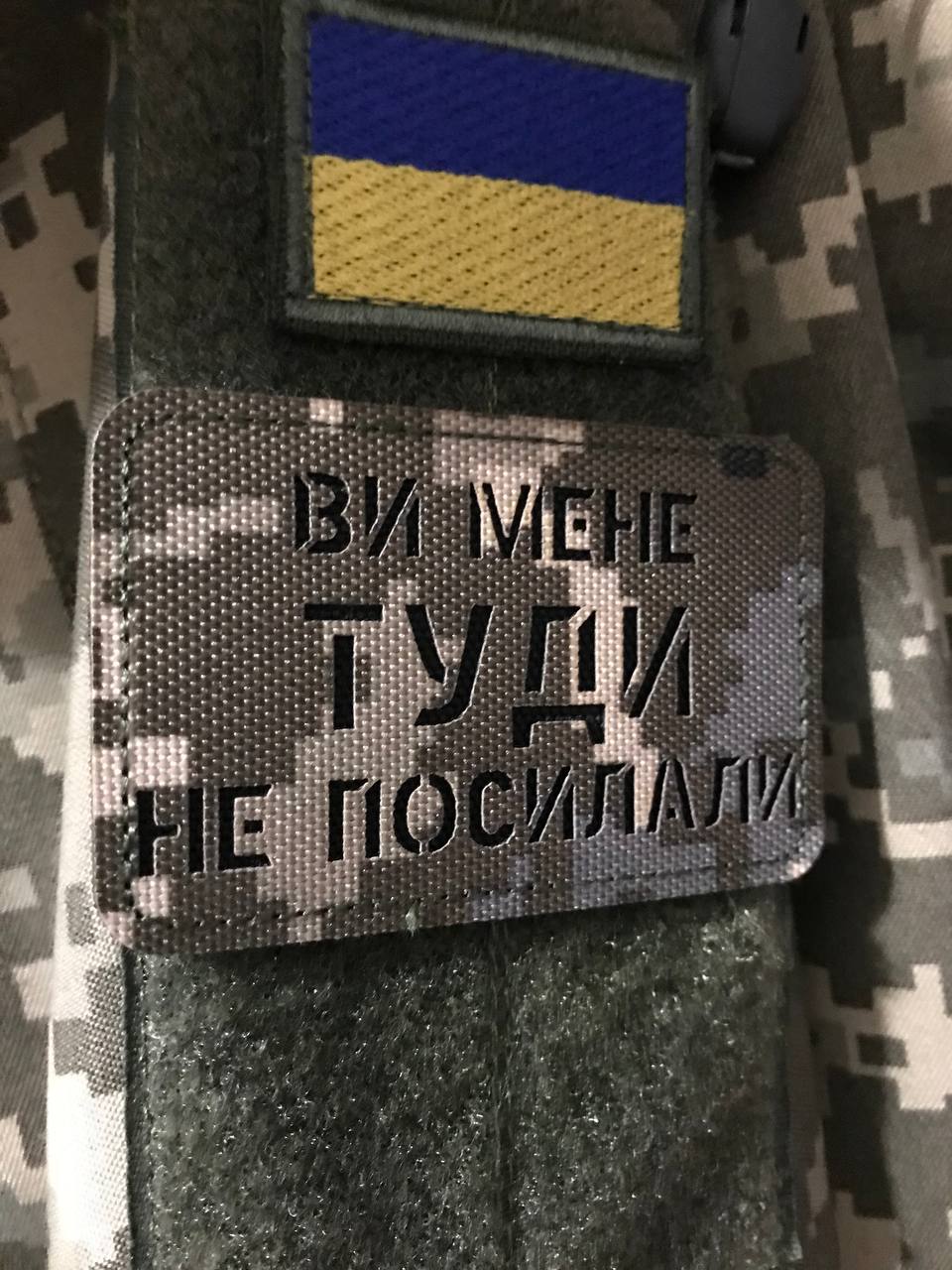
— However, you also encountered outright draft dodgers among your passengers. Tell us about them.
— Once, I was called to a shop. A shop assistant came out first to scout the area. She made sure there was no one on the street. Then she opened the rear door, and a guy ran out of the shop and jumped into my back seat. As soon as the door closed, he began shouting at me: "Hurry up! Go!"
On the way, it turned out that a TCR and SS patrol had been walking along a nearby street. The guy had run into the shop and asked the shop assistants to call a car so he could escape. At that moment, I finally realized how tired I was of people like him. And that guy paid double the fare because I told him that otherwise, I would drive him to the TCR and SS. It was a bluff. I did not know where the TCR and SS was in that neighbourhood, but he became frightened and paid double.
— Did you try to confront such people or explain anything to them?
— I was not paid to do that. Secondly, since I volunteered to fight while someone else has instead spent all this time running and hiding, these are people whose ethics and morals differ greatly from mine. So I do not know what I could possibly discuss with them.
I do not know what I could discuss with the cockroaches in my kitchen, so I simply poison them. I do not know what to discuss with slugs, so I do not communicate with slugs. I simply ignore such people because I do not understand them. It is not that I hate or despise them. I do despise them a little, but without hatred.
— Earlier on Facebook, you asked civilian men not even to discuss in your presence how to obtain a mobilisation exemption or how difficult it was. Did this feeling intensify after, firstly, you yourself had served and endured captivity and, secondly, your brother was killed in the war?
— And thirdly, all of this is compounded by the general lack of stability in my life and the absence of proper work and opportunities. Do you understand what veterans see as a profound injustice? While we are fighting and losing our brothers-in-arms, our health, and sometimes our relatives (yes, my younger brother, who also fought, was killed), someone else is building a career and making money. We will end up in a situation where people return from the front only to find that those who spent that time working under mobilisation exemptions and advancing their careers have become our bosses.
It turns out that being decent and honestly fulfilling your duty is a losing strategy. You are an idiot because the person who wriggled out of it, bought his way out, and built a career is now your boss. He now decides whether to hire you.
At an individual level, this may simply be personal resentment on my part. But when this begins happening to hundreds of thousands of people, there will be a risk of social revolt. It will turn out that rules were written while we were away, and under those rules, we lose. Our only remaining option will be to overturn the chessboard. That genuinely frightens me.
"No one knows how to come back alive." How he became a writer
— You recently made your debut as a writer. The book is titled The Numbers Game. Tell us about it.
— I enjoy writing. Especially when deadlines and editors are not breathing down your neck—then writing is pure pleasure. So I have found what I would like to do. But I do not understand how to make a living from it. Writing books is still a hobby; in this country, you are either not paid for it at all or paid very little.
Of course, as the author, I receive royalties from every copy someone buys. But the royalties are not very large, the book itself is not expensive, and its print run is not large enough to build any real financial security from that income.
— Tell readers who have not read it yet about the book.
— The book is titled The Numbers Game. That was a favourite phrase of one of the few experienced soldiers in our battalion at the beginning of the full-scale invasion, who also happened to be an American. He explained to me why war was a numbers game. He said: "In war, everyone does the same thing; everyone follows a safety protocol literally written in blood. Everyone carries out the mission, but in the end, some will be killed and others will not. And you can never fully predict who it will be." Many people are then tempted to do nothing at all. Unfortunately, no one knows how to win the numbers game and return home from war alive.
Incidentally, my book is not merely veteran literature; it is veteran literature four times over. It was not only written by a veteran; it was also designed by a veteran. The artists who created the cover and illustrations are two active-duty service members, Valerii Puzik and Viktor Kushchenko. Before being mobilised, they were highly paid, commercially successful artists.
— It is also worth mentioning that you released Army Haiku.
— A long time ago, when I was still serving as an administrative clerk, another service member and poet, my namesake Yevhen Manzhenko, wrote a humorous post comparing military bureaucracy to the Japanese art of calligraphy. I sat there thinking: "If we are comparing it to Japanese art, there ought to be haiku about it." So I wrote several humorous three-line haiku about the army’s absurd paperwork and bureaucracy. Then I went on a 24-hour duty shift as an assistant to the unit duty officer. I came back a day later, turned on my phone, and found absolute madness unfolding. There were hundreds of shares; the poems were spreading everywhere, and everyone was writing in the comments and sending me private messages: "Give us more! This is great!" I recalled a few more stories and wrote several dozen more verses. Each one tells a true story from my service in three lines. In other words, every one of these poems has a real protagonist with a surname, first name, patronymic, and military rank.
It turned out that they are still circulating in the military. Soldiers print them out and take them to their positions, while those with Starlink forward them to one another in group chats.
Iryna Bilotserkivska, director of the Bilka Publishing House, decided to publish them. My only request was that they make the book small enough to fit into the sleeve pocket of a uniform so that it could always be carried around.
On the very first day, at the book launch, paratroopers approached us and asked whether they could order 500 copies at once. The book is inexpensive, small, convenient, and funny. The latest thing I heard - I was even sent a video - was that soldiers had invented a game. They now open the haiku book to a random page and read one, saying it is like a fortune from a fortune cookie, only without the cookie.
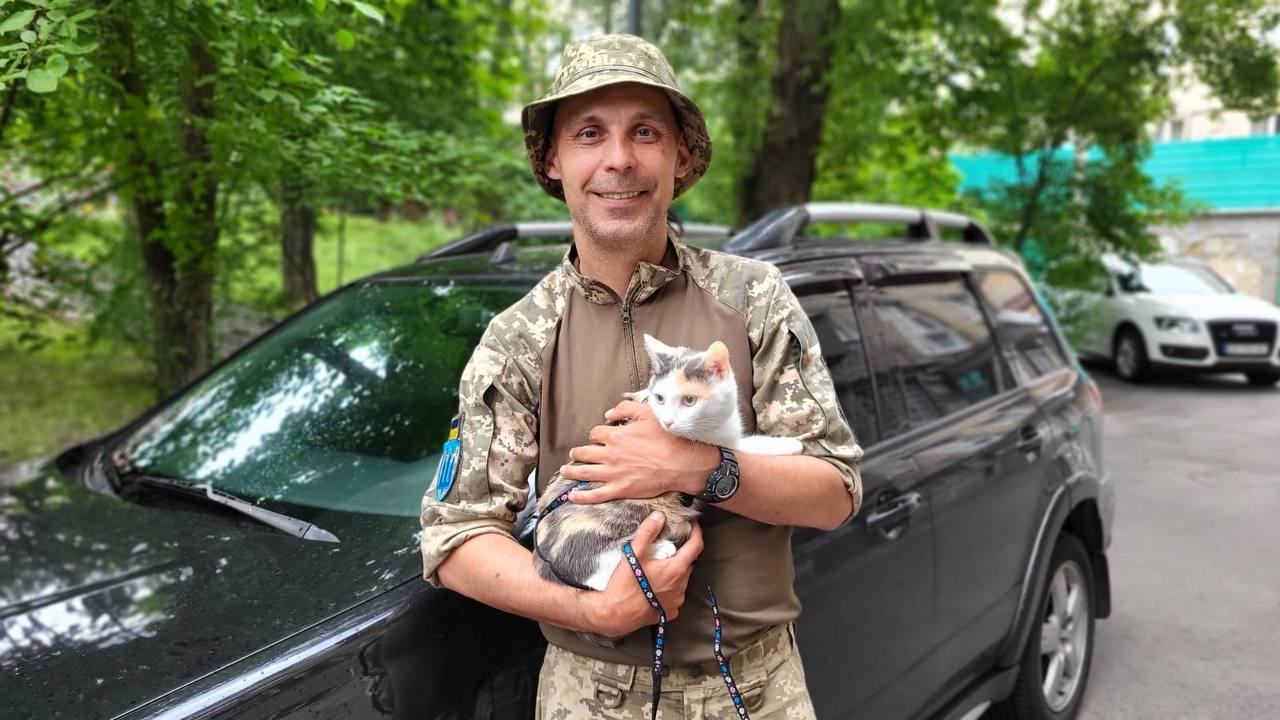
— Can you quote one?
— I can. This is a haiku I dedicated to my brothers- and sisters-in-arms from the 207th Separate Battalion of the Territorial Defence Forces:
I look at my comrades-in-arms
Who thought it was a good idea
To give these people weapons?
Hryhorii Pyrlik


