



"Day with soldier": how Black, UGV platoon commander with 3rd Army Corps, trains, refurbishes robots and evacuates civilians
The commander of an UGV platoon in the motorized infantry battalion of the 60th Separate Mechanized Brigade of the 3rd Army Corps, whose call sign is Black, is originally from Siverskodonetsk. He has spent almost his entire life there. In 2021, he left for the Czech Republic to work, but when the full-scale invasion began, he returned to Ukraine to defend it.
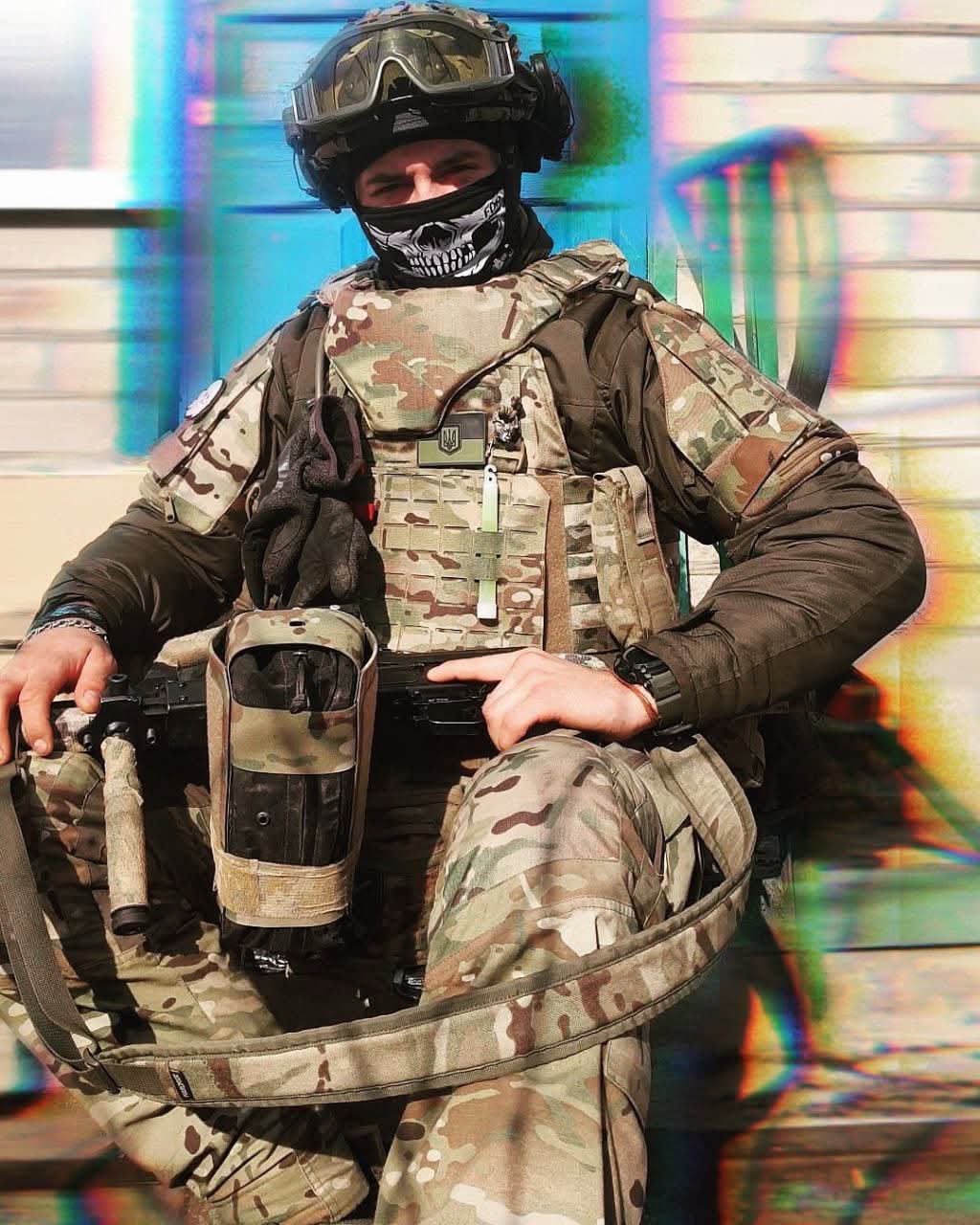
"I found out about the full-scale invasion straight away – at four in the morning on 24 February," says Black. "I realised I needed to get ready. It took a little while to find what I needed." When I arrived in Ukraine, I went straight to the Territorial Defence. There, they told me I wasn’t old enough, as I’m only 23. Although there were lads there younger than me at the time. I stayed there for a while, let’s say, ‘illegally’, and thought: this isn’t exactly a joke – there’s a war on, I could get killed, and I’m not registered anywhere. I found out that the ‘Azov-Kyiv’ Special Operations Unit was just being formed, so that’s where I went. Why didn’t I come here straight away? Because lads from my town – classmates, acquaintances and friends – were at the Territorial Defence, so I decided to join them first. Besides, I didn’t know about the ‘Azov’ Special Operations Unit at the time.
When I arrived, I completed the registration process within a day and was sent to the recruitment centre. From there, I went to the camp, where the selection process had already begun. There, we underwent physical tests and various intellectual assessments. That’s how I got through all the stages of selection. That’s how my journey in the war began. I started out as an assault infantryman in Bakhmut. That’s where I saw my first battles and assaults. I fought in Avdiivka and on the Borovskyi front. There was a great deal of enthusiasm. It’s not that it’s gone now. But the war has changed. Overall, we’ve always known – and still know – what we’re doing: daily sorties and training, sorties and training, sorties and training. That was our whole life; that’s what we worked at. And it’s still the same today. Although I’m not an infantryman now, I still train constantly with the lads: at the training ground, and medical training is a must. We’re honing our skills so as not to lose them and to pass them on to new recruits. Some fighters come to me who’ve never been in the army at all and don’t have the same experience as I do – they need to be trained. Even though we’re not an infantry unit, I believe everyone should have a basic grounding. Because we’re not in the infantry now, but tomorrow everything could change. Besides, all sorts of situations can arise – you might simply come across the enemy somewhere, so you need to know how to fight.
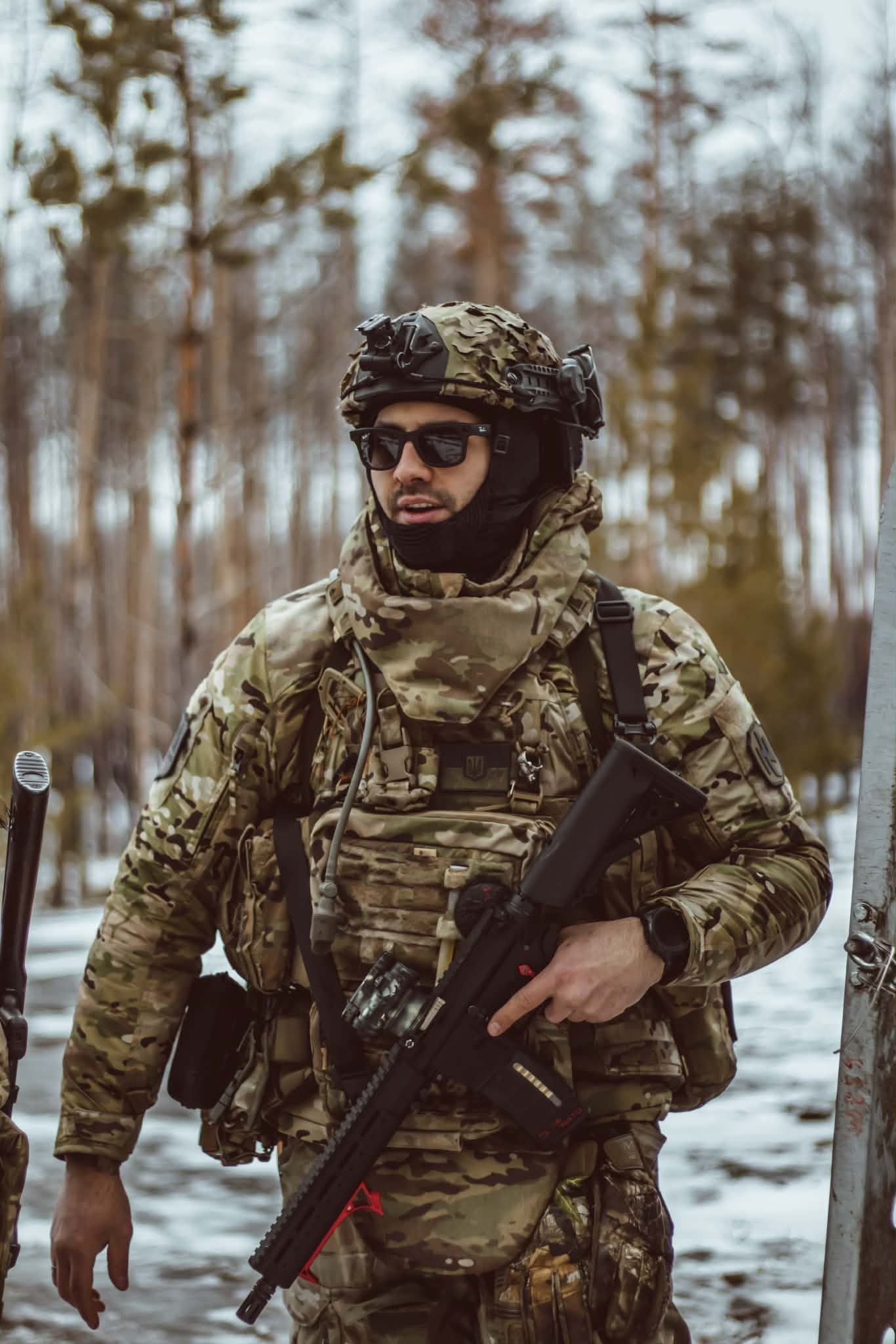
Why did I choose the UGV unit? When the 3rd SAB was expanded into a corps, the question of passing on experience arose. They told me I needed to move on – to the 60th SMB, which is joining us here. They gave me a choice: what did I want to do? I could learn the ropes and choose whatever interested me. I liked the UGV. I’ve always loved technology or anything to do with it. I went in with absolutely no experience, but I managed it. It’s all down to desire.
Black filmed a few short videos to give a brief glimpse into his daily routine. This was on 8 August this year. He added a short commentary to each video to explain exactly what was happening. Next is his direct quote.
‘I don’t get the feeling that it’s "Groundhog Day" here,’ he notes. ‘Because there’s always something new. New people, ideas and developments are constantly emerging – we haven’t just picked up one machine and are working on it. No! We’re constantly trying to improve, to come up with something that doesn’t exist yet. It might not always work out, but we’re constantly thinking and exploring. We also have regular planning sessions, coordination meetings and so on. Of course, we have a schedule, but it can be adjusted. That’s why it’s always interesting and feels fresh.
On this particular day, I got up at eight in the morning. That happens quite often. Of course, there are exceptions: if, for example, we’ve been working through the night, we might allow ourselves to sleep in a bit. But generally, I try to get up at that time.
Today I woke up to my alarm. But, as a rule, in the morning I start getting woken up by calls and messages that come in constantly. So my sleep is often fitful: I might be woken up at four or at six in the morning. Something is always happening, because the work goes on non-stop. Even when I’m asleep, the lads carry on working, for example, at their posts. I always tell them: ‘If you need anything, it’s better to ring me so I know. If you need any advice, I’d rather give it to you. It doesn’t matter whether I’m asleep or not.’ A commander is available to his soldiers 24/7. It’s so much easier for me when I know and control everything.
Next comes my morning pu-erh. I’ve had this tradition since my time in Severodonetsk. I started drinking tea when I was about 19 or 20. I just liked it. It’s not connected to China for me. It’s just that I’ve always been into amateur sport – I used to go to the gym, box, and lead an active lifestyle. No alcohol, no drugs either. But sometimes I just fancied sitting around with the lads, having a chat. So I discovered tea for myself. And I got the lads into it too. It’s healthy and fun. Your mind stays clear. Why not?! Sometimes I might have a coffee as well. We’ve got plenty of that here. But I always have plenty of tea. It goes everywhere with me.
I’ve got various figurines on my stand. It’s just a bit of interior decoration – it looks nice. I’ve got loads of different ones. Some I bought myself, others were gifts from my girlfriend or friends.
According to our schedule, we head out to the training ground every few days. This is my unit – the lads who’ve been with me for a while now. We do live-fire exercises, target practice and so on. In other words, we keep learning and improving.
I’m delivering a parcel on my quad bike. I’d picked up a birthday present for my friend Kapter – some military-themed tableware. He’s someone very close to me, someone I’ve been with ‘all the way’: we met in the war, started our journey together in the infantry, and we’re still friends to this day.
A bit of time for sport. We’ve got a sort of makeshift gym in our courtyards. We bought and set it all up ourselves – a barbell, dumbbells, kettlebells, a speed bag. We train every day if we can. It doesn’t necessarily have to be ‘weights’. You can also have a go at the speed bag, go for a run or do some exercises.
The bar here is light, not for serious lifting – about seven kilograms. Plus, the discs weigh about 50–60. Generally, I can do bench presses with weights of 80–100 kilograms. If, for example, I’m working on my biceps, it’s 20–30, and for my triceps it can also be 80 or 100.
This is how we keep fit, and it also takes our minds off things, as our heads are constantly full of worries. I went along, had a workout, and somehow it felt easier. Of course, I don’t always have the energy for it, but I simply can’t do without it now.
We’ve received the machines. We’ll be retrofitting them. Because 90–95 per cent of the ones that come to us aren’t immediately operational. They need to be refurbished. I won’t say why that is. I don’t know how our plants work. So we have our own workshop where our specialists carry out the refurbishment. They reprogramme them, ‘reflash’ them and so on – in other words, they do whatever is necessary for our work.
We’re at the command post. We’ve got to evacuate some civilians – an elderly man who’s been wounded and can’t walk, and an elderly woman. They’d asked us to do this earlier, saying they couldn’t stay here any longer. I don’t understand why they waited so long without leaving, given that there’s a war going on there. They were driven there and handed over to the stabilization point. I didn’t speak to them personally. But I could see on the camera that everything was fine.
Generally speaking, we mostly transport ammunition and supplies – water and food. We also carry equipment, drones, generators, EcoFlow units – everything our people need to do their job. In this regard, everything is organised very efficiently – everyone is responsible for their own tasks. The lads submit requests, and we assess what needs to be collected from where and delivered to where. There’s a clear framework for our work. Even though enemy drones are tracking us – they’ve managed to spot a couple of our positions. They see that an UGV has arrived at a location. It’s obvious it’s not just by chance. But we have our own methods for avoiding this, which we use successfully.
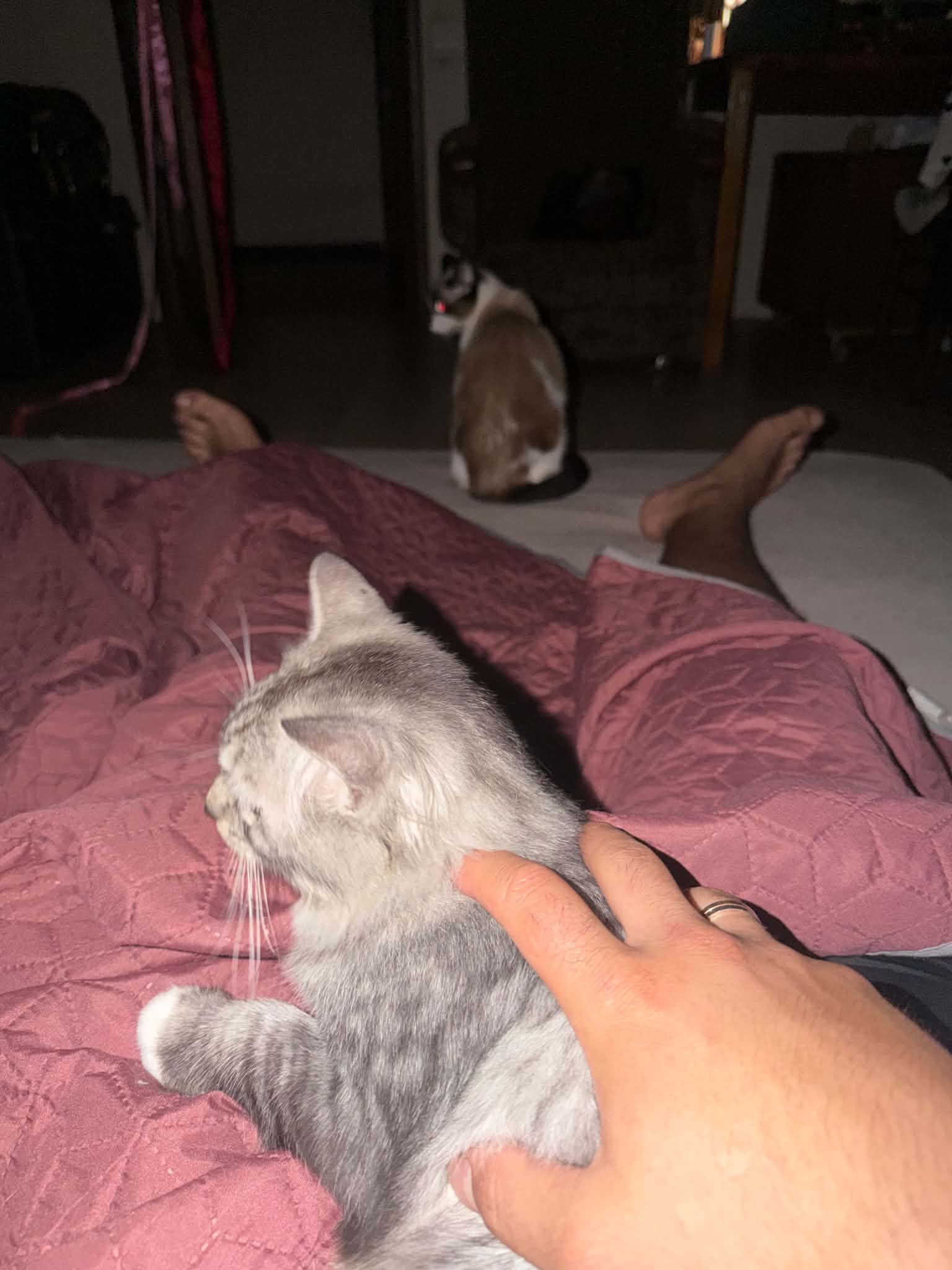
I go to bed. Lisa and Charlie are with me. We’ve had the cat for ages. We picked him up when he was just a tiny kitten. My partner and I had popped into the post office. We looked over and saw this tiny, grubby little thing sitting there. And we’d wanted another cat for ages – we love animals. I asked my partner, "Well? Shall I put him on you? If he doesn’t run away, I’ll take him home." I placed him in her arms, and he curled up into a ball and fell asleep. That’s it, he’s our ‘passenger’! We took him home. He’s eight months old now. He weighs about five kilograms. Our cats are clean, well-groomed, well-fed and tame. We love them.
Olha Moskaliuk, "Censor.NET"


