



Parents of 12-year-old Hrysha Hlushych, killed in road accident: "What we need most is to stop those who behave recklessly on roads"
After 12-year-old Hrysha Hlushych was killed in a horrific road accident in Kyiv’s Karavaievi Dachi district, his parents began investigating why drivers who routinely and flagrantly violate speed limits are allowed to remain behind the wheel. They often continue driving even after their licences have been revoked.
They launched a petition to the President calling for road safety reform, took part in discussions on relevant draft legislation, and are now striving to bring about systemic change and reduce road deaths.
We spoke to Oleksii Hlushych and Oleksandra Terletska about road accident investigations, penalties for drivers, the launch of the "Phantoms", and what can actually make our roads safer. And if you look at the photographs from this family’s personal archive – which they provided at my request for this article – you will realise just how happy they were before that terrible day that turned everything upside down.
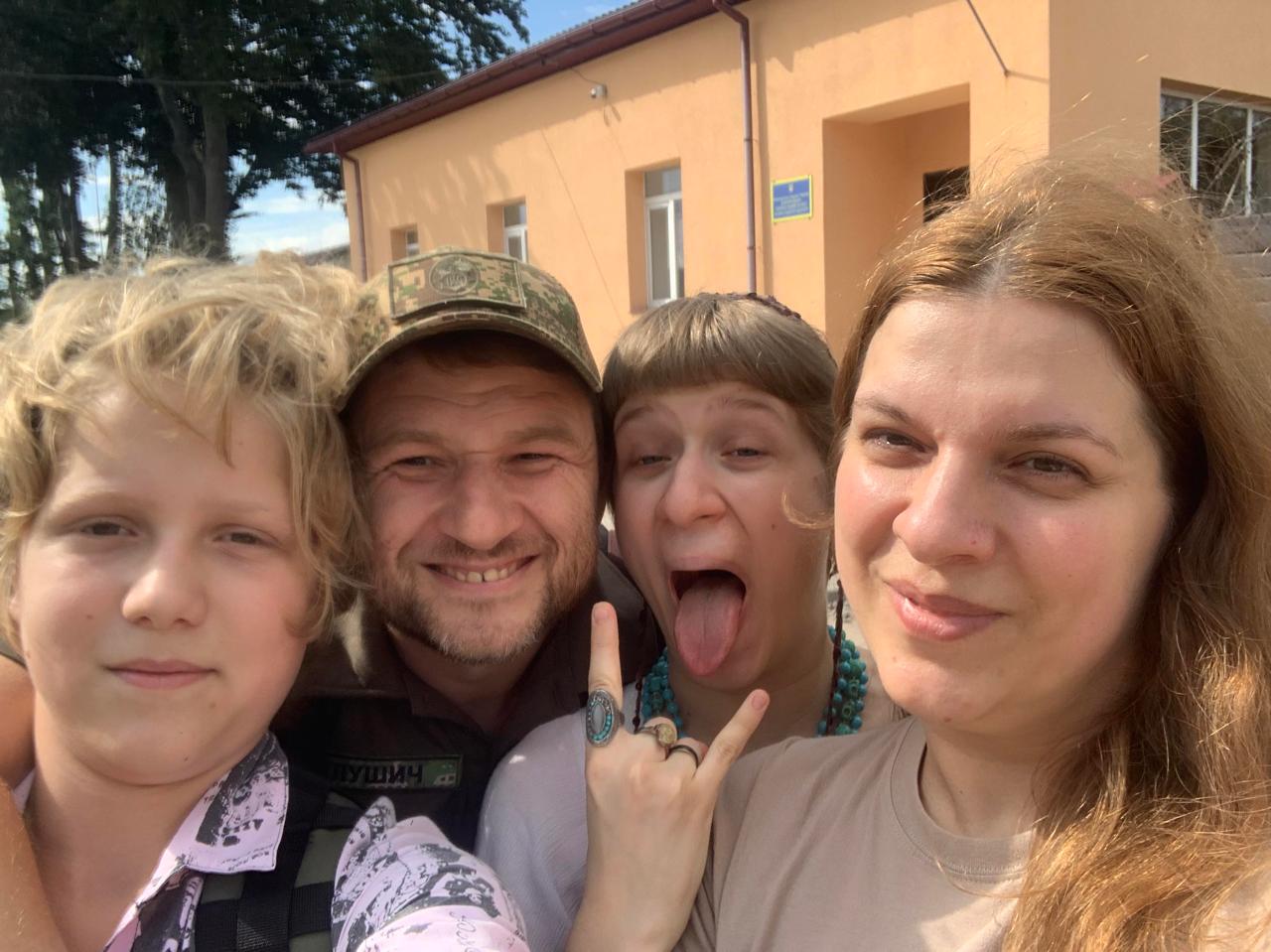

Censor.NET has written about this tragedy on numerous occasions, but I still asked what gives them strength and helps them not lose hope. I also asked what they expect from the MPs who finally plan to consider bills this week that could prevent such incidents from recurring.
"IF WE HAVE ALREADY PAID THIS PRICE, IT MUST NOT BE IN VAIN"
— It has been a little over three months since Hrysha’s death. How have you lived through this period?
When my husband died, I realised that the first few days were not as difficult as what came afterwards. What was that "afterwards" like for you?
O.H.: During the first few days, there were pressing practical matters and issues that had to be dealt with. Once all that subsides, you are left alone with your thoughts and alone with your loved ones. It becomes much harder because you are constantly thinking about what happened. Yes, you are right; it is difficult to live through.
Psychologists say that it is perfectly normal for things to remain extremely difficult for a year.
— Do you often think about what should have happened earlier so that June 5 would never have happened?
O.H.: A million times. Constant what-ifs, over and over again. They concern both small things and major decisions. What if I had decided not to join the army? What if I had been transferred earlier? What if he had eaten lunch there and finished that cutlet? There are a million of these what-ifs.
— Almost immediately after the tragedy, you began speaking publicly about the need for changes that would improve the situation on the roads and reduce the number of deaths. How did you find the strength not only to endure your loss but also to begin this fight? And what have you managed to achieve so far?
O.T.: Everything we saw around us somehow pushed us towards it. People wrote to us not only to express their condolences but also to tell us about their own experiences.
Then, whether it was the algorithms at work or the stars aligning, we began seeing more and more information about what was actually happening on the roads. We learned that Ukraine’s road accident statistics are appalling and several times worse than those in European countries.
When Hrysha died, we felt that what had happened was profoundly unfair. That feeling intensified when we began to understand the scale of the road death problem.
We also learned what penalty the driver who caused such a crash could face. A maximum of ten years, which you still have to fight for in court. And a driving ban of no more than three years. None of this made any sense to us.
At the same time, people kept writing in the comments: life imprisonment, life imprisonment... Our people are emotional, and we understand why they wrote that.
And when you are in that state, you think: yes, truly, a life for a life. Four people died here. What are ten years? Somehow, these thoughts prompted us to start reading more about the relevant legislation and asking ChatGPT questions: why, what, and how. We also looked into when the legislation governing this issue had last been updated at all. And how it came to be that we live in a country where victims are so poorly protected in such cases that, when a measure of restraint is being imposed on a driver, neither they nor their lawyer is even allowed to speak. As though what is happening has nothing to do with the victims. Yet if such a person is not taken into custody and flees, it is the victims who suffer.
The legislation currently contains many nuances that leave loopholes in the traffic rules. One example is the same 20-kilometre-per-hour allowance in cities, which everyone has become so accustomed to that they react aggressively to the mere suggestion that it should be reduced. There is no 20-kilometre-per-hour allowance anywhere else; it remains only here and in Russia.
It is an old Soviet rule. Let us move towards Europe, where, I believe, a margin of error of five kilometres per hour is the maximum. And everyone should observe the speed limit.
So gradually, step by step and fact by fact, we became increasingly immersed in the issue. I also happened to see the "For Safe Roads" campaign and reposted something from it. Then, through friends, representatives of civil society organisations contacted us and said: we are with you, and we support you. By that point, it was probably even before the funeral, we had decided that we would try to submit a petition to the President.
At first, we wondered what the President had to do with it, but then we thought that quite a lot in our country is decided at that level. And the President’s opinion plays an important role.
Civil society organisations wanted the same thing, so we eventually joined forces and drafted the petition. People supported us, and we collected more than 25,000 signatures in two weeks.
We later received a reply, and the President responded in a video address. Ultimately, this led to a meeting of the National Security and Defence Council, to which Oleksii was invited. And the day before yesterday, the Coordination Council for Road Safety under the Ministry of Internal Affairs finally convened. It was established, I believe, back in 2018, if I am not mistaken. The council was created as a multisectoral body. In other words, it brings together different branches of government and civil society to address road safety. In particular, it includes the Ministry of Internal Affairs, the National Police, the Patrol Police, two Verkhovna Rada committees: the Committee on Transport and Infrastructure and the Committee on Law Enforcement, as well as civil society organisations.
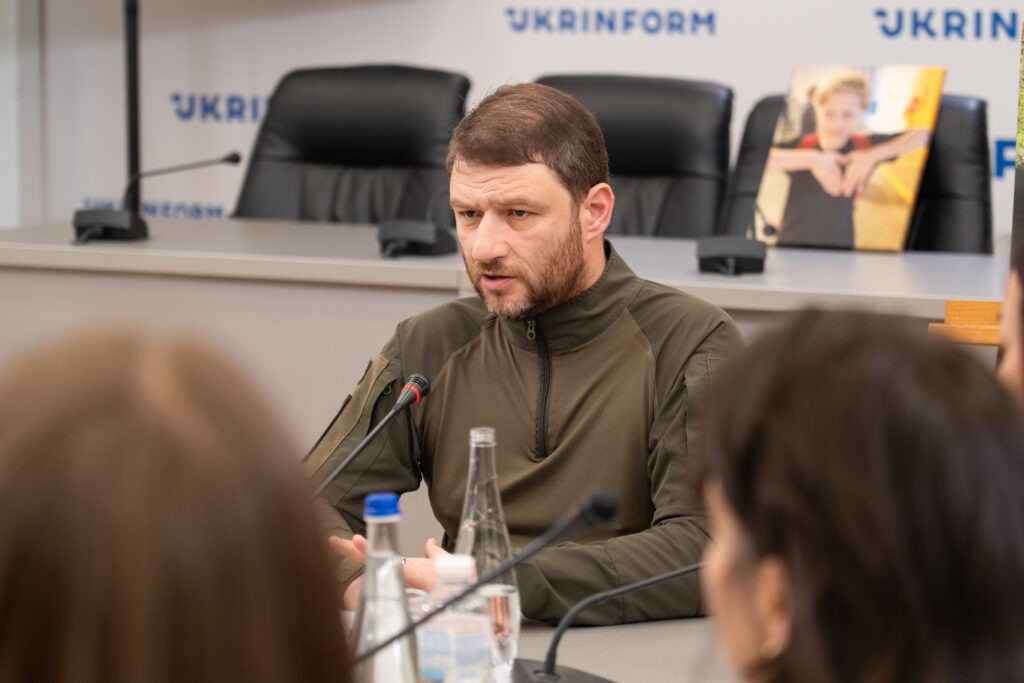
O.H.: Its membership is very well thought out, but it turns out that it has not met once since 2018.
O.T.: Perhaps there will finally be some action. Maybe we are in our own bubble, but it seems to us that the issue has nevertheless gained slightly more public awareness, that people are talking about it a little more and perhaps driving a little more carefully. I say that cautiously. There has been a great deal of discussion surrounding the "Phantoms": whether they were introduced properly, whether they are necessary or not.
— What do you think about their introduction?
O.H.: Personally, I really like this initiative. I now make a point of driving at 50–60 kilometres per hour. Even if people behind me honk their horns, I do not speed up. Since the "Phantoms" were introduced, I have noticed that people have stopped speeding on the roads. There are almost none of the speedsters we used to see.
Tetiana, I would also like to answer your question about why we decided to take public action and insist on systemic change.
I have been a driver for a long time and have spent many years behind the wheel. I can see that I used to drive that way too, and that society as a whole effectively drives carelessly. Drivers do not think about the consequences until they experience them personally. The price that made me drive carefully was extraordinarily high: the death of my son; but we cannot force every driver to drive carefully at such a price. We could use other methods. People genuinely do not understand, just as I once did not, that their haste or their pursuit of adrenaline puts someone else’s life at risk. It is better for them to come to this realisation through fines or the loss of their driving licence than by killing someone, isn’t it?
Legislation, infrastructure and the same "Phantoms." Even without legislative changes, the mere presence of the "Phantoms" conducting covert monitoring on the roads has already prompted drivers to be more careful on a large scale. That is wonderful. If we also introduce legislative changes (penalties in the form of fines and driving bans) along with road safety infrastructure and speed restrictions enforced through technical means, the situation will change significantly.
Yes, infrastructure costs money, and yes, building it takes time. But if we take a comprehensive approach, people will drive carefully. And if they drive carefully, the statistics will be entirely different.
This is not something I have imagined; we can see it in European statistics. Likewise, we can see the statistics from developing countries such as India. They are appalling. And we do not want our people to die.
If we have already paid this price, it must not be in vain. That is why we want to work on this issue, however difficult it may be for us.
— Oleksandra, you said that people had told you about situations they had experienced. What did these stories have in common? Or were they simply different situations in which people wanted to share their own pain?
O.T.: There was a great deal of hopelessness in these stories. And, of course, pain. Naturally, people remain in pain regardless of how many years have passed since the tragedy when it concerns a loved one or a family member.
There is always a great deal of pain and considerable hopelessness because the court imposed a very short sentence on the person responsible for the road accident. Or handed down a suspended sentence. Oksana Tryndei, head of the Mothers of Children Affected by Road Accidents community, analysed court sentences from 2025, and the figures are striking.
There were many stories involving drink-driving. There were stories in which people were left to die on the road while the drivers fled. And there were stories in which the drivers went entirely unpunished. That is, cases in which drivers are in hiding or have fled the country.
People also described situations in which defendants joined the army instead of serving their sentences. No one asks the victims for their views on this, and it can feel unjust and disproportionate.
— Did people offer you their support? Did they say, "Let us act together to change the situation on the roads"?
O.T.: There were many different comments. People wrote that they were prepared to take to the streets, if necessary, to demand change.
When we were collecting signatures for the petition, many people told us that they had signed it themselves, asked their friends to sign it, and brought it to their workplaces. They tried to support us and help us collect the required number of signatures more quickly.
It was very moving and inspiring.

— Oleksii, you initiated the petition and actively promoted it because, as we know, it was accepted only on the third attempt. Ultimately, however, the President responded to it. Are you satisfied with the President’s response in the form it took?
O.H.: First of all, we all worked on it together – my wife and I, as well as civil society organisations. The petition bears my signature because those are the rules: a petition must be submitted by an individual citizen.
Are we satisfied with the response? Yes, we are. Despite the fact that this happened during a change of government, it attracted considerable attention; the media picked it up, the public saw it, and the authorities began taking action. In other words, the President’s response was appropriate.
I was personally invited to a coordination meeting at the National Security and Defence Council, where I spoke and was heard. MPs from the relevant committee were present, and the proposal that I address the Verkhovna Rada before the vote on the relevant bill was well received.
But the approval must still be formalised in writing rather than given merely in words. That has not happened yet, and I suspect it will not. But you are asking specifically about the President’s response. I am pleased with the form it took. Most importantly, it provided impetus for further action. Things are moving forward, thank God!
However, I should note that the response could have been stronger. It could have taken the form of a presidential bill that the Verkhovna Rada would consider as a matter of urgency.
O.T.: We did not expect him to speak about this issue publicly because it is a domestic issue and not the most popular one. But it was good that he spoke about it.
It happened when two BMW cars collided, after which one of them crashed into a restaurant’s outdoor terrace and overturned. Miraculously, no one was injured. One of the drivers had previously been convicted over a fatal road accident involving a child.
He mentioned this and said that he believed such drivers should not have been allowed to drive at all. That is extremely important to us because it is precisely the message we want to convey. If drivers who drive recklessly, disregard the law, and believe they can use money to buy their way out of anything were disqualified from driving at least temporarily, and if compliance were monitored to ensure that they did not drive without a licence, we would have fewer deaths on the roads.
O.H.: One of our key demands is the introduction of criminal liability for driving while disqualified. This is extremely important because there are plenty of cases in which people drive without a licence.
— You mean after their licences have already been taken away?
O.H.: Yes. Fortunately, we have the practice of temporarily suspending driving privileges, and the police use it. But drivers still get behind the wheel, and these are not isolated cases — it happens on a massive scale.
I will tell you a story that occurred during my military service.
I served as a deputy company commander for personnel affairs, and my duties included working with personnel. They were recruits — people undergoing basic combined arms training who had only recently joined the army.
One of them approached me because his bank accounts had been frozen by a court order. He asked what could be done about it.
We began looking into what had caused the accounts to be frozen. It is fairly common for this to happen when someone fails to pay fines. Since all banks are required to comply with such a court order, opening an account with another bank will not help, as that account will also be frozen. It is a fairly widespread practice. People in the army had approached me with similar questions before.
The restrictions cannot be lifted until the debt is paid, but at least you can submit an application allowing you to access part of the funds for expenses, while the remainder will automatically be applied towards the unpaid fines.
When this subordinate asked me to help him with the frozen funds, and we began investigating why the accounts had been frozen, we discovered that he had received a series of fines for drink-driving. We were all astonished that this had happened several times and wondered why he had continued driving.
He said: "Yes, I was disqualified from driving, but I still had to take my children to school, so I got behind the wheel and drove. The police knew that I regularly used that road. They stopped me and imposed another fine of 17,000."
We asked him how he had accumulated several million in debt. He replied: "Well, I drove the children every day." He said he had been issued 23 fines, although he had actually driven past the police 94 times. He added that they had stopped him 94 times but officially fined him on 23 occasions.
And this is not an isolated case. A person is disqualified from driving but simply does not care. Because if you continue driving after being disqualified, your punishment is a fine — one that you may not even pay until your accounts are eventually frozen.
That is why we insist on legislative changes.
This is a loophole in the law, and we want it closed. Only then, in our view, will it serve as a deterrent.
In other words, even if someone breaks the law and is disqualified from driving, they will understand that if they get behind the wheel again, they could actually go to prison. Once people understand this, they will drive more carefully.
Our objective is not to punish anyone. Nor is it to quarrel with those who want to drive fast. Our objective is to prevent drivers from killing pedestrians. And this can be achieved through legislative changes.
— Should such drivers also have their cars confiscated so that they face financial consequences as well?
O.H.: That occurs to everyone too. But as lawyers who work specifically on legislation in the Verkhovna Rada have explained to us, depriving someone of their property is not as straightforward as it may seem.
Simply writing such a provision into a single law would not be enough because it would conflict with other laws and with the Constitution.
"SO FAR, THE ONLY CONCRETE ACTION WE HAVE SEEN HAS BEEN THE ‘PHANTOMS’"
— When you saw the history of violations linked to the Mercedes whose driver crashed into an underground pedestrian passage in June, how did you feel? According to publicly available information, there were around forty such violations.
O.H.: First, it must be made clear that the 39 violations are attributed to the car, not the driver. It was not even his car, but his daughter’s. We do not know who was driving it on those 39 occasions. The police had personally stopped him 15 times over a year and a half, I believe.
How did we feel? We relived everything that had driven us to fight. Because we do not want just one driver to be punished. We want drivers to stop behaving this way altogether. We want them to stop driving like this.
Yes, some people want to put their foot down because they think it is safe. After all, there are three more lanes to your right, while you are in the fourth. So what if you accelerate to 150 kilometres per hour in the city? In reality, you will do it five times, and on the sixth, you will kill someone. And then you will say: "But it was an accident! He fell onto my bonnet himself."
No, my friend, it was not an accident. You simply became accustomed to putting your foot down where you were not supposed to.
— At the first court hearing, when the measure of restraint was being imposed, the driver said that he had felt unwell, lost consciousness, and did not remember why the road accident had occurred. Has his position changed since then?
O.T.: He says very little. His lawyer does most of the talking. As I understand it, the lawyer is constructing some sort of account based on a loss of consciousness. Although we do not really understand how this will develop.
They appear to be apologising through the lawyer. He also tried to say something at the second hearing. But those words do not sound natural. They are very difficult to hear because they do not feel sincere. At least not to me.
There have been different accounts of the alleged loss of consciousness. They were asked whether he had lost consciousness before or after the crash. It remains unclear. We know that when he was later pulled from the car, he was fully conscious.
The investigation is ongoing, and various interesting details are emerging. We will speak about them in court later.
There were posts on social media from people who apparently knew him before and claimed that he liked speeding and even frightening people riding in the car with him, and so on. But these are not official statements. We merely read about them.
— How is the investigation into the road accident progressing? Are you satisfied with the work of the investigators and prosecutors?
O.T.: Overall, everything is going well. Of course, we are already a little tired now that the investigation is in its fourth month.
They are currently completing all the forensic examinations and will then submit the indictment to the court.
O.H.: The investigation period has officially been extended until the end of October. But we believe it will be completed earlier and that the case will be brought before the court soon.
— Have you received answers to all your questions about the circumstances of the crash during this time? Does anything remain unclear?
O.H.: Everything is obvious to us. His claims that he lost consciousness are an act of desperation because he effectively has nothing to say in his defence. They are simply fabrications.
— To what extent do you have to monitor the case yourselves, remind the authorities about it, and demand information?
O.H.: Unlike during the trial on the merits, having a lawyer during the pre-trial investigation is not mandatory, but it is extremely important. Our lawyer stressed this from the outset.
Someone needs to monitor the deadlines, ensure that nothing is overlooked, and that all the necessary procedural steps are taken on time. If, for example, the investigator delays taking certain steps, she contacts the prosecutor and reminds them.
Overall, she is satisfied with their work. From the reports she gives us, we understand how important it is for everything to be done properly and on time. If there are any gaps in the investigation or if anything is done poorly, a competent defence lawyer will seize upon it, and the judge may then be compelled to impose a more lenient sentence.
O.T.: Perhaps the investigators are overworked, or perhaps it is simply the nature of their work, but they try to do the bare minimum.
They say: "What more do you want? We already have this and that; everything is basically clear." But no one knows how all of this will ultimately play out in court.
— Bill No. 15348 and the alternative Bill No. 15348-1 have been registered in the Verkhovna Rada. They differ, but both are intended to improve road safety. At least, that is what their authors claim. Were you directly involved in discussing or drafting them?
O.H.: We were, and we are extremely grateful to our friends, of whom there turned out to be a great many. One of them took on the task of drafting the bill itself.
He is an aide to an MP, has worked in the Verkhovna Rada for a long time, and has drafted more than one document. We have known him for years through our children’s school.
When he began preparing the alternative bill, he explained that it was unlikely to be adopted as the basis, but that it would subsequently be useful when the adopted bill was prepared for its second reading.
The provisions included in it were discussed both with civil society organisations and with us. He also reviewed previously registered road safety bills, including those concerning electric scooters, a penalty-points system and so on. He examined all of this and incorporated certain provisions into alternative Bill No. 15348-1.
We are very grateful for this, and it is genuinely a good thing. Even if it only generates media coverage, and even if this alternative bill, which people are merely discussing, is not considered by the Verkhovna Rada, the fact that it exists is already positive. Because it is important to talk about it. The main bill does not contain anything remotely resembling some of its provisions.
We talk about it, and the media cover it. The work will continue. For now, only the main bill will be put to a vote at its first reading, followed by a second reading. The provisions incorporated while preparing the document will depend on how society responds, how it discusses the issue, and what people believe the bill should contain: whether to retain the 20-kilometre-per-hour allowance, and whether or not drivers should be disqualified.
That will determine how MPs continue working on it. Even if they do not work with our alternative bill but with their own main bill, the work will still continue.
— The relevant committee has recommended adopting Bill No. 15348 as the basis and rejecting alternative Bill No. 15348-1. Which provisions in these bills are fundamental to you, and what do you believe must be included in the final version?
O.T.: The alternative bill was drafted within an extremely tight timeframe, and we first tried to include whatever could be included.
Our main need is to stop reckless drivers on the roads.
From the main bill, we support the introduction of tiered and higher fines, but we do not believe that this is sufficient. Even the amounts specified in it have become outdated since they were drafted.
The second point is disqualification from driving (either temporarily or for a longer period) for serious violations. These include creating dangerous situations on the road, running red lights, violations at pedestrian crossings, significantly exceeding the speed limit, and so on.
The third point from the main bill is the criminalisation of driving while disqualified. Disqualifying a driver is not enough; it must also ensure that the driver does not get behind the wheel.
The alternative bill also provides for lowering the threshold above the speed limit at which fines apply from 20 to 10 kilometres per hour, along with other provisions.
O.H.: It contains many different things, but you are asking, Tetiana, what our red lines are and what we stand firm on because they were paid for in blood. There are three points. The first is higher fines. The second is disqualification from driving for repeated serious violations. In other words, if a person does not understand after the first or second offence, they should be disqualified and made to walk for a while. Then it will become clearer to them.
They can take a taxi or hire a driver. This does not violate any fundamental constitutional rights. Walking for six months will do them good.
The third point on which we insist, and which is extremely important, is criminal liability for driving while disqualified. This is necessary for the previous provision to work properly.
— Oleksandra, you said that people had written that the punishment should be more severe, up to and including life imprisonment. Do you personally support this, and do you support it, Mr Oleksii? I am, of course, referring to cases in which a road accident has extremely serious consequences and people are killed.
O.H.: If you ask the parents of a child who was struck by two tonnes of metal travelling at 150 kilometres per hour, then we support life imprisonment, the death penalty and shooting the perpetrator on the spot.
O.T.: It is difficult to say what the punishment should be. There is no justice. Emotionally... He still has his life; he still has the most precious thing. He can breathe, see, and feel something. Our lives were taken from us, and our son’s life was taken from him. I do not know how to answer your question.
Oleksii and I are very kind people by nature, and it is difficult for us even to think about the appropriate punishment for something like this. It is extremely difficult.
O.H.: But when a lorry comes up behind you, sits on your bumper and blasts its horn because you are following the rules and the driver wants to go faster, you really wish you had a gun so you could explain to them on the spot that they are wrong.
O.T.: Wanting to do something is one thing. Actually doing it is another.
— A meeting was held at the National Security and Defence Council, and the Coordination Council under the Ministry of Internal Affairs convened. Do you think there will be further progress, or were these merely public declarations made in the moment because the President said that something had to be done?
O.T.: Alongside our regular work and military service, we will try to devote time and effort to this issue, as will civil society organisations. The main thing is for both us and the civil society organisations to be heard.
Of course, we would like to address the problem comprehensively, but we are not planning too far ahead because something changes every day. The country is at war, and there are many difficult problems. We understand that.
We have ideas about how to raise public awareness of this issue and improve driving culture and driver behaviour on the roads. These would be more in the nature of civic initiatives.
For example, we met with UNICEF Representative in Ukraine Anne-Claire Dufay and her team. We discussed what could be done to ensure that children grow up with a different culture of road behaviour, both as pedestrians and as drivers, and that their parents also devote considerable attention to it. Many interesting ideas were put forward.
We heard from them that UNICEF had not previously devoted enough attention to road safety issues. They were shocked by the statistics we showed them.
O.H.: They had focused on other issues, such as mine safety, which is also important for children. But after we spoke, they promised to pay more attention to children’s safety on the roads. And we are very grateful to them for that.
O.T.: The legislative track is, of course, important to us. We are waiting to see what MPs vote for and how the process develops from there.
O.H.: Are you asking whether we think this is simply an attempt to bury the problem under endless talk?
— Yes.
O.H.: It does not seem to be just empty talk. It appears that the authorities are taking up the issue. We will see what happens next. So far, the only tangible action we have seen has been the "Phantoms," which have genuinely led drivers to reduce their speed. I can see it with my own eyes. Everything else is discussion, which is necessary, of course.
Meetings at the National Security and Defence Council are necessary, and legislative changes must be discussed in the Verkhovna Rada. MPs have their views, and we have ours. All of this is necessary. But in practical terms, the "Phantoms" are the only measure so far.
The attitudes of MPs on the relevant parliamentary Committee on Law Enforcement are also a major concern. We have met them in person several times, including at the National Security and Defence Council meeting.
These people appear to want to bury the problem under endless talk. At least, that is the impression they give. They talk a great deal but say little of substance.
The central theme of their arguments is that "the chamber" will not vote for it. In other words, you and we may want these changes, and they may support us, but MPs will not vote for anything they bring before the chamber. Strangely, we hear this recurring claim that "they will not vote for it" only from members of this committee.
Yet more than 50 MPs, including the Speaker of the Verkhovna Rada, signed the alternative bill, while only 12 signed their main bill. That alone speaks volumes. But no. Wherever we meet them, they constantly repeat that their colleagues will not vote for it. They say that the changes must be extremely limited and that preferably nothing should be changed at all. That is their position, and it concerns us.
— When people discuss this story now, Hrysha often becomes "the 12-year-old boy who died in a road accident." How would you like people to remember Hrysha himself, rather than the tragedy?
What aspects of who Hrysha was do you particularly want to preserve and tell others about?
O.T.: He was a very strong and determined boy. He was extremely talented. He played the piano beautifully and played chess — he was good at it. He loved solving difficult mathematics and logic problems. He did not always succeed, but he would become completely engrossed in them because they interested him.
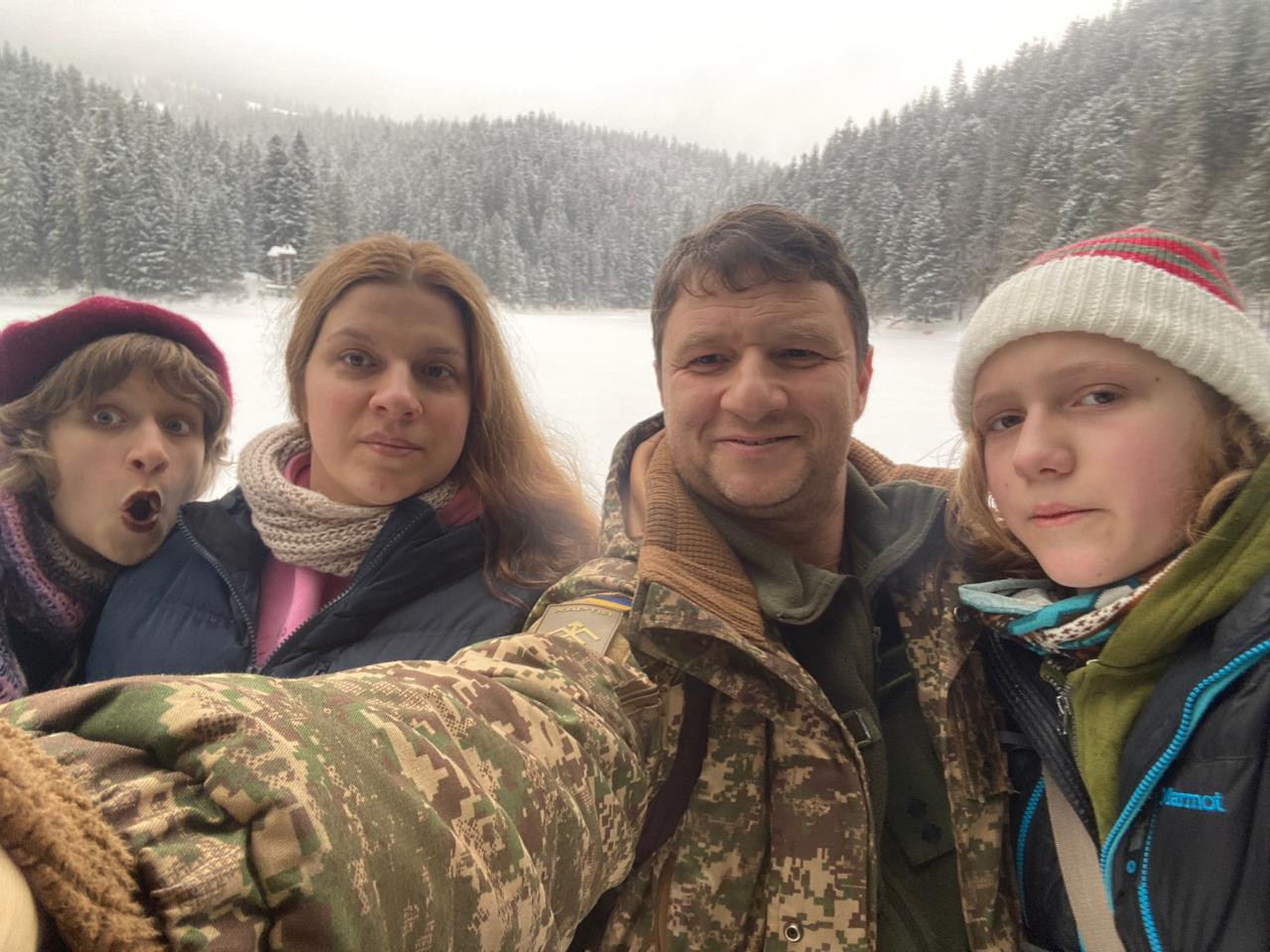
He wanted to become a programmer and help develop weapons that would defend our country.
Oleksii served in different regions of the country, far from Kyiv. During that time, I leaned on Hrysha. He was only 12, but he was very mature for his age.
He was tall and broad-shouldered. My daughter and I always felt safe beside him.
He had a very bright spirit. Truly bright. And he was kind.
— And for the sake of his memory, we must all make sure that these changes do happen.
Tetiana Bodnia, Censor.NET


