



Dmytro Tkachuk: "UAVs are becoming not only means of reconnaissance or attack, but also way to deliver chemical agents"
The war has long ceased to be merely a confrontation involving artillery, tanks, and infantry. Today, thousands of UAVs operate over the battlefield, robotic systems are deployed on the ground, and technology increasingly determines how positions are detected, attacked, and defended. Yet the enemy continues to seek ever more sophisticated ways to locate, strike, or force a service member out of cover.
Chemical agents are dropped from UAVs, positions are monitored across different spectra, and a conventional smoke screen no longer reliably guarantees concealment. In this war, even the air around a position can become a weapon. That is why the work of radiation, chemical, and biological protection troops often goes unnoticed by those far from the front line. Their task is to detect a threat before it becomes apparent to others, assess it, protect personnel, and enable them to continue carrying out their combat mission.
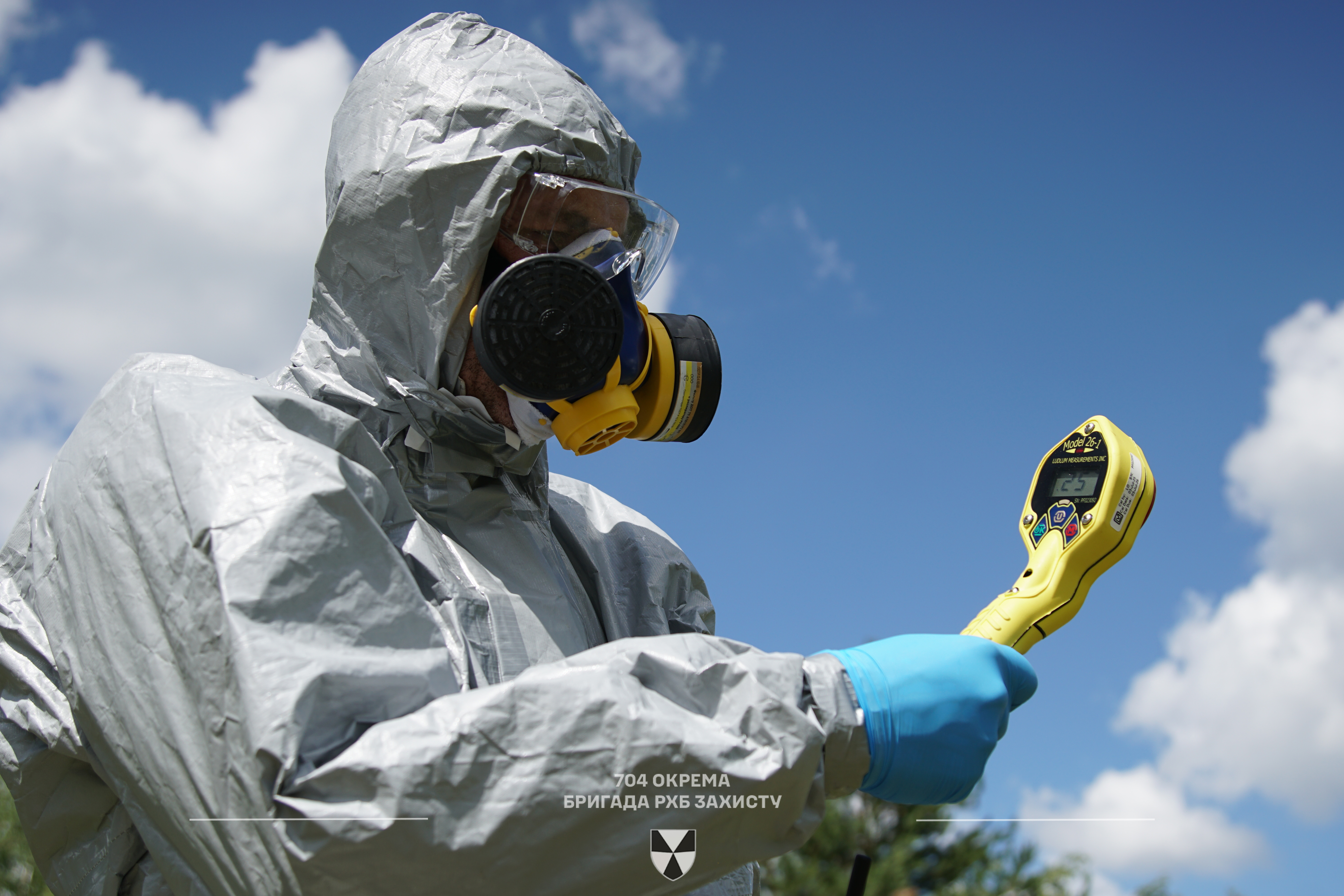
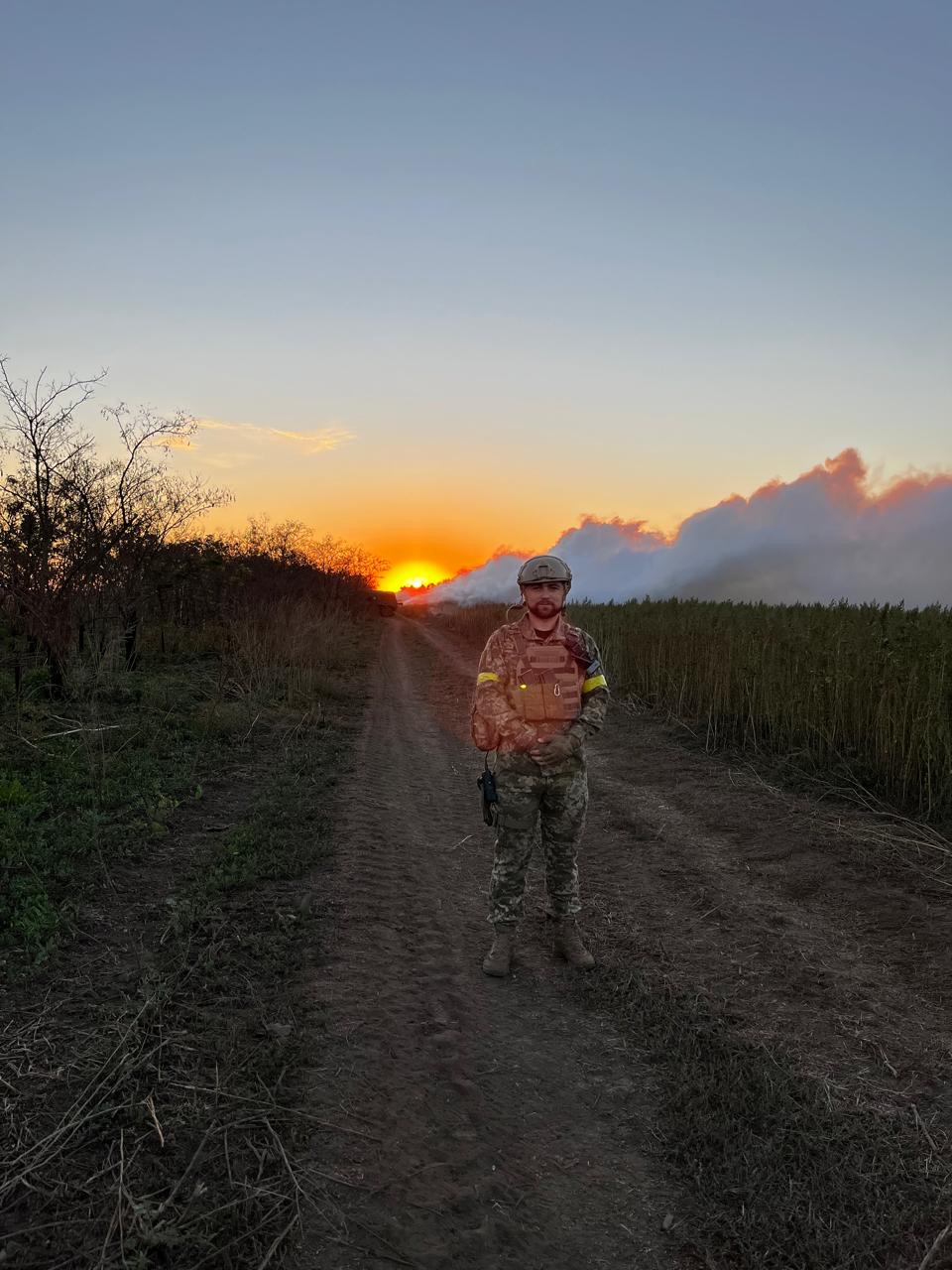
On 15 September, Ukraine marks the Day of Specialists of the Radiation, Chemical and Biological Protection Troops. This date is an opportunity to draw attention to those who counter invisible threats every day and protect our soldiers in the most challenging conditions. Dmytro Tkachuk, call sign Livsha, commander of the radiation, chemical and biological protection battalion of the 704th Separate CBRN Protection Brigade of the Support Forces of the Armed Forces of Ukraine, describes this work without undue romanticisation. Behind the instruments, procedures, smoke screens, mobile teams, and cutting-edge technologies, he sees people first and foremost. After all, CBRN protection is not only about radiation, chemicals, or biological threats. It is about ensuring that service members survive and that units retain their combat effectiveness.

- To begin, could you explain to our readers what CBR protection is and what is distinctive about the work of your unit?
- CBR protection means the chemical, biological, and radiological protection of troops. The CBR Protection Troops are a specialised branch of the Armed Forces of Ukraine. Today, this field is viewed within the broader CBRN framework. It covers chemical, biological, radiological, and nuclear protection in accordance with NATO approaches and standards.
The specific nature of our work involves detecting and assessing CBRN hazards, protecting personnel, conducting decontamination, and carrying out concealment tasks and measures to ensure unit survivability.
- What do civilians usually fail to understand about your work?
- That it is not merely about dealing with potential contamination, but rather a comprehensive set of measures aimed at preserving lives and maintaining the combat effectiveness of troops.
Our unit carries out CBRN protection missions. This is an element of support for the troops and forces of the Armed Forces of Ukraine. It is implemented through a range of tasks and measures involving prevention, protection, and recovery, which are planned and carried out to prevent or minimise potential losses among troops and forces before, during, and after the use of weapons of mass destruction or the destruction of high-risk facilities. It also involves enhancing force protection through the use of aerosols and engaging the enemy with thermobaric weapons. Accordingly, as we defend our country today, our troops perform these tasks as part of the entire force grouping in order to anticipate, minimise, and prevent losses among troops and forces. For me, as the commander of a separate battalion, people are the most important consideration. Behind every regulation, procedure, and piece of equipment is an individual service member who must carry out their mission. CBRN protection is therefore ultimately about preserving lives and maintaining the combat effectiveness of the military. We work to ensure that even in the most challenging circumstances, our units do not stop but continue carrying out their missions. That is our job.
- What role do the CBRN Protection Troops play in modern warfare? How has their work changed since the start of the full-scale invasion?
- First of all, I would like to note that the 704th Separate CBRN Protection Brigade is a structural unit of the Support Forces of the Armed Forces of Ukraine. We continuously monitor the radiological and chemical situation, detect and assess threats, protect personnel, decontaminate equipment and property, conduct reconnaissance, and employ other specialised means to reduce the enemy’s effectiveness. The full-scale war has changed the very nature of this work. We operate directly in combat zones, where the situation changes rapidly, and decisions often have to be made under fire and constant enemy surveillance. Therefore, simply knowing the procedures is no longer enough. You must be able to apply them in real combat conditions. The technology involved in our work has also changed.
Unmanned and remotely operated systems make it possible to gather information and perform certain tasks without exposing people to unnecessary risk. We constantly adapt to the enemy’s new reconnaissance and strike capabilities and seek more effective ways of operating. But the fundamentals remain unchanged: radiological and chemical reconnaissance instruments, protective equipment, decontamination, aerosol obscuration, and thermobaric weapons.
New technologies merely expand our capabilities. The full-scale war has shown that professionalism means not only knowing your speciality well, but also being able to change as the war changes and remain effective under the most challenging conditions.
- How is a chemical threat detected on the battlefield today? What helps establish that it is not merely a suspicion but the confirmed use of a specific substance?
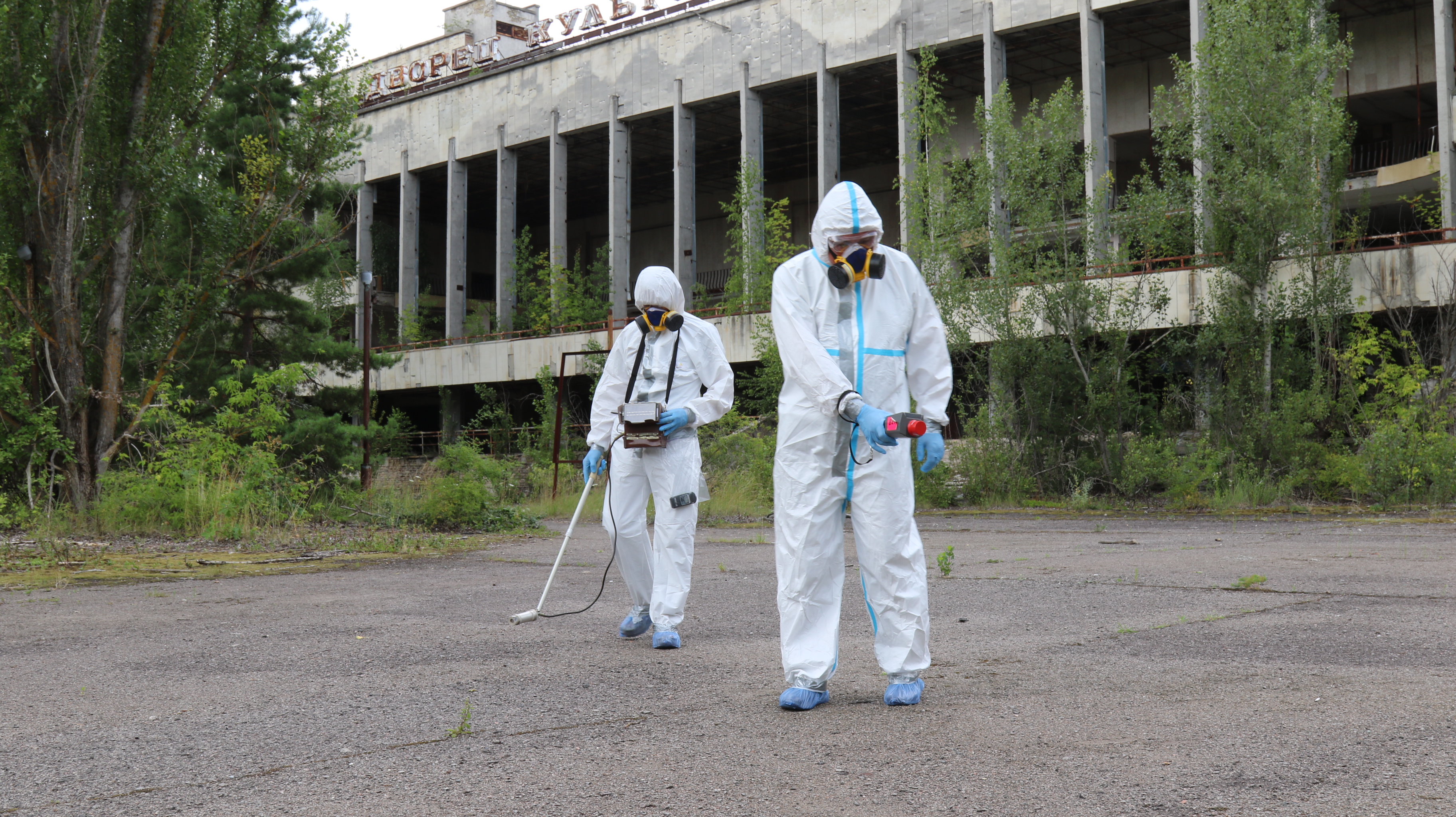
- For the initial detection of a chemical threat, we use CBRN reconnaissance equipment, including ChemProX, LCD, AP4C, and other specialised equipment. These devices help detect hazardous substances and, depending on the instrument, determine their type. However, instrument readings alone are insufficient grounds for a report. To conclusively confirm the use of a specific substance, mobile sampling teams are deployed. They travel to the area where it was used and collect soil, munition components, clothing, or other materials that may have come into contact with the substance. The collected samples are then analysed. It is the combination of reconnaissance findings, sampling, and sample analysis that makes it possible to confirm the use of a chemical agent and identify the substance. Every link in this chain matters: correct detection, sampling, and analysis. This determines how quickly the command receives reliable information. An instrument is merely a tool. Behind it is always a specialist, and people’s safety and the unit’s combat effectiveness may depend on the accuracy of their work.
- How has the nature of Russia’s use of chemical agents changed over the course of the full-scale war?
- Since the start of the full-scale invasion, what began as isolated incidents involving chemical agents has evolved into a systematic practice. To date, the Radiation, Chemical and Biological Protection Troops of the Support Forces have recorded almost 14,000 incidents involving the use of hazardous chemical substances against Ukraine’s Defence Forces. There were almost 200 such incidents in June 2026 alone and nearly 250 in May.
The enemy uses K-51 and RG-Vo gas grenades, as well as improvised containers filled with CS and CN agents, predominantly dropping them from UAVs. The purpose is to force service members out of cover, disorganise them, and gain a local tactical advantage. Chemical agents have thus become a routine tactical tool for the enemy.
- Have countermeasure tactics changed along with this?
- Of course! CBRN reconnaissance personnel continuously monitor the situation. Every incident is documented. Mobile teams collect samples for further examination. At the same time, we are improving personnel training, protective equipment, and response procedures. We maintain constant duty and keep the issue under close supervision. This is a serious and persistent challenge. Even irritants can cause tearing, irritation of the eyes and respiratory tract, coughing, choking, and disorientation, temporarily rendering a service member unable to perform their duties. Therefore, constant readiness and discipline are the foundation of an effective response. A gas mask must always be within reach, and service members must know how to act without delay.
A chemical attack is intended not only to inflict harm but also to force you to act as the enemy wants. Our task is to prevent the enemy from doing so.
- Late last year, there were reports of capsules containing the toxic chemical CS being discovered in Russian UAVs. Does the use of such agents from drones create new challenges for CBRN protection?
- Yes, a UAV is becoming not merely a reconnaissance or strike asset, but also a means of delivering chemical agents directly to a location selected by the enemy.
It can approach a position, shelter, or other facility that would be far more difficult to reach with such a substance by conventional means. For CBRN protection specialists, a downed or damaged UAV is a potentially hazardous object. It must be correctly identified, the risks assessed, the situation documented, and, if warranted, materials collected for examination.
The war constantly forces us to learn. The enemy is looking for new ways to deliver danger, while we are looking for ways to detect it more quickly, assess it correctly, and prevent it from putting our people out of action.
- How much more difficult is it to conduct reconnaissance when the enemy keeps the air under constant drone surveillance?
- UAVs have made CBRN reconnaissance significantly more hazardous. The enemy continuously monitors the terrain and tracks any activity. Our task is therefore to obtain the necessary information while minimising the risk to personnel. Wherever possible, we use remotely operated reconnaissance assets, unmanned platforms, and remote-monitoring instruments, but technology cannot replace a specialist. A specialist must correctly assess the data received, determine the level of threat, organise sampling, and confirm the findings.
- How has the widespread use of drones changed the requirements for camouflage and concealment of CBRN defence units’ operations?
- Drones have changed the very approach to concealment. Today, simply concealing a position or equipment is not enough. We must consider how the enemy conducts surveillance, what might reveal our presence, and what patterns it might detect. Concealment is therefore a comprehensive effort involving proper positioning and use of terrain, discipline, control of telltale signatures, manoeuvre, and the timing of operations. The objective is simple: to prevent the enemy from detecting the unit in time, understanding its intent, and anticipating its next move.
- How has the widespread use of drones changed the requirements for camouflaging and concealing the activities of CBRN protection units?
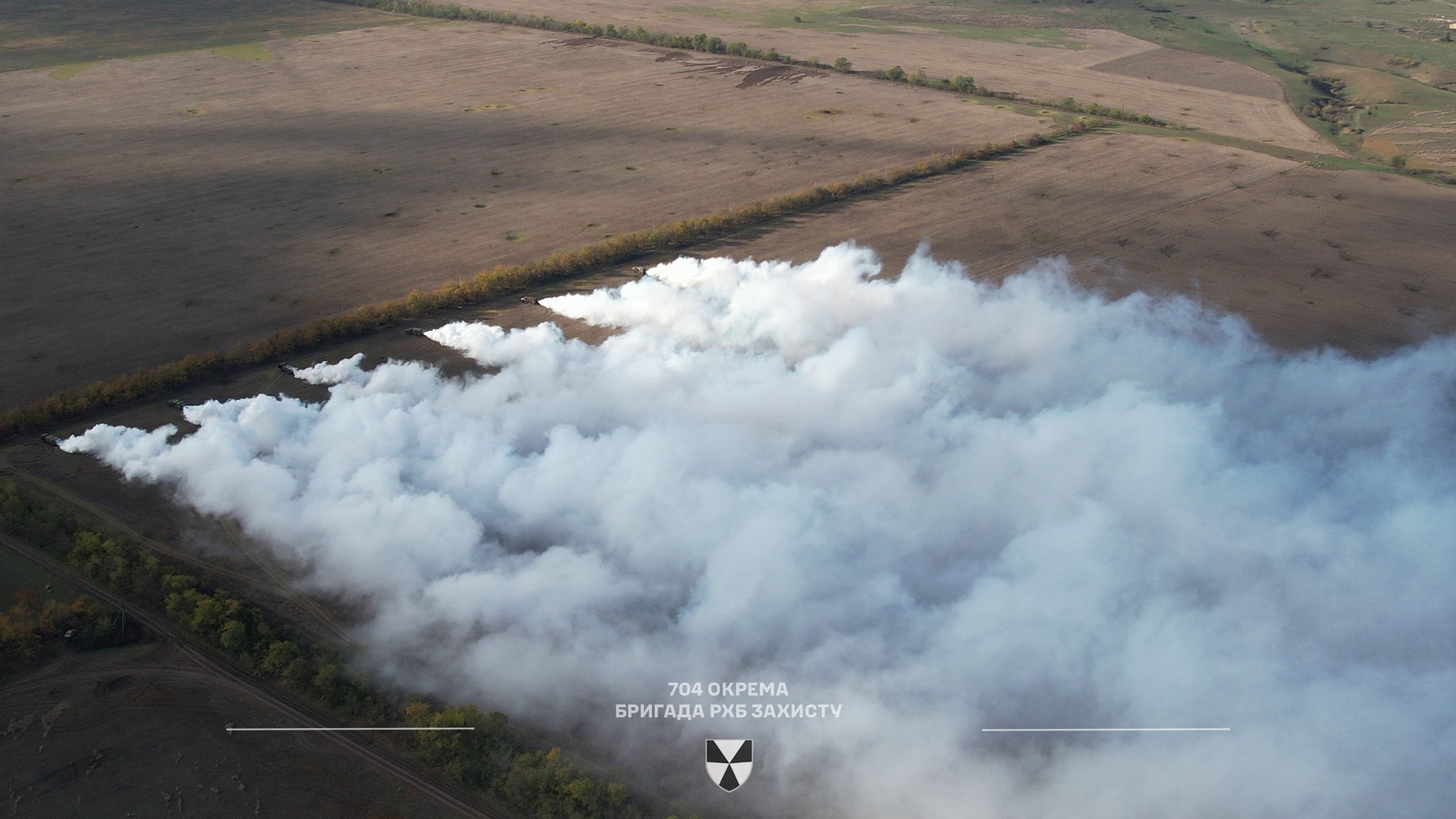
- Since the start of the full-scale invasion, I have spent a great deal of time working with aerosol concealment units. Conditions have changed. Smoke can no longer provide universal protection against every means of surveillance. Something that effectively conceals an object in the visible spectrum will not necessarily work equally well against thermal imaging and other spectral ranges. But smoke screens have not lost their importance. On the contrary, they have become a more specialised tactical tool. I consider them not in isolation, but in combination with concealment, terrain, manoeuvre, and the timing of missions. Smoke can obstruct the enemy’s view, impede surveillance, and give a unit the time it needs to move or carry out its work. The question today is therefore not whether smoke works, but when, where, and for what purpose it should be used. A unit commander must understand the capabilities and limitations of each measure and organise the mission so that they complement one another.
For me, as an aerosol concealment specialist, this is fundamental. In other words, smoke does not replace concealment and manoeuvre but creates opportunities for them.
- Is it possible today to create a smoke screen that effectively conceals a unit’s activities from enemy reconnaissance assets?
- Yes. However, there is no universal screen capable of completely concealing a unit from every modern reconnaissance asset. A smoke screen is created for a specific mission, taking into account which surveillance assets the unit must be concealed from, the terrain, the direction and duration of the screen, and the nature of the manoeuvre. The effectiveness of smoke therefore depends not only on the properties of the means itself, but also on accurate calculations and competent employment, giving the unit the time and space needed to carry out its mission or manoeuvre. In modern warfare, smoke does not make us invisible. It must make observing our actions ineffective for the enemy.

- How has the role of aerosol concealment changed on the modern battlefield? Is it still primarily a means of concealing a unit, or has it become a much broader tool?
- Today, aerosol concealment has become part of the overall system for protecting a unit from enemy surveillance and attack. The enemy uses various reconnaissance assets, including UAVs equipped with electro-optical and other sensors. Simply obstructing visibility is therefore not enough. As an aerosol concealment specialist, I need to understand exactly what we want the screen to achieve. It can conceal movement, impede enemy surveillance, support demonstration activities, reduce the enemy’s ability to employ weapons accurately, or create the conditions necessary to carry out a mission. Smoke is therefore no longer a separate element. It works as part of an integrated system alongside terrain, manoeuvre, timing, and overall concealment. If this prevents the enemy from quickly understanding what we are doing and exactly where we are, the mission has been accomplished.
- To what extent are modern technologies changing the work of aerosol concealment units? What do they offer a commander compared with traditional means?
- First and foremost, the ability to control the process remotely and with greater precision. Previously, smoke-generating equipment relied much more heavily on the direct involvement of personnel. Now, some of these operations can be carried out remotely.
A good example is the introduction of remote smoke-generation control systems. They make it possible to control the creation of an aerosol screen or aerosol cloud from a distance and coordinate the operation of individual systems in a predetermined sequence. For a commander, this is important not only in terms of convenience. Fewer service members need to be directly involved in hazardous work, while the concealment itself can be better synchronised with the unit’s mission. Technology provides additional capabilities here. Most importantly, it allows us to put fewer lives at risk.
- Today, the CBR Protection Troops also carry out missions involving fire engagement of the enemy. How have the thermobaric weapons used by your units changed over the years of the war?
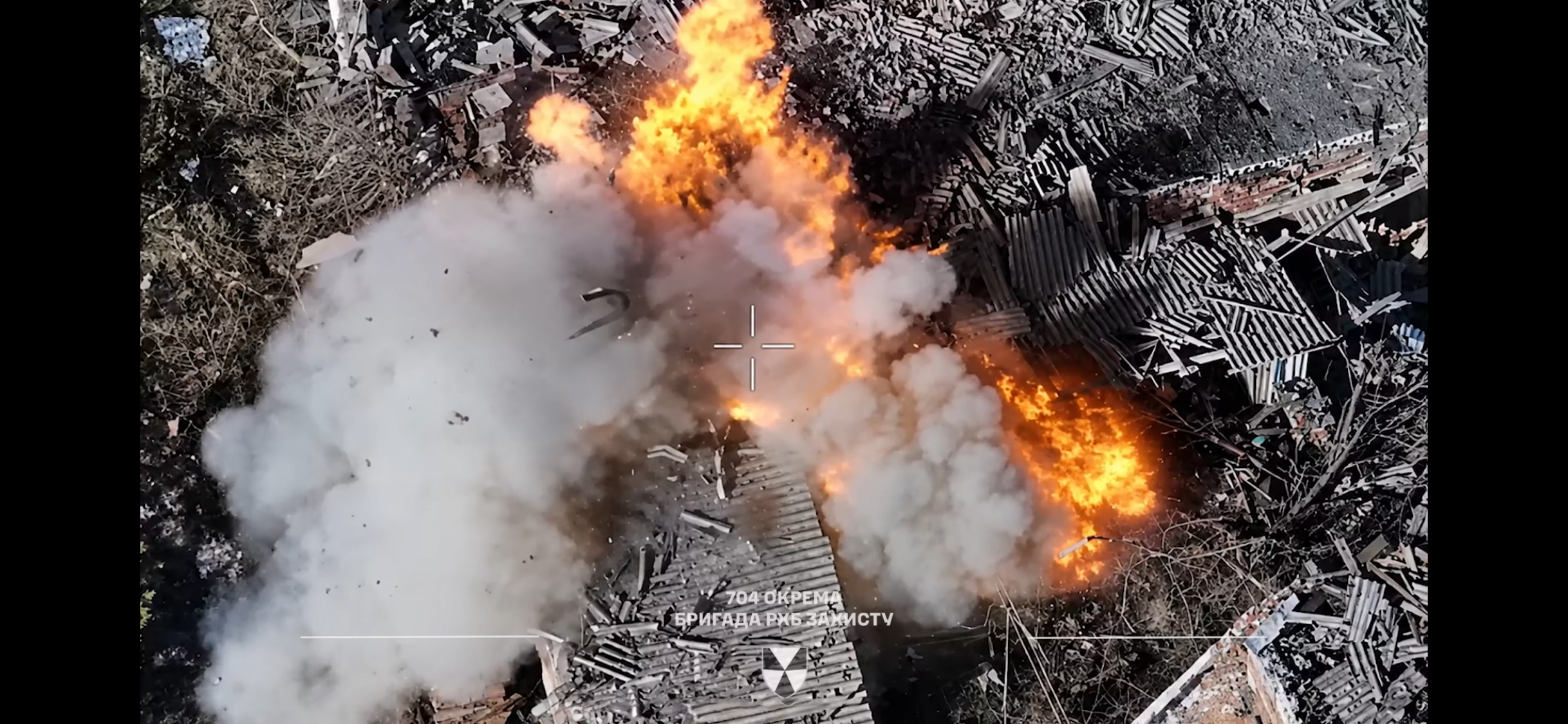
- Thermobaric munitions make it possible to effectively engage enemy personnel in shelters and engineered fortifications. However, not only have the weapons themselves changed, but also the approach to employing them. We previously used the RPV-16 rocket-propelled infantry flamethrower, whereas today we have a much broader range of capabilities.
The RPV-16 became one of the first modern Ukrainian examples of such a weapon even before the full-scale war. Mobile systems were the next stage. One example is the Sivalka-VM8, a compact mobile multiple-launch system designed for thermobaric munitions. Its main advantage is the ability to deliver a powerful strike and relocate just as quickly. The 704th Separate CRB Protection Brigade employed it as an attached fire-support asset in coordination with other units of the Defence Forces. This development has now progressed even further. Thermobaric munitions are being integrated with unmanned systems. This is a fundamentally important change. It allows us to engage the enemy remotely while reducing the risk to personnel. Thermobaric capabilities today are therefore no longer represented by a single specific weapon, but by an entire system evolving from man-portable flamethrowers through mobile launchers to unmanned platforms. I believe that combining specialised munitions with robotic and unmanned systems will be one of the main areas of further development.
- By the way, you have already begun using unmanned ground vehicles. What missions do they perform, and how do they make your work easier?
- Unmanned ground vehicles make it possible to remotely perform tasks that previously required personnel. In our unit, we primarily use them to deliver supplies, food, water, and medicines to positions. For a commander, this means being able to avoid risking personnel where their presence is unnecessary. The vehicle takes over routine work, allowing service members to focus on tasks that require their expertise and judgement.
- To what extent could robotics change the work of a CBR protection specialist in the coming years?
- Robotics will significantly change the work of CBR protection specialists. Some hazardous, routine, and labour-intensive tasks will be performed remotely. At the same time, the role of the specialist will become more important. Specialists will need not only to understand CBR protection but also to know how to operate robotic platforms and sensors and work with the data they provide. The CBR protection specialist of the future will not merely be a service member carrying an instrument, but a specialist capable of combining professional expertise with technology to accomplish missions and protect lives.

- Looking to the near future, how will the work of the CBR Protection Troops change amid the rapid development of drones, robotic systems, and other technologies?
- CBR protection will increasingly shift from personnel working directly in hazardous areas to remotely operated systems. Drones, unmanned ground vehicles, and automated sensors will make it possible to survey the situation, detect threats, take measurements, or perform some hazardous tasks without directly exposing service members to risk. This is no longer a matter for the distant future. Such technologies are being actively developed and introduced into the military.
Artificial intelligence is a separate area of development. It can help process large volumes of data from different sources, detect changes in the situation more quickly, and alert commanders to what requires attention, but the final decision remains with a human. The CBR protection specialist will therefore also change. They must simultaneously be an expert in their field, an operator of technological systems, and someone capable of working with information and making decisions.
I believe the future of CBR protection lies in keeping people as far from danger as possible while bringing them as close to the information as possible. A machine observes, measures, and transmits data. A specialist assesses the data and decides what to do next. In my view, this is the model that CBR protection will follow as it develops.
- What major change in approaches to CBR protection has this war already brought, and what lesson do you believe will be most important for the future?
- CBR protection has become more mobile and technologically advanced. We adapt quickly to new threats and use technology wherever it enables us to carry out missions more effectively. Most importantly, it helps preserve lives.
But war is not only about technology. Behind every decision are people: their lives, their families, and their right simply to live in their own country. For me, the main lesson of this war is that we must do everything possible to ensure that wars like this never happen again. To achieve this, Ukraine must be a powerful state with a strong military capable of defending its land and its people. We must win this war and subsequently possess such forces and capabilities that no enemy would even consider attacking Ukraine. The best preparation for war is to do everything possible to prevent it. But if the enemy comes to our land, we must be ready to defend it.
- Finally, one more important question. During the full-scale war, Russia has repeatedly used nuclear rhetoric as an instrument of pressure on Ukraine. From a professional standpoint, how realistic do you consider the prospect of nuclear weapons being used?
- I believe Russia constantly uses the nuclear issue as an instrument of pressure. I would not attempt to predict how real the threat is. We must be prepared for various possible developments. If a nuclear threat emerges, we must follow the established procedure: detect it, assess the situation, report it, and organise the necessary protective measures. We cannot know what the enemy will decide, but we must always be prepared for it. And we know how to respond.
Olha Moskaliuk, "Censor.NET"


