ENG




16992 visitors online
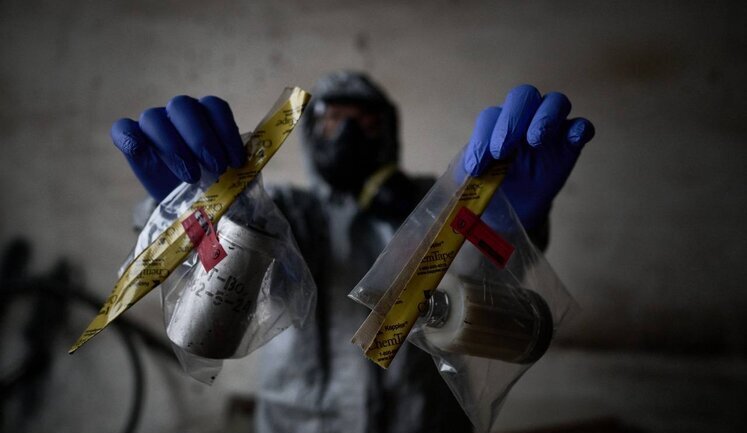
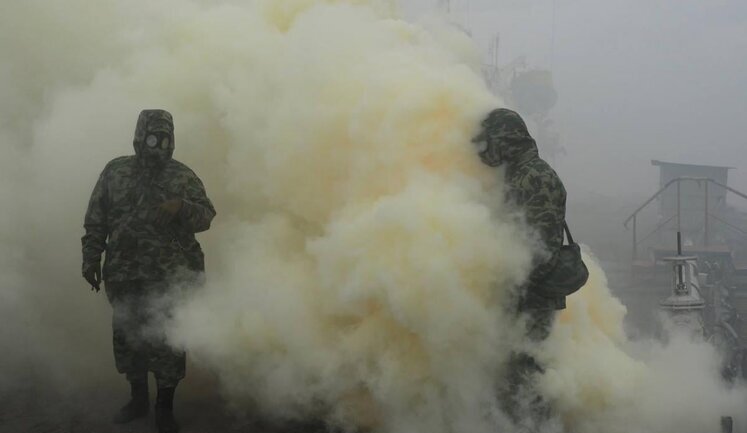
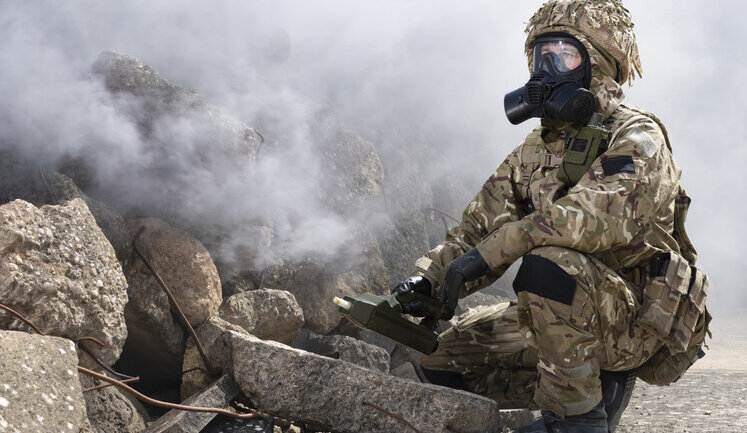
Amid escalating tensions, Ukraine has been elected to the Executive Council of the Organization for the Prohibition of Chemical Weapons, while Russia's application has been rejected for the third time. This coincides with increased reports of Russian forces using banned chemical weapons in Ukraine, which have not only drawn international condemnation but also led to a series of sanctions from the EU and other Western nations. The use of these dangerous chemicals violates the Chemical Weapons Convention, requiring urgent global attention, especially given the strategic targeting of Ukrainian defenders with chemical agents on multiple fronts. Continued use elevates the humanitarian crisis and underscores the importance of strict international oversight and accountability in adherence to global disarmament norms.
What actions have led to sanctions on Russia over chemical weapons?
Russia faces international sanctions due to its repeated use of chemical weapons in Ukraine, violating international laws, particularly the Chemical Weapons Convention. These actions include using hazardous chemical agents against Ukrainian forces and failing to adhere to global disarmament norms, prompting the European Union and countries like the UK to impose restrictions.
How has Ukraine contributed to global chemical weapons regulations?
Ukraine has made significant contributions to the global regulation of chemical weapons by being elected to the Executive Council of the Organization for the Prohibition of Chemical Weapons (OPCW), where it plays a crucial role in shaping policies and ensuring adherence to international standards against chemical warfare, especially amid increasing threats on its own soil.
What evidence exists of chemical weapons use by Russian forces in Ukraine?
Multiple intelligence and military reports confirm the systemic use of chemical weapons by Russian forces against Ukrainian defenders. These reports highlight over 10,000 confirmed chemical attacks involving banned hazardous agents used strategically across various Ukrainian regions, significantly escalating the humanitarian crisis and posing severe risks to public safety.
What has been the international response to Russia's chemical weapons usage?
The international response has been one of strong condemnation and firm action, including the extension of sanctions by the European Union against individuals and entities involved in the chemical attacks. Additionally, organizations like the OPCW and various countries have demanded accountability and strict compliance with the Chemical Weapons Convention to prevent further atrocities.
How are chemical weapons impacting the conflict in Ukraine?
The use of chemical weapons by Russian forces has significantly impacted the conflict in Ukraine by increasing the ferocity and lethality of attacks on Ukrainian defenders. This escalation not only contravenes international laws but also intensifies the humanitarian crisis, complicates diplomatic resolutions, and necessitates stronger international interventions and sanctions to combat the violation of global norms.
Are there specific areas in Ukraine more affected by chemical weapons attacks?
Several regions in Ukraine, particularly the southern and eastern front lines, have experienced intensified chemical weapon attacks by Russian forces. Frequent reports from areas like Bakhmut, Zaporizhzhia, and the broader frontline indicate systematic use of munitions laced with toxic agents, causing significant challenges for Ukrainian defense strategies and civilian safety.
What preventative measures are international bodies taking against chemical weapon proliferation?
International bodies like the OPCW are actively working to prevent chemical weapon proliferation by enforcing compliance with the Chemical Weapons Convention. This involves rigorous monitoring, sanctions against violators, promoting disarmament, and strengthening international cooperation to ensure that global standards are upheld and violators are held accountable to maintain global security.
News chemical weapons
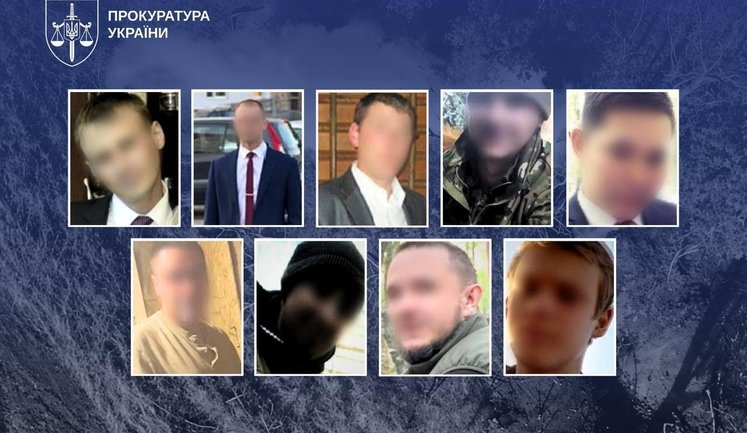
 Russian chemical attacks in Kharkiv region: nine Russian military personnel to stand trial. PHOTO An investigation has been completed in the Kharkiv region into nine Russian servicemen accused of carrying out at least 14 chemical attacks on Ukrainian Armed Forces positions. Seven Ukrainian servicemen were injured as a result of the use of chemical munitions. 1 160 6 Previously in trend: use of prohibited chemical weapons
 Protracted war could push Putin to use chemical weapons of mass destruction, - Times The West fears that a protracted or deadlocked war in Ukraine could push Russian dictator Vladimir Putin to use chemical weapons for mass destruction. 5 783 52 Previously in trend: use of prohibited chemical weapons
 Ukraine elected to Organization for Prohibition of Chemical Weapons, Russia rejected for third time For the third time in a row, Russia failed to join the Executive Council of the Organization for the Prohibition of Chemical Weapons (OPCW), while Ukraine was elected to the governing body. 833 10 Previously in trend: use of prohibited chemical weapons
 EU extends sanctions for use of chemical weapons until 2026 The European Union has extended sanctions against individuals involved in the use and proliferation of chemical weapons until October 16, 2026. 753 2 Previously in trend: use of prohibited chemical weapons
Ruscists use chemical weapons to "smoke out" Ukrainian soldiers from defensive positions - General Staff Russian invaders are using hazardous chemicals to "smoke out" Ukrainian defenders from their defensive positions and force them to leave the shelter. 1 275 19 Previously in trend: use of prohibited chemical weapons
 Schemes identified Russian units that use chemical weapons against Ukrainian military personnel. VIDEO Russian invaders are violating the laws and customs of war by using chemical weapons in Ukraine. Journalists have identified some of the Russian units that are using chemical weapons prohibited by international law against the Ukrainian Defence Forces. 2 624 4 Previously in trend: use of prohibited chemical weapons
Russians have carried out more than 10,000 chemical attacks against Ukrainian Defence Forces since start of full-scale war - SSU. VIDEO Russian occupation forces are massively using banned chemical weapons against the Ukrainian Defence Forces. 879 2 Previously in trend: use of prohibited chemical weapons
Russia intensifies use of chemical weapons in Ukraine, which is matter of serious concern, - Kallas Russia is intensifying the use of chemical weapons in Ukraine, as evidenced by several intelligence reports. 846 4 Previously in trend: use of prohibited chemical weapons
"We’ll go in with ’that stuff’ and hit at close range": DIU intercepts occupiers’ call about planned chemical attack on AFU. AUDIO Russian occupation forces continue to use prohibited chemical weapons against Ukrainian defenders on the front lines. 4 401 58 Previously in trend: use of prohibited chemical weapons War crimes of Russia
 UK imposes new sanctions on Russia over chemical weapons use in Ukraine On Monday, July 7, the UK government imposed new sanctions on Russia for the use of chemical weapons in Ukraine in violation of the Chemical Weapons Convention. 1 051 7 Previously in trend: Sanctions against Russia
 Russia using chemical munitions daily in south – Defense Forces Russian forces on the southern sector of the frontline are systematically using munitions containing a chemical agent during assaults on Ukrainian positions. 1 114 3 Previously in trend: use of prohibited chemical weapons
Occupiers have been using chemical weapons in Siversk direction for third week - Rubizh NGU brigade Russian invaders have been using chemical weapons against Ukrainian defenders in the Seversky direction for three weeks. 2 448 8 Previously in trend: use of prohibited chemical weapons Fighting on the Siversk direction
In May, 888 cases of Russian use of munitions with hazardous chemical substances documented – General Staff In May 2025 alone, radiation, chemical, and biological reconnaissance units documented 888 instances of Russian forces using munitions containing hazardous chemical agents against Ukrainian Defense Forces along the frontline. 876 5 Previously in trend: use of prohibited chemical weapons
EU imposes sanctions on Russia over use of chemical weapons in Ukraine The European Union has imposed additional restrictive measures against three Russian entities involved in the development and use of chemical weapons in Ukraine. 865 1 Previously in trend: use of prohibited chemical weapons
 In March, ruscists carried out 767 chemical attacks against Ukrainian troops - Defense Ministry Russia ignores the norms and obligations under the Chemical Weapons Convention. In March 2025 alone, the Support Forces' chemical warfare intelligence units recorded 767 cases of the use of ammunition containing hazardous compounds by the Russian occupiers. 622 2 Previously in trend: use of prohibited chemical weapons
Ruscists are systematically using munitions containing poisonous gas against AFU on front line – DIU The Russian invaders are using chemicals, including ammunition with poison gas, against the Ukrainian Defense Forces at the front. This crime has become systemic. 1 143 9 Previously in trend: use of prohibited chemical weapons
 Enemy systematically uses ammunition equipped with hazardous chemicals - General Staff of Armed Forces of Ukraine. PHOTO The enemy continues to attack the Ukrainian Defence Forces with special ammunition filled with hazardous chemicals. 2 340 7 Previously in trend: use of prohibited chemical weapons
Russia used chemical munitions 6.9 thousand times over 3 years - Ministry of Defence Since the beginning of the full-scale invasion of Russia, more than 6,900 cases of the use of ammunition containing hazardous chemicals by the Russian occupiers have been confirmed. 498 0 Previously in trend: use of prohibited chemical weapons
 General Staff: 5389 cases of occupiers’ use of chemical munitions since beginning of full-scale invasion recorded The enemy continues to use special ammunition equipped with hazardous chemicals against the Defense Forces. A total of 5389 such cases have been recorded. 628 4
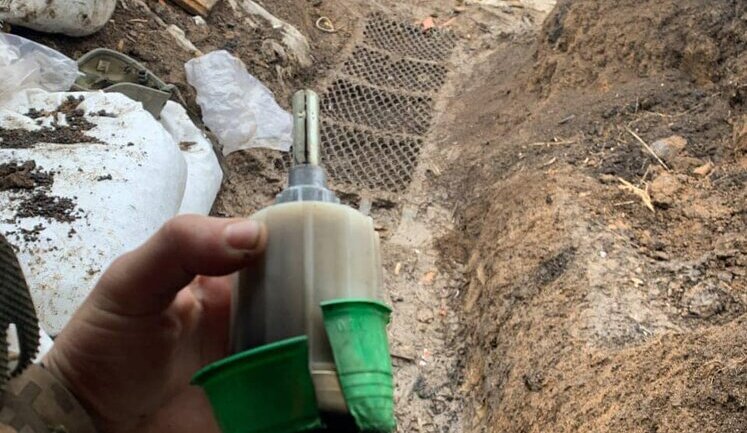
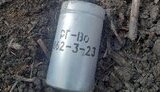 Since 24 February 2022, Russians have used hazardous chemicals 4,800 times along entire frontline - Support Forces Russians are most actively using gas grenades of the K-51 and RG-VO types, which are usually used to suppress mass unrest. However, the use of these weapons as weapons against the military is prohibited by international law. 548 2
In October, Ruscists carried out 323 attacks using ammunition equipped with dangerous chemical substances - General Staff. INFOGRAPHIC Since the beginning of the full-scale invasion, 4613 uses of ammunition with hazardous chemicals have been recorded by the enemy. 570 2 Previously in trend: War
 Spanish police seize 13 tons of banned chemicals bound for Russia The chemicals were supplied to Russia through a shell company run by Russian citizens. The police noted that the scheme involved a subsidiary company in Moscow, as well as several shell companies, in particular in Armenia and Kyrgyzstan. 3 069 3
Russian Federation regularly uses chemical weapons along entire front line in Ukraine - Post-Representative at OPCW Karasevych The Russian Federation continues to violate the norms of international law, in particular, it regularly uses ammunition equipped with dangerous chemical substances against Ukraine. 953 2 Previously in trend: War
 UK imposes sanctions on Russian troops for using chemical weapons in Ukraine On Tuesday, 8 October, the United Kingdom imposed sanctions against the Russian Radiological, Chemical, and Biological Defence Forces (RKhBZ) and its head Igor Kirillov. 1 376 22 Previously in trend: Sanctions against Russia War
Over 440 cases of occupants’ use of hazardous chemical munitions recorded in August - Support Forces The enemy continues to use special ammunition equipped with hazardous chemicals against the Defence Forces. 601 2 Previously in trend: War
Russian troops are actively using chemicals for attacks in South - OSGT Tavria Russian troops are actively using ammunition with poisonous substances in the South. They are dropped from drones on the positions of the Defense Forces. 1 373 6 Previously in trend: War
 Russian troops increase dynamics of chemical attacks against Defense Forces - Command of Support Forces of AFU The growth of the dynamics of enemy chemical attacks is recorded in the Defense Forces. 1 658 13 Previously in trend: War
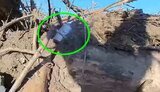 Russian Z-military correspondent Filatov boasts of using banned chemical weapons: "We dropped this gas grenade". VIDEO Russian Z-military correspondent Andrey Filatov filmed the use of banned chemical weapons by the Russian army. 7 186 16 Previously in trend: War
In April, invaders used over 400 chemical munitions against Ukrainian Armed Forces - General Staff. INFOGRAPHICS In total, the Russians have used ammunition loaded with hazardous chemicals almost 2,000 times. 855 3 Previously in trend: War
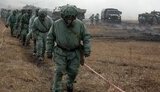 Russian army uses chloropicrin. US State Department confirms use of banned chemical weapons The United States has acknowledged that the Russian army is using a banned chemical weapon called chloropicrin in the war in Ukraine. It is also used in Russia to disperse riots. 16 226 95
Invaders are increasingly shelling of Ukrainian soldiers with chemical weapons - AFU General Staff The enemy’s use of chemicals in ammunition has become systematic at the front. In March alone, the Ukrainian defense forces and mobile groups recorded more than 370 cases of shelling with the use of chemicals in shells. 1 504 10 Previously in trend: War
 Since beginning of full-scale war, Russians have carried out 1068 chemical attacks Since 24 February 2022, the Russian army has carried out 1068 chemical attacks. 549 2
 Occupants reduced aviation activity in Tavria OSGT, resumed use of poisonous substances in Zaporizhzhia and Donetsk regions - Tarnavskyi In the Tavria OSGT (operational-strategic group of troops - ed. note), the enemy reduced its aviation activity over the last day, conducting only 2 air strikes, but conducted 42 combat engagements and fired 1040 artillery rounds. 1 131 3
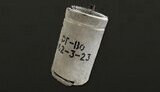 Ruscists start using new type of grenades with poisonous substances at frontline In December 2023, the use of a new type of RG-VO grenade with a suffocating effect was first recorded at the front by Russian invaders. 5 585 18 Previously in trend: War
Russia has carried out 626 chemical attacks since beginning of large-scale war. Up to 10 cases are recorded daily - Ukrainian Armed Forces Support Forces Since the beginning of the large-scale war, Russia has carried out 626 chemical attacks in Ukraine. 1 292 4 Previously in trend: War
 Russians use chemical weapons, Avdiivka remains hottest part of front, - DeepState Cases of the use of chemical weapons were recorded in the Svatove and Bakhmut areas. 4 359 7 Previously in trend: War
 Enemy increasingly uses chemical weapons in Bakhmut sector - Ukrainian Armed Forces Russian troops are increasingly using chemical weapons in Bakhmut sector. Preliminarily, this refers to lewisite. 8 725 43 Previously in trend: Russian aggression against Ukraine War
 Special services of Russian Federation have begun to carry out provocation with chemical weapons in Zaporizhzhia region, - Defence Intelligence. VIDEO Russia’s special services have begun to implement a provocation with chemical weapons. 9 803 10 Previously in trend: War
 Ministry of Defense of Russian Federation stated that Armed Forces of Ukraine are preparing "chemical attack" in Sumy region in order to discredit Russia on international stage The Russian Ministry of Defense said that the Armed Forces of Ukraine are allegedly preparing a provocation with the use of "chemical weapons" in the Sumy region, aimed at discrediting the Russian Federation on the international stage. 2 943 39 Previously in trend: Russian aggression against Ukraine War
 Enemy dropped K-51 chemical munition in Vodiane area, - Defense Forces The Russian occupiers again dropped non-lethal aerosol grenades of the K-51 type from a UAV in the Vodiane region. 6 049 3 Previously in trend: War
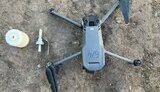 Russians start dropping unconventional grenades with chemical explosives from drones - AFU The Russian occupiers began dropping grenades with chemical explosives from drones on the positions of Ukrainian forces, which is prohibited by international conventions. 10 082 12 Previously in trend: War
Russians dropped banned "K-51" aerosol grenades from drone on positions of defenders of Ukraine in Donetsk region, - State Border Service. PHOTOS The occupiers use prohibited chemical weapons - "K-51" aerosol grenades 16 142 22 Previously in trend: War
 Russian military uses chemical hand grenades in Ukraine, - General Staff. PHOTOS The troops of the Russian Federation use hand-held K-51 tear gas grenades. 15 949 32 Previously in trend: Russian aggression against Ukraine War
 Information about introduction of chemical weapons by occupiers to Kherson region has not been confirmed, - OC "South" Information about the delivery of a batch of chemical weapons to the Kherson region has not been confirmed. 1 237 0 Previously in trend: War
Russian Defense Ministry blames Ukraine for use of chemical weapons in Zaporizhzhia region The Ministry of Defense of the Russian Federation accused Ukraine of using chemical poisonous substances against Russian servicemen and civilians. 7 406 71 Previously in trend: War
Russia conducts disinformation campaign on chemical weapons in Ukraine - statement by 52 OPCW delegations 52 delegations of member countries of the Organization for the Prohibition of Chemical Weapons (OPCW) published a joint statement in which they sharply condemned Russia's disinformation about the alleged possible use of chemical weapons by Ukraine. 3 787 9 Previously in trend: War
 Occupiers are preparing to use chemical weapons in Mariupol, - local deputy Lashyn. VIDEO On May 11, the Russian occupiers are going to use chemical weapons against Ukrainian defenders on the territory of Azovstal. 7 404 17 Previously in trend: Russian aggression against Ukraine War
 Ministry of Defense of Russian Federation disperses fakes about chemical, biological or nuclear attack in Ukraine, - Center of counteraction of misinformation at National Security and Defense Council. PHOTO The Center for Combating Disinformation at the National Security and Defense Council of Ukraine warns that the enemy continues to conduct an information and psychological operation on the possibility of using weapons of mass destruction in Ukraine. 5 555 20 Previously in trend: War
Page 1 of 2
more news