



Protracted war could push Putin to use chemical weapons of mass destruction, - Times
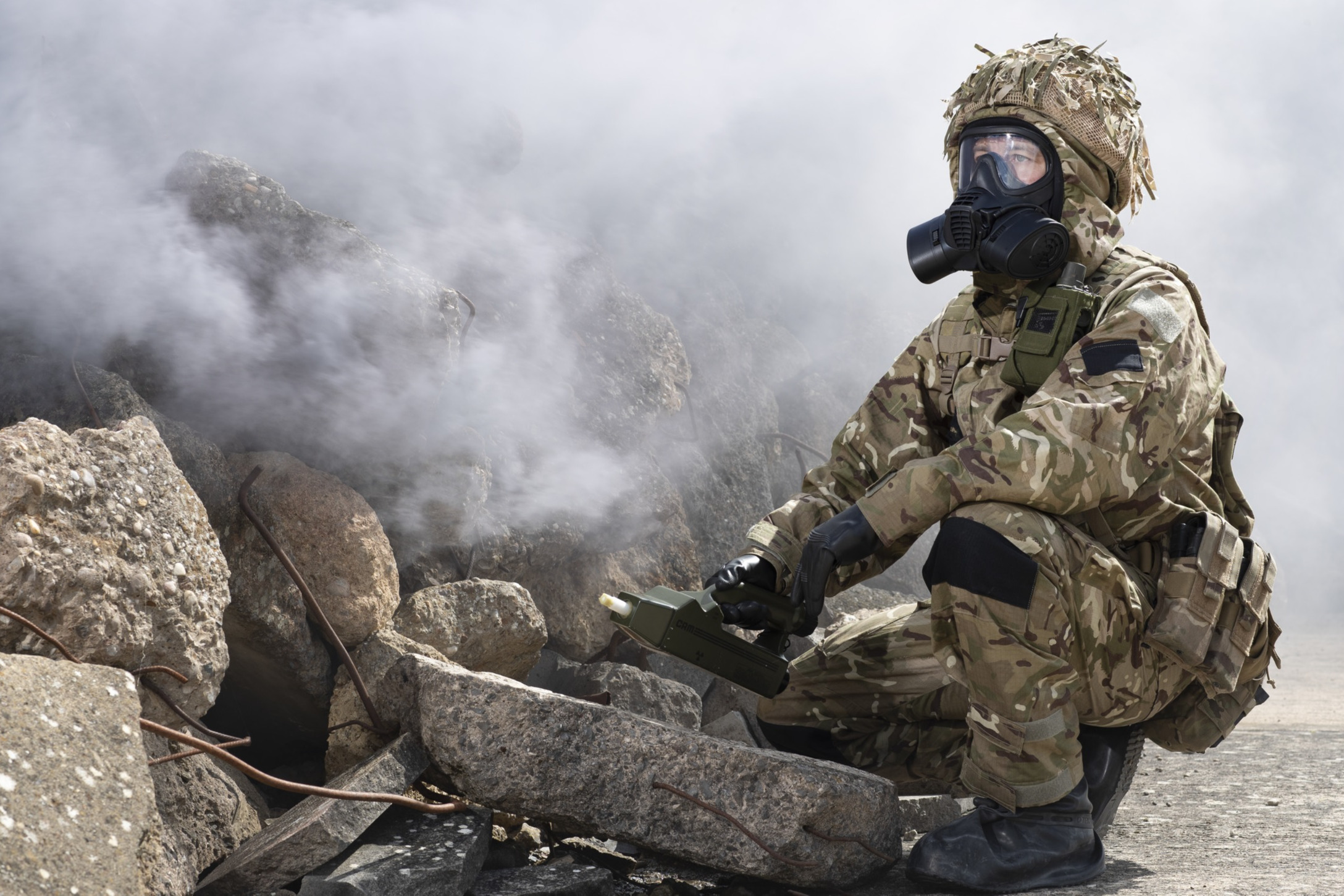
The West fears that a protracted or deadlocked war in Ukraine could push Russian dictator Vladimir Putin to use chemical weapons for mass destruction.
According to Censor.NET, citing a link to RBC-Ukraine, this was reported by The Times.
Use of chemical weapons by the Russian Federation
According to Ukrainian military sources, Russian occupiers have used dangerous chemicals more than 9,000 times since the start of the war — 6,540 times last year alone.
Yes, this mainly refers to the use of grenades filled with riot control gases such as CS and CN.
Ukrainian and European officials say Russian units have also sometimes resorted to chloropicrin, a suffocating agent first used in World War I.
Chemical weapons of mass destruction
The publication writes that Western officials fear that the chemicals reported by Ukraine may not reflect the full extent of Russia's arsenal.
Allied capitals are concerned that a protracted or deadlocked war in Ukraine could push the Kremlin to use more dangerous weapons of mass destruction. Putin has repeatedly rattled his nuclear sabre, while conspicuously remaining silent on chemical or biological weapons of mass destruction," notes The Times.
"Novichok"
In particular, after the poisoning of Alexei Navalny in 2020, the Bellingcat research group concluded that the Russian program to develop the nerve agent Novichok continued "well beyond the officially announced closure date."
According to their investigation, scientists who participated in the development of nerve agents were transferred to supposedly civilian institutions, which allowed them to continue working on chemical weapons under the guise of medical and industrial research.
Employees of two such organizations—the State Institute of Experimental Military Medicine and the Signal Scientific Center—were named as key figures in the improvement and "arming" of Novichok until the 2010s.
According to former British Army officer Hamish de Breton-Gordon, it is safe to assume that Russia's chemical weapons program still exists.
"If Novichok had been used on a larger scale, it could have had enormous consequences," he stressed.
Is there any benefit for the Russian Federation?
Former commander of the Joint Forces Command of the Armed Forces of the United Kingdom, General Sir Richard Barrons, argues that the transition to more lethal chemical weapons would be an unfavorable move for Moscow, as it would bring little military benefit and incur significant costs.
"If you draw attention to war crimes, you risk facing appropriate measures, and it's a double-edged sword — you could put your own forces at risk," for example, if the wind changes direction," he noted.
At the same time, according to Barrons, the temptation to use such weapons may arise "if you find yourself in a situation where the stakes are extremely high, when the survival of the country is at stake."
Statistics from the General Staff of the Armed Forces of Ukraine
- In total, from February 2022 to mid-December 2025, nearly 12,000 cases of the use of hazardous chemicals by Russian occupiers have been documented.
- The largest number of chemical attacks by Russians was carried out in April 2025. Radiological, chemical, and biological reconnaissance units of the Ukrainian Armed Forces Support Forces recorded 894 cases of the use of hazardous chemicals against Ukrainian Defense Forces servicemen.


