



"Resilience budget" or survival budget: where will Ukraine get its money from in 2027?
At the last minute, late in the evening on September 15, the government submitted the draft state budget for 2027 to the Verkhovna Rada—well within the deadline set by law. The next day, speaking from the parliamentary rostrum, Finance Minister Serhii Marchenko described the document as complex. Prime Minister Serhii Koretsky had stated the day before that the situation with public finances was nearing a crisis, while President Volodymyr Zelenskyy emphasized the "astronomical" funding shortfall. At the same time, members of parliament decided to suspend plenary sessions for 26 days—until October 13.
The draft of the country’s main financial document provides for multi-billion allocations for defence and social spending; however, its implementation will depend to a large extent on international financial assistance and decisions yet to be taken by parliament. At the same time, the state is already facing a funding shortfall this year: funding for some capital expenditure has been suspended, and the question of additional resources for the war remains unresolved. "Censor.NET" spoke to two members of the parliamentary Budget Committee – MPs Lesia Zaburanna and Oleksii Honcharenko – about how realistic the government’s planned targets are.
"WE WILL HAVE A RESILIENT BUDGET"
"I want to reassure everyone: there is no betrayal in the fact that parliament will not be convening in plenary session for the time being," says Lesia Zaburanna, a Member of Parliament from the ‘Servant of the People’ faction . "Firstly, we have received the draft state budget, so until 1 October, MPs will be working on it and submitting their proposals. In other words, we have entered the normal budgetary process.
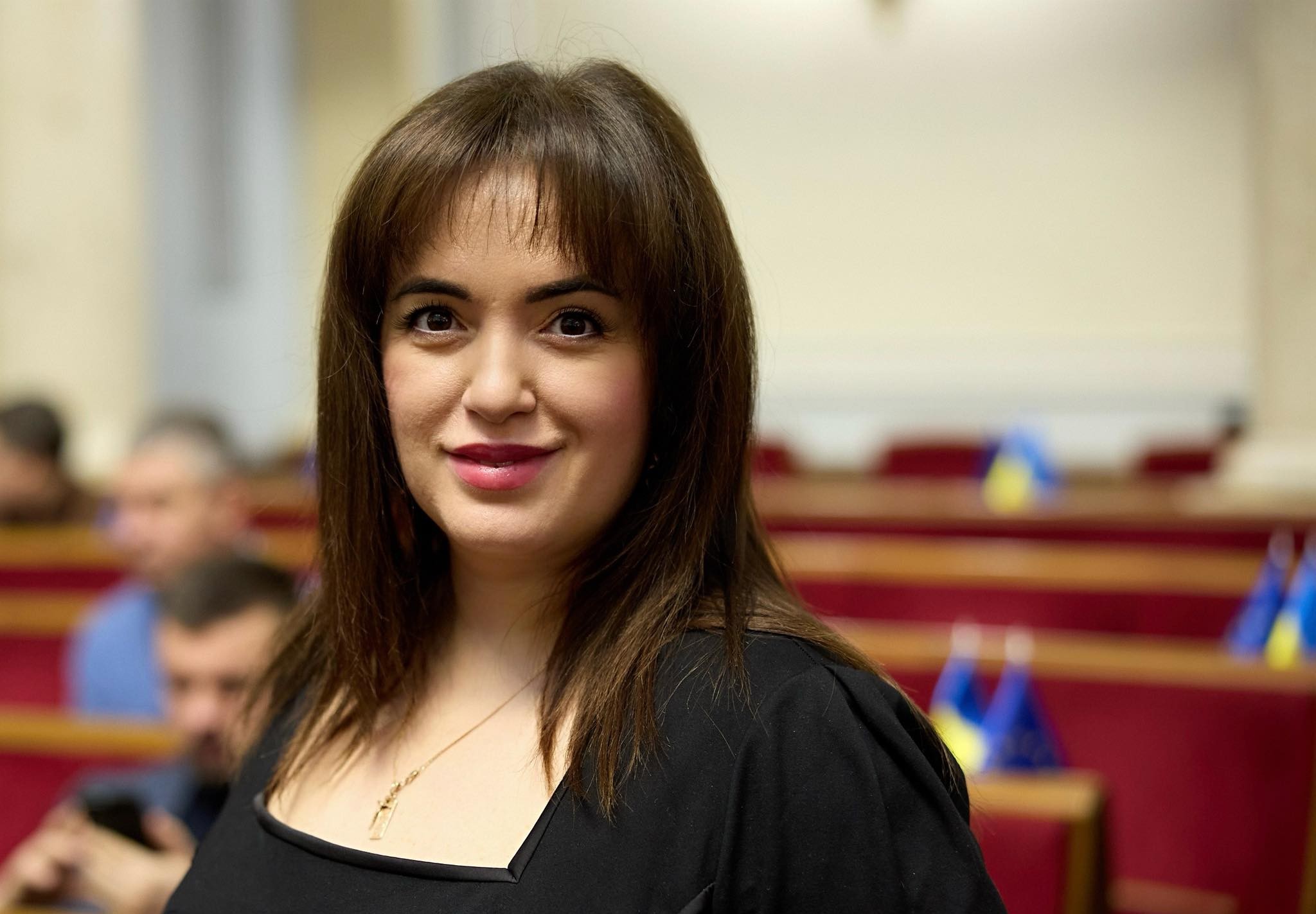
Secondly, we voted in the first reading on one of the key bills concerning parcels, which needs to be prepared for the second reading. Accordingly, committees and temporary investigative commissions are working on this.
At the same time, over the course of these two weeks, a session of the Parliamentary Assembly of the Council of Europe and the Inter-Parliamentary Union will be taking place. As the support of international partners is crucial (if not decisive) at this stage, communication at the parliamentary level and the articulation of our positions are also very important.
Therefore, it cannot be said that Parliament is on hold, with things having ground to a halt. Indeed, I would say that we are working at the international level, dealing with the draft budget and important bills ahead of their second reading, and, accordingly, carrying out our day-to-day work.
- Speaking of international aid. In the 2027 draft budget, Ukraine’s need for international support is estimated at 52.6 billion dollars. How much of this amount is covered by the 90-billion-euro European package, and how much might we have to seek from other partners?
- As things stand, we have confirmation of $20 billion in European support and other microgrants. Consequently, $32.6 billion remains in doubt – it has not yet been confirmed.
On a positive note, the draft budget that has been submitted (I do not think it will undergo any significant changes) has been verified by the International Monetary Fund. In other words, the IMF has given its assessment: this budget meets certain indicators and aligns with the vision of how the country should develop, and there is nothing superfluous in it. This enables us to engage with our international partners, in particular the European Union and other institutions (such as the World Bank), to seek additional funding and resolve these issues. This is precisely what the President, the Government and Parliament are currently working on.
- If, for some reason, we do not receive the full amount of aid within the required timeframe, do we have "Plan B"? For example, spending cuts, additional taxes, domestic borrowing or financing through the issuance of currency?
- Yes, this is a spending cut – a reduction in expenditure, in particular by cutting capital expenditure or certain programmes. This does not apply to guaranteed expenditure items – pensions, public sector wages and other social benefits.
We will not resort to issuance of currency, as this would lead to serious inflationary pressures. Indeed, we may try to increase revenue and domestic borrowing, but this alone will not fully resolve the problem.
- Speaking of capital expenditure, this month the Ministry of Finance has suspended funding for all capital expenditure under the state budget, totalling 39 billion hryvnias, postponing it until December. What does this mean for us? What will happen with preparations for winter, particularly regarding the protection of energy infrastructure and the construction of shelters?
- I will be able to report in detail on what will happen with preparations for winter in the capital and other regions on Friday, following the meeting of the Temporary Special Commission. Everyone directly involved in the Kyiv Resilience Plan will be invited, from the Kyiv City Administration to the Recovery Agency. We are gathering round the table to assess the situation and see what is happening.
In fact, we have already begun to raise this issue, including at the previous TSC meeting. It was on that very day that capital expenditure was suspended. The situation is as follows: all payments for work actually carried out up to September were made. In other words, it cannot be said that no funds were allocated. If the city and the Agency carried out the work and submitted everything on time, everything was funded. Indeed, since September, due to this difficult situation, there has been a halt, as there is no financial provision, and we must first and foremost cover protected expenditure.
At present, it is impossible to speak in general terms about the country as a whole, because, as the relevant services have pointed out to us, each region has managed to implement the Resilience Plan in different ways – to varying degrees. We need to look at the situation on a city-by-city and region-by-region basis. And so we are now trying to get to the bottom of this situation.
Furthermore, we hope that we will pass all the necessary initiatives at the second reading and still receive the international financial assistance that Ukraine is counting on.
- Is there a risk that we will start the next financial year with an accumulated "backlog" unspent capital expenditure? Or is it too early to talk about this?
- There is certainly a risk. But we need to look at the percentage involved. By Friday, we’ll have a better idea of how much work we haven’t managed to complete. Although, to be honest, given that it was mid-September, by and large we should have used up most of the funds if the preparations had been systematic and well-organised.
- The war is currently affecting all processes within the state. Recently, the chair of your committee, Roksolana Pidlasa, stated that one day of the war costs Ukraine 190 million dollars. To what extent is next year’s budget protected against the possibility that actual military expenditure will once again exceed the plan? Obviously, we cannot rule out that this will happen.
- Indeed, the problem lies in the fact that it is difficult for us to fully predict the escalation of the situation on the Russian side, or to assess the types of weaponry they are using. Accordingly, the budget was drawn up taking into account the trends observed this year.
At the same time, I consider it a wise decision that the Ministry of Finance has additionally set aside a special financial reserve (the so-called fund) amounting to 264.9 billion hryvnias, precisely so that, should military requirements increase, they can act more flexibly and have the means to cover them. However, it will, of course, only become clear over the course of the year how the aggressor country will behave and what additional needs we will have.
- And have funds been included in next year’s draft budget to cover a possible increase in military pay?
- A certain increase has already taken place in July this year. I specifically checked with the Ministry of Finance to confirm that the Ministry of Defence had not included any additional pay rises in its budget request for 2027. Salaries will be paid at the same level, taking into account inflation and indexation, as they are now following the July increase. In other words, no additional pay rises for military personnel have been budgeted for 2027.
- But if this issue arises, couldn’t it be put to a vote next year through amendments to the budget?
- Of course. That is, in fact, precisely why this fund was set up. Provided there is no critical escalation requiring the use of these funds, and provided we can more or less cover our deficit, then, naturally, this issue will become a priority. But for the time being, funding will remain at current levels.
- The draft budget allocates nearly 4.9 trillion hryvnias to defence. Does this mean that, in the current situation, any increase in defence requirements will automatically lead to cuts in civilian spending?
- No. All protected expenditure items are funded in full. Even despite the war, we are seeing that pensions are being index-linked. There will be no cut in social spending that people will feel.
Let’s return to what we were discussing: if we cannot find the resources to cover the entire $32.6 billion deficit, then in that case we will implement spending cuts and reduce capital expenditure. Yes, this may limit our capacity for reconstruction and so on, but social security, in particular, will definitely not be touched.
- So, ultimately, will we have a survival budget?
- It is, rather, a resilience budget.
"RIGHT NOW, EVERYTHING MUST BE VIEWED THROUGH A SINGLE LENS – THE WAR"
- I don’t even see much point in analysing this draft budget in detail, because it’s simply an ‘essay on a given topic’, comments Oleksii Honcharenko, a Member of Parliament from the ‘European Solidarity’ faction. – In reality, there’s no real planning involved. They just took some figures and crammed them onto a single sheet of paper, because they had to submit a draft budget to the Verkhovna Rada in accordance with the Budget Code.
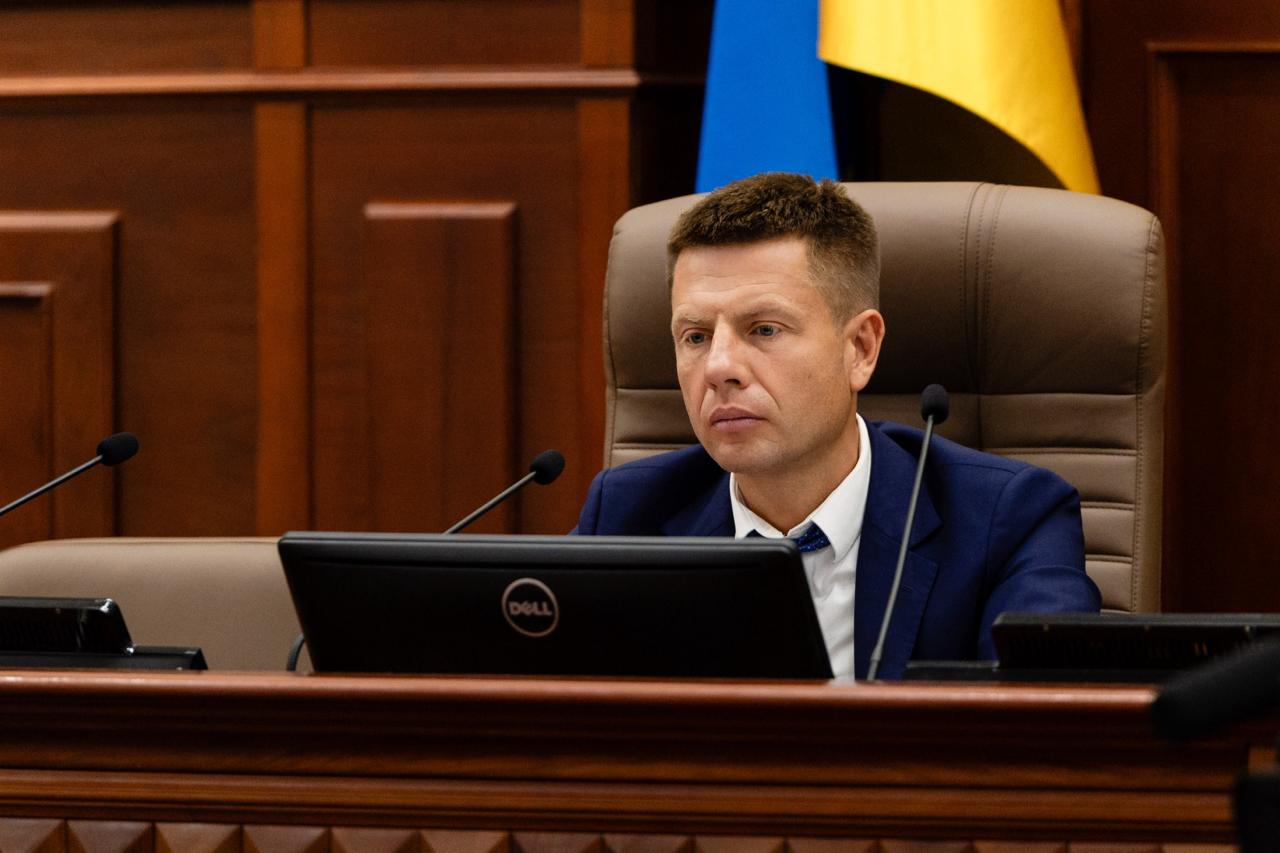
In general, we need to sort out the current year first, as the situation is completely unclear: one moment there’s a shortfall of 27 billion dollars, the next they’re quoting a different figure. We had a committee meeting today (22 September – ed.) at which the Accounting Chamber presented its report. According to their calculations, there is a shortfall of 265 billion hryvnias just for military pay until the end of the year – money that is not in the budget but will have to be paid out. Of course, this is not 27 billion dollars, but nearly six, but I must emphasise: this concerns just one item of expenditure.
Add to that the fact that, over the past eight months or so, tax revenue shortfalls have amounted to 23 billion. This figure is now set to rise rapidly, as all these recent attacks and the closure of the ports will have a very serious impact on revenue. The payment of corporation tax for the third quarter is particularly at risk. The situation is very complex. So, whilst it is, of course, possible to speculate about what will happen in 2027, I repeat, this is a long way from what we will ultimately see in reality.
- You mentioned the $27 billion in unmet funding requirements for the Defence Forces by the end of 2026, which are not included in the current state budget. Where can Ukraine actually get this money from? Will it be new borrowing, international aid, taxes or cuts to other expenditure?
- Clearly, the main route is to secure more from our partners: to bring forward some of what was due next year, or to secure some additional aid. I cannot say to what extent they are prepared to do this, as I am not involved in these negotiations. So we will have to wait for the results.
Furthermore, a significant amount of these funds is tied to the passing of laws – our commitments. This is, of course, a very important matter. But here, too, the situation is unclear. The government tells us that we’re talking about billions of euros that they plan to receive. These are included in the budget and can be obtained, but to do so, laws must be passed and certain other steps taken. However, the issue is that, at the same time, parliament will not be sitting in plenary session for almost a month. And its schedule is determined by the ruling party, the majority. So how does one thing relate to the other? It really is very difficult to make sense of this.
- Ukraine is set to receive 90 billion euros from the European Union in 2026–2027. How much of this money is actually guaranteed for next year – not just politically promised, but allocated in terms of budgetary planning?
- The portion of those 90 billion that is not allocated for the current year is carried over to the next. By the end of 2027, these funds must be fully accounted for. That is what we are definitely set to receive. But we need to look at what we have agreed with Norway, Japan, Canada and the United Kingdom. There are already separate agreements and separate aid packages in place with them.
- Is there a risk that we won’t receive these funds?
- It seems we do not have such problems at the moment. In other words, our partners are delivering exactly what has been promised to us and what has been signed. So I do not see any problems here. Although there will be serious challenges next year. For example, the elections in France. But in any case, their results will no longer affect this 90 billion in aid. Of course, time is flying by, and by next September we need to have a clear understanding of where we’ll be getting the money from in 2028. Our main sponsor and financial partner at present is the European Union. And this is where the question will arise: what will the situation be like after next year’s elections in Europe, particularly the French ones?
- The chair of your committee said that over 131 billion hryvnias of budget revenue for next year depends on laws that have not yet been passed by the Verkhovna Rada. How accurate is it, in general, to call the draft budget ‘balanced’ if part of its revenue is, in fact, contingent?
- Of course it isn’t! There’s nothing balanced about it. We’re operating on the principle of ‘live for the day, hold out for the night’. It’s a well-known story. But at the same time, I repeat, I cannot understand how all this fits in with the fact that parliament has now adjourned for a month. I don’t know.
- Raising VAT from 20 per cent to 21 per cent is expected to generate around 58.7 billion hryvnias. Are you personally prepared to vote in favour of this?
- As things stand, I have no intention of doing so. We will, of course, discuss the matter further at our parliamentary group meeting. But generally speaking, I have never once voted in favour of this government’s budget. Because, in my view, there are two things that determine whether you are in opposition or represent the ruling party, whatever its name may be – personnel appointments and the budget. If you vote in favour of these two issues, in my view, you cannot call yourself part of the opposition.
So, as I said, I have never voted in favour of this government’s budget. What’s more, I generally don’t like it anyway – ranging from all these ‘marathons’, ‘thousand-spring’ initiatives and other, in my view, inefficient uses of financial resources, to more systemic problems.
As for VAT specifically, on the one hand, we’re talking about a one-per-cent increase to set up a fund for aid and insurance against military risks and so on. But how much further can we increase the tax burden?! It amounts to this: in order to help you, we’ll first squeeze every last penny out of you, and only then will we help. A highly dubious initiative and highly dubious assistance. I do not understand this approach.
- Another potential source of revenue is a further increase in fuel excise duties. But the cost of fuel affects virtually the entire economy – logistics, prices of goods and so on. Has the Budget Committee discussed this with the government?
- They are factoring in such additional revenue. But the question is how accurate these calculations are. I don’t have an answer. However, this is still under discussion.
- You have noticed the state programme ‘thousand-spring’. There is another interesting initiative – ‘National Cashback’. The draft budget for 2027 does not provide for its funding, although formally the programme is scheduled to run until April 2028. Does this mean that the state is effectively abandoning it? Will funds be taken from the Reserve Fund?
- That’s exactly how they usually fund it, including from the Reserve Fund. I believe this is a completely pointless exercise that needs to be stopped.
- But there’s a lot of talk that the authorities aren’t giving up on the idea of holding elections, as former Defence Minister Mykhailo Fedorov recently mentioned. And ‘National Cashback’, on a par with other populist programmes, could be a sort of modern-day equivalent of the ‘buckwheat’ scheme.
- Our government needs to make up its mind: does it intend to win the war or the elections? In the second scenario, I’d remove the word ‘win’ altogether. I’d say – not to lose. That would be more relevant. And you can’t have it all: ‘buckwheat’, real military spending and the social sector. It’s impossible. They should have abandoned ‘buckwheat’ a long time ago. And today – there are simply no options.
- In September 2026, the Ministry of Finance of Ukraine suspended funding for all capital expenditure under the state budget totalling 39 billion hryvnias, postponing it until December. What does this mean for us?
- As things stand, since there is no money in the single treasury account, the Ministry of Finance has suspended funding (i.e. the direct transfer of funds) for the capital expenditure planned for September. No such decisions have yet been made even for October. What happens next depends on the trend in tax revenues and the volume of international technical assistance. This, in turn, depends on the passing of laws or changes to agreements, and so on. Therefore, the matter remains open. But clearly, there is a problem. I think they will postpone payments for October as well. No one can say at the moment what will happen in November. This means that certain projects we need for this winter will not be completed on time, or may not be built at all. Naturally, this increases the risks of getting through the winter and, at the same time, forces us to consider how realistic and well-planned the 2026 budget actually was, given that we find ourselves in this situation by the end of the year. Furthermore, the issue of financial discipline remains unclear. This is because various claims are being made, for example, that Fedorov used some funds from the end of the year at the start of the next. How did this happen? Who oversaw this process? How did it come to pass that, at the end of the year, we are left with an ‘empty trough’? It’s a rather strange story. It’s like in a family where a husband buys his wife presents in February or March, takes her out to a restaurant, and then in July says: ‘Now we’ve got nothing to eat for the rest of the year because I’ve spent it all.’ It’s madness.
- Is there a risk that, due to a budget shortfall, the state will have to suspend or restrict funding for certain social expenditure – such as public sector salaries, pensions and social benefits?
- At today’s meeting of the Budget Committee, the Ministry of Finance promised that they would definitely fund the entire salary component. Let’s hope that’s the case.
- This isn’t the first year the need to save budget funds has been raised. Given the circumstances, shouldn’t we review the system of special pensions, particularly for judges and prosecutors, and significantly reduce their amounts?
- Certainly, cuts are needed here too. In fact, a decision has been taken to set the maximum pension for next year at 28,780 hryvnias – ten times the minimum. Clearly, under the current circumstances, there needs to be greater social justice.
- Are the authorities open to this approach?
- In theory, yes. We’ll see how it works out in practice.
- How do you assess our financial prospects for next year? Is there any room for optimism here?
- At the moment, everything must be viewed through a single lens – the war. Of course, one would like to be optimistic, although that is difficult to achieve. We need to bring the war to an end. If it continues next year, we must realise that we are entirely dependent on external funding. If that funding does not stop, or even if it merely decreases, we will immediately face disaster, default, social unrest and so on.
Our own resources are dwindling year on year. No steps are being taken to sustain them. In other words, the authorities have fully adopted the attitude: ‘To hell with the domestic economy; we’re getting money from abroad, so we’ll just carry on like this.’ This is the reality we live in. In my view, this is a completely flawed model. That is why we are entirely dependent on the military situation and external circumstances.
Olha Moskaliuk, "Censor.NET"


