



Fedir Lapii: Plague won’t reach Ukraine from Russia; we’re sufficiently isolated
There’s been an outbreak of the plague in Russia. And, as is usually the case in Russia, we don’t have the faintest idea what actually happened.
We know that a young woman has died, but after that samples were taken from a number of people for testing, and there have been no official results since.
Donald Trump has already said that he needs to speak to Putin, and that Americans should not stay in Russia but should leave. What is going on?
We’re speaking to our guest, Fedir Lapii, an infectious diseases specialist and immunologist.
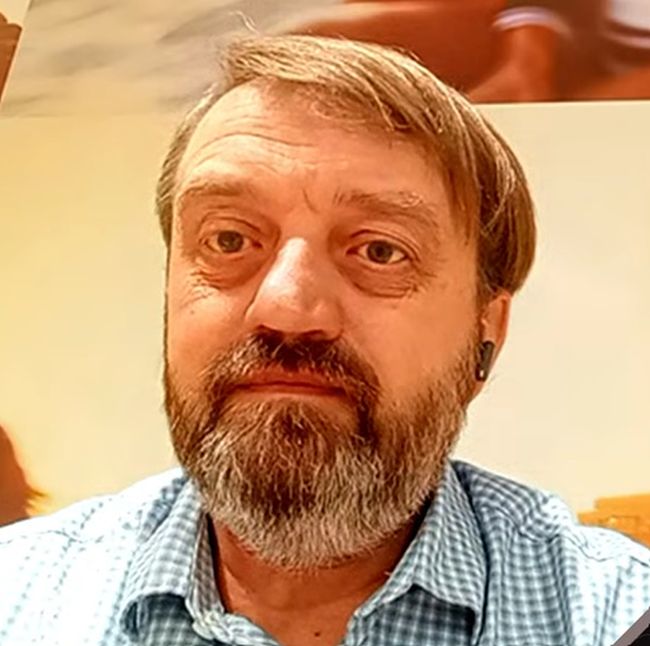
Fedir, what happened in the Irkutsk region? Is this an outbreak of pneumonic plague, or not? What can be said at this stage? Or is nothing clear?
You know, it would be easier to say that nothing is clear.
And it’s no surprise that this is happening in Russia. In fact, this isn’t the first time in history that they’ve covered things up – and the same can be said of authoritarian countries in general. They hold on to the information and conceal it until the very last moment. But as of today, there aren’t sufficient grounds to claim that this is specifically pneumonic plague.
We can only speculate as to what it might be.
If it is the plague, how dangerous is this disease? How is it transmitted? How does it kill, and how quickly does it kill a person? Can it be treated?
If it is indeed the plague, does it currently pose a threat to Ukraine? No, it does not.
We have no natural foci. There are natural foci in Mongolia, for example in Siberia, and in Madagascar, but not in Ukraine. If we consider the possibility that, say, a research fellow at an institute studying the plague – who, in fact, was not only working on the plague but had also been involved in biological weapons and the study of particularly dangerous pathogens since Soviet times… And this is precisely what frightens me: as of today, we have no information about what is happening there.
And if we’re talking about pneumonic plague – and I’ve already been asked this in recent days – could it be brought into the occupied territories? And even here I’ll say: rest easy for one simple reason – because from the moment of infection, when a patient sheds the plague pathogen and it enters another person’s respiratory tract, within 1, 2 or 3 days a very severe illness, a very severe infection, develops. And without proper antibiotic treatment, the person dies quickly. So even if people say, ‘What if they bring conscripts from there to the occupied territories of Ukraine?’, I say they won’t make it that far.
You’re thinking in terms of time, but if they fly from Irkutsk to Turkey, will they infect anyone there?
They need, you know, to get organised and leave; they say that quite strict measures are being taken there. And that, in fact, is also cause for concern. Or rather, I’d go further and say it instils a certain fear in me, because fear can be rational, or it can be irrational.
Fear of zombies is an irrational fear. Fear of a real threat, such as the plague, is rational. But we must understand that this may not be the plague. It could be either a modified plague pathogen, or they may have been dealing with some other microorganism that caused such a fleeting illness in a staff member working at a specialised facility.
And it is hard to imagine that she did not follow infection control protocols, as she is, after all, experienced and understands what she is dealing with. And it is precisely this uncertainty – what is actually happening there – that is most frightening, because Russia is quite a closed country. That is why international organisations and various countries are currently concerned about the unknown. Remember how the COVID-19 pandemic began, when cases of a form of pneumonia of unknown aetiology were reported in Wuhan.
Both international organisations and the wider community could see that something was happening there. But, as a rule, the governments of such countries say: ‘There’s nothing going on here; we’ve checked everything; it’s all under control.’ It is precisely this aspect that is frightening, but then we ended up with a pandemic. Will something similar happen? Well, we must keep a cool head and recognise rational fears. And the risks, of course, do exist; if certain barriers are breached somewhere, then—as you said—they’ll spread to Turkey, just as happened when COVID-19 spread to other countries. Could this be something similar? Perhaps, but we need time to draw conclusions.
Well, we know from history that the Soviet Union, for example, covered up accidents at biological weapons facilities. There was, in particular, an anthrax leak in Sverdlovsk in 1979. Fedir, if this really is the plague, is there any way to independently verify and understand what is happening in Russian laboratories?
In order to verify this independently, independent experts – or world-class experts with no vested interests – would need to have access to this institute and this city, and carry out an investigation based on the documents. But I can say from my own experience that even before 2014, when I met with Russians at various international forums and events, their stance was more or less this: ‘We owe nothing to anyone.’ And when the question arose that, yes, we are collecting various data – vaccination coverage rates, outbreaks – please share this data with us, because we depend on you just as much as you depend on us when it comes to contacts between citizens of different countries and the risks associated with infectious diseases.
I heard this argument very often. They would say: ‘Are we supposed to report to someone else as well – to the World Health Organisation? And don’t do that.’ That’s roughly how their arguments went. So when will independent experts be allowed in there?
Well, just as with how the situation with COVID-19 is unfolding. Whether COVID-19, or SARS-CoV-2, is of natural origin or whether it leaked from a laboratory? We currently have no answer for one simple reason: the experts who could set the record straight have not been allowed – and are still not being allowed – by the Chinese government to carry out investigations. And if, of course, the situation in that region takes a tragic turn, then in Irkutsk – and in that particular city, well, naturally, it will be very difficult to conceal this, and it will then be possible to draw more reliable, but first and foremost, as they say, analytical conclusions based on how the situation there unfolds.
Apparently, there is a second case, a fatal one, that has been recorded. It seems that this so-called laboratory assistant travelled to natural foci of the disease to take some samples, but in reality, a great deal does not add up. Well, firstly, she should have been vaccinated against the plague, even though the vaccine is not highly effective. Nevertheless, she works with this pathogen and should have been protected.
Secondly, she is experienced and should be using personal protective equipment, and she should understand the risks to herself. Thirdly, the claim that a test tube broke sounded very strange. In fact, leading laboratories no longer use glass test tubes, as they do not break when dropped. This raises the question: what actually happened there?
If it is not the plague, then what is it? It could indeed be some as yet unknown microorganism, or Russia may be hiding something.
Could it be that Russia is concealing, for example, the production of some sort of biological weapon?
It’s possible. In principle, you know, the Soviet Union was a world leader in everything… We can already see from our own experience what lies behind the words of the so-called president or the Russian foreign minister; we understand perfectly well that the reality could be the exact opposite. And even back in Soviet times, for example, there was a facility near Novosibirsk which, on paper, was not involved in the development of biological weapons, but in reality not only stored strains of particularly dangerous infections but also continued to develop biological weapons. As for the situation you mentioned, regarding 1979, the anthrax spores – these have been documented; they appear in reports dating back to the 20th century.
These are not isolated incidents; they indicate that the Soviet Union continued either to study or to develop such weapons. And it is unlikely that this ceased with the FSB coming to power in Russia. They may have been studying them from a security perspective, but if storage protocols were breached – or if this really was part of the development of some kind of biological weapon for the future – then a leak and the infection of personnel could have occurred. Therefore, this possibility cannot be ruled out.
That’s very interesting. Fedir, you did say at the very start of our conversation that this is far from Ukraine and poses no threat.
I was referring to the plague. When it comes to the plague, it really is a long way from us.
If we’re talking about a standard case, even of the pneumonic form, well, it won’t reach us. In that respect, we’re quite isolated from Russia.
But if something else were to reach us, are we – as a society, as a country, as a state – prepared to deal with something else?
I’d say yes rather than no. And I’ll explain why.
Well, first of all, we do have a more open society after all, and we talk about these things openly. When we know something, we sound the alarm. We liaise with our colleagues. Through my activities and my work – as chair of the National Technical Expert Group on Immunoprophylaxis and as a member of the World Health Organisation’s European Technical Advisory Group – at least within my area of responsibility, I know this.
We share information, we are open, and we discuss the issues. And that in itself is part of the solution. We have well-equipped laboratories, even if they are not of the highest standard or capable of handling particularly hazardous materials. Nevertheless, openness, establishing contacts, setting up centres for disease control and prevention, and the experience we gained during the COVID-19 pandemic.
In all our regions, disease control and prevention centres are able to carry out polymerase chain reaction (PCR) tests to sequence the genome and then determine what kind of pathogen it is. In other words, we have trained staff, a system in place, and the necessary regulatory framework. And the people currently in leadership roles – in particular, I would say, the Minister of Health, who is an epidemiologist and understands these risks – as well as the Director of the Centre for Public Health, Volodymyr Kurpita, who is an infectious diseases specialist and also understands these risks. I know that there are a great many relatively young but qualified specialists working there who understand these risks. This isn’t Onishchenko in Russia, it isn’t Rospotrebnadzor, it isn’t some other strange people who will, you know, as they say, cover things up.
We, on the other hand, are ready for an open dialogue and to issue warnings. At the very least, we have enough people who will not remain silent. We must not speculate, but approach this professionally.
Iryna Romaliiska, Censor.NET


