



Trump, Russian diesel and "energy truce": What is behind Washington’s latest decisions?
No matter how prepared the world may have been for Donald Trump’s political antics, his announcement of an agreement with Vladimir Putin to supply Russian diesel to the US and global markets came as a bolt from the blue. Following the news, the Ukrainian delegation, which was in the United States for talks at the time, cut its visit short.
The US president later made another unexpected announcement, writing that an energy truce between Ukraine and Russia had begun and was supposedly to take effect immediately. However, Kyiv had no prior knowledge of such an agreement: Volodymyr Zelenskyy said Ukraine was ready to support a halt to strikes provided it was reciprocal. Moscow had not publicly confirmed any agreed terms either. Meanwhile, Russia continued to attack Ukraine, striking its cities and, in particular, its energy infrastructure.
Reports of pressure from Washington on Kyiv further complicate the situation. According to media reports, the US side threatened to stop sharing intelligence with Ukraine and halt weapons supplies if it continued to destroy Russian oil refineries.
Censor.NET asked Ukrainian politicians how they assessed Trump’s unexpected moves, what risks these posed for Ukraine, how we should respond, and what scenarios we should prepare for.
"TRUMP’S WORLDVIEW IS LARGELY BASED ON A BUSINESS APPROACH"

The Verkhovna Rada Committee on Foreign Policy and Interparliamentary Cooperation will consider relations between Ukraine and the United States on Wednesday, says the committee’s chair, Oleksandr Merezhko, an MP from the Servant of the People faction:
- The committee is keeping its finger on the pulse and closely monitoring the situation. I hope the minister will also attend the meeting. Incidentally, we will discuss other issues as well, including the situation surrounding South Korea and relations with Estonia. We will talk and examine these important topics in detail, but behind closed doors.
As for Trump’s decision on supplies of Russian diesel fuel, this is very unwelcome and quite unexpected news, although in some respects it was also predictable. Given Trump’s worldview, which is largely based on a business approach, one could have assumed that he would lean towards such decisions.
We negotiated in good faith with White House representatives. We hoped for serious dialogue, good faith, and tangible results. It turns out that, at the very same time, other things were happening behind the scenes. I view this as an international lawyer. In general, international law does not regulate the negotiation process, with the exception of one important tenet, a general principle of law, namely the principle of good faith. In other words, negotiations must be conducted in good faith, which is what we did. However, it turned out that our American partners did not fully adhere to this principle. That is, of course, quite disheartening.
At the same time, I have my own explanation for what is happening. It may be subjective and simplify reality, but I believe these events need to be viewed in the context of the election campaign, as they are directly connected to it. To put it mildly, Trump has problems with Iran. As a result, fuel prices in the United States have risen. With elections just around the corner, he also needs to explain to voters who is to blame. Clearly, he will not take responsibility himself. Instead, it is much easier to find a weaker party to blame for these problems. Perhaps that is precisely what happened. After all, Ukraine and our strikes on Russian oil refineries do not affect fuel prices in the US. This issue is more closely connected to Iran and developments surrounding it. It is indeed unfortunate to be blamed for something for which you bear absolutely no responsibility and to be used in a domestic political struggle. But there is also good news: these tensions will begin to ease after November 3, when the US holds its midterm elections. Then it will be possible to seek a constructive approach and appropriate solutions.
I do not think America will stop supplying us with weapons and sharing intelligence. Trump’s actions have prompted what Americans call a backlash — a negative reaction. Primarily from the opposition, although Republicans, incidentally, are also unhappy with this decision. Both Democrats and Republicans see it as an attempt to forge an alliance with Putin. This endangers America’s image, the country’s reputation, and the institution of the presidency. Americans understand this well, which is why the response has been very consistent, forceful, and resolute, as we are now seeing. I hope this response will prevent intelligence sharing from being halted. After all, this is an exchange; Ukraine also provides information to the United States. It is a reciprocal process. And the threats in question were made behind closed doors. They are unlikely to be made public, because that would make it look as though the Trump administration were siding with Putin when we are dealing not merely with a war of aggression against Ukraine, but also with the genocide Putin is currently committing by killing Ukrainian civilians and destroying civilian infrastructure. These threats are therefore unlikely to be made public, and such a position is unlikely to become the Trump administration’s official policy.
The US president also announced a so-called energy truce. This reflects Trump’s tendency to make statements from time to time that are subsequently not borne out by the facts. It is quite clear that there was no energy truce. Residents of Kyiv and other Ukrainian cities understand this well. When you hear explosions outside your window, when the power and water go out, what energy truce can there possibly be?! Unfortunately, Trump tried to use this situation in some way, because Russia is suffering badly from strikes on its oil refineries; they inflict serious damage on Russia and its war machine. Putin probably hopes to use Trump to force Ukraine to stop these strikes, which are painful for the Russian war machine. Unfortunately, Trump is inclined towards such an approach. After all, how absurd is it to propose that a so-called energy truce should be limited solely to certain actions by Ukraine? This is an obvious asymmetry: Russia has many oil refineries, whereas we have only one, which, moreover, is not operating at full capacity. This is an obvious imbalance that must not be allowed during a war. Ukraine’s president rightly said that, if we are talking about a genuine energy truce, it must begin with Russia ceasing its attacks on our infrastructure. We, in turn, could then refrain from attacking Russian oil refineries. This proposal is entirely sound and justified, at least as an initial step. But Trump is proposing something else, an utterly absurd idea that can only harm Ukraine during the war.
"TRUMP HAS GONE OFF THE RAILS"
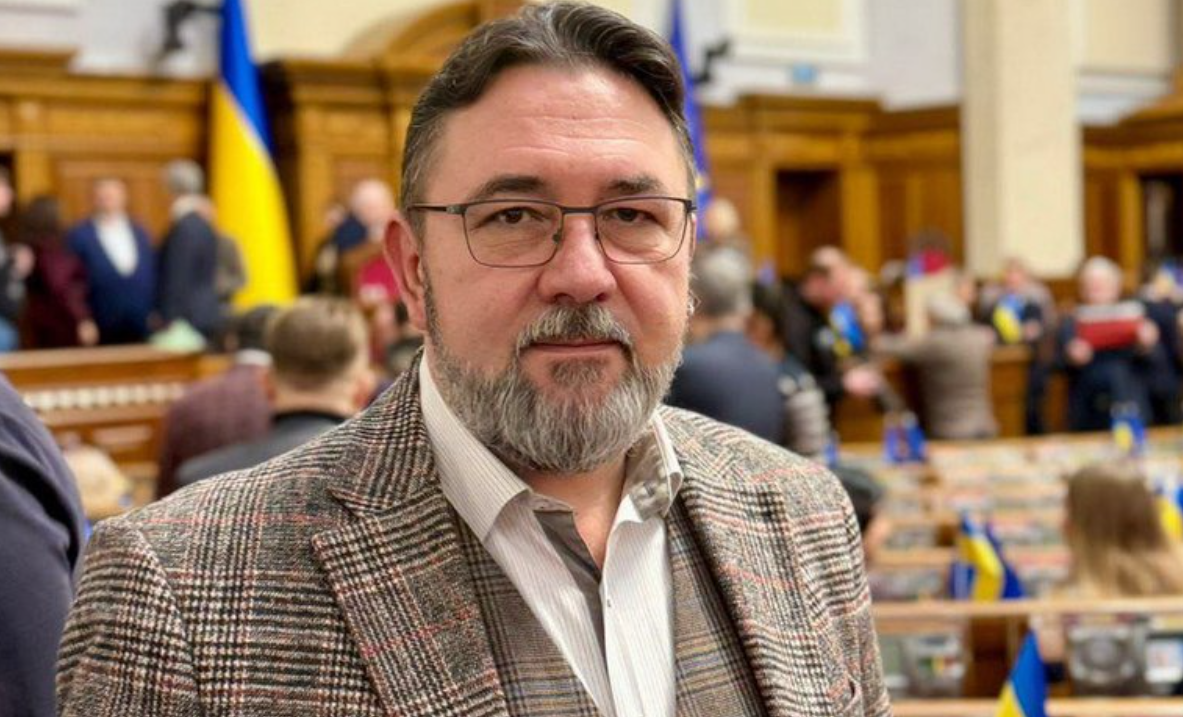
Mykyta Poturaiev, an MP from the Servant of the People faction, is convinced that talks on a possible deal with the Russians began even before Trump took office in the White House:
- Just recall the first meeting between the negotiators, which took place shortly after Trump officially became US president for the second time. The line-up did indeed seem strange at the time. Witkoff, Dmitriev, Lavrov and Rubio attended the meeting. First, Witkoff and Dmitriev spent an hour and a half, if not two hours, alone, "wheeling and dealing" over something (I am deliberately using this expression because we understand that, when people like these are involved, these are not negotiations but business "wheeling and dealing"), while Lavrov and Rubio sat somewhere in an anteroom like schoolboys who had misbehaved, waiting to be called in. They were invited in only for the final twenty minutes to sit alongside the other two as a matter of protocol. I am certain that, since then, not a single month has passed without these talks about how nice it would be to make money together. All those endless visits by Witkoff to Moscow and never-ending meetings between Witkoff, Kushner, and Dmitriev attest to this, as do the idiotic statements about contracts worth ten trillion dollars or something along those lines, which were even reported in the press; they never concealed any of this. So none of this is news to anyone deeply engaged with these issues. Donald Trump has simply "gone off the rails" and begun speaking and acting accordingly in public, repeatedly making statements that amount to nothing other than utterly blatant, brazen, and cynical interference in our sovereign internal affairs. This includes, in particular, his statements that Zelenskyy must go and Ukraine should get a new president who will strike a wonderful deal with Putin. And what kind of deal is that? We know exactly what kind! Even after that last conversation between Putin and Trump, which led to the diesel deal, Ushakov said they would keep fighting until they had fully achieved their objectives. Those objectives are known and have been stated publicly. The Russians keep repeating that these are the objectives set out by so-called President Putin in 2024 at a meeting with senior officials of Russia’s Ministry of Foreign Affairs. At the time, the Russian dictator said that the prerequisite for starting negotiations (not even for concluding any agreement) was the withdrawal of Ukraine’s Defense Forces from the entirety of the Luhansk, Donetsk, Zaporizhzhia and Kherson regions, without reservations or conditions, as well as Ukraine’s recognition of these four regions and the Autonomous Republic of Crimea as Russian territory. Only then might they sit down at the negotiating table to discuss anything. That is the deal Donald Trump is talking about — capitulation. Now, once again, he is publicly accusing Ukraine of consistently refusing, for some reason, to capitulate to Russia.
We must understand that Trump is operating within his own political process — everything the American president says and does falls within that framework. Although I suspect that, specifically regarding the diesel deal, people in his circle may have vested interests of their own. After all, it is known that they are discussing the purchase of Lukoil’s foreign assets by Americans. In fact, this is essentially about the interests of the Trump family, since Kushner is also involved in the process. So, first, these are clearly election campaign statements intended to deceive American voters. Second, there are purely self-serving interests connected to diesel. And this troublesome Ukraine is standing in the way of such cooperation between Trump’s business circle and Putin’s business circle, preventing good people from making billions of dollars.
In my opinion, the Americans will not stop supplying us with weapons for the simple reason that, once again, this means billions of dollars flowing into the American economy every month. To also deal a blow now to the Republican Party’s traditionally biggest financial backers (representatives of the American military-industrial complex) would amount to political suicide. Donald Trump is, of course, irrational, but I do not think he is so irrational as to finish himself off politically and put himself and his cronies on trial in potential corruption cases after the Democrats win the elections to Congress and the Senate. And that is where things are heading. So I would not worry too much about weapons. A halt to intelligence sharing, however, would be unpleasant for us, though not fatal. After all, we understand that there are various ways to guide weapons to targets deep inside Russia. In my view, there is another, more dangerous issue — the use of Starlink. But I also do not think Elon Musk will voluntarily give up the millions of dollars he receives every month from our European partners for our use of Starlink.
"TRUMP’S DECISION IS MORE ABOUT POLITICS THAN BUSINESS AND CORRUPTION"

Volodymyr Ariev, an MP from the European Solidarity faction, also believes that the situation is primarily linked to the US midterm congressional elections:
- Trump needed a populist story like this ahead of the elections. As he himself said, he is targeting farmers and truck owners. Most of them do not read analysis of the fuel market. They do not look into the fact that US diesel refining capacity is operating at almost 100 percent. It cannot be expanded any further. Moreover, even the oil produced in the US is poorly suited to making diesel, which requires what one might loosely call heavy crude. Russia, Venezuela, and some Middle Eastern countries have that kind of oil. But in this case, there is no diesel shortage in America, because it produces more than its market consumes. All these developments therefore reflect global trends: there is indeed a shortage of crude oil itself, particularly oil from Arab countries. And that is directly Trump’s own responsibility, because he stirred things up a bit in both places. Clearly, ahead of the elections, he does not want to admit that he himself is to blame for this situation. Developments in Venezuela had less of an impact, but the Strait of Hormuz is entirely his own blunder. So he needs to "shift the blame" to someone else. That is how he is "shifting the blame" to Ukraine while demanding diesel from Russia. In reality, that volume will have no significant effect on prices within America. But it will allow Trump to show his voters that he is doing something and absolve himself of responsibility. And he simply does not give a damn about us.
There is also an interesting question about which intermediary companies are bringing cheap Russian diesel into the US. I assume that, with volumes like these, even a difference of ten dollars per tonne amounts to a substantial sum. But whatever the circumstances, the price of Russian diesel will clearly be determined by politics. So it will be interesting to see how much the intermediary between Russian diesel suppliers and the American market pays for the product and how much it sells it for, as well as who owns that company, who exactly will act as the operator?
One other point makes me think that this really is more about politics than purely business, or business and corruption. Russia does not have the capacity to produce the amount of diesel Trump is talking about supplying to foreign markets. Moreover, Russia itself does not have enough diesel for its domestic market, and there is even a ban on its export. Meanwhile, the United States has a ban on imports of Russian petroleum products. So this will clearly involve a scheme using third countries that will refine Russian oil into diesel. This particularly concerns countries where Russia exercises direct control. That is the only option I can see that could potentially work more or less legally. We are therefore most likely witnessing a political game and an attempt to shift responsibility specifically onto Ukraine. After all, someone has to be found to take the blame. Trump is not particularly concerned that Ukraine is striking Russian oil refineries because it is defending itself. He does not want to view the situation in terms of who is the aggressor and who is the victim at all. He looks at who is stronger and who is weaker, and onto whom he can shift responsibility with the fewest consequences for himself and in the way most convenient for him.
The bill being prepared in Congress to ban purchases of Russian oil is also about politics, because members of Congress will not convene before the elections. Only afterwards will the current Congress hold sessions, as the new one will begin work in January next year. So this will not happen quickly. The current bill is based on Reagan’s doctrine of "Peace through strength". In my opinion, this is the only viable approach in confronting Nazi Russia. It worked for Reagan against the communist Soviet Union. Trump has certain levers of influence in the period before the elections, after which the new Congress will begin to take shape. Accordingly, we need to be most active before then. After all, we do not yet know how even the current members of Congress will behave once voting is over. Both Republicans and Democrats, as we know, respond primarily to the prevailing mood among voters. Once the election results are announced, positions may shift, including those of Republicans towards Trump. Their attitude towards him may change. We are already seeing considerable Republican criticism of Trump’s decision. At the same time, there are doubts about whether this will help them at least level the playing field or catch up with their opponents and regain what they have already lost because of his policies. But it seems to me that the American president is thinking less about his own party than about ensuring that his core supporters, whom he has spent a long time cultivating and rallying around himself, have a convenient explanation for what happened and that their favourite remains blameless.
We need to carry on with our own work and fight off the ruscists. Zelenskyy needs strong diplomacy, which, unfortunately, I have yet to see from us, as well as a sufficiently measured policy. In a contest over their reputations, Trump will clearly have the advantage, because he can do whatever he wants, whereas Zelenskyy does not have that room for manoeuvre. He needs to act in the interests of the state now, avoid getting into any arguments, avoid an "Oval Office 2.0" and recognise that Trump takes criticism of his weak decisions badly. In terms of their personalities, they are essentially twin brothers. But for Zelenskyy, his country’s very survival is at stake. For Trump, it is only his personal political career. These two things cannot be compared, because they exist in different dimensions.
"IF THE AMERICANS COMPLETELY STOP SHARING INTELLIGENCE WITH US, WE WILL SWITCH TO EUROPEAN INTELLIGENCE"

The Verkhovna Rada Committee on National Security, Defense and Intelligence was not informed about preparations for a deal between America and Russia, or that a tanker carrying diesel fuel had left Russia as early as September 22, according to press reports, says the committee’s secretary, Roman Kostenko, an MP from the Holos faction:
- The relevant authorities did not report this to us. Umerov, the head of the Foreign Intelligence Service, has not attended a single committee meeting since his appointment. His deputies have attended, but we received no such information from them.
In general, we need to understand one thing and take it very seriously: Trump is now doing everything he can primarily to appeal to his domestic audience and portray himself as someone who resolves problems abroad and overcomes crises. We therefore also need to assess his statements critically and analyse whom they are aimed at. He is in an election period now, and his first priority is to engage with his voters. We see and know how he handles issues. Trump is trying to show his domestic audience that this is how he tackles crises, stops wars, and reaches agreements. We need to get as much as we can out of this. If he says we will negotiate some kind of truce, we see Ukraine’s president take up the issue and work towards it. Personally, I currently doubt that anything will come of this. But we see that our diplomats are nevertheless stepping up their efforts and continuing to look for opportunities to get something out of it.
It is still too early to say how this whole situation will affect the battlefield, where we need to continue doing our job, striking the enemy. This is primarily a geopolitical game in which Trump "gives Putin a free hand" and demonstrates that he is now an entirely acceptable partner to do business with; the US is doing it, so others can too. That is the biggest problem. But Europe has also condemned Trump’s decision, and we see that there are many such voices. So I do not think any of this will directly affect the war for now. If further steps follow, they could, of course, affect the situation, particularly if they involve intelligence, Starlink or other things of critical importance to us. If attempts are made to push us into certain concessions, that could, of course, also have consequences. But at this point, all we have are statements and the passage of a single tanker. Could the US stop sharing intelligence with us and halt weapons supplies? We have dealt with Trump before, so anything is possible. But I think such a scenario is unlikely in this particular situation. The point is that, fortunately, we no longer depend exclusively on the United States. Yes, it performs important work, and its intelligence capabilities are among the best. But there are alternatives, including our European partners. Let us consider the worst-case scenario: if the Americans completely stop sharing their intelligence with us, we will, of course, switch to European sources, particularly British ones, which also have the relevant capabilities. Of course, this will not fully replace American intelligence, but it certainly does not mean we will lose the war as a result. As for weapons supplies, there are certain critically important items, particularly missiles for Patriot systems, which we are already receiving in rather limited quantities. Supplies of everything else are essentially diversified, and the resources we need can be sought in other countries. Let us put it this way: if such a situation arises, it could be critical, but not catastrophic.
"TRUMP HAS SIGNED A POLITICAL 'DEATH WARRANT'"
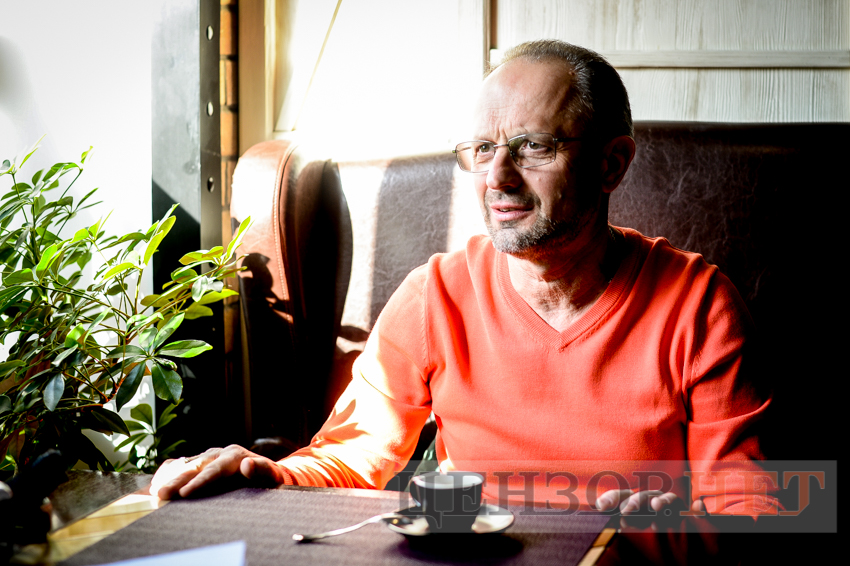
Politician and diplomat Roman Bezsmertnyi stresses that Trump’s announcement of a supposed energy truce between Ukraine and Russia is a continuation of the so-called diesel deal:
- All of this constitutes a form of informational and psychological pressure aimed at reshaping voters’ choices ahead of November 3. Neither announcement has anything to do with the energy market, peace negotiations, a ceasefire or anything of the sort. All of it serves a single purpose, the elections. The thinking is this: if you take a pipette, fill it with diesel and put a drop on Trump’s forehead, gasoline prices will change. That is how these things can be described.
Remember, Trump first had a great deal to say about Nobel laureate Pillay. He said he deserved the prize far more, because he had supposedly ended all the wars in four thousand years of human history. Then he realised that this was his moment of glory. He had to resolve, as he himself puts it, the issue of the Russian-Ukrainian war. So he puts out an announcement that is likewise entirely detached from the substance of the process and reflects his own perception of the situation.
As for the shock caused by these announcements, pay attention to how MAGA figures close to Trump commented on them. Admittedly, they did so anonymously, because by now more than one fool is unwilling to put their name to such things. They say there is no need to negotiate, no need to persuade anyone: post a tweet, and a truce is in place. That is what this is designed to achieve. And a sizeable proportion of Americans, I assure you, could well believe it. Even people with university degrees still support Trump. So we need to understand that we are dealing not only with the "orange plague", as he was labelled in a sculpture, but with a peculiar society in which 70–80 percent simply spend their time on social media, like children in Europe today whom people are trying to protect from the excessive influence of the digital environment. So we should not overestimate their society. These two announcements will not change the situation at this stage, but they are designed to be swallowed by the public. And in precisely the way Donald Trump’s agitated, feverish mind wants.
One more thing: in my opinion, President Zelenskyy’s reaction to this whole situation has been excessive. Like many others, he sees it as almost a catastrophe. But in my view, it means one thing: Donald Trump has signed his own political "death warrant" and is waiting for November 3, when the Democrats will carry it out. That is exactly what will happen, because these actions weaken Trump rather than strengthen him. Whatever society may be like, there is a trend within it. The trend now is away from Trump, not towards him. He does not understand this, which is why he keeps lurching from one side to the other; he still sees himself in the 2024 election campaign: Ukraine is to blame, and so is Biden. Incidentally, even Loomer reacted to this situation entirely correctly. So his political "funeral music" is playing now.
We need to understand that America is about as much use to us as a billy goat is for milk. First, it stopped providing us with intelligence a long time ago, whereas Ukraine gives it intelligence on Russia, and it pretends not to need it.
Second, all satellite intelligence is provided by the United Kingdom, France, and Italy. So the US plays no role here.
Third, they keep repeating: "We are helping you." But you are not helping us — you are selling us things, and things that are not of the highest quality, at that. Moreover, from 2027 onwards, Ukraine will no longer conclude new contracts with the United States. There is no need whatsoever to do so.
Where could problems arise? There is a certain amount of equipment, including Abrams tanks, only a few of which remain, and components for M777 howitzers, many of which are American-made. But they are not that difficult to replace with German, French, British, Swedish, and other equivalents. The F-16 issue, meanwhile, has been gradually losing relevance for nine months now. It increasingly concerns only what will be supplied from Europe, particularly Belgium. There is a question of renewing the programme here. That is precisely why major contracts are being signed for Gripen fighters and French Rafales. So this avenue will gradually narrow.
Olha Moskaliuk, Censor.NET


