



A scandal is unfolding in Ukraine over a lithium deposit linked to Trump’s partner, Ronald Lauder
On October 20–22, the Kyiv District Administrative Court will hold four hearings in cases concerning the tender for Ukraine and the United States’ first pilot minerals deal project – the Dobra lithium deposit. The court has ordered the Ministry of Economy and the Interagency Commission on Production Sharing Agreements to submit 21 categories of documents by October 22, including the winner’s application, which the ministry considers confidential.
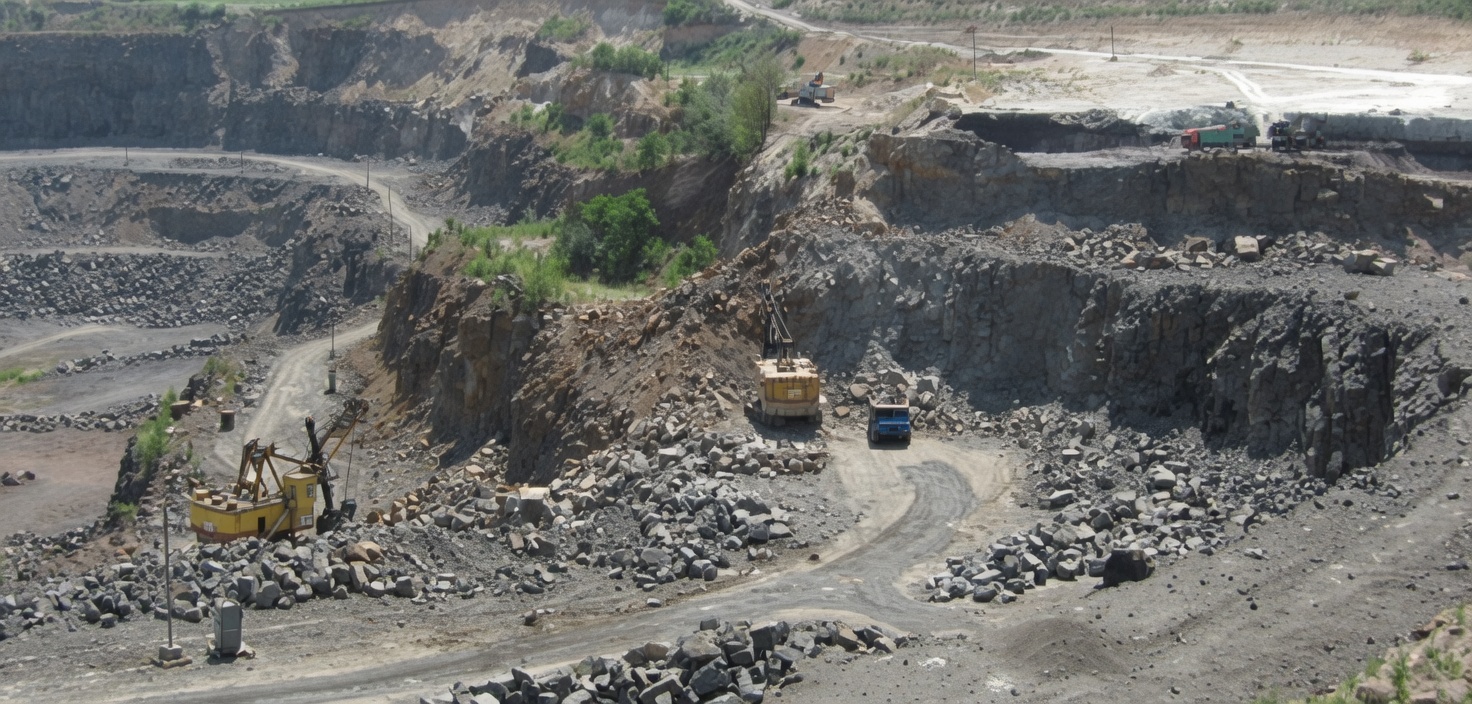
In an investigation, BusinessCensor explains why the major minerals deal with the United States risks turning into a major scandal, what aspects of the tender have been kept secret from the public, and why the new government will have to answer for the previous government’s decisions.
The fund’s first minerals investment – why isn’t lithium among its priorities?
On October 2, the U.S.-Ukraine Reconstruction Investment Fund (URIF) approved its first investment in critical minerals. According to Reuters, around $30 million will go toward a platform for early-stage mining projects. A statement from the Ministry of Economy identified "selected deposits of rare earth elements, beryllium and zirconium" as top priorities. Lithium and "Dobra" were not mentioned.
Back in 2025, Dobra was called the first project under Ukraine’s minerals cooperation with the United States. Andriy Yermak, then head of the Presidential Office, was among those who made that claim. Progress on the lithium project was indeed active: in January 2026, Prime Minister Yuliia Svyrydenko announced that Ukraine had, for the first time, selected the winner in a tender to develop a lithium deposit under a production sharing agreement mechanism. The winner was Dobra Lithium Holdings JV, LLC, whose shareholders are TechMet and The Rock Holdings.
Although the fund’s money has gone to other deposits, "Dobra" has not been forgotten. The site has become the subject of five court cases, with the next hearings scheduled for October. The judges’ decisions and the positions of the Cabinet of Ministers and the Ministry of Economy will determine whether the court gains access to the tender documents: the participants’ applications have not yet been made public.
"They wanted to move faster, but things turned out as usual", or the powerful friends behind the big deal
Ukraine and the United States signed the minerals deal in April 2025 at the initiative of U.S. President Donald Trump. When the tender took place, the media highlighted one of the investors in the winning project: billionaire Ronald Lauder, a longtime friend of Donald Trump.
Yermak and then-Economy Minister Oleksii Sobolev both spoke about Lauder’s involvement. The New York Times, citing its own sources, reported that the consortium included Lauder, Trump’s friend, and TechMet, which is partly owned by the U.S. government’s DFC.
In a column for "Interfax-Ukraine", Deputy Minister of Economy and Environment Yehor Perelyhin described Lauder as the sole beneficiary of The Rock Holdings. Lauder himself has not publicly confirmed his participation, as BusinessCensor previously reported. No one has publicly stated whether Kyiv expected that the friend of the American president in the consortium would help in matters of support from the US. That is one of the questions we are seeking answers to.
But then things got interesting. Let us briefly summarize the chronology:
- July 2025: In an interview with the Financial Times, Mykhailo Zhernov, a board member of European Lithium and Critical Metals, asserted the company’s rights to the deposit: "This is our licence, these are our rights".
- August 2025: Under Resolution No. 1059, the government announced a tender for the development of the Dobra lithium deposit under a production sharing agreement. The terms included a 50-year special permit and minimum investments of $12 million for geological exploration and $167 million for extraction and enrichment. According to European Lithium, after the tender was announced, the company wrote to the president and prime minister, arguing that it has the right to a special permit for "Dobra" which was confirmed by Ukrainian courts. The company asked the authorities to resolve the issue before the tender but says it has not received a response.
- December 2025: applications were submitted by Dobra Lithium Holdings JV, LLC, whose shareholders are TechMet and The Rock Holdings, and European Lithium Ukraine LLC, owned by Australia’s European Lithium Limited. "Dobra" proposed $179 million, matching the minimum threshold, and "European Lithium" proposed more than $1.5 billion (what the applications actually contain, we will tell in the second part of the investigation);
- January 2026: The commission selected the winner, and under Order No. 14-r, the government recognized "Dobra" as the winner.
Whether the situation around "Dobra" has affected relations between the presidents of Ukraine and the United States is impossible to assess. However, it is difficult to describe their relationship as warm today. Tensions peaked on October 10, when Trump publicly declared that it was time for Ukraine to choose a new president, after Volodymyr Zelenskyy criticized a US-Russia agreement on diesel supplies. According to Axios, this is now the most serious crisis between the two leaders since February 2025.
What is particularly interesting is the context in which these tensions are unfolding: in just 10 days, a court hearing will take place over the tender the winning consortium of which, according to The New York Times, includes Trump’s friend Ronald Lauder.
Violations at every stage? Why the minerals tender ended up in court
Since March, European Lithium Ukraine LLC has filed seven lawsuits, five of which are still ongoing. The company is challenging the tender results, its terms, the evaluation of applications, and the composition of the commission. Ihor Lukianov, director of European Lithium Ukraine, has described the process in the media as "highly closed and non-transparent" and claims that his company’s offer was objectively better.
What exactly is being kept secret? The winner’s application: the Ministry of Economy considers it confidential, and the winner itself is opposing its disclosure in court.
It is also still unclear how the commission calculated the scores. In court, the Ministry of Economy stated that the tender rules "do not provide for the preparation of evaluation sheets/tables by members of the Interdepartmental Commission".
Interestingly, the details were hidden even from people living near the mining site. In June, Volodymyr Osiievskyi, head of the Dobrovelychkivka community, said that community representatives were not allowed to attend the commission meeting. According to him, "the information is classified".
The new government will have to answer for the previous government’s decisions: how did this happen?
The competition was held and the winner was determined by the previous government. But the current government will have to defend those decisions in court: since July 16, the government has been headed by Serhii Koretskyi, and Oleksandr Kravchenko has been in charge of the Ministry of Economy and Environment.
On October 1, the court ordered the Ministry of Economy and Environment and the Interdepartmental Commission to submit 21 categories of documents by 1 p.m. on October 22. These include the commission members’ evaluation sheets, documents concerning the expert, materials on recusals and conflicts of interest, approval of the draft government order, Prime Minister Yuliia Svyrydenko’s directive of January 9, 2026, No. 944/1/1-26, and the winner’s application. The Cabinet of Ministers and the Ministry of Economy and Environment objected to this.
The court held the heads of the commission and the ministry, or those acting in their place, personally responsible for complying with the ruling and warned that a fine could be imposed.
Government Order No. 14-r, which declared "Dobra" the winner, is being challenged in court. This means that if an agreement is signed on the basis of that order, it will be signed by the officials currently in office.
We will find out on October 22 how these "renewed" officials respond. Next, it is worth understanding what the prospects of the case are and what they are based on.
Old friends in a new company: Did the commission favor one company?
Suspicions that one of the companies had received preferential treatment during the competition appeared almost immediately. The grounds for this question are the coincidences in the biographies of people on both sides of the competition.
One member of the Interdepartmental Commission is Yehor Perelyhin, Deputy Minister of Economy and Environment, who, at the time of publication, had announced his resignation at his own request. In 2018–2019, he headed Petro-Consulting LLC, the name under which the claimant, European Lithium, operated until 2022.
Meanwhile, the winner’s interests before the authorities are represented by Volodymyr Ihnashchenko, TechMet’s representative in Ukraine and First Deputy Minister of Ecology during Viktor Yanukovych’s presidency.
In the autumn of 2021, Mykhailo Zhernov, the then owner of Petro-Consulting, claimed that the company had actually been owned by Ihnashchenko. According to YouControl, Ihnashchenko’s son Taras worked there during the same period as Perelyhin.
Thus, both a commission member and the winner’s representative share a common point in their biographies: "Petro-Consulting", now the claimant in the case.
What we set out to find out
BusinessCensor sent information requests to the Ministry of Economy, the Interdepartmental Commission and the Cabinet of Ministers. Among other things, we asked about Perelyhin and his resignation, which had not yet been publicly reported at the time, and whether it was connected to a conflict of interest related to the tender. We also asked:
- whether the commission had assessed the financial backing for the participants’ programmes;
- whether any notifications had been received concerning conflicts of interest involving commission members;
- which company representatives the ministry had met with, including Ihnashchenko.
We also requested the commission’s minutes, voting results and scores awarded to both participants.
We have already received some of the responses. The editorial team has obtained documents provided by the Ministry of Economy: the minutes of the Interdepartmental Commission meeting held on 8 January 2026, including the voting results; expert conclusions with a comparative analysis of both applications, and two responses from the ministry to the Dobrovelichkivska Village Council to its appeal.
We will receive the Ministry of Economy’s position on the conflict of interest at a later date. The ministry said it needed 20 days to process this question. We will publish its response.
We will examine these documents, including the detailed assessments of both applications, in the second part of the investigation. It will be published after the court hearings and the ministry’s response.
We will devote the next part to a detailed analysis: what exactly the applications contain, how the experts evaluated the proposals of both companies, who voted to determine the winner, and what these documents reveal about the people and companies on both sides of the competition.
A budget without money, a deposit tied up in court: what happens next?
Ukraine’s draft 2027 budget projects a deficit of around UAH 1.67 trillion, or 15% of GDP. Finance Minister Serhii Marchenko has put the funding gap that must be covered by external financing at $32.6 billion. Ukraine needs money for reconstruction, yet the deposit that the government called the first project under the minerals deal has become mired in court proceedings.
According to Perelyhin, under the terms of the tender, the investor must carry out geological exploration over 2.5 years, followed by approximately another 4–5 years to build a mine. This means production is expected to begin roughly 6.5–7.5 years after the agreement is signed.
In June, BusinessCensor quoted then-Economy Minister Oleksii Sobolev as saying that the pilot tender "should help establish transparency standards for future projects".
Meanwhile, in court, the Ministry of Economy is offering an interesting demonstration of what putting that principle into practice looks like. In its ruling of October 1, the court set out the ministry’s position, which included the following statement:
"The presence or absence of the requested documents is unrelated to the subject matter of the dispute and does not indicate that the contested order is unlawful".
Does the restructured ministry believe that withholding documents from the court helps establish transparency standards, we will find out soon, and the answer will be an interesting marker of the processes that are actually taking place in the government
Time is running short: the deadline expires at 13:00 on October 22. By then, the Ministry of Economy and the Interagency Commission must submit the documents or explain why they cannot do so.
The court could extend the deadline, impose a fine, deem the fact for which the documents were requested to be established, or schedule the case for a hearing on the merits.
This investigation will continue. BusinessCensor will monitor court hearings, publish responses to its requests, and seek answers to the key questions: Whose interests did the tender serve? Who issued the instructions? Who is the ultimate beneficiary of the winner? And who will ultimately get the right to mine Ukraine’s lithium?


