ENG




8625 visitors online
The Cabinet of Ministers of Ukraine is actively navigating through several critical challenges in 2026. With nearly 40% of the necessary decisions completed for securing international financial aid, the government remains under pressure to finalize the remaining commitments by October 15. Amid concerns about critical state finances, the Cabinet has prioritized essential public spending and delayed other state projects. Additionally, significant funds have been allocated for anti-drone measures to protect key infrastructure, reflecting the heightened defense and logistics challenges. Meanwhile, regulatory changes in railway operations during air raid alerts illustrate the adaptive strategies required by the Cabinet to maintain infrastructure safety amid ongoing threats.
What are the main priorities of Ukraine's Cabinet of Ministers for 2026?
The Cabinet of Ministers is focused on securing international financial aid by completing necessary decisions, setting critical public spending priorities, and implementing stringent austerity measures. Additionally, efforts are being made to enhance infrastructure protection and adapt to ongoing security challenges through strategic allocations and regulatory updates.
What has been allocated by the Cabinet for anti-drone protection?
The Cabinet of Ministers of Ukraine has allocated 789 million hryvnias specifically for anti-drone protection measures. This allocation targets roads critical for defense and logistics, underscoring the government's commitment to safeguarding key infrastructure from aerial threats and enhancing national security.
How is the Cabinet addressing the issue of critical state finances?
Prime Minister Serhii Koretskyi has acknowledged the precarious state of Ukraine's finances and urged swift legislative action to ensure continued international financial support. The government is prioritizing essential expenditures and has introduced austerity measures to manage the budget deficit, particularly for defense-related needs.
What new railway regulations have been introduced by the Cabinet?
The Cabinet of Ministers has approved new regulations governing the operation of the railway system during 'yellow' and 'red' air raid alerts. These measures aim to enhance safety and efficiency under heightened security threats, illustrating the government's proactive approach to national infrastructure management.
What changes have been made to parcel taxation by the Cabinet?
The Cabinet of Ministers has reintroduced draft legislation to tax international postal and express consignments valued at up to 150 euros. This move is part of broader efforts to regulate imports and generate revenue, addressing economic challenges while aligning with international practices.
News Cabinet of Ministers
 More than 4,000 vacant government posts to be cut, - Koretskyi The government plans to cut more than 4,000 vacant posts in central executive authorities as part of the first phase of streamlining, and to reduce the number of deputy ministers by approximately 20%. 1 627 10 Previously in trend: reducing the number of officials in Ukraine
 Government has completed 17 of 42 decisions needed to receive international aid, must finish rest by 15 October – Koretskyi The Cabinet of Ministers has already completed 17 of 42 planned decisions under its commitments to international partners to obtain financial assistance. 1 666 6 Previously in trend: Aid to Ukraine from Europe Budget-2026
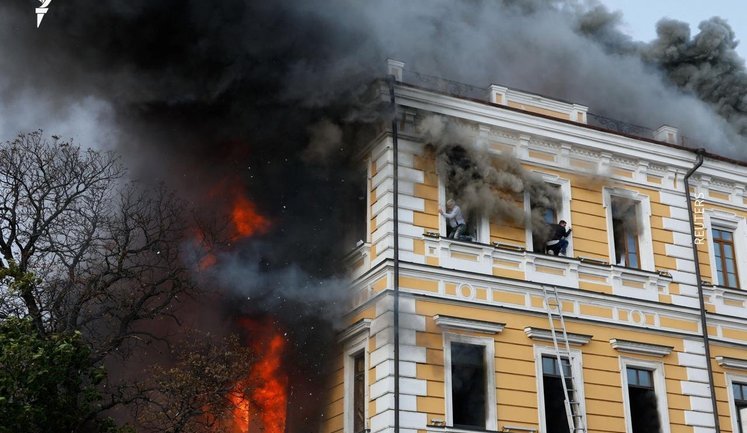
 Third phase of Operation ’Vivaldi’, Russian strike on building of National Academy of Sciences of Ukraine, and government’s prioritisation of public spending: top news stories for 28 September. VIDEO The Third Army Corps has liberated a further 51 km² of Ukrainian territory and taken more than 250 occupiers prisoner as part of Operation ‘Vivaldi’. Russia has struck the building of the National Academy of Sciences of Ukraine. The Cabinet of Ministers has set spending priorities due to the... 1 587 4
 Parks, squares and new construction projects to be postponed: government sets state spending priorities The Ukrainian government has set priorities for state spending amid difficult public finances and delays in receiving some planned international funding. 4 670 62 Previously in trend: Financial assistance to Ukraine Spending restrictions
 Rada meeting was canceled without warning because part of government had left for summit in Bukovel, - Siumar A session of the Verkhovna Rada was canceled without notice because some government officials had traveled to Bukovel for the Carpathian Summit 12 306 85 Previously in trend: Verkhovna Rada session
 Government has approved new rules for operation of railways and stations during ’yellow’ and ’red’ air raid alerts The Cabinet of Ministers of Ukraine has approved new rules governing the operation of the railways and railway stations, depending on the level of air threats. 2 867 3 Previously in trend: Declaration of an air raid alert Shelling of Ukrzaliznytsia facilities
 Cabinet of Ministers to allocate UAH 789 million for anti-drone protection of roads – Koretskyi The Cabinet of Ministers will allocate 789 million hryvnias from the reserve fund for anti-drone protection of roads that are a priority for defense and logistics. 663 5 Previously in trend: Anti-drone protection
 Situation with state finances is close to critical – Koretskyi Prime Minister Serhii Koretskyi said that the situation with state finances is close to critical and once again called on all MPs to pass as soon as possible the bills on which the receipt of international financial assistance depends. 8 878 88 Previously in trend: Budget-2026
 Cabinet of Ministers has once again approved taxation of parcels worth up to 150 euros The Cabinet of Ministers of Ukraine has once again approved draft legislation on the taxation of international postal and express consignments valued at up to 150 euros. 12 676 42 Previously in trend: Tax changes
 New alert levels to be introduced in Ukraine to indicate threat from Russia. There will be changes for Kyiv – Zelenskyy President Volodymyr Zelenskyy announced new rules for responding to Russian aerial attacks, including measures concerning Kyiv’s security. 6 440 80 Previously in trend: Shelling of Kyiv Russian aerial attacks
Government is introducing strict austerity measures for budget funds not earmarked for defence purposes, - Koretskyi Prime Minister Serhii Koretskyi announced that Ukraine requires $27 billion in emergency funding to cover the defence budget deficit 5 443 67 Previously in trend: State budget
 Government terminates mandate of Sense Bank Supervisory Board Chair Hladyshenko The Cabinet of Ministers terminated the mandate of Mykola Hladyshenko, chair of the Supervisory Board of Sense Bank, amid NABU’s Forest Gump and Themis special operations. 1 172 10 Previously in trend: Forrest Gump operation
 Government suspends Sense Bank Supervisory Board Chair Hladyshenko amid NABU investigation – Koretskyi The government has decided to suspend Mykola Hladyshenko, chairman of the supervisory board of state-owned Sense Bank, and has also initiated the suspension of Oleksii Stupak, chairman of the bank’s management board. 2 165 12 Previously in trend: Forrest Gump operation
 Degeneration of power. How Zelenskyy topped out and machinery of government bottomed out – media President Volodymyr Zelenskyy has failed to overhaul the system of public administration and remove incompetent officials, leaving Ukraine in a governance crisis. 6 300 58 Previously in trend: Staff changes
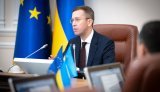 Cabinet of Ministers has approved Government’s Programme of Activities: document has been submitted to Verkhovna Rada The Cabinet of Ministers has approved the Government’s Programme of Activities and, within the timeframe laid down by law, has submitted it to the Verkhovna Rada for consideration. The document sets out the main objectives, specific tasks and individual responsibilities for their implementation. 764 8 Previously in trend: Government action programme
 State Tax Service to transfer data on all men aged 18 to 60 to Defence Ministry The Cabinet of Ministers of Ukraine approved the Procedure for maintaining the Unified State Register of Conscripts, Persons Liable for Military Service and Reservists (USRCPLMSR), as well as the Procedure for consuls abroad to verify the validity of military registration documents. 37 0
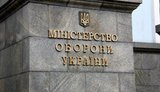 Cabinet of Ministers appoints Mykola Shvydkyi as Ukraine’s deputy defence minister The Cabinet of Ministers has appointed Mykola Shvydkyi as Deputy Minister of Defence of Ukraine. 3 002 6 Previously in trend: Defense Ministry appointments
 Cabinet of Ministers has approved tax on parcels The Cabinet of Ministers has submitted a draft bill to the Verkhovna Rada to amend the rules on the taxation of imported goods. 6 693 31 Previously in trend: Tax changes
 Cabinet of Ministers appointed Liubov Halan and Serhii Boiev deputy defence ministers On Wednesday, 29 July, the Cabinet of Ministers appointed Liubov Halan and Serhii Boiev deputy defence ministers of Ukraine. 5 369 18 Previously in trend: Defense Ministry appointments
Koretskyi is dissatisfied with ’resilience plans’: Cabinet of Ministers is demanding urgent reports The government is demanding that ministries and agencies submit reports as a matter of urgency due to their failure to meet sustainability targets. 4 113 39
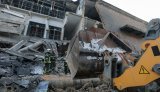 Next winter could be very difficult, - Zelenskyy Next winter could be very difficult for Ukrainians due to Russia’s attacks on Ukraine’s energy sector. 6 171 58 Previously in trend: Attacks on the energy sector Personnel changes in government
 We are resuming work of Coalition Council to strengthen coordination between government and parliament, - Koretskyi Prime Minister Serhii Koretskyi held a meeting with Verkhovna Rada Chairman Ruslan Stefanchuk, during which they identified specific steps to strengthen coordination between the government and parliament. 952 12 Previously in trend: New Cabinet
 Khmara officially becomes acting defence minister on 20 July – Cabinet of Ministers Former acting head of the Security Service of Ukraine Yevhenii Khmara officially took over as Acting Minister of Defence of Ukraine today, 20 July. 2 733 16 Previously in trend: Defense Ministry appointments Fedorov’s resignation
 Cabinet of Ministers appoints Khmara acting defence minister and Sybiha acting foreign minister The government has appointed Yevhenii Khmara acting defence minister and Andrii Sybiha acting foreign minister. 3 381 27 Previously in trend: Defense Ministry appointments
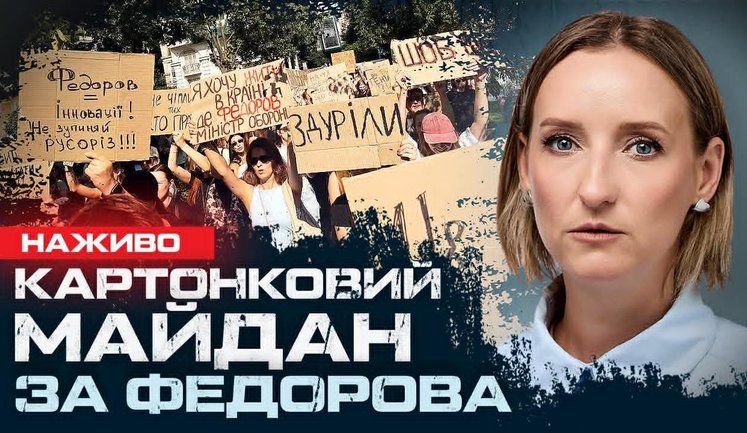
 Protests in support of Fedorov. New government. Case of former 155th Separate Mechanised Brigade commander Luchanov | Iryna Romaliiska. VIDEO Watch a live broadcast with journalist Iryna Romaliiska discussing the approval of the new government, Mykhailo Fedorov’s resignation as defence minister, and the high-profile case involving Stanislav Luchanov. 1 358 2 Previously in trend: New Cabinet Brigade Commander Luchanov Fedorov’s resignation
 Zelenskyy offered Fedorov post of Ukraine’s prime minister, but he turned it down – The Economist Ukrainian President Volodymyr Zelenskyy offered Mykhailo Fedorov the opportunity to head the new government on the day the resignation of Yuliia Svyrydenko’s Cabinet was announced. However, the then defence minister declined the post. 6 415 44 Previously in trend: New Cabinet Fedorov’s resignation
 Rada appoints Koretskyi’s new government lineup. VIDEO The Verkhovna Rada has approved the new lineup of the Cabinet of Ministers of Ukraine. 9 478 31 Previously in trend: New Cabinet
 Koretskyi submits motion to Rada to appoint members of new Cabinet of Ministers A submission from Ukrainian Prime Minister Serhii Koretskyi proposing appointments to the Cabinet of Ministers of Ukraine has been received by the Verkhovna Rada. 5 339 20 Previously in trend: New Cabinet Personnel changes in government
There may not be vote on defense minister today. "Servants of the People" to hold separate meeting, - Vasylevska-Smahliuk (updated) It is likely that the Verkhovna Rada will not vote on the appointment of a new Ukrainian defense minister on July 16. 2 195 22 Previously in trend: New Cabinet Fedorov’s resignation
 Rada has appointed Koretskyi as Ukraine’s new Prime Minister. VIDEO The Verkhovna Rada has appointed Serhiy Koretskyi as the new Prime Minister of Ukraine. 3 511 27 Previously in trend: New Cabinet
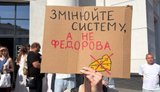 See you at rally: UNITED24 Media suspends publication of materials in protest against Fedorov’s dismissal Today, July 16, UNITED24 Media is suspending all publications in protest against the dismissal of Mykhailo Fedorov as defense minister. 2 195 4 Previously in trend: Fedorov’s resignation
 "Eurosolidarity" has called on Koretskyi to reinstate Fedorov in government "European Solidarity" has called on the candidate for the post of Prime Minister, Serhii Koretskyi, to reinstate Mykhailo Fedorov to the government. 2 990 42 Previously in trend: Fedorov’s resignation
 Verkhovna Rada Committee supports appointment of Koretskyi as Prime Minister The Verkhovna Rada Committee on State Building supported the appointment of Serhii Koretskyi as prime minister. 1 183 10 Previously in trend: New Cabinet
 Rada will vote on new defense minister after lunch, - Zhelezniak This morning, the Verkhovna Rada is expected to appoint Serhii Koretskyi as prime minister; the appointments of other ministers are expected after lunch. 5 221 31 Previously in trend: New Cabinet
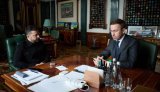 Zelenskyy has submitted proposal to Verkhovna Rada to appoint Koretskyi as Prime Minister The Verkhovna Rada has received a proposal from President Volodymyr Zelenskyy to appoint Serhii Koretskyi, head of Naftogaz of Ukraine, as Prime Minister. 2 485 24 Previously in trend: New Cabinet
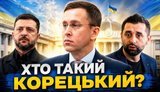 Koretskyi and new ZE-government / Polish frenzy over Volhynia / Chronicles of fried Russians / Uncensored. VIDEO A new analysis of the week’s main political events by journalist Maryna Danyliuk-Yarmolaieva. 3 801 3 Previously in trend: New Cabinet Personnel changes in government
Probable Koretskyi government: new ministries, Shmyhal stays, intrigue around Fedorov continues – Zhelezniak An updated list of potential appointments in Serhii Koretskyi’s future government has emerged. The options include the possible appointment of Mykolaiv Regional Military Administration head Vitalii Kim as minister for veterans and internally displaced persons, replacing Nataliia Kalmykova. The... 6 334 48 Previously in trend: New Cabinet
Zelenskyy names Koretskyi "best-prepared" candidate for prime minister President Volodymyr Zelenskyy has described Naftogaz of Ukraine CEO Serhii Koretskyi as the "best-prepared" candidate for prime minister. 1 583 46 Previously in trend: New Cabinet
Koretskyi outlined priorities of future government. Shmyhal and Berezhna will definitely remain in their posts, - Vasylevska-Smahliuk A meeting of the "Servant of the People" faction is currently taking place without President Volodymyr Zelenskyy in attendance. Prime Minister nominee Serhii Koretskyi is discussing his biography and his achievements in the corporate sector. 8 195 26 Previously in trend: New Cabinet Personnel changes in government
Today, "Servant of People" will nominate Koretskyi for position of prime minister, he has already initiated meetings with parliamentary factions, - Zhelezniak Today, July 15, at 9:30 a.m., the "Servant of the People" faction will convene and formally submit a motion to appoint Serhii Koretskyi as prime minister. 3 025 38 Previously in trend: New Cabinet Personnel changes in government
 Verkhovna Rada dismissed Prime Minister Svyrydenko Today, July 14, the Verkhovna Rada dismissed Prime Minister Yulia Svyrydenko. 2 722 29 Previously in trend: New Cabinet Personnel changes in government
 Svyrydenko on reasons for her resignation: President wants to renew government and strengthen specific areas The Verkhovna Rada Committee on State Construction has approved the dismissal of Yulia Svyrydenko from the post of Prime Minister of Ukraine. 2 349 29 Previously in trend: resignaton of Cabinet of Ministers
 Klymenko is leading candidate for position of defense minister, there are no votes in favor of appointing Poklad as head of SSU, - Vasylevska-Smahliuk Ihor Klymenko, the current head of the Ministry of Internal Affairs, is now the leading candidate for the position of defense minister following personnel changes in the Ukrainian government. 5 574 57 Previously in trend: New Cabinet Personnel changes in government
 Svyrydenko was to head Presidential Office and Budanov General Staff. Everything changed because Stefanishyna may face suspicion – source Ukraine’s current Prime Minister Yuliia Svyrydenko is resigning together with the entire Cabinet to continue her career as Ukraine’s ambassador to the United States. Her independent personnel appointments (Kachka, Sobolev and Berezhna) and support for the dismissal of Andriy Yermak from the... 9 576 30 Previously in trend: New Cabinet
Naftogaz chief Koretskyi 90% certain to be approved as head of new Cabinet of Ministers – sources The current chairman of the board of Naftogaz of Ukraine, 48-year-old Serhii Koretskyi, is the sole candidate for the post of prime minister of Ukraine, with the probability of his appointment estimated at 90%. 2 621 44 Previously in trend: New Cabinet Personnel changes in government
 There were only 192 votes in favour of Cabinet reshuffle in Rada. Koretskyi is only candidate for Prime Minister, - Bereza Former Member of Parliament Boryslav Bereza has stated that, as things stand, there are not enough votes in the Verkhovna Rada to bring about a change of government. 3 613 23 Previously in trend: New Cabinet Staff changes Personnel changes in government
 Friz on change of government: Ukraine needs professional ministers, not yet another reshuffle For the "European Solidarity" parliamentary group, the key factors are the professionalism of the candidates for government posts and a clear action plan for the Cabinet of Ministers. 1 299 12 Previously in trend: New Cabinet
 Zelenskyy met with Shmyhal: They identified the areas to focus on in coming months. PHOTOS Today, 12 July, President Volodymyr Zelenskyy heard a report from Energy Minister Denys Shmyhal. 1 764 24 Previously in trend: New Cabinet
Page 1 of 24
more news