


Musician, actor, poet, Junior Lieutenant Oleh Kadanov: "Fact that I feel no remorse over occupiers killed doesn’t mean I won’t cry when I see skinny, exhausted dog left chained up somewhere near Kostiantynivka"
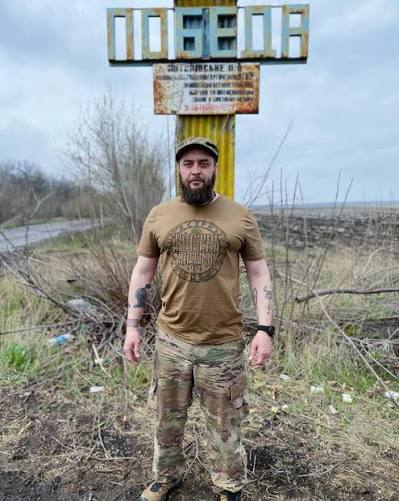
The founder of the band "Che" and a member of the "Mannerheim Line" project, in which he performed alongside Yevhen Turchynov and Serhii Zhadan, joined the Ukrainian National Guard’s "Omega" special forces unit in 2024. And although Oleh devotes a great deal of effort to eliminating the enemy, he also managed to publish a poetry collection this year.
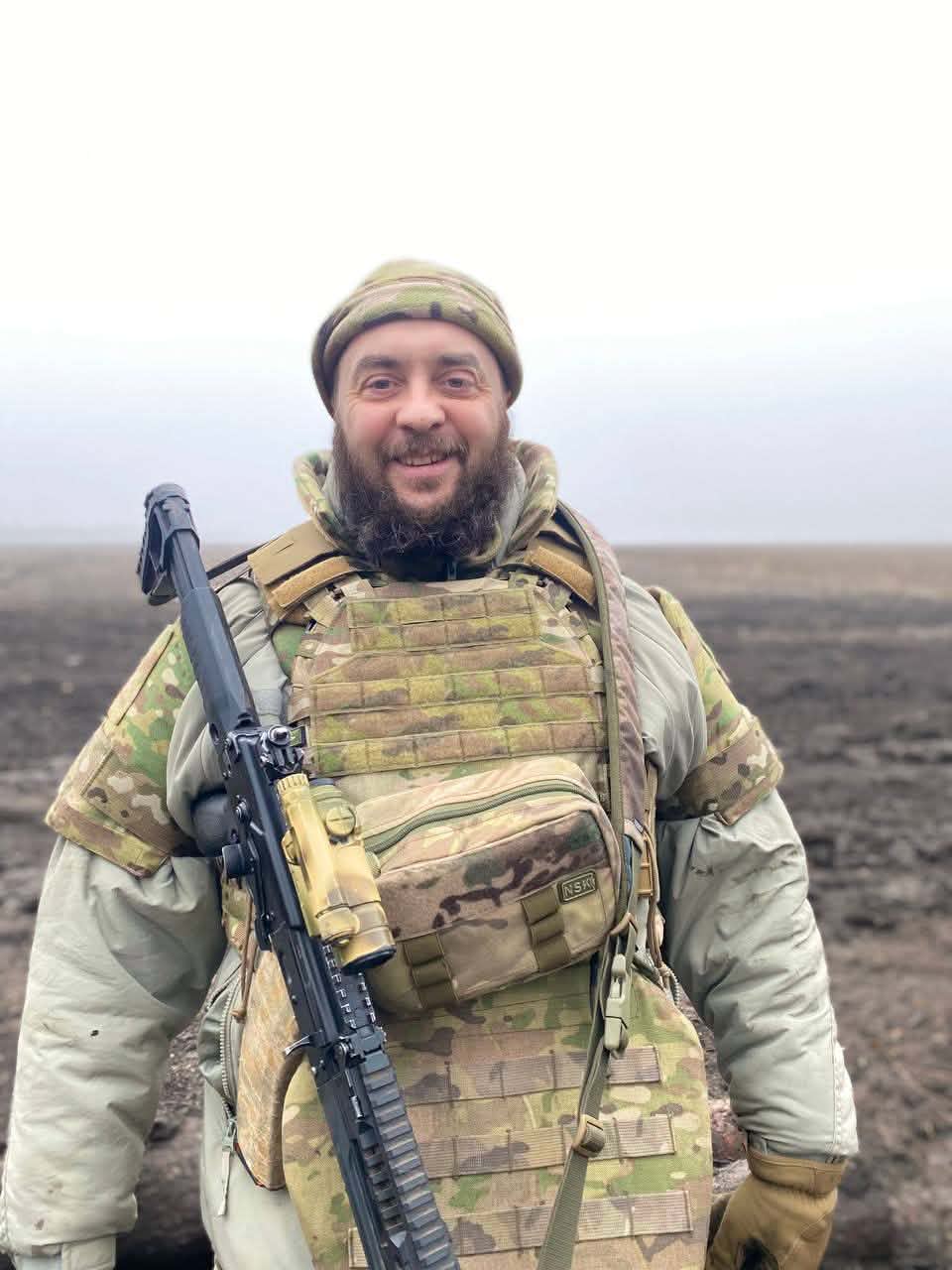
"THERE’S A TIME TO DRAW YOUR SABRE AND CUT DOWN MOSKALS, AND THERE’S A TIME TO PICK UP YOUR BANDURA AND THINK: WHERE AM I, WHO AM I, WHAT’S HAPPENING TO ME, WHAT’S HAPPENING TO ALL OF US?"
After performing at the "Literary Fair" in Kharkiv, Oleh was elated and deeply moved. How could he not be? He had managed to get away for a couple of hours from the unit where he carries out combat missions, and here was a packed hall singing his songs along with him. These very different worlds come together quite naturally in Oleh. So we began our conversation by asking whether he missed performing, making music and working in the studio.
- I really want to work on new material. Especially since we recorded some demos before the full-scale invasion. I have three or four very interesting projects tucked away that we could work on. But when? Where do we find the time to get together and start doing something? I record things with Stas Kononov from time to time. But that’s easier: he’s in Kharkiv most of the time, and when I get away from the Donetsk region to Kharkiv and have some time, we quickly arrange to meet and do something at the studio of Serioha Kondratiev, better known as Flanger. He’s always accommodating and has never turned us down. It’s easier for the two of us to coordinate. It’s harder with the "Mannerheim Line" project because Zhenia and Serhii are serving too, so finding a time when all of us can work in the studio is almost impossible.
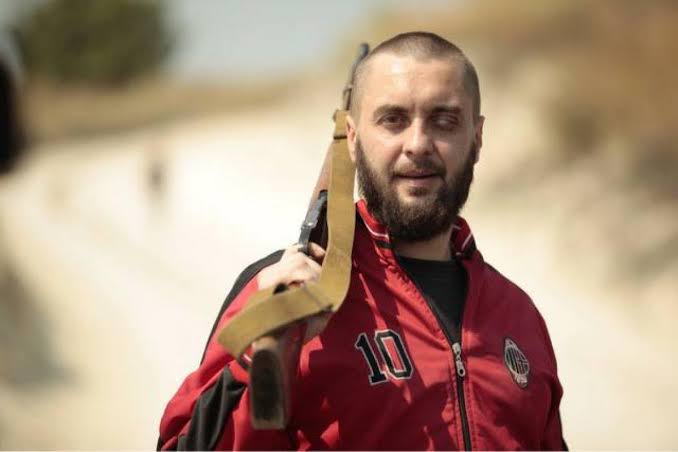
- Do you ever miss performing, the audience singing along, the warm atmosphere?
- Incredibly! You know, in 2022, when I became heavily involved in volunteer work, I couldn’t have cared less about creative work. It didn’t seem even remotely important to me. What mattered were requests from soldiers, finding the money, figuring out where to buy what they needed, and getting it to the guys at the front as quickly as possible. Anton Behmenych and I delivered it ourselves. It was non-stop, with no days off. So what creative work could there be? Sit down and write something? Was that necessary when we had to meet the army’s needs, because someone’s life could depend on it? There were times when we didn’t get somewhere in time, messed up, and then tried to call the people we hadn’t reached — no contact. We’d try to reach them through someone else, and they’d tell us: that platoon no longer exists… At moments like that, you feel utter despair because you’re the one who f…ked something up, who didn’t make it in time. And you think: "If I’d made it in time, could it have changed the course of events?" Like Bradbury’s story about the butterfly. Those were the thoughts going through my head then. And, of course, there was no room for creative work in any of it. But after I went to fight and spent a year at war, I realised I really, really wanted to return to creative work; it’s like therapy. I realised that everything happening in Ukrainian culture, and the rethinking of language, is a new experience in which you find new meanings and look for new imagery. You can’t apply the old yardsticks to everything you’re living through now; they don’t work. And that search is extremely important too. In other words, there’s a time to draw your sabre and cut down Moskals, and there’s a time to pick up your bandura and think: where am I, who am I, what’s happening to me now, what’s happening to all of us? And all of this is in the context of a protracted war, something our society hasn’t experienced for a long time, something this generation hasn’t experienced. This trauma is cumulative, and it’s unclear what to do with it. But at least asking ourselves questions about where we are, what point we’ve reached, and what’s happening to us is important. So, little by little, I’m returning to art. I’m grateful that my commander is accommodating and lets me go. I’m in a combat unit, after all; I’m in the thick of it. Just yesterday morning, we flew more than 50 kilometres into enemy territory. Admittedly, the wind and the conditions weren’t right yesterday, so we didn’t burn anyone up. But the day before, we did!
- You also published a poetry collection this year. Does it consist of new poems you wrote after 2022?
- Not only. Why is the collection called "Before Zero and After"? Zero is a point of reference. It’s 2022. But the collection also includes poems written in 2020 and 2021. When I opened my drafts in 2023, I saw how much they reflected that premonition of war that was simply in the air. Most of my writing is abstract, with images building on one another — a kind of stream of consciousness. But now, when I reread it, I think: wow! I’m not saying I’m a medium, but anyone who sensed it couldn’t help acknowledging it. So I put together this narrative: "before zero" is the section of pre-war poems, and "after" contains poems written in 2022–2024.
- How long did you go without writing anything?
- I still wrote something from time to time. Writing a text is much easier than composing a piece of music. I go to bed, and something is going round in my head. I take out my phone and write it down. The next day, I reread it and quickly edit a few things. And that’s it; I leave it there.
- So you don’t have periods when absolutely nothing comes to you?
- I don’t try to write during those periods. I’ve been doing creative work for so many years that I understand: sometimes it’s worth forcing yourself to write, but now isn’t one of those times. There’s plenty to do. If the writing isn’t coming, that’s fine; get on with other things. It’s still accumulating somewhere inside. And one day, something will demand to be written down.
- Was it difficult to find the time to put the book together?
- It wasn’t easy. I had a lot of poems written in 2019, but I used hardly any of them because they don’t resonate with how I feel now. The ones from 2021 really do. I compiled some of it, tried arranging it this way and that, and then, suddenly, it all came together into a very tightly woven narrative. Compared with my first book, where everything was very fragmented and scattered, this one is more structured… The poems are different, written at different times, but they came together into a single, unfolding narrative. And Mitia Fieniechkyn brought all of that out with his illustrations. They aren’t literal illustrations, but rather additions that deepen and expand my imagery and the world within the poems. That’s how it all came together. Mitia and I go back a long way. He designed all the album covers for "Orkestr Che", apart from the earliest ones, and then made an incredible number of posters for our concerts. So we’ve had this visual dialogue for a long time. Making the book with him was a joy because he pays very close attention to the texts and has a very poetic vision. He doesn’t like illustrating things literally. It’s about complementing each other, about synergy. I can’t say this is my book – it’s our book, mine and Mitia’s. It really is.
- People leaving the army or recovering from serious wounds are advised to write, to record their memories — as a way of finding themselves or reconnecting with themselves, of coping with PTSD. What do you think?
- Healing happens during the writing itself, because I’m rethinking the experiences that stay with me. But when the book came out, there was this sense that what was happening was unreal, almost fantastical. Because the vast majority of my reality is tied to the war. And I can’t allow myself to leave it all behind and return to creative work. Now is not the time.
"OUR ARMY ISN’T SMALL, BUT THERE ACTUALLY AREN’T THAT MANY PEOPLE DOING THE FIGHTING"
- How long have you been in the military?
- I’ve been fighting since the beginning of 2024. At first, it was under a black flag…
- Were you a pirate?
- I was learning, gaining experience in combat under the supervision of Tokha Spitsyn, my commander. May he rest in peace. In the summer, I started the paperwork, and in the autumn of 2024, I formally joined "Omega" and went for basic military training. After New Year, in early 2025, I was already carrying out missions under combat orders as an "Omega" soldier.
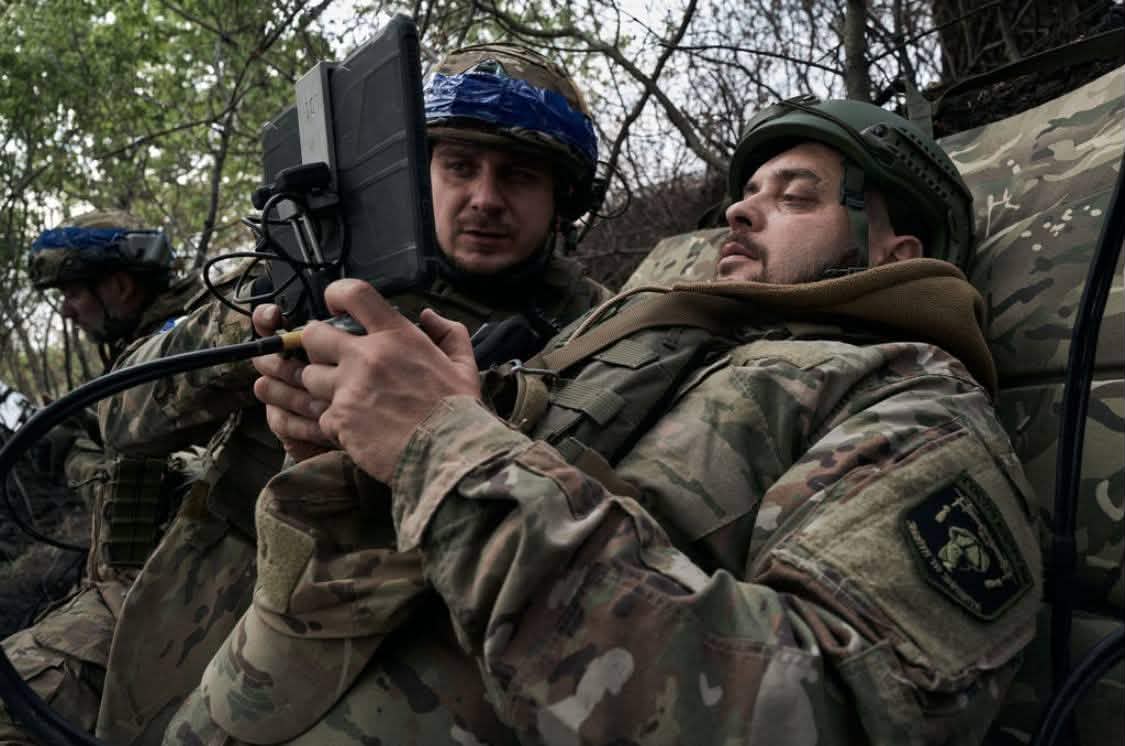
Our army isn’t small, but there actually aren’t that many people doing the fighting. I haven’t yet reached the level of exhaustion where I could stop taking part in combat and feel all right about it, look myself in the mirror with a clear conscience. I can’t do that yet. But at the same time, the volunteer in me hasn’t gone anywhere. I help not only "Omega" but also several other friends and units in the Donetsk region who are fighting hard in the Lyman sector. You simply can’t do otherwise once you know they need something and you know where to find it and how to get it to them. I put the money that comes my way from time to time to use, pass it on to my comrades, and report back to the donors. The volunteer work continues. It’s very important. And I’m not the only one in the military doing this. Everyone who came from volunteering and still has some resources continues to volunteer. There are so many needs, and the war changes so quickly that we constantly have to find new solutions. No army can keep pace with that because it’s an unwieldy machine. Although I can honestly say that many units respond quickly to challenges, overall there is still a lot of catching up to do. I don’t think conditions will ever be ideal.
- There will always be something missing…
- Yes, which is why these volunteer resources are so badly needed. Right now, I’m very grateful to Serhii Sternenko, who has stepped in to help our unit. And we asked for something he doesn’t usually deal with. His guys immediately said, "We don’t provide additional equipment for drones." But that’s exactly what we need. We spoke to Serioha, and he got involved. I’m very grateful to him for that. The band "Kurhan & Agregat" also helps my unit. And the "Art-Dacha" charitable foundation supports us regularly. In turn, whenever we can, we also support our friends in neighbouring units. We’re all fighting the same war. Of course, there’s competition; there are e-points. I’m not particularly keen on that whole thing. On the one hand, the e-points system seems to motivate soldiers, but on the other, it creates this stupid competition between neighbouring units. Because of that, sometimes people don’t share information or equipment. But we need to support one another because we’re all working towards the same goal. The year 2022 showed that we’re much stronger together.
- Do you remember how you decided to go and fight? Or did the decision come very easily?
- You know, there were several factors. I understood all the risks. When we first went to the Donetsk region in late March 2022… Until then, we’d been in Kharkiv the whole time because all hell was breaking loose here. Every trip to the ring road was on a knife-edge because the whole area was under fire. Mortar rounds landed near us so many times. When I got back, there was this rush of endorphins: I survived, I survived! Every time, I was overjoyed. So the risks were always there, on every trip. In the winter of 2023, when we were going to Bakhmut, every trip into the city was very risky. But we knew what we were doing. Something else was harder for me. I was my own commander: as a volunteer, I decided for myself what to do and when. By deciding to join the army, I was choosing to restrict my own freedom. Like every creative person, probably, I value freedom enormously. I’d never worked for anyone else. But in the army, you have to accept that you’re no longer your own person. That was the hardest step for me. But at some point, I realised I had to go — there weren’t enough people, we needed to fight, and something had to be sacrificed. Did I have to sacrifice my own freedom? Okay.
When did I make the decision? In February 2023, I was completely burnt out from volunteering, so I decided to take three or four days off and went to visit the Spitsyn brothers in Bakhmut’s industrial zone, just 700 metres from where small-arms fighting was already taking place. We flew drones from the industrial zone. I helped set up antennas and reload the drones. I watched how it all worked and learned.
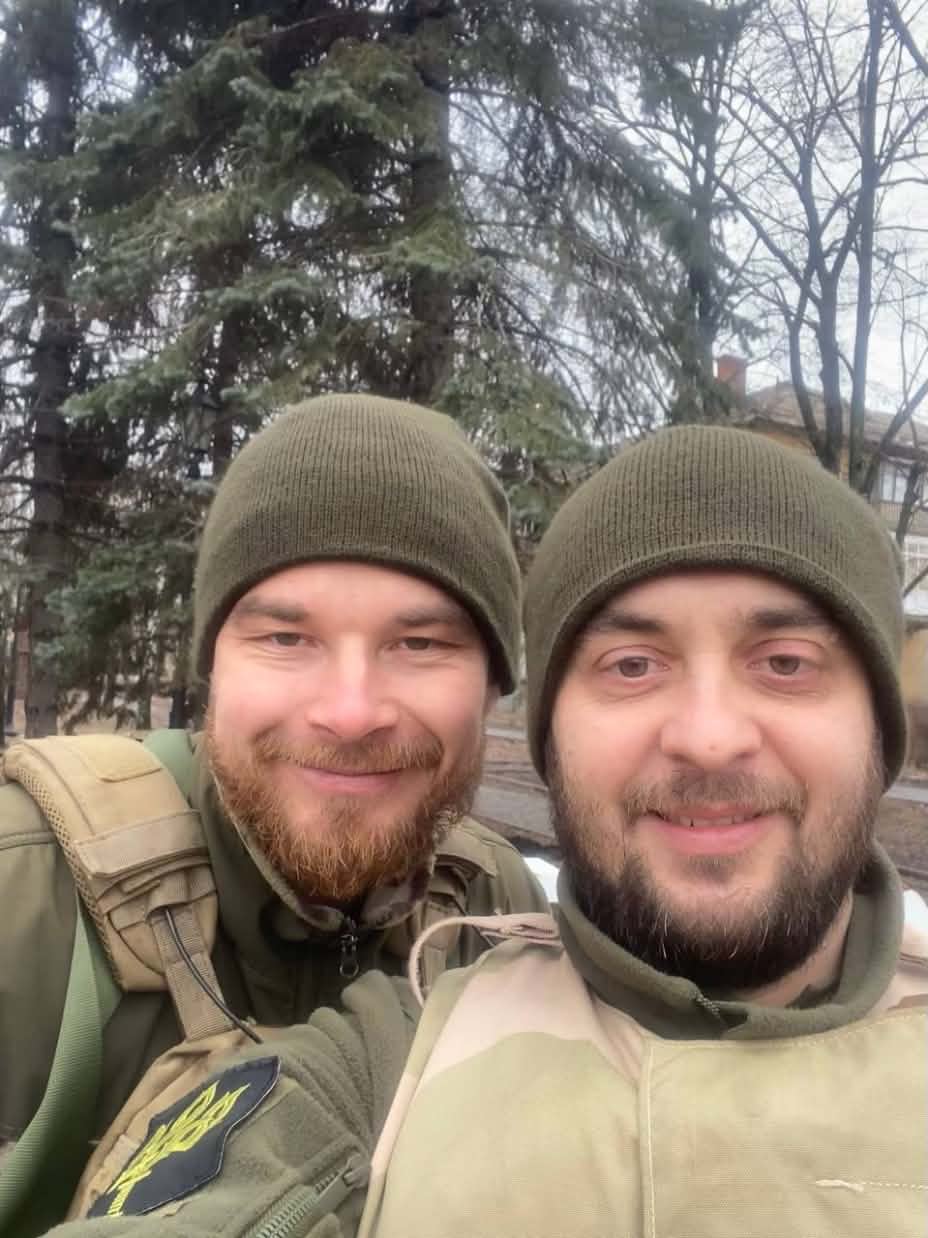
- An unusual choice of place to recharge…
- Subconsciously, I was looking for a place where I would feel whole. Nothing in Kharkiv brought me any joy; everything felt very hard and bleak. Go somewhere in the Carpathians? I couldn’t even imagine it.
- Why?
- Things were difficult then, especially in Bakhmut. And to go away specifically for a holiday while fierce fighting was going on, while people you knew were fighting? It felt wrong somehow. That was when I realised: that’s it, I’m ready to join the "Peaky Blinders". They weren’t called that yet. Essentially, it was Anton Spitsyn and Oleksandr Spitsyn, with Tioma Fisun helping them out a little. The core was already there, but there was no unit as such.

- A family affair…
- Yes, a close-knit family affair. In the first days of March — the first or second — we got out of Bakhmut. Anti-tank guided missiles were hitting everything there by then, including the road to Khromove, but we made it out, and I returned to Kharkiv. And I realised: I’ll wrap up a few things now, because the volunteer work hadn’t gone anywhere, and start getting the paperwork sorted. But then I got caught up in it all again. Once, I was talking to Petro Sviatetskyi, callsign Avatar, who is now the chief sergeant of the 36th Marine Brigade. I told him I couldn’t seem to finish up my volunteer work so I could finally go and fight full-time, and he said: "You’ll never finish. You just have to put everything on hold and go and fight." I understood those words very clearly. And at the beginning of 2024, I signed up with "Omega".
- Was what you saw in Bakhmut and Khromove the most frightening thing you’ve experienced? Or was there something that affected you more?
- Well, it’s harsher near Pokrovsk now than it was in Bakhmut. The "Rubikon" units are operating there. Throughout 2025, we fought on the side facing the Dnipropetrovsk region, near Mezhova. Even then, we’d go in to operate for a week and end up staying… I’ve read accounts of guys who didn’t leave their positions for six months; in my case, it was 28 days straight. We weren’t used to that; it’s not how we operate. But those were the challenges we faced in 2025.
- Where was that? In Pokrovsk itself?
- No, near Pokrovsk, on the side facing Kotlyne and Pidhorodetske. We went into a tree line and started digging in. On the first night, we slept right under the trees; after that, some of us flew drones while others dug.
It was really scary there. Every morning at four, four-oh-two, they fired a full salvo of Grad rockets at our tree line. Every single day. The tree line was fairly long, a kilometre, but each morning the rockets landed closer. By the time shrapnel started flying at us, we were more or less dug in; we’d made our holes. But the scariest part of all was when a tank started firing directly at us. You don’t hear it fire; you only hear the impact. And it was targeting us! I don’t know whether it was firing at random or whether it just happened that way, but we counted eight shots. It was terrifying. One crater was 12 metres away from me, and I was slightly deafened by the blast. Shrapnel damaged some cables and the antenna. But overall, nothing too serious happened. A tank, though — that’s frightening. When artillery or a mortar is firing, or an FPV drone is coming, you can hear it all; you have some time to get your bearings and take cover. Unless it’s an FPV drone out in an open field, then you’re f#cked; it’s very, very frightening. That didn’t happen often, but the tank… I’m not ashamed to admit it, it’s terrifying.
"I KILLED ELEVEN ENEMY SOLDIERS IN A SINGLE DAY"
- How has the war changed over the past year? It’s changing faster and faster.
- The kill zone has expanded. Since spring, we’ve been operating systems that fly deep into enemy territory. It’s not entirely safe, because Lancets reach us, but it’s nothing like when we were flying Mavics. You hunt down an occupier and kill him with a dropped munition. By the end of 2025, my target tally had passed a hundred.
- Do you keep count?
- Gladly! I even kept a tally: on this date, this many. I killed eleven enemy soldiers in a single day — that was luck; things just worked out that way. And there are days when you attack and attack, and either the bomb goes off course or something else happens. Dropped munitions aren’t precision weapons; not everything depends on your skill. A slight gust of wind can affect the result… Dropping munitions has its own rules. Or the signal doesn’t get through. Some f#cker is walking across a field, and you’re flying above him, thinking: that’s it, you’re mine, darling! You keep pressing and pressing, but the release mechanism won’t work. And you almost want to cry because there’s nothing you can do! That happens too. But now there are fewer and fewer Mavic operators on the firing line. Of course, there are still some, but it’s great that there are longer-lasting batteries that let you fly reconnaissance or drop munitions from 15 kilometres away from the line of contact. New conditions and new rules of warfare are increasing the distances and expanding the kill zone, and there’s nothing you can do about it. No matter how skilled you are, if you give away your position, you’ll get blown to f…king pieces in an instant.
- Obviously, targeting enemy logistics reduces their ability to launch assaults. Is that more effective than killing them one by one?
- Yes. In spring, we started operating mid-range drones and achieved fairly good results. The Azov guys have excellent results, as do the Defence Intelligence guys; a lot of units are getting great results with mid-range drones. And we kept hoping those numbers would translate into fewer assaults. But at least in the Kostiantynivka sector, it didn’t really work out that way.
- That must have a cumulative effect too…
- Well, that’s what we hoped, but after three or four months, the results weren’t really noticeable. We ask the guys right there in the trenches: "So, has it got a little easier for you?" — "Not a f#cking bit!" Maybe that was just how things worked out in our sector. Maybe things have got easier for someone elsewhere. I really hope such massive strikes on logistics can’t fail to have an effect on the front line — they have to, they have to. Fewer and fewer people are reaching it, fewer and fewer supplies, yet they still somehow filter through and keep pressing. Although, to give credit where it’s due, we can see that the rate at which they capture territory and advance has fallen to a third or a quarter of what it was. Perhaps that’s precisely the effect — they don’t have enough resources to push with the same force and at the same speed as in previous years. Although, I repeat, things are very, very difficult for the guys on the front line. They don’t feel the difference. They say it’s just as hard as before.
- What have you destroyed that made you particularly happy? Apart from eleven enemy soldiers in one day, of course.
- During one of my first flights in spring 2024, when I was doing reconnaissance with Tokha Spitsyn, I spotted something under a tarpaulin beneath some trees through my Mavic’s camera. My more experienced comrade said: "It’s nothing; they’ve had some water delivered. Nothing to worry about." But I kept descending and taking a closer look for as long as the radio line of sight allowed. He started grumbling at me: "What are you doing? You’re going to get shot down!" I looked from a different angle, and there was a disposable launcher sticking out. I zoomed in and recorded it. Tokha flew out and set the weapons alight with his first FPV drone. We got very lucky; you can’t always hit the target with the first FPV. And then the explosions started! They went on for God knows how long. Serioha Sternenko posted that video because they were his FPV drones. As I understand it, the enemy had stockpiled a lot of weapons right there in the woods, and I spotted the cache. Tokha blew it the f…k up, and we disrupted their planned operation near Lyptsi. As a novice, I was absolutely delighted! My instincts, my gut feeling that it wasn’t water, had been right… Anyway, the secondary explosions were quite something. It was very cool.

- And now, are you finding anything interesting further behind enemy lines?
- So far, we’re mostly taking out pickups. But we also had a KamAZ truck blow up. It made our day because it was literally torn apart. We flew in with the next little aircraft and saw that some colonels had arrived. So we sent another one in… We hit a pickup nearby. The two vehicles created a traffic jam. Every time we flew up, there was some activity there, and we struck… It was a great, productive day.
"WAR IS NOT OUR CHOICE"
- Time comes up a lot in your work, in your songs and poems. Do you experience it in a particular way?
- We all experience it differently in different situations. Sometimes it coils up like a spring and just rushes past; at other times, it drags unbelievably, and you think: come on, an hour must have passed by now, but it’s only been five or seven minutes… I try to convey those feelings in my writing. Generally, time is a resource you always seem to be short of, something you want more of. It’s a treasure you often can’t help thinking about. I often think about lost time. Remember Schwartz’s fairy tale about lost time? Time is this substance, this ether that fascinates you and makes you think about it or regret missed opportunities. It’s the never-ending story of my relationship with time.
- Do you feel that the war is taking away your time, time that is important and precious to you?
- No, no. It’s an incredible experience, and I’ve met incredible people whom I would never, under any circumstances, have met in peacetime. Well, most likely, there’s a 99 per cent chance our paths would never have crossed, because we come from such different walks of life.
War isn’t our choice. It’s an objective reality that we can’t pause, end, stop, or ignore. Serhii Zhadan and I spoke about this recently, and he pointed out that many people involved in the war seem not to notice books, songs, or poems about it, as though they’re afraid to immerse themselves in it completely. I find that very strange. Because this is a given, this is the reality of our lives, and there’s no escaping it. I find it strange and sad that some people try not to notice it at all.
- Do you sing while you work?
- Very rarely.
- But it happens?
- Of course.
- What might you sing?
- Some tunes, two or three words, or complete gibberish, a string of words. Incidentally, a video recently came out for my new song, whose chorus I came up with more than ten years ago. It goes: "I can f#cking steal, I can f#cking lie." It’s about the corruption in our society, which never seems to stop being relevant. And now, during the war, it’s more painful than ever.
- What have you learned about yourself during the war? Have you changed? How do you feel?
- Before the full-scale invasion, I saw myself as a creative person; my administrative abilities were close to zero. When I started volunteering, I fought tooth and nail to raise the money we needed and came down hard on people to make sure they honoured their commitments. That Galician vibe especially pissed me off: you order something from Zakarpattia or Prykarpattia, and they tell you, "Well, we’ll do it tomorrow…" For f#ck’s sake! We need it now. It was through volunteering that I realised I could be a tough administrator. That happened when I felt responsible for other people’s lives, my comrades, people I knew. Not once did it even occur to me to say: well, that didn’t work out, sorry, guys… I got things done; I fought tooth and nail.
I’m surprised those abilities never showed themselves when I needed to solve my own problems or sort something out for my projects. I was embarrassed to say: "Guys, this is our fee… Travel and meals need to be covered…" Now I realise I had it wrong. There’s a spiritual side, and that doesn’t go away. But there’s a material side to us too, and that’s also very important. There’s nothing to be embarrassed about. I’ve thought all of that through very differently during the full-scale war.

And another thing… I thought: once I kill my first occupier, I’ll probably dream about him, I’ll be distressed, perhaps I’ll throw up, like they describe in books. You have no idea how you’ll react. But… Yes, I find it unpleasant to watch them suffer if I haven’t managed to kill them with the first dropped munition, and to record it all. I get no pleasure from it; I want him to die quickly and for the whole thing to be over for him. And for me, too, accordingly. But I have no remorse about having killed someone. I eliminated an occupier who wants to destroy us on our own land. That was a revelation to me: I feel absolutely no shame about it; I’m indifferent. I’m not horrified that I’ve killed a certain number of occupiers. It’s all fine; I’m doing my job.
- Tell me, do you know where your own Mannerheim Line runs, as you sang in the song based on Zhadan’s poem?
- (Laughs.) It’s a very crooked, winding line. But it always runs within you. When I thought about Serhii’s words, I imagined that line as a boundary. Every day, we choose between one thing and another, and that line of choice never goes away; it stays with you all the time.
- A choice between what and what?
- Often, it’s a choice between doing what’s right and doing what benefits you. But, strange as it may seem… I absolutely love the Strugatsky brothers. They’re among the writers I can’t write off, no matter who criticises me for it. They gave me a great deal. In one of their books about Kammerer, "The Beetle in the Anthill", I think, there’s a quote: when choosing between what benefits you and what is right, always choose what is right. That’s me. It’s about empathy for those who are weaker, for animals. In other words, it’s very important not to become hardened during the war. The fact that I feel no remorse over the occupiers killed doesn’t mean I won’t cry when I see a skinny, exhausted dog left chained up in some village like Serhiivka. That would hurt me deeply, and I don’t want to become hardened to the suffering of others, which, again, makes me feel human. As long as I’m doing something to prevent that suffering, I remain human.
P.S. During our conversation, a woman approached us. She apologised for interrupting and asked Oleh to remind her of a poem she couldn’t find; she remembered only a few words. Oleh immediately recited it to her. I’d like to quote it here:
This is a day unfolding nowhere once again,
a shadow that has swallowed its own footsteps,
a sky that is both old and young,
a minute that has stopped behind the year’s back.
A question that has backed itself into a corner,
like perfection that has fashioned itself.
This is the silence that stole and swallowed the first cry,
this weakness that is your greatest strength.
Violetta Kirtoka, Censor.NET


