


"If Russia attacks, NATO will wipe out Königsberg": Interview with former Latvian Defence Minister Pabriks
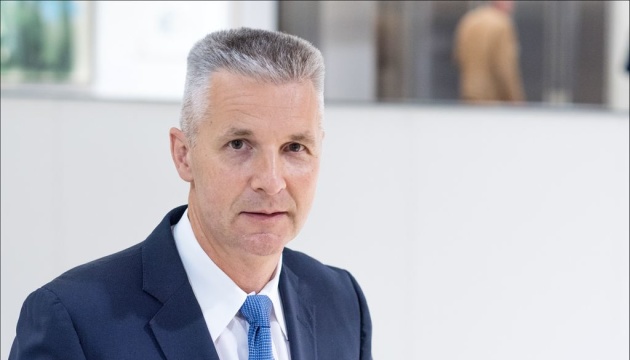
Artis Pabriks is someone often described as a "friend of Ukraine". I interviewed him in 2022, a month before Russia launched its full-scale invasion of Ukraine. At the time, many still did not believe it could happen. Pabriks was Latvia’s defence minister. He not only believed it was possible but had already secured US approval to transfer Stinger man-portable air defence systems (MANPADS) to Kyiv.
He is a Latvian politician and political scientist who has served twice as Latvia’s defence minister, as well as deputy prime minister and a member of the European Parliament. He now heads the Northern Europe Policy Centre, a think tank specialising in defence and security. He also heads the Latvian Association of Military Technologies, Drones and Robotics. He is known for his firm stance on Russian aggression against Ukraine.
We spoke to him this autumn amid escalating tensions along Russia’s borders with NATO countries and constant threats from the Kremlin. On 30 September, the Russian Federation officially warned NATO that it was prepared to use its entire arsenal, including nuclear weapons, in response to any attempt to "isolate" Kaliningrad. The following day, Vladimir Putin personally reiterated the threat at the Valdai forum. Meanwhile, Russian Foreign Ministry spokeswoman Maria Zakharova said that Moscow considered European companies producing weapons for Ukraine to be potential military targets. Against this backdrop, Latvian President Edgars Rinkēvičs said there were no legal obstacles to stationing nuclear weapons in Latvia, although no specific talks were currently taking place. Lithuania, meanwhile, is moving towards lifting its constitutional ban on stationing nuclear weapons. The United Kingdom has also proposed extending its nuclear deterrent to the Baltic states and Northern Europe.
ASSESSING TRUMP’S ACTIONS
– Artis, how do you assess the US president’s actions at this point?
Well, overall, we can see that Trump is siding with Russia. Of course, we do not know all the facts. I do not know all the circumstances. But if it is true that the United States has stopped sharing intelligence with Ukraine, if it is true that the operation of Starlink’s military segment in Ukraine is also being restricted, then it is absolutely clear: if you are not supporting Ukraine, you are supporting Russia.
And if you support Russia, you must remember that Russia is an ally of Iran. Russia also poses the main threat to all NATO countries and US allies. So this policy actually runs counter to the interests of Europeans and NATO allies. We can only hope that it ends as soon as possible. The US Senate and Congress can also put a stop to it. Otherwise, America will, unfortunately, find itself on the wrong side of history and on the opposite side from its allies.
"RUSSIA’S AIM IS LESS TO CONQUER THE BALTIC STATES THAN TO BREAK UP NATO": WHY NATO IS NOT RESPONDING TO RUSSIAN PROVOCATIONS
– Artis, in 2022, you were among those who believed Russia was preparing to attack Ukraine. Do you now believe Russia could attack the Baltic states in the near future?
Theoretically, anything is possible. And if we live next to a country like Russia, we must always prepare for the worst. Especially given our history in the Baltics, where we have already experienced such an invasion. We do not want it to happen again. And that forces us to prepare for anything. But having said that, I must also say that the main objective of the Kremlin, Putin and the Russian elite, if we can call it that, is probably not to conquer Latvia, Estonia, Lithuania or Poland. I think it is very important to them that an organisation like NATO should simply fall apart. They want the West and Europe to be worse off than Russia itself. Because Russia accounts for just 2–3% of the global economy. It cannot build up its own strength to influence global politics, but it can make things worse for others. In other words, if you have no cows and your neighbour has three, you need to get rid of one or two of theirs, and you will feel better.
I think Russia will continue to escalate. But as we can see, this escalation is directed not only against the Baltic states but across Europe and around the world. Wherever they see an opportunity, they strike.
– If, God forbid, something does happen, do you expect the United States, especially now with Trump in charge, to come to Latvia’s defence?
You know, it is one thing to say they will come to our defence. The questions of to what extent, when, and with what forces are another matter.
– Yes, I mean militarily, of course. Will they send troops? Will they send weapons? Will Article 5 be invoked? (Article 5 of the North Atlantic Treaty enshrines NATO’s core principle of collective defence: "an armed attack against one or more of them in Europe or North America shall be considered an attack against them all" - Ed.)
It is important to us that all this assistance arrives as quickly as possible, from the very first minute. But let me remind you of something about our NATO membership: an international brigade is stationed in Latvia, including Canadians, Italians and Poles. Looking at the war now being fought on Ukrainian soil, you could say it is only one brigade. But that brigade will be fighting from the very first minute, and it will also suffer casualties. And then the question is: how will the Alliance’s leaders, the politicians in their own countries, explain that we are simply going to hand over, say, 50 square kilometres of Latvia to Russia and do nothing about it?
I think Russia hopes it can seize five kilometres there without triggering a major war. That, I think, is precisely why there have been all these hints about Königsberg. The message is that if the West isolates or attacks Königsberg, nuclear missiles will follow. To return to your question about Trump: looking at how Trump treats Ukrainians and how his people deal with Russia, public trust in the Americans has, of course, fallen in our country. Putin is counting on that too. On the other hand, elections are approaching in America as well. And we know from opinion polls that 75% of Americans are still willing to defend their friends in the Alliance.
– You have already mentioned Königsberg/Kaliningrad. Putin said that if the West tried to "isolate" Kaliningrad, Russia could respond with nuclear weapons. Do you see this as a genuine warning that Russia is prepared to use nuclear weapons, or more as blackmail?
I think it is primarily blackmail. Putin and the others there understand the mood in Western Europe very well: people want to live as they did before, they want to live well, and they do not want to think about war and problems. On the other hand, I can also imagine how the armed forces and institutions in those countries think: they have a more or less accurate understanding of what Russia wants. The question is how and when to respond. Because the problem has been that Western countries have consistently responded very mildly to the operations Russia has carried out and continues to carry out on their territory. And this…
– Which operations do you mean specifically?
Well, for example, the drone incident in Leipzig (a drone carrying explosives was found at Leipzig Airport near a Ukrainian aircraft carrying ammunition - Ed.), the cables, the arson attacks, and so on…
– There were also explosions at arms depots in Czechia, and in Bulgaria…
Yes, that is exactly what I mean. There has been no joint NATO response so far because the decision-makers say: let us not escalate. They do not understand that by failing to respond with concrete, firm action, they are actually helping Russia escalate. Because Russia understands strength.
"RUSSIANS SHOULD NOT BE GIVEN TOURIST VISAS TO EUROPE. HOW IS THAT FASCISM?": HOW NATO SHOULD RESPOND TO RUSSIAN PROVOCATIONS
– If it were up to you, how would you decide NATO should respond to, for example, a Russian arson attack or an explosion at a military facility in Europe?
There are many possible asymmetric responses, and all our intelligence services know about them. There are also political responses. But I still do not understand why we cannot decide to stop trading gas or fuel with Russia altogether.
– Well, the answer is that the public would suffer, and people would dislike their politicians and would not vote for them.
That is the wrong policy because Latvia, for example, buys neither gas nor fuel from Russia, and we are doing fine. We find ways to manage. A second area for an asymmetric response is visas and tourism. We should simply stop issuing visas to Russians altogether. Russians should not be travelling to Europe.
– I will respond to that idea right away! But let us make sure we come back to asymmetric responses. You have already named two…
Yes, that is not all. There is much more that can be done.
– I understand, but let me respond to the point about visas for Russians right away. The so-called Russian opposition, or "good Russians", if you prefer, say this is fascism and a violation of their rights solely because they were born in that country. They say you are banning them from receiving visas solely because of their passports.
There is a difference between granting asylum in a European country to someone fleeing Russia, for example, and tourists simply coming to holiday in Sicily, Greece or Spain. How is that fascism? This country is waging a war! I somehow cannot imagine Germans coming to London to do some shopping in, say, 1941. Or saying: it is other Germans who are fighting, while we are just going for a stroll along Brighton Beach. Or travelling to America for a little holiday in California. How is that possible?
– Returning to the asymmetric responses you think NATO could use. You have named two: stopping purchases of Russian energy and refusing to issue visas to Russians. What others are there?
There are also various special operations and other types of operations. Do you remember what happened in Syria, for example? There were Russian mercenaries there. The Americans asked the Russians: "Are these yours?" They replied: "No, they are not ours." Well, if they are not yours, that is it; they are gone. There are also various cyberattacks and so on. I think we simply need to send signals: guys, if you behave like this, we have ways of exerting pressure on you too.
– Why do you think the West chooses not to take that approach?
Because they are not prepared to make fundamental decisions, because they have forgotten what a crisis really means. They think it will somehow go away on its own, like a runny nose.
"NATO TROOPS WILL WIPE OUT KÖNIGSBERG FIRST": WHAT PUTIN MEANT
– We have already discussed how Putin and Russian diplomats mentioned Kaliningrad. Specifically, they said they were prepared to use nuclear weapons if the West "isolated Kaliningrad". What is this about?
If Russia wanted to start a war against the Baltic states, the first region to find itself in a very, very difficult situation would be precisely the former Königsberg.
– So there is the Suwałki Gap there (a strategically important stretch of the border between Poland and Lithuania, approximately 65 km long, separating Russia’s Kaliningrad region (an enclave) from Belarus - Ed.). What could happen there?
We have always assumed that if such a war broke out, Russia would cut off the Suwałki Gap. But somehow we do not consider that if Russia attacks, the first thing that happens will be that Königsberg is wiped out. And there will no longer be a Suwałki Gap there.
– Wiped out by whom?
By NATO troops. Poland, Lithuania, and all the others are there. An enclave like that (Kaliningrad — Ed.) cannot exist on its own. And I think that is precisely what Putin was hinting at. He was saying: you know, if something happens, do not even think about attacking Königsberg.
– So you mean that if Putin stages some kind of provocation, NATO’s first response will target Kaliningrad–Königsberg? And that is what Putin was talking about?
Well, that is how I understand it, yes.
"WE TOO ARE COUNTING ON THE WEST’S NUCLEAR UMBRELLA": SHOULD NATO NUCLEAR WEAPONS BE STATIONED IN THE BALTIC STATES?
– Artis, Russian Foreign Ministry spokeswoman Maria Zakharova says European factories producing weapons for Ukraine could be considered military targets. Latvia has many such companies. As the head of Latvia’s association of arms manufacturers, you know the situation from the inside. Have these statements by Zakharova caused concern among your defence companies? Are they preparing for possible acts of sabotage or strengthening their security?
We do not need to listen to statements like that. If Russia wants to attack someone, that is who it will target. All these companies knew this three years ago, so there is nothing new here.
– Your president says there are no legal obstacles to stationing nuclear weapons in Latvia. Lithuania is lifting its constitutional ban on stationing nuclear weapons. In your view, should NATO nuclear weapons be stationed in the Baltic states?
The question is not whether there are one, five or ten bombs in Latvia or Lithuania. The question is whether the Baltic states have guarantees of nuclear protection. In other words, if action is taken against the Baltic states, we too are counting on the West’s nuclear umbrella. Since we are close to the Russian border, we do not actually need nuclear missiles or anything like that here. But if, for example, an aircraft carrying nuclear missiles needs to land at our airports, then of course it will.
– And what does it mean when the United Kingdom proposes extending its nuclear deterrent to the Baltic states and Northern Europe?
I assume this is about providing nuclear alternatives for other European countries if, for example, the American option is unavailable. Last year, the Americans told the Europeans, primarily those in Western Europe: "You know, you have enough money yourselves. You should be able to defend yourselves with conventional weapons." And in principle, I agree with that. It is right. Europe needs to get its own affairs in order. At the same time, however, the Americans said they would provide Europe with a nuclear umbrella through their arsenal. But given that transatlantic relations are not exactly ideal at the moment, both France and the United Kingdom are talking about extending the protection offered by their national arsenals to other European countries, such as the Baltic states.
– So the United Kingdom is saying: "Putin, if you dare to attack Latvia with nuclear weapons, we will use our nuclear weapons against you if Trump stays silent"?
Yes, we can use them that way.

FIRST THINGS FIRST. CORRUPTION IN UKRAINE AND WESTERN SUPPORT
– Artis, you are a longstanding friend of Ukraine. You support us in every way and call for weapons, resources, and assistance. How, then, do you view these constant corruption scandals in Ukraine? When you see that the prosecutor general has fled, that the head of the Presidential Office is implicated in corruption, and that perhaps even the president himself is implicated…
Well, it is bad, of course. I understand that corruption exists and will continue to exist in every country. Especially during a war: some people die, while others can make money. That, too, is understandable. But I refrain from being too critical of Ukraine right now because, as they say in English, first things first. This means: let us deal with this war first, and then, of course, this must be addressed too. Those who oppose aid to Ukraine use precisely these arguments about corruption to withhold assistance. That is wrong. You have corruption; we know that. But this does not mean we should now stop helping you fight, because it is the Ukrainian people who are fighting. You will have good politicians and bad politicians, good businesspeople and bad businesspeople, good people and bad people. It is the same everywhere. But first and foremost, you simply have to win this war and preserve your country. Then you will presumably sort it out.
– Yes, we do have these problems, and it is terrible. But…
Who does not have them? Does America not have them? Look [at the corruption there]! And they are not even at war.
"A CLASSIC EUROPEAN POLITICAL GAME": WHY WERE SANCTIONS ON FRIDMAN AND USMANOV LIFTED?
– Why do you think the EU lifted sanctions on Russian oligarchs, particularly Usmanov?
Because France wanted to play a game against Azerbaijan.
– I do not understand. Please explain.
Several French citizens were in prison in Azerbaijan. And we know that France does not have particularly good relations with Azerbaijan…
– Yes, because it has historically supported Armenia…
Yes. And they wanted to play a game, so to speak.
– I still do not understand what Azerbaijan has to do with the arrangement to lift sanctions on Usmanov. I missed that story.
Well, they simply wanted to make a decision on sanctions once those people were released. It is a classic European political game to get something for themselves.
(Editor’s note: Azerbaijan and other Turkic states had sought the lifting of sanctions on Alisher Usmanov, who is of Uzbek origin and has influential connections in the region. According to Reuters, France may have agreed to remove Russian billionaire Alisher Usmanov from the EU sanctions list in exchange for the release of French citizens imprisoned in Azerbaijan. On 23 September 2026, the day after reports that sanctions on Usmanov had been lifted, Azerbaijan’s president pardoned French citizen Martin Ryan, who had been convicted on espionage charges. The existence of such an agreement has not been officially confirmed.)
And the oligarchs whose sanctions were lifted probably also have substantial business interests in Europe. Because money makes the world go round — in other words, money decides everything. But this is a very bad precedent.
– Should we expect Europe to ease sanctions further or make other concessions?
No, I do not think sanctions will be eased. But the problem is something else: some sanctions are in place, but they are 80% ineffective. Why do we need sanctions? To hurt someone, to prevent them from travelling, moving around, or trading. But if sanctions always come with exceptions - we will not do this, but that is still allowed - then it is like a soup that is neither hot nor cold. Halfway measures do not work very well as sanctions. No war can be won through sanctions alone. And clearly, sanctions hit not only the country they target but also our own pockets. Until people in Western Europe are prepared to pay a price for victory too, it will be very difficult to make these sanctions work.
– Well, they will not be prepared to do that until missiles start flying at them.
Yes, unfortunately, that is true. And in a way, perhaps it is even good that something occasionally happens there: they start moving a little faster.
WHY IS EUROPE NOT FIGHTING ALONGSIDE UKRAINE?
– How do you respond to this argument: why are Ukrainians the only ones dying to defend Europe?
Well, "Ukraine is defending Europe" is also a matter of semantics, because, of course, the war is between Russia and Ukraine. Yes, Ukraine is vital to us. If you asked me, I would, of course, provide Ukraine with as much assistance as possible from every European country. On the other hand, until countries and their people are attacked themselves, it will be difficult for them to decide to take part in a war. Because that is a serious step.
We can criticise those who do not give Ukraine their full support. On the other hand, Russia miscalculated because it thought Ukraine would not receive the kind of assistance it is getting. So we can also say that the glass is half full, because Ukraine does receive a great deal from other countries. Does Ukraine need more assistance? Yes, and we need to talk about that more. On the other hand, no country has an obligation to help Ukrainians on the grounds that they are fighting on its behalf. Yes, we understand that emotionally, but every country has its own problems. Just look at Germany or Italy. How do you go to a village or town there and persuade people to give more money to Ukraine?
– The European Union’s GDP, if I am not mistaken, is ten times Russia’s. So if the European Union really wanted to commit fully, it seems that by now…
The war would have ended two years ago. I think so too. And that is precisely our position here in Latvia, Lithuania and Estonia, perhaps also in Poland or Finland. Unfortunately, however, we cannot guarantee with absolute certainty that the other EU countries will think and act the same way.
"IT WAS A BIG MISTAKE TO BE SO OPEN TO IMMIGRATION": RADICAL SENTIMENT IN EUROPE
– Right-wing sentiment is growing in Europe. Does that frighten you?
I would not call it right-wing sentiment, because there is left-wing sentiment too. If you look at eastern Germany, both the AfD and the former communists are making almost the same political moves. I would not even call them populists. Because I think politicians in Western Europe have made a great many wrong decisions overall.
– For example?
On immigration, for example. I think it was a big mistake to be so open to immigration from third countries, or from the so-called Global South. Because they (migrants - Ed.) come from a completely different, radically different culture, and they will not integrate. This has also given Russian agents an opening. Russia uses non-governmental organisations, parties, journalists and businesspeople, and has been working against Western governments for decades. I think immigration has had a very, very significant impact, making this almost the number one issue in Germany, France and Britain.
– Where will the rise of such sentiment lead? Do you expect Europe to stop supporting Ukraine in a few years?
I hope the war will be over in a few years. Then there will be a long period of reform, with support, European funding and so on. But Europe itself has many questions to answer about how Europe, the European Union, can compete in the wider world. Take artificial intelligence, for example. There is America, there is China. Europe is absent. Of course, Russia is absent too. But Europe is absent. We are losing. And economically, we are also becoming less influential as a continent. That is very bad. We have to answer the question of how we will live in 50 years.
RUSSIAN INFLUENCE IN LATVIA
– How strong are pro-Russian sentiment and Russian influence in Latvia today?
There is, of course, some nostalgia among the generation born to Soviet-era immigrants in Latvia, though not among everyone. Ethnic Russians whose parents came here during the Soviet era fall into three groups. One is pro-Latvian, another looks towards Russia with nostalgia, and the third is indifferent.
– Is there any substantial force in Latvia that Russia could rely on?
Well, no. The emergence of so-called little green men, as happened in Ukraine in 2014, is impossible in Latvia.
Of course, they have their agents here. They can find someone to set something on fire or commit some criminal act. But large movements or anything like that — I do not think that is possible. We are a relatively small country, and we basically know these people by sight.
– If, God forbid, a Russian soldier reaches Latvia and actually crosses the border, what will Latvian society do?
Open fire.
– Will it?
Of course. Because we know where this leads. We have the examples of 1939 and 1940. We will shoot.
Iryna Romaliiska, Censor.NET.


