


"Some are fighting, while others are out and about": why will changing reservation system not solve mobilisation problem?

Reservations from mobilization may become less accessible, and penalties for evading military service and deserting one’s unit may become more severe. The government has already begun reviewing the reservation rules and last week approved a draft amendment that would reduce the quota for enterprises in the defense-industrial complex and the energy sector from 100 percent to 85 percent, and for certain heat and water supply and waste management enterprises from 75 percent to 60 percent. For the remaining critical enterprises, the plan was to leave the quota as it currently stands—50 percent. In addition, a proposal was made to establish a Coordination Center under the Cabinet of Ministers, which would participate in approving decisions to grant enterprises the status of critically important. The text of this decision was not made public, but even so, the idea sparked a barrage of criticism from the public. Consequently, the Cabinet of Ministers was forced to revise its initiatives.
However, the review of reservation is only part of a wider debate on mobilisation. At the same time, Prime Minister Serhii Koretskyi announced an update to the draft law on liability for evading military service and the AWOL. The authorities have therefore set out on two fronts: to change the rules governing how employees are granted reservations, and to revisit the issue of stricter penalties for violations. However, the executive cannot implement these changes on its own – it needs the assistance of the Verkhovna Rada. And this is where things get really interesting, as it appears that, at present, the government and parliament do not share a common vision on how to resolve the mobilisation issues.
"WE MUST FOCUS AS MUCH AS POSSIBLE ON THAT CATEGORY OF MILITARY-OBBLIGED PERSONS WHO HAVE NOT REGISTERED FOR MILITARY SERVICE"
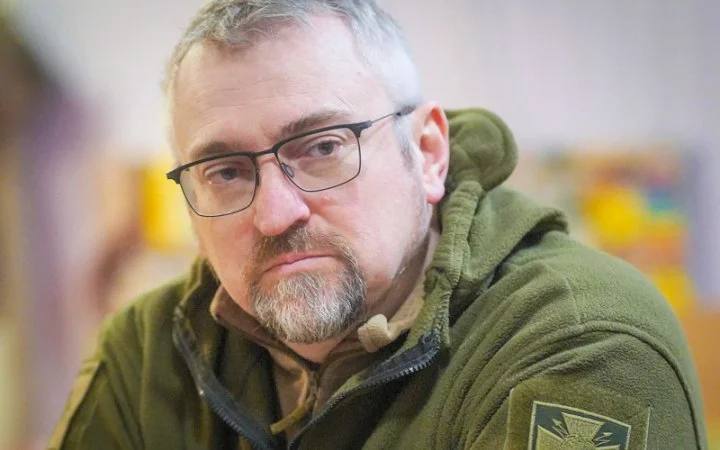
Last Thursday, the issue of reservation was discussed at a meeting of the Verkhovna Rada Committee on National Security, Defence and Intelligence, attended by senior officials from the Ministry of Defence and the Ministry of Economy, according to Committee member and MP from the ‘Servant of the People’ faction, Oleksandr Fedienko:
- However, the meeting was closed to the public, so I cannot disclose exactly what was discussed there. All I can say is that the Committee has prepared its position: to leave everything as it is, that is, not to change anything at all, and not to set up any coordination councils, committees or anything of that sort. Instead, the focus should be on the issue of identifying those who have not registered for military service and drafting legislation concerning them. Our recommendation there is that they should somehow put those who have not registered for military service on the radar and amend the liability provisions for those who have went on the AWOL. But this is more a matter for the Committee on Law Enforcement, which they also understand.
At the moment, it seems that the Cabinet of Ministers may wish to demonstrate to both the President and the High Command just how capable they are. But we in Parliament believe that more attention should be paid to those conscripts who have not registered for military service at all, as there are millions of them. Koretskyi has announced tougher penalties for evading mobilisation. But the way he speaks makes it impossible to understand anything. Even during Question Time to the government, when I put a direct question to him, his answer was such that nobody understood a thing. That is why we in Parliament are now sending him a clear message: Mr Prime Minister, you must prioritise dealing with that category of conscripts who have failed to comply with current legislation and have not registered for military service. We are telling him this in no uncertain terms. That is one issue. The second is the need to address the case of those military personnel who have left their units without authorisation, in particular by tightening the rules on accountability. To begin with, an audit needs to be carried out there, because the number of open criminal cases exceeds the number of those who have gone into the AWOL. We need to simplify this system somehow and increase accountability. At least then it will be possible to report to the Supreme Commander-in-Chief that a certain objective has been achieved. Because right now, the Cabinet of Ministers has chosen a very simple route. They see how many people are on the Radar system: around one and a half million registered. Of course, the easiest thing is to ‘flush out’ these people. I asked them – not in the Committee, but in the chamber: "Are you sure you’ll find a certain number of people, and that they won’t then switch to other organisations? That they won’t go into hiding or go the AWOL?" After all, our aim is to bolster the Defence Forces, not just to do something for the sake of it. But they keep dodging the question. It’s clear that this is a very unpopular issue which they’re trying to shift onto us. We say: "Right, if you’re unable to make a decision, let us do it. But we need specific data on how many people are where. We don’t know that!"
Generally speaking, everyone realises that changes to the reservation system could cause harm. That is why MPs are drawing attention to this. On certain points, I agree with the government. Of course, it is conceivable that those enterprises with a 100 per cent quota might abuse the system. But if you believe that to be the case, you don’t need some sort of coordination council for that. Come and carry out an inspection, and if any violations are found, simply revoke the enterprise’s critical status. These might be symbolic measures, but they will be effective. As for simply removing 100 per cent reservation quotas at critical enterprises – I’m not sure how appropriate that is, as I’m not an energy expert. But it is important to me that the energy sector functions and is restored very quickly following attacks. However, we need to understand which of these people are involved in management and which are directly involved in restoration. I emphasise: the government has sufficient powers to carry out inspections at enterprises.
Another important point: we have military administrations that are constantly reserving people, but nobody knows exactly who or why. For example, the Luhansk and Donetsk administrations legally exist and are growing in numbers, yet nobody understands why they are reserving people?! So we need to take a political, decisive decision and work with these military administrations. Just as we must with the AWOL and people who have failed to comply with the legal requirements regarding mobilisation. But this is a very unpopular issue. And they realise this too – both the Prime Minister and the government. They are aware that a storm of discontent will be directed at them. I realise that it’s very easy to ‘sell’ the message to the public that there are roughly as many people on the reserve list as there are in the Defence Forces. But then let’s put forward another message: we have over a million people who have not fulfilled their military duty, whilst there are fewer people in the Defence Forces. When I, as a member of the Defence Committee, visit the front line, I hear only one thing from the soldiers: "We’re not interested in who’s been reserved. They’re already on the radar, and their time will come. We’re interested in what you’re doing to bring those who aren’t fighting out of the shadows." This is a huge problem right now. It will persist in the future too. Because when the soldiers return home, they won’t be confronting MPs or those who were exempted from military service. They’ll ask their neighbour: ‘What were you doing? You were just hiding whilst I was defending the country!’ Nobody wants to tackle this problem – neither the government nor some MPs. They’re thinking about the elections, so they’re afraid, because this is a very unpopular issue.
How can we increase the accountability of those who evade mobilisation? This should be a proposal from the executive. We shouldn’t constantly pass the buck to parliament. Everything is already being dumped on us. The streetlights aren’t working in Boryspil – who’s to blame? The Verkhovna Rada, again. But there is an executive branch that we elected. It must analyse everything and come to parliament with proposals, and parliament must then make the decisions. If the Verkhovna Rada analyses issues and makes decisions instead of the government, then what is the point of the Cabinet of Ministers if we can do everything for them?! That is why it is completely wrong to try and shift all the blame onto parliament. I understand that this suits the Cabinet of Ministers. But it is they who must put forward initiatives. Whether MPs adopt them or not is another matter. However, you must provide us with proposals. For example, say: ‘There are roughly this many evaders. We propose blocking their access to public services – services at the Administrative Service Centres, freezing their accounts, and so on.’ This is standard practice. We are currently in a situation where the survival of the country is at stake. We are not debating who is right and who is wrong. We are trying to work out how to survive under these circumstances. Yet, for some reason, the government is distancing itself from this somewhat.
I particularly ‘admire’ the Ministry of Economy, which doesn’t have a single statistic to its name. They present some figures and spout generalised phrases. For example, a service sector business with 300,000 employees. I ask, what does that include? Shops, logistics, anything else? Can’t they be more specific? Here, they’re targeting bartenders, clowns and performers. And there are about 9,000 of them on the reserve list. Even if we sent them all to serve, it wouldn’t solve the problem. It’s a dead-end situation, which all MPs are pointing out. They are explaining to the executive that, in this way, it is heading towards the destruction of the economy, without even realising it. Certain processes are already underway: those who have been reserved have started to go into hiding or resign. We live in such an information-driven environment today that people fear a lack of transparency. Therefore, the Cabinet of Ministers needs to work thoroughly on this issue.
"RESERVATION SHOULD NOT BE A PRIVILEGE FOR THE ELITE. IT IS A TOOL THAT HELPS THE STATE TO SURVIVE"
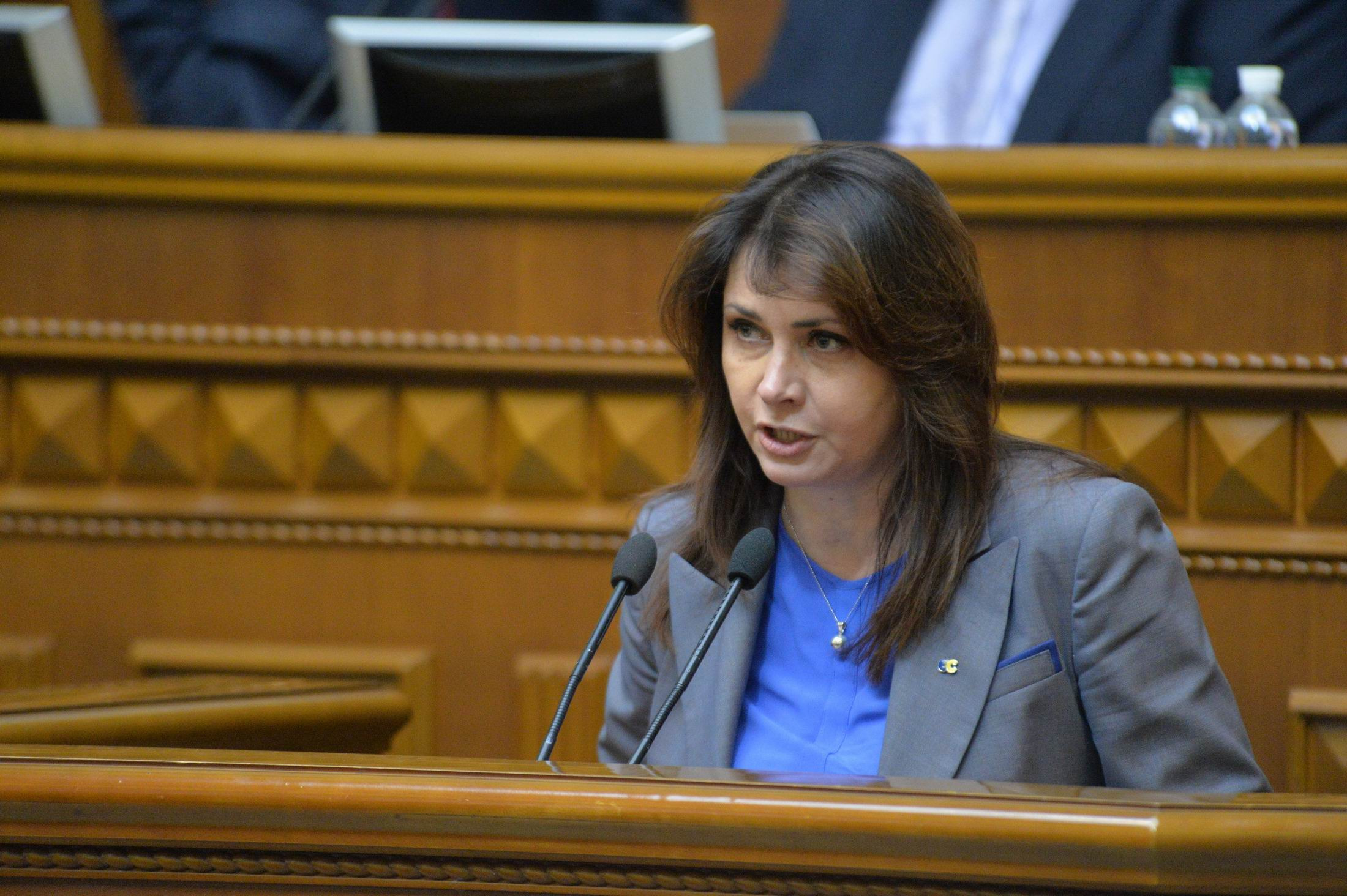
Iryna Friz, a Member of Parliament from the "European Solidarity" faction and a member of the Committee on National Security, Defence and Intelligence, confirms that proposals containing specific recommendations have already been submitted to the government:
- First and foremost, to review the resolution of 13 October 2026, to maintain a 100 per cent allocation for the defence sector and the energy sector, and to hold further consultations with experts. We have also proposed abandoning the creation of a Coordination Centre for Reservations. Personally, I see a great risk that such a centre could turn into yet another platform for subjective decisions, pressure and corruption. We must move towards digital and transparent procedures, rather than creating new bodies where the fate of enterprises will be decided by a group of officials and security service personnel. This is the wrong path.
Any revision of the reservation rules must not be carried out without a thorough audit, analysis and modelling of the consequences. It cannot be a thoughtless implementation of the High Command’s decision, which amounted to a mechanical reduction in the number of reservations across sectors. After all, this will not yield any results. This is particularly true when it comes to the defence industry, the energy sector and critical infrastructure.
If abuses have been identified in the system, it is necessary to establish exactly where they occurred, what mechanisms were involved, and why those involved in these processes have not been held to account. Undoubtedly, such abuses must be tackled. However, we cannot, simply because of a rise in the overall number of reservations made ‘on the off-chance’, make across-the-board cuts to the entire reservation system and start slashing where the figure was 100 per cent. For example, defence industry enterprises account for only 10 per cent of total reservations. Therefore, cutting back in this sector will have no tangible effect on mobilisation. At the same time, this could certainly lead to the termination of contracts with the Ministry of Defence, an exodus of specialists abroad and, overall, a loss of our defence industry’s production capacity. So let us not forget that the people who manufacture weapons, repair military equipment or supply the country with electricity are also working for our defence. So, first of all, we need to clarify who, why and on what grounds receives exemptions across all sectors; who is responsible for granting exemptions in sectors where there is a genuine need, and where there are simply privileges and abuses. We need to replenish the armed forces, but not at the cost of shutting down the enterprises that actually support them.
Of course, the rules on conscription may change. We are living in a state of war, and the army’s needs today are not the same as they were two or three years ago. This must be understood. But if an individual or a business has met all the state’s requirements and lawfully obtained a conscription exemption, the rules cannot simply be changed overnight and they cannot be presented with a fait accompli. It must be clear why a decision is being taken, who it affects and how much time there is to adapt. The authorities must be predictable. Because businesses need to plan their operations and fulfil contracts, particularly defence contracts. And people need to understand the rules they are living under. You cannot demand that citizens obey the law if the authorities, in turn, are constantly changing the rules without clear explanations.
We will demand that the government provide specific figures regarding reservation, the army’s needs and the economic consequences of the changes. How can such decisions be made without having the full picture? The Cabinet of Ministers has not carried out any calculations regarding the consequences of the cuts reported in the media. These were not presented to us in the Committee, nor was the text of the relevant resolution. According to government officials, they are awaiting a political decision. And this is utter nonsense, as such resolutions must be adopted on the basis of clear calculations, methodology and analysis, rather than political expediency. We need to understand how many people are reserved, in which sectors, at which enterprises, and to what extent these workers are critically important. We also need to assess the consequences. What will happen to defence contracts, the energy sector, taxes, jobs and transport? Parliament needs this data to make informed decisions. Of course, no one is suggesting that sensitive information about the armed forces’ needs or specific defence enterprises should be made public. But using secrecy as a pretext to avoid explaining one’s own decisions is unacceptable. Public trust in the authorities is already dwindling, and such poor communication on key issues only serves to fuel growing mistrust.
The negative consequences of changing the reservation rules could be very real: failure to fulfil defence contracts, a halt to the repair of military equipment, and an exodus of specialists from the defence industry, the fuel and energy sector and the housing and utilities sector – which would leave people without electricity and the military without timely supplies. We in the Committee insist that this decision be reviewed. And here it is important to understand: not all employees can be replaced quickly. There are engineers, technologists, energy specialists and defence industry experts who take years to train. If a company loses such people, it may simply grind to a halt. Therefore, we need to assess not only the number of staff reserved, but also what will happen if a particular specialist fails to turn up for work tomorrow.
I do not merely believe that the booking system can be made transparent and fair; I am also convinced that the authorities should have established clear criteria, digital procedures and appropriate rules for everyone long ago. So that reservations are based on the actual importance of a business and its employees, rather than on personal connections or the ability to strike a deal. So that ‘economic reservation’ is not a watered-down version where it is enough to meet just three out of seven booking criteria. It is, in fact, through government decrees that this ‘economic reservation’ scheme – which had previously been criticised and blocked as a legislative amendment in the Verkhovna Rada – was pushed through. It didn’t pass through parliament – they pushed it through the government and were pleased with themselves. And now the country needs to find a way out, because the number of reserved places is growing. Yes, we need to eliminate bogus employment, corruption schemes and cases where reserved places are effectively bought. There must be inevitable punishment for this, and the law enforcement system should demonstrate the quality of its work in upholding the law, rather than ‘turning a blind eye’ where they’ve been ‘asked’ to or where they’ve ‘received a call’. Reservation should not be a privilege for the select few. It is a tool that helps the state to survive during wartime.
Why has the draft law on increasing liability for breaches of mobilisation rules still not been adopted? It is important here not to lump everything together. There are people who deliberately evade mobilisation, and those who breach military registration rules. There are corruption schemes. And there are unlawful actions by officials themselves during mobilisation. These are different matters, and the liability must also differ. Any increase in penalties must be carefully analysed so that we do not create even more problems and opportunities for abuse. As for the delay in considering the bill, this is a question that the President and the Government must answer, as all parliamentary initiatives have been blocked, and nothing has yet been registered by the Cabinet of Ministers. But I want to emphasise something else. We already have sufficient legislative tools to punish those involved in corruption relating to mobilisation. The question is why these mechanisms are not working. And here, the problem often lies not in the absence of a new law, but in the failure of law enforcement agencies to do their job properly.
Of course, I support the principle that there must be consequences for deliberate evasion of mobilisation. The country is at war, and defending the state is our shared duty. But I am not convinced that yet another increase in fines will automatically solve the problem. We already have both fines and criminal liability in place. Fines were increased, only to be reduced later. Overall, this has not yielded any results. I am convinced that we need to crack down more rigorously on organised schemes of evading mobilisation, document forgery and corruption. And it is not only citizens who should be held accountable, but also officials who break the law.
But there is another fundamental issue that we constantly discuss: motivation for military service and clear terms regarding its duration. Today, many people are not unwilling to defend their country, but they are daunted by the uncertainty. They do not understand how long they will be serving in the army or when they will be able to return to their families. The authorities are also obliged to resolve this issue, rather than remaining silent and distancing themselves from it.
As for the vote on this issue, everything will depend on what the draft bill actually contains. I will not support increasing liability simply for the sake of increasing it. The law must be fair, effective and understandable to everyone. We must ensure the army is adequately staffed, whilst at the same time safeguarding the economy, defence production and public trust. Fair mobilisation is not just about punishment. It is, first and foremost, about fair rules, the authorities’ accountability to the people and respect for those who defend Ukraine.
"WHY DID WE START THE DISCUSSION WITH THE DEFENCE SECTOR?"
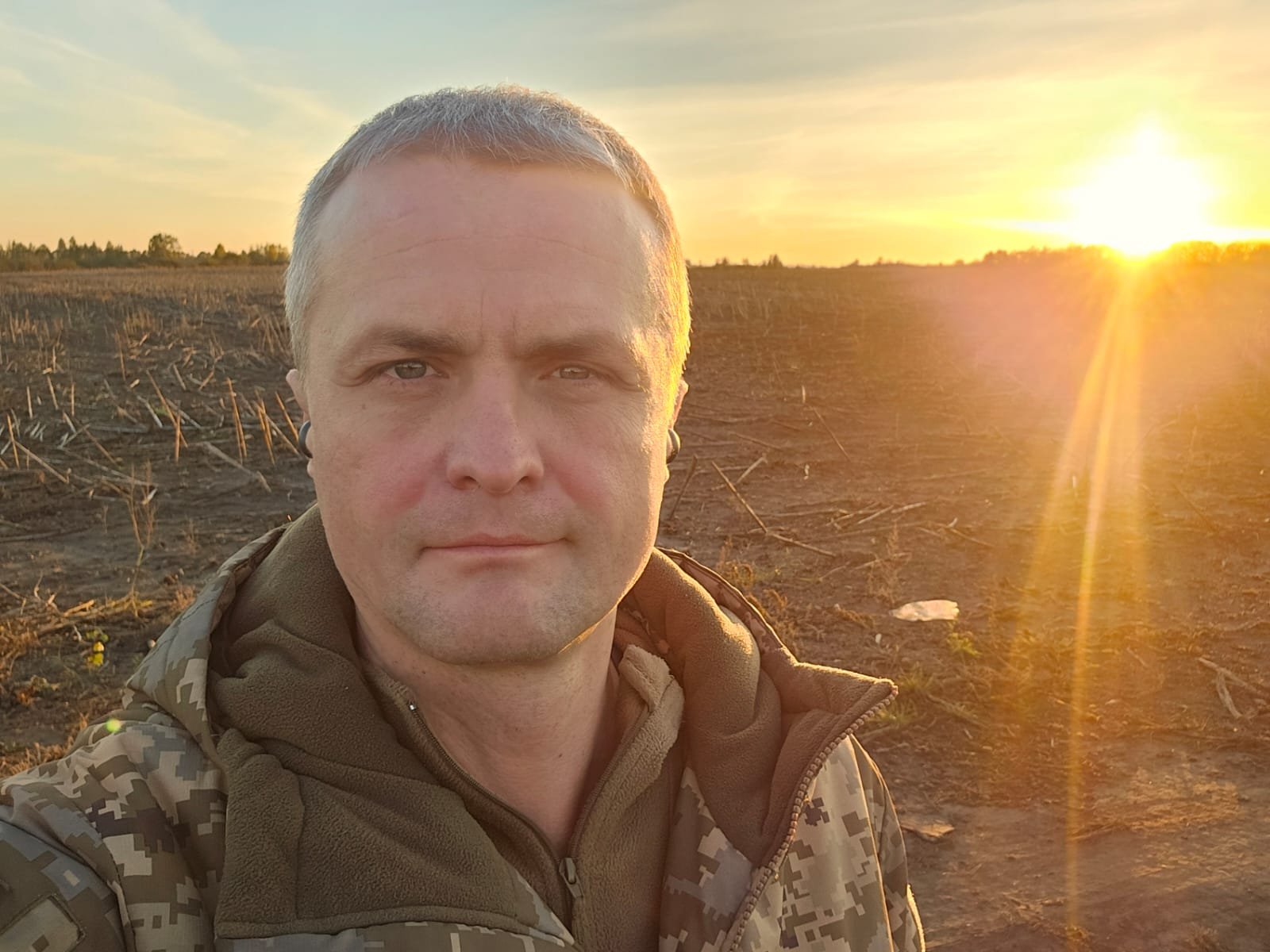
Ihor Lutsenko, a military officer and former Member of Parliament, emphasises that the reservation system has long been in need of reform:
- It is clear to me that there are no uniform criteria for determining whether a person should be exempted from conscription or not. If there were, we would be able to compare the necessity of reservation a priest or a journalist with that of a UAV assembler at a defence company. As it stands, every department has been allocated a quota and uses it at its own discretion. I am referring to every ministry and other central government bodies, each of which has its own specific quota for reserving personnel. We simply need to decide, as a whole, what is critical. These are defence companies and infrastructure companies. As for TV channels and religious organisations, it’s obvious that they aren’t. But here we should also explain why the latter have been included. It’s simply a fear of losing out in the eyes of public opinion. Journalists are needed to maintain the government’s approval ratings. Consequently, pro-government media are exempted, and those who are influential and pose a threat to the government are also exempted to ensure loyalty.
So we have these two million draft dodgers who have been identified. If we lift the restrictions on any number of people in any category, what will happen to these people next? For some reason, I fear that they will simply swell the ranks of these two million, and nothing further will happen – just as nothing is happening with the two million who are already there. My second point: we have a host of ministries and departments that have their own reserved personnel. Why did we start the discussion with the defence sector? Yes, of course, there is also corruption in the defence sector, but let’s take a look at what’s going on in other sectors. Let’s engage in a professional discussion on how to properly reserve personnel in the defence sector, because, of course, I too have serious questions about how this was done previously. But when it comes to agriculture, retail chains and similar sectors, we can mobilise people without any significant negative consequences. This will not lead to disruptions in the supply of equipment necessary for combat operations, as happened, for example, in September this year, when it was decided yet again to review the principles of reserving personnel. And so we see that not even a month has passed, and it’s ‘same old, same old – let’s start all over again’.
I doubt that the Verkhovna Rada will dare to impose stricter penalties on those who evade service. Because that would be a very unpopular move, and I don’t see many brave people here. Even if, by some chance, they do pass some regulations, who on earth is going to enforce them?! Our police have stated that they do not want to lose their good image in the eyes of the public and have no desire to get involved in mobilisation. One more thing: it’s important to understand that for people who have essentially been moving around the streets in short bursts for years and spend most of their time at home, having their bank accounts frozen is obviously not too high a price to pay to remain exempt from military service.
"RIGHT NOW WE HAVE A KIND OF EXTENDED ATO: SOME ARE FIGHTING, WHILE OTHERS ARE OUT AND ABOUT"

Servicemember Oleksandr Matiash believes that, by changing the rules on exemptions from mobilization, the authorities are trying to plug a gap without making full use of the country’s resources:
- We need to start with mobilization itself, not exemptions. We are in a war that, at the current pace, will not end for many years. We are losing strength, time, and people. Those who have served from the beginning have only three ways out of the military. The first is being killed. The second is being wounded. The third is certain family circumstances, such as having three children or caring for relatives who are ill and need assistance. Even those grounds could be reviewed. Given that, no matter how many people receive exemptions, we will still be short of personnel.
So, in my view, we need to accept that all men must serve in the military, at least those whose health and age allow it. People currently exempt from mobilization, for example because they work at critical infrastructure companies, are not irreplaceable. There are many people in the military who could do those jobs after demobilization. In other words, we need rotation. Some people have worked in the energy sector, for instance, since the first day of the war. And some energy workers have been fighting since the first day.
No matter how many exemptions you grant, nobody will want to join the military until there is a successful example of demobilization. If those people lose their exemptions now, they will start fleeing. I do not know how that could be controlled. But we must remember that there are no simple solutions in wartime. We need to decide where we stand in this confrontation. Anyone living in Kyiv can see large numbers of young men of draft age who are not serving, although their age and health make them liable for military service. They walk around the city; some buy exemptions for themselves, and so on. That is why I believe we need to review the mobilization and conscription system as a whole, and how we intend to carry on. The only acceptable model that will help us survive is the Israeli one. There, nobody has any doubt about what they will do if the country is attacked. Here, some have fought since the first day, losing their health and motivation and eventually beginning to lose their psychological resilience. Others can obtain exemptions. Take employees of Nova Poshta, for example; I have nothing against the company, or employees of government institutions. In reality, those organizations could operate without those particular people.
So my approach is very simple: if we are already in the fifth year of fighting Russia, with no end to this war in sight, we need to rethink our overall approach to our country’s defence. That depends on the participation of all citizens, both men and women (though in different ways). Women can help too, for example by assembling drones. But it must be voluntary. I oppose forcing women to do so. We need to create opportunities. The fact is that military service is neither prestigious nor financially rewarding. If you serve in a rear-area role, you receive 30,000 hryvnias as a soldier. How are you supposed to support a family on that?! If you are on the line of contact, you are paid 100,000 hryvnias, but only if you spend the entire time there. That is not the case for everyone. On top of that, you spend a great deal of your own money. For example, the engines in two of my vehicles have just broken down. A used replacement engine costs $2,000 for each vehicle. I do not yet know how much the repairs will cost. Where am I supposed to get the money for all this?!
That is why I say we need a comprehensive solution. However, if we change people’s exemptions or revoke them, loopholes will remain. We are adults, and we understand that people can always find a way around the rules. Many have bought exemptions in one form or another. I do not blame them: they simply see no future for themselves in the military. That is understandable. So the first priority is to make military service more attractive. To encourage people to serve, we need to give them confidence that military service will not last forever. You join, serve your term, then are demobilized and can rest. If the law setting a three-year term of service had been passed at the time, a second wave of service members would now be approaching the point when they could be relieved. A year later, those demobilized earlier could serve again. There has to be some form of rotation. People need rest. Thirty days of leave is not enough to recover from the military, from combat or simply from service. So however much the authorities tinker with the rules and devise new schemes, we will not have more people. It will not fundamentally change the situation. We need to relieve those on the line of contact.
We also need to prepare the population for national resistance. People should receive training before they join the military, rather than only after they enter it, so that anyone mobilized already has the necessary skills. Today, people are mobilized and required to report immediately. Sometimes people arrive in such a condition that it is frightening to see.
Could tougher penalties for evading service help? Some people have not left their homes since the war began. Even if, for example, their bank accounts were frozen, they would carry on living that way. Their wives would work to support them, and that would be that. So we need to address the problem comprehensively. We have several questions to answer. The most important is: what would count as victory for us in this war, or at least as something short of defeat? Once we have defined that overarching goal, we must build the mechanisms that will enable the country to survive. As things stand, we have something like an expanded Anti-Terrorist Operation: some people fight while others stroll around.
Olha Moskaliuk, Censor.NET


