


Exclusive footage of hunt for Russia’s 205th Brigade on Dnipro islands
In August 2023, the Russian Armed Forces’ 205th Brigade attempted to seize islands in the Dnipro delta in the left-bank part of the Kherson region. At the time, even prominent Z propagandists reported heavy Russian losses. We could not tell this story earlier to avoid disclosing operational information.
Unique footage, intercepted enemy radio communications, and the story of how two mortar crews and a group of Buzkyi Hard fighters, alongside the 8th Special Operations Forces Regiment, stopped a Russian brigade. It should also be noted that the Russian Armed Forces’ 205th Brigade is believed to have carried out the destruction of the Kakhovka Hydroelectric Power Plant.
Intercepted communications indicated that the 205th Brigade would be delivering "dinner" all night. That was their term for ferrying their landing troops.
Illia Zelinskyi, commander of the Buzkyi Hard composite detachment:
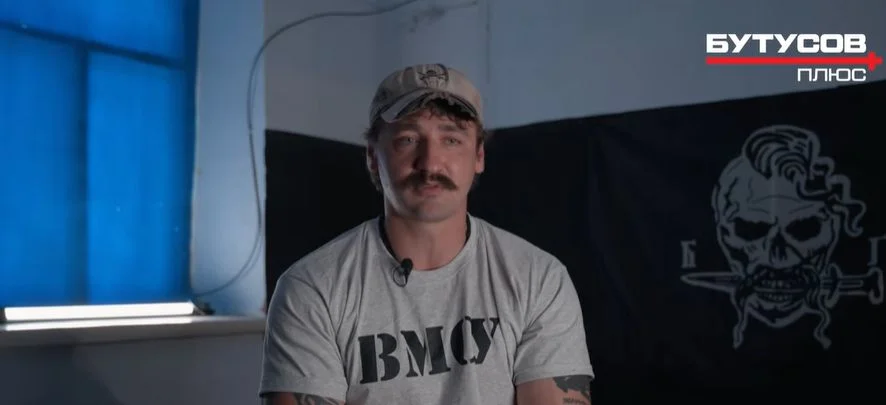
It is the summer of 2023. The enemy decides to occupy the islands in the Dnipro delta opposite the settlements of Mykolaivka and Odradokamianka. What are these islands like?
This is a large archipelago covering an area roughly equivalent to three settlements. The enemy had amassed troops in the settlements of Dnipriany and Nova Kakhovka. At the time, the 10th GRU Brigade and the 25th GRU Regiment were operating around these islands. They were the ones we were expecting.
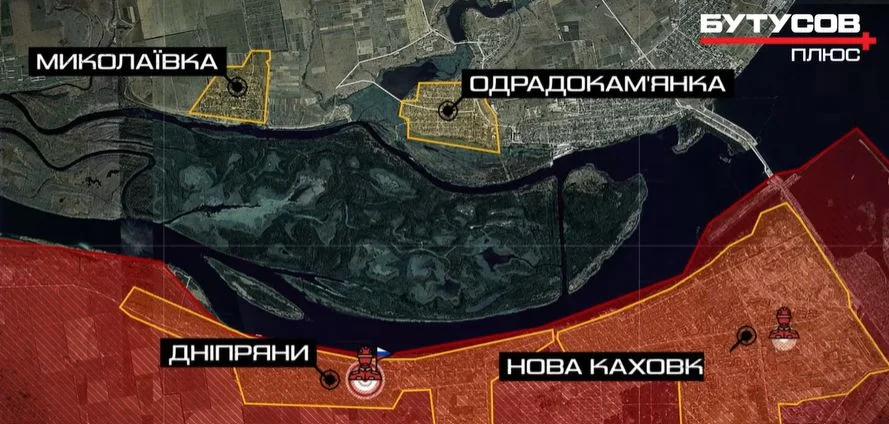
By then, we already had information from intercepted communications that the 205th Brigade would be delivering "dinner" all night. That was their term for ferrying their landing troops.
"Makhno, this message is for you personally. They’ll be delivering dinner all night. Bunny has hopped home."
The intercepted message said that dinner deliveries would continue all night. "Bunny" would be heading home. That was the boat returning to the settlement. On the 15th, the enemy made seven boat trips. At that point, we decided to wait until the enemy was at its most vulnerable, on the islands themselves, and then engage them with 120 mm and 82 mm mortars. The enemy had gathered in an assembly area on one of the islands in the archipelago.
Our mortar fire rendered the entire group combat-ineffective: roughly a platoon from the 205th Brigade’s reinforced reconnaissance company. We saw the result and assessed the damage. We assessed it using information obtained from intercepted radio communications. And we continued firing until morning.
This was to prevent the enemy from carrying out the evacuation they were attempting, and to give the brigade responsible for that sector time to respond, because those two mortar crews had completely negated the element of surprise in the enemy’s actions. The next day, August 16, the enemy did not abandon its attempts to retrieve the wounded. Our reconnaissance team then advanced along the planned route. Although time was short, a plan of action had been drawn up, coordinating the fire teams and the reconnaissance team in conjunction with the 8th Regiment.
Kaks, operator with the 8th Special Operations Forces Regiment:

We had already located this boat and were working out a plan for our team. We needed the detachment to issue us a combat order. So I said to Sigma, "Come with me to the detachment commander. We’ll push to get him to let us go." We arrived at the command post.
We walked in, and the detachment commander was sitting there. This was quite interesting. I explained it to him: the boat is here; this is where it’s moving. I guaranteed we would get it done, that everything would be fine.
And the battalion commander said: "So, can we issue the lads a combat order?" And this officer said: "Well, you see, Commander, we don’t know, but something is being planned there, and they’re not letting anyone go." Sigma turned to him and said: "Mate, look, what they’re planning is exactly what we’ve just brought you." They didn’t know who he was, that he was just a senior soldier.
Then I said: "He’s an SBU captain." And they were like: "What’s going on here?" The detachment commander said: "Well, lads, you won’t know until you try." He gave us the go-ahead, and we started preparing. But then we were told there was no combat order, even though we had already arranged everything.
I called the detachment commander and said: "We need to go to a garage in Mykolaiv for a few days. The vehicles aren’t running." He said: "Right, just get on with it."
"Dinner, dinner. Don’t engage. Keep tracking dinner."
One machine gun had a thermal sight; the other had a holographic sight for use with night vision goggles.
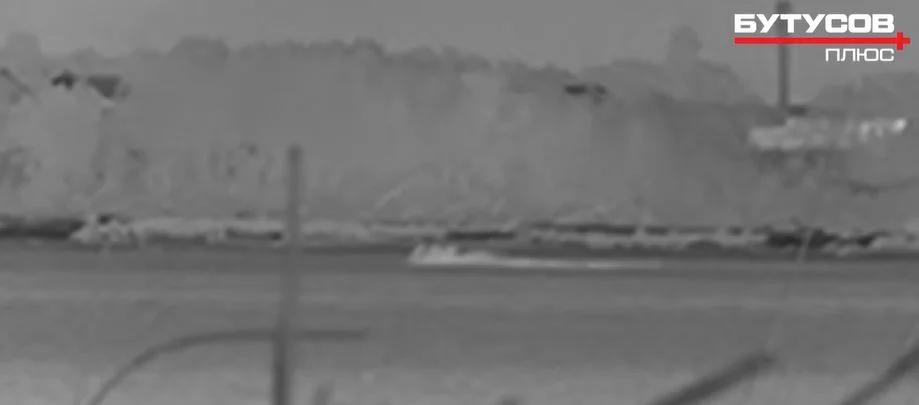
So, the boat started moving. We opened fire, and one machine gun immediately jammed: the one with the thermal sight, which would have had a better chance of hitting the target. Clearing that stoppage in the dark was a nightmare. The other gun kept firing.
Bob, serviceman with the Buzkyi Hard detachment:
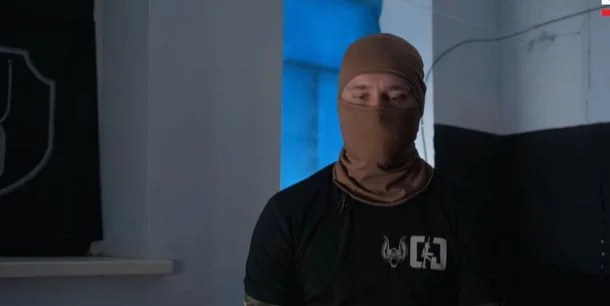
Meanwhile, enemy troops were already on the island, 400 metres from us. They had no idea we would be so close to them, setting up this ambush. They thought it was friendly fire, but in fact the boat went to the bottom.
"They f#cking tore past me, then f#cking turned around. I don’t know what they were doing there, and then they went back, f#ck. Then, f#ck, a little way off the bank, well, a bit farther straight ahead, almost in the middle, that black piece of crap started sinking."
Kaks: If anything had happened to us there, everyone would have been in a lot of trouble. But he appreciated what we had done. We got it all done, and he said: "All right, lads, good job." Then the entire detachment was moved to that area.
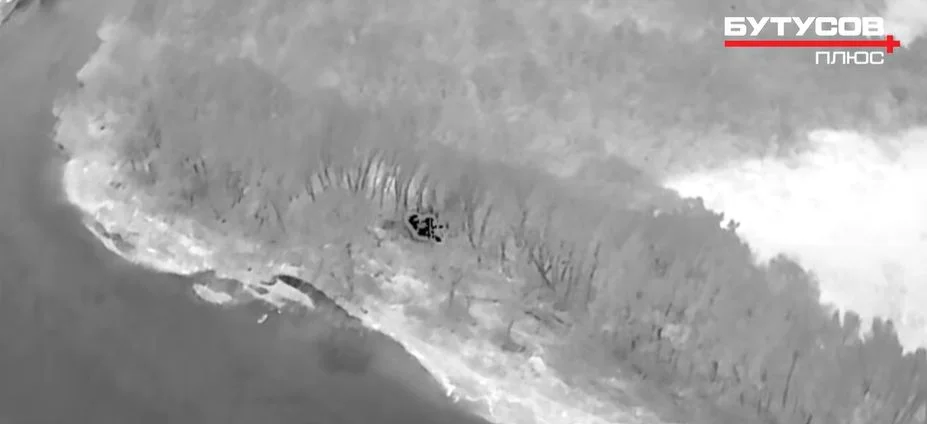
Zelinskyi: The enemy group changed its landing point because it had suffered heavy losses at the previous one, and higher command’s assets had already been engaging them throughout that day. On August 22, an enemy boat landed troops at the same place where the previous ambush had taken place. We decided to hold the boat there and prevent it from returning because, according to our information, the enemy was short of watercraft.

They could not land their troops in a single wave. The enemy tried, ordering its personnel to return by morning and speed things up, but we prevented this with constant fire. We then learned that they had wounded men there — "WIA" — and continued firing on their assembly area. By then, our reconnaissance team, once again working with the 8th Special Forces Regiment, had crossed over to the island.
Kaks: Our task was to get as far as the place where we had set up the ambush. That was roughly a kilometre from Kozatskyi Island. There are two swamps there and a narrow passage between them. Observation Post 26 was positioned right in that passage, and we needed to move it farther forward, towards our ambush site.
I remember approaching the position. The man in charge was this big guy in suspenders, and I could tell something was wrong. He was acting very strangely. Then he came over and said, "Lads, my back was hurting really badly. They gave me three doses of nalbuphine." I was like: "Okay, all right." We were sitting there in complete silence, with caterpillars eating the leaves. There was this constant crunching sound.
At one point, he turned around and said: "Can you hear the crocodiles eating these trees too?" And I was like: "Oh, great. Brilliant." Then he just stood there and said: "Yes, we had contact here. We blew up a couple of them. I set off a MON mine. There they are, those lads, lying over there."
We were like: "Where?" And he said: "Come on, I’ll show you." We went over, and they had just covered them with bark because they could not dig properly or go very deep: everything kept flooding.
He showed us a short video of himself there. He was nearly 50, a big guy, and those lads were really... well, they were maybe 19 or 20.
"Have you had a rotation? — No. Two groups came in, and they’re still here. It’s been about five days now. And two more groups of us came in yesterday. — Right. On that island? — No, somewhere here on this island too. — Right."
Bob: At the position, we received information that another reconnaissance team was somewhere in the area, trying to infiltrate our rear. We spotted this team during the day and exchanged fire with them.
Kaks: I remember our conversation with the chief of staff then. I said: "Look, two machine guns are firing. We have two machine guns, so our guys are alive." When the order to cease fire came over the radio and the enemy withdrew, we fell back to the observation post, regrouped, and went to reconnoitre the site of the firefight. We advanced just 60 metres.
And it turned out they had been near our position for quite a long time. They had already managed to dig in and were just sitting there, living their lives, with nothing bothering them.
Bob: The enemy troops we encountered at the observation post had no body armour or helmets. They were properly equipped. They had optics mounted on various AK models and wore boonie hats, all in the old-school reconnaissance style.
Zelinskyi: Again, that night, after receiving intercepted radio communications that same day, August 22, we noted the enemy’s attempts to evacuate personnel who had suffered casualties that night. Before the boat could even reach the pickup point, we had already hit the group it was supposed to evacuate. At five in the morning, now August 23, the boat made another attempt. Again, the enemy suffered casualties, all in the same place.
A lot of people later wrote about this on social media channels.
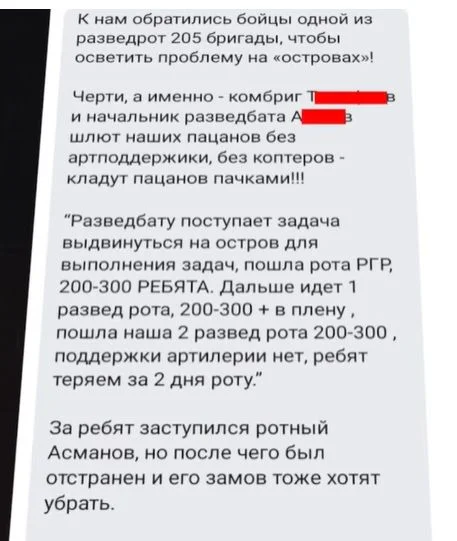
"Right now, a lot of men are being sent to their deaths on these islands.
The 205th Brigade is particularly good at this at the moment. Yesterday, I spent half the day on an interesting activity: watching a monitor, making phone calls, telling people where to fire, passing on coordinates, assigning targets, saving the lads. Six killed in the 205th Brigade yesterday. The lads got caught in a meat grinder on those islands. Just so you understand, they were dropping cigarettes and food to them by quadcopter because they had nothing. They were drinking water from the Dnipro because there was nothing to drink. They’re surrounded there."
Zelinskyi: Everyone complained that the Ukrainian Defence Forces’ mortar was firing constantly and no one could silence it. Later, they even published posts, motivational ones, perhaps, I don’t know, claiming they had finally killed the crew.
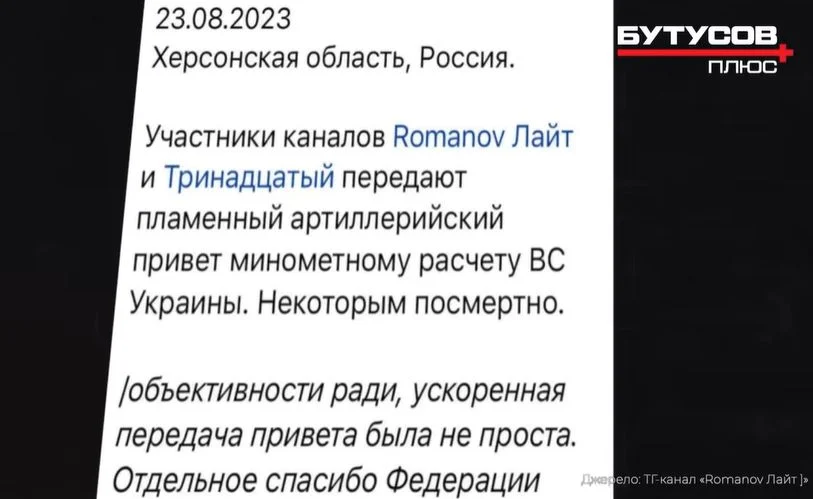
The crew is alive. The crew continued its work.
Kaks: We had been out on patrol for about four days. Naturally, we wanted to locate the enemy and catch up with the group we had exchanged fire with, because we had somehow just gone our separate ways. No one had killed anyone. Not very interesting. It became clear that the enemy was somewhere nearby because there was rubbish everywhere: bottles of Krymska Voda and, I remember it clearly, Alyonka chocolate. We all gathered to discuss what we would do if we made contact.
I said: "Look, command isn’t pushing us forward. We can keep working here and do more later. We don’t know how many enemy troops there are. We know nothing; we can only hear voices."
"Let’s do this. We’ll establish a covering fire element here, and three men will move forward to make contact. If we see an upper-body or full-body silhouette, we fire at it, fall back to the covering fire element, and then act according to the situation." The chief of staff was out with us again that time. Credit to him: he immediately passed the mortar crews the coordinates of the spot where we could hear voices. I kept walking, and at one point I realised there was a man standing 40–50 metres away, wearing webbing and picking up a bottle of water. My first thought was that he had no body armour. No body armour, just webbing, and he started drinking water. We all saw him.
I picked a slightly better firing angle and rested my rifle on a solid branch. I fired, and I remember it clearly because, in the adrenaline rush, I thought I had fired two shots. In fact, I pulled the trigger about five times, you can even see it in the video, but I thought I was calmly firing just two shots. That was how hard the adrenaline was hitting.
It was a good thing we had not all moved forward together, because two mines went off. This is standard procedure: when a reconnaissance team lies up for the day, it protects its position with mines, Claymores and MON-50s, to secure the most dangerous approach.
Two MON-50s went off, and chaotic firing broke out. What made the difference then was that the chief of staff had called in mortar fire on that position. The mortar opened fire.
We realised we had to either go in there or move on. The operations duty officer was very worried about us. He kept saying: "All of Russia is looking for you on that island now. You’re running around like wild men." And we were thinking: we had contact here two days ago; now we’ve made it somewhere else, and someone else is looking for us. Let’s fall back to the patrol base and wait for further instructions.
"The situation on the island unfolded as follows: an untrained young platoon commander, who arrived two weeks ago, was killed by gunfire. Two men were wounded in mortar attacks. All of this could have been avoided if everyone had done their duty."
"August 25, 2023. Kherson region, 205th Brigade. Right now, our lads on the island are being torn to pieces with every weapon imaginable.
The lads are providing targets. There is video of the targets, but no one is engaging them. The lads identify targets, track them, and send coordinates, but the information goes no further than the intelligence chief. The company commander and his men tried to head out to evacuate the lads.
They were stopped. The company commander was forcibly sent to a psychiatric hospital on the pretext that there was no one there. The entire company stood up for its commander, and now they are being threatened with criminal charges. Two other commanders who supported him have also been locked up.
The lads were sent onto the island yesterday afternoon, in full view of the enemy. The brigade commander is afraid to report the situation up the chain of command."
Zelinskyi: The enemy was completely demoralised. Over the radio, they said that after exchanging fire with the reconnaissance teams, they were being pressed back and surrounded. They said that unless something changed or further action was taken, they would leave the island the following day — that patch of land assigned to the 8th Regiment and our reconnaissance team.
"Sibir, Sibir, this is Kot." — "Sibir receiving. Who’s calling?"
"Are we supposed to die here? We’re leaving tomorrow if nothing changes. Tell command we’re leaving in the morning." — "Copy that."
But we had already spotted enemy troops building rafts. Their actions told us that they no longer wanted to keep fighting. All they could think about was leaving that place and crossing to a neighbouring patch of land outside our area of responsibility, so to speak. Having identified their intentions, however, we carried out another series of strikes with an 82 mm mortar.
According to our information, the enemy had completely lost its combat capability. Its deep reconnaissance company, which is part of its authorised structure, had been rendered entirely combat-ineffective and was withdrawn for reconstitution. From the recorded evidence, we could confirm up to a platoon’s worth of dead, but the enemy’s figures indicated a higher number. We will only cite figures we can verify ourselves. If there were more, that suits us too.


