


Is Ukraine losing R&D battle? Where manufacturers can find funding for new developments
Drone Industry
Technological cycles in war are short. Cycles of technological adaptation on the battlefield are even shorter. Nick Reynolds of the Royal United Services Institute speaks of a six-week cycle (42 days). This dynamic is particularly pronounced in electronic warfare. A solution that seems groundbreaking today may therefore prove worthless within a relatively short time. Research and development (R&D) departments must consequently work continuously.

"Today, R&D in defense tech cannot afford to wait years for the next modernization cycle. It must quickly test solutions in practice, listen to those who use the system on the front line every day, and refine it just as quickly," Adrian Kanter, co-founder of the French-Ukrainian defense tech company Alta Ares, wrote in his column for Business Censor.
In wartime, when the state needs new types of weapons that meet battlefield realities and give the Defense Forces a technological advantage, this approach is essential. Yet R&D is expensive, and development costs cannot be included in the price of products supplied under government contracts.
This means manufacturers must fund development themselves out of their allowable profit. But the same money must also fund production expansion, including the purchase or construction of facilities, as no one wants to rent out premises without war risk insurance; purchases of new equipment and components for future production batches; and the restoration of destroyed production facilities, which is the most pressing problem.
Business Censor examined where manufacturers can find funding for new developments and how to prevent Ukraine from falling behind technologically as the enemy constantly upgrades its weapons.
The risk of technological conservatism
The war has changed the very approach to weapons development, the Ukrainian Council of Defence Industry points out. Today, technological superiority often depends less on creating highly complex and extremely expensive systems than on the ability to rapidly develop, test and scale up new solutions that combine high combat effectiveness with an acceptable cost.
"At the same time, many Ukrainian manufacturers, especially small and medium-sized companies, simply do not have enough working capital of their own to independently finance a full R&D cycle. Without an established mechanism for reimbursing the costs of developing new systems, a company effectively has to finance them out of its profits. But manufacturers also need those profits to scale up production, purchase equipment and components, restore destroyed production facilities, and cover other unforeseen wartime expenses. Relying on profits alone to provide a sustained source of R&D funding is therefore insufficient," the Ukrainian Council of Defence Industry explained to Business Censor.
There is, however, a second problem. The absence of a mechanism for reimbursing R&D costs creates a risk of technological conservatism.
"For a manufacturer with steady government orders, it is economically easier to continue producing a proven solution than to invest its own money in expensive development with an uncertain outcome. As a result, the state may receive a steady supply of existing systems while losing momentum in technological development," the Ukrainian Council of Defence Industry says.
The council proposes establishing a transparent mechanism for reimbursing R&D costs that applies equally to all manufacturers, with a separate allocation within the price structure of defense products to fund research, development and testing.
"This does not mean that any manufacturer should be allowed to arbitrarily increase the contract price under the pretext of R&D. On the contrary, the rules must be uniform and transparent, with oversight to ensure that such costs are justified. The specific size of this allocation requires separate calculations and testing in practice," the association explains.
Accelerators, grants and investment programs already meet part of this need, but their capacity is insufficient to serve the entire Ukrainian defense market. A systemic solution must therefore operate under uniform rules for a broad range of manufacturers, rather than only for companies selected for a particular program.
"For Ukraine, this is about more than supporting manufacturers. It is about the state’s ability to continually upgrade its weapons inventory, maintain technological superiority, and ensure sufficient production volumes at the same time. In the long term, the absence of an R&D funding mechanism could become a constraint on the entire defense industry," the Ukrainian Council of Defence Industry stressed in its comments to Business Censor.
Meanwhile, Vladyslav Belbas, CEO of Ukrainian Armor, says that under current conditions, manufacturers of weapons and military equipment have sufficient funds to invest in R&D.
"We used to operate under the old, broadly ‘Soviet system,’ which limited profits and subjected them to strict controls. That system has run its course. There should be a free market. The main driver of development is competition, which lowers prices and improves quality. And every manufacturer can decide at its own discretion which development projects to invest in and how much," he told Business Censor, adding that his company has 35 new development projects across entirely different segments this year.
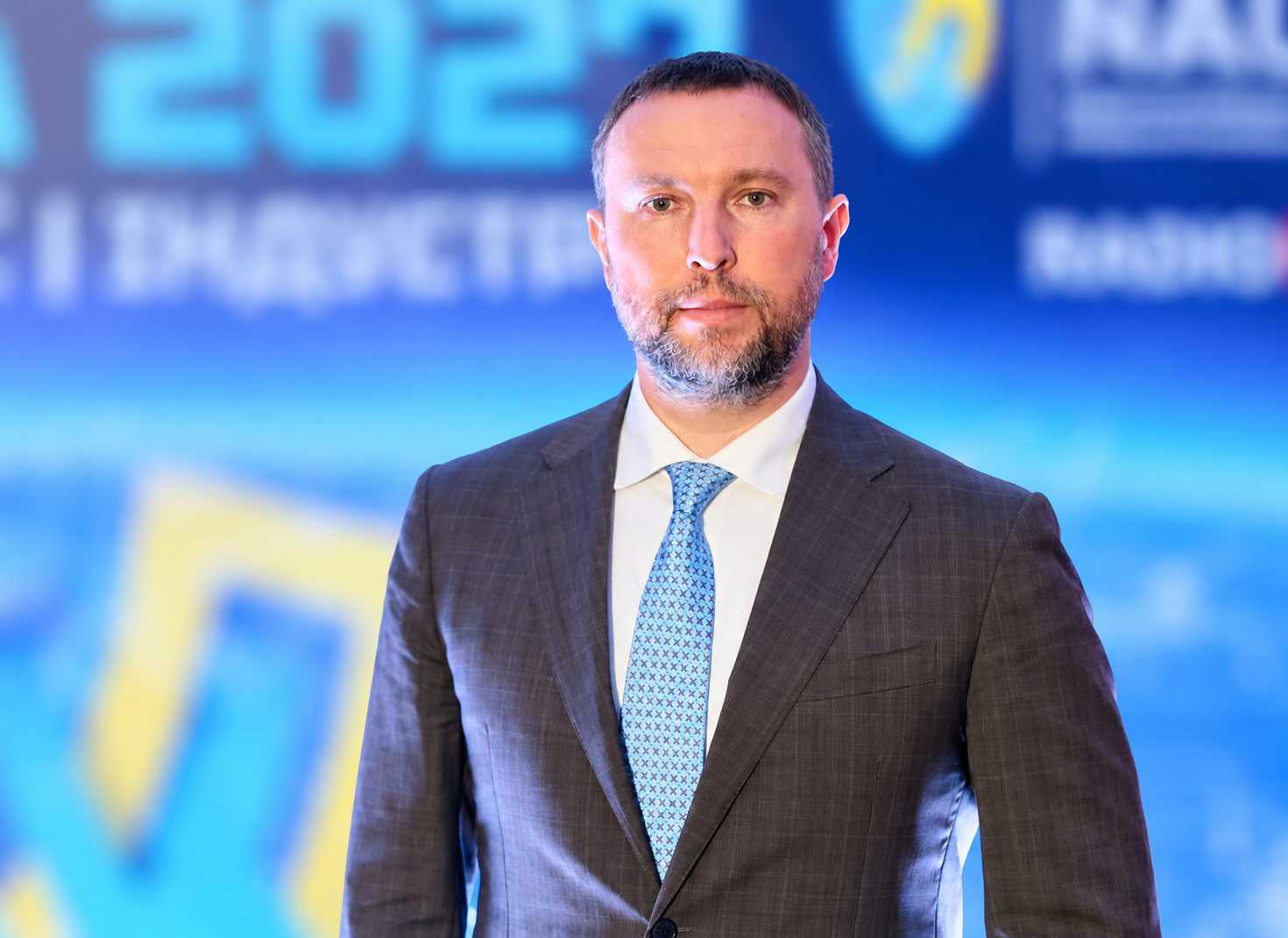
According to Belbas, the state’s role in R&D should be to provide coordination and support systematic development, but there are problems with this.
"Because there is no coordination whatsoever. A manufacturer does not and cannot have information about the Defense Forces’ requirements, or what equipment is needed now or will be needed in the future. Manufacturers therefore need to be coordinated and brought together. How does the Defense Procurement Agency differ from the Ministry of Defense’s Weapons Development Department? The department brought manufacturers together, spoke with them, and coordinated the directions in which development could and should proceed. The DPA, however, has reduced communication to a minimum, creating a vacuum. Essentially, the DPA is purely a tendering organization, and no one is responsible for development," he explains.
The second important point Vladyslav Belbas highlighted is communicating requirements and long-term planning.
"To establish production capacity, everything has to be planned and built. If you steer a manufacturer in one direction and then tell it to turn 180 degrees, it does not work," the CEO of Ukrainian Armor stresses.
Belbas also believes cooperation with partners is important in development. As an example, he cited Gripen fighter jets, whose delivery, according to President Volodymyr Zelenskyy, is expected "in the near future."
"We need to understand what weapons will be used. That, in turn, creates scope for developing and upgrading particular types of weapons, and manufacturers need to be informed about this," Vladyslav Belbas says.
Loans and private investment
The main problem is that the pace at which R&D investment is needed today far exceeds that of conventional funding and government procurement cycles, Viktoriia Kulchytska, commercial director of the Ukrainian-British defense tech company Trypillian, told Business Censor.
"In our case, the model is somewhat different because Trypillian has a Ukrainian-British corporate structure, and we have raised private investment. Some of these funds go specifically toward R&D, expanding the engineering team, testing and preparing products for serial production. This allows us to invest in development before a new product starts generating sales from serial production. Our model combines private investment, the company’s own revenues, reinvestment in subsequent development projects and, where appropriate, grant programs," she explains.

Technology company BlueBird Tech’s strategy is to reinvest all its profits.
"As a result, we constantly face funding shortfalls. For us as a Ukrainian manufacturer, this drives continuous development, because under these conditions we make fewer rash decisions and avoid inefficient business processes. At the same time, it means that at certain points we cannot afford R&D work that may be critical," BlueBird Tech CEO Valerii Zarubin told Business Censor.
According to him, the company continues to borrow, even though development does not guarantee a profit.
"Every new development project, product, purchase, production run and so on requires resources here and now. That is before we even get to restoring or building facilities. Those are capital expenditures on a different scale, requiring substantial investment," Zarubin says.
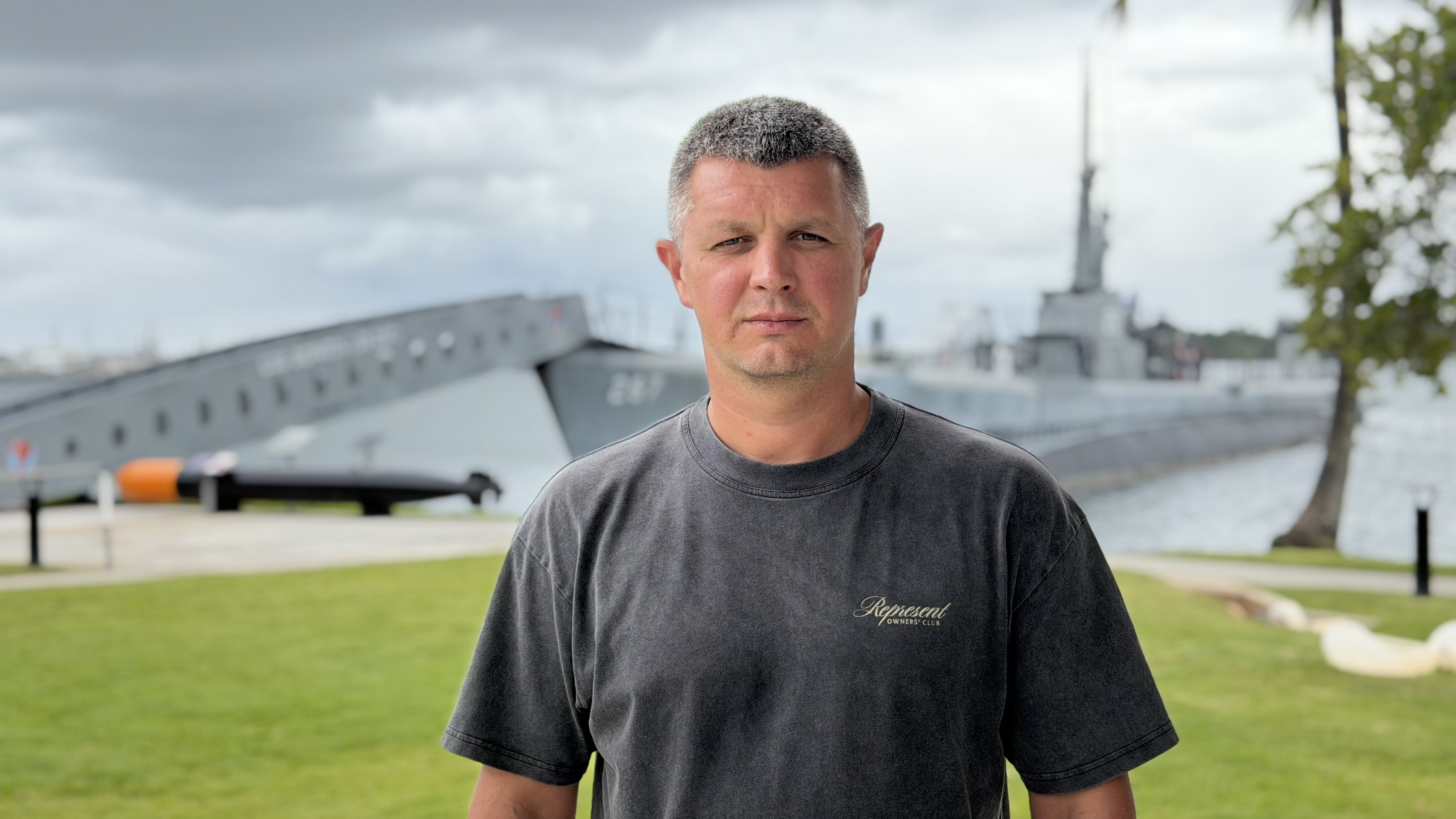
In his view, the state-regulated 25% markup is a matter of survival for many small and medium-sized companies without large government orders.
"European and American manufacturers have markups of 100%, because all of this involves long-term funding and large-scale processes: technical education, R&D, government contracts spanning decades, and lending. If a formula involving individual audits were in place, allowing the markup percentage to be reviewed, it would help companies that reinvest all their earnings in themselves without taking money out of the business," Valerii Zarubin believes.
Viktoriia Kulchytska believes the state clearly recognizes this problem. After all, Brave1, grant programs and testing mechanisms have emerged, and interaction between manufacturers and the military has become much more active. Zarubin expressed a similar view.
"But I would not frame the question solely in terms of how much money the state should provide for R&D. Private capital can also bear some of the risk of early-stage development, and our company is one example of this model. What is critical is for the state to establish a short, predictable pathway: military requirement – development – testing – codification – procurement – scaling up. If a manufacturer and an investor are prepared to commit their own capital and take on technological risk, there must be a clear mechanism for moving to procurement once the product’s effectiveness has been confirmed," she explains.
BlueBird Tech’s CEO stresses that behind every successful R&D product are 10 failed prototypes that will never see the light of day. But money has already been spent on those development projects, and without them, the successful finished product would not exist.
"In my view, all manufacturers, both small and large, need to reinvest as much as possible in their own businesses. Our budgets are limited, but we have no time to spare either. Reinvestment will therefore drive development that delivers benefits on the battlefield faster and saves more of our defenders’ lives," Valerii Zarubin told Business Censor.
Ukraine must now learn to do two things at once: attract private and international capital into defense tech and protect Ukrainian technologies, believes Viktoriia Kulchytska, commercial director of the Ukrainian-British defense tech company Trypillian.
"These things do not contradict each other. It is possible to attract investment, build international companies and enter global markets without automatically granting unrestricted access to technologies," she says.
But this requires a balance: on the one hand, rules that are clear enough for investors to bring capital into Ukrainian defense tech; on the other, strict controls over transfers of critical technologies and compliance with export legislation.
"For me, a strong model combines private capital, Ukrainian engineering expertise, military experience, and the state as a predictable customer. Maintaining control over critical technologies remains essential," Kulchytska stressed.


