ENG




23800 visitors online
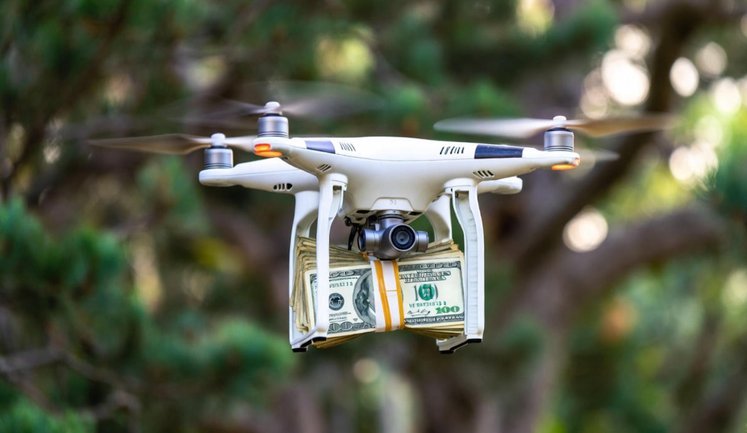
The European Commission has approved €45 billion in aid to Ukraine for 2026, with a significant portion earmarked for drone development. This substantial funding package underscores Europe's commitment to supporting Ukraine amidst ongoing conflict. However, Ukraine faces conditions; the Verkhovna Rada must enact 11 crucial laws to secure an additional €4 billion, as proposed by the EU. These legislative measures are part of the Ukraine Plan aimed at securing sustainable financial assistance. Meanwhile, concerns over the country's potential depletion of war funds by June have been raised, highlighting the pressing need for efficient allocation and utilization of available financial resources.
What is the purpose of the €45 billion EU aid to Ukraine?
The €45 billion aid package from the European Union to Ukraine is designed to support the country in its ongoing conflict, with a strong focus on developing advanced drone technologies. This allocation reflects Europe's commitment to bolster Ukraine’s defense capabilities and ensure stability in the region amidst current geopolitical challenges.
What new legislative measures does Ukraine need to enact for funding?
To secure up to €4 billion in additional funding, Ukraine's Verkhovna Rada is required to pass a set of 11 new laws. These laws are part of the stipulated conditions under the Ukraine Plan proposed by the EU, aimed at enhancing transparency, governance, and economic reforms to ensure sustainable financial support and aid effectiveness.
Is Ukraine at risk of losing its war funding?
Yes, Ukraine has been warned of the potential risk of running out of financial resources for the war by June, as highlighted by various reports. This risk is attributed to a combination of factors threatening the inflow of billions in aid from key donors, necessitating urgent fiscal management and strategic planning to avert a financial crisis.
How has the Ukrainian defense industry fared with foreign investments?
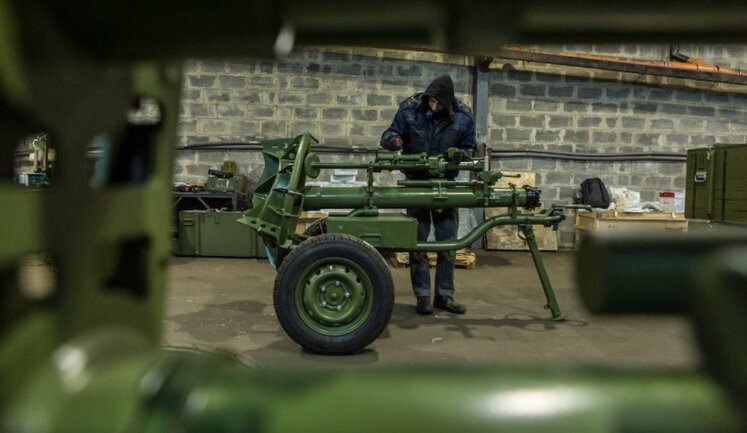
The Ukrainian defense industry has successfully attracted a record $6.1 billion in foreign investments in 2025, aligning with the "Danish model." These funds, derived from direct purchases by partner countries and proceeds from frozen Russian assets, have significantly bolstered the industry’s production capabilities and financial resilience amid ongoing conflicts.
Are there specific EU conditions tied to Ukraine’s funding?
The European Union has imposed specific conditions tied to Ukraine’s procurement of additional aid, requiring compliance with reformative legislative measures. These include reforms in anti-corruption protocols and transparency initiatives, particularly within the framework of the Ukraine Plan, to maintain ongoing financial support and aid accountability.
News funding
 Zelenskyy warns of possible serious drone shortage for Armed Forces in January–February President Volodymyr Zelenskyy said Ukraine could face difficulties supplying the Armed Forces with drones and missiles in early 2027 if it does not cover its defence budget shortfall in the autumn and in December. 3 574 60 Previously in trend: Production of drones 2027 budget
 Khmara held talks with Kubilius: they discussed speeding up funding for Defence Forces’ critical needs The Ukrainian Minister of Defence, Yevhen Khmara, held a telephone conversation with Andrius Kubilius, the European Commissioner for Defence and Space. The parties discussed accelerating funding for the critical needs of the Ukrainian Defence Forces. 485 0 Previously in trend: Aid to Ukraine from Europe Defense Forces funding
 Ukraine received $841 million from World Bank under Canadian guarantee: funds will be allocated to pensions, - Koretskyi Ukraine has secured $841 million from the World Bank under guarantees from the Canadian government. The government is allocating the funds to reimburse the state budget for pension payments. 1 269 31 Previously in trend: Support programs
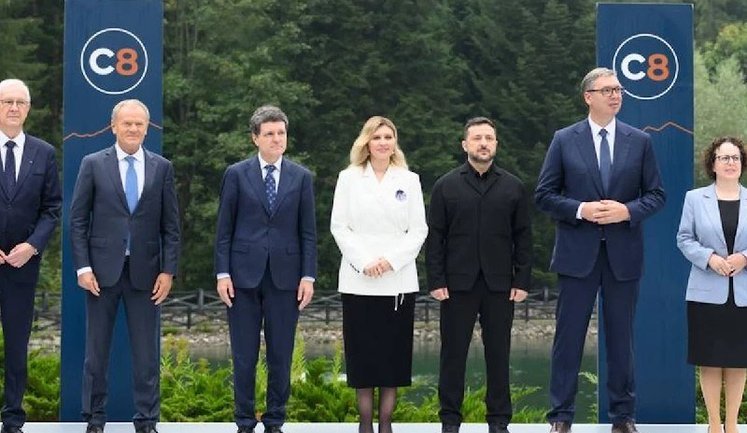
 "Carpathian Eight" summit, "astronomical" funding shortfall and destruction of Russian launcher used to strike Kyiv: top news for September 18. VIDEO Ukraine and seven European states have launched a new cooperation format, C8 — the "Carpathian Eight". The European Commission is awaiting contracts from Kyiv for the purchase of Patriot missiles before releasing payments, while Zelenskyy has reported an "astronomical" funding shortfall. 2 174 6 Previously in trend: News of the day
 Zelenskyy to take part in EU summit: Funding for Ukraine to be discussed EU leaders will discuss Ukraine with President Volodymyr Zelenskyy during the European Council summit in Brussels on October 15–16. 978 11 Previously in trend: External financing
 To be increased by 22%: More than UAH 1.07 billion allocated in 2027 budget for operations of president and Office of President – Zhelezniak The draft state budget for 2027 provides for increased funding for the operations of the president and the Office of the President. Expenditure will rise by UAH 194.9 million to more than UAH 1.07 billion. 3 295 49 Previously in trend: 2027 budget
 Koretskyi warns of toughest winter since independence: Ukraine needs funding and air defense Ukraine will face major cuts to its defense budget unless lawmakers adopt unpopular measures needed to unlock billions of dollars in Western aid ahead of winter. 2 992 51 Previously in trend: State budget Budget-2026
 Funding for "ePoints" programme is available through end of year, all payments will be made – Defence Ministry The Ministry of Defence has provided clarification regarding the funding of the ePoints programme and payments to manufacturers. 2 838 24 Previously in trend: Defense Forces funding
 Delayed e-Points payments to arms manufacturers: National Security Committee addresses situation, cites Defence Ministry delay The Verkhovna Rada Committee on National Security, Defence and Intelligence has issued a statement regarding delayed payments to defence companies under the e-Points programme. 3 222 17 Previously in trend: Production of drones Defense Forces funding Ukrainian weapons production
 EU surprised by Ukraine’s request for additional $27 billion for defence, seeks to determine how shortfall arose – NYT President Volodymyr Zelenskyy informed European partners about Ukraine's additional need for $27 billion by the end of the year. Ukraine's request surprised European partners. Questions are arising in the EU regarding the efficiency of spending and the justification for new financial requests. 29 473 133 Previously in trend: Defense Forces funding State budget Budget-2026
 Ukraine meets minimum fiscal transparency requirements – U.S. Department of State The US Department of State has published its 2026 Fiscal Transparency Report, which states that Ukraine meets the minimum requirements for transparency in public finances. 1 475 5 Previously in trend: US aid to Ukraine
 EU will provide Ukraine with 1.4 billion euros from profits from frozen Russian assets, - Koretskyi The EU will allocate 1.4 billion euros to Ukraine using proceeds from frozen Russian assets. 587 6 Previously in trend: Use of frozen assets of Russian Federation
 Spain will help to restore and modernise Ukraine’s air navigation system, - Ministry of Development Spain will contribute to the restoration and modernisation of Ukraine’s air navigation infrastructure. In particular, the Spanish government will fund the preparation of a comprehensive technical and economic feasibility study for the restoration of Ukraine’s air traffic management system. 602 3 Previously in trend: Ukraine and Spain cooperation Spainish aid to Ukraine
 Government has allocated 8.3 billion hryvnias to SSU, Defence Intelligence and other security agencies, - Svyrydenko The government has allocated 8.3 billion hryvnias from the reserve fund earmarked for the security and defence sector in 2026. 1 796 12 Previously in trend: payments to military
 Ukrainian SkyFall and Poland’s BGK sign memorandum to attract EU funding for Ukrainian defense technologies Ukrainian defense technology company SkyFall and Poland’s Bank Gospodarstwa Krajowego (BGK) signed a Memorandum of Understanding (MoU) during the Ukraine Recovery Conference (URC) 2026 in Gdansk. 48 0 Previously in trend: Drone industry
 More spending on security and defence sector: Zelenskyy has signed law amending 2026 state budget On Monday, 22 June, the President of Ukraine, Volodymyr Zelenskyy, signed a law amending the 2026 state budget, with the primary aim of increasing expenditure on the security and defence sector. 1 128 3 Previously in trend: State budget
 Ukraine risks losing part of EU aid for first time due to unimplemented reforms – media Ukraine may lose part of the financial assistance from the European Union provided under the Ukraine Facility for the first time. This is due to the late implementation of two reforms. 6 490 27 Previously in trend: Aid to Ukraine from Europe Ukraine Facility
 Ukraine has received seventh tranche from the EU under Ukraine Facility — €2.8 billion Ukraine has received the seventh tranche of funding from the European Union under the Ukraine Facility, totaling 2.8 billion euros. 524 1 Previously in trend: Ukraine Facility Relations between Ukraine and EU
 NATO may announce €70 billion aid package for Ukraine at summit in Ankara, - Politico NATO countries are considering the idea of providing Ukraine with a new military aid package worth €70 billion, which could be announced as early as next month at the alliance’s summit in Ankara (Turkey). 4 426 25 Previously in trend: Aid to Ukraine
 State Customs Service only 48% funded, over 90% of funds goes to salaries, Mandzii says The needs of the State Customs Service are currently 48% funded. 950 20 Previously in trend: Customs
 Ukraine allocates US$45-50 billion year for weapons production – Zelenskyy President Volodymyr Zelenskyy has said that Ukraine allocates US$45-50 billion a year for weapons production. He assured that funding for the Ukrainian army is secured. 1 220 20 Previously in trend: Production of weapons
 EU approves new €2.8 billion for Ukraine for completed reforms The Council of the European Union has approved the provision of the seventh tranche of financial assistance to Ukraine under the Ukraine Facility programme, worth almost €2.8 billion. 644 5 Previously in trend: Ukraine Facility
 Ukraine’s external financing needs for 2026–2027 amount to $95 billion, - Marchenko Ukraine’s external financing needs for 2026–2027 amount to $95 billion. $52 billion has already been secured for 2026. 1 226 14 Previously in trend: External financing
 Authorities have allocated further 0.6 billion hryvnias for united telethon, – Zhelezniak The authorities have decided to allocate 600 million hryvnias in state funding to a united news telethon without holding a tender. Each hour of airtime costs almost 170,000 hryvnias. 4 140 53 Previously in trend: Telethon Monitoring
 Zelenskyy: EU has not yet adopted decision on 90 billion euros The European Union has not yet completed the procedure for approving 90 billion euros in loan support for Ukraine. 2 401 18
 Magyar announced cooperation with EU to unblock Hungary’s funds Hungary's future prime minister, Péter Magyar, has stated his intention to work with the European Commission to unblock frozen EU funds. 1 770 5 Previously in trend: European Union budget
 European Commission initiated allocation of 45 billion euros to Ukraine for 2026. Part of funds will be directed to drones The European Commission has approved a proposal to allocate 45 billion euros in aid to Ukraine for 2026. 70 0 Previously in trend: Financial assistance to Ukraine External financing Drone industry
 European Commission sends Rada list of 11 laws that could help Ukraine secure funding The European Commission has proposed an alternative mechanism for Ukraine to receive up to €4 billion in funding: to secure it, Ukraine’s Verkhovna Rada must pass a package of 11 laws envisaged under the Ukraine Plan. 5 724 20 Previously in trend: Orban’s blocking of a loan for Ukraine
 Ukraine may run out of money for war by June, - Bloomberg For the past two months, Ukraine has been at risk of running out of funds for the war, as a confluence of factors is jeopardizing tens of billions of euros in aid from key donors. 6 510 62 Previously in trend: External financing
 Country is on brink of financial disaster, - "Servant of People" Hetmantsev. VIDEO Danylo Hetmantsev, Chair of the Finance Committee of the Verkhovna Rada of Ukraine, stated during his speech that in 2025 Ukraine failed to meet 14 indicators of the Ukraine Facility programme and, as a result, did not receive €3.9 billion – part of these funds has already been lost. 11 281 86
 Ukrainian company Buntar Aerospace raises more than $10 million to scale unmanned ISR systems Ukrainian defence-tech company Buntar Aerospace has raised $10.4 million in a new investment round. The lead investor was Axon Enterprise, Inc., a global leader in public safety technology. 42 0 Previously in trend: Drone industry
 Ukraine received $1.5 billion in first tranche from IMF under the new EFF program, - Svyrydenko Today, Ukraine received the first tranche from the IMF under a new four-year program within the Extended Fund Facility (EFF). 843 11 Previously in trend: Cooperation with IMF IMF financial assistance
 NATO denies funding was behind Ukraine’s Patriot interceptor missile shortage The shortage of interceptor missiles for Patriot systems in Ukraine’s Armed Forces in January 2026 was not linked to delayed payments from European donors or other financial problems. 2 296 9 Previously in trend: Patriot for Ukraine
Zelenskyy ally’s production company gets UAH 341 million from budget, halts operations after Mindich flees Kinokit LLC, which previously produced content for the Rada TV channel as part of the national telethon, has currently suspended operations. 12 374 47 Previously in trend: Mindichgate
 Ukrainian defense industry attracted $6.1 billion in foreign funding in 2025, - Ministry of Defense In 2025, the Ukrainian defense industry attracted a record $6.1 billion in foreign funding. The funds were received under the "Danish model," through direct purchases by partner countries and from proceeds from frozen Russian assets, which allowed the defense industry to increase its production... 802 9 Previously in trend: Ukrainian defense industry Assistance according to the Danish model
 "We have two strategies for next year": Ukrainian drone makers share their plans for 2026 Neither manufacturers nor the military are prepared to look far ahead for now. After all, 2025 is ending with a great deal of uncertainty, including due to the negotiation track on ending the war. 1 121 0 Previously in trend: Drone industry
 Funds for reconstruction will be directed only to territories controlled by Ukraine, - Zelenskyy All financial resources that Ukraine receives from international partners for post-war reconstruction will be directed exclusively to the restoration of territories under Ukrainian control. 1 320 29 Previously in trend: rebuilding Ukraine after the war
 Macron played key role in EU shift in Ukraine financing mechanism – Politico French President Emmanuel Macron played a decisive role in derailing a plan to provide Ukraine with a loan to compensate for damages and in the European Union’s shift to an alternative financing mechanism. 6 573 42 Previously in trend: Aid to Ukraine from Europe
 UN humanitarian funding falls to lowest level in 10 years UN humanitarian funding has fallen to its lowest level in a decade: this year, the organization has received only a quarter of the funds it needs, jeopardizing aid to tens of millions of people in crisis regions. 694 6 Previously in trend: shortage of UN funding
 EU to cover two-thirds of Ukraine’s financing needs in 2026–2027 – von der Leyen The European Union plans to cover two-thirds of Ukraine’s external financing needs for 2026–2027, amounting to €90 billion. 1 413 13 Previously in trend: Financial assistance to Ukraine
 Ukraine joins ranks of countries with largest military budgets – media. INFOGRAPHICS Ukraine has become one of the countries with the highest defence spending, taking a leading position in the global ranking of military budgets. 2 481 12 Previously in trend: State budget
 EU is considering alternative to "reparations loans": Ukraine may receive €90 billion in grants in 2026-2027 The European Union is ready to consider an alternative mechanism for financing Ukraine if the project of "reparation loans" based on frozen Russian assets fails to materialize. 1 089 7 Previously in trend: Financial assistance to Ukraine Reparations from Russia
 European Commission has proposed three options for financing Ukraine in 2026-2027 The European Commission has proposed three options for financial support for Ukraine for 2026-2027 to EU member states. 1 359 4 Previously in trend: Financial assistance to Ukraine
 EU has allocated €1.8 billion to Ukraine in fifth tranche of Ukraine Facility program The EU Council has decided to provide Ukraine with €1.8 billion under the Ukraine Facility program. 628 7 Previously in trend: Financial assistance to Ukraine Aid to Ukraine from Europe
 Denmark to help restore museums and monuments in Ukraine – €1.3 million allocated to Cultural Heritage Fund The Danish government is allocating €1.3 million to the newly established Ukrainian Cultural Heritage Fund. The funds will be used to restore cultural buildings, monuments, and museums destroyed by the war. 572 1 Previously in trend: Denmark’s assistance to Ukraine Fund of Ukrainian culture heritage
 Defence Ministry allocates another ₴1.9 billion to purchase drones via DOT-Chain Defence Ukraine’s Ministry of Defence has allocated an additional UAH 1.9 billion to procure drones and other equipment via the DOT-Chain Defence system. 74 0 Previously in trend: Drone industry
 EU approves funding for restoration of Ukrainian hospitals after Russian attacks, - Health Ministry The EU has agreed to allocate additional funding under guarantees for a joint project between the Ukrainian Ministry of Health and the World Bank, "Strengthening the Health System and Saving Lives" (HEAL Ukraine). 524 2 Previously in trend: Financial assistance to Ukraine Restoration of Ukraine
 U.S. Senate again fails to pass budget — shutdown lasts 28 days The U.S. Senate has failed for the 13th time to pass a short-term budget resolution to restore government funding, Ukrainian Ambassador to the U.S. Olha Stefanishyna reported, according to Censor.NET. 1 586 6 Previously in trend: Threat of shutdown in the USA
Page 1 of 7
more news