ENG




6941 visitors online
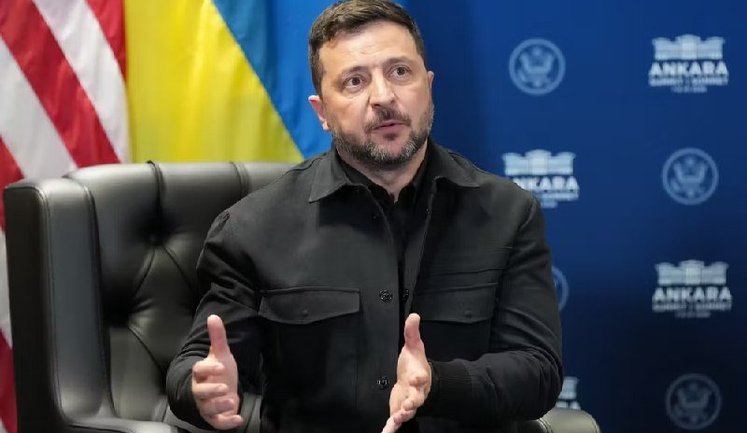
Ukrainian air defence continues to play a pivotal role in the protection of its skies, successfully neutralizing over 50% of Russian aerial threats with advanced electronic warfare (EW) systems. This achievement highlights Ukraine's strategic deployment of new air defence technologies, including private forces intercepting high-speed Shahed drones, thus enhancing the defence capabilities. President Zelenskyy announced plans for domestic production of air defence systems, aiming to work with international partners to enhance capabilities. The country seeks more anti-ballistic systems and Patriot missiles, crucial for protection against Russian aerial attacks. New Tridon systems from Sweden and operational use of JEDI Shahed Hunter interceptors further strengthen the defense forces. Continued international support, including £100 million from the UK and missile supplies from Norway, aid Ukraine in maintaining an effective shield against ongoing attacks. As Ukraine prepares for winter, emphasis is placed on bolstering missile supplies for Patriot systems and enhancing cooperation with NATO.
How is Ukraine's electronic warfare system affecting its air defence?
Ukraine's electronic warfare system significantly boosts its air defence by interfering with and neutralizing over 50% of Russian aerial targets, demonstrating effectiveness in protecting airspace. These systems are a critical component in repelling attacks, highlighting their importance in modern warfare.
What role do international partners play in Ukraine's air defence strategy?
International partners are vital in Ukraine's air defence strategy, providing both technical and financial assistance. Countries like the UK and Norway offer missile supplies and monetary support, while cooperation with NATO and bilateral agreements enhance defense capabilities, promising stronger defenses against aerial threats.
What advancements have been made in Ukraine's air defence technology recently?
Recent advancements in Ukraine's air defence technology include the certification of high-speed JEDI interceptor drones and acquisition of Tridon air defense systems. The incorporation of these technologies enhances operational efficiency and capability to counter drone threats, contributing to a more robust air defense system overall.
Why is Ukraine seeking new air defence production with international partners?
Ukraine aims to produce new air defence systems with international partners to leverage technological expertise and resources, ensuring self-sufficiency and advancement in its defense strategies. Collaborations could lead to enhancements in missile production and anti-ballistic capabilities, vital for national security.
What are the current challenges in Ukraine's air defence operations?
Current challenges in Ukraine's air defence operations include the need for timely supply of advanced missiles like the Patriot PAC-3, adapting to evolving Russian attack tactics, and maintaining a consistent flow of financial and resource support from international partners to meet the defense demands efficiently.
How effective are Ukraine's private air defence forces?
Ukraine's private air defence forces have demonstrated effectiveness by intercepting high-speed drones such as the Shahed. These forces complement national defense efforts, showcasing the country's multi-faceted approach to securing its airspace against sophisticated aerial attacks from adversaries.
What strategic agreements has Ukraine formed recently to enhance its air defence?
Recent strategic agreements include partnerships with countries like Norway and commitments from NATO allies to supply advanced missiles and aid. These agreements propel Ukraine's defensive plan, ensuring ongoing support and technological advancements crucial for reinforcing its air defence systems.
How are Shahed drones being countered by Ukrainian forces?
Shahed drones are countered through various measures including high-speed interceptor drones, traditional anti-aircraft systems, and mobile fire groups. These forces employ a combination of technologies and strategic positioning to effectively neutralize threats, maintaining Ukrainian airspace integrity.
What impact has international financial aid had on Ukraine's air defence capabilities?
International financial aid, such as the £100 million support from the UK, plays a crucial role in maintaining and expanding Ukraine's air defence capabilities. Such aid helps procure advanced missile systems, ensuring the defense infrastructure remains robust and responsive to dynamic threats.
How is Ukraine preparing for potential future air defence needs?
Ukraine is preparing for future air defence needs through alliances and production plans with partners for new systems, aiming to boost self-reliance. Emphasis is also on securing continuous missile supplies amid changing geopolitical landscapes, ensuring ongoing readiness and operational resilience.
w117_header_alt Ukrainian Air defence
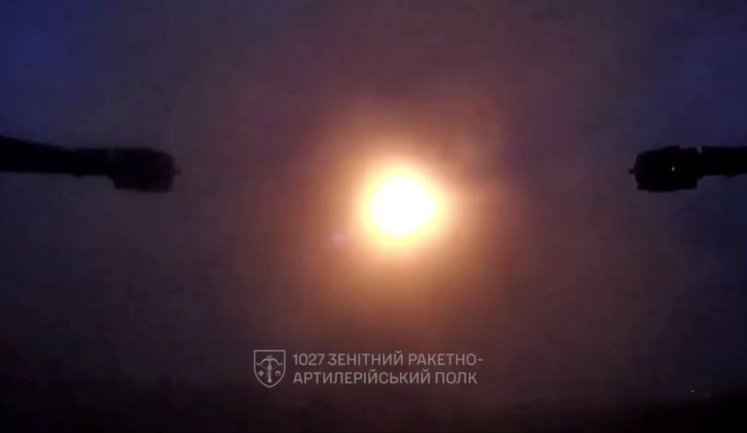
 Anti-aircraft gunners from 1027th Regiment are destroying enemy aerial targets whilst on combat duty. VIDEO Soldiers from the 1027th Anti-Aircraft Missile and Artillery Regiment of the Ukrainian Armed Forces’ Land Forces’ Air Defence have released footage of combat operations in which they destroyed Russian aerial targets using various types of anti-aircraft weaponry. 1 082 2 Previously in trend: Ukrainian Air defence
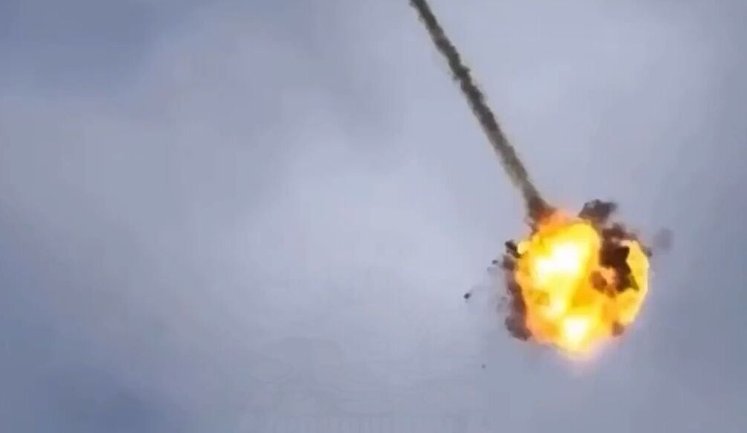
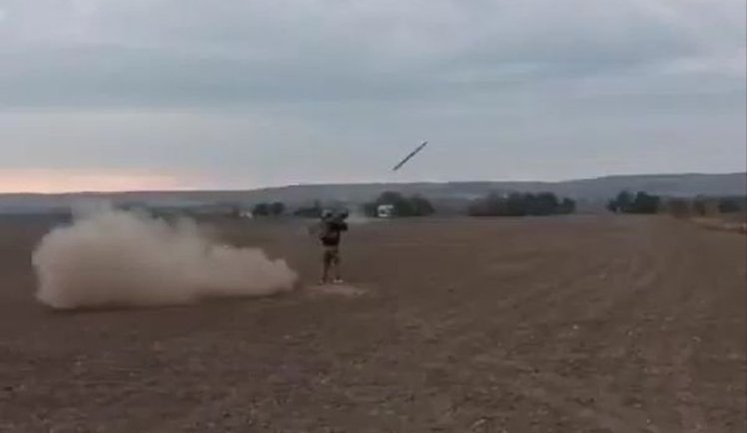
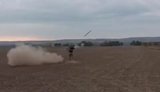 Destruction of Russian "Shahed" jet drone by "Igla-1" MANPADS missile. VIDEO Soldiers from the "West" Air Command destroyed a Russian "Shahed" jet-powered attack drone using a "Igla-1" man-portable air defence system. 3 686 20 Previously in trend: Ukrainian Air defence Destruction of Russian drones
 NATO is seeking 20-mm ammunition for Ukraine to shoot down Russian jet-powered drones: they are cheap and effective, - Admiral Dragone Admiral Giuseppe Cavo Dragone, Chairman of the NATO Military Committee, has asked the allies to determine how much 20-millimeter ammunition they can immediately provide to Ukraine. The Alliance considers such ammunition to be an inexpensive and effective means of countering Russian jet-powered... 1 652 10 Previously in trend: Ukrainian Air defence
 Ukraine prepares new contracts for air defence systems and missiles, infrastructure protection is challenge – Zelenskyy President Volodymyr Zelenskyy said the main challenge now was protecting infrastructure from ballistic missile threats and called on partners to provide Ukraine with more ballistic missile defence assets. 968 19 Previously in trend: Ukrainian Air defence Zelenskyy’s address Anti-drone protection
 Merz calls air defense Ukraine’s weakest point and promises assistance German Chancellor Friedrich Merz said he is working to strengthen Ukraine’s air defense and find additional air defense systems. 1 417 9 Previously in trend: Ukrainian Air defence
 Khmara visited Air Force command posts in Kyiv region: We will strengthen layered defence of Kyiv The Ukrainian Minister of Defence, Yevhen Khmara, visited command posts at Air Force units in the Kyiv region. 1 818 17 Previously in trend: Ukrainian Air defence Result of the work of the air force
 Tusk on visit to Ukraine: We will discuss Poland’s participation in anti-ballistic missile coalition Prime Minister Donald Tusk of Poland stated that during his visit to Ukraine, he will discuss Poland’s participation in the anti-ballistic missile coalition with President Volodymyr Zelenskyy. 1 193 4 Previously in trend: Ukrainian Air defence Carpathian Eight
 Yelizarov should be returned to Defense Forces to minimize consequences of what awaits us in coming months – Butusov The resignation of Pavlo Yelizarov, deputy commander of the Air Force, who was in charge of the drone program, served as a wake-up call. 6 074 27 Previously in trend: Ukrainian Air defence
 Zelenskyy meets with Carney: Canada has made significant decision on aid package for Ukraine’s air defence. PHOTO President Volodymyr Zelenskyy has begun bilateral talks with Canadian Prime Minister Mark Carney. 1 707 6 Previously in trend: Ukrainian Air defence
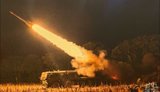 Ukraine unveils launcher for "Koral" air defence system that can intercept ballistic missiles Ukraine displayed a launcher for "Koral" surface-to-air missiles for the first time at the MSPO defence exhibition in Poland. 10 506 50 Previously in trend: Ukrainian Air defence
 Russia attacked with ballistic missiles, Banderol loitering munitions and UAVs: Air defense neutralized 56 targets. INFOGRAPHICS Starting in the evening of August 18, Russian occupiers launched ballistic missiles, various types of UAVs, and "Banderole" loitering munitions at Ukraine. 1 339 1 Previously in trend: Ukrainian Air defence
 Ukraine to expand localisation of Western arms production, working to secure new air defence packages – Zelenskyy President Volodymyr Zelenskyy heard a report from Deputy Head of the Presidential Office, General Pavlo Palisa, on the implementation of Ukraine’s defence agreements with its partners. 1 260 15 Previously in trend: Ukrainian Air defence Development of air defence in Ukraine Production of weapons
 Zelenskyy on Freya: Ukraine can build missile and launcher. We should work with partners on radars and sensors President Volodymyr Zelenskyy said that Ukraine and its European partners are working to develop the joint Freya anti-ballistic missile system, with 10 countries and 12 manufacturers already involved. 3 529 91 Previously in trend: Ukrainian Air defence
 Zelenskyy to partners: Anti-ballistic missiles must protect people, not sit in stockpiles President Volodymyr Zelenskyy has called on Western partners to supply Ukraine with missiles for the Patriot systems, emphasising that they should be used to protect people rather than left gathering dust in warehouses. 5 445 135 Previously in trend: Ukrainian Air defence Patriot missiles for Ukraine Patriot for Ukraine
 We have brought Russian strike drone interception rate to 93% – Zelenskyy President Volodymyr Zelenskyy said that Ukraine had managed to raise the interception rate for Russian strike drones to 93%. 1 508 31 Previously in trend: Ukrainian Air defence Result of the work of the air force
 Ukraine has agreement with Middle East regarding anti-ballistic missiles, - Zelenskyy President Volodymyr Zelenskyy has stated that an agreement has been reached with the Middle East regarding the supply of anti-ballistic missiles. However, the details will not be disclosed until the war in that region has ended. 936 9 Previously in trend: Ukrainian Air defence
Ukraine and Europe will create anti-ballistic shield together for first time, - Zelenskyy. VIDEO President Volodymyr Zelenskyy announced the launch of the Freya project to develop a European anti-ballistic missile system and stated that Ukraine is moving closer to producing missiles for the Patriot system. 1 187 16 Previously in trend: Ukrainian Air defence Anti-ballistic air defense system
 Ukraine and nine other European countries have officially formed Anti-Ballistic Missile Coalition Ukraine and nine other European countries have officially announced the launch of an anti-ballistic coalition. 4 675 40 Previously in trend: Ukrainian Air defence Anti-ballistic air defense system
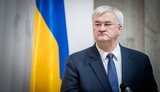 Concrete decisions have already been made to strengthen Ukraine’s air defense and anti-ballistic capabilities – Sybiha Following talks at the NATO summit, concrete decisions have already been made to strengthen Ukraine’s air defense, in particular its anti-ballistic capabilities. 889 19 Previously in trend: Ukrainian Air defence Anti-ballistic air defense system
 NATO summit to seek solution on supplying ballistic missile interceptors to Ukraine, - Rutte NATO Secretary-General Mark Rutte expressed the hope that the Alliance’s summit would lead to decisions being taken that are of critical importance to Ukraine regarding the supply and deployment of additional systems to intercept Russian ballistic missiles. 824 12 Previously in trend: Ukrainian Air defence NATO aid to Ukraine Anti-ballistic air defense system
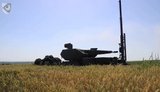 Air Command "West" has shown destruction of Russian cruise missile by Skynex system. VIDEO The "West" Air Command has released footage of the Skynex anti-aircraft artillery system in action, showing it destroying a Russian cruise missile. 9 481 33 Previously in trend: Ukrainian Air defence Shooting down Shaheds Air operations of AFU
 Fedorov appealed to 40 countries asking them to urgently transfer Patriot missiles to Ukraine this month Ukraine's Defense Minister Mykhailo Fedorov, following the massive shelling of Kyiv, sent letters to nearly 40 partner countries asking them to urgently transfer missiles for Patriot air defense systems to Ukraine from existing stocks this month. 2 741 27 Previously in trend: Ukrainian Air defence Missiles for Patriot
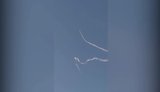 Air Force releases footage of destruction of Russian ballistic missiles over Kyiv on June 25. VIDEO The Air Force of the Armed Forces of Ukraine has released a video showing Ukrainian air defense shooting down Russian ballistic missiles over Kyiv on Thursday, June 25. 8 131 29 Previously in trend: Ukrainian Air defence Result of the work of the air force
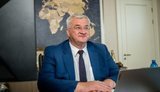 Ukraine expects additional decisions on air defence at NATO summit in Ankara – Sybiha During the NATO summit in Ankara (Türkiye), Ukraine expects additional decisions on strengthening Ukrainian air defence. 374 4 Previously in trend: Ukrainian Air defence NATO Summit in Ankara
 Ukraine is responding to Russia’s criminal attack on Lavra with strikes on Moscow region, - Zelenskyy Ukrainian President Volodymyr Zelenskyy stated that the Russian drone strike on the Kyiv-Pechersk Lavra is a "crime against humanity" and an attack on one of the most important Christian shrines. Ukraine is responding with strikes on Russian military and fuel facilities. 1 640 13 Previously in trend: Ukrainian Air defence Striking Russia Strike on Kyiv-Pechersk Lavra
 Over 57,000 targets destroyed: effectiveness of Ukraine’s air defence remained at 88% throughout May, - AFU. PHOTOS Units of the Ukrainian Defence Forces are demonstrating a high and consistent success rate in repelling Russian air attacks. Despite the unprecedented intensity of air raids during the spring of 2026, the rate of enemy targets shot down remains between 88% and 90%. 831 2 Previously in trend: Ukrainian Air defence
 Ukraine has managed to secure additional air defence systems and interceptor missiles from its partners, - Foreign Ministry Ukraine has held talks with its partners and secured a number of additional assets, including both air defence systems and interceptors. 1 658 8 Previously in trend: Ukrainian Air defence Patriot missiles for Ukraine
 30 companies have been granted permission to establish private air defense units in Ukraine In Ukraine, 30 companies have been granted the right to form private air defense units to protect facilities from attacks by Russian drones. 1 615 6 Previously in trend: Ukrainian Air defence Result of the work of the air force
PAC-3 interceptor missile supplies to Ukraine continue every day and every week – Rutte NATO Secretary General Mark Rutte has assured that supplies of US PAC-3 interceptor missiles to Ukraine are continuing "every day and every week." 3 066 11 Previously in trend: Ukrainian Air defence NATO aid to Ukraine
 We need to use our resources more efficiently due to the shortage of missiles for air defense, - Syrskyi During a working visit to the south, he worked at the Southern Air Command. He inspected the organisation of combat operations at the command post, as well as the combat crews of anti-aircraft missile and artillery systems tasked with defending Ukraine’s airspace. 996 16 Previously in trend: Ukrainian Air defence Syrskyi briefing
 Drone operators from 23rd Brigade of National Guard of Ukraine "Khortytsia" destroyed 20 enemy drones overnight that were attacking Zaporizhzhia. VIDEO During the latest large-scale attack on Zaporizhzhia on the night of 1–2 June, the interceptor pilots of the 23rd ‘Khortytsia’ Brigade of the Ukrainian National Guard demonstrated exceptional effectiveness. According to Censor.NET, thanks to the professionalism and coordinated actions of the... 1 462 1 Previously in trend: Ukrainian Air defence
 Zelenskyy and von der Leyen discussed strengthening Ukraine’s air defence capabilities, particularly its anti-ballistic capabilities President Volodymyr Zelenskyy discussed with European Commission President Ursula von der Leyen efforts to strengthen Ukraine’s air defense, particularly its anti-ballistic capabilities. 737 7 Previously in trend: Ukrainian Air defence Zelenskyy’s conversation with von der Leyen
 Moment Russian Kh-101 cruise missile is intercepted during massive shelling of Kyiv. VIDEO During another massive attack by Russian terrorists on the Ukrainian capital, air defense forces managed to neutralize most of the aerial targets heading toward residential areas. 11 441 18 Previously in trend: Ukrainian Air defence
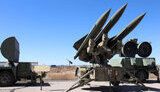 US approves sale of Hawk system equipment to Ukraine for $108 million The U.S. State Department has approved a potential sale of $108.1 million worth of equipment to Ukraine to support the Hawk missile system, with the aim of strengthening the country's air defense capabilities. 2 413 18 Previously in trend: Ukrainian Air defence Development of air defence in Ukraine
 Zelenskyy orders strengthening of air defenses and anti-drone protection in northern Ukraine President Volodymyr Zelenskyy held a meeting with community leaders from Kyiv and Chernihiv regions, during which they discussed protecting the Chernihiv-Kyiv direction from potential Russian threats. 1 159 22 Previously in trend: Ukrainian Air defence Anti-drone protection
 Air Force of Armed Forces of Ukraine shows combat work during repulsion of attack by more than 200 Russian UAVs. VIDEO The Ukrainian Air Force has released footage of air defence operations during a massive attack by Russian drones on the night of 12 May. 2 779 0 Previously in trend: Ukrainian Air defence Attack of drones Shooting down Shaheds Destruction of Russian drones
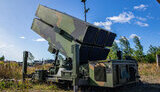 Patriot and NASAMS launchers are half-empty due to shortage of ammunition, - Air Force Ukrainian air defence units have critically low missile stocks, and international support remains vital. 5 327 57 Previously in trend: Ukrainian Air defence
 Additional radars, EW and crews: Zelenskyy announces stronger air defense for Dnipro and Odesa President Volodymyr Zelenskyy has announced stronger air defense, in particular for Dnipro and Odesa. 1 154 19 Previously in trend: Ukrainian Air defence Development of air defence in Ukraine
 24 companies have already joined the private air defense project, Ministry of Defense says As of April 2026, 24 companies have joined the private air defense project. 1 228 3 Previously in trend: Ukrainian Air defence Modernization of the Ukrainian air defense system
 We are actively looking for ways to secure anti-ballistic systems and other air defense assets against missiles – Zelenskyy Ukraine is actively looking for ways to secure anti-ballistic systems and other missile defense assets. 1 451 22 Previously in trend: Ukrainian Air defence Development of air defence in Ukraine
 Minus 11 "Shaheds" and 4 reconnaissance drones: combat operations by "Strix" UAV operators. VIDEO Air defence units continue to effectively repel massive attacks by Russian terrorists, who are increasingly using combined strikes involving various types of drones. Operators of the ‘Strix’ air defence system have reported further successes in defending Ukrainian airspace. This was reported by... 551 0 Previously in trend: Ukrainian Air defence
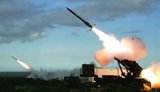 Anti-ballistic air defence stocks could run out in any week because of intensity of shelling – Zelenskyy Ukraine’s air defence stocks could run out in any given week because of the intensity of Russian aerial attacks. 2 354 39 Previously in trend: Ukrainian Air defence shortage of missiles for air defence systems
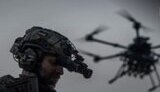 More than 50% of enemy aerial targets are jammed by EW systems – Ground Forces of AFU Electronic warfare systems play a key role in Ukraine’s air defence and neutralise more than half of the Russian aerial targets. 866 0 Previously in trend: Ukrainian Air defence
 Ukraine plans to produce air defence with partners. We are looking for anti-ballistic systems, Zelenskyy says. VIDEO President Volodymyr Zelenskyy said that Ukraine plans to manufacture air defence systems together with its partners. 1 350 18 Previously in trend: Ukrainian Air defence
 Private air defence forces destroyed first jet-powered "Shahed": it was flying at speed of over 400 km/h. VIDEO Private air defence forces have shot down a 'Shahed' drone travelling at over 400 km/h for the first time. 7 864 29 Previously in trend: Ukrainian Air defence Result of the work of the air force
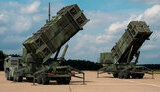 Ukraine asks partners to send Patriot missiles by November: Winter is near Ukraine has appealed to its international partners to transfer missiles for Patriot systems by November and finance the purchase of advanced PAC-3 missiles to strengthen air defense. 2 151 27 Previously in trend: Ukrainian Air defence
 Protecting skies and supplying drone teams: Ukraine and Norway have agreed on priorities for cooperation, — Fedorov Defense Minister Mykhailo Fedorov held a working meeting with Norway's Defense Minister Tore Sandvik on the eve of the "Ramstein" conference. 1 034 3 Previously in trend: Ukrainian Air defence Aid to Ukraine from Norway Ukraine–Norway cooperation
 113 out of 128 UAVs launched by Russians were neutralized by air defense forces. INFOGRAPHICS On the night of April 10, Russian occupiers launched 128 drones at Ukraine. 860 1 Previously in trend: Ukrainian Air defence
Page 1 of 3
more news