


"SHOOT, YOU BASTARDS!" Interview with Ukrainian Vyhivskyi, who has spent 13 years behind bars in Russian Federation. Torture, recruitment, life in solitary confinement
Valentyn Vyhivskyi, a resident of Kyiv, served 11 years in a Russian prison on fabricated charges. And for a year now, he has been unable to return home—Russia continues to hold him based on the rulings of its judges. He is now in a deportation center, which is little different from a prison: bars, handcuffs, and a metal door with a small window for food. According to Valentyn himself, there is a secret order from Alexander Bastrykin, the head of the Investigative Committee of the Russian Federation, not to allow Ukrainians of draft age to leave Russia.
Due to some easing of restrictions at the deportation centre, Valentyn is allowed to use a telephone for a few hours. That is precisely how we were able to record this interview with him. Out of concern for his safety, we have edited out some sensitive details. But from this text, you can grasp the main point – how Russia is detaining Ukrainians, and what they are having to go through. When asked the simple question "How are you?", Valentyn replies: "The main thing is that I’m alive."
We’ve written in detail about the fight for his release here.
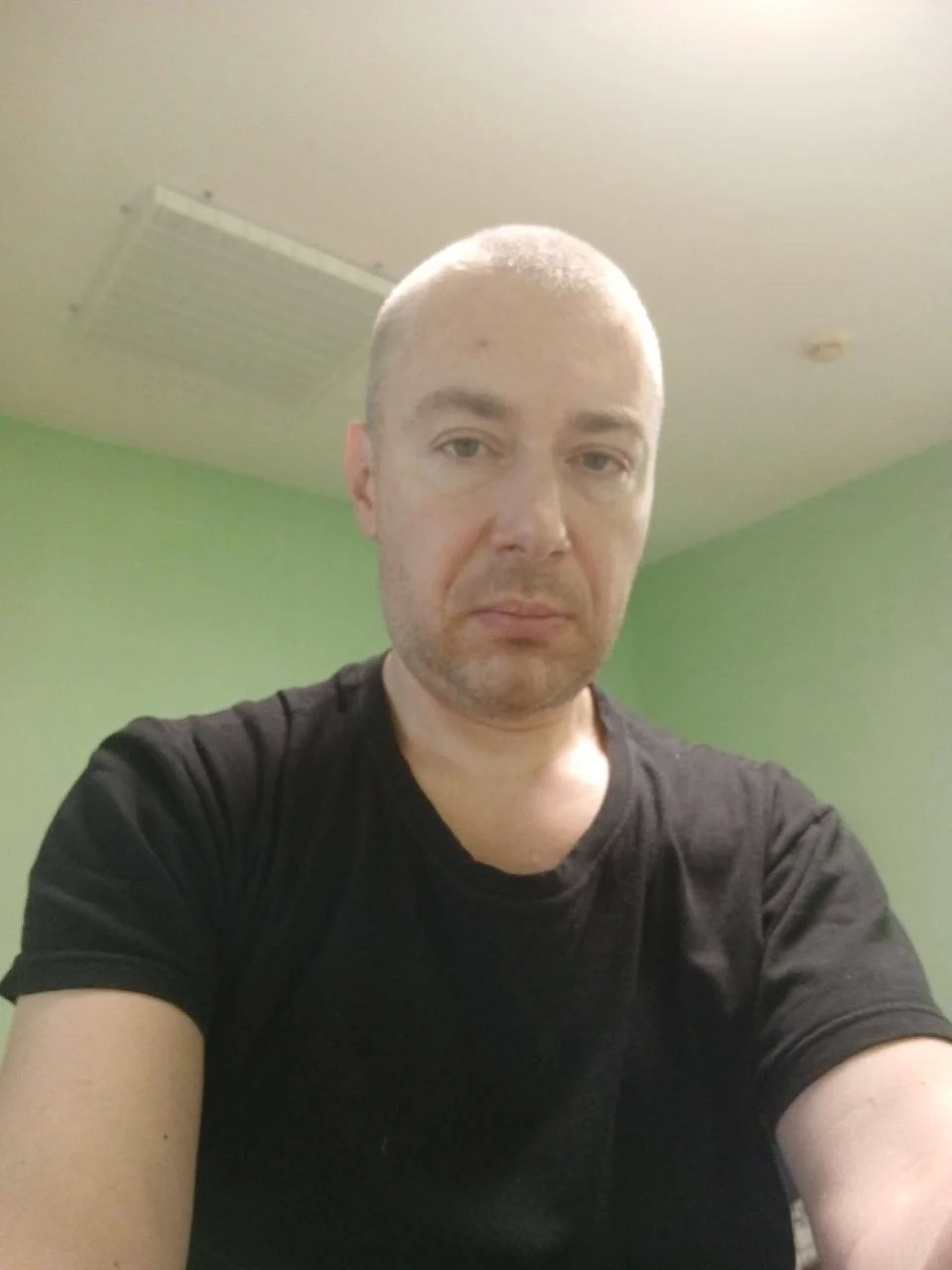
"LIKE IN PRISON". The deportation centre
– Valentyn, tell us, what is a typical day like for you in this deportation centre? I’ve simply never been to such places; I don’t even know what they look like.
-It’s just like a prison. In Russia, whatever they set about creating, it always ends up resembling either a prison or a Kalashnikov assault rifle. This country can’t produce anything else. Our centre is like a prison, only with slightly better conditions.
-Are they separate rooms or cells?
-I’m sharing with my neighbour – who, by the way, is also from Ukraine – and we’re in a cell. Here, the shower and toilet are partitioned off. And the door is locked. So you can’t leave the cell. There’s a food slot in the door, just like in a prison. We sit here all day long.
Later, Valentyn sent me two photographs of his cell at the deportation centre: a small room with bars on the windows, a metal bed, an iron door with a small window for serving food, and a toilet behind a plastic door.
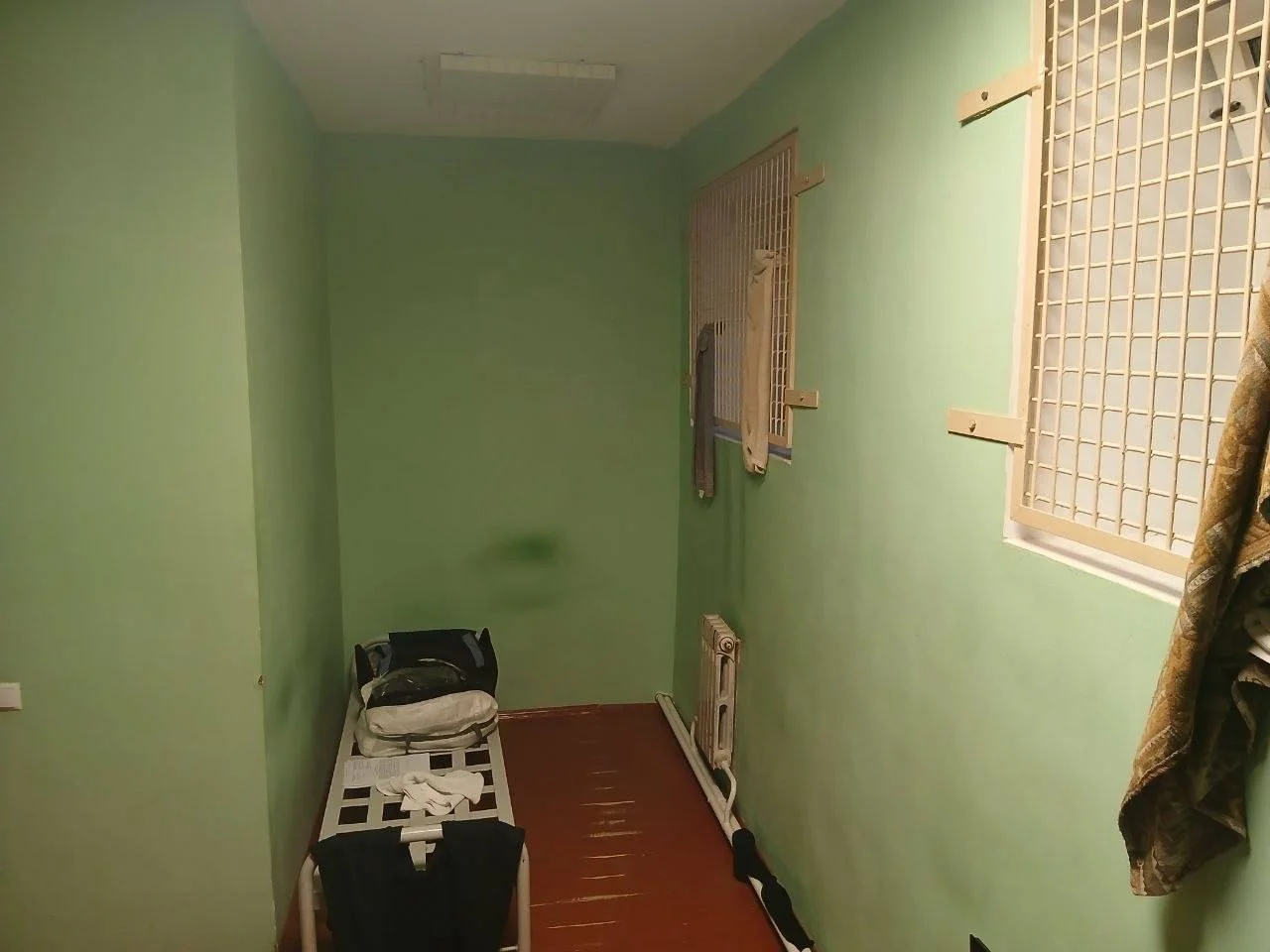
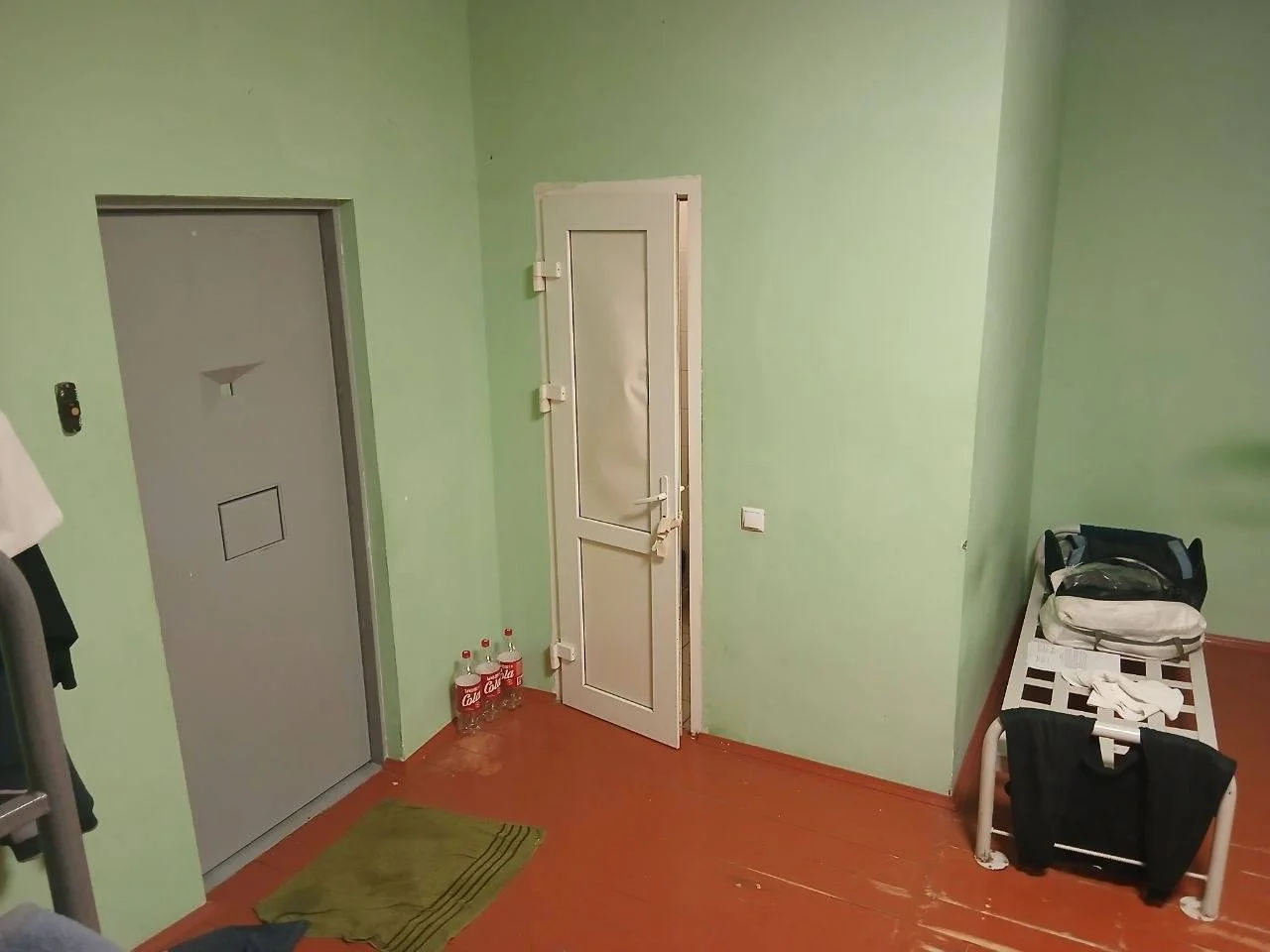
‘There’s also a telly. And they give you a phone during the day. And they don’t drive you mad, like in prison – that’s a relief. And your morale is improving.’
-Are there guards?
-Of course. Just like in prison. Only a bit more relaxed. The regime isn’t as strict. Besides, some renovation work has been done – all the walls have been repainted. You’re allowed to wear loose-fitting clothes. In prison, you weren’t allowed to wear loose-fitting clothes. And whilst these might seem like trivialities to someone who hasn’t experienced this, in reality, they’re very important.
-Are there many Ukrainians there?
-Plenty. We recently found out that there’s an order from Bastrykin (Alexander Bastrykin, head of the Investigative Committee of the Russian Federation – ed.) stating that all Ukrainian men must be held in these deportation centres for two years before being released. So they don’t go off to fight. Just think about it – the order was issued by the Head of the Investigative Committee of the Russian Federation, not even the FSB! In other words, they’re to facilitate the deportation of women, children, the elderly and the sick, whilst keeping the men in.
-Did you hear about this order from Bastrykin during your own court hearings?
-In court, they say there is a confidential internal order; they show it to the judges, but the document itself is not included in the case file.
-And what do they write in the court rulings as to why you are not being released from the deportation centres?
-There are already six Ukrainians held in our centre. And the reason is the same for all of us – they’re simply extending our stay in the centre due to the ‘Special Military Operation’ (as the war is officially termed in the Russian Federation – ed.). As if they’re looking out for our safety. And they’re still unable to carry out the deportation orders because there’s no safe section of the border with Ukraine.
-Have you asked to be allowed to cross the borders into other countries?
-Yes! They won’t agree. I offered to travel via Belarus, at my own expense. I also suggested travelling via Estonia, until they introduced a curfew at the border there. I offered to go via any country. I even offered to pay for my own escort myself.
And the judges themselves realise that this order from Bastrykin, firstly, has nothing to do with migration policy. Secondly, it’s classified. Thirdly, it seems they’re ashamed themselves, because they realise that even under their own pitiful laws, this is illegal. And it’s a farce. And this isn’t just about me. In Russia, there is complete legal lawlessness. It’s as if 1937 never ended; the traditions of the NKVD and Vetlag (the Vyatka Correctional Labour Camp – one of the camps in the Soviet Gulag system, located in the Kirov Oblast of Russia – ed.) live on and flourish.
-Valentyn, how is it that you can express your views so freely whilst in Russian captivity?
-Well, I used to say everything straight to the FSB officers’ faces, and even more bluntly than that. They gave me a bit of a rough time for it, of course. And I spoke my mind directly to the prison staff too. Because it’s the truth. At Lubyanka, I told their superiors exactly what I thought. By the way, all their middle managers are just like Putin. Carbon copies. As if they’d all come from the same mould. So bureaucratic, so bland. It’s all so gloomy there; a portrait of Felix Edmundovich Dzerzhinsky hangs in every office. People with that sort of corporate culture have seized all the power. To them, everyone here is an enemy and ‘the English are up to no good’.
-Last year your sentence ended – the 11 years you were given for alleged espionage. When you left the prison, did you believe that was it – freedom?
-To be honest, I didn’t think about it. Given the charge against me, I could have expected any sort of provocation from them – anything at all. So, if I can’t do anything about it, why should I worry my head about it? I walked out of the building, a police patrol arrived, and they took me away. That was it.
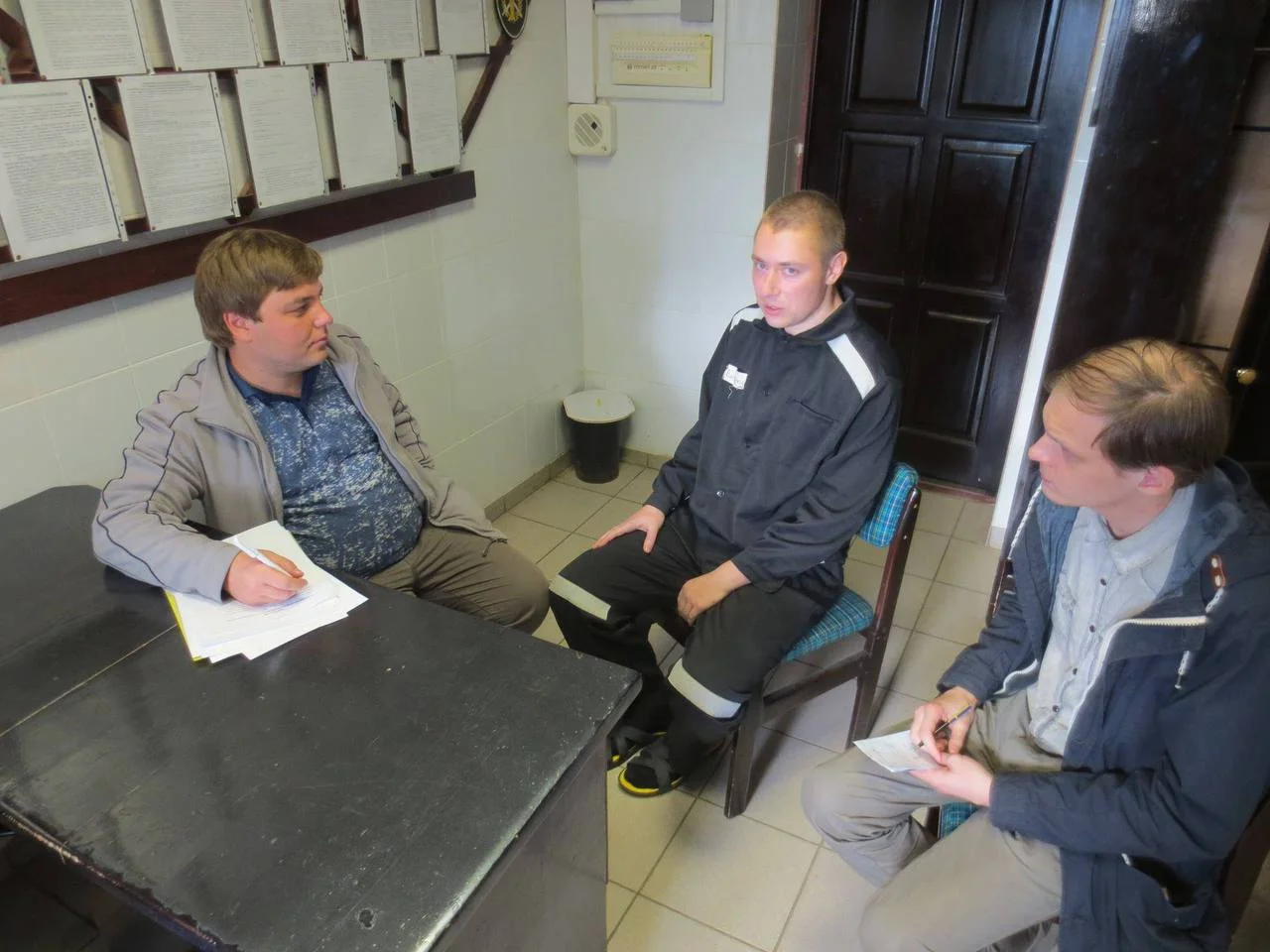
After his sentence ended on 17 September 2025, Valentyn was taken from the prison to court. The Kirov court ruled that he must be deported to Ukraine immediately, as he posed a threat to Russians. What’s more, Valentyn was banned from entering Russian territory for 10 years. However, he is not being allowed to leave Russia. Following a ruling by the same court, the Ukrainian is being held at the Centre for the Temporary Detention of Foreign Nationals run by the Russian Ministry of Internal Affairs in the city of Kirov. Initially, he was ordered to spend 120 days at this centre, but this period has been repeatedly extended. Valentyn Vyhivskyi has now been held there for over a year.
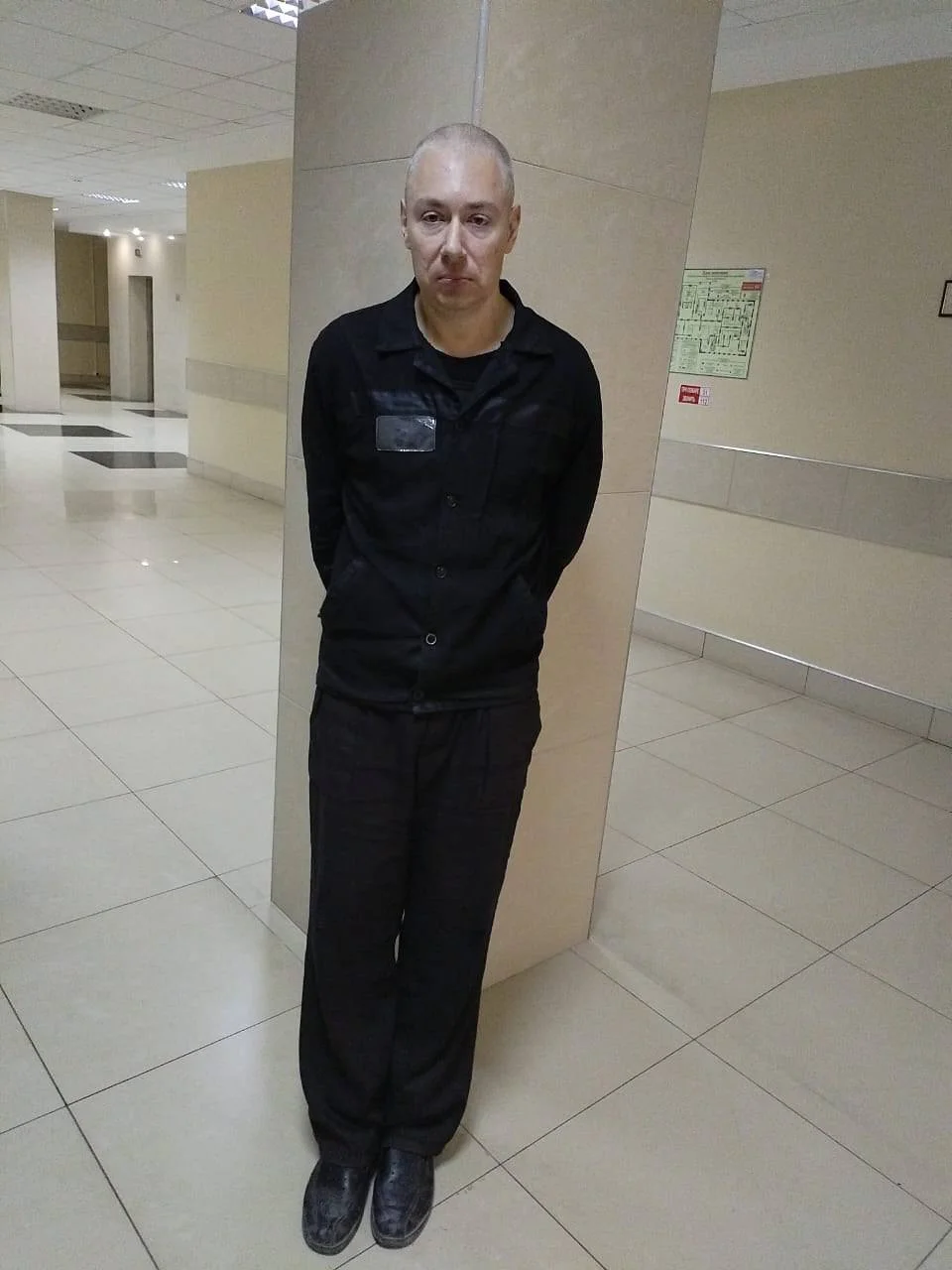
‘As I once told the investigator: until I physically leave the territory under this state’s jurisdiction and give two middle fingers in a certain direction, I consider that nothing is over yet. When I cross the border, only then will I be able to say that I am finally free.’
-Do you have any idea when that will be?
-Well, what’s there to know? Anything could happen. I’ve been stuck in this centre for over a year now. I’m doing everything I can, and my parents are doing everything they can to try and push this matter forward. But things will turn out as they’re meant to.
-You said there are other Ukrainians here with you. Who are they?
-One is from the camp where I was held. The other is from a different zone. And they’ve brought two more here from prison as well. Two of them want to stay here.
-In Russia?
-Yes. One of them has a mother here. The other simply loves Russia. He might go off to war. By the way, one of them has already been there. His arm was torn off there.
A THIRD OF HIS SENTENCE – IN SOLITARY CONFINEMENT. PRISON
-How did your 11 years in a maximum-security prison go?
-It felt like 35 years. And if only there’d been a camp, a barracks, but no, it wasn’t like that for me. I served most of my sentence in solitary confinement. Just stuck within four walls. It’s several times harder.
-What was the cell like?
-Horrible. It wasn’t even fully painted. There were wooden benches. You had to bolt them down in the morning so you couldn’t sit on them. I had to take the mattress out to a special room at the end of the corridor, called the ‘mattress room’. Only a bench remains in the cell. Everything’s designed to be as uncomfortable as possible. Because this bench is like the ones in a nursery – just 20 centimetres high. It’s cold. It’s sweltering. There are loads of mosquitoes. You’re in a prison uniform. Wake-up is at 5 am, there’s an hour’s walk, and lights out is at 8 pm. The days drag on for what feels like an eternity. It feels as though one day here is like a whole week in normal life.
-And are you always on your own?
-Yes. About 70 per cent of my 11-year sentence was spent in solitary confinement. That in itself is a form of torture. Even those serving life sentences are held in pairs. But I’m on my own.
-How did you cope with that?
-Thanks to my ability to take a step back. I tried to take my mind off things; I read books, magazines, and newspapers—I ordered a whole bunch of them. I was probably the only one there who read so much. I did my utmost to escape reality – constantly pondering things, writing letters, keeping my own notes – so as not to try to fall asleep and to spend that time usefully. I think in the film "The Shawshank Redemption", the main character said that in harsh prison conditions, the most important thing is to distance yourself from reality as much as possible. I didn’t understand that saying before. But honestly, that advice really helped me.
Because I saw and heard how, in neighbouring cells, some people sewed their mouths shut, others cut themselves, and some were taken away to a psychiatric hospital. Their minds simply couldn’t cope.
-Did you have any mental breakdowns?
-No, I didn’t. I’m quite mentally stable.
-What was your relationship like with the prison authorities?
-It varied. I’m a straight-talking sort; I don’t like sucking up to anyone. If it’s a turd, it’s a turd – I’m not going to call it ‘organic faecal matter’. I always told it like it is, but I behaved decently. So, on the whole, my relationship with the staff was more or less normal.
"SHOOT, YOU BASTARDS!" TORTURE BY THE FSB
– Were you subjected to abuse? Was there any torture?
-Not in the prison colony. Only at Lubyanka (‘Lubyanka’ is a square in the centre of Moscow, the name of which has become a symbol of the Soviet and Russian secret services; it is now home to the headquarters of the Russian FSB – ed.)
-Tell us about it.
-For example, back in 2014, they took me out to the forest near Ramenskoye, just outside Moscow. They drove me around for five hours; I had a sack over my head, crouched on the floor of the minibus. The special forces' legs were on me. They took me out in the woods. It was a counter-terrorism special forces unit, from the FSB. They pulled me out, stood me up – and walked away. In silence. They were all wearing masks and carrying automatic rifles.
-They just stand there in silence, is that it?
-Yes. They just stand there in silence. That’s their psychological tactic – a way of breaking a person. It’s already clear to me that they’re going to finish me off right here and now. They’re a bunch of lawless thugs; they don’t give a damn about anything. Because there’ll be no consequences for this. I’m standing there… and everything around me has slowed down so much. And I was overcome by such a sense of sadness that I wouldn’t see my son grow up. I remember that moment particularly well. I don’t know how much time passed, but it felt like an age. I said to them: ‘Well then, shoot, you bastards!’ But they just stood there in silence. Then there was a crackle on the radio. They approached silently, put the bag over my head again. They threw me into the car. And that was it. Then one of them said to me: "Well, you’re a tough nut to crack; we’ve had terrorists break down under this procedure!"
The most brutal torture usually takes place within the first 24 hours. Before they transfer you to the pre-trial detention centre. Because at Lefortovo (a historic and active prison in Moscow, known as the main detention centre for the Russian security services – ed.), every time they bring you there, they strip you completely naked and check to see if you’ve been beaten up. They won’t take someone who’s been beaten up on their own responsibility, so that you don’t die there. Because you’ve already been arrested, so you’re supposedly within the law. And on my side, I’m not charged with a terrorism offence. But with those charged under terrorism offences, they can do absolutely whatever they like – they’ve got far more scope for ‘creativity’. One investigator told me: ‘It’s a shame you’re not charged with terrorism; then I could shoot through your leg and stick my finger in there.’
-During that time, before you were sent to the remand centre, were you beaten?
-Well, of course! How could it be otherwise?! It’s such a minor thing compared to everything else. They even filmed a video with me. They wrote a script for me, claiming I was an SSU agent. They printed it out on paper, told me to learn it by heart and repeat it a few takes. But they couldn’t even film that properly – because my face was all battered. I said: ‘You could at least have waited until these bruises had gone down!’ Just to make it more convincing! Because it turns out just like in that old clip with Dobkin and Kernes from Kharkiv: ‘Misha, you’ve got a boring face, nobody’s going to give you any money!’
– But what’s the SSU got to do with it? Didn’t they accuse you of spying for China?
-But they changed the charges several times, making up all sorts of things. Something different every time. I told them: "I feel Spanish shame because of your competence." In the end, they simply accused me of espionage. As for China – that was probably just something the journalists made up.
"SERVE YOUR COUNTRY!" HOW THE FSB RECRUITED
–So why did you go to Crimea then?
-They lured me there through my girlfriend. She lived in the Moscow region, I think, and probably still does. She used to come to see me in Kyiv; we’d chat about technical matters. She asked me to help with something and to come to Crimea. I went. It’s not the first time my soft-heartedness has got me into trouble.
-Do you understand why you, in particular, came to the FSB’s attention?
-Well, I have a few theories. They later told me that they wanted me to work for them – to be part of their small cyber operations team. Even on the eve of the sentencing, in the evening, sometime after 9 or 10 pm, people came to see me – as I understand it, some weren’t even from the FSB, but from the intelligence services – and politely said: ‘Well, perhaps you’ll agree?’ I said: ‘No, I won’t work for the enemy in any capacity.’
And then in court, before the sentence was handed down, before the hearing began, the prosecutor came up to me – my lawyer was sitting right next to me – and she said: ‘Young man, why do you want to go to prison? Serve your homeland!" I was just about to reply that Russia isn’t my homeland, when she said: "It doesn’t matter which homeland. It’s better than sitting in prison."
They wanted me to live in Moscow and work for them as an IT specialist. As for my girlfriend, they simply went after her. In Russia, it’s a matter of technique; here, they can grab anyone by the arse, and there’s nowhere you can run. Because she’s a decent girl. Even though she set me up royally. I had my trial and she was there as a witness, because she was the one who lured me in. She was ashamed; she didn’t even look in my direction, just mumbled something incoherently – you couldn’t make head nor tail of it. She’s not a bad person, it just turned out to be a bit of a mess. The foot of the state is coming—and a person has no real choice.
"MY BUILDING IS IN THE NEWSPAPER PHOTO." THE START OF THE FULL-SCALE INVASION
– You were in prison when the full-scale invasion began. How did you find out about it?
– They showed something on television. Novaya Gazeta (a Russian newspaper that continued to report critically on the war, ed.) was still coming out then, and I had a subscription. The "special military operation (SMO)" began, and the next day a new issue arrived. And there in the photo was my building, all battered, on Koshytsia Street, near Kharkivska metro station. Opposite the school. Of all the buildings they could have published a photo of, it had to be mine!
– That’s horrifying.
– Yes. Can you imagine how I felt? I went off like you wouldn’t believe. It was insane. I’d managed, with great difficulty, to get out of solitary and had been living under SUS (a Russian acronym for "strict conditions of detention," ed.) for a year and a half by then. The conditions were a little better there. There was a television and a fridge. And then I lost it. There are always well-wishers around. Someone reported me, and they put me back in solitary.
– What did you do?
– Just imagine how I felt. It had all begun, and there in the newspaper was a photo of the wrecked building where I’d lived. There was no mistaking it! It was a shock. Can you imagine? And there were these f#ggots there, all fired up with patriotic fervor! They’d say things like, "Oh, come on, you khokhols all bat for the other team..." I just wanted to beat those assholes to death. They reported me to the prison’s security officers.
– And they put you back in solitary. For how long this time?
– A month. But they still turned the radio on in the morning before exercises, so I heard some news. The newspapers still arrived, even if they were late. They were near Kyiv at the time, and I was here, unable to do anything. And the way they presented it on television, Gazmanov would be singing on the Maidan any day… Anyway, those aren’t very pleasant memories.
– Did the way people treated you change after 2022?
– I wouldn’t say so. I’d already built decent relationships with the staff. With each person individually. For the most part, they treated me well. I know how to find common ground with people. And they do respect decent people. If someone refuses to betray their beliefs even under those conditions, knowing there will be consequences, any reasonable person will respect that, even if they don’t share those beliefs.
That reminds me of a story. I had a bath sponge in the colors of the Russian flag. I’d bought it in the local shop. They simply didn’t have any others. One day I was going to the bathhouse, and a staff member, a big guy who’d been a paratrooper, said, "Oh, so you’re one of us now! You’ve become Russian! Just look at your bath sponge!" The second time, he said the same thing. The third time, I told him, "But you don’t know what I wash with it." He started shouting, practically foaming at the mouth. And I told him, "That’s exactly what I keep it for—to wash my backside."
"I WAS ON THE OTHER SIDE OF THE LOOKING GLASS." THE INTERNET
– What was the most terrifying thing for you over those 12 years?
– Being in solitary. Time without end. It’s probably even worse than being shot outright. It’s probably the worst thing that can happen, the hardest ordeal. Even sharing a cell with the most horrible scum is better. At least you’re with another living person.
– At least now you have a phone and can stay in touch with your parents and your son. You have internet access…
– Yes, it’s a quantum leap! You can learn all kinds of things, watch videos, read proper news. I watch Ukrainian YouTube channels now. I subscribe to several. I also watch things about new technology, aviation and military technology, IT infrastructure… There are video car reviews now, too, instead of just reviews in magazines…
– It’s a whole new world for you.
– I feel like I was on the other side of the looking glass. But I wouldn’t say I’ve fallen that far behind. On the one hand, there’s a lot I haven’t seen. But look at how quickly children pick things up. And I’ve got an adult brain. I do understand a lot of things well. I’ve missed a lot, but I know what to pay attention to.
– What did you study?
– Electronic engineering. I graduated from Kyiv Polytechnic.
– Did you work in your field?
– What electronics industry do we even have in Ukraine? Do we manufacture microprocessors or servers? Of course not. I worked more in IT.
– How are you building a relationship with your son now? You haven’t seen each other for 12 years, after all. He was very little. I’ve spoken to many of our former prisoners of war. They often say it’s difficult with their children, that they have to start all over again.
– There is that. But every family’s situation is different. Besides, I understand psychology well. It’s a hobby of mine. The idea that I couldn’t build a relationship with my own son is laughable. Everything’s fine on that front. He’s waiting for his dad. He’s 17 now, an age when he really needs his father. When I get back, he’ll live with me. He was worried at first, but I told him, "Kiriusha, relax. You’re part of me, and I’m part of you. We have a lot in common. We’re a single whole. Think of me as your best friend." And everything went well.
"I’M SURPRISED MYSELF THAT I DIDN’T BREAK DOWN." DREAMS
– Why do you think you weren’t included in any exchanges all these years?
– I don’t think anything about it. And I don’t want to. None of it matters anymore. I don’t like speculating when I have no information to go on. It’s a pointless mental exercise.
– Are you sure I can publish this?
– Yes. I said all of this to the Chekists’ faces. You won’t make things worse. How much worse could they get? The Russians want to kill us all, hang us, or send us to Siberia. I saw how they abused the Azov fighters who were given long sentences. Our penal colony had a punishment block. They set up a separate section for them at the end of the corridor. The way they abused them…
– What do you dream of doing when you return?
– I dream of just living like a normal person. I want normal clothes. To simply walk down the street. To be out in the open. To go for a drive. To spend time with my son. To do interesting work. You know, you have to try to stay positive anyway. Yes, you have to recognize reality and keep your sanity, but a positive attitude and good humor allow you to get through any ordeal with dignity.
– I’m so surprised to hear that from you. That you haven’t broken down…
– Honestly, even I’m surprised I haven’t cracked, lost my mind. Really, I’m surprised myself. But again, you learn these things about yourself when life gives you a chance to test yourself. It’s like in physics, like testing a mechanical component. You never know what it can withstand until you test it. But it’s better not to put people through tests like that. Still, there it is. A lot of guys are in the trenches now. They have it much harder.
Iryna Romaliiska


