


"Dual-use" bank: while Russia kills, Raiffeisen counts its profits. Kremlin hostage or partner?
Austria’s Raiffeisen Bank International (RBI), the largest Western bank still operating in Russia, has spent nearly five years explaining why it cannot leave.
And throughout those years, it has been making money there. Its Russian subsidiary earns profits, processes payments, and remains an important part of the aggressor state’s financial system: Russia’s central bank considers it systemically important, and a senior RBI executive told the Financial Times back in 2023 that the bank handled 40–50% of financial flows between Russia and the rest of the world.

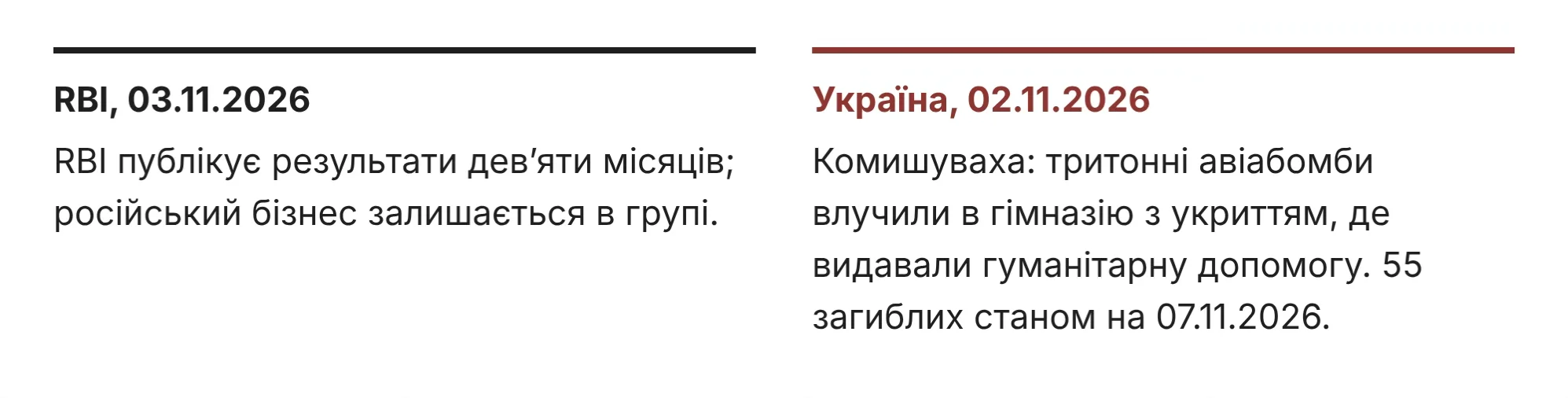
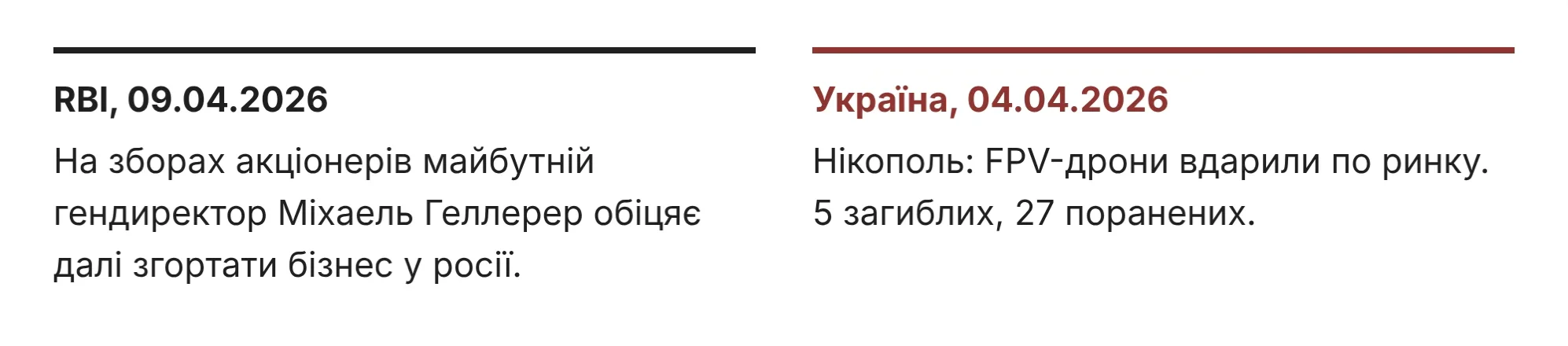
This article was being prepared against the backdrop of reports of another Russian war crime. On 2 November 2026, Russian aircraft struck a school in Komyshuvakha in the Zaporizhzhia region. Fifty-five people who were in a shelter were killed. Against this backdrop, the billions in RBI’s reports no longer seem neutral.
That is why we place the dates of events in Ukraine alongside the dates of the bank’s statements. It is impossible to prove that specific funds paid for a specific missile or bomb. But Ukrainians have a right to see this context.
Nearly five years of "exiting"
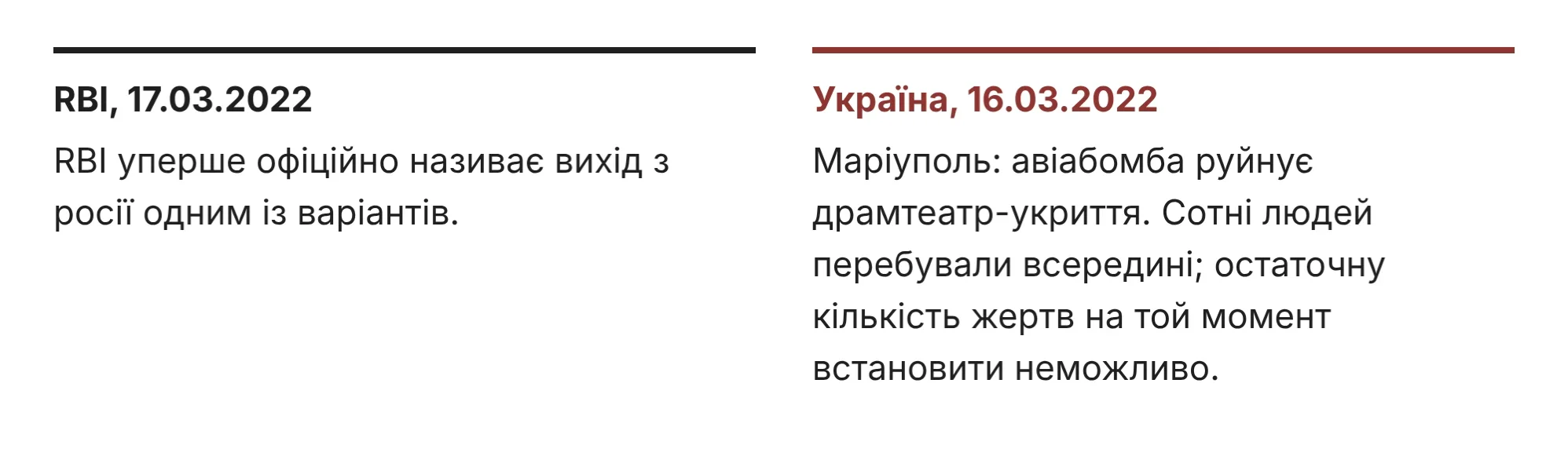
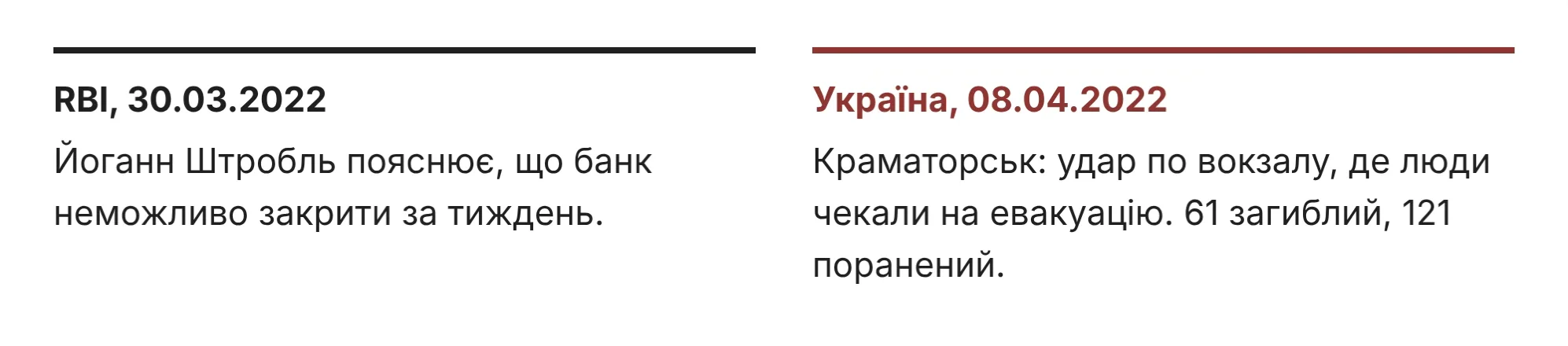
On 1 March 2022, RBI’s then chief executive, Johann Strobl, told investors: "It is very important that everyone understands: we are not leaving." By 17 March, the bank was discussing a "carefully managed exit" from Russia as one of its options. Around the same time, Strobl explained to FT journalists that the bank was not a sausage stand that could be closed in a week.
In January 2023, responding to criticism from the National Bank of Ukraine, RBI acknowledged that its Russian subsidiary grants loan repayment holidays to Russian military personnel and writes off their debts if they are killed or become disabled. The bank explained that Russian law requires it to do so. Even if that is the case, it means a European bank is protecting the financial interests of people fighting against Ukraine.
A year later, in March 2023, Strobl said the group was considering selling its Russian subsidiary or spinning it off. He gave no timeline. Neither has happened to date.
That same year, Ukraine’s National Agency on Corruption Prevention (NACP) added RBI to its list of international sponsors of war. According to unofficial reports, Austria held up new EU sanctions against Russia because of this. In December 2023, Vienna agreed to unblock the 12th sanctions package, and the NACP suspended the bank’s designation at the same time.
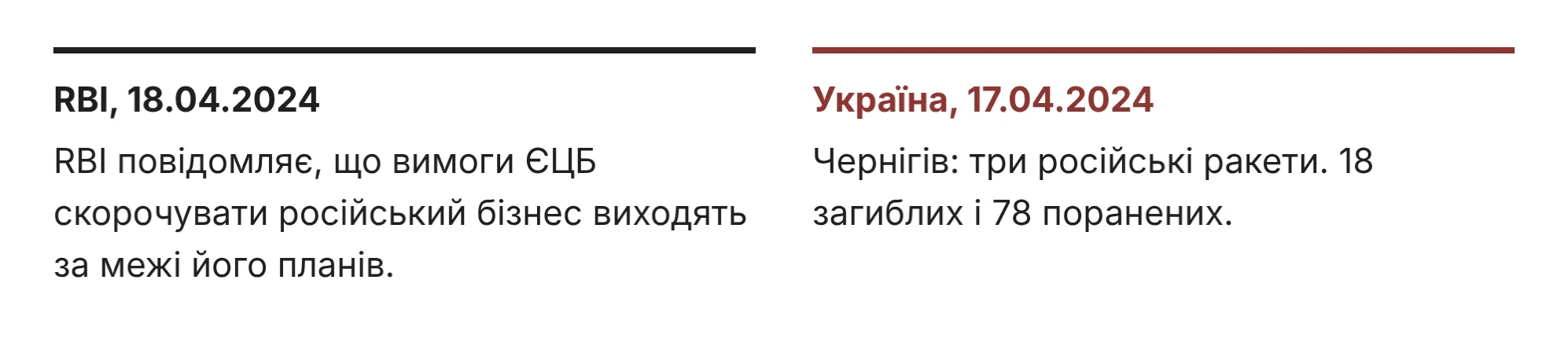
In April 2024, the European Central Bank demanded that RBI scale back its Russian business faster. The bank responded that this went "far beyond" its plans. An RBI spokesperson later explained to Reuters that Vienna could appoint the Russian subsidiary’s management and give it instructions, but could not sell it. If the head office runs the Russian business, it is also responsible for what that business does.
RBI’s arguments are familiar: the Kremlin has restricted bank sales, regulators must approve any new owner, and Russian courts intervene in ownership matters. This is partly true. However, in the spring of 2025, as Washington and Moscow began moving closer, RBI itself suspended efforts to sell its Russian business. In August 2025, a Russian court lifted a ban on selling the subsidiary, imposed in the Rasperia case (discussed below). Meanwhile, the bank’s then chief executive, Johann Strobl, said it would not leave Russia without compensation.
In October 2025, according to Reuters, the bank found a local buyer, but Russian authorities blocked the deal. Bloomberg reported that Russian regulators were unwilling to let Raiffeisen go because it was one of the few remaining channels for access to the international payment system SWIFT. Meanwhile, the EU was discussing whether to include RBI itself in its 21st sanctions package.
On 5 October 2026, RBI’s new chief executive, Michael Höllerer, told Reuters he would leave Russia tomorrow if he could. He also acknowledged that he had received no direct signals from Russian authorities about possible confiscation of the bank. The result is mutual dependence: Moscow will not let the bank go because it needs it, while the bank is in no hurry because it does not fear confiscation and continues to make money.
How much RBI earns in Russia
The bank’s financial reports show that its Russian business generated more than €2 billion in profit in 2022. That was approximately 54% of the entire group’s profit. In the first half of 2026, it generated around €550 million, or 44% (RBI report). In 2025, the subsidiary reported a loss of €122 million, but solely because of a write-off relating to the Rasperia court case discussed below. Its operating result (before write-offs and taxes) that year was almost €2 billion, or 39% of the group’s total.
The bank is indeed scaling back lending. According to its figures, loans to customers in Russia have fallen from €13.7 billion to €2.5 billion since 2022, and since September 2024, at the ECB’s request, it has stopped making foreign-currency transfers abroad for individuals. Yet it continues to earn money. RBI itself acknowledges that more than 70% of its Russian subsidiary’s interest income comes from money it holds at Russia’s central bank.
A substantial amount of money has accumulated there. According to calculations by the US firm Grizzly Research (discussed below), in mid-2026, the Russian subsidiary held €12.6 billion, including €11.3 billion in an account at Russia’s central bank. The bank cannot transfer this money to Vienna. The Russian business generates income for RBI while keeping its money "tied up" in Moscow.
Limousines for Putin and an account "for drones"
On 17 September 2026, Grizzly Research published a report on RBI’s Russian business. The bank’s shares fell by approximately 9% that day.
The report’s authors examined Russian customs records. According to their findings, contracts worth $1.19 billion for goods subject to Western sanctions or export restrictions were registered with Raiffeisen’s Russian bank between 2022 and early 2025. The goods included microchips, networking equipment, and thermal imaging and optical sights. More than $100 million was for goods that the West identifies as high-priority items for Russian military production.
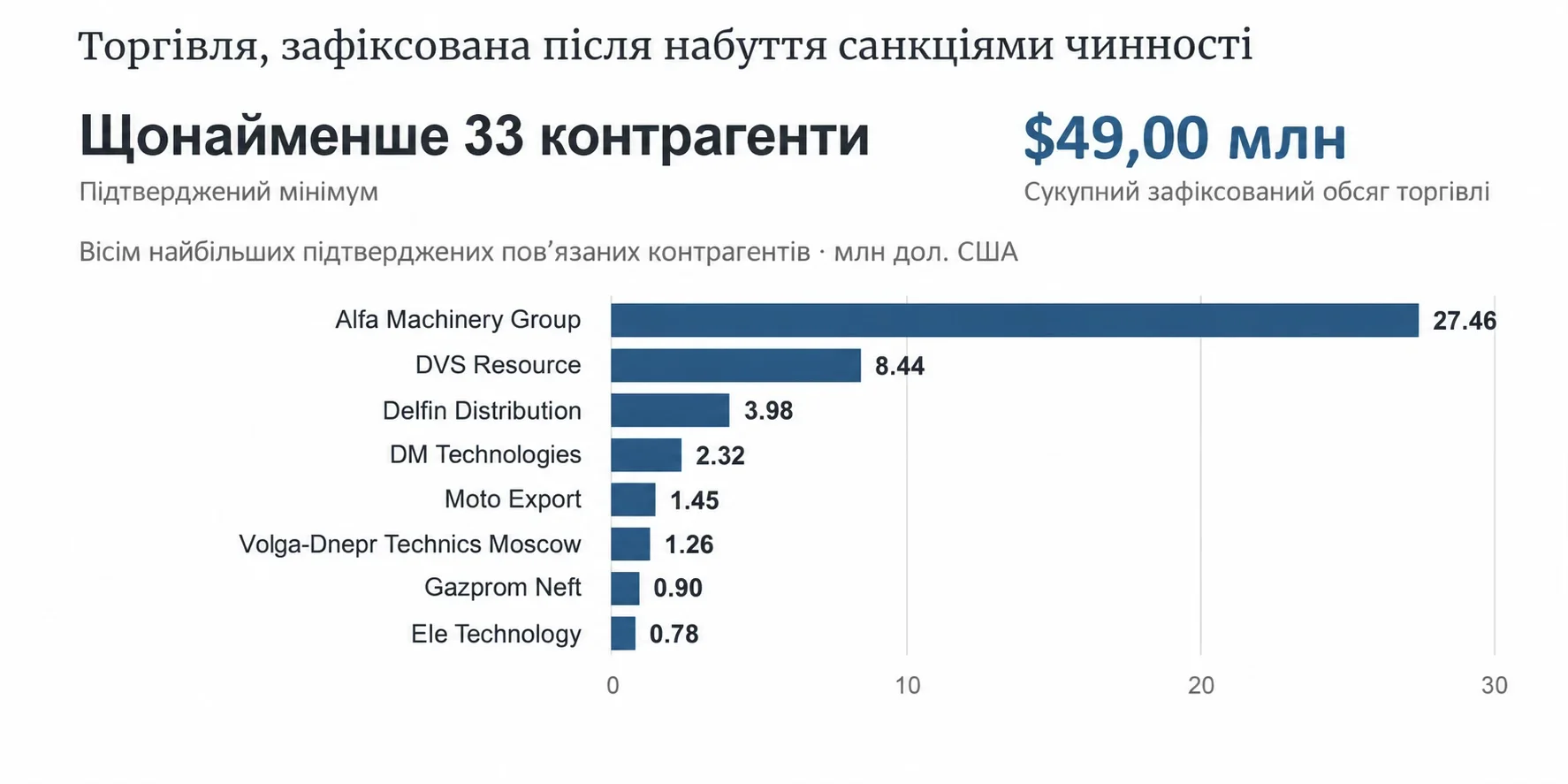
The report separately examines machine tools. In November 2023, the United States added the Russian supplier Alfa Machinery Group to its sanctions list. According to Grizzly’s calculations, the company subsequently imported another $27 million worth of goods, including CNC lathes, and these contracts were also registered with Raiffeisen. Such lathes are used to machine weapons components. The Economic Security Council of Ukraine traced similar machine tools to factories producing Iskander, Yars and Bulava missiles.
Alfa Machinery Group is the largest such case, but not the only one. In total, Grizzly identified at least 33 counterparties that were already under US, EU, UK, or Ukrainian sanctions at the time of the transactions (not all were subject to full asset freezes). Contracts with them registered with Raiffeisen between May 2022 and March 2025 totalled $49 million. Most of this sum is already included in the $1.19 billion mentioned above.
Another example is Aurus, the manufacturer of the armoured limousines used by Putin. The company has been under US sanctions since February 2024. About a year later, it imported $38,000 worth of parts for its vehicles, and the contract was again registered with Raiffeisen. The amount is small, but it shows how sanctions work in practice. In the same customs records, Grizzly also found more than $10 million in trade with Iran and North Korea.
The report’s most damning episode concerns a test of the bank itself. The researchers posed as a charitable foundation and asked the Russian subsidiary to open an account. They made no secret of its purpose: the foundation would buy drones for the war. According to Grizzly, several managers showed no hesitation and said an account could be opened. The bank even reserved account details for the "foundation" for 14 days. The researchers, of course, did not proceed with opening it.

Another part of the test concerned Iran. The researchers proposed an arrangement to a manager at the Russian subsidiary under which some of the goods would be shipped to Iran. According to Grizzly, the manager agreed and set just one condition: no payments in euros. It was Iran that supplied Russia with the Shahed drones it uses to attack Ukrainian cities.
The report also includes a section on Raiffeisen Capital’s funds. This is an asset management company owned by RBI through its Russian subsidiary, which invests clients’ money in securities. According to Grizzly, in August 2026, shares in companies the report’s authors identify as sanctioned accounted for more than a third (37.3%) of the assets in one of its funds. These included Lukoil, Rosneft and Surgutneftegas. BankTrack and B4Ukraine reported similar investments back in March 2025.
Some of these securities have been under sanctions since 2022. For example, Alrosa, whose securities are held in the same fund, came under UK and US sanctions in the spring of 2022. Shares in Sberbank, which the United States and the UK placed under blocking sanctions in April 2022, account for more than 8% of another Raiffeisen Capital fund. In other words, these securities are still being held more than four years after sanctions were imposed.
"Schemes" uncovers defence payments
On 12 October 2026, journalists from "Schemes" (Radio Liberty) revealed actual payments, rather than just contracts. According to their findings, at least 26 payments from accounts used for Russian state defence procurement passed through Raiffeisen’s Russian bank in 2024–2025. Together, they totalled more than 15 million roubles, or approximately $180,000.
The payments were made by Kvalitet, a company that produces lubricants for Russia’s defence industry. Producing and shipping lubricants requires containers and chemical additives. Kvalitet transferred payments for steel drums and additives to suppliers’ accounts at Raiffeisen. Drums do not fire or explode, but without them, the lubricants will not reach military equipment.
State defence procurement accounts in Russia carry a special identifier: the number 40706. "Schemes" reports that the receiving bank can see it in the payment order. This means Raiffeisen’s compliance department had the technical means to identify the payment as defence-related.
RBI did not deny that these payments had taken place. The bank explained that Russian law prevents it from refusing domestic payments in roubles and added that it had stopped working with Kvalitet several years earlier. However, the journalists’ documents for 2025 list at least four Kvalitet accounts at Raiffeisen’s Russian bank.
Vladyslav Vlasiuk, the Ukrainian president’s commissioner for sanctions policy, told "Schemes" that the bank should have checked payments explicitly marked as state defence procurement for sanctions compliance. Such transactions, he said, are "generally considered non-compliant", and a bank that processes them risks secondary sanctions.
A banker does not press the button that launches a missile. But the bank provides services to the supply chain for Russian military equipment and has the technical means to see this.
The Rasperia case
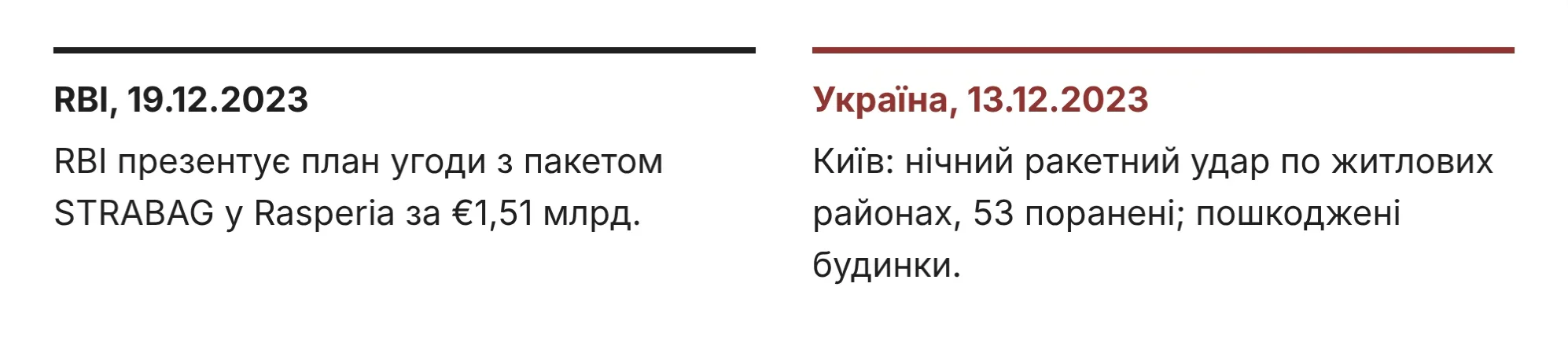
In December 2023, RBI announced a deal. Its Russian subsidiary was to buy a large stake in the Austrian construction group STRABAG from Rasperia for approximately €1.5 billion and transfer the shares to Vienna. Money trapped in Russia would have been converted into a valuable asset in Europe.
The obstacle was the stake’s provenance: it was linked to the sanctioned Russian oligarch Oleg Deripaska. On 8 May 2024, RBI abandoned the deal because it had not received the necessary assurances from regulators. A few days later, the US Treasury published a description of a scheme that could have unfrozen more than $1.5 billion in Deripaska’s assets.
Rasperia took the matter to a Russian court and won. More than €2.7 billion has now been forcibly debited from the accounts of RBI’s Russian subsidiary: €2.1 billion in 2025 and the rest in 2026. The latest debit, of €342 million, became public in November.
RBI is now seeking to recover this money through a court in Vienna. Rasperia did not respond to the claim, and on 22 September 2026, the court issued a default judgment awarding the bank €3.15 billion. The judgment became final on 22 October. Tellingly, the Russian court itself had authorised RBI to sue Rasperia abroad back in the summer.

To enforce the judgment, the bank is seeking permission to sell the STRABAG shares owned by Rasperia from Austria’s financial regulator, the FMA. This has also become a political issue. In the autumn of 2025, Austria proposed allowing these shares to be transferred to RBI under the EU’s 19th sanctions package, while the bank’s then chief executive said that lifting sanctions on Rasperia was in the EU’s interests. Experts and Austrian politicians cited by Grizzly believe the entire affair resembles an asset swap through the courts.
When it comes to recovering billions, the bank finds courts, complex legal arrangements and political support. When it comes to leaving Russia, it talks about obstacles that are "impossible to overcome".
The Ukrainian subsidiary
Raiffeisen’s Ukrainian operation is formally a separate bank. RBI owns 68.21% of its shares, while the European Bank for Reconstruction and Development owns another 30%. The bank’s website carries the slogan "We stand with Ukraine".
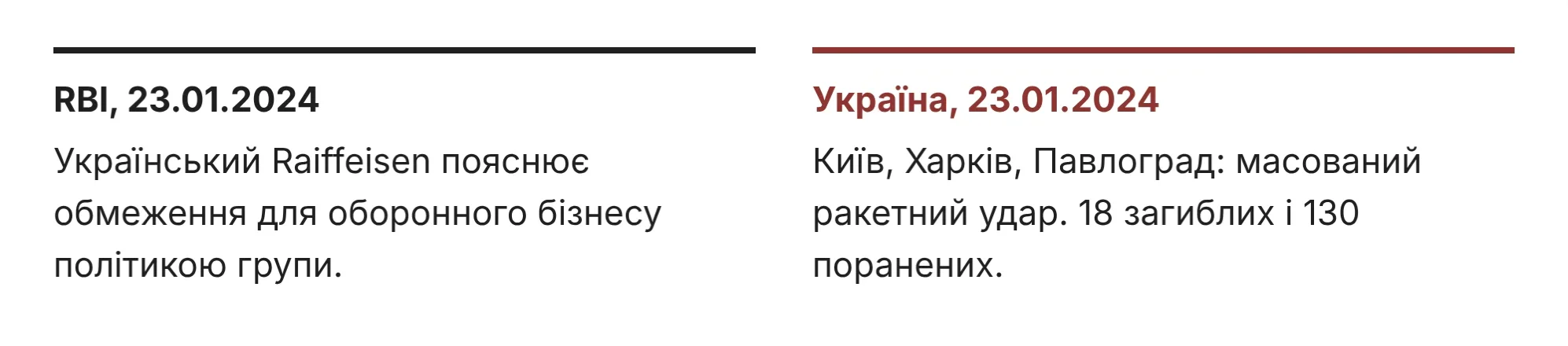
However, in January 2024, it confirmed that it restricts the services it provides to defence companies and manufacturers of dual-use goods. It attributed this to the international group’s policy, Austria’s neutrality and correspondent banks’ requirements. At the same time, the bank denied requiring clients to cease defence-related activities. The asymmetry is striking: in Ukraine, the group restricts its work with defence companies, while in Russia, according to "Schemes", its subsidiary processes payments for the aggressor’s state defence procurement.
Oleksandr Pysaruk, the former head of Raiffeisen’s Ukrainian bank, told Forbes Ukraine back in 2023 that he and his team wanted the group to leave Russia, which he called a "terrorist state". At the time, he hoped a decision would not take another year.
Other banks have left. Or are at least trying
France’s Société Générale sold its Rosbank subsidiary back in May 2022 and recognised a loss of around €3.2 billion. Britain’s HSBC sold its Russian subsidiary in May 2024, and US bank Citi did so in February 2026.
The Netherlands’ ING was unable to sell its Russian business: in April 2026, the bank terminated the sale agreement because the buyer had no realistic prospect of obtaining Putin’s approval. The Kremlin does indeed block Western banks’ exits. But while it waits, ING has not taken on new clients in Russia since 2022 and has been gradually winding down its operations there.
RBI is not the only major Western bank in Russia: Italy’s UniCredit still operates there too. But Russia accounted for around 6% of UniCredit’s operating profit in 2025, compared with around 39% for RBI.
Staying also carries risks. According to Reuters’ calculations, Russia confiscated and nationalised approximately $50 billion in private assets over three years (this figure also includes property owned by Russian companies). RBI experienced this firsthand in the Rasperia case. Leaving the market of an aggressor state can be costly, but other banks’ experience shows that "difficult" does not mean "never".
What Ukrainians say
At a protest in Vienna in July 2022, Ukrainian community activist Andrii Karioti said: "Every cent paid in tax in Russia destroys this banking group’s reputation and undoes all the good it has done." Since then, according to estimates by B4Ukraine, BankTrack and other organisations, Raiffeisen has paid around €1.9 billion in taxes into the Russian budget.
Political analyst Oleksii Holobutskyi put it this way: "Against the backdrop of an endless list of Russian war crimes that the whole world can see, another reassuring press release will not work. Excuses will not work. Only decisive action, accountability for one’s words, and a clear stance. And I still believe in public pressure and the power of reputation. I also believe that boycotts work. If the bank has still not chosen a side and likes Russia so much, it must suffer for its repugnant stance."
Banking prudence is a virtue when it protects depositors. But when it protects profits from operating in an aggressor state, the bank does not look like a victim of circumstances. Such a stance looks more like a conscious choice. If that is the case, it should be acknowledged honestly, and it will then become clear who stands on which side of history.
We drew on RBI’s financial reports, Grizzly Research’s report of 17 September 2026, the investigation by "Schemes" (Radio Liberty), regulatory and court documents, statements by the bank itself, and media reports. The facts come from these sources; the assessments and conclusions are our own.


