


Business insurance at Ukrainians’ expense: who will pay for destroyed businesses?
After nearly three months of discussions on establishing an Insurance Fund to support businesses affected by Russian strikes, the government has yet to decide how to finance the state’s contribution. Plans are changing, and instead of tax and customs changes, the government is now considering financing the Fund through transfers from the National Bank’s profits.
The Fund was initially intended to total up to $4 billion. The state was to provide a quarter of this amount from the state budget. This is a condition set by partners that could participate in the Fund and provide the remaining three-quarters.
"Foreign partners, namely European Union countries, say they will provide money. But their condition is that the state must contribute to the Fund. For every hryvnia we put in, they are prepared to put in three," a source familiar with the discussions told Business Censor.
To finance the Fund, the Ministry of Economy proposed raising VAT by 1 percentage point, from 20% to 21%. However, according to information obtained by the publication, this option is currently no longer under consideration. Neither lawmakers nor businesses supported the VAT increase.
"On VAT, yes. For now, we do not see support in parliament for a VAT increase. We are looking for other funding options," a government representative told Business Censor when asked whether the idea of raising the tax had been abandoned.
Other sources say the idea has been shelved for now. The search is now on for a more feasible option that would not require legislative changes.
Moreover, the Fund's expected size has now been revised to up to $3 billion. The prime minister confirmed this figure a few days ago.
"This is an ambitious goal: to establish a fund of up to $3 billion and make the process of applying for and receiving immediate compensation for these losses as simple as possible. We are setting an extremely challenging task, aiming to achieve either a full or at least an interim result. Economy Minister Kravchenko is personally responsible and is working directly on this," Serhii Koretskyi said.
The Fund will operate as follows: businesses will pay a premium for insurance coverage (with a maximum coverage limit of $10 million). If an insured event occurs, the Fund will compensate for losses within the coverage limit. If losses exceed that amount, a private insurance company and a reinsurer will cover the remainder.
Why the VAT increase lacks support
Lawmakers do not support raising VAT because they do not want to end up being blamed for the tax increase. VAT is effectively a tax on the end consumer. If it is raised to finance the Insurance Fund, the public will end up paying directly for business risks.
They also do not want to make the decision without the support of businesses themselves, which likewise do not consider a VAT increase an ideal way to finance the Fund.
Raising VAT to 21% will lead to higher prices. The NBU and the Ministry of Economy estimate the additional inflationary impact at 0.4–0.8 percentage points. However, former adviser to the president of Ukraine Oleh Ustenko believes the increase in inflation could be significantly greater.
"A VAT increase will have a cumulative effect. Historically, raising VAT by 1 percentage point leads to a 4–5% increase in prices. This is borne out by both European cases and Ukraine's experience in 2014–2015," Ustenko maintains.
As an alternative way to finance the Fund, both lawmakers and businesses point to tackling the shadow economy and ending the use of various tax evasion schemes. Using frozen Russian assets could also be a suitable option.
However, this remains unlikely for now. Direct payments from these assets to affected Ukrainian businesses will only be possible in the future, through an international Compensation Fund. It is to be established on the basis of the Register of Damage caused by the aggression.
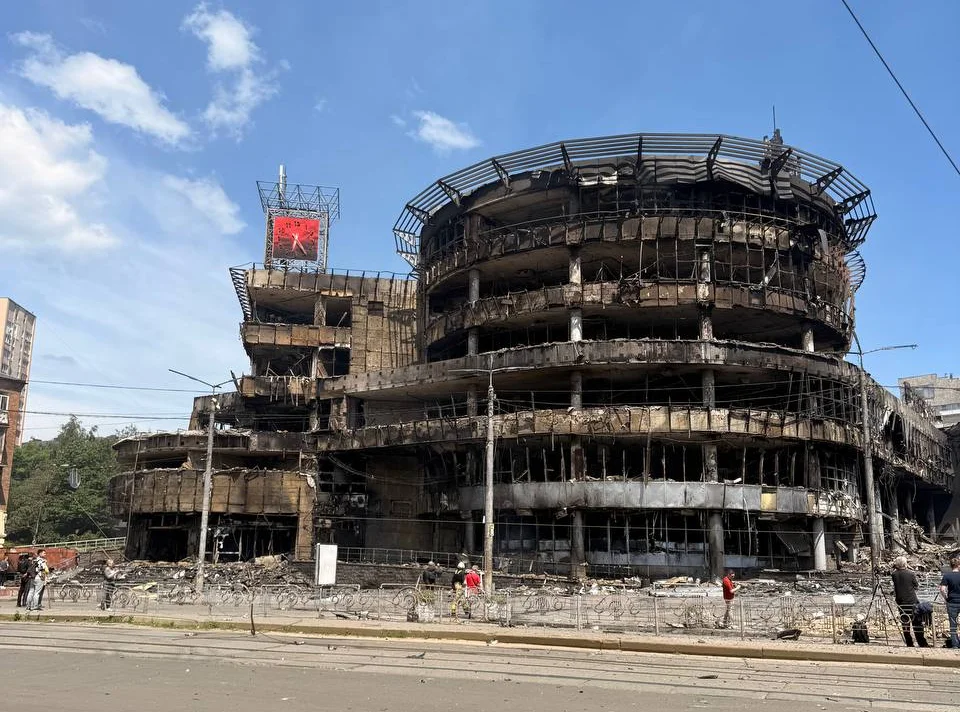
But compensation is needed now. Strikes on businesses, which intensified in July, are continuing. According to the latest information, food industry facilities and food supply infrastructure could come under large-scale attack.
Total business losses, estimated at $7 billion just a few months ago, have reached $8 billion, according to the latest information from the prime minister. They could reach $10 billion by the end of the year.
Alternatives to a VAT increase: import duties and NBU transfers
Economy Minister Oleksandr Kravchenko discussed the possibility of introducing import duties as an alternative to raising VAT two months ago. However, he noted at the time that this could have an even more adverse impact on inflation.
Such a move would also run counter to the terms of Ukraine's membership in the World Trade Organization (WTO) and its Association Agreement with the EU.
If Ukraine raises duties without agreement with its WTO partners, it will face reciprocal measures. A duty-free trade regime applies to trade with the EU. Unilateral changes to its application could also trigger trade restrictions.
Hlib Vyshlinskyi, executive director of the Centre for Economic Strategy, notes that introducing import duties also carries additional corruption risks.
"This will trigger additional corruption at customs, since administration takes place at customs rather than at the point of sale," he told Business Censor.
However, under WTO rules, Ukraine can unilaterally raise duties only if a sharp increase in imports causes serious injury to domestic producers. Raising duties requires detailed negotiations with WTO partner countries.
Under the Association Agreement, duties may be introduced during martial law, but only in the event of a serious deterioration in the balance of payments. Gold and foreign exchange reserves must also be at a minimum level. Ukraine's reserves are currently high, at around $49 billion, thanks to international assistance.
Ukraine has already raised import duties following Russia's invasion. In 2015, Arseniy Yatseyuk's government introduced special duties of 5–10% on all non-critical imports. The reason was an acute balance-of-payments crisis and a critical decline in gold and foreign exchange reserves amid Russia's invasion. Ukraine was on the brink of default at the time.
However, the decision to introduce special duties was preceded by detailed consultations with the WTO, the IMF and the European Union. These protective measures remained in place for less than a year.
Business Censor currently has no information indicating that Ukraine has initiated any consultations with its partners on changing duties. A source familiar with the government's plans told the publication that changes to import duties are currently "not being seriously discussed."
Meanwhile, several sources told Business Censor that the option currently under consideration is to finance the Insurance Fund through transfers of the National Bank's profit to the state budget.
The draft budget for 2027 initially envisaged almost UAH 49 billion in transfers from the NBU's profit for the current year. However, on October 1, the regulator updated its forecast, raising it to UAH 70 billion. It is this difference of more than UAH 20 billion that the government wants to channel into the Business Insurance Fund.
However, the National Bank's profit and, consequently, its transfers to the budget are not guaranteed figures: this is only a forecast, amounting to half the planned sum.
The final outcome will depend on the regulator's monetary policy and reserve management in November and December. The amount could increase, but a decrease cannot be ruled out either.
It is not yet possible to say with certainty whether NBU transfers will become a source of financing for the Insurance Fund. Economy Minister Oleksandr Kravchenko declined to comment on this possibility. Government sources told Business Censor that discussions on financing the Fund are still ongoing.
During a meeting with the World Bank's leadership a few days ago, the prime minister also confirmed that neither the Insurance Fund's financing arrangements nor its operating model had been finalized.
"We discussed options for financing [the Fund] through various instruments. We will continue working with the World Bank on an effective model involving international financial institutions and the insurance market," Serhii Koretskyi said.
A Servant of the People lawmaker on the relevant parliamentary committee told Business Censor that the government had "made a mistake." In his view, finding the best solution for establishing and financing the Insurance Fund would have been faster and easier if the issue had been discussed with the Verkhovna Rada beforehand. However, the source noted that the government took a different approach, putting the idea up for public discussion without consulting lawmakers.


