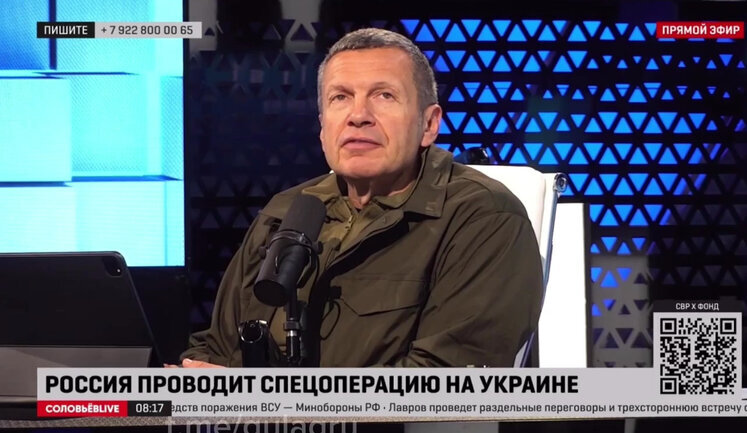
Yandex, the Russian technology giant, is currently facing significant backlash from various sources. Notably, Vladimir Solovyov, a known pro-Kremlin journalist, has strongly criticized Yandex after the search engine referred to him as a "Russian propagandist." This label has caused Solovyov great distress, leading to an outburst against the company. In parallel, Yandex.Market has initiated the sale of second-hand goods amidst the challenges faced by Russians in Ukraine. Despite being banned, Yandex's services continue to be utilized by thousands of Ukrainian domains, including state authorities, highlighting a complex web of reliance and compliance difficulties within the region.
Why did Yandex call Vladimir Solovyov a propagandist?
The Yandex search engine labeled Vladimir Solovyov a "Russian propagandist," likely reflecting widespread international sentiment about his work promoting Kremlin-aligned narratives. This label has provoked a significant reaction from Solovyov, who is known for his outspoken views and has publicly lashed out against Yandex for this characterization.
How has Yandex.Market adapted to recent challenges in Ukraine?
Yandex.Market has adapted to recent challenges by starting to sell second-hand goods, including smartphones and children's items. This move comes amidst the tumultuous conditions faced by Russians in Ukraine, allowing the platform to maintain operations and provide alternative options for consumers during difficult times.
What legal actions have been taken against Yandex in Ukraine?
In previous years, Ukrainian authorities, including the SBU, have raided Yandex's offices in Kyiv and Odesa. These actions were part of broader responses to Yandex's activities, reflecting official scrutiny due to the company's associations and compliance with local legal frameworks. These measures highlight the ongoing geopolitical tensions and digital sovereignty issues between Ukraine and Russia.
Are Yandex services still used in Ukraine despite bans?
Despite being formally banned, Yandex's services continue to be used by approximately 8,330 Ukrainian domains. Additionally, 26 state bodies reportedly utilize mail services from Yandex. This persistent usage illustrates a complex scenario where technical dependence may render official restrictions less effective, showcasing the multifaceted nature of digital service provision and cross-border internet dependency.
What has been the general reaction to Yandex's activities in Ukraine?
Yandex's activities in Ukraine have sparked significant controversy and debate. While some view its services as necessary for certain technical functions, others criticize its ongoing presence, particularly given the geopolitical tensions between Ukraine and Russia. Moreover, public figures' outbursts against Yandex signal underlying societal and political frictions exacerbated by digital branding and international relations.