



In Russian Federation "incorrect mentions" from textbooks of the publishing house "Enlightenment" are massively removed: "They told to make as if Ukraine simply isn't present"
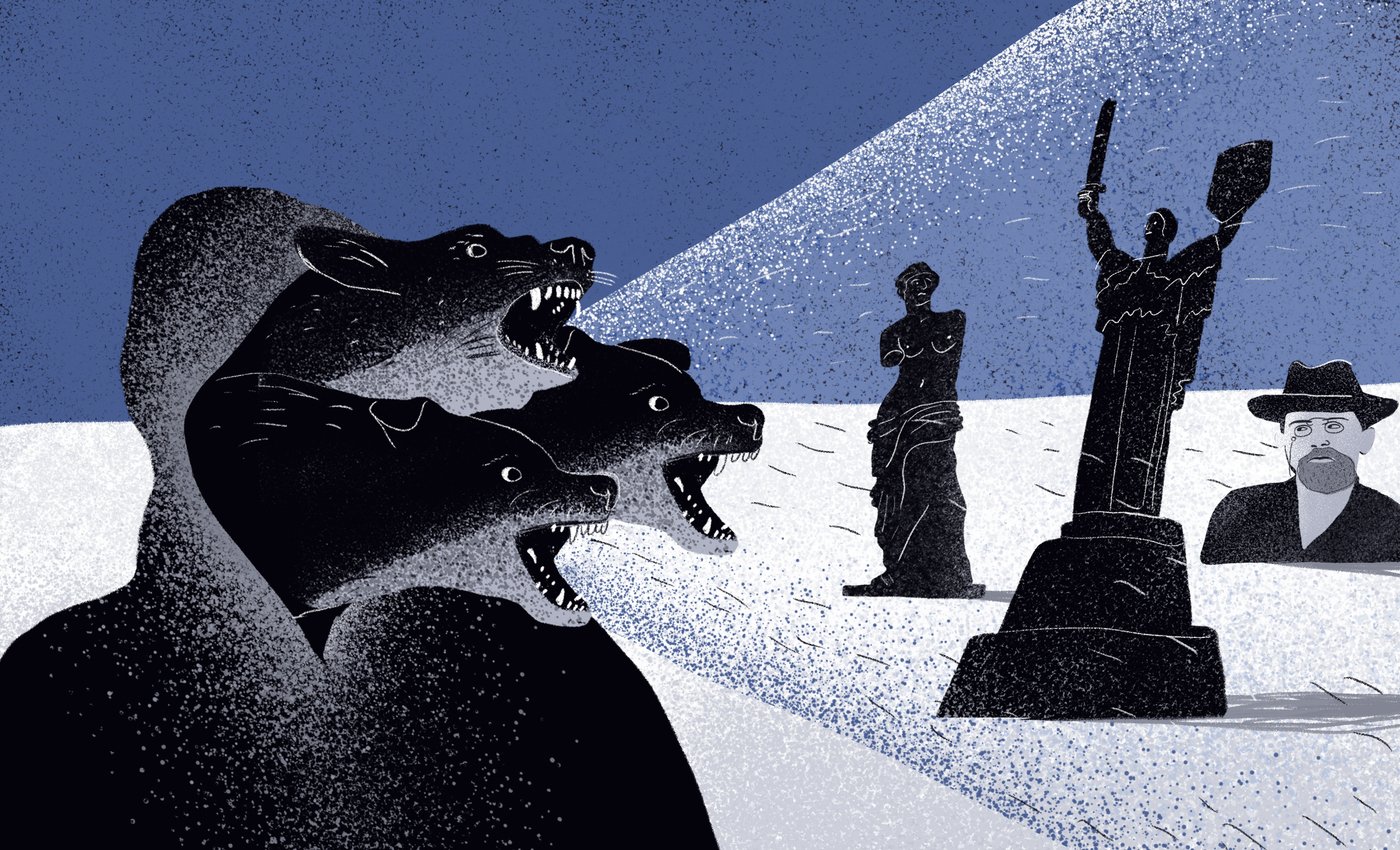
According to Censor.NET with reference to "Mediazone". The publication talked to the editors of the publishing house about how history, geography and literature are being "cleansed".
After the start of the war in Ukraine, Enlightenment staff received an unspoken order from the leadership to minimize the mention of Ukraine and Kyiv in Russian school textbooks. Three editors of the publishing house told Mediazone about this. They all asked for anonymity; the request to remove "incorrect" mentions of Ukraine was reported by the authorities to subordinates at a "confidential" meeting. In addition, as explained by the interlocutors of "Mediazone", each employee of "Enlightenment" during employment signs "a huge number of documents on non-disclosure of official information" - violation of such agreements threatens them with immediate dismissal.
According to the publishers' editors, after the start of the war, dismissal also threatens any manifestation of an anti-war position - signatures on petitions, posts on social networks, participation in protests.
"We are a publishing house that publishes literature that influences the minds of the younger generation. Refrain from expressing a view on social networks that is different from the official one," said one of Enlightenment employees.
The editors of "Enlightenment" received an oral order to minimize the mention of Ukraine and Kyiv on the first day of the war, February 24.
At the same time, the course to "clean up" Ukraine and Kyiv from textbooks was taken much earlier, Mediazone interlocutors recall. After 2014, textbook authors and editors tried to mention Ukraine as rarely and cautiously as possible. But even with the "cleansing" that has taken place in recent years, after February 24, according to the editors, they had to "write about 15% of the texts."
Thus, from the paragraphs that give examples of heraldry of different countries, in particular flags, a few years ago it was strongly recommended to remove the flag of Ukraine and replace it with the flag of any other country. If it is necessary to give an example of the capital in the chapter, Kyiv was replaced by another capital.
"Several times we had to remove the US flag, but it's easier there, our program pays little attention to world history," - says one of the employees of "Enlightenment". Now, editors must remove references to Ukraine wherever possible.
"In other words, we are faced with the task of making it as if Ukraine simply does not exist," says his colleague. A person grows up without a knowledge base about a country, and then it is much easier for him to believe what is being said about him on TV. "
Those who work on history textbooks have the hardest time: it is often impossible to remove references to Ukraine and Kyiv without damaging the content, then we have to change the wording to "safer".
"But if there is a possibility, it is better not to mention Ukraine in principle. Kyiv is usually mentioned now in terms of the fact that it was the capital of Kyivan Rus, and that we liberated Kyiv," says the editor.
According to him, the context is important: "We can remember how we saved Kyiv, but it is impossible to talk about any independence of Ukraine as a country."
"We only mention once that Kyivan Rus 'was formed, and then we call it simply Rus', there is no more Kyivan Rus. And Kyiv is its capital," explains one of the Enlightenment's staff members. [it is necessary] to replace the line that "Volodymyr baptized Kyiv" with the words that he "baptized the capital".
Sometimes the editor can come up with new wording to mention Ukraine, but often the authorities just drop ready-made samples: "We can only adjust a little in this case, so that it is not completely clerical."
For example, the phrase that Nestor the Chronicler wrote "The Tale of Bygone Years" in the Kyiv-Pechersk Lavra has been removed from some textbooks due to fears that they may be removed. The same thing happened: the monk Nestor simply wrote "The Tale of Bygone Years". That's all.
In addition, it is planned that next school year one of the textbooks will be published by the publishing house without the author's name on the cover, as the author is a citizen of Ukraine, and his name "openly hints" at this. "Inside, on the back, where it is written in small print, the author, of course, we call, but from the cover just in case removed," says an employee of the publishing house.
In early April, the publisher's staff received a newsletter asking them to remove links to Facebook and Instagram pages from their signature correspondence, as well as to mention of blocked social networks from the textbooks they work with. It is forbidden to mention the company Meta, recognized by Russia as an "extremist organization".


