



Ukraine is already "attriting" Russian army faster than it is replenished, Madyar says in The Economist interview
Since the start of winter, Ukrainian drones have killed or incapacitated at least 8,776 more soldiers than Russia has replaced.
This was stated by Unmanned Systems Forces Commander Robert "Madyar" Brovdi in an interview with the British magazine The Economist.
Details
"December marked a turning point, the first month when verified Russian losses to Ukrainian drones exceeded recruitment. Since the start of the winter, Ukrainian drones have killed or incapacitated at least 8,776 more soldiers than Russia has replaced. Russia continues to gain little ground in return for its losses," The Economist writes.
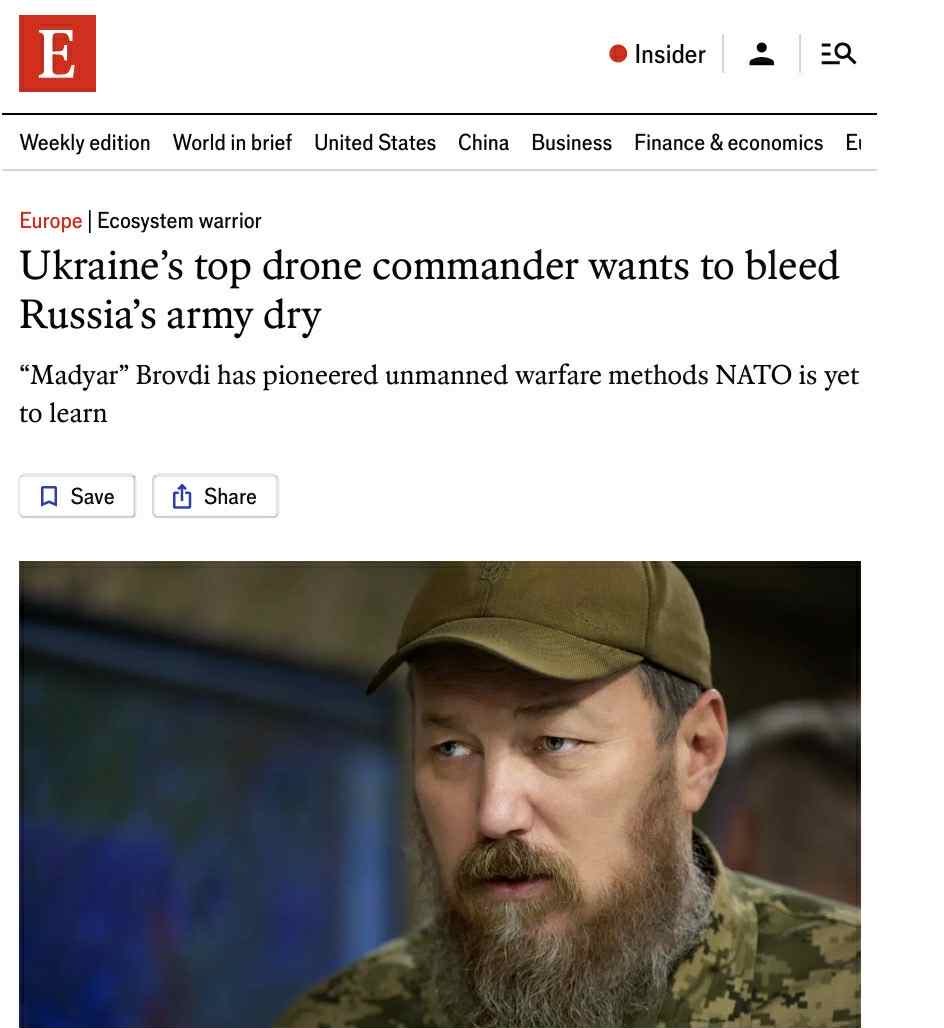
As the British outlet notes, thanks to the strict safety protocols introduced by Madyar, the cumulative casualty rate in the Unmanned Systems Forces does not exceed 1%.
Madyar insists on having a backup for every piece of equipment, a lesson learned after several brushes with death. He says his strict safety protocols keep the cumulative casualty rate in his unit at just 1%. He claims the Unmanned Systems Forces are now killing 400 Russians for every one Ukrainian, and that each enemy kill costs $878. As Madyar puts it: "We should be swapping plastic and metal for dead Russians. That is the best exchange rate," the article says.
According to The Economist, Madyar’s Unmanned Systems Forces have an ecosystem of 15 interconnected functions, ranging from jamming to surveillance, mining and explosives production.
"The bunker’s hundred-odd screens show how far operations have progressed. Every mission, whether drone strike or electronic-warfare session, is logged and verified by video, then fed into business-intelligence software that Mr Brovdi repurposed from his days as a grain trader. The killing is managed closer to the front. Teams operate 3-5km behind the line, overseen only by battle captains back at headquarters. Mr Brovdi says the unit has an ecosystem of 15 interlocking functions, from jamming to surveillance, mine-laying and explosive production. It is a concept nato generals have yet to grasp," The Economist writes.
The magazine notes that Madyar has no doubts about destroying enemies who came to his land with weapons in hand to kill people.
"I don’t experience any moral reservations at all. None," he says. "A man with a rifle in his hand on my land is coming to kill me. I kill him or he kills me. Millions of Ukrainians, my mother included, draw strength from what we do," Madyar said.


