



What I said about ability to fight for 10 years was approximate. 200,000 year and we rotate – "Servant of People" Merezhko
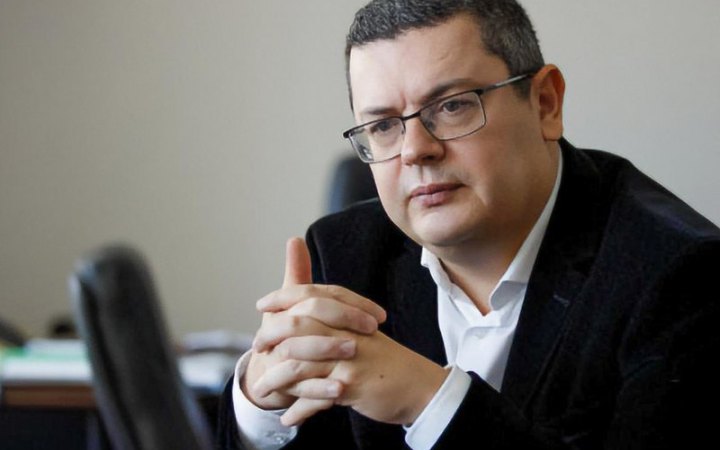
Oleksandr Merezhko, head of the Ukrainian parliament’s Committee on Foreign Policy and Interparliamentary Cooperation and an MP from Servant of the People, has said that when he spoke about Ukraine having the resources to fight for 10 years, he was referring to the state’s existing reserve of resilience.
He said this in a comment to Censor.NET.
He said that in his interview with The Independent, he had pointed to calculations: "In fact, the question of manpower constantly arises, that is, our reserve of resilience. This was already in the specific context related to those two million who are allegedly evading service. I roughly calculated it mathematically for the journalist. I was not making an exact claim, because I do not know how long the war will last. That is not what this is about. It is about our reserve of resilience in terms of mobilization resources. I said: the calculation is simple — take two million, and if there is proper rotation, then, say, 200,000 are needed who are directly involved in combat operations. I am not an expert here, but roughly speaking, that is it. If you divide even two million by 200,000, that already looks like 10 years, provided there is proper rotation. That was the idea. The point is that we need to look for incentives so that people want to serve and do not evade service, but quite the opposite. Then, if we solve this problem (which I consider psychological), we will solve the issue of mobilization resources for many years. So when I spoke about 10 years, this was not about the duration of the war. Because then the question arises: from what point do you count? The war has already lasted 12 years, and the full-scale war has lasted four. This is about reserve of resilience in terms of mobilization resources. These are different things."
According to the MP, various levers, including psychological ones, should be used to encourage Ukrainians of draft age to mobilize.
"In my opinion, it is important that people perceive the mobilization process as socially fair, so that they do not say that someone has a deferment, and so on. In other words, mechanisms need to be found that will create a sense of fairness in the minds of most people. I am not an expert here, but I studied the legislation of the United Kingdom during World War II, and I looked at the mechanism used in the United States during the Vietnam War. The principle here is very simple. What are people afraid of? Uncertainty. If they know they are going for a fixed term, that largely resolves the issue — they are no longer so afraid of it. There are different military specialties. It (Mobilization - ed.) does not mean that everyone automatically ends up on the front line. It is also a matter of trust in the state, in the system. These psychological mechanisms need to be sought in order to create the proper motivation. As a scholar, I approach this from the perspective of what law is. It creates a certain motivation in a person’s mind. The task of the legislator is to create such motivation that a person agrees," Merezhko stressed.
The politician believes that people should perceive mobilization as a fair process.
"I proceed from a very simple principle as a lawyer: equality of people. And when that works, corresponding incentives arise, including psychological ones. For some, an economic package matters; for others, it does not. Then other mechanisms need to be sought. For example, let us take the Vietnam War. There was such a mechanism there: a lottery, with call-up cohorts assigned accordingly. A person went into the army for two years, of which they spent no more than one year at the front. Then another cohort was called up, made up of people born in a different year. This mechanism worked more or less. I am not saying it should be copied, but it is worth analyzing," he explained.
The MP noted that the financial issue is also important.
"But here we are talking about reserve of resilience in terms of mobilization resources — we have it for years. Incidentally, this destroys the Russian narrative that it does not exist. Another question is how to back this up financially and economically. The Europeans are giving us 90 billion, although this issue has stalled somewhat for now. We also should not give up on raising the issue of confiscating and transferring to us Russian money and assets — about 300 billion euros. So we need to look for different levers, instruments and motivators. Motivation should be the state’s job. But every citizen, in turn, must fulfill their duty. From the point of view of behaviorism, there are positive and negative incentives. The task of the state is to use the law to create the right balance between them. I believe the key issue now is rotation. So that people can rest, recover and know that they serve for a certain term, after which they are replaced. If the mobilization system is built properly, then this issue can be resolved," Merezhko added.
As reported earlier, Servant of the People MP Oleksandr Merezhko said in The Independent article that Ukraine has enough human resources to continue the war for another 10 years or even longer.


