



US has fired over 1,000 Tomahawk missiles and up to 2,000 air defense missiles since Iran war began - WSJ
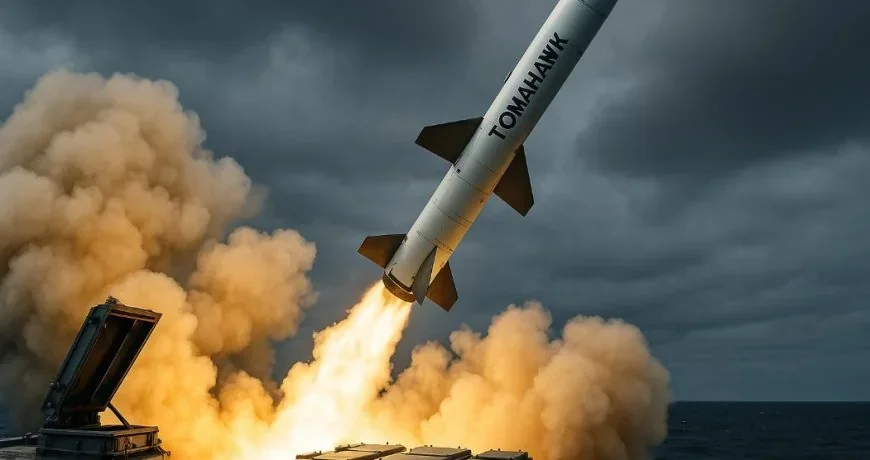
Since the start of the operation in Iran, the U.S. has fired more than 1,000 long-range Tomahawk missiles and between 1,500 and 2,000 anti-aircraft missiles.
According to Censor.NET, this is reported by The Wall Street Journal.
According to U.S. officials, the munitions used include interceptors from the THAAD, Patriot, and Standard Missile systems. They say this level of expenditure is already raising concerns about the depletion of stockpiles.
U.S. officials note that it could take up to six years to fully replenish depleted ammunition stocks. This, in turn, has sparked internal discussions about possible adjustments to military plans, particularly in the context of a scenario involving the defense of Taiwan.
At the same time, U.S. officials emphasize that there are currently no signs of an imminent conflict with China. They also note that Beijing is preparing for international negotiations, and that the Chinese military leadership is undergoing internal personnel changes.
Nevertheless, in the event of a large-scale conflict, the United States could face a shortage of precision-guided munitions in the short term, which could potentially increase the risks to U.S. forces.
At the same time, some officials in the administration believe that the situation can be improved by investing in the defense industry and expanding the production of less expensive types of weapons.
U.S. Operation in Iran
Since late February 2026, the United States and Israel have been conducting a large-scale military operation called "Epic Fury," aimed at completely dismantling Iran's nuclear program and overthrowing the current political regime in Tehran. The campaign began with massive missile and airstrikes, which neutralized the country’s top leadership—including Ayatollah Khamenei—and a significant portion of the Islamic Revolutionary Guard Corps’ command structure within the first few days. The allies are focusing primarily on destroying underground uranium enrichment facilities, ballistic missile depots, and air defense systems, which has already cost Iran’s economy hundreds of billions of dollars.
Currently, the situation is extremely tense due to the blockade of the Strait of Hormuz, which Iranian forces are attempting to maintain in order to destabilize the global energy market. The Trump administration is responding with a tough ultimatum: either complete nuclear disarmament and the restoration of shipping, or a shift to strikes against critical civilian infrastructure, including oil terminals and power grids. Although certain ceasefire agreements are in place on paper, the United States continues to strengthen its naval presence in the region, preparing to ultimately force Tehran to capitulate.


