



War against Ukraine could turn into Putin’s defeat - Guardian
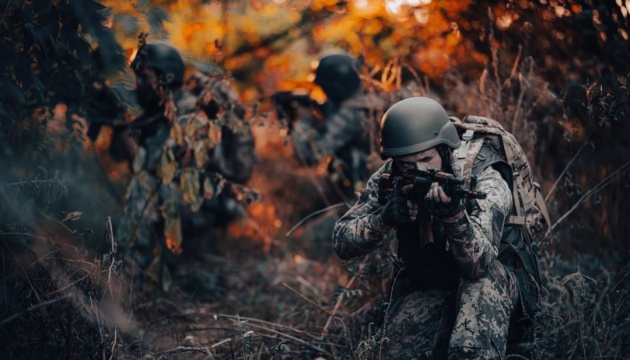
Massive losses, sanctions, and economic instability in Russia could seriously weaken the position of Russian dictator Vladimir Putin.
According to Censor.NET, Rajan Menon, a senior research fellow at Columbia University’s Salzman Institute for War and Peace Research, writes about this in an article for The Guardian.
According to the author of the article, when he launched a full-scale invasion on February 24, 2022, Putin likely expected a quick conquest of Ukraine and a political victory. However, instead of a short campaign, Russia became embroiled in a grueling, protracted war that has turned into a major crisis for the Russian Federation itself.
Amid the stalemate on the front lines, Russia has suffered colossal losses: an estimated 1.3 million Russian troops have been killed or wounded. At the same time, the war is taking an increasingly heavy toll on the domestic economy—due to sanctions, inflation, budgetary strain, and a decline in the population’s well-being.
For ordinary Russians, the consequences of the war are becoming increasingly palpable: rising prices, restrictions, pressure to enlist, and public fatigue are gradually eroding the stability on which the Kremlin’s rule has depended.
The war is penetrating deeper and deeper into the Russian rear
Whereas the war used to feel like a distant event—something happening "somewhere abroad"—for most Russians, its consequences are now increasingly being felt directly within Russia itself. Ukrainian drones and missiles regularly strike military and strategic targets far from the border, sometimes at distances exceeding 1,600 kilometers.
At the same time, the war has dealt a serious blow to the Russian economy. Due to the massive demand for workers from the military and the defense industry, the country faced an acute labor shortage. Although the official unemployment rate in March was only 2.2%, this led to a slowdown in economic growth, exacerbated inflation, and put significant pressure on small businesses.
According to data from the Russian Federation Chamber of Commerce and Industry, nearly two-thirds of small businesses reported no profit in the first quarter of 2026. Economic growth rates plummeted: while they stood at 4.9% in 2024, they fell to 1% in 2025. The first quarter of 2026 has already shown a further decline—GDP fell by 0.3% year-over-year.
Minimal gains on the front lines and Putin’s growing concern
The situation on the battlefield also points to serious difficulties for Russia. Despite heavy losses, the occupying forces have made only minimal gains. This is largely due to Ukraine’s effective use of drones, which have significantly transformed the modern battlefield.
Last year, Russia managed to capture only 0.8% of Ukraine’s territory, at the cost of over 400,000 casualties, of whom nearly 200,000 were killed. In 2026, the pace of the offensive slowed even further, and in April, Russian forces lost more territory than they were able to capture for the first time since the fall of 2023.
Against this backdrop, signs of concern are becoming increasingly evident in the Kremlin. Putin’s security has been significantly tightened, his movements within Russia have become more restricted, and his residence in Sochi has been renovated with substantially enhanced security measures. In addition, the authorities continue to tighten control over the information space by blocking or restricting access to key platforms, including Telegram.
Experts believe that although Putin’s political future remains uncertain, his war is increasingly showing signs of strategic failure, and his outward display of strength may increasingly resemble an attempt to mask internal weakness.


