



Kubilius called on EU governments to "open their arsenals" to Ukraine and step up arms production
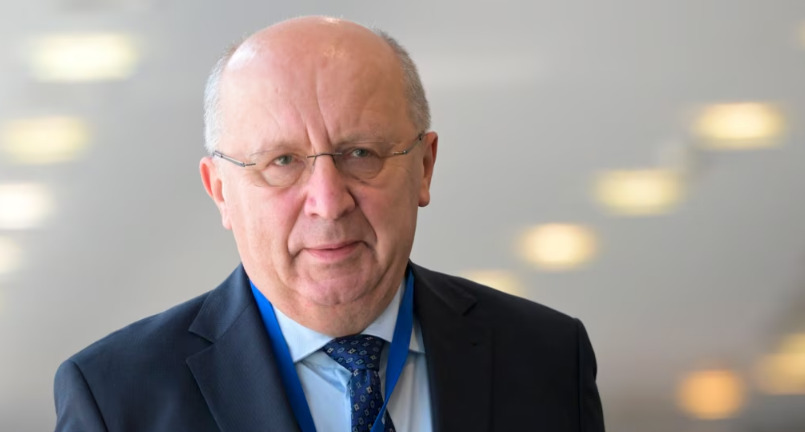
European Commissioner for Defense Andrius Kubilius called on countries to open their arsenals to supply weapons to Ukraine and to increase production, while phasing out the manufacture of "high-end" weapons.
He stated this in an interview with the Financial Times, according to Censor.NET.
Details
"Governments must open their arsenals to provide Ukraine with what it needs," Kubilius emphasized.
According to the European Commissioner, strengthening the Ukrainian army would be even more important if Europe were to reopen official channels of dialogue with Russia, given the growing support in Europe for such talks.
"The only formula that can bring peace is what is known as peace through strength. Strength must be on Ukraine's side, and Europe can help with that," he said.
At the same time, Kubilius noted that Europe lags behind Russia and Ukraine in missile production because its companies manufacture complex and expensive weapons that are difficult to scale up.
"Europeans produce what they call 'haute couture' products. These are technologically very complex, very advanced, very expensive, and impossible to mass-produce. Ukrainians produce what these European industries call 'pretty good' products," he explained.
Therefore, according to the European Commissioner, Europe needs to take a cue from Ukraine and switch to cheaper systems that can be produced quickly and on a large scale.
"The Ukrainians have begun producing their own 'Flamingo' cruise missile, and this year they are set to produce around 700 units," he noted, adding that the EU has produced fewer than 300 units, while Russia has produced 1,200.
Kubilius believes that Ukraine could purchase weapons from European stockpiles using €60 billion from the recently approved €90 billion loan. The sellers could then use that money to purchase additional weapons or to expand production.
The European Commissioner’s call came as the EU prepares initiatives aimed at boosting defense production and reducing fragmentation in the European arms industry. Brussels is set to present a plan for creating a more integrated market in July.
The proposal aims to address the issue of divergent national procurement rules and practices, which, he said, have effectively closed off markets for defense products and hindered cross-border cooperation in the defense industry.
"In reality, there is no market, and there are countless obstacles," he added.
Kubilius also said that EU governments protect their own arms manufacturers. In particular, France and Germany purchase 70% of what their industries produce, while only about 10% is sold to other EU countries.


