



Defense Ministry speaks about Ukrainian LITAVR interceptor drone with homing system
Drone Industry
Interceptor drones with a homing system developed by Ukrainian manufacturers are implementing Ukraine’s strategic objective of maintaining leadership in the war of innovation.
This was reported by the Ministry of Defense, which spoke about the LITAVR interceptor drone made by F-Drones, Censor.NET reports.
"Ukrainian company F-Drones has developed the LITAVR UAV interceptor, a drone with automatic terminal guidance, remote control, and minimal dependence on foreign components. A key feature of LITAVR is its automatic terminal guidance system (Last Mile or Pixel Lock). It identifies the target and independently guides the drone into the attack: during the final approach, the pilot controls only the speed, while the rest of the process is handled automatically. It is precisely such developments that implement the strategic objective of staying ahead of the enemy in every technological cycle and maintaining leadership in the war of innovation," the Defense Ministry said.
LITAVR is an interceptor drone designed to destroy aerial targets and operate against ground targets. F-Drones independently develops software, electronics, its own engines, regulators, and flight controllers, consistently reducing dependence on Chinese components, the Defense Ministry noted.
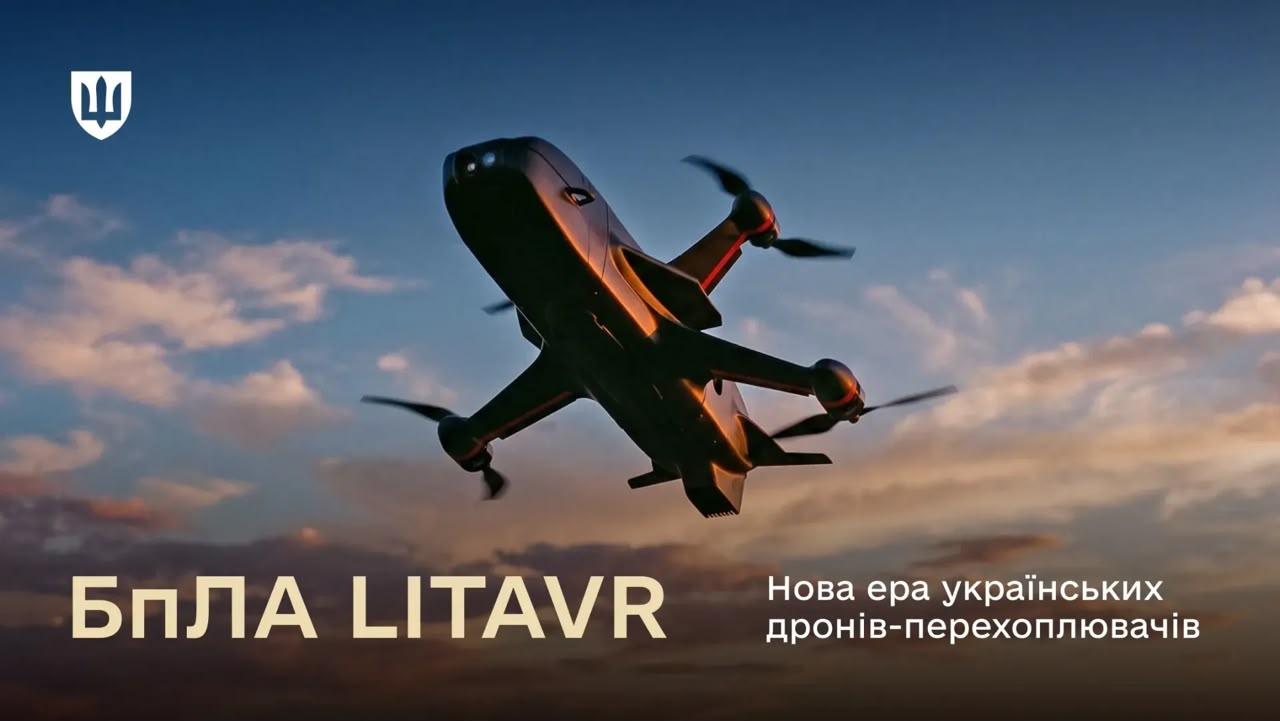
The anti-drone system reportedly began development in the autumn of 2024. In the summer of 2025, the drone was successfully tested and codified. Serial production and deliveries to the military began in the autumn.
Characteristics of the LITAVR interceptor drone with an automatic terminal guidance system:
- Declared maximum speed: 350 km/h.
- Operating radius: 40 km; maximum recorded distance: more than 80 km.
- Maximum flight altitude: 9,000 m.
- Last Mile or Pixel Lock automatic terminal guidance system.
- Proprietary non-GPS navigation.
- Daytime and thermal imaging cameras with switching capability.
- Integration with various radar systems through the company’s proprietary LARAG software suite.
- The warhead is located in the nose of the drone and is supplied in two versions: an empty container that the unit loads with explosives on site, or a ready-made warhead with a NATO code as part of the product.
- Remote control module. The operator can control the drone from hundreds or even thousands of kilometers away from the interception point. If the target is not detected, the pilot switches the initiation board to safe mode and returns LITAVR to base.
- The body is made by plastic injection molding. This technology provides greater structural strength and more stable characteristics in serial production.
The UAV is currently available in the closed catalog of the Brave1 platform (BraveMarket), where units can submit a request, the Defense Ministry reports.
It is also noted that the manufacturer is upgrading all previously delivered first-generation UAVs to the version with the auto-guidance system free of charge, both in hardware and software.
As is known, Ukrainian Defense Minister Mykhailo Fedorov said yesterday that Ukraine is scaling up new-generation interceptor drones capable of autonomously shooting down Shaheds. "We continue to systematically strengthen the protection of the sky. We are scaling up solutions that have already proven effective in combat conditions," the minister stressed.


