



Aid to Ukraine in 2027–2029: Netherlands has earmarked €3 billion annually
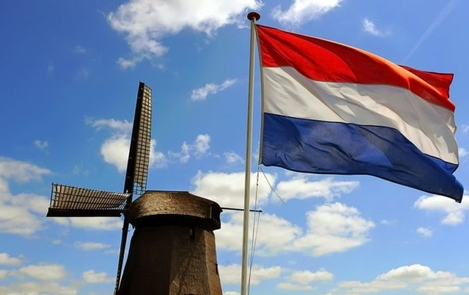
The Netherlands budget allocates €3 billion annually to support Ukraine between 2027 and 2029, with a focus on the continuous supply of weapons.
According to Censor.NET, Simon Wouda, head of the Taskforce Ukraine at the Dutch Ministry of Defence, made this statement in an interview with Ukrinform.
"We are currently working on plans for the use of the structural budget allocated by the Dutch government for 2027, 2028 and 2029. Three billion euros have been earmarked each year to support Ukraine. We are trying to draw up a plan that will enable us to provide sustainable and continuous support to the Ukrainian Armed Forces over the next three years," he said.
A continuous flow of deliveries rather than one-off deliveries
In his view, "the most important thing is not simply to deliver as much aid as possible all at once, but to establish a steady flow of supplies. This makes it much easier for the Ukrainian military to receive the equipment, adapt it to their needs, distribute it among units and use it effectively. It is far more practical than receiving the entire volume of aid at once. That is precisely why we aim to organise a continuous supply of unmanned aerial systems over the next three years, support the F-16 programme and other key areas that are currently our priorities."
The evolution of approaches to military aid and the reduction of procurement and production lead times
He also noted that at the start of the full-scale war, almost all aid came directly from warehouses. Over time, commercial procurement began to play an increasingly significant role, and this takes more time.
"Under normal circumstances, procurement through standard contractual procedures can take over a year. However, we have managed to reduce this process to around three to four months for the conclusion of contracts. This does not, however, mean that the equipment will be delivered immediately after the agreement is signed. In most cases, the manufacturer only starts production after that, which can take another three to four months. Therefore, if we manage to deliver the necessary equipment within six to nine months, that is a very fast result. Of course, it is not as quick as transferring equipment from warehouses, but for new products, this is a genuinely rapid pace. So, overall, it can be said that over time, deliveries have taken longer, as more and more equipment is being procured directly from manufacturers. At the same time, the quality of what we are supplying to Ukraine has improved significantly compared to the start of the full-scale war. The process goes quickly when we can use existing production lines where manufacturing is already up and running," he said.


