



Defence Ministry contracts over UAH 333 billion worth of drones for Armed Forces of Ukraine in six months
Drone Industry
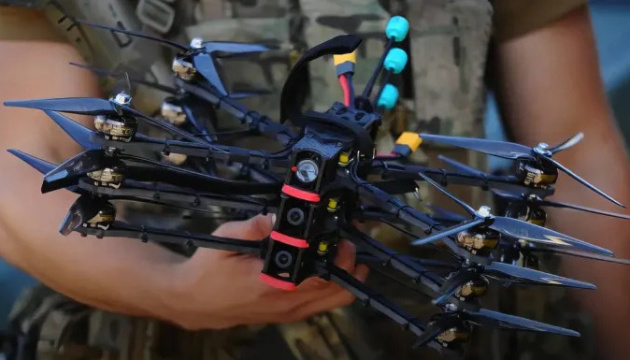
In the first half of 2026, Ukraine’s Ministry of Defence contracted unmanned aerial vehicles worth UAH 333.6 billion for the Defence Forces. This is more than double the volume contracted during the same period last year.
Censor.NET reports this, citing Ukraine’s Ministry of Defence; FPV drones accounted for the largest share of the UAVs procured.
Procurement was carried out by the Defence Procurement Agency and the State Operator for Non-Lethal Acquisition. Some contracts were concluded through the DOT-Chain Defence state arms marketplace, which allows combat units to independently select the equipment they need using budget funds.
The agency handles the entire process, from concluding contracts to payment and logistics oversight. As a result, the average delivery time for equipment available through the marketplace has been reduced to nine days.
The Ministry of Defence emphasised that supplying the military with drones remains one of the key areas of Ukraine’s defence strategy. Drones are used to strike enemy targets, conduct reconnaissance, lay mines and deliver essential equipment to Ukrainian troops in the most dangerous sections of the front.
In March this year, the ministry changed its approach to UAV procurement. The list of required systems is now compiled using combat data from the ePoints, DOT-Chain, Brave1 Market, DELTA and Mission Control digital platforms. The data are used to rank drones by effectiveness.
The General Staff of the Armed Forces of Ukraine then determines the list, quantities and types of unmanned systems to be procured, taking into account the needs of military units. The Defence Procurement Agency subsequently awards the contracts directly.
The Ministry of Defence noted that this system allows the state to prioritise drones that have proven effective under real combat conditions.
The agency also conducts closed competitive tenders for certain unmanned systems in accordance with the tactical and technical requirements of the General Staff. This mechanism has already proven effective in the procurement of long-range 155-mm ammunition, where savings of more than 16% were achieved.
The Ministry of Defence, together with the Cabinet of Ministers and the Defence Procurement Agency, has also introduced a mechanism for adjusting the value of fibre-optic drone contracts. This has allowed the procurement and delivery of such systems to continue despite a sharp rise in optical fibre prices on the global market.
In addition, the ministry has launched the first stage of the "Baseline" project, which provides for guaranteed monthly supplies of the most sought-after types of drones to combat units.
The military will primarily receive radio-controlled and fibre-optic FPV drones, Mavic-type quadcopters, bomber drones, fixed-wing reconnaissance drones and light mid-strike drones. During the first stage, the project will include military units that directly hold sectors of the defensive line and conduct active combat operations.


