



Ukrainian drones and engineering barriers are thwarting Russia’s attempts to break through with tanks, - Trehubov
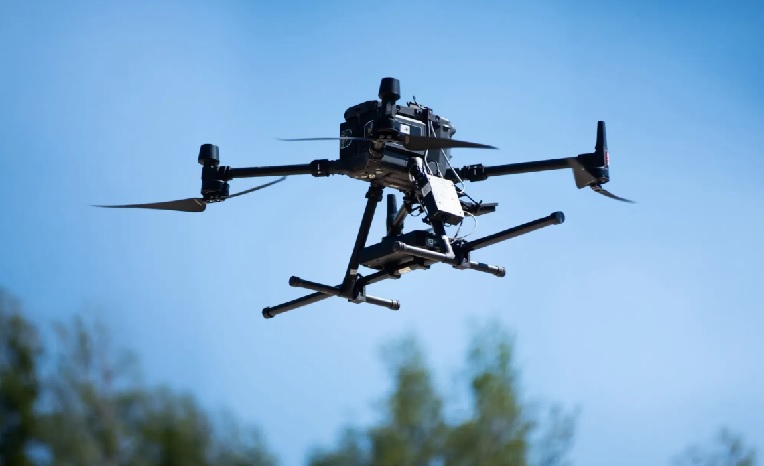
Russian tank crews attempting to attack Ukrainian positions find themselves in an area of dense engineering barriers and intensive use of drones, which makes mechanised assaults virtually futile.
According to Censor.NET, Viktor Trehubov, spokesperson for the Joint Forces Operation, stated this in an interview with the YouTube channel ‘Third World’.
According to him, the Ukrainian defences on this section of the front are organised in such a way that any attempt to break through immediately ends up in the so-called ‘kill zone’ — an area that is fully controlled by UAV operators.
"I don’t know why so many of their Russian tank crews suddenly decided they wanted to go to Valhalla at the same time, but we have a very dense engineering barrier, a very dense line of drones and a very dense no-fly zone," said Trehubov.
Attempts to break through result in heavy losses
The spokesperson emphasised that every attempt at a mechanised assault results in significant losses for the Russian army due to the effective work of Ukrainian drone operators.
"If, by any chance, someone were to want to take their own life and thereby cause significant damage to the Ukrainian budget due to the need to pay Ukrainian drone operators, I would only welcome that," he said.
Why do the Russians keep attacking?
According to Trehubov, on other sections of the front, the Russian command may have been counting on a temporary weakening of Ukrainian defences in order to attempt a breakthrough and consolidate their positions.
"It is difficult to judge matters outside one’s own area of responsibility, but I can surmise that they believed that, at a certain point, they had sufficiently weakened the Ukrainian forces to attempt a breakthrough and consolidate their position," the spokesperson explained.
The enemy’s only chance is the weather
According to Trehubov, the only factor that could theoretically have helped the Russian forces was the weather, which would have temporarily rendered the Ukrainian drones inoperable.
However, even such conditions, he said, had not arisen in his area of responsibility.
"Perhaps there was some sort of weather-related issue that meant the drones wouldn’t be flying at all at that particular moment. We could give it a go. But we don’t even have any opportunities for that," concluded Trehubov.


