



Russian commander who used prisoners as ’human shields’ in Sumy region identified – Office of Prosecutor General. PHOTOS
Under the procedural guidance of the Sumy Regional Prosecutor’s Office, law enforcement officers have identified the commander of a Russian Federation army battalion who, according to the investigation, ordered the use of Ukrainian prisoners of war and civilian women to cover the retreat of a Russian convoy. He has been notified in absentia that he is suspected of violating the laws and customs of war.
According to Censor.NET, this was reported by the Office of the Prosecutor General of Ukraine.
According to the prosecution, on 1 March 2022, around 300 Russian soldiers in 45 vehicles were moving through the Sumy region towards the Ukrainian state border.
To avoid fire from the Ukrainian Defence Forces and ensure the convoy’s retreat, the commander, according to the investigation, ordered six Ukrainian prisoners of war and two civilian women to be used as ‘human shields’.
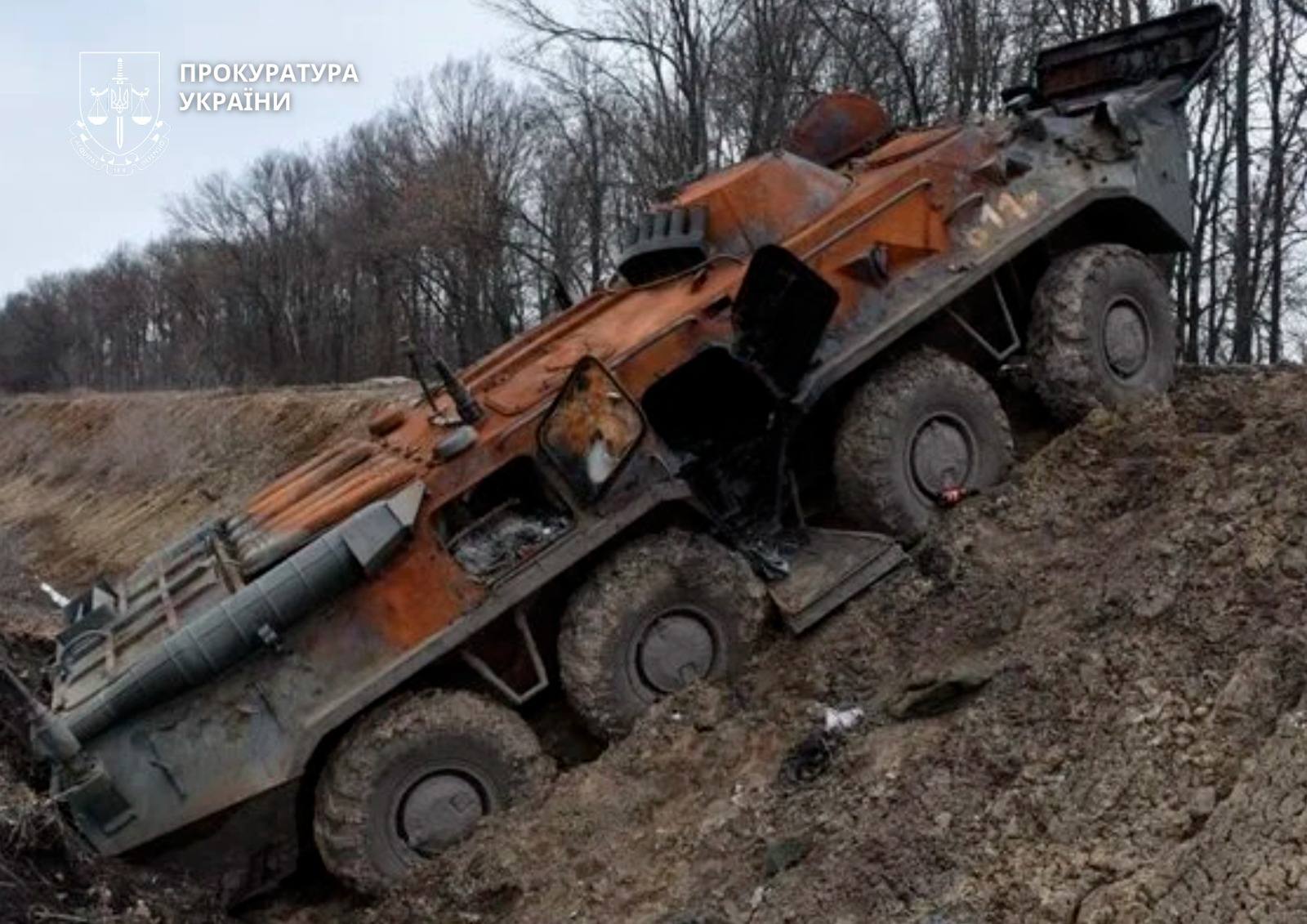
The prisoners and women were forced to travel at the front of the convoy
According to the investigation, the prisoners and civilians were placed in vehicles travelling at the head of the Russian military convoy.
The occupiers reckoned that the Ukrainian military would not open fire due to the threat to the lives of the people being used as cover.
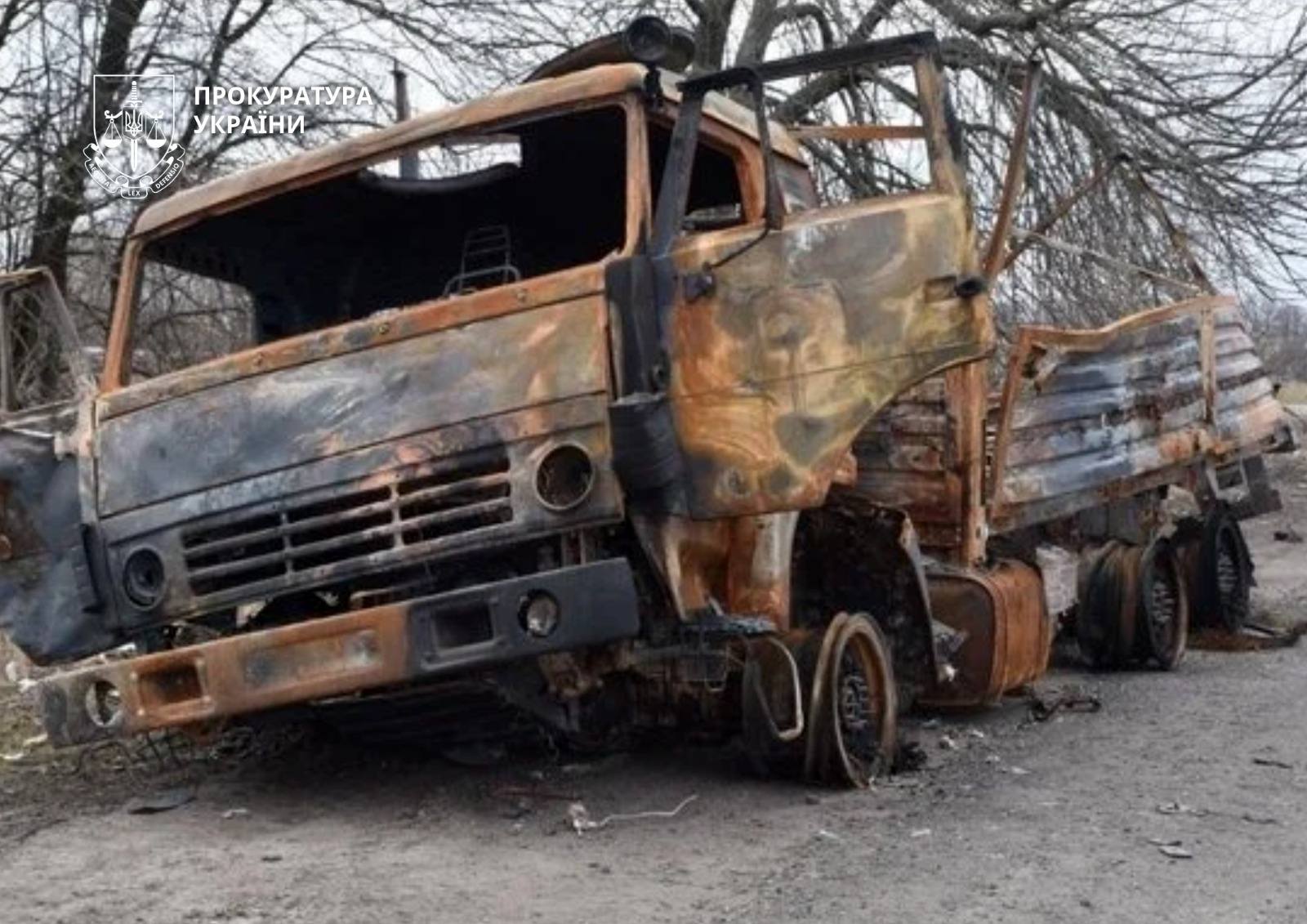
The suspect is a 45-year-old man originally from the Kaluga region of the Russian Federation. At the time of the offence, he was in command of a battalion of the 1st Motorised Rifle Regiment of the 2nd Motorised Rifle Division of the Russian Federation’s 1st Tank Army.
The commander was notified of the charges in absentia
The man was notified in absentia of the suspicion that he had violated the laws and customs of war under Part 1 of Article 438 of the Criminal Code of Ukraine.

The offence carries a sentence of between 8 and 12 years’ imprisonment.
The ‘Pivnich’ mobile justice team from the international organisation Global Rights Compliance was brought in to document this incident. Together, the experts carried out the mapping, structuring and analysis of the evidence.


